
This lesson clarifies the specific technical and legal requirements for Swiss motorcycle licence categories A and A1. By understanding these distinctions, you will know exactly which vehicles you are permitted to ride and how your licence tier impacts your regulatory obligations. This foundational knowledge is essential for your progression through the Swiss theory exam and your future as a motorcyclist.
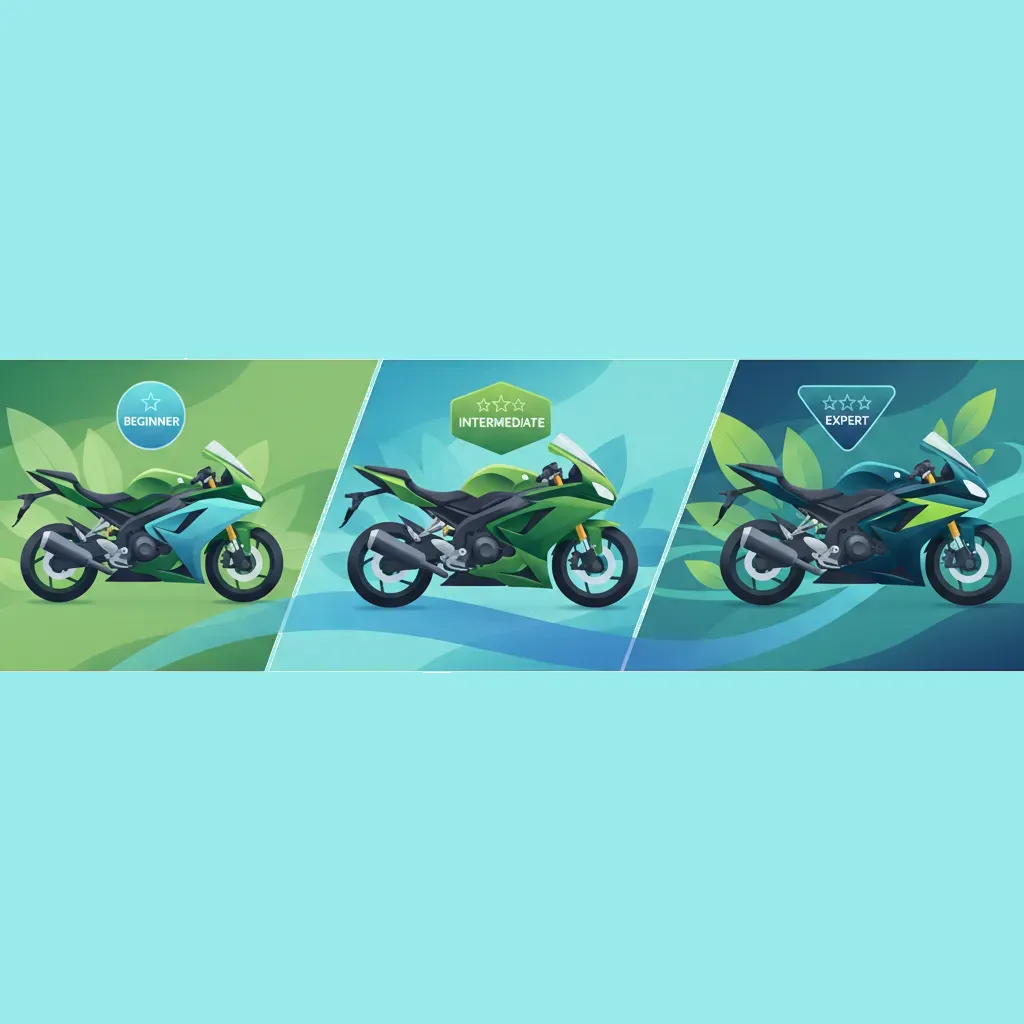
Lesson content overview
The Swiss motorcycle licensing system employs a graduated approach, designed to ensure that riders progressively gain experience and skill before being permitted to operate higher-performance machines. This lesson provides a detailed comparison of the A1, Restricted A, and Unrestricted A licence categories, outlining their technical specifications, legal restrictions, and the rider qualifications required for each. Understanding these distinctions is fundamental for legal compliance and safe riding practices within Switzerland.
Switzerland, like many countries, implements a graduated licensing system for motorcycles to enhance road safety. This system acknowledges that operating a high-performance motorcycle requires advanced skills and experience that novice riders typically lack. By restricting new riders to less powerful vehicles, the system allows them to develop foundational skills in a controlled environment, gradually preparing them for more demanding machines. This phased approach mitigates risks, reduces accident severity, and ultimately creates safer roads for all users. The structure involves specific technical limits tied to engine displacement, power output, and a crucial metric: the power-to-weight ratio.
The A1 licence serves as the initial step into the world of motorcycling in Switzerland. It is tailored for new riders and those who prefer lighter, less powerful vehicles. This category provides a controlled environment for learning basic riding skills, traffic navigation, and hazard perception without the added complexity of high-performance engines.
With an A1 licence, you are permitted to operate motorcycles with specific limitations:
These specifications mean that A1 licence holders can ride a range of lightweight motorcycles, including many scooters and smaller standard bikes, provided they meet all three criteria. It is a common misunderstanding that merely having an engine under 125 cm³ is sufficient; both the power and power-to-weight ratio limits must also be strictly observed.
To obtain an A1 motorcycle licence in Switzerland, candidates must be at least 16 years old. The process typically involves passing both a theoretical knowledge exam covering general traffic laws and a practical riding examination specifically for the A1 category. Successful completion ensures that the rider has demonstrated basic competence and understanding of safe riding practices for entry-level motorcycles.
Always check the official vehicle documentation (Fahrzeugausweis) to confirm that a motorcycle's specifications – particularly power (kW) and weight (kg) – comply with your A1 licence limits before riding.
The A1 licence allows for the operation of motorcycles designed for urban commuting and lighter recreational use. These vehicles are generally easier to handle due to their lower weight and power, making them ideal for developing rider confidence and skill.
Examples:
The total volume swept by the pistons in all cylinders of an engine, typically measured in cubic centimetres (cm³). It is often correlated with the engine's potential power output.
The Restricted A licence, sometimes referred to as 'A limited' or 'A 35 kW', represents the next stage in the Swiss graduated licensing system. It permits riders to operate a significantly broader range of motorcycles, offering a step up in performance and capability compared to the A1 category.
The Restricted A licence has distinct criteria:
This category allows access to many medium-powered motorcycles, including certain models that are specifically manufactured or modified to comply with the 35 kW limit.
To qualify for a Restricted A licence in Switzerland, candidates must meet specific age and experience requirements:
Attempting to bypass the two-year holding period for an A1 licence before obtaining a Restricted A licence is illegal and can lead to severe penalties, including fines and disqualification.
The Restricted A licence opens up opportunities to ride a wider variety of motorcycles, including many popular models from various manufacturers that come in A2-compliant (equivalent to Swiss Restricted A) versions. These bikes offer more significant performance for longer journeys and varied road conditions.
Examples:
A standard unit of power, commonly used in Switzerland to specify the output of motorcycle engines. One kilowatt is approximately equal to 1.34 horsepower.
The Unrestricted A licence represents the highest tier for motorcycle licensing in Switzerland, granting riders the freedom to operate any motorcycle without limitations on engine displacement, power output, or power-to-weight ratio. This category is reserved for experienced riders who have demonstrated a high level of skill and responsibility over time.
With an Unrestricted A licence, there are no technical restrictions on the motorcycles you can operate:
This allows access to the full spectrum of motorcycles, from high-performance sportbikes and powerful touring machines to custom-built motorcycles with any specifications.
The path to an Unrestricted A licence is built on a foundation of prior experience and maturity:
While not legally mandatory, many Unrestricted A licence holders choose to pursue advanced rider training or defensive riding courses. These can further hone skills and enhance safety, especially when handling high-performance motorcycles.
The Unrestricted A licence is for those who desire the full performance capabilities of modern motorcycles. These machines often feature advanced electronics, powerful engines, and sophisticated chassis designs, requiring a high degree of rider skill and judgment.
Examples:
The highest category of motorcycle licence in Switzerland, permitting the operation of any motorcycle without limitations on engine displacement, power, or power-to-weight ratio.
Understanding the specific technical limits for each category is paramount for compliance. These specifications are legally binding and form the basis for determining which motorcycles you are permitted to ride.
| Licence Category | Maximum Engine Displacement | Maximum Power (kW) | Maximum Power-to-Weight Ratio (kW/kg) | Minimum Age | Prerequisite Experience |
|---|---|---|---|---|---|
| A1 | 125 cm³ | 11 kW | 0.1 kW/kg | 16 years | None |
| Restricted A | No limit | 35 kW | 0.2 kW/kg | 18 years | 2 years A1 licence |
| Unrestricted A | No limit | No limit | No limit | 20 years | 2 years Restricted A licence |
This table provides a concise overview of the core technical and age requirements. Riders must always ensure their motorcycle meets all specified criteria for their respective licence category.
The power-to-weight ratio is a critical metric in the Swiss motorcycle licensing system. It quantifies how much power an engine generates relative to the vehicle's mass, directly influencing a motorcycle's acceleration and overall dynamic performance. A lower power-to-weight ratio indicates less aggressive acceleration, making the motorcycle more manageable for less experienced riders.
The power-to-weight ratio is calculated by dividing the engine's power output (in kilowatts) by the motorcycle's kerb weight (in kilograms). For example, a motorcycle with 11 kW power and a weight of 110 kg would have a power-to-weight ratio of 0.1 kW/kg. This ratio is more telling than engine displacement alone because a smaller, lighter bike with a high power output can be just as demanding to control as a heavier bike with a larger engine but lower specific power.
By setting limits on the power-to-weight ratio, the licensing system directly controls the level of performance novice and intermediate riders can access. This ensures that riders develop their skills incrementally. Unqualified riders on high-performance motorcycles may struggle with rapid acceleration, sensitive throttle response, and powerful braking, increasing their risk of accidents. The graduated system aims to prevent such scenarios by matching vehicle performance to demonstrated rider competence.
A crucial metric representing an engine's power output (kW) divided by the vehicle's weight (kg), indicating its performance capabilities, particularly acceleration.
The Swiss system encourages a systematic progression through the licence categories, building rider experience over time. Each stage is designed to prepare you for the next, more demanding level.
Each stage builds upon the previous one, ensuring that riders gain significant on-road experience before accessing more powerful motorcycles. This phased approach is a cornerstone of motorcycle safety strategy.
A1 Licence: Minimum age 16, pass theory and practical exams. Ride motorcycles up to 125 cm³, 11 kW, 0.1 kW/kg.
Restricted A Licence: Minimum age 18, must have held A1 for at least 2 years, pass Restricted A practical exam. Ride motorcycles up to 35 kW, 0.2 kW/kg (no displacement limit).
Unrestricted A Licence: Minimum age 20, must have held Restricted A for at least 2 years, pass Unrestricted A practical exam. Ride any motorcycle without restrictions.
Adhering to licence category rules is not just about safety; it is a legal requirement with serious consequences for non-compliance. Operating a motorcycle that exceeds your licence category's specifications is a serious offense in Switzerland.
One of the most frequent violations is riding a motorcycle whose power output or power-to-weight ratio exceeds the limits of your licence. For example, an A1 licence holder riding a 125 cm³ motorcycle that produces 12 kW of power is breaking the law, even if the engine displacement is correct. Similarly, a Restricted A licence holder riding a 40 kW bike, even if it's a smaller engine, is in violation. Ignorance of the law is not an excuse, and riders are responsible for verifying their vehicle's compliance.
Attempting to obtain a higher licence category before meeting the minimum age or mandatory holding period for a prerequisite licence (e.g., getting Unrestricted A without holding Restricted A for two years) constitutes a serious offence. These rules are in place to ensure a necessary period of skill development.
Modifying a motorcycle can inadvertently push it out of a permitted licence category. For instance, removing a power restrictor on a 35 kW bike to increase its output to 60 kW would render it illegal for a Restricted A licence holder. Riders must be aware that any changes affecting engine power or vehicle weight can impact their legal ability to operate the motorcycle.
Operating a motorcycle without the correct licence category can result in substantial fines, licence suspension, vehicle impoundment, and may even void your insurance in the event of an accident.
An 18-year-old rider, holding an A1 licence for two years, passes the Restricted A practical exam. They then purchase a 600 cm³ motorcycle that has been officially restricted to 35 kW and has a power-to-weight ratio of 0.18 kW/kg. This is a correct and legal application of their Restricted A licence.
A 17-year-old rider, holding an A1 licence for only one year, is offered a friend's 250 cm³ motorcycle with 20 kW power. If they choose to ride it, they would be in violation of both the age requirement for Restricted A (18 years) and the mandatory two-year holding period for the A1 licence, not to mention exceeding the A1 power limits.
While licence categories define the technical limits of motorcycles you can ride, various external factors influence how you should ride within those limits. Understanding these contextual variations is part of responsible motorcycling.
Adding a passenger or heavy luggage significantly increases a motorcycle's overall weight. This increased mass directly affects the motorcycle's power-to-weight ratio, although it does not alter the legal classification of the motorcycle itself. However, it will impact acceleration, braking distance, and handling characteristics. Even with an Unrestricted A licence, riders must account for the altered dynamics to maintain safe control. For A1 and Restricted A licence holders, while the motorcycle's inherent power-to-weight ratio determines its category, riding with heavy loads demands even greater skill and caution within those limits.
Licence category restrictions do not change based on weather or road type. However, the performance capabilities of higher-category motorcycles (Unrestricted A) become more challenging to manage in adverse conditions like rain, ice, or on gravel roads. Similarly, a powerful bike on narrow city streets requires different handling compared to open motorways. Riders must always adapt their riding style and speed to the prevailing conditions, regardless of their licence category.
The core reasoning behind the graduated licensing system is safety. This structured approach directly links a rider's experience and skill level to the performance potential of the motorcycle they operate.
When riders operate motorcycles within their permitted licence category, they are, by definition, on vehicles whose performance matches their presumed skill level. This significantly reduces the likelihood of accidents caused by being overwhelmed by a machine's power or speed. A rider who has gradually progressed through the categories develops the necessary muscle memory, judgment, and hazard perception to safely handle increasingly powerful motorcycles.
Conversely, operating a motorcycle that exceeds one's licence category limits means riding a machine for which one lacks adequate training and experience. Such situations often lead to:
The graduated system therefore acts as a critical safety barrier, protecting both the rider and other road users from the dangers associated with mismatched skill and vehicle performance.
The Swiss motorcycle licensing system ensures a structured progression for riders, aligning their experience with vehicle performance. The key takeaways from this comparison of A1, Restricted A, and Unrestricted A licences include:
Understanding and respecting these categories is not just a legal obligation but a cornerstone of responsible and safe motorcycling in Switzerland.
The Swiss motorcycle licence system uses three progressive categories to match motorcycle performance with rider experience. The A1 licence is the entry point at age 16, limiting riders to 125 cm³ engines with maximum 11 kW power and 0.1 kW/kg power-to-weight ratio. After holding A1 for two years, riders can progress to Restricted A at age 18, which permits motorcycles up to 35 kW and 0.2 kW/kg with no engine size limit. The Unrestricted A licence, available at age 20 after two years of Restricted A riding, imposes no technical restrictions. The power-to-weight ratio is a critical metric alongside engine displacement and raw power output, and riders must verify their motorcycle's specifications against official documentation before riding to ensure legal compliance.
A short set of high-value points that capture the most important learning from this lesson.
A1 licence permits motorcycles up to 125 cm³ engine, 11 kW power, and 0.1 kW/kg power-to-weight ratio for riders aged 16+
Restricted A licence allows motorcycles up to 35 kW and 0.2 kW/kg with no engine displacement limit, requiring 2 years of A1 experience and minimum age 18
Unrestricted A licence has no technical limits but requires 2 years of Restricted A experience and minimum age 20
The power-to-weight ratio (kW divided by kerb weight in kg) is a separate legal requirement from engine displacement and must be verified for both A1 and Restricted A categories
The graduated system directly links vehicle performance to demonstrated rider experience as a road safety measure
Explore all units and lessons included in this driving theory course.
Power-to-weight ratio is calculated by dividing engine power (kW) by vehicle weight (kg) and both limits must be met, not just one
Restricted A has no engine displacement limit, meaning a 1000 cm³ bike can be ridden if restricted to 35 kW and compliant with 0.2 kW/kg ratio
The mandatory 2-year holding period for each licence upgrade must be completed before applying for the next category
Always check the official vehicle documentation (Fahrzeugausweis) to confirm a motorcycle meets all criteria for your licence category
Modifying a motorcycle's engine or removing power restrictors can push it outside your permitted licence category
Assuming a 125 cm³ motorcycle is automatically A1-eligible without checking its actual power output and power-to-weight ratio
Believing engine displacement alone determines eligibility for Restricted A, when actually only power (35 kW) and power-to-weight ratio (0.2 kW/kg) matter
Attempting to upgrade to Restricted A before completing the mandatory 2-year A1 holding period, even if the minimum age is met
Riding a modified motorcycle without verifying that power or weight changes still keep it within licence category limits
Assuming that weather or load conditions change the legal requirements for your licence category
Lesson content overview
A short set of high-value points that capture the most important learning from this lesson.
A1 licence permits motorcycles up to 125 cm³ engine, 11 kW power, and 0.1 kW/kg power-to-weight ratio for riders aged 16+
Restricted A licence allows motorcycles up to 35 kW and 0.2 kW/kg with no engine displacement limit, requiring 2 years of A1 experience and minimum age 18
Unrestricted A licence has no technical limits but requires 2 years of Restricted A experience and minimum age 20
The power-to-weight ratio (kW divided by kerb weight in kg) is a separate legal requirement from engine displacement and must be verified for both A1 and Restricted A categories
The graduated system directly links vehicle performance to demonstrated rider experience as a road safety measure
Explore all units and lessons included in this driving theory course.
Power-to-weight ratio is calculated by dividing engine power (kW) by vehicle weight (kg) and both limits must be met, not just one
Restricted A has no engine displacement limit, meaning a 1000 cm³ bike can be ridden if restricted to 35 kW and compliant with 0.2 kW/kg ratio
The mandatory 2-year holding period for each licence upgrade must be completed before applying for the next category
Always check the official vehicle documentation (Fahrzeugausweis) to confirm a motorcycle meets all criteria for your licence category
Modifying a motorcycle's engine or removing power restrictors can push it outside your permitted licence category
Assuming a 125 cm³ motorcycle is automatically A1-eligible without checking its actual power output and power-to-weight ratio
Believing engine displacement alone determines eligibility for Restricted A, when actually only power (35 kW) and power-to-weight ratio (0.2 kW/kg) matter
Attempting to upgrade to Restricted A before completing the mandatory 2-year A1 holding period, even if the minimum age is met
Riding a modified motorcycle without verifying that power or weight changes still keep it within licence category limits
Assuming that weather or load conditions change the legal requirements for your licence category
Explore search topics learners often look for when studying Comparison of A1, Restricted A, and Unrestricted A. These topics reflect common questions about road rules, driving situations, safety guidance, and lesson level theory preparation for learners in Switzerland.
Browse additional driving theory lessons that cover connected traffic rules, road signs, and common driving situations related to this topic. Improve your understanding of how different rules interact across everyday traffic scenarios.
Understand the step-by-step process to upgrade your Swiss motorcycle licence. Learn the age, experience, and examination requirements for moving from A1 to Restricted A and then to Unrestricted A.
This lesson details the Swiss motorcycle licence categories, explaining the technical criteria that define A1 and A licences, such as engine capacity and power output. It outlines the statutory age thresholds and the progressive training path required for riders. Understanding this regulatory framework provides a clear foundation for what is legally permitted for each licence type.

This lesson explains the direct link between a rider's licence category and their on-road behaviour. It covers how factors like speed selection, lane positioning, and hazard anticipation must be adapted to a motorcycle's specific power and handling characteristics. The content stresses that all riders must make safe decisions appropriate for their vehicle and the Swiss traffic environment.

This lesson defines the scope of Switzerland's Category M license by comparing it to other vehicle categories. It details the specific criteria for vehicles, such as maximum speed and engine power, that fall under this classification. Understanding these distinctions is crucial for knowing your legal entitlements and limitations as a Category M license holder.

This lesson explains the legal age minimums for each motorcycle licence category and details the mandatory health assessments. It covers the required vision and hearing standards, along with the general medical fitness criteria stipulated by Swiss authorities. Learners will understand the process of obtaining a health certificate and the importance of meeting these prerequisites for safe and legal riding.
This lesson outlines the specific rules and skills required for riding on high-speed Swiss motorways. It covers the correct procedures for entering and exiting, merging with traffic, maintaining appropriate speed, and conducting safe overtaking maneuvers. Emphasis is placed on using mirrors and signals effectively to integrate safely into the flow of traffic.

Gain insight into the two-stage examination process for the Swiss Category B licence, covering both the theory exam and the practical driving test. This lesson outlines the question format, passing score thresholds, and the nature of the practical assessment. Administrative aspects such as registration procedures, test locations, and retake policies are also addressed.

This lesson focuses on the Lernfahrausweis, the Swiss provisional permit required for learning to ride a small powered vehicle. It explains the application process, minimum age requirements, and the specific rules and limitations that apply to a learner rider. Learners will understand the legal framework that governs the learning phase before they can obtain their full driving license.

This lesson explains that obtaining a Category D license is the first step, while the OACP (Chauffeur Admission Ordinance) is a separate, mandatory professional qualification. It outlines the purpose of the OACP, including initial qualification and periodic training requirements. Understanding this distinction is crucial for a compliant and successful career in professional driving.

This lesson outlines the principles of safe overtaking, emphasizing the importance of accurate judgment of speed and distance. It covers the necessary steps: checking mirrors, signaling, checking blind spots, executing the maneuver smoothly, and returning to the lane safely. The content is tailored to different road environments, from urban streets to rural roads.

This lesson provides a clear definition of the Swiss heavy goods vehicle license categories. It details the weight limits and vehicle configurations for Category C (lorries over 3.5t) and C1 (lorries from 3.5t to 7.5t). Furthermore, it explains how categories CE and C1E grant the entitlement to tow heavy trailers, forming articulated vehicles or road trains, which is crucial for professional transport operations.
Explore the specific engine displacement, power (kW), and power-to-weight ratio limits for each Swiss motorcycle licence category. Essential theory for understanding vehicle compliance.
This lesson details the Swiss motorcycle licence categories, explaining the technical criteria that define A1 and A licences, such as engine capacity and power output. It outlines the statutory age thresholds and the progressive training path required for riders. Understanding this regulatory framework provides a clear foundation for what is legally permitted for each licence type.
This lesson explains the legal age minimums for each motorcycle licence category and details the mandatory health assessments. It covers the required vision and hearing standards, along with the general medical fitness criteria stipulated by Swiss authorities. Learners will understand the process of obtaining a health certificate and the importance of meeting these prerequisites for safe and legal riding.
This lesson outlines the specific rules and skills required for riding on high-speed Swiss motorways. It covers the correct procedures for entering and exiting, merging with traffic, maintaining appropriate speed, and conducting safe overtaking maneuvers. Emphasis is placed on using mirrors and signals effectively to integrate safely into the flow of traffic.
This lesson explains the direct link between a rider's licence category and their on-road behaviour. It covers how factors like speed selection, lane positioning, and hazard anticipation must be adapted to a motorcycle's specific power and handling characteristics. The content stresses that all riders must make safe decisions appropriate for their vehicle and the Swiss traffic environment.

This lesson explores the typical features of rural and alpine roads, such as narrow lanes, sharp bends, and significant elevation changes. It discusses the need for heightened awareness due to limited sight distances and the potential for unexpected hazards like wildlife or agricultural vehicles. Riders will learn to adapt their speed and positioning for these challenging conditions.
This lesson outlines the principles of safe overtaking, emphasizing the importance of accurate judgment of speed and distance. It covers the necessary steps: checking mirrors, signaling, checking blind spots, executing the maneuver smoothly, and returning to the lane safely. The content is tailored to different road environments, from urban streets to rural roads.

This lesson explores the various types of motorcycle helmets, including full-face, open-face, and modular designs, and explains the legal safety standards they must meet in Switzerland. It details how to correctly assess a helmet's fit to ensure it provides optimal impact protection. The importance of maintaining a clean and clear visor for unobstructed vision is also emphasized.
This lesson defines the scope of Switzerland's Category M license by comparing it to other vehicle categories. It details the specific criteria for vehicles, such as maximum speed and engine power, that fall under this classification. Understanding these distinctions is crucial for knowing your legal entitlements and limitations as a Category M license holder.
This lesson details the maximum legal speed limits applicable to Category M vehicles in Switzerland. It explains how to identify speed limits through signage and differentiates between built-up areas, rural roads, and motorways where permitted. The content stresses that the legal limit is a maximum, and riders must always adapt their speed to traffic, weather, and road conditions.

This lesson details the definition of Category B within the Swiss licensing system, focusing on vehicle types, weight capacities, and passenger limits. It clarifies the maximum authorized mass for Category B cars and the specific restrictions on towing trailers. You will learn the legal framework defining which vehicles you may operate and the boundaries of this license category.
Find clear answers to common questions learners have about Comparison of A1, Restricted A, and Unrestricted A. Learn how the lesson is structured, which driving theory objectives it supports, and how it fits into the overall learning path of units and curriculum progression in Switzerland. These explanations help you understand key concepts, lesson flow, and exam focused study goals.
Category A1 is limited to motorcycles with a cylinder capacity not exceeding 125cc and a power output not exceeding 11kW. Category A allows for higher-powered motorcycles, with specific restricted and unrestricted tiers depending on your experience.
A restricted A licence allows you to ride motorcycles with a maximum power output of 35kW. After two years of holding this licence without major traffic offences, you can generally apply for the unrestricted category A.
Yes, holding a full category A licence entitles you to ride all motorcycles, including those in the A1 and restricted A categories.
The unrestricted category A has no upper limit on power or cylinder capacity, allowing you to ride any two-wheeled motorcycle registered for road use in Switzerland.
Pinpoint specific Swiss traffic rules, road signs, or driving situations you need to master. Use the practice search to start a focused revision session now and build confidence for your official driving theory exam.