
Logo
Swiss Driving Theory Courses

Lesson 2 of the Swiss Category M Context and First-Rider Responsibility unit

Swiss Driving Theory M: Comparing Category M with Other Licence Categories

This lesson explains the legal definition and limitations of the Swiss Category M license, which covers mopeds and e-bikes. Understanding these vehicle classifications is essential for knowing your legal entitlements on the road and correctly answering related theory exam questions.
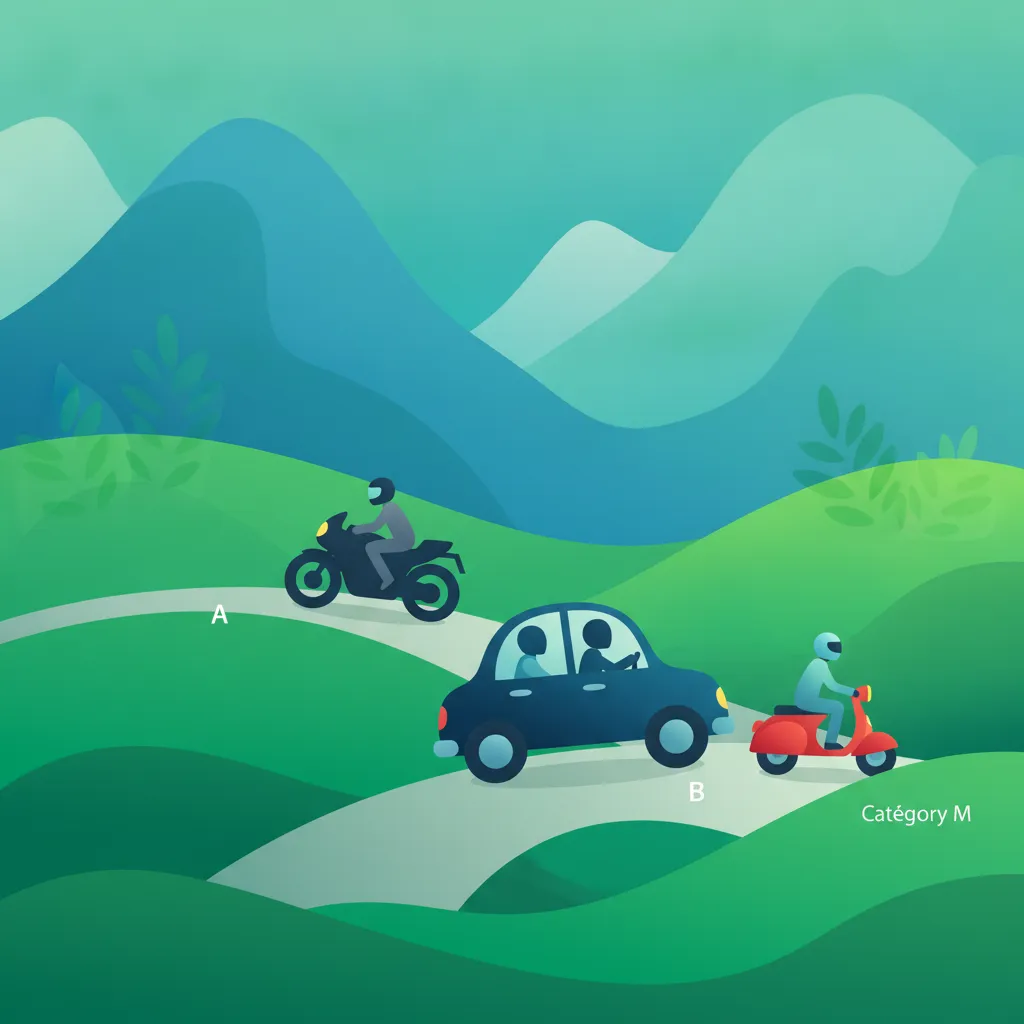
Category Mlicense categoriesSwiss traffic lawmoped rulestheory exam prep
Swiss Driving Theory M: Comparing Category M with Other Licence Categories

Lesson content overview

Swiss Driving Theory M

Swiss Driving Licence Categories: Understanding Moped (Category M) Entitlements

Welcome to the Swiss Driving License Theory Course for Category M (Mopeds). This comprehensive lesson will define the scope of Switzerland's Category M licence by comparing it to other vehicle categories, focusing on specific criteria like maximum speed, engine power, and weight. Understanding these crucial distinctions ensures you know your legal entitlements and limitations as a Category M licence holder, promoting road safety and compliance with Swiss traffic law.

What is a Driving Licence Category in Switzerland?

In Switzerland, a driving licence category is a classification system that grants specific vehicle operation rights based on an individual's age, required training, and the technical specifications of the vehicle. The primary purpose of this system is to align a rider's competence and experience with the performance capabilities of different vehicles, thereby enhancing overall road safety. This structured approach ensures that less experienced drivers are limited to less powerful and slower vehicles, gradually progressing to more complex and higher-performance machines as their skills develop.

The implications of these categories are profound: your licence category strictly determines which types of vehicles you are legally permitted to operate on public roads. Operating a vehicle that falls outside your licence's specific category can lead to severe legal penalties, including fines, vehicle impoundment, and licence suspension.

Swiss Category M Licence: Mopeds and Light Electric Bikes

The Swiss Category M licence is specifically designed for mopeds and light electric bikes. This category permits the operation of two-wheeled vehicles that are limited to a maximum speed of 30 km/h and have an engine that does not exceed 500 W of continuous power. This classification covers a range of vehicles, from traditional gasoline-powered mopeds to modern electric bikes, provided they adhere to these strict speed and power thresholds.

The primary purpose of Category M is to allow young or novice riders, starting from the age of 14, to operate low-speed vehicles with minimal initial training. This provides a gradual introduction to road traffic, emphasizing basic safety and vehicle control without the complexities of higher-performance motorcycles. It is important to note that Category M does not have subcategories; all mopeds meeting the specified limits fall under this single classification, regardless of their engine configuration (combustion or electric).

Key Characteristics of Category M Vehicles

Category M vehicles are defined by precise technical limitations that directly impact their safe operation and the requirements for their riders. These include:

  • Maximum Speed: Vehicles under Category M are legally restricted to a top speed of 30 km/h. This limitation is crucial for reducing kinetic energy in the event of an accident, thus minimizing potential injury severity for the rider and others.
  • Engine Power: The continuous power output of the engine must not exceed 500 W. This restriction controls the vehicle's acceleration capabilities, making it more manageable for riders who are new to motorized two-wheelers.
  • Helmet Requirement: All operators of Category M vehicles are legally mandated to wear an approved motorcycle helmet. This protective gear is vital for mitigating head injuries in collisions.
  • Vehicle Equipment: Mopeds must be equipped with a functional speedometer. For electric bikes, the motor assistance must cut off at the specified speed limit to comply with Category M regulations.

Common misunderstandings regarding Category M often include the belief that it permits riding any two-wheeler, regardless of its speed or power. It is crucial to distinguish mopeds from lightweight motorcycles, which fall under different licence categories and have higher performance capabilities.

Motorcycle Licences in Switzerland: Categories A1, A2, and A

Beyond Category M, Switzerland employs a progressive system for motorcycle licences, categorized as A1, A2, and A. This system is designed to gradually expose riders to increasingly powerful motorcycles as they gain experience and demonstrate competence.

Category A1: Light Motorcycles and Scooters

The Category A1 licence is for light motorcycles and scooters. It permits the operation of vehicles with an engine displacement not exceeding 125 cc, a continuous power output of no more than 11 kW, and a power-to-weight ratio not exceeding 0.1 kW/kg. Riders can obtain an A1 licence from the age of 16.

  • Practical Meaning: A1 allows riders to operate small motorcycles or scooters that can achieve higher speeds than mopeds (e.g., up to 80 km/h or more, depending on the vehicle), offering greater mobility.
  • Relationship to Category M: In some cases, previous experience or holding a Category M licence might influence the training path for A1, but an A1 licence is a distinct qualification that does not automatically imply the right to ride vehicles exceeding Category M limits.
  • Common Misunderstanding: Assuming that an A1 licence automatically includes the right to ride all mopeds without understanding the specific distinctions between vehicle types and speeds.

Category A2: Medium-Powered Motorcycles

The Category A2 licence permits the operation of medium-powered motorcycles. These vehicles must have a maximum continuous power of 35 kW and a power-to-weight ratio not exceeding 0.2 kW/kg. Additionally, if the motorcycle's original power exceeds 70 kW, it must be restricted to 35 kW, meaning it cannot be derived from a vehicle originally having more than double the A2 power limit.

  • Practical Meaning: A2 allows riders to operate more powerful motorcycles than A1, but still with a safety-conscious limitation on performance. This category provides a stepping stone to unrestricted motorcycles.
  • Progression: Typically, riders must gain at least two years of experience with an A1 licence or complete an advanced training module to qualify for an A2 licence.
  • Importance: This category helps riders develop more advanced skills with higher-performance machines before moving to the most powerful motorcycles.

Category A: Unrestricted Motorcycles

The Category A licence is the full, unrestricted motorcycle licence, allowing the operation of any motorcycle regardless of its engine power, displacement, or speed. This is the highest level of motorcycle entitlement in Switzerland.

  • Practical Meaning: With a Category A licence, you can ride high-performance sport bikes, large cruisers, and any other motorcycle available.
  • Requirements: Obtaining a Category A licence typically requires completion of a comprehensive motorcycle training program and passing a practical examination, often after gaining experience with A2.
  • No Automatic Moped Entitlement: While a Category A licence grants the highest motorcycle privileges, it's essential to understand that the specific rules and entitlements for mopeds (Category M) are distinct. Having Category A doesn't negate the need to understand specific moped rules, though it generally covers the ability to operate lower-powered two-wheelers.

Swiss Car Licence: Category B and its Relationship to Mopeds

The Category B licence in Switzerland is the standard entitlement for operating cars and light motor vehicles. It is a distinct category with its own set of rules and limitations, and its relationship to Category M for mopeds is often misunderstood.

Category B: Cars and Light Vehicles

The Category B licence permits the operation of motor vehicles with a maximum authorized mass of up to 3,500 kg. These vehicles can carry up to 8 passengers in addition to the driver and may tow a trailer with a maximum authorized mass of up to 750 kg. This category covers most standard passenger cars, minivans, and light trucks.

  • Practical Meaning: Category B is the most common licence, enabling individuals to drive typical family cars, for daily commuting, travel, and various personal or light commercial uses.
  • Requirements: To obtain a Category B licence, applicants must be at least 18 years old and pass both a theory and a practical driving examination.

Does a Category B Licence Cover Mopeds?

A common misconception is that holding a Category B car licence automatically entitles you to ride a moped. In Switzerland, this is generally not the case. While some countries might have provisions where a car licence includes moped entitlements, in Switzerland, Category M is a separate licence. Therefore, a driver holding only a Category B licence may not legally ride a moped unless they also specifically hold a Category M or a motorcycle licence (A1, A2, A), as these categories often encompass the privileges of lower-powered two-wheelers. Always verify your specific licence entitlements.

Key Regulations for Category M Licence Holders

Operating a moped or light electric bike under a Category M licence in Switzerland comes with specific regulations designed to ensure safety, especially for young or novice riders. Adherence to these rules is paramount for legal and safe road use.

Speed Limitation for Category M Vehicles: Max 30 km/h

The most fundamental rule for Category M vehicles is the strict adherence to a maximum speed of 30 km/h. This applies to all mopeds and electric bikes operated under this licence.

  • Rationale: Limiting the speed significantly reduces the kinetic energy of the vehicle, which in turn shortens stopping distances and minimizes the severity of accidents. For inexperienced riders, lower speeds provide more time to react to hazards and maintain control.
  • Consequences of Violation: Modifying a moped to exceed 30 km/h or riding it faster than permitted without holding a higher licence category is a serious offence, potentially leading to fines, vehicle impoundment, and licence suspension.

Engine Power Limitation: Max 500 W Continuous Power

Category M vehicles must not exceed a continuous engine power output of 500 W. This rule applies uniformly to both combustion-engine mopeds and electric bikes.

  • Rationale: This power restriction controls the vehicle's acceleration potential, making it more predictable and manageable for novice riders. It prevents sudden bursts of speed that could overwhelm an inexperienced operator.
  • Consequences of Violation: Operating a moped with an engine modified to produce more than 500 W of continuous power, or riding a vehicle that naturally exceeds this limit, with only a Category M licence, is illegal and carries significant penalties, including fines and possible vehicle seizure.

Age Requirements for Category M Licence

The minimum age for obtaining a Category M licence in Switzerland is 14 years.

  • Rationale: This age requirement balances the desire for youth mobility with necessary safety provisions, allowing young individuals to gain initial road experience with low-risk vehicles.
  • Important Note: Even at 14, specific rules apply regarding learning and supervision, as detailed below.

Mandatory Helmet Requirement

All operators of Category M vehicles, regardless of age or experience level, must wear an approved motorcycle helmet while riding.

  • Rationale: This rule is a critical safety measure, designed to protect the rider's head in the event of a fall or collision. Helmets significantly reduce the risk of severe head injuries.
  • Recommendation: A full-face helmet offers the best protection for mopeds and is highly recommended.
  • Consequences of Violation: Riding without a helmet is a traffic offence resulting in a fine and potential demerit points.

Lernfahrausweis (Learner's Permit) Rules for Category M

For individuals learning to ride a moped, the "Lernfahrausweis" (learner's permit) comes with specific mandatory rules to ensure safe learning.

  • Display of "L" Plate: The learner must prominently display an "L" plate on the rear of the moped. This plate signifies that the vehicle is being operated by a learner driver and alerts other road users to exercise extra caution.
  • Supervision Requirements: Learners under 16 years old must be accompanied by an adult supervisor who is at least 23 years old and holds a full, valid driving licence. The supervisor must ride alongside the learner, typically on another moped or motorcycle, or in a car where visual contact and verbal communication can be maintained.
  • Rationale: Supervision provides real-time guidance and allows an experienced driver to intervene or advise the learner, significantly improving safety and facilitating faster skill acquisition.
  • Consequences of Violation: Unsupervised riding by a learner, especially if under the age of 16, or riding without an "L" plate, can lead to fines for both the learner and potentially the supervisor, and may result in the revocation of the learner's permit.

Common Violations and Misunderstandings with Category M

Misinterpreting the rules or being unaware of the specific limitations of the Category M licence can lead to common violations and dangerous situations. It's crucial for all riders to be fully informed.

  1. Riding a Moped Exceeding 30 km/h:

    • Reason Wrong: The Category M licence is strictly limited to vehicles with a maximum speed of 30 km/h. Exceeding this limit makes the vehicle an unlicensed motorcycle.
    • Correct Behavior: Always ensure your moped's performance is within Category M limits. Do not modify it for higher speeds. If you wish to ride faster, you need an A1 or higher motorcycle licence.
    • Consequence: Fines, potential licence suspension, and even vehicle impoundment.
  2. Operating a Moped with Modified Engine Power (>500 W):

    • Reason Wrong: Modifying the engine to produce more than 500 W continuous power violates the specific power restriction for Category M. Such a vehicle is then classified differently.
    • Correct Behavior: Keep the moped's engine to its stock specifications that comply with Category M. For more powerful engines, obtain the appropriate higher licence category.
    • Consequence: Vehicle impoundment, heavy fines, and legal action.
  3. Riding Without a Helmet:

    • Reason Wrong: Wearing an approved helmet is mandatory for all Category M vehicle operators.
    • Correct Behavior: Always wear a certified motorcycle helmet to protect yourself from head injuries.
    • Consequence: A fine and potential demerit points on your driving record.
  4. Unsupervised Riding by a Learner (<16 years):

    • Reason Wrong: Learners under 16 years old with a "Lernfahrausweis" must be supervised by a qualified adult.
    • Correct Behavior: Always ensure you are accompanied by an adult supervisor (over 23, with a full licence) and display the "L" plate during practice rides.
    • Consequence: Fines for both learner and supervisor, and potential revocation of the learner's permit.
  5. Using a Moped on Motorways or High-Speed Expressways:

    • Reason Wrong: Mopeds, due to their limited speed, are expressly prohibited from motorways (Autobahnen) and high-speed expressways (Autostrassen) in Switzerland.
    • Correct Behavior: Plan your routes to use local, cantonal, or other eligible roads (Type 1 or Type 2 roads). Always check road signage for restrictions.
    • Consequence: Significant fines for motorway violations, potential danger to yourself and other road users.
  6. Assuming Category M Allows Riding Any Two-Wheeler:

    • Reason Wrong: Category M is strictly for low-speed, low-power mopeds and light electric bikes. It does not extend to motorcycles (even light ones) that exceed its speed or power limits.
    • Correct Behavior: If you wish to ride faster or more powerful two-wheelers, you must obtain the appropriate A1, A2, or A licence.
    • Consequence: Unlicensed driving, which carries severe penalties including large fines, licence revocation, and criminal charges.
  7. Riding an Electric Bike with Motor Assistance Above 25 km/h (if regulated as a moped):

    • Reason Wrong: Many electric bikes are classified as mopeds if their motor assistance exceeds a certain speed (e.g., 25 km/h or 30 km/h) without manual pedaling. Operating such a vehicle without ensuring the motor cuts off at the legal limit pushes it beyond Category M classification.
    • Correct Behavior: Ensure your electric bike complies with the specified speed and power limits for Category M, especially regarding motor assistance cut-off.
    • Consequence: The vehicle may be reclassified as a more powerful motorized vehicle, requiring a higher licence category and leading to fines for unlicensed operation.

Conditional Logic and Contextual Variations for Moped Riding

Safe moped riding extends beyond merely following the basic rules; it requires adapting your behavior to various environmental and contextual conditions.

  • Weather Conditions:
    • Wet or Snowy Conditions: Rain, ice, or snow significantly reduce tyre grip and increase stopping distances for all vehicles, including mopeds. Riders must reduce their speed well below the legal limit of 30 km/h and increase their following distance. Reduced visibility also necessitates extra caution.
    • Strong Winds: Mopeds are lightweight and can be significantly affected by strong crosswinds, making steering and stability challenging. Grip the handlebars firmly and be prepared for sudden gusts.
  • Road Type:
    • Motorways and Expressways: As noted, Category M vehicles are strictly prohibited from motorways and high-speed expressways due to their low speed and vulnerability.
    • City Streets and Rural Roads: Mopeds are permitted on most city streets, rural roads, and designated bike paths. Always check signage for specific local restrictions or permissions.
    • Uneven Surfaces: Potholes, gravel, tram tracks, or other uneven surfaces can be particularly hazardous for mopeds. Reduce speed and approach such areas with extreme caution to maintain balance and avoid skidding.
  • Vehicle Load:
    • Passengers: Only carry a passenger if your moped is explicitly designed and rated by the manufacturer for two occupants. Overloading affects braking efficiency, stability, and overall handling.
    • Cargo: Any cargo must be securely fastened and must not exceed the manufacturer's specified maximum load. Improperly secured or excessive loads can shift, unbalance the moped, and obstruct your view or control.
  • Visibility:
    • Poor Light Conditions: During dusk, dawn, fog, heavy rain, or at night, it is mandatory to use your moped's headlights and taillights. Ensure your lights are clean and fully functional.
    • Reflective Gear: Enhance your visibility by wearing reflective clothing or gear, especially when riding in low light conditions. Mopeds are small and can be easily overlooked by other road users.
  • Interaction with Vulnerable Road Users:
    • Pedestrians: Mopeds must always yield to pedestrians at crosswalks and exercise extreme caution near areas with high pedestrian traffic, such as school zones or shopping areas.
    • Cyclists: While mopeds may share some bike paths where permitted, they must always give way to cyclists and maintain a safe, respectful distance. Avoid abrupt maneuvers when near cyclists.

Cause-and-Effect Relationships in Moped Safety

Understanding the underlying reasons behind traffic rules helps in developing safer riding habits. For Category M riders, several direct cause-and-effect relationships underscore the importance of compliance.

  • Adherence to Speed Limit (30 km/h):
    • Cause: Riding at or below 30 km/h.
    • Effect: Significantly reduced kinetic energy ((E_k = \fracmv^2)), leading to shorter stopping distances and substantially lower impact forces in a collision. This directly reduces the severity of potential injuries.
  • Compliance with Engine Power Restriction (500 W):
    • Cause: Using a moped within the specified power limit.
    • Effect: Ensures manageable acceleration and predictable vehicle behavior, which is crucial for novice riders to maintain control and react safely to changing traffic situations.
  • Mandatory Helmet Use:
    • Cause: Wearing an approved motorcycle helmet.
    • Effect: Provides critical protection for the head, dramatically decreasing the risk of traumatic brain injury (TBI) in the event of a crash or fall. Helmets can reduce head injury risk by up to 70%.
  • Supervised Learning (with Lernfahrausweis):
    • Cause: A learner practicing with a qualified supervisor.
    • Effect: Real-time feedback and guidance accelerate skill acquisition, helping the learner develop safer riding techniques and better hazard perception much faster than learning alone.
  • Violation of Licence Category Restrictions:
    • Cause: Operating a vehicle that exceeds the specifications of your Category M licence (e.g., a faster moped or a motorcycle).
    • Effect: Leads to severe legal penalties, including heavy fines, potential licence revocation, and prosecution for unlicensed driving, which can significantly restrict future driving privileges.
  • Maintaining Safe Following Distance:
    • Cause: Keeping ample space between your moped and the vehicle ahead.
    • Effect: Provides sufficient time to react to sudden braking or hazards, preventing rear-end collisions. At lower speeds, reaction distance is smaller, but a safety margin is always vital.

Essential Vocabulary for Category M Riders

Applied Scenarios for Comparing Licence Categories

Let's explore some practical situations to solidify your understanding of Category M and its distinctions.

  1. Scenario: A 15-year-old with a Category M licence rides an electric bike on a city bike path.

    • Rule Application: The Category M licence mandates a maximum speed of 30 km/h, and the motor's continuous power must not exceed 500 W. If the electric bike's motor provides assistance beyond 25 km/h, it is considered a moped (or "fast e-bike") and falls under Category M rules.
    • Correct Behavior: The rider ensures the electric bike's motor assistance cuts off at or below 30 km/h, even if they can pedal faster. They wear an approved helmet.
    • Incorrect Behavior: The rider uses an electric bike that provides continuous motor assistance up to 45 km/h, believing their Category M licence covers it. This vehicle would typically require a Category A1 (for fast e-bikes over 25 km/h assist) or specific subcategory, not Category M.
  2. Scenario: A learner with a Category M Lernfahrausweis practices riding a moped alone on a quiet residential street.

    • Rule Application: A Category M learner under 16 years old must be accompanied by a qualified adult supervisor and display an "L" plate.
    • Correct Behavior: The learner displays the "L" plate and is accompanied by an adult supervisor (over 23 with a full driving licence), who might be riding alongside on another vehicle. Both wear helmets.
    • Incorrect Behavior: The learner rides alone without the "L" plate or any supervision. This is a serious violation of learner permit rules.
  3. Scenario: A driver with a Category M licence attempts to ride a 125 cc motorcycle.

    • Rule Application: A 125 cc motorcycle, typically capable of speeds far exceeding 30 km/h and with power output greater than 500 W, falls under the Category A1 licence. Category M does not permit the operation of such a vehicle.
    • Correct Behavior: The driver uses a vehicle that strictly complies with Category M specifications (max 30 km/h, max 500 W). To ride the 125 cc motorcycle, they would need to obtain a Category A1 licence.
    • Incorrect Behavior: The driver attempts to ride the 125 cc motorcycle, illegally operating it without the correct licence category.
  4. Scenario: Riding a moped on a rainy evening on a suburban road.

    • Rule Application: Mopeds must use appropriate lighting in poor visibility, and riders must reduce speed below the legal limit in adverse conditions due to reduced traction and increased stopping distances.
    • Correct Behavior: The rider activates the moped's headlamps and rear lights, wears reflective gear, and maintains a speed significantly below 30 km/h, allowing for a greater safety margin for braking and maneuvering on wet surfaces.
    • Incorrect Behavior: The rider maintains the maximum 30 km/h speed limit without turning on lights or wearing reflective gear, drastically increasing the risk of an accident.

Conclusion: Mastering Category M for Safe Swiss Roads

Understanding the precise definitions and limitations of the Swiss Category M licence is not just about passing your theory exam; it's about ensuring your safety and legal compliance on public roads. This lesson has clarified that Category M specifically pertains to mopeds and light electric bikes with a maximum speed of 30 km/h and an engine power not exceeding 500 W. It is distinct from the progressive motorcycle licences (A1, A2, A) and the car licence (Category B).

Key takeaways for every Category M rider include:

  • Strict adherence to speed (30 km/h) and power (500 W) limitations.
  • Mandatory helmet use at all times.
  • Understanding and following the "Lernfahrausweis" rules, including supervision and displaying the "L" plate.
  • Knowing that mopeds are prohibited from motorways and high-speed expressways.
  • Adapting your riding behavior to varying road, weather, and visibility conditions.
  • Recognizing that attempting to operate vehicles exceeding Category M specifications without the proper higher licence constitutes unlicensed driving, leading to severe legal consequences.

By internalizing these distinctions and adhering to all associated regulations, you lay a strong foundation for responsible and safe riding practices, preparing you for the broader challenges of road traffic. This fundamental knowledge will be crucial as you progress through more advanced topics in your Swiss Driving License Theory Course for Category M.

Learn more with these articles

Check out these practice sets

Lesson recap

Quick summary before you move on

Fast revision

The Swiss Category M license specifically governs mopeds and light electric bikes with strict technical limits of 30 km/h maximum speed and 500 W continuous power output. This category is separate from motorcycle licenses A1, A2, and A (which cover progressively more powerful two-wheelers) and from Category B car licenses (which do not include moped entitlements). Key regulations include mandatory helmet use, L-plate and supervision requirements for learners under 16, and prohibition from motorways. Violations include operating vehicles exceeding Category M specifications, riding without proper supervision, and failure to wear protective gear, all carrying significant legal penalties.


Core takeaways

Main ideas from this lesson

A short set of high-value points that capture the most important learning from this lesson.

Swiss Category M license covers mopeds and light electric bikes limited to a maximum speed of 30 km/h and 500 W continuous engine power.

Category M is distinct from motorcycle licenses A1 (up to 125 cc, 11 kW), A2 (up to 35 kW), and A (unrestricted) - each requires separate qualification.

A Swiss Category B car license does NOT automatically entitle you to ride a moped; Category M is a separate license requirement.

Category M vehicles are prohibited from motorways and high-speed expressways due to their limited speed capabilities.

Age 14 is the minimum for Category M, but learners under 16 must be supervised by an adult (23+) with a full license and display an L-plate.

Remember this

Details worth keeping in mind

Point 1

Maximum speed limit for Category M vehicles is 30 km/h - exceeding this requires a higher motorcycle license category.

Point 2

Engine power must not exceed 500 W continuous output for Category M classification.

Point 3

Wearing an approved motorcycle helmet is mandatory for all Category M riders at all times.

Point 4

Learner permit holders must display an L-plate and be accompanied by a qualified supervisor until age 16.

Point 5

Electric bikes requiring motor assistance above 25 km/h may be classified as mopeds and fall under Category M rules.

Watch for this

Frequent learner mistakes

Assuming Category M permits riding any two-wheeler - it strictly covers only vehicles meeting the 30 km/h and 500 W limits.

Modifying a moped engine to exceed 500 W or removing speed limiters, which reclassifies the vehicle and invalidates the license.

Riding a moped on Swiss motorways (Autobahnen) or high-speed expressways, which is expressly prohibited.

Riding without a helmet, which is a mandatory safety requirement with automatic fines and demerit points.

Unsupervised learner riding under age 16 without displaying the L-plate, resulting in fines for both learner and supervisor.

Search topics related to Comparing Category M with Other Licence Categories

Explore search topics learners often look for when studying Comparing Category M with Other Licence Categories. These topics reflect common questions about road rules, driving situations, safety guidance, and lesson level theory preparation for learners in Switzerland.

Swiss Category M license requirementswhat vehicles can I ride with Category M license Switzerlanddifference between moped and motorcycle license SwitzerlandCategory M moped speed limits theory examSwiss driving license categories explaineddo I need a license for my e-bike in Switzerland

Related driving theory lessons for Comparing Category M with Other Licence Categories

Browse additional driving theory lessons that cover connected traffic rules, road signs, and common driving situations related to this topic. Improve your understanding of how different rules interact across everyday traffic scenarios.

Swiss Driving Licence Categories M, A1, A2, A, and B Explained

Understand the specific differences and overlaps between Switzerland's Category M moped licence and other categories like A1, A2, A (motorcycle), and B (car). Learn vehicle classifications, power limits, and legal entitlements for each category to ensure compliance with Swiss traffic law.
licence categoriesCategory MCategory A1Category BSwiss traffic lawvehicle classificationtheory explained
Comparison of A1, Restricted A, and Unrestricted A lesson image

Comparison of A1, Restricted A, and Unrestricted A

This lesson provides a detailed comparison of the technical specifications and legal restrictions associated with each Swiss motorcycle licence category. It explains the differences in engine capacity, power-to-weight ratios, and permitted vehicle performance. This comparison clarifies how each licence tier corresponds to increasing levels of rider experience and skill.
Swiss Motorcycle Theory (A)Swiss Motorcycle Categories, Licence Scope and Rider Responsibility
View lesson
Overview of Swiss Motorcycle Licence Categories lesson image

Overview of Swiss Motorcycle Licence Categories

This lesson details the Swiss motorcycle licence categories, explaining the technical criteria that define A1 and A licences, such as engine capacity and power output. It outlines the statutory age thresholds and the progressive training path required for riders. Understanding this regulatory framework provides a clear foundation for what is legally permitted for each licence type.
Swiss Motorcycle Theory (A)Swiss Motorcycle Categories, Licence Scope and Rider Responsibility
View lesson
Category B Definition and Limits lesson image

Category B Definition and Limits

This lesson details the definition of Category B within the Swiss licensing system, focusing on vehicle types, weight capacities, and passenger limits. It clarifies the maximum authorized mass for Category B cars and the specific restrictions on towing trailers. You will learn the legal framework defining which vehicles you may operate and the boundaries of this license category.

Swiss Driving Theory BSwiss Category B, Learner Permit, Examination and Driver Responsibility
View lesson
Theoretical and Practical Examination Overview lesson image

Theoretical and Practical Examination Overview

Gain insight into the two-stage examination process for the Swiss Category B licence, covering both the theory exam and the practical driving test. This lesson outlines the question format, passing score thresholds, and the nature of the practical assessment. Administrative aspects such as registration procedures, test locations, and retake policies are also addressed.
Swiss Driving Theory BSwiss Category B, Learner Permit, Examination and Driver Responsibility
View lesson
Implications of Licence Category on Road Behaviour lesson image

Implications of Licence Category on Road Behaviour

This lesson explains the direct link between a rider's licence category and their on-road behaviour. It covers how factors like speed selection, lane positioning, and hazard anticipation must be adapted to a motorcycle's specific power and handling characteristics. The content stresses that all riders must make safe decisions appropriate for their vehicle and the Swiss traffic environment.
Swiss Motorcycle Theory (A)Swiss Motorcycle Categories, Licence Scope and Rider Responsibility
View lesson
Understanding Swiss Categories D, D1, D1E, and DE lesson image

Understanding Swiss Categories D, D1, D1E, and DE

This lesson provides a clear breakdown of the different vehicle categories within the Swiss Category D license framework. You will learn to distinguish between a minibus (D1), a standard bus (D), and combinations with trailers (D1E, DE). The content covers the specific rules regarding passenger numbers, vehicle mass, and the legal requirements for operating each class of vehicle.
Swiss Driving Theory DSwiss D, D1, D1E & DE Scope and Professional Responsibility
View lesson
Distinguishing License Theory from Professional Qualifications (OACP) lesson image

Distinguishing License Theory from Professional Qualifications (OACP)

This lesson explains that obtaining a Category D license is the first step, while the OACP (Chauffeur Admission Ordinance) is a separate, mandatory professional qualification. It outlines the purpose of the OACP, including initial qualification and periodic training requirements. Understanding this distinction is crucial for a compliant and successful career in professional driving.
Swiss Driving Theory DSwiss D, D1, D1E & DE Scope and Professional Responsibility
View lesson
Understanding Swiss Vehicle Categories C, C1, C1E, CE lesson image

Understanding Swiss Vehicle Categories C, C1, C1E, CE

This lesson provides a clear definition of the Swiss heavy goods vehicle license categories. It details the weight limits and vehicle configurations for Category C (lorries over 3.5t) and C1 (lorries from 3.5t to 7.5t). Furthermore, it explains how categories CE and C1E grant the entitlement to tow heavy trailers, forming articulated vehicles or road trains, which is crucial for professional transport operations.
Swiss Truck Driving Theory (C/C1)Swiss C, C1, C1E & CE Scope and Professional Context
View lesson
Lernfahrausweis and Accompanied Learning lesson image

Lernfahrausweis and Accompanied Learning

This lesson provides a comprehensive overview of the Swiss learner permit (Lernfahrausweis), detailing eligibility criteria and the role of the accompanying driver. It places emphasis on the legal responsibilities of both the learner and supervisor, including age and experience requirements. The lesson clarifies procedural steps and common misconceptions about supervised driving practice.
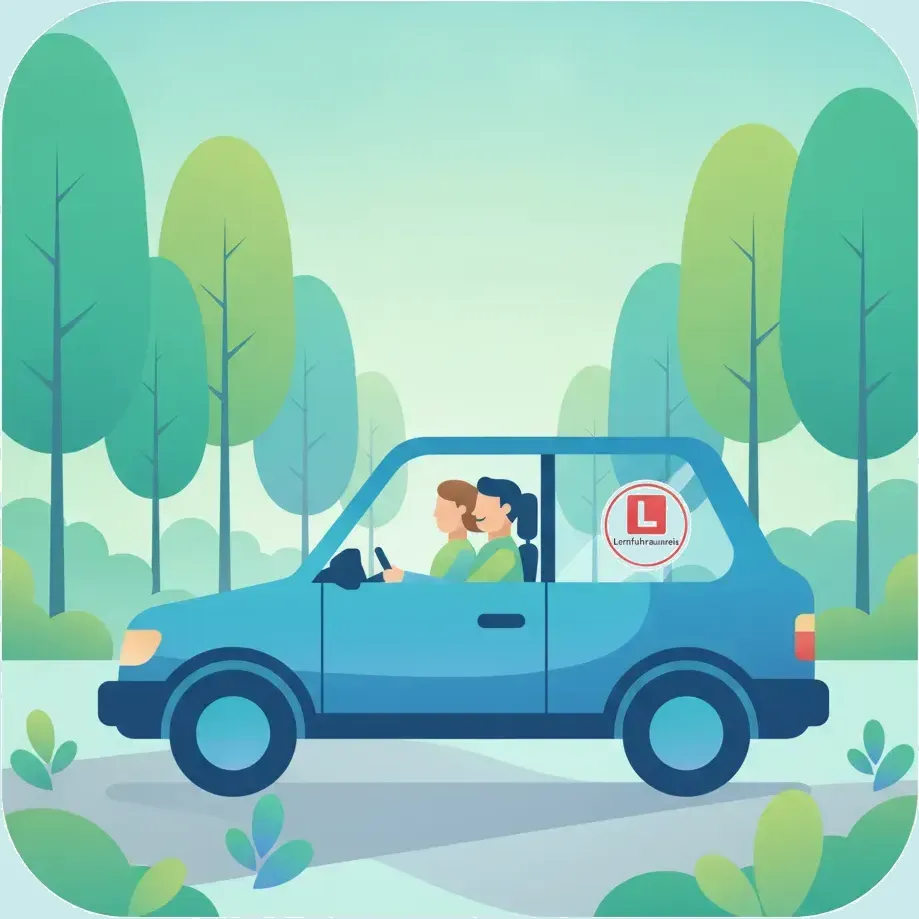
Swiss Driving Theory BSwiss Category B, Learner Permit, Examination and Driver Responsibility
View lesson
Motorway Driving: Lane Discipline, Overtaking, and Following Distances lesson image

Motorway Driving: Lane Discipline, Overtaking, and Following Distances

Motorway driving requires constant concentration due to high speeds. This lesson emphasizes the importance of staying in the right-hand lane unless overtaking and the specific restrictions on lorry overtaking in Switzerland. It reinforces the need for a following distance of at least four seconds to compensate for the vehicle's long stopping distance and provides guidance on safely merging and exiting.

Swiss Truck Driving Theory (C/C1)Rural Roads, Mountain Roads, Motorways, Tunnels, Weather and Long-Distance Risks
View lesson

Swiss Category M Moped Rules, Speed Limits, and Rider Responsibilities

Master the essential rules for Swiss Category M licence holders, including strict speed (30 km/h) and power (500 W) limits, helmet mandates, and learner permit (Lernfahrausweis) regulations. Understand vehicle classifications and legal requirements for safe operation.
Category Mmoped rulesspeed limitshelmetLernfahrausweisSwiss driving theorylegal requirements
Speed Limits for Small Vehicles in Different Environments lesson image

Speed Limits for Small Vehicles in Different Environments

This lesson details the maximum legal speed limits applicable to Category M vehicles in Switzerland. It explains how to identify speed limits through signage and differentiates between built-up areas, rural roads, and motorways where permitted. The content stresses that the legal limit is a maximum, and riders must always adapt their speed to traffic, weather, and road conditions.

Swiss Driving Theory MSpeed, Braking, Following Distance, and Vehicle Control
View lesson
Legal Entitlements and the Lernfahrausweis lesson image

Legal Entitlements and the Lernfahrausweis

This lesson focuses on the Lernfahrausweis, the Swiss provisional permit required for learning to ride a small powered vehicle. It explains the application process, minimum age requirements, and the specific rules and limitations that apply to a learner rider. Learners will understand the legal framework that governs the learning phase before they can obtain their full driving license.
Swiss Driving Theory MSwiss Category M Context and First-Rider Responsibility
View lesson
Protective Gear: Helmets, Clothing, and Visibility Accessories lesson image

Protective Gear: Helmets, Clothing, and Visibility Accessories

This lesson details the types and functions of personal protective equipment (PPE) for riders. It explains Swiss legal requirements for helmets and the safety standards to look for. The content also covers the benefits of wearing protective jackets, pants, gloves, and footwear to guard against impact and abrasion injuries.
Swiss Driving Theory MWeather, Road Surfaces, Protective Equipment, and Vehicle Safety
View lesson
Essential Road Signs for Small Vehicle Riders lesson image

Essential Road Signs for Small Vehicle Riders

This lesson introduces the fundamental traffic signs that directly impact small vehicle riders. It covers the classification of signs into regulatory, warning, and mandatory categories, explaining how their shape and color indicate their function. Learners will be able to recognize and correctly interpret speed limits, priority signs, and other key information vital for safe navigation.
Swiss Driving Theory MSwiss Signs, Signals, Markings, and Priority Rules
View lesson
Special Zones: Tempo-30, School Zones, and Residential Areas lesson image

Special Zones: Tempo-30, School Zones, and Residential Areas

This lesson covers areas with special traffic regulations designed to protect vulnerable road users. Learners will understand the rules and reduced speed limits applicable in Tempo-30 zones, residential areas, and around schools. The content emphasizes the need for heightened awareness and a defensive riding style in these designated zones.
Swiss Driving Theory MSwiss Signs, Signals, Markings, and Priority Rules
View lesson
Legal Consequences of Traffic Violations and Accidents lesson image

Legal Consequences of Traffic Violations and Accidents

This lesson outlines the legal repercussions for breaking traffic laws in Switzerland. It details the system of fines and administrative measures, including the potential for license withdrawal for serious offenses. The content also explains a rider's legal duties after being involved in an accident, including reporting and insurance obligations.
Swiss Driving Theory MRisk Behaviour, Legal Consequences, Breakdowns, and Emergencies
View lesson
Snow, Ice, and Winter Riding Safety Measures lesson image

Snow, Ice, and Winter Riding Safety Measures

This lesson focuses on the significant risks of riding in winter conditions. It explains how to spot potential icy patches, such as black ice, and the need for extremely gentle and deliberate control inputs. The importance of proper winter tyres and dressing warmly to prevent distraction and fatigue from the cold is also emphasized.
Swiss Driving Theory MWeather, Road Surfaces, Protective Equipment, and Vehicle Safety
View lesson
First-Rider Responsibilities and Safe Habits lesson image

First-Rider Responsibilities and Safe Habits

This lesson details the fundamental responsibilities and safe habits every new rider must adopt. It covers legal obligations such as wearing a helmet and using lights, as well as the importance of developing a defensive mindset. The content emphasizes anticipating potential hazards and making responsible decisions to ensure safety for oneself and other road users.
Swiss Driving Theory MSwiss Category M Context and First-Rider Responsibility
View lesson
Vehicle Visibility: Lights, Reflectors, and Clothing lesson image

Vehicle Visibility: Lights, Reflectors, and Clothing

This lesson focuses on the concept of conspicuity, or how easily a rider can be seen by others. It explains the legal requirements for vehicle lights and reflectors in Switzerland and the benefits of wearing bright or reflective clothing. Learners will understand how to maximize their visibility during the day, at night, and in poor weather conditions.
Swiss Driving Theory MObservation, Visibility, Positioning, and Communication
View lesson
Traffic Lights, Pedestrian Signals, and Tram Signals lesson image

Traffic Lights, Pedestrian Signals, and Tram Signals

This lesson details the operation of traffic light systems in Switzerland. It explains the sequence and meaning of red, amber, and green lights, including flashing amber signals. The content also covers specific signals for pedestrians and the priority rules associated with tram signals to ensure safe interaction at controlled intersections.

Swiss Driving Theory MSwiss Signs, Signals, Markings, and Priority Rules
View lesson

Frequently asked questions about Comparing Category M with Other Licence Categories

Find clear answers to common questions learners have about Comparing Category M with Other Licence Categories. Learn how the lesson is structured, which driving theory objectives it supports, and how it fits into the overall learning path of units and curriculum progression in Switzerland. These explanations help you understand key concepts, lesson flow, and exam focused study goals.

What is the primary difference between Category M and Category A1?

Category M is specifically for mopeds and light motorized bicycles with restricted power and speed, typically up to 45 km/h. Category A1 allows for more powerful motorcycles up to 125cc, requiring a different test and higher minimum age.

Does my e-bike fall under Category M?

It depends on the wattage and speed of your e-bike. While some pedal-assisted e-bikes are exempt, faster e-bikes capable of speeds up to 45 km/h fall under Category M requirements.

Are there speed limits specific to Category M vehicles?

Yes, vehicles in Category M are generally restricted to a maximum design speed of 45 km/h. You must adhere to all general Swiss traffic speed limits, even if your vehicle's top speed is lower.

Can I drive a standard motorcycle with a Category M license?

No, a Category M license does not authorize you to ride standard motorcycles. You must hold the appropriate Category A1 or A license to operate vehicles outside of the moped classification.

Ready to Target Specific Weaknesses in Your Swiss Driving Theory Knowledge?

Pinpoint specific Swiss traffic rules, road signs, or driving situations you need to master. Use the practice search to start a focused revision session now and build confidence for your official driving theory exam.

Search Practice Theory Questions

Continue your Swiss driving theory learning journey

Swiss road signsSwiss article topicsSearch Swiss road signsSwiss driving theory homeSwiss road sign categoriesSwiss driving theory topicsSearch Swiss theory articlesSwiss driving theory coursesSwiss Driving Theory B courseSwiss Driving Theory M courseSwiss Driving Theory D courseSwiss driving theory articlesSwiss driving theory practiceSwiss practice set categoriesSwiss driving licence proceduresSwiss Motorcycle Theory (A) courseSearch Swiss driving theory practiceSwiss driving theory terminology A–ZSwiss driving theory terms and glossarySwiss Truck Driving Theory (C/C1) courseSwiss Signs, Signals, Markings, and Priority Rules unit in Swiss Driving Theory MSwiss Category M Context and First-Rider Responsibility unit in Swiss Driving Theory MRoad Users, Core Behaviour Rules and Safe Communication unit in Swiss Driving Theory BSwiss D, D1, D1E & DE Scope and Professional Responsibility unit in Swiss Driving Theory DSwiss C, C1, C1E & CE Scope and Professional Context unit in Swiss Truck Driving Theory (C/C1)Passenger Vehicle Construction, Controls, and Pre-Trip Inspections unit in Swiss Driving Theory DMotorcycle Construction, Controls, Equipment and Safety Checks unit in Swiss Motorcycle Theory (A)Swiss Category B, Learner Permit, Examination and Driver Responsibility unit in Swiss Driving Theory BSwiss Motorcycle Categories, Licence Scope and Rider Responsibility unit in Swiss Motorcycle Theory (A)The AM-Style Course in the Swiss Context lesson in Swiss Category M Context and First-Rider ResponsibilityHeavy-Vehicle Dimensions, Masses, Axle Loads and Operating Limits unit in Swiss Truck Driving Theory (C/C1)Legal Entitlements and the Lernfahrausweis lesson in Swiss Category M Context and First-Rider ResponsibilityFirst-Rider Responsibilities and Safe Habits lesson in Swiss Category M Context and First-Rider ResponsibilityComparing Category M with Other Licence Categories lesson in Swiss Category M Context and First-Rider Responsibility