
This lesson provides a foundational understanding of the Category B driving licence in Switzerland. You will learn the legal definitions of the vehicles you are permitted to drive, including maximum authorized mass and specific rules for towing trailers.
Lesson content overview
Welcome to the Comprehensive Swiss Driving Theory Course for Category B License. This lesson serves as a foundational guide to understanding the specific parameters and legal boundaries of the Category B driving licence within Switzerland. Gaining a precise understanding of what vehicles you are permitted to operate, their maximum weight, passenger capacity, and towing allowances is crucial for legal compliance and safe driving on Swiss roads.
The Category B licence is the most common for private motor vehicles. It enables you to drive a wide range of cars and light vehicles, but it comes with distinct limitations designed to ensure road safety, vehicle controllability, and the protection of road infrastructure. This chapter will detail these essential definitions and restrictions, preparing you to operate your vehicle confidently and lawfully.
The Category B driving licence in Switzerland authorizes you to operate specific types of motor vehicles. At its core, it is designed for passenger cars and light commercial vehicles, providing the freedom to drive most typical private vehicles. Understanding this category means knowing both what is permitted and what is strictly prohibited without additional qualifications.
The primary purpose of licence categories is to regulate who may drive specific types of vehicles, balancing the need for mobility with paramount safety concerns. These classifications ensure that drivers possess the necessary skills and knowledge to control vehicles of varying sizes, weights, and complexities.
A Category B licence permits the holder to drive motor vehicles that meet two main criteria:
This definition covers most standard passenger cars, many sport utility vehicles (SUVs), and smaller vans or light trucks used for personal transport or light commercial purposes.
The term "passenger seats" specifically refers to seats designed for occupants other than the driver. So, a vehicle with 1 driver's seat and 8 passenger seats is permissible.
For the average driver, a Category B licence means you can:
Understanding these basic parameters prevents common misunderstandings, such as believing that a Category B licence allows you to drive any car or tow any trailer. Each limit is a strict legal requirement.
The Maximum Authorized Mass (MAM), often referred to as the Gross Vehicle Weight (GVW) in other contexts, is a critical concept for Category B licence holders. It represents the absolute maximum weight that a vehicle is legally allowed to be when fully loaded. This limit is set by the vehicle manufacturer and enforced by road traffic regulations.
The total permissible weight of a vehicle when it is fully loaded, including its own weight, fuel, fluids, driver, passengers, and all cargo. For Category B licences in Switzerland, this limit is 3,500 kg.
MAM includes every single item adding weight to the vehicle:
The sum of the curb weight and the maximum payload equals the MAM. It is crucial to check your vehicle's registration document (Fahrzeugausweis / Permis de circulation) for its exact MAM.
MAM limits are not arbitrary; they are established for several vital safety and operational reasons:
A frequent mistake is confusing the vehicle's curb weight with its MAM. A car might have a curb weight of 1,500 kg, but a MAM of 2,200 kg, meaning it can carry 700 kg of passengers and cargo. Always refer to the MAM specified in your vehicle's official documents.
Driving a vehicle that exceeds its Maximum Authorized Mass is a serious offence in Switzerland and can lead to significant fines, points on your licence, or even licence suspension. More critically, it dramatically increases the risk of an accident.
In addition to weight limits, Category B licences also impose clear restrictions on the number of passengers you may transport. This is a direct measure to ensure that vehicles are not overcrowded, maintaining safe operating conditions and allowing all occupants to be properly restrained.
For Category B licence holders, a motor vehicle may be operated if it is designed for the transport of passengers and has no more than 8 passenger seats, in addition to the driver's seat. This means the total number of individuals (driver included) that can be legally transported is nine.
Seats specifically designed and equipped for the safe transport of occupants other than the driver, typically featuring seat belts and appropriate ergonomic design.
This passenger limit is vital for:
Always verify the number of designated passenger seats in your vehicle's registration document if you are unsure.
Towing a trailer significantly alters a vehicle's handling, braking, and overall dynamics. The Swiss road traffic regulations, in conjunction with the Category B licence, define strict limits for towing to ensure safety. Exceeding these limits without the appropriate extended licence category can lead to severe penalties and dangerous situations.
There are two main scenarios for towing with a standard Category B licence:
Light Trailers (MAM up to 750 kg):
Heavier Trailers (MAM over 750 kg):
Always check the MAM specified on both your towing vehicle's registration document and the trailer's registration document. It's the stated maximum weight, not the actual current weight, that determines legal compliance for licence categories.
Let's consider an example:
Calculation: Car MAM (2,200 kg) + Caravan MAM (1,200 kg) = Combined MAM of 3,400 kg.
Since 3,400 kg is less than or equal to 3,500 kg, you would be permitted to tow this caravan with a Category B licence, provided the trailer has an appropriate braking system.
However, if your car had a MAM of 2,600 kg and the same 1,200 kg caravan, the combined MAM would be 3,800 kg (2,600 kg + 1,200 kg). In this case, 3,800 kg exceeds the 3,500 kg limit for Category B, and you would require an extended licence category (B+E) to tow this specific combination.
For those who need to tow heavier trailers or larger caravans that exceed the standard Category B limits, the Category B+E licence is required. This is an extension to your existing Category B licence, acknowledging the increased skill and responsibility needed for handling heavier trailer combinations.
With a Category B+E licence, you are authorized to tow trailers where:
An extended driving licence category in Switzerland that permits the holder of a Category B licence to tow heavier trailers, where the combined Maximum Authorized Mass of the vehicle and trailer exceeds 3,500 kg but is less than or equal to 4,250 kg, and the trailer's MAM does not exceed 3,500 kg.
To obtain a Category B+E licence in Switzerland, you must:
Scenario 1: You have a large SUV with a MAM of 2,500 kg. You wish to tow a caravan with a MAM of 1,800 kg.
Scenario 2: You drive a powerful car with a MAM of 2,000 kg. You need to tow a horse trailer with a MAM of 1,500 kg.
The B+E licence is essential for anyone regularly transporting large caravans, substantial boat trailers, or horse boxes. It ensures that drivers have demonstrated the necessary competence to manage the unique challenges of driving with a heavy trailer.
Adhering to the definitions and limits of your Category B licence is not merely a recommendation; it is a legal obligation under Swiss road traffic law. Violations can range from administrative fines to severe legal penalties, including licence suspension and criminal charges in cases of accidents.
| Rule | Applicability | Rationale |
|---|---|---|
| Vehicle MAM ≤ 3,500 kg | All motor vehicles operated with a Category B licence. | Ensures drivers can control the vehicle safely, aligns with braking and handling capabilities, prevents infrastructure damage. |
| Max 8 Passenger Seats (excl. driver) | Vehicles designed for passenger transport. | Guarantees adequate vehicle control, safety for occupants (seatbelt availability), and proper evacuation in emergencies. |
| Trailer MAM ≤ 750 kg (unrestricted) | When towing any trailer. | Allows for basic utility towing without significant impact on vehicle dynamics. |
| Trailer MAM > 750 kg, Combined MAM ≤ 3,500 kg | When towing a heavier trailer. | Prevents overloading, ensures braking performance and stability remain within safe limits for a Category B driver. |
| B+E for Combined MAM > 3,500 kg (up to 4,250 kg) | When towing larger trailers/caravans. | Requires additional training for handling significantly heavier trailer combinations, enhancing safety. |
Understanding and respecting these rules is not just about avoiding penalties; it is fundamental to ensuring your safety and the safety of everyone else on the road.
Beyond the legal definitions, the practical implications of vehicle weight, passenger count, and towing affect how you should drive. Safe driving practices are paramount, especially when operating close to or at your licence's limits.
Wet or icy roads severely reduce braking efficiency. Exceeding weight limits under such conditions becomes exponentially more hazardous, increasing the risk of skidding and loss of control. Always adjust your driving to account for vehicle load and prevailing weather.
The Category B driving licence is fundamental for operating passenger cars and light commercial vehicles in Switzerland. A thorough understanding of its limitations is crucial for road safety and legal compliance.
Key takeaways include:
By internalizing these definitions and consistently adhering to the rules, you will operate your vehicle responsibly and contribute to safer roads for everyone as part of the Comprehensive Swiss Driving Theory Course for Category B License.
The Swiss Category B licence covers vehicles up to 3,500 kg MAM with maximum 9 occupants. Towing rules distinguish between light trailers (under 750 kg MAM, no combined limit) and heavier trailers where combined vehicle-trailer MAM must not exceed 3,500 kg. For combined weights above 3,500 kg up to 4,250 kg, the Category B+E extension is required, which involves a practical driving test. Exceeding these limits constitutes a serious traffic offence in Switzerland with significant fines and potential licence suspension, while also creating dangerous safety hazards including extended braking distances and reduced vehicle control.
A short set of high-value points that capture the most important learning from this lesson.
Category B licence in Switzerland permits driving vehicles with a Maximum Authorized Mass (MAM) of up to 3,500 kg, including the vehicle itself, fuel, passengers, and cargo
The passenger limit for Category B is 8 seats in addition to the driver's seat, meaning a maximum of 9 occupants total
Trailers with MAM up to 750 kg can be towed without restriction on combined vehicle-trailer weight
For trailers exceeding 750 kg MAM, the combined MAM of towing vehicle and trailer must not exceed 3,500 kg
Category B+E licence extends towing capabilities to combined MAM between 3,500 kg and 4,250 kg, requiring a practical driving test
Explore all units and lessons included in this driving theory course.
MAM includes all components: curb weight, fuel, driver, all passengers, cargo, and trailer nose weight when towing
Always verify vehicle and trailer MAM values in their respective Swiss registration documents (Fahrzeugausweis)
Trailers with MAM exceeding 750 kg must have a functional braking system by Swiss law
The combined MAM calculation is mandatory when towing heavier trailers, not just the vehicle's MAM alone
B+E requires a practical test only; no separate theory exam is needed once Category B is held
Confusing a vehicle's curb weight (empty weight) with its Maximum Authorized Mass (fully loaded limit)
Believing any trailer is legal as long as the car's MAM is under 3,500 kg, ignoring the combined MAM requirement
Towing a trailer over 750 kg without functional brakes, which is both illegal and dangerous
Carrying passengers in cargo areas not specifically designed and registered for passenger transport
Assuming that a standard Category B licence covers all towing scenarios when the combined weight exceeds 3,500 kg
Lesson content overview
A short set of high-value points that capture the most important learning from this lesson.
Category B licence in Switzerland permits driving vehicles with a Maximum Authorized Mass (MAM) of up to 3,500 kg, including the vehicle itself, fuel, passengers, and cargo
The passenger limit for Category B is 8 seats in addition to the driver's seat, meaning a maximum of 9 occupants total
Trailers with MAM up to 750 kg can be towed without restriction on combined vehicle-trailer weight
For trailers exceeding 750 kg MAM, the combined MAM of towing vehicle and trailer must not exceed 3,500 kg
Category B+E licence extends towing capabilities to combined MAM between 3,500 kg and 4,250 kg, requiring a practical driving test
Explore all units and lessons included in this driving theory course.
MAM includes all components: curb weight, fuel, driver, all passengers, cargo, and trailer nose weight when towing
Always verify vehicle and trailer MAM values in their respective Swiss registration documents (Fahrzeugausweis)
Trailers with MAM exceeding 750 kg must have a functional braking system by Swiss law
The combined MAM calculation is mandatory when towing heavier trailers, not just the vehicle's MAM alone
B+E requires a practical test only; no separate theory exam is needed once Category B is held
Confusing a vehicle's curb weight (empty weight) with its Maximum Authorized Mass (fully loaded limit)
Believing any trailer is legal as long as the car's MAM is under 3,500 kg, ignoring the combined MAM requirement
Towing a trailer over 750 kg without functional brakes, which is both illegal and dangerous
Carrying passengers in cargo areas not specifically designed and registered for passenger transport
Assuming that a standard Category B licence covers all towing scenarios when the combined weight exceeds 3,500 kg
Explore search topics learners often look for when studying Category B Definition and Limits. These topics reflect common questions about road rules, driving situations, safety guidance, and lesson level theory preparation for learners in Switzerland.
Browse additional driving theory lessons that cover connected traffic rules, road signs, and common driving situations related to this topic. Improve your understanding of how different rules interact across everyday traffic scenarios.
Understand the precise definition of the Swiss Category B driving licence, including Maximum Authorized Mass (MAM) limits, passenger seat restrictions, and detailed rules for towing trailers up to 750kg and beyond. Learn when the B+E extension is required for heavier towing combinations.

This lesson explores the correct use of seat belts, the installation of child restraints, and the importance of securing loads. It covers weight distribution guidelines, maximum load limits, and conditions for towing a trailer. Guidance is also provided for safely transporting animals and ensuring all loads are properly secured to prevent movement.
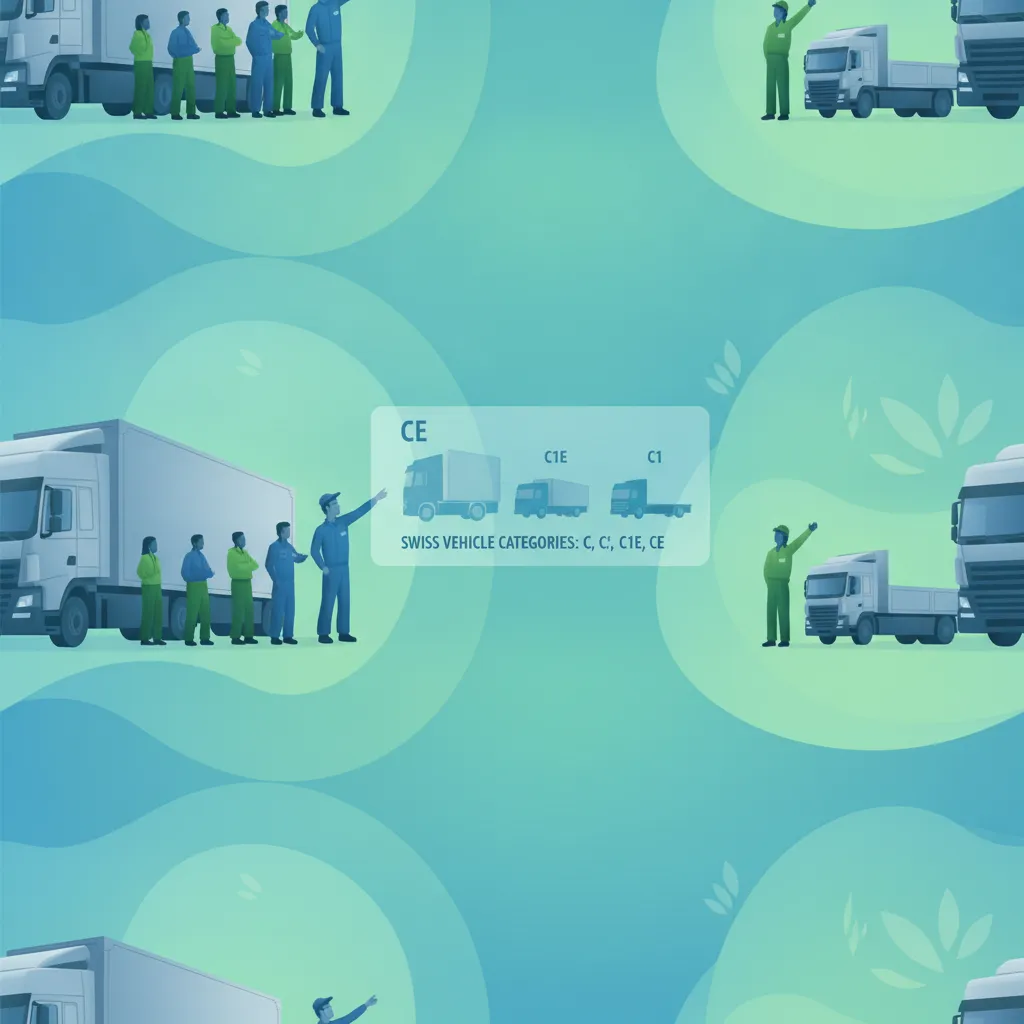
This lesson provides a clear definition of the Swiss heavy goods vehicle license categories. It details the weight limits and vehicle configurations for Category C (lorries over 3.5t) and C1 (lorries from 3.5t to 7.5t). Furthermore, it explains how categories CE and C1E grant the entitlement to tow heavy trailers, forming articulated vehicles or road trains, which is crucial for professional transport operations.

Gain insight into the two-stage examination process for the Swiss Category B licence, covering both the theory exam and the practical driving test. This lesson outlines the question format, passing score thresholds, and the nature of the practical assessment. Administrative aspects such as registration procedures, test locations, and retake policies are also addressed.
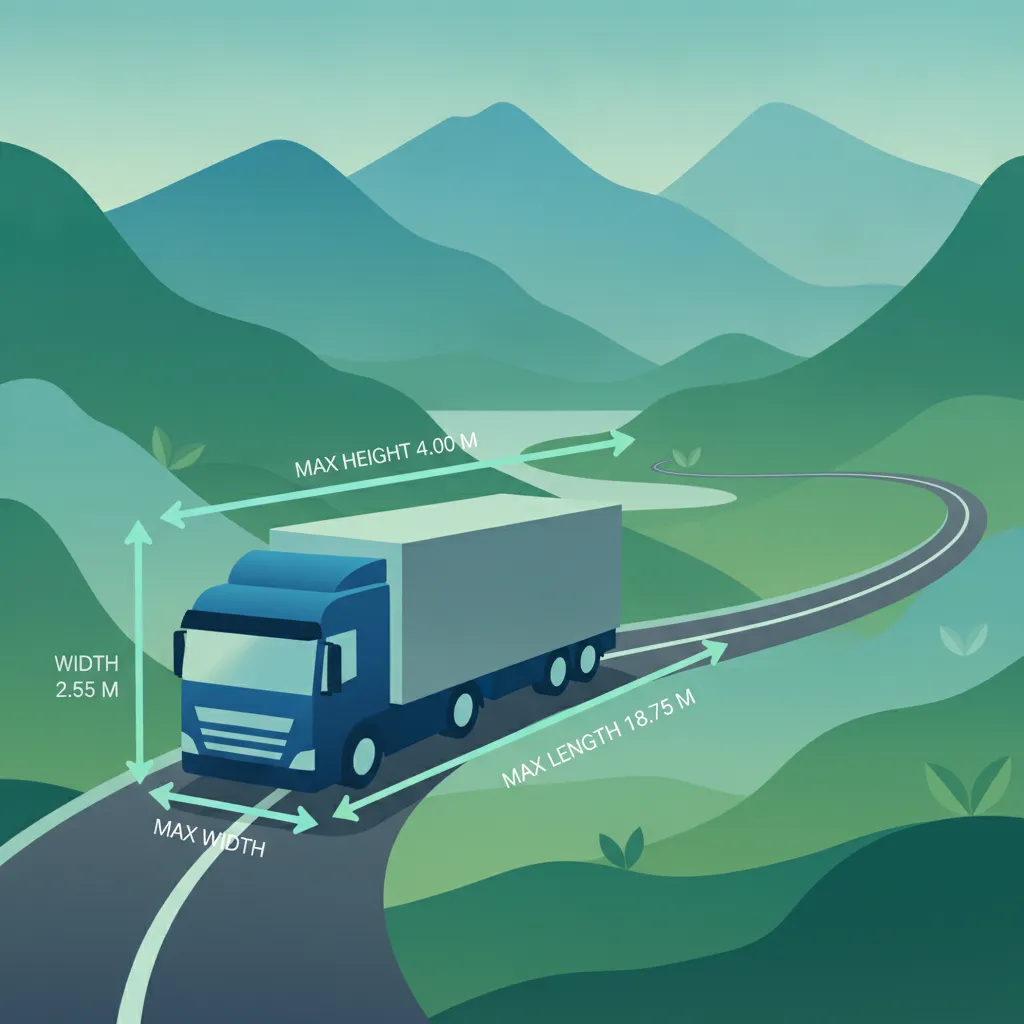
Swiss law strictly regulates the maximum dimensions of commercial vehicles to ensure they can safely navigate the infrastructure. This lesson specifies the standard limits for vehicle height (4.0m), width (2.55m), and length for various lorry and trailer combinations. Adhering to these dimensions is crucial for avoiding collisions with bridges, tunnels, and other structures, and for navigating narrow roads.
Motorway driving requires constant concentration due to high speeds. This lesson emphasizes the importance of staying in the right-hand lane unless overtaking and the specific restrictions on lorry overtaking in Switzerland. It reinforces the need for a following distance of at least four seconds to compensate for the vehicle's long stopping distance and provides guidance on safely merging and exiting.
Overloading is a serious offence with severe safety and legal ramifications. This lesson details how excess weight drastically increases braking distances, puts extreme stress on tyres leading to blowouts, and negatively affects steering and overall stability. Furthermore, it discusses the substantial fines, potential license withdrawal, and driver liability that result from violating Swiss weight regulations.
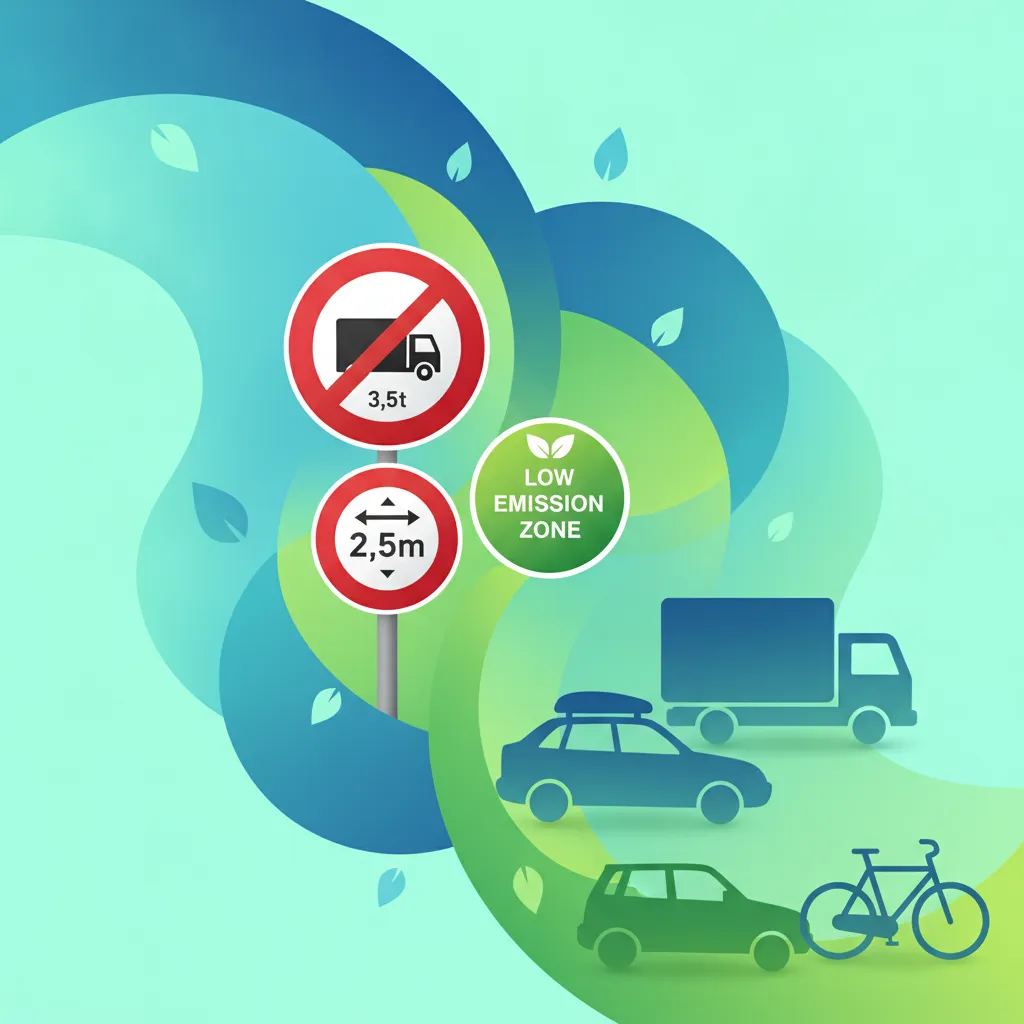
Many urban areas have restrictions to manage traffic and protect infrastructure. This lesson teaches drivers to identify and interpret traffic signs that prohibit access based on gross vehicle weight, axle load, height, or width. It also covers the growing prevalence of environmental or low-emission zones, which may restrict entry for older, more polluting vehicles.
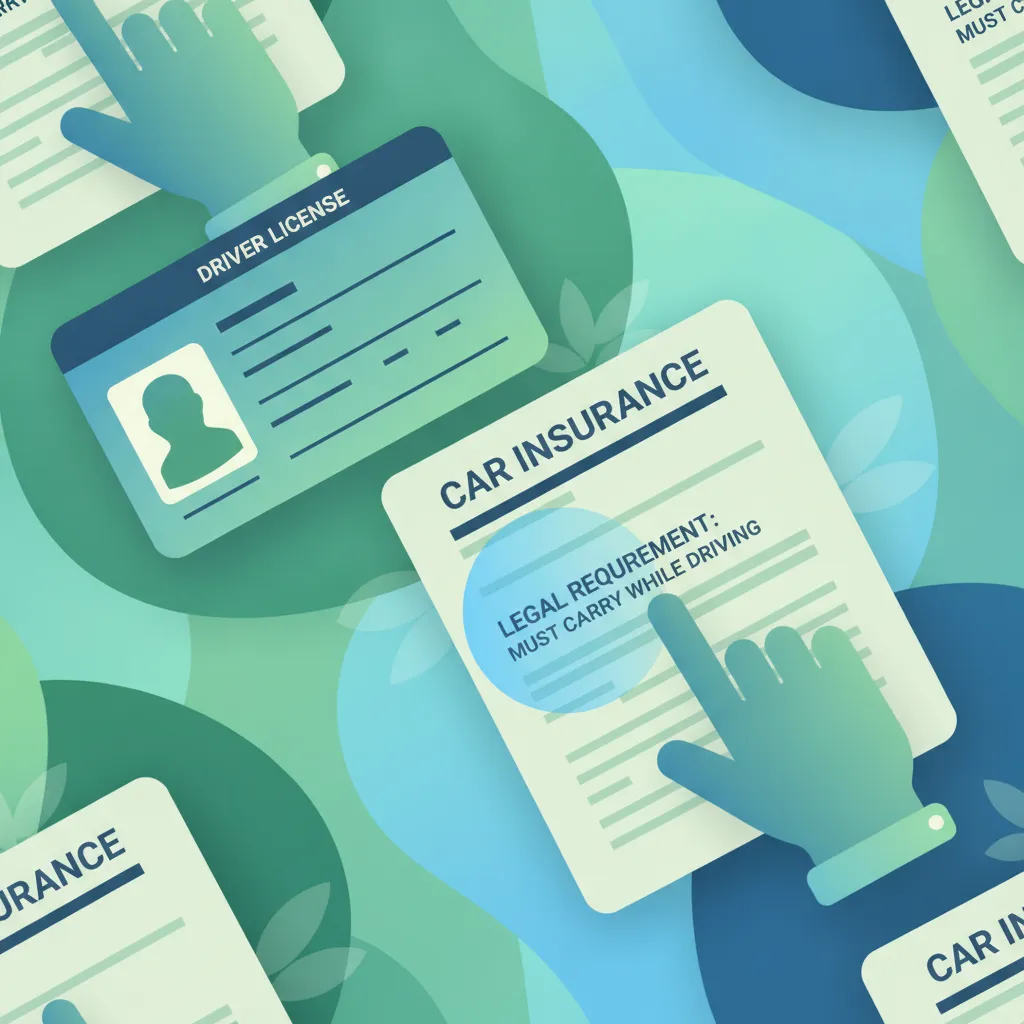
This lesson outlines the mandatory documentation required during any professional transport journey in Switzerland. Drivers must be able to present the vehicle registration document ('Fahrzeugausweis'), their valid driving license, and the OACP qualification card upon request. It also touches upon transport-specific documents like consignment notes, which are crucial for legal compliance during roadside inspections by authorities.
The manufacturer's identification plate is a critical source of information about a vehicle's technical limits. This lesson teaches drivers where to find this plate and how to interpret the data it contains, including maximum gross vehicle weight, gross combination weight, and maximum axle loads. This information is essential for ensuring that the vehicle is operated legally and within its designed safety parameters.
This lesson provides a comprehensive overview of the Swiss learner permit (Lernfahrausweis), detailing eligibility criteria and the role of the accompanying driver. It places emphasis on the legal responsibilities of both the learner and supervisor, including age and experience requirements. The lesson clarifies procedural steps and common misconceptions about supervised driving practice.
Explore the legal framework defining the Category B driving licence in Switzerland. This lesson covers vehicle classifications, Maximum Authorized Mass (MAM), passenger seat limitations, and towing regulations. Understand the legal implications and potential consequences of non-compliance for drivers.
Overloading is a serious offence with severe safety and legal ramifications. This lesson details how excess weight drastically increases braking distances, puts extreme stress on tyres leading to blowouts, and negatively affects steering and overall stability. Furthermore, it discusses the substantial fines, potential license withdrawal, and driver liability that result from violating Swiss weight regulations.
This lesson explores the correct use of seat belts, the installation of child restraints, and the importance of securing loads. It covers weight distribution guidelines, maximum load limits, and conditions for towing a trailer. Guidance is also provided for safely transporting animals and ensuring all loads are properly secured to prevent movement.
For professional drivers, traffic violations can have career-altering consequences beyond standard fines. This lesson details the heightened penalties for infringements such as speeding, overloading, insecure loads, and violations of driving time regulations. It outlines the process of warnings, license suspension or withdrawal, and potential criminal liability, emphasizing the importance of strict legal compliance in the transport industry.
This lesson provides a clear definition of the Swiss heavy goods vehicle license categories. It details the weight limits and vehicle configurations for Category C (lorries over 3.5t) and C1 (lorries from 3.5t to 7.5t). Furthermore, it explains how categories CE and C1E grant the entitlement to tow heavy trailers, forming articulated vehicles or road trains, which is crucial for professional transport operations.
Swiss law strictly regulates the maximum dimensions of commercial vehicles to ensure they can safely navigate the infrastructure. This lesson specifies the standard limits for vehicle height (4.0m), width (2.55m), and length for various lorry and trailer combinations. Adhering to these dimensions is crucial for avoiding collisions with bridges, tunnels, and other structures, and for navigating narrow roads.
This lesson emphasizes the broad responsibilities of holding a driver's licence in Switzerland, including adherence to traffic laws and maintaining vehicle roadworthiness. It covers legal obligations related to insurance, registration, and reporting accidents, as well as the consequences of violations. The content reinforces the duty of care drivers owe to all other road users.
Transporting loads that are wider, longer, taller, or heavier than standard regulations allow requires special authorization. This lesson explains the concept of exceptional transport and the legal requirement to obtain a special permit from the relevant cantonal authorities. It highlights that such operations require careful route planning, often mandating specific times of travel and sometimes the use of escort vehicles.

This lesson explains the Swiss penalty points system, detailing how points are assigned for various traffic violations. You will understand the thresholds for point accumulation and the legal consequences, such as licence suspension. The content also covers fine structures and the administrative process for point assessment for all driver license types.
Motorway driving requires constant concentration due to high speeds. This lesson emphasizes the importance of staying in the right-hand lane unless overtaking and the specific restrictions on lorry overtaking in Switzerland. It reinforces the need for a following distance of at least four seconds to compensate for the vehicle's long stopping distance and provides guidance on safely merging and exiting.
Transporting children carries the highest level of responsibility. This lesson covers the specific legal requirements for school buses in Switzerland, including the use of special signs and warning lights. It details the safe procedures for stopping, boarding, and alighting, and the driver's role in supervising children.
Find clear answers to common questions learners have about Category B Definition and Limits. Learn how the lesson is structured, which driving theory objectives it supports, and how it fits into the overall learning path of units and curriculum progression in Switzerland. These explanations help you understand key concepts, lesson flow, and exam focused study goals.
In Switzerland, Category B allows you to drive motor vehicles with a total authorized mass not exceeding 3,500 kg and which are designed and constructed for the carriage of no more than eight passengers in addition to the driver.
You may tow a trailer with a maximum authorized mass not exceeding 750 kg. If the trailer exceeds 750 kg, the combined authorized mass of the car and the trailer must not exceed 3,500 kg.
It covers campers and motorhomes provided they do not exceed the 3,500 kg maximum authorized mass limit. If the vehicle is heavier, you would require a different category of driving licence.
Yes, a Category B vehicle must be designed and constructed to carry no more than eight passengers plus the driver, making a total capacity of nine people.
Pinpoint specific Swiss traffic rules, road signs, or driving situations you need to master. Use the practice search to start a focused revision session now and build confidence for your official driving theory exam.