
This lesson guides you through the legal requirements for your Lernfahrausweis, the essential provisional permit for riding mopeds in Switzerland. Understanding these regulations is your first step toward responsible riding and fulfilling the administrative requirements for the Category M driving exam. It builds the foundation for your training and ensures you operate legally within the Swiss traffic system.

Lesson content overview
Welcome to a crucial lesson within your Swiss Driving License Theory Course for Category M (Mopeds). This chapter provides a comprehensive understanding of the Lernfahrausweis, the essential provisional permit required for anyone learning to ride a small powered vehicle in Switzerland. We will delve into the legal framework, application procedures, and the specific operating conditions that apply to you as a learner rider. Mastering these regulations is fundamental for safe and compliant progression towards obtaining your full Category M driving license.
The journey to becoming a certified moped rider in Switzerland begins with the Lernfahrausweis. This legal document is more than just a piece of paper; it represents a temporary authorization that grants you the privilege to learn and practice riding a moped under specific, controlled conditions. It is a cornerstone of the Swiss licensing system, designed to ensure that new riders gain experience responsibly and safely.
A Lernfahrausweis is a learning permit issued by the cantonal road traffic office that legally entitles an individual to operate a specific vehicle category (in this case, Category M for mopeds and e-bikes) for the purpose of learning. This permit is not a full driving license but rather a provisional authorization. It comes with distinct limitations and requirements that are designed to protect both the learner and other road users during the initial learning phase.
This provisional permit is a critical step, enabling you to practice real-world riding scenarios under supervision. It bridges the gap between theoretical knowledge and practical application, allowing you to develop essential vehicle control skills and situational awareness. Without a valid Lernfahrausweis, any attempt to learn riding on public roads would be illegal and carry significant penalties.
The system of provisional permits, including the Lernfahrausweis, is built upon a fundamental dual objective: risk reduction and competence building. During the learning phase, new riders are naturally more prone to errors and lack the experience to handle complex traffic situations confidently. The restrictions imposed by the Lernfahrausweis directly address these challenges.
The Lernfahrausweis ensures that your initial riding experiences are structured and supervised, thereby minimizing the likelihood of accidents. This structured approach helps you gradually build the necessary skills and confidence required for independent riding.
By setting clear boundaries regarding age, supervision, speed, and vehicle type, the Lernfahrausweis system creates a controlled environment for skill development. This legal instrument ensures that all aspiring riders adhere to a standardized pathway, contributing to overall road safety and guaranteeing that individuals are adequately prepared before they can obtain their full driving license.
Before you can embark on the practical journey of learning to ride a moped, you must first establish your legal entitlement to apply for a Lernfahrausweis. This entitlement is determined by specific criteria set forth by Swiss traffic law, primarily focusing on your age and residency status. Meeting these prerequisites is the first mandatory step in the application process.
One of the most fundamental requirements for obtaining a Lernfahrausweis for Category M is meeting the minimum age threshold. This age requirement reflects a societal consensus on the cognitive and physical maturity generally needed to operate a motor vehicle safely. For Category M vehicles, which include mopeds and certain e-bikes, the minimum age is set at 14 years.
The earliest age at which an individual may apply for a Lernfahrausweis. For Category M, this is 14 years old.
It is crucial to note that this age requirement is specific to Category M. For other vehicle categories, such as Category A1 (light motorcycles), the minimum age is higher, typically 16 years. Aspiring riders must wait until their 14th birthday before they can legally submit their application for a Category M Lernfahrausweis. Any application submitted prematurely will be rejected.
In addition to age, your residency status in Switzerland plays a vital role in determining your eligibility for a Lernfahrausweis. The Swiss authorities require applicants to demonstrate a genuine connection to the country, ensuring that permit holders are subject to and familiar with Swiss traffic laws. To be legally entitled, you must have been a resident in Switzerland for a continuous period of at least six months.
This residency requirement means that temporary visitors or individuals on short-term stays are generally not eligible to obtain a Lernfahrausweis. Proof of residency, often in the form of official registration documents or utility bills, will be required during the application process. This measure helps to maintain the integrity of the licensing system and ensures that individuals learning to drive are genuinely integrated into the Swiss legal and social framework.
Once you have confirmed your eligibility based on age and residency, the next phase involves the formal application process for your Lernfahrausweis. This administrative procedure is standardized across Switzerland, though specific cantonal road traffic offices may have minor variations in their exact requirements or forms. Following these steps meticulously is essential for a smooth and successful application.
To apply for a Lernfahrausweis, you will need to gather several key documents that verify your identity, age, and residency. These documents are crucial for the cantonal road traffic office to confirm your eligibility and process your application legally.
Completed Application Form (Lernfahrgesuch): This official form must be accurately filled out. It can usually be downloaded from your cantonal road traffic office's website or obtained directly from their counter.
Proof of Identity: A valid Swiss passport or identity card. Foreign nationals will require their passport and valid residence permit.
Proof of Residence: Documents such as a registration certificate from your local municipality (Wohnsitzbestätigung) or recent utility bills bearing your name and address can serve as proof. This confirms you meet the six-month residency requirement.
Passport-Sized Photo: A recent, high-quality photograph meeting biometric standards for official documents.
Eye Test Certificate: A certificate from an authorized optician, confirming your eyesight meets the required standards for driving. This certificate typically has a limited validity period, so ensure it is current.
Always check the specific requirements of your cantonal road traffic office before visiting. Missing or incorrect documentation is a common reason for application delays or rejections.
The submission of your application and accompanying documents must be done at your local Cantonal Road Traffic Office (Strassenverkehrsamt). This is the official authority responsible for issuing driving permits and licenses in your canton. You will typically need to visit in person to verify your identity and submit all paperwork.
During your visit, a clerk will review your documents to ensure everything is in order. It's advisable to make an appointment if possible, to minimize waiting times. Once your application is accepted, it will proceed to the processing stage. The duration of this processing can vary depending on the canton and current workload.
An official fee is associated with the application for a Lernfahrausweis. This fee covers the administrative costs of processing your application and issuing the permit.
While an example fee might be around CHF 30, it is essential to verify the exact amount with your specific cantonal road traffic office, as fees can vary slightly by canton and may be subject to change. Payment is usually required at the time of submission. Processing times can range from a few days to several weeks, so it's wise to apply well in advance of when you wish to begin your practical learning.
Once you have successfully obtained your Lernfahrausweis, you are legally authorized to begin practical riding practice. However, this authorization comes with a strict set of rules and restrictions. These conditions are paramount for ensuring your safety, the safety of others, and your compliance with Swiss traffic law during the learning phase. Failing to adhere to any of these regulations can lead to severe consequences, including fines and the revocation of your Lernfahrausweis.
One of the most critical rules for Lernfahrausweis holders is the supervision requirement. As a learner, you are not permitted to ride a moped alone on public roads. You must always be accompanied by a qualified supervising adult. This adult serves as your guide and ensures your safety and adherence to traffic rules.
The supervising adult must meet specific criteria:
Riding alone without a qualified supervisor is a serious violation of the Lernfahrausweis conditions. This can result in the immediate revocation of your permit and significant legal penalties.
The rationale behind this rule is straightforward: immediate corrective feedback and safety oversight. A supervisor can point out errors, anticipate hazards, and provide real-time guidance, which is invaluable for developing safe riding habits.
Another fundamental restriction for Category M learners is the speed limitation. Regardless of the posted speed limit on the road you are traveling on, you, as a learner with a Lernfahrausweis, must not exceed a maximum speed of 45 km/h. This rule applies uniformly across all road types where Category M vehicles are permitted.
The maximum speed of 45 km/h that a learner with a Lernfahrausweis for Category M may not exceed, irrespective of the general road speed limits.
This strict speed cap is designed to reduce accident severity and provide learners with more time to react to unexpected situations. At lower speeds, the kinetic energy of the vehicle is significantly reduced, leading to shorter stopping distances and allowing you to focus on vehicle handling and traffic observation rather than managing high speeds. It also minimizes the risk associated with less experienced riders struggling with quick decision-making.
To further enhance safety, particularly concerning visibility and traffic conditions, temporal restrictions are placed on when learning practice can occur. As a holder of a Lernfahrausweis for Category M, you are permitted to practice riding only between the hours of 7:00 AM and 10:00 PM.
Learning to ride a moped with a Lernfahrausweis is strictly prohibited between 10:00 PM and 7:00 AM.
This rule effectively prohibits night practice. The reasoning is clear: reduced visibility during nighttime hours significantly increases the risk for novice riders who are still developing their perception and judgment skills. Practicing during daylight or well-lit evening conditions ensures that you and your supervisor have optimal visibility, allowing for safer observation of traffic and road conditions.
The type of vehicle you can use for learning is also subject to specific vehicle restrictions. These limits ensure that the power and capabilities of the moped or e-bike align with the skill level of a beginner rider, preventing the use of vehicles that might be too powerful or complex to control safely during the initial learning phase.
For mopeds, the engine capacity must not exceed 500 cubic centimeters (cc). For electric bikes (e-bikes) classified under Category M, the electric motor power must not exceed 500 Watts (W).
A rule stating that only mopeds with an engine capacity of ≤500 cc or e-bikes with an electric motor power of ≤500 W may be used by a learner with a Lernfahrausweis for Category M.
Using a vehicle that exceeds these technical specifications constitutes a legal violation. This rule directly relates to the safety principle of matching vehicle performance to rider competence, thereby mitigating the risk of loss of control and accidents. Always verify the technical data of any moped or e-bike you intend to use for practice against its registration documents.
Learning to ride a moped involves adapting to various environmental and traffic conditions. While the core rules of the Lernfahrausweis remain constant, your approach and vigilance must change based on the specific scenario. Understanding these contextual variations is crucial for safe and responsible learning.
Weather and light conditions significantly impact visibility and road grip, posing additional challenges for learners.
The type of road you are practicing on also dictates specific behaviors and restrictions.
As a moped learner, you must exercise extreme caution and demonstrate respectful behavior when interacting with vulnerable road users such as pedestrians and cyclists.
Your ability to safely interact with these vulnerable groups is a key indicator of your readiness for independent riding and is a fundamental aspect of responsible road use.
Non-compliance with the rules governing the Lernfahrausweis can lead to serious consequences, not only jeopardizing your safety but also your ability to obtain a full Category M license. It is crucial to be aware of common violations and their potential repercussions.
One of the most frequent and serious violations is a learner riding a moped without a qualified supervising adult.
Failing to adhere to the maximum speed of 45 km/h is another common infringement.
Riding a moped with a Lernfahrausweis before 7:00 AM or after 10:00 PM is strictly prohibited.
The technical specifications for learning vehicles are precise and must be respected.
The rules and restrictions associated with the Lernfahrausweis are not arbitrary. They are carefully designed to create a safe and effective learning environment. Adhering to these regulations is paramount for several reasons:
By internalizing and consistently applying these regulations, you are not just passing a test; you are cultivating the disciplined and safety-conscious mindset essential for becoming a responsible and skilled moped rider in Switzerland.
The Swiss Lernfahrausweis for Category M is a mandatory provisional permit authorizing supervised practice on mopeds and e-bikes, obtainable at age 14 with six months Swiss residency. Key restrictions include mandatory supervision by a licensed adult aged 25+, a strict 45 km/h speed cap regardless of road limits, permitted hours of 7:00 AM to 10:00 PM, and vehicle power limits of 500 cc or 500 W. Common violations include riding unsupervised, exceeding speed limits, practicing outside permitted hours, and using overpowered vehicles, each carrying serious penalties including permit revocation and fines. Proper adherence builds the foundation for safe riding and smooth progression to a full Category M license.
A short set of high-value points that capture the most important learning from this lesson.
The Lernfahrausweis is a provisional permit for learning to ride Category M mopeds and e-bikes in Switzerland, required before any public road practice.
You must be at least 14 years old and have resided in Switzerland for at least six continuous months to be legally entitled to apply.
A qualified supervisor must be at least 25 years old, hold a valid Category M license, and be seated beside you during all practice sessions.
Learner riders are prohibited from motorways and expressways regardless of circumstances.
Using an overpowered vehicle (exceeding 500 cc or 500 W) constitutes a serious legal violation during the learning phase.
Explore all units and lessons included in this driving theory course.
Minimum age is 14 years; residency requirement is six continuous months in Switzerland.
Speed limit for learners is a hard cap of 45 km/h, regardless of posted road limits.
Permitted learning hours are strictly 7:00 AM to 10:00 PM only.
Supervising adult must be 25+ and hold a valid Category M or higher license.
Required documents: completed Lernfahrgesuch, proof of identity, proof of residence, passport photo, and current eye test certificate.
Assuming you can practice unsupervised once you have your Lernfahrausweis, which risks immediate permit revocation.
Believing the 45 km/h limit applies only where posted, when in fact it is absolute for all learner riders.
Submitting an application with missing or expired documents, causing delays or rejection.
Riding an e-bike that exceeds the 500 W power limit without checking technical specifications first.
Attempting to practice during nighttime hours (after 10:00 PM or before 7:00 AM) assuming lighter traffic justifies it.
Lesson content overview
A short set of high-value points that capture the most important learning from this lesson.
The Lernfahrausweis is a provisional permit for learning to ride Category M mopeds and e-bikes in Switzerland, required before any public road practice.
You must be at least 14 years old and have resided in Switzerland for at least six continuous months to be legally entitled to apply.
A qualified supervisor must be at least 25 years old, hold a valid Category M license, and be seated beside you during all practice sessions.
Learner riders are prohibited from motorways and expressways regardless of circumstances.
Using an overpowered vehicle (exceeding 500 cc or 500 W) constitutes a serious legal violation during the learning phase.
Explore all units and lessons included in this driving theory course.
Minimum age is 14 years; residency requirement is six continuous months in Switzerland.
Speed limit for learners is a hard cap of 45 km/h, regardless of posted road limits.
Permitted learning hours are strictly 7:00 AM to 10:00 PM only.
Supervising adult must be 25+ and hold a valid Category M or higher license.
Required documents: completed Lernfahrgesuch, proof of identity, proof of residence, passport photo, and current eye test certificate.
Assuming you can practice unsupervised once you have your Lernfahrausweis, which risks immediate permit revocation.
Believing the 45 km/h limit applies only where posted, when in fact it is absolute for all learner riders.
Submitting an application with missing or expired documents, causing delays or rejection.
Riding an e-bike that exceeds the 500 W power limit without checking technical specifications first.
Attempting to practice during nighttime hours (after 10:00 PM or before 7:00 AM) assuming lighter traffic justifies it.
Explore search topics learners often look for when studying Legal Entitlements and the Lernfahrausweis. These topics reflect common questions about road rules, driving situations, safety guidance, and lesson level theory preparation for learners in Switzerland.
Browse additional driving theory lessons that cover connected traffic rules, road signs, and common driving situations related to this topic. Improve your understanding of how different rules interact across everyday traffic scenarios.
Understand the mandatory rules and restrictions for Category M learners in Switzerland, including supervision, speed limits, and permitted riding hours. Ensure compliance with Swiss traffic law for safe learning.
This lesson provides a comprehensive overview of the Swiss learner permit (Lernfahrausweis), detailing eligibility criteria and the role of the accompanying driver. It places emphasis on the legal responsibilities of both the learner and supervisor, including age and experience requirements. The lesson clarifies procedural steps and common misconceptions about supervised driving practice.

This lesson defines the scope of Switzerland's Category M license by comparing it to other vehicle categories. It details the specific criteria for vehicles, such as maximum speed and engine power, that fall under this classification. Understanding these distinctions is crucial for knowing your legal entitlements and limitations as a Category M license holder.
This lesson explores the requirements for maintaining vehicle roadworthiness, including regular technical inspections (MFK) and compliance with emission standards. It outlines the inspection criteria, such as brake performance, steering condition, and lighting system functionality. Understanding these inspections helps ensure safety and compliance with Swiss regulations.
This lesson clarifies the AM-style course designation within the Swiss legal context. It outlines the core educational objectives, focusing on providing the theoretical knowledge necessary for safe moped and e-bike operation. The content explains the direct alignment with the official Category M examination, ensuring learners understand the pathway to obtaining their driving permission.
This lesson focuses specifically on the rules and techniques for navigating roundabouts. It clarifies that traffic already in the roundabout has priority and explains how to choose the correct lane on approach based on your intended exit. Proper signaling procedure for entering and, most importantly, exiting the roundabout is also detailed.
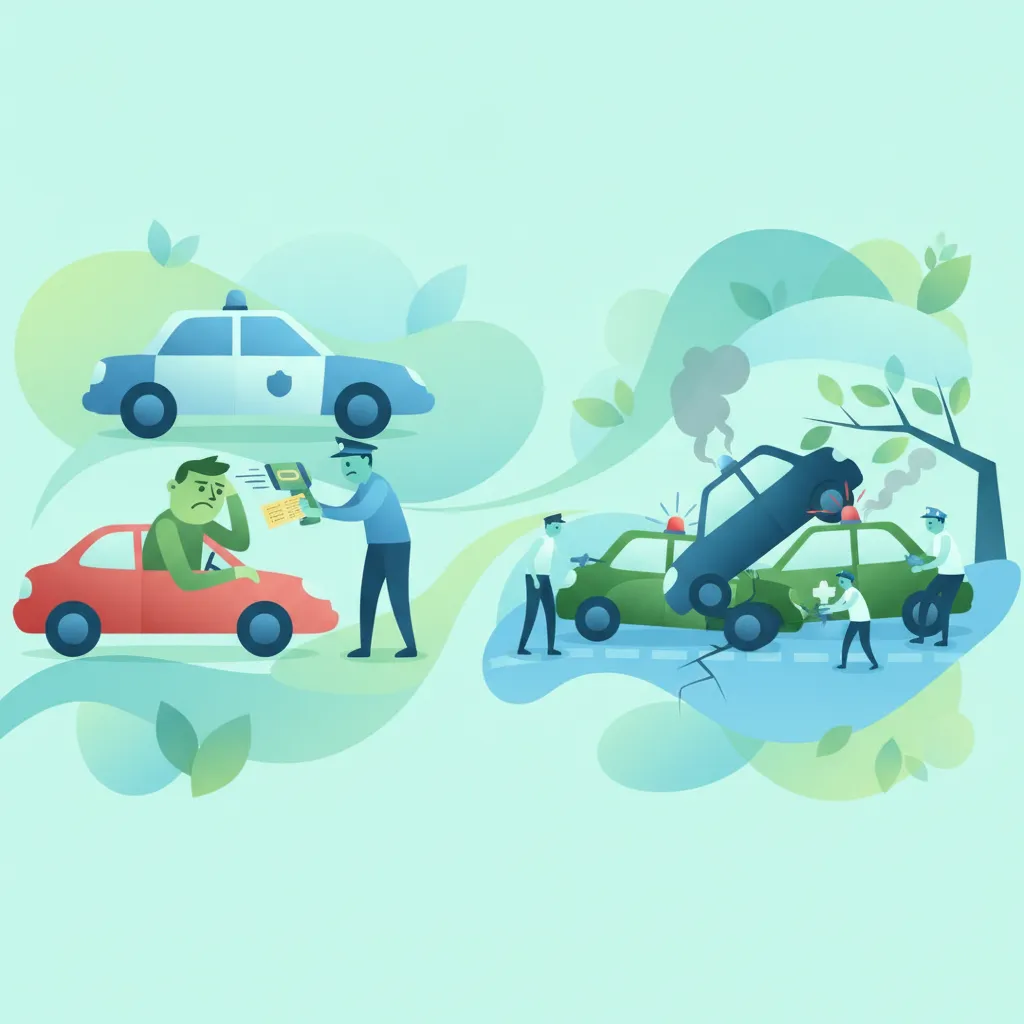
This lesson outlines the legal repercussions for breaking traffic laws in Switzerland. It details the system of fines and administrative measures, including the potential for license withdrawal for serious offenses. The content also explains a rider's legal duties after being involved in an accident, including reporting and insurance obligations.
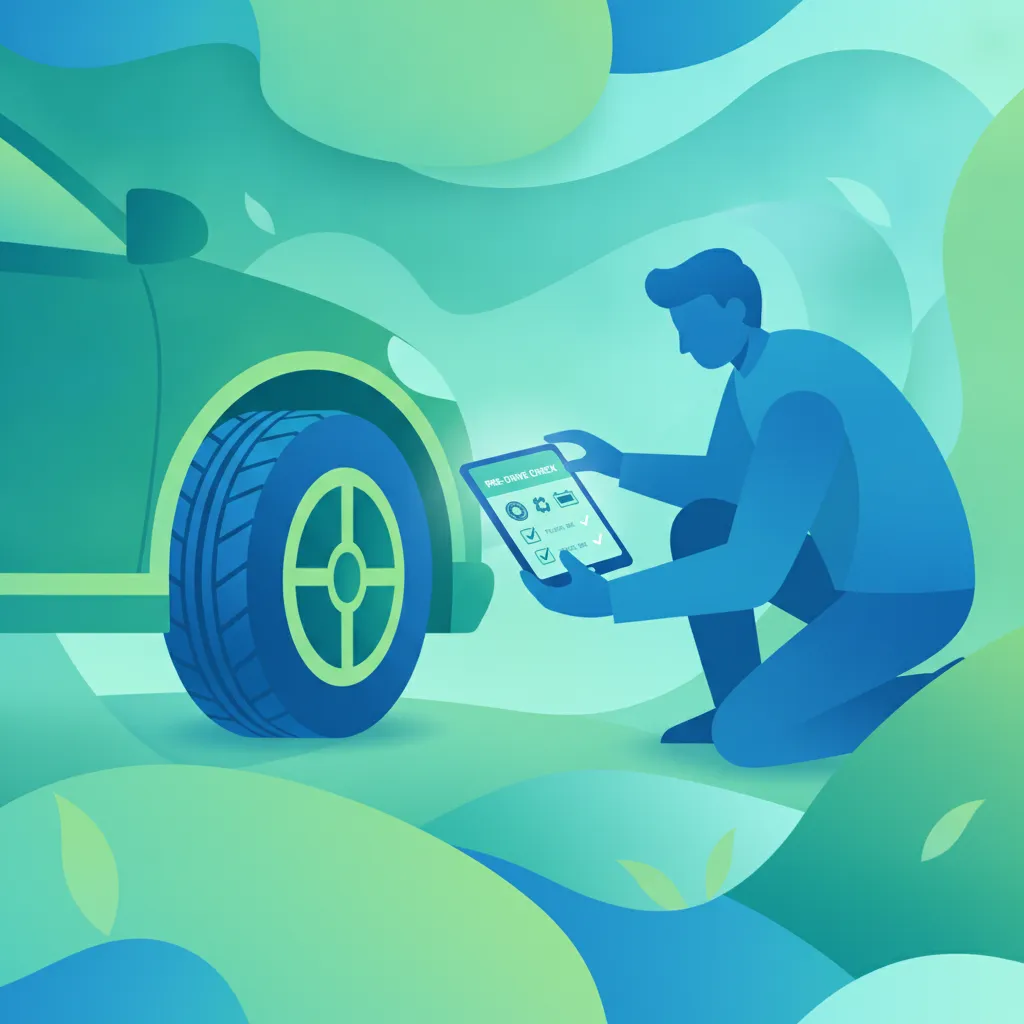
The driver is legally responsible for the roadworthiness of their vehicle at the start of and during every journey. This lesson outlines the formal process for reporting any identified defects to the transport manager or maintenance staff. It stresses the critical rule that a vehicle with a known safety-critical defect must not be driven until it has been professionally repaired and declared safe.
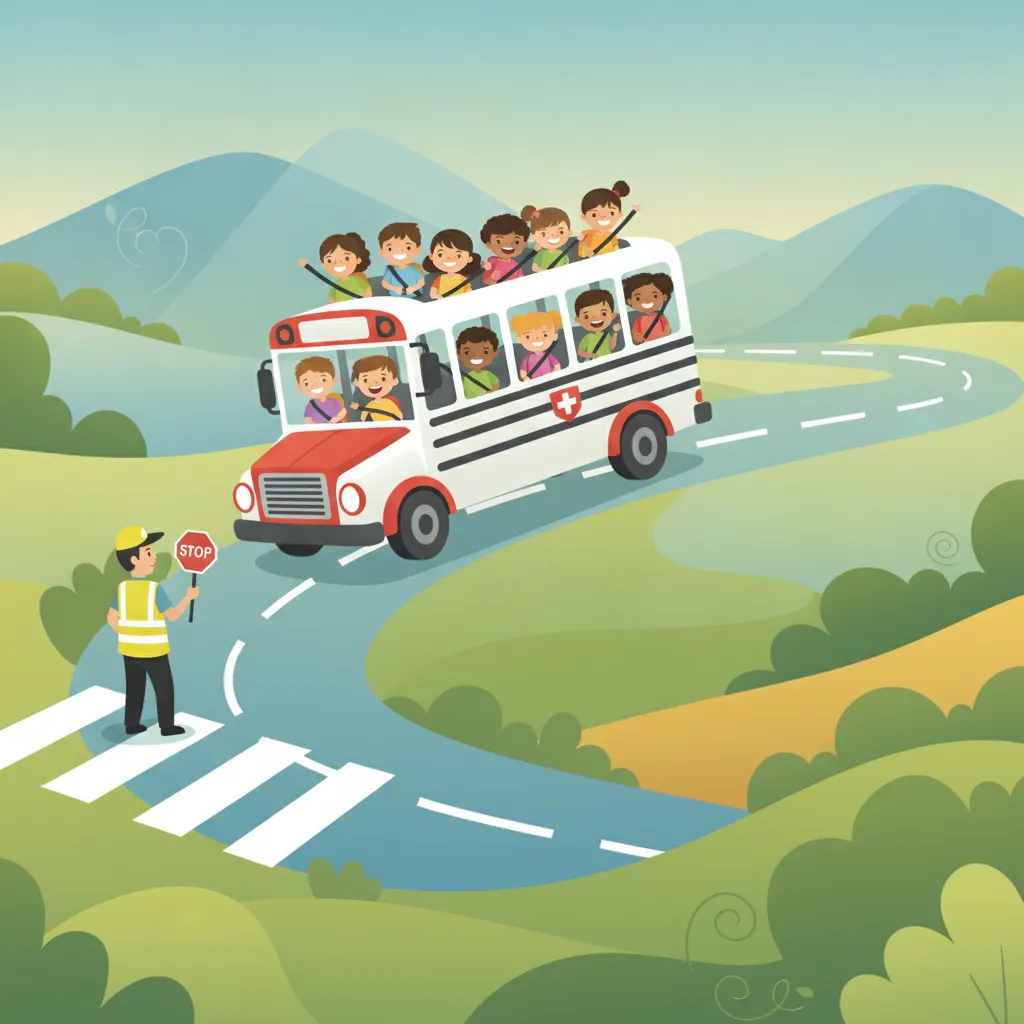
Transporting children carries the highest level of responsibility. This lesson covers the specific legal requirements for school buses in Switzerland, including the use of special signs and warning lights. It details the safe procedures for stopping, boarding, and alighting, and the driver's role in supervising children.

This lesson details the definition of Category B within the Swiss licensing system, focusing on vehicle types, weight capacities, and passenger limits. It clarifies the maximum authorized mass for Category B cars and the specific restrictions on towing trailers. You will learn the legal framework defining which vehicles you may operate and the boundaries of this license category.
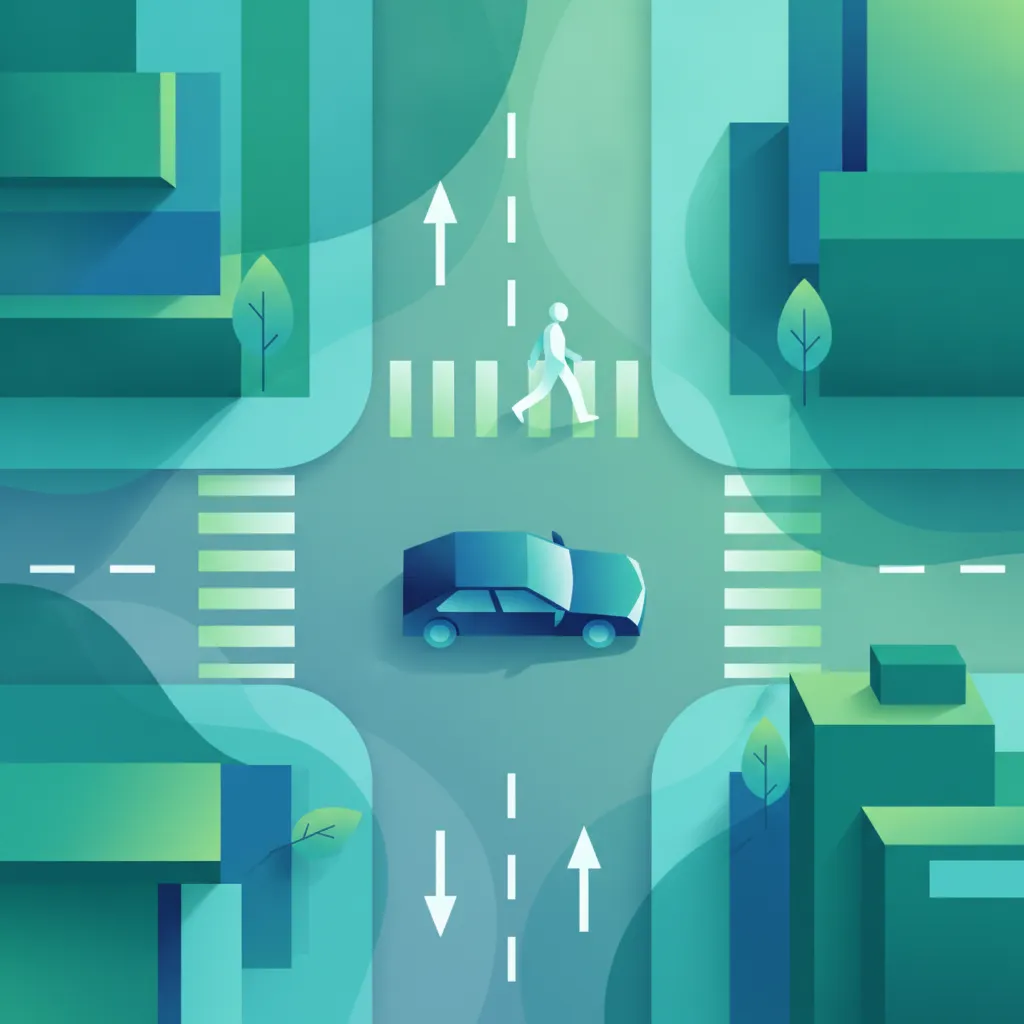
This lesson focuses on the variety of painted markings on Swiss roads and their legal significance. Learners will understand the difference between solid and broken lines, the rules for stop lines, and their obligations at a zebra crossing (Fußgängerstreifen). Correct interpretation of these markings is essential for proper lane positioning and safe interaction with all road users.
Explore the legal entitlements, minimum age requirements, and step-by-step application process for obtaining a Swiss Lernfahrausweis for Category M mopeds and e-bikes. Learn about residency rules.
This lesson defines the scope of Switzerland's Category M license by comparing it to other vehicle categories. It details the specific criteria for vehicles, such as maximum speed and engine power, that fall under this classification. Understanding these distinctions is crucial for knowing your legal entitlements and limitations as a Category M license holder.
This lesson details the types and functions of personal protective equipment (PPE) for riders. It explains Swiss legal requirements for helmets and the safety standards to look for. The content also covers the benefits of wearing protective jackets, pants, gloves, and footwear to guard against impact and abrasion injuries.

This lesson introduces the fundamental traffic signs that directly impact small vehicle riders. It covers the classification of signs into regulatory, warning, and mandatory categories, explaining how their shape and color indicate their function. Learners will be able to recognize and correctly interpret speed limits, priority signs, and other key information vital for safe navigation.
This lesson details the maximum legal speed limits applicable to Category M vehicles in Switzerland. It explains how to identify speed limits through signage and differentiates between built-up areas, rural roads, and motorways where permitted. The content stresses that the legal limit is a maximum, and riders must always adapt their speed to traffic, weather, and road conditions.
This lesson clarifies the AM-style course designation within the Swiss legal context. It outlines the core educational objectives, focusing on providing the theoretical knowledge necessary for safe moped and e-bike operation. The content explains the direct alignment with the official Category M examination, ensuring learners understand the pathway to obtaining their driving permission.

This lesson explains the legal age minimums for each motorcycle licence category and details the mandatory health assessments. It covers the required vision and hearing standards, along with the general medical fitness criteria stipulated by Swiss authorities. Learners will understand the process of obtaining a health certificate and the importance of meeting these prerequisites for safe and legal riding.
This lesson outlines the legal repercussions for breaking traffic laws in Switzerland. It details the system of fines and administrative measures, including the potential for license withdrawal for serious offenses. The content also explains a rider's legal duties after being involved in an accident, including reporting and insurance obligations.

This lesson emphasizes the rider's responsibility for ensuring their vehicle is in safe, roadworthy condition. It outlines a simple pre-ride inspection routine covering key safety components like tyres, brakes, lights, and controls. Regular maintenance is presented as a critical component of overall rider safety.

This lesson details the fundamental responsibilities and safe habits every new rider must adopt. It covers legal obligations such as wearing a helmet and using lights, as well as the importance of developing a defensive mindset. The content emphasizes anticipating potential hazards and making responsible decisions to ensure safety for oneself and other road users.
This lesson details the Swiss motorcycle licence categories, explaining the technical criteria that define A1 and A licences, such as engine capacity and power output. It outlines the statutory age thresholds and the progressive training path required for riders. Understanding this regulatory framework provides a clear foundation for what is legally permitted for each licence type.
Find clear answers to common questions learners have about Legal Entitlements and the Lernfahrausweis. Learn how the lesson is structured, which driving theory objectives it supports, and how it fits into the overall learning path of units and curriculum progression in Switzerland. These explanations help you understand key concepts, lesson flow, and exam focused study goals.
In Switzerland, you can apply for your Category M learner permit starting from the age of 14. Once you pass the theory test and receive your permit, you are legally entitled to drive mopeds.
It depends on the power and speed of the e-bike. For standard e-bikes with pedal assistance up to 25 km/h, you generally do not need a license if you are 16 or older. However, for faster speed e-bikes or mopeds falling under Category M, you must have the appropriate license and learner permit.
The validity period for your provisional license is regulated by the cantonal road traffic office. It is important to check the specific expiration date on your document and ensure you complete your theory and practical requirements within that timeframe to avoid re-application.
Yes, for Category M, unlike some higher categories that require a supervisor, you are generally allowed to ride independently once you hold the valid Lernfahrausweis, provided you follow all traffic rules and display the appropriate 'L' plate if required by your specific vehicle type or local regulation.
Pinpoint specific Swiss traffic rules, road signs, or driving situations you need to master. Use the practice search to start a focused revision session now and build confidence for your official driving theory exam.