
This unit focuses on the critical skills needed to protect vulnerable road users and navigate high-risk environments safely. Essential for Category D license holders, it covers pedestrians, cyclists, children, and specific rules for school transport, preparing you for complex urban and high-traffic situations on Swiss roads.
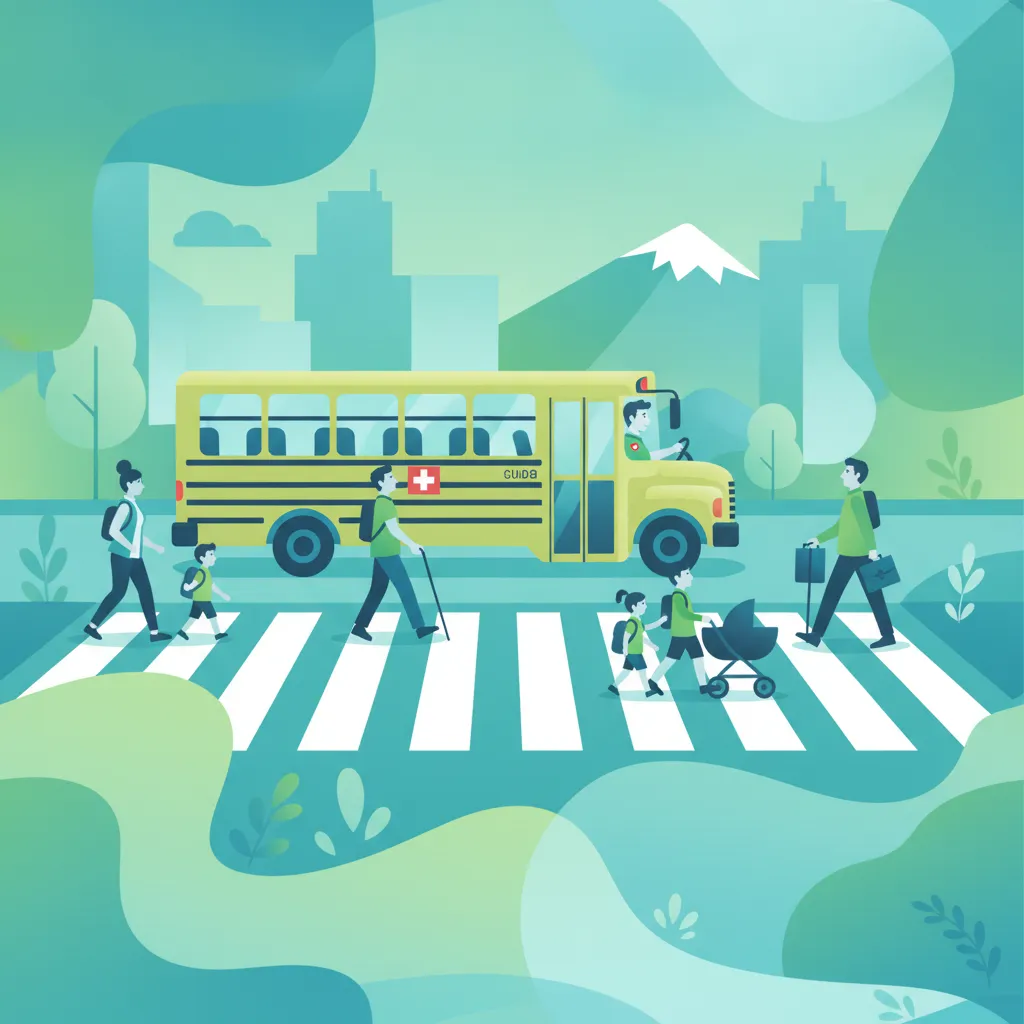
Browse all lessons that make up Protecting Vulnerable Road Users and Managing High-Risk Environments. Each lesson focuses on specific topics, learning objectives, and core concepts, helping you build essential knowledge and follow a clear, structured progression toward your study goals in Switzerland.
This lesson trains drivers to look beyond other vehicles and actively search for pedestrians, cyclists, and motorcyclists, especially those who may be distracted or unaware. It covers common behavioral patterns of different VRU groups. The goal is to see potential hazards developing early and create time and space to react safely.
A stopped bus creates a significant visual obstruction for other road users. This lesson focuses on the risk of pedestrians stepping out from in front of the bus and cyclists passing unexpectedly on either side. It reinforces the need for exhaustive mirror and blind spot checks before moving off to prevent tragic 'pull-away' accidents.
Transporting children carries the highest level of responsibility. This lesson covers the specific legal requirements for school buses in Switzerland, including the use of special signs and warning lights. It details the safe procedures for stopping, boarding, and alighting, and the driver's role in supervising children.
This lesson focuses on general driving safety in areas with a high concentration of children. It stresses the importance of significantly reducing speed, being prepared for unexpected events, and scanning for children between parked cars. The driver must exhibit maximum vigilance in these high-risk environments at all times.
Transport hubs are characterized by a dense mix of buses, taxis, private cars, and large numbers of distracted pedestrians with luggage. This lesson provides strategies for navigating these areas safely. Key topics include maintaining very low speeds, clear communication with other drivers, and constant vigilance for pedestrians.
Tourists are often unfamiliar with local traffic rules and may be distracted by sightseeing, leading to unpredictable behavior. This lesson teaches drivers to be extra cautious in these zones. It focuses on anticipating sudden crossings, being aware of other tour vehicles, and maintaining a large safety bubble around the bus.
Explore high-intent keywords and long-tail search topics learners use when researching Protecting Vulnerable Road Users and Managing High-Risk Environments. These terms reflect how people search for reliable study materials, structured explanations, and unit-level theory preparation support in Switzerland.
Find clear answers to the most common questions learners ask about Protecting Vulnerable Road Users and Managing High-Risk Environments. Understand how the unit is organized, what learning goals it supports, and how it contributes to your study progression with structured explanations and practical guidance tailored for learners in Switzerland.
Driving near Swiss schools requires extreme vigilance due to the unpredictable movements of children, who may run into the road without warning. You must be prepared to stop suddenly, maintain very low speeds, and be aware of parents, cyclists, and other vehicles. Always anticipate the unexpected and be ready to react defensively.
The Swiss Category D theory exam will present scenarios requiring you to demonstrate your understanding of how to interact safely with VRUs. Expect questions about identifying potential hazards, maintaining safe distances, and applying the correct priority rules when VRUs are present, especially in urban areas and near bus stops.
Official school transport services in Switzerland have stringent safety requirements. Drivers must ensure all passengers, especially children, are safely seated and secured, operate doors cautiously, conduct thorough checks before each trip, and adhere strictly to designated routes and schedules. Your primary responsibility is the absolute safety of the children onboard and during boarding/alighting.
Transport hubs are high-risk due to high volumes of diverse traffic: pedestrians, cyclists, private vehicles, and other public transport. This means constant vigilance is needed to anticipate actions, manage blind spots effectively, and navigate complex movements while adhering to schedules. Maintaining a safe distance and communicating intentions clearly are paramount.
When approaching cyclists in narrow Swiss streets, a bus driver must significantly reduce speed and create as much space as possible. If passing is unsafe due to width or oncoming traffic, wait patiently. Be aware that cyclists may swerve to avoid obstacles. Always use your indicators well in advance if a manoeuvre is possible.
The 'look-last' principle means that before departing a bus stop, the driver must perform a final, thorough check of the interior for any remaining passengers or hazards, and then the exterior mirrors to ensure no road users (pedestrians, cyclists, other vehicles) are in a dangerous position. This is a critical safety step to prevent accidents.
All included lessons
Lessons in Protecting Vulnerable Road Users and Managing High-Risk Environments
See who benefits most from studying Protecting Vulnerable Road Users and Managing High-Risk Environments. This overview explains how the unit supports different learning needs, what level of knowledge is helpful before starting, and how it fits into the overall study path in Switzerland.
This unit is crucial for aspiring and current Swiss Category D bus and coach drivers preparing for their theory examination. It is particularly beneficial for those who need to refine their understanding of protecting vulnerable road users and managing the complexities of urban and high-risk driving scenarios common in Switzerland.

Begin your structured preparation for the official Swiss driving licence theory test today. Browse our comprehensive curriculum, choose your ideal course, and start mastering essential traffic laws, road signs, and practical driving knowledge with confidence.
Browse Swiss Theory CoursesExplore all units and lessons included in this driving theory course.
Begin your structured preparation for the official Swiss driving licence theory test today. Browse our comprehensive curriculum, choose your ideal course, and start mastering essential traffic laws, road signs, and practical driving knowledge with confidence.
Browse Swiss Theory Courses