
This lesson addresses the critical risks associated with bus stops, focusing on the danger to vulnerable road users when a vehicle prepares to pull away. You will learn the systematic approach to mirror and blind spot checks required by Swiss standards to ensure passenger and pedestrian safety during the stop cycle.
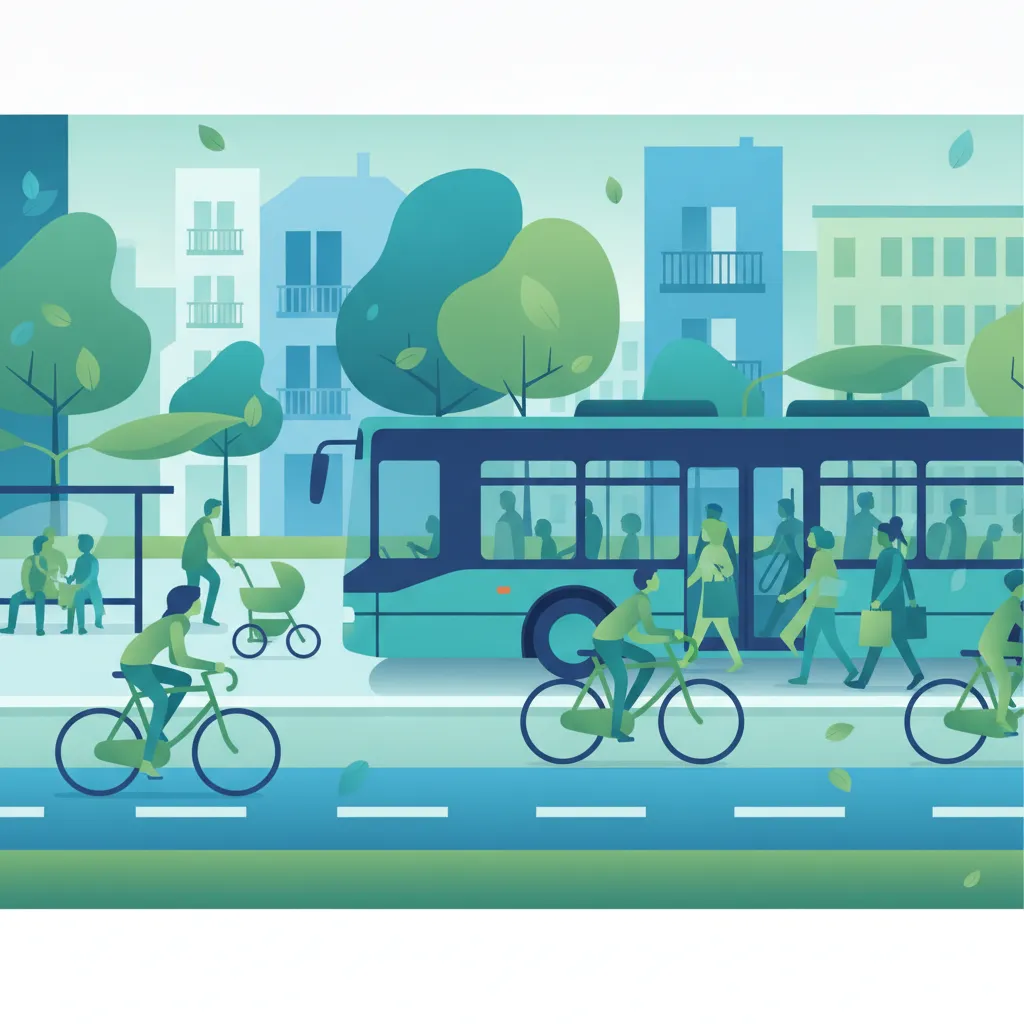
Lesson content overview
Operating a bus or coach within the Swiss Category D driving license framework demands an elevated level of vigilance, especially when stationary at designated stops. A professional driver's primary responsibility is the safety of all road users, particularly the most vulnerable: pedestrians and cyclists. This lesson delves into the critical risks posed by these users in the immediate vicinity of a stopped large passenger vehicle, providing the essential knowledge and procedures to prevent severe "pull-away" collisions.
Understanding these hazards is paramount. A stationary bus or coach creates substantial visual obstructions, effectively hiding pedestrians who might step out from in front of or behind the vehicle, and cyclists who might unexpectedly pass on either side. Failing to accurately perceive these risks and implement robust pre-movement verification protocols can lead to tragic consequences. This chapter will reinforce the necessity of exhaustive mirror and blind spot checks before any movement, ensuring every departure from a stop is executed safely and legally.
The sheer size and architecture of a bus or coach inherently generate significant blind spots and visual obstructions for the driver. When these large passenger vehicles are stopped, especially at a bus stop, they transform into imposing barriers that can completely obscure the presence of vulnerable road users. Recognizing and actively compensating for these limitations is fundamental to safe driving.
A stationary bus, by its very nature, blocks the driver's line of sight to certain areas of the road and pavement. This phenomenon is critical, as it means a driver cannot rely solely on direct forward vision or casual glances to confirm the immediate surroundings are clear. Pedestrians, particularly children, and cyclists can easily become invisible in these zones.
An area around a vehicle that cannot be directly observed by the driver through mirrors or windows. These are particularly pronounced in large vehicles like buses and coaches due to their size and design.
The primary blind zones created by a stopped bus include:
It is a common misunderstanding to assume that the driver, being seated high, can see everything directly in front of the vehicle. In reality, the height and length of the bus's front section create an immediate "dead zone" on the road surface. This physical limitation necessitates rigorous procedural checks before any movement.
Pedestrians interacting with bus stops exhibit specific patterns of behavior that professional drivers must anticipate and accommodate. These patterns, combined with the visual obstructions mentioned previously, create a heightened risk of collision.
Understanding typical pedestrian behavior is crucial for preventing accidents. At a bus stop, pedestrians are often focused on their journey – boarding, alighting, or crossing the street – and may not always be aware of the exact moment a bus is about to move.
The term "pull-away accident" (or "premature departure collision") specifically refers to incidents where a vehicle starts to move from a stationary position and collides with a pedestrian or cyclist. For bus drivers, this risk is particularly acute at stops. The danger is compounded by the fact that vulnerable users, especially children, often act unpredictably. A child emerging from behind a stopped bus to cross the street might not be visible to the driver until it is too late, even if the driver performs a quick glance.
Never assume a pedestrian will wait. Always anticipate that someone might step into your intended path at any moment, especially near a bus stop.
Swiss traffic law places a clear obligation on drivers to yield to pedestrians in certain situations, particularly near public transport stops. This legal framework reflects the heightened vulnerability of pedestrians.
Rule: Right-of-Way for Pedestrians at Bus Stops Pedestrians leaving a bus stop, intending to cross the roadway, have the right-of-way. Drivers of all vehicles, including buses and coaches, must yield to these pedestrians. This means remaining stationary until the pedestrian has safely cleared the vehicle's path or the crossing point. Failure to do so is a serious violation and a common cause of accidents.
Cyclists present a unique challenge around stopped buses due to their maneuverability, speed, and tendency to filter through traffic. Their smaller profile also makes them harder to detect, especially when they are positioned close to a large vehicle.
Cyclists, seeking to maintain momentum or navigate congestion, often choose to overtake a stationary bus. This can occur on either side, posing distinct risks.
Cyclists require adequate lateral space to pass safely. When a bus is stopped, cyclists may misjudge the space available or assume the bus will not move. If a driver pulls away before a cyclist has fully cleared the bus, it can force the cyclist into oncoming traffic, off the road, or directly into the side of the bus. This is especially true for cyclists with trailers, who require even more clearance.
Detecting cyclists demands more than just a quick glance. Their speed can be deceptive, and their narrow profile means they can be obscured by even small obstructions. Reflections, glare, and poor lighting conditions (dusk, dawn, night, rain) further complicate detection. Drivers must be proactive in their checks, not just reactive.
When checking for cyclists, pay attention not only to the immediate area next to your bus but also further down the road. A fast-approaching cyclist might close the distance rapidly.
The single most effective measure to prevent pull-away collisions is the implementation of a systematic, exhaustive pre-movement verification procedure. This goes beyond a casual glance and involves a disciplined sequence of checks designed to cover all potential blind spots.
The final confirmation step ensuring that the intended path is free from pedestrians, cyclists, or obstacles before accelerating away from a stationary position.
Mirrors are your primary tool for seeing what is not directly visible through your windows. For large passenger vehicles, properly adjusted and frequently scanned mirrors are indispensable.
Rule: Exhaustive Mirror Scan Before moving off from any stop, especially a bus stop, the driver must perform a systematic and repeated check of all mirrors: right, left, and rearview. This sequence should be deliberate, lasting a minimum of 2-3 seconds, allowing enough time for approaching vulnerable users to enter the mirror's field of view.
While mirrors provide excellent coverage, they do not eliminate all blind spots. The area immediately adjacent to the vehicle, especially towards the rear three-quarters, can remain hidden. This is where the shoulder check becomes vital.
The driver physically turning their head to glance over the shoulder, covering blind spots not visible in mirrors, particularly critical before changing lanes or moving off.
A shoulder check complements the mirror scan, acting as a final verification that no vulnerable road user is unexpectedly present in the immediate vicinity of the vehicle, particularly a child who might have just exited the bus or a cyclist positioned very close.
To ensure no stone is left unturned, adopt this systematic procedure every time you prepare to move off from a stop:
Full Stop and Secure: Ensure your bus is fully stopped, passengers have boarded/alighted safely, and doors are closed. Confirm the vehicle is stable.
Initial Right Mirror Scan: Systematically check your right-hand side mirror, looking for pedestrians stepping out from the curb or cyclists attempting a right-hand overtake. Scan thoroughly from front to back.
Initial Left Mirror Scan: Next, check your left-hand side mirror for cyclists in the adjacent lane or pedestrians crossing from the left.
Rearview Mirror Check: Quickly glance at your interior rearview mirror to ensure no unexpected activity inside the bus could distract you, and to confirm no passengers are lingering dangerously near the doors.
Perform a Shoulder Check (Right): Quickly but thoroughly glance over your right shoulder, specifically looking for vulnerable users in the blind spot closest to the curb and doors.
Perform a Shoulder Check (Left): Follow immediately with a glance over your left shoulder to confirm the adjacent lane is clear of cyclists or other small vehicles.
Final Mirror Re-scan: Conduct a quick re-scan of all mirrors (right, left, rearview) to catch any last-second changes in the environment.
Pre-Movement Verification: Only when you are absolutely certain that your intended path is clear of all vulnerable road users and obstacles, then (and only then) engage gear, signal your intention, and gently accelerate away.
In Switzerland, professional drivers, particularly those operating large passenger vehicles, are held to a stringent "duty of care." This is not merely a recommendation but a statutory obligation, legally mandating that drivers ensure the safety of other road users before undertaking certain maneuvers, including moving off from a stop.
Swiss traffic law explicitly addresses the responsibilities of drivers when departing from a stationary position, particularly where vulnerable road users are present. These regulations are designed to prevent the very accidents discussed in this lesson.
Legal Duty of Care: The law requires drivers of large passenger vehicles to take all necessary precautions to ensure that their intended path is clear of pedestrians and cyclists before moving off. This includes performing comprehensive visual checks. Specifically, Article 14 of the Road Traffic Regulations (RVF) generally covers the duty to ensure safety before any maneuver, and Article 16 RVF specifically addresses yielding to pedestrians at stops.
This legal obligation means that in the event of a pull-away collision, the burden of proof often lies with the driver to demonstrate that all reasonable and legally required checks were performed.
Failure to adhere to the legal duty of care and the prescribed pre-movement verification procedures can lead to severe consequences:
Understanding these consequences underscores the critical importance of integrating exhaustive checks into routine driving practice.
Driving is rarely static; conditions constantly change, demanding adaptive strategies from the driver. The principles of pre-movement verification remain constant, but their application must be adjusted based on environmental factors, road types, and specific vulnerable user interactions.
Adverse weather conditions significantly impair visibility, making the detection of pedestrians and cyclists even more challenging.
The type of road and the density of traffic influence the prevalence and behavior of vulnerable road users.
When transporting school children or operating near schools, playgrounds, or residential areas, the duty of care reaches its highest level. Children are inherently unpredictable.
Understanding the theory is one thing; consistent application in practice is another. Identifying common pitfalls helps drivers consciously avoid them.
Several recurring errors contribute to pull-away accidents:
Developing robust safe driving habits is an ongoing process for professional drivers.
The safety of pedestrians and cyclists near bus stops is a core responsibility for professional bus and coach drivers. By internalizing and consistently applying the principles discussed in this lesson, you significantly reduce the risk of collisions and uphold the highest standards of professional driving.
This lesson addresses the critical hazards pedestrians and cyclists face near stopped buses, which are particularly relevant for Swiss Category D theory exams. A stationary bus creates substantial front and lateral blind zones that can completely hide vulnerable road users, requiring drivers to perform exhaustive mirror scans and shoulder checks before any departure. The lesson outlines a systematic 8-step pre-movement verification procedure covering right, left, rearview mirrors and physical shoulder checks to ensure the intended path is clear. Swiss traffic law mandates a heightened duty of care for professional drivers, with pedestrians exiting a bus having legal right-of-way to cross in front of the vehicle. Common mistakes include premature pull-away, inadequate mirror adjustment, and failing to anticipate unpredictable pedestrian and cyclist movements, all of which can lead to serious pull-away accidents.
A short set of high-value points that capture the most important learning from this lesson.
A stopped bus creates substantial front and lateral blind zones that completely hide pedestrians and cyclists from direct view
The legal right-of-way for pedestrians leaving a bus stop requires drivers to remain stationary until the crossing path is fully clear
Cyclists may overtake a stopped bus on either side, with right-hand overtakes being particularly hazardous due to proximity to the curb
The Exhaustive Mirror Scan must cover right, left, rearview mirrors followed by shoulder checks before any departure
Professional bus drivers carry a heightened legal duty of care under Swiss traffic law regarding vulnerable road users at stops
Explore all units and lessons included in this driving theory course.
Front blind zone extends several metres directly in front of the bus, making pedestrians stepping off the curb invisible even from a high driving position
Lateral blind zones exist along both sides, with the right side being especially dangerous for cyclists filtering between bus and curb
The mirror scan sequence should last a minimum of 2-3 seconds to allow approaching cyclists time to enter the field of view
Swiss Art. 14 RVF covers duty of care for pull-away maneuvers; Art. 16 RVF addresses yielding to pedestrians at bus stops
Environmental conditions like rain, fog, snow, or darkness require extended scanning times and increased caution
Premature pull-away due to time pressure or habit before completing the full systematic check sequence
Inadequate mirror adjustment that fails to minimize blind spots, missing cyclists positioned close to the vehicle
Assuming pedestrians or cyclists will wait or yield, when they may misjudge the vehicle's intentions or be distracted
Neglecting shoulder checks and relying solely on mirrors, which misses the immediate adjacent blind spots
Failing to adjust checking procedures for adverse weather or low visibility conditions, leading to missed detections
Lesson content overview
A short set of high-value points that capture the most important learning from this lesson.
A stopped bus creates substantial front and lateral blind zones that completely hide pedestrians and cyclists from direct view
The legal right-of-way for pedestrians leaving a bus stop requires drivers to remain stationary until the crossing path is fully clear
Cyclists may overtake a stopped bus on either side, with right-hand overtakes being particularly hazardous due to proximity to the curb
The Exhaustive Mirror Scan must cover right, left, rearview mirrors followed by shoulder checks before any departure
Professional bus drivers carry a heightened legal duty of care under Swiss traffic law regarding vulnerable road users at stops
Explore all units and lessons included in this driving theory course.
Front blind zone extends several metres directly in front of the bus, making pedestrians stepping off the curb invisible even from a high driving position
Lateral blind zones exist along both sides, with the right side being especially dangerous for cyclists filtering between bus and curb
The mirror scan sequence should last a minimum of 2-3 seconds to allow approaching cyclists time to enter the field of view
Swiss Art. 14 RVF covers duty of care for pull-away maneuvers; Art. 16 RVF addresses yielding to pedestrians at bus stops
Environmental conditions like rain, fog, snow, or darkness require extended scanning times and increased caution
Premature pull-away due to time pressure or habit before completing the full systematic check sequence
Inadequate mirror adjustment that fails to minimize blind spots, missing cyclists positioned close to the vehicle
Assuming pedestrians or cyclists will wait or yield, when they may misjudge the vehicle's intentions or be distracted
Neglecting shoulder checks and relying solely on mirrors, which misses the immediate adjacent blind spots
Failing to adjust checking procedures for adverse weather or low visibility conditions, leading to missed detections
Explore search topics learners often look for when studying Specific Hazards Involving Pedestrians and Cyclists Near Stops. These topics reflect common questions about road rules, driving situations, safety guidance, and lesson level theory preparation for learners in Switzerland.
Browse additional driving theory lessons that cover connected traffic rules, road signs, and common driving situations related to this topic. Improve your understanding of how different rules interact across everyday traffic scenarios.
Learn about the specific risks pedestrians and cyclists pose at bus stops and essential procedures to prevent pull-away accidents. This lesson covers blind spots and the driver's duty of care in Swiss Category D theory.

This lesson focuses on general driving safety in areas with a high concentration of children. It stresses the importance of significantly reducing speed, being prepared for unexpected events, and scanning for children between parked cars. The driver must exhibit maximum vigilance in these high-risk environments at all times.

This lesson trains drivers to look beyond other vehicles and actively search for pedestrians, cyclists, and motorcyclists, especially those who may be distracted or unaware. It covers common behavioral patterns of different VRU groups. The goal is to see potential hazards developing early and create time and space to react safely.
The approach to a stop sets the stage for a safe passenger exchange. This lesson covers signalling in good time, decelerating smoothly, and aiming for a final position that is close and parallel to the kerb. Proper positioning minimizes the step for passengers and prevents them from having to step into traffic.
Departing from a bus stop is a high-risk manoeuvre. This lesson details the critical sequence of actions: checking all passengers are clear of the doors, performing a comprehensive mirror and blind spot check, signalling, and waiting for a safe gap in traffic. This systematic approach is essential for preventing collisions with overtaking vehicles, cyclists, or pedestrians.
Pedestrians, cyclists, motorcyclists, and e-scooter riders are extremely vulnerable in any interaction with a heavy vehicle. This lesson instills a defensive mindset, teaching drivers to be hyper-aware of VRUs, especially near junctions, crossings, and cycle lanes. It focuses on anticipation and giving VRUs extra space, as they can be unpredictable and are often hidden in blind spots.

This lesson moves beyond simply staying within the lines, teaching how to actively position your vehicle within the lane to manage risk. You will learn to create a 'safety cushion' of space around your bus. This proactive approach improves your reaction time and gives other road users more space, reducing the likelihood of conflicts.
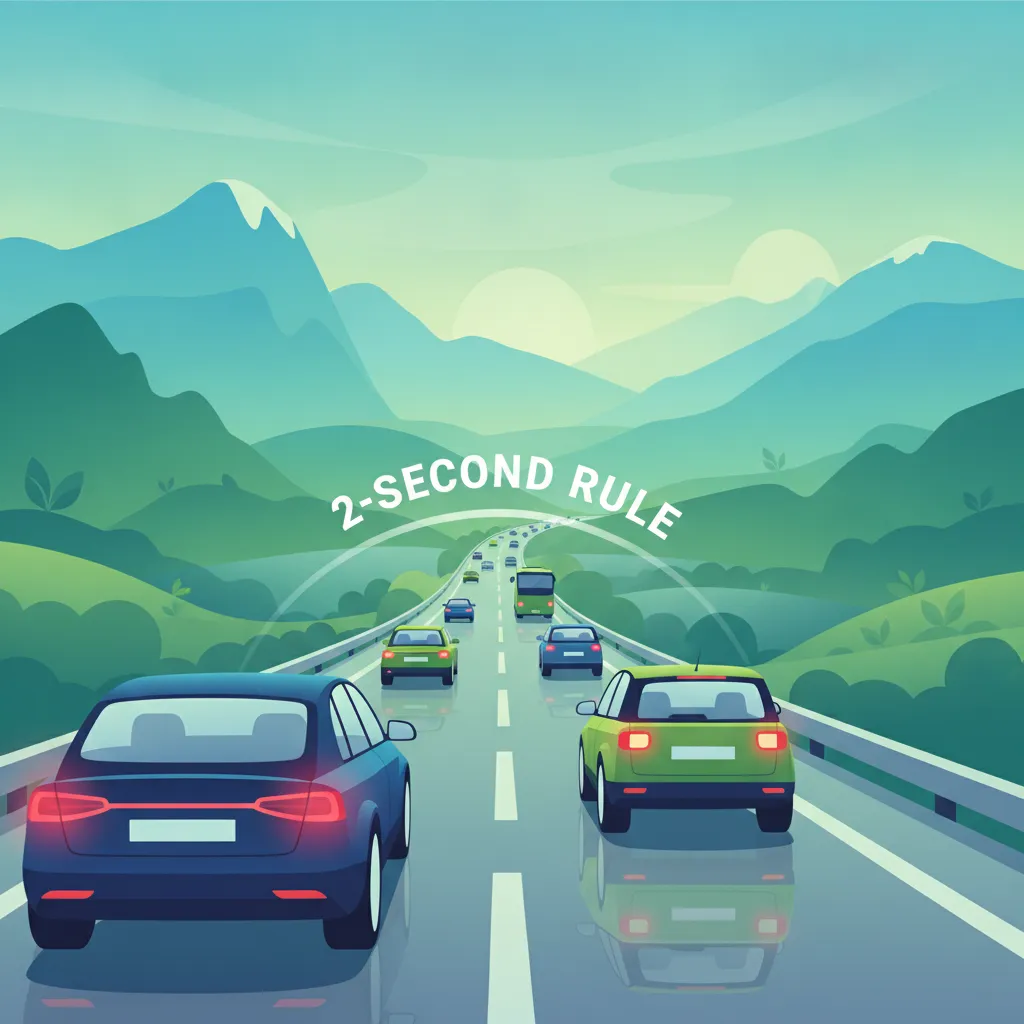
Buses and coaches require significantly more distance to stop than cars. This lesson explains why the 'two-second rule' is insufficient and teaches the appropriate methods for calculating a safe gap in various conditions. Maintaining an adequate safety cushion is one of the most important defensive driving skills.
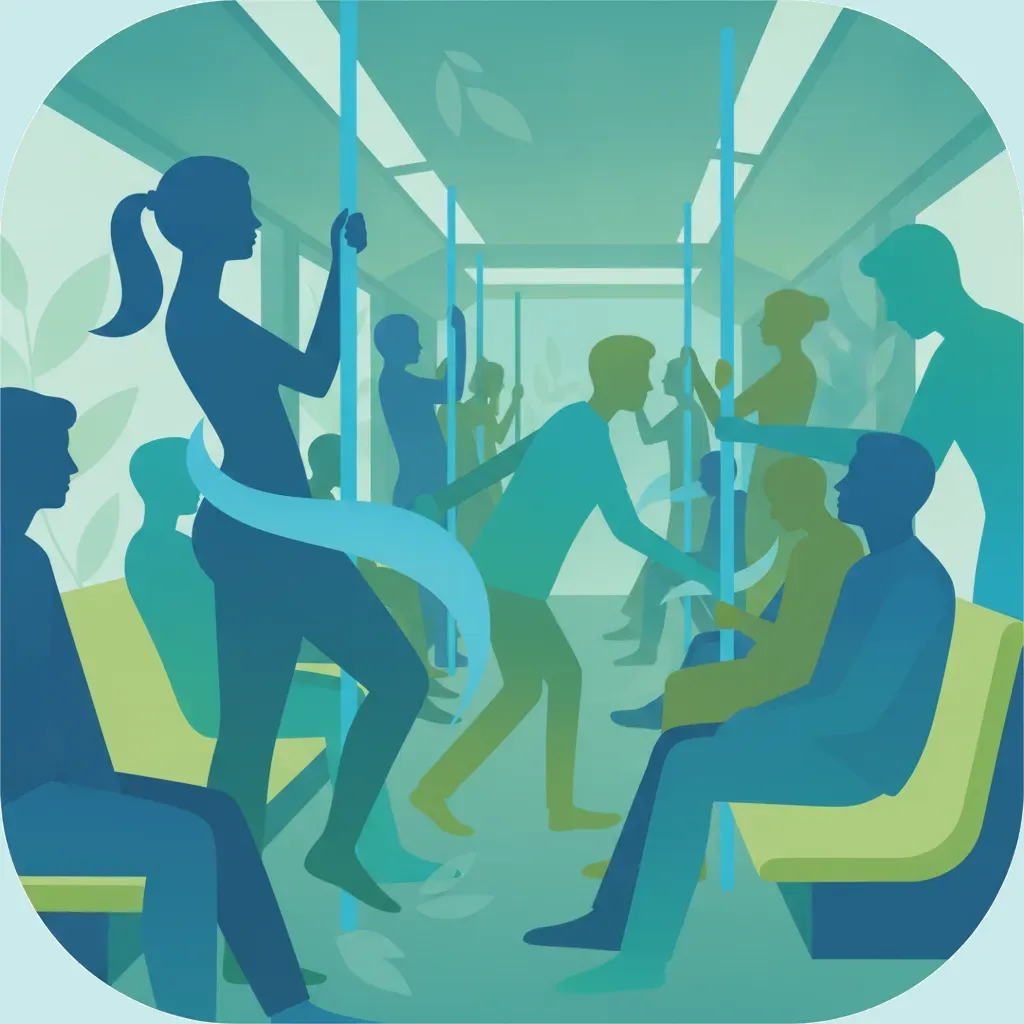
Standing passengers are particularly vulnerable to sudden vehicle movements. This lesson covers the driver's responsibility to adapt their driving style when people are standing. It emphasizes even smoother control, heightened awareness, and clear communication to minimize the risk of falls and injuries.
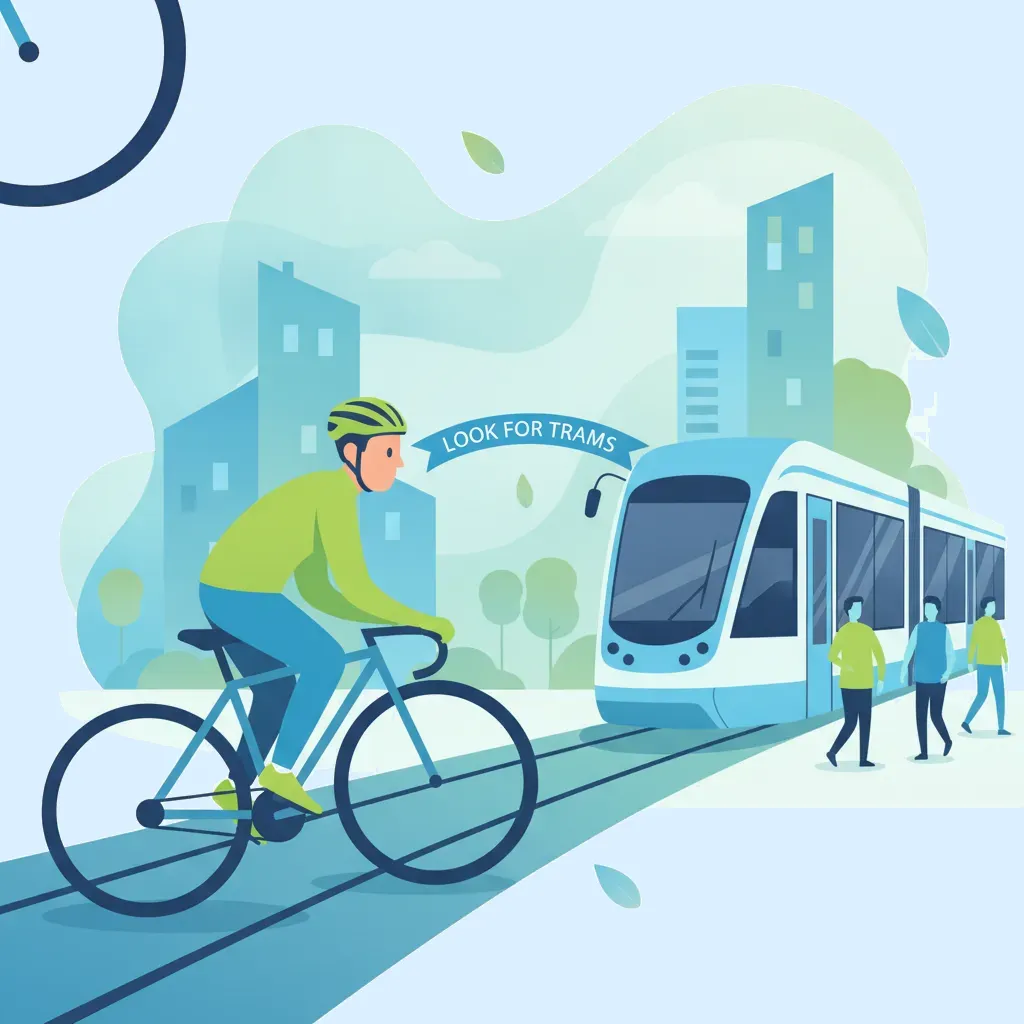
Sharing road space with trams presents unique challenges, including different priority rules and physical hazards like tracks. This lesson covers the Swiss regulations regarding tram priority at junctions and stops. It also provides practical advice on crossing tram tracks safely and maintaining awareness of tram movements.
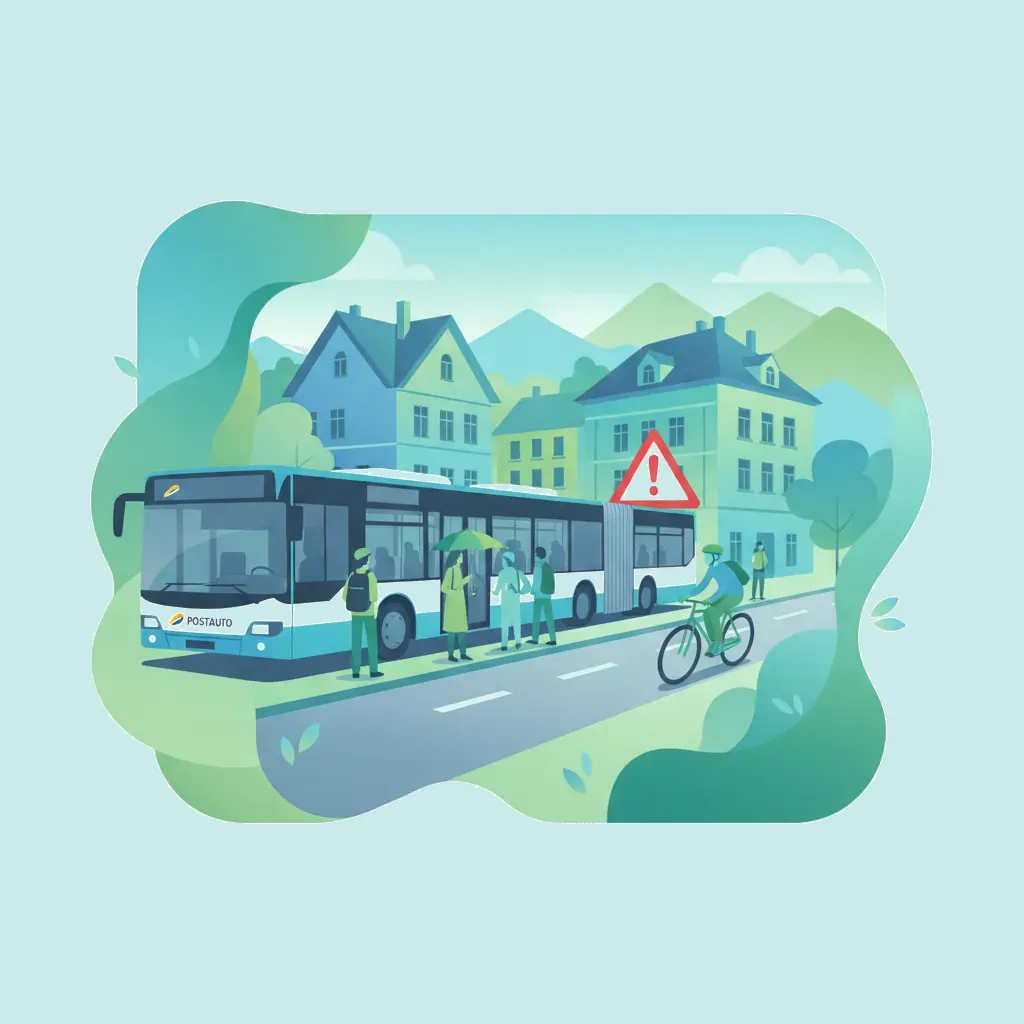
Bus stops are magnets for activity and potential hazards. This lesson trains you to anticipate dangers such as pedestrians running for the bus, cyclists passing on the inside, and cars attempting to overtake. Developing heightened situational awareness is key to preventing accidents in these busy environments.
Explore the significant blind spots created by large passenger vehicles like buses and coaches. This lesson details systematic checks, including mirror and shoulder checks, to ensure safety before any maneuver, crucial for Swiss Category D theory.

Buses and coaches have significant blind spots to the front, sides, and rear. This lesson maps out these 'no-zones' and teaches a continuous and active scanning process using all available mirrors and direct vision. The goal is to minimize the time any other road user spends undetected in a blind spot.
Departing from a bus stop is a high-risk manoeuvre. This lesson details the critical sequence of actions: checking all passengers are clear of the doors, performing a comprehensive mirror and blind spot check, signalling, and waiting for a safe gap in traffic. This systematic approach is essential for preventing collisions with overtaking vehicles, cyclists, or pedestrians.
Driving a bus in older parts of a city requires exceptional spatial awareness and precise control. This lesson focuses on assessing clearances, managing front and rear overhang, and negotiating tight turns around parked cars and buildings. A key theme is slow, careful, and deliberate manoeuvring to avoid contact.
This lesson moves beyond simply staying within the lines, teaching how to actively position your vehicle within the lane to manage risk. You will learn to create a 'safety cushion' of space around your bus. This proactive approach improves your reaction time and gives other road users more space, reducing the likelihood of conflicts.

Reversing is the most dangerous manoeuvre a large vehicle can perform and should be avoided whenever possible. This lesson details a safe system of work for when reversing is unavoidable. It covers the importance of a 360-degree check before starting, the use of a banksman, and how to interpret standard hand signals.
The size of a bus requires careful planning when negotiating complex intersections. This lesson teaches the importance of early lane selection, clear signalling, and comprehensive observation. It provides specific techniques for managing the vehicle's swept path through multi-lane roundabouts and other challenging urban junctions.
The approach to a stop sets the stage for a safe passenger exchange. This lesson covers signalling in good time, decelerating smoothly, and aiming for a final position that is close and parallel to the kerb. Proper positioning minimizes the step for passengers and prevents them from having to step into traffic.

Being seen and being able to see are critical for safety. This lesson covers the systematic check of all exterior lights, including headlights, brake lights, and indicators. It also emphasizes the importance of ensuring all mirrors and camera lenses are clean, undamaged, and properly adjusted for maximum visibility.

Rural driving requires a different mindset from urban driving. This lesson covers how to position your vehicle on narrow roads, how to use passing places effectively, and how to anticipate hazards like slow-moving farm machinery, animals, and concealed junctions. Managing vehicle width and height is a key focus.
This lesson focuses on general driving safety in areas with a high concentration of children. It stresses the importance of significantly reducing speed, being prepared for unexpected events, and scanning for children between parked cars. The driver must exhibit maximum vigilance in these high-risk environments at all times.
Find clear answers to common questions learners have about Specific Hazards Involving Pedestrians and Cyclists Near Stops. Learn how the lesson is structured, which driving theory objectives it supports, and how it fits into the overall learning path of units and curriculum progression in Switzerland. These explanations help you understand key concepts, lesson flow, and exam focused study goals.
Because a bus is a large vehicle, it creates a significant blind spot. Pedestrians, especially children, may step out from immediately in front of the bus where they are invisible to the driver, leading to a high risk of collisions during pull-away.
Before moving off, you must perform a comprehensive scan of your right-side mirrors and any blind-spot cameras. If you suspect a cyclist is approaching, wait for them to pass completely before engaging the transmission to pull away.
Yes, hazard perception is a core component of the Swiss exam. You will be tested on your ability to identify these exact scenarios and apply the correct defensive driving actions to ensure passenger and public safety.
The 'Look-Last' check is critical. This involves checking your primary mirrors, your auxiliary mirrors, and your camera systems in a systematic loop, finishing with a final check of the side that poses the highest immediate risk to vulnerable road users.
Pinpoint specific Swiss traffic rules, road signs, or driving situations you need to master. Use the practice search to start a focused revision session now and build confidence for your official driving theory exam.