
This lesson focuses on the critical safety requirements for driving in areas with high pedestrian activity, such as schools and residential zones. It is part of our comprehensive unit on protecting vulnerable road users, helping you refine your situational awareness as a professional Category D driver.

Lesson content overview
Operating a heavy passenger vehicle, such as a bus or coach, within the Swiss Category D Driving License framework demands an exceptional level of awareness and caution, particularly in environments frequented by children. Schools, playgrounds, and residential areas present unique challenges due to the unpredictable nature of young pedestrians and cyclists. This lesson provides a comprehensive guide to safe driving practices in these high-risk zones, emphasizing the proactive measures professional drivers must adopt to ensure the safety of all road users.
Children, by their very nature, are among the most vulnerable road users. Their limited understanding of traffic rules, developing perception, and impulsive behavior make them particularly susceptible to accidents. For a professional driver of a Category D vehicle, understanding these vulnerabilities is the first step towards preventing potentially severe incidents.
Vulnerable Road Users (VRUs) are individuals who are at a heightened risk of injury in a traffic incident due to their lack of protection. Children, especially those under 15 years old, fall squarely into this category. Unlike adults, children often have a narrower field of vision, making it harder for them to spot approaching vehicles. They may also misjudge vehicle speeds and distances, believing they have more time to cross a road than they actually do.
Common child behaviors that increase risk include darting into the road without looking, chasing after a ball or pet, emerging suddenly from between parked cars or from behind fences, and being distracted by friends or electronic devices. Their small stature also makes them less visible to drivers, especially from the elevated position of a bus or coach. As a Category D driver, you must always anticipate the unexpected and operate with the understanding that children might not act logically or predictably in traffic.
Professional passenger vehicle drivers carry a significant duty of care, extending beyond their passengers to all other road users. When operating a large vehicle like a bus or coach, the consequences of an accident involving a child are magnified due to the vehicle's size and mass. This makes strict adherence to safety protocols in child-centric areas not just a recommendation, but a fundamental professional responsibility.
For Category D drivers, maintaining maximum vigilance, significantly reducing speed, and exhibiting predictable vehicle behavior are paramount. These practices are crucial for preventing accidents and are integrated into Swiss traffic law, reflecting the high standards required in protecting vulnerable populations. Your proactive approach in these environments is a direct reflection of your professional commitment to safety.
Swiss traffic regulations impose specific rules for driving in areas with a high concentration of children, recognizing the increased risks. Adhering to these rules is mandatory and contributes significantly to road safety.
One of the most critical regulations near schools, playgrounds, and in many residential areas is the mandatory reduced speed limit, often set at 30 km/h. These areas are typically marked by specific signage. It is imperative to decelerate to the prescribed speed well before entering such a zone and maintain it until you pass the zone's end. This speed reduction dramatically decreases stopping distances and provides drivers with more time to react to sudden movements from children.
These 30 km/h zones can be permanent, applying at all times, or conditional, active during specific hours (e.g., school start and end times). Always pay close attention to supplementary signs that might indicate these conditions. Even if the general speed limit outside these zones is higher, you must adjust your speed accordingly. Failing to comply with these reduced speed limits can result in significant fines and penalties, reflecting the severe risk posed by speeding in these sensitive areas.
Always assume children may be present, even if signs indicate conditional speed limits. Reduce speed preventatively.
Overtaking other vehicles is strictly prohibited in certain areas around schools and crosswalks. This rule is designed to prevent situations where a child might unexpectedly emerge from behind an overtaken vehicle, unseen by the overtaking driver. Typically, this prohibition applies within a specified distance before and after a school zone sign or a marked pedestrian crossing.
Adhering to this rule means you must remain in your lane and patiently follow the vehicle ahead, even if it is moving slowly. The temporary delay is a small price to pay for ensuring child safety. Overtaking in these restricted zones creates an unpredictable and highly dangerous scenario, increasing the likelihood of an accident.
Swiss traffic law places a high priority on the safety of pedestrians, particularly children, at marked crosswalks. Drivers must yield to children crossing at marked crosswalks, regardless of the traffic light phase or whether the children have fully entered the crosswalk. Children may not accurately judge traffic speed or distance, making it essential for drivers to anticipate their movements and stop promptly.
This principle extends beyond marked crosswalks. In residential areas or near playgrounds, where children may cross at unofficial points, drivers are expected to exercise extreme caution and be prepared to stop. Always make eye contact with children if possible, and use clear signals to indicate your intention to stop and let them cross.
For Category D drivers specifically involved in school transport services, additional obligations apply. These include precise route planning, strict adherence to designated bus stops, and careful procedures for boarding and alighting.
Approach Safely: Slow down well in advance, signal your intention to stop, and position the bus correctly at the designated stop.
Full Stop and Warning: Bring the bus to a complete stop. Activate hazard lights to warn other road users that the bus is stationary and children may be boarding or alighting.
Check Surroundings: Before opening doors, meticulously check all mirrors and blind spots. Ensure the roadway is clear and it is absolutely safe for children to exit the bus or approach to board.
Supervise Alighting/Boarding: Monitor children as they exit or enter the bus, ensuring they do so safely and do not run into traffic. Keep doors open only as long as necessary.
Depart Safely: Before moving, ensure all children are safely away from the bus and any crossing children have reached the sidewalk. Deactivate hazard lights, signal departure, and proceed slowly.
It is prohibited to open bus doors while the vehicle is still in motion or to stop in unauthorized zones. Proper communication with school staff regarding schedules and safety protocols is also vital. These specific rules are designed to create a safe zone around the bus during critical moments of interaction with children.
Beyond explicit regulations, safe driving in child-heavy areas relies heavily on fundamental driving principles adapted for maximum safety. These core principles guide a driver's behavior and decision-making process.
Maximum vigilance involves continuous, heightened observation of the entire road environment, with a particular focus on areas where children might suddenly appear. This includes not just the road ahead, but also sidewalks, driveways, play areas, and crucially, the spaces between parked cars and behind fences.
Effective scanning techniques for Category D drivers include:
Reducing your speed significantly below the posted limit, especially in designated 30 km/h zones, is the single most effective safety measure. Lower speeds have a dramatic impact on stopping distance and the severity of a collision. For a heavy vehicle like a bus, which requires a longer stopping distance than a passenger car, this reduction is even more critical.
At 30 km/h, you have more time to perceive and react to a child's sudden movement, and if a collision is unavoidable, the force of impact is drastically reduced, greatly improving the chances of survival for the child. Always decelerate smoothly and well in advance, signaling your intentions clearly to other road users.
Operating your bus or coach in a smooth, consistent, and predictable manner is essential. Sudden acceleration, abrupt braking, or erratic lane changes can startle children, causing them to react unpredictably or misjudge your vehicle's path. Such actions also make it harder for other road users to anticipate your movements, increasing the overall risk.
Maintain a steady speed, accelerate and decelerate gradually, and use your turn signals well in advance of any maneuver. This predictable behavior allows children and other road users to understand your intentions, giving them time to react safely and reducing the likelihood of unexpected interactions.
Children often dart out from behind parked vehicles, fences, bushes, or other obstacles, making them momentarily invisible to drivers. Proximity awareness means being constantly mindful of the space between your moving vehicle and any stationary objects where a child could be hidden.
Maintain a safe buffer distance from parked vehicles, especially those on the side of the road closest to schools or playgrounds. This extra space provides you with more time and a clearer line of sight to spot a child before they enter your path. Always assume a child might emerge unexpectedly and adjust your speed and position accordingly.
Driving in areas with children requires a constant state of preparedness for the unexpected. Children's actions are often impulsive and can change in an instant, such as a child chasing a ball into the street or suddenly changing direction on a bicycle.
Maintain a defensive driving posture at all times. Keep your hands on the wheel, eyes scanning, and foot poised over the brake pedal, ready to react instantly. A safe following distance from the vehicle ahead will also provide crucial reaction time if they brake suddenly in response to a child. This mindset minimizes reaction time and allows for quicker, safer responses to unforeseen circumstances.
Driving conditions are not always ideal. Factors like weather, lighting, vehicle load, and road type can significantly impact safety, especially in high-risk zones.
Adverse weather conditions such as rain, snow, or fog reduce visibility and extend stopping distances. In these situations, the mandatory 30 km/h speed limit in school zones should be further reduced.
When driving a heavy vehicle, double your following distance in wet conditions and consider increasing it even more in snow or ice.
Similarly, during low light conditions (dawn, dusk, or night-time), children are harder to spot due to reduced contrast and shadows. Ensure your headlights are on, even if street lighting is present, and increase your vigilance for less visible pedestrians and cyclists. The combination of poor visibility and the unpredictability of children demands an even greater safety margin.
The weight of your Category D vehicle significantly influences its braking performance. A heavily loaded bus requires a longer stopping distance than an empty one. When carrying many passengers, especially children, you must adjust your speed downwards even further to compensate for the increased mass and ensure you can stop safely within the reduced speed limits.
Narrow residential streets, often lined with parked cars, also present unique challenges. The constrained lane width may force you closer to potential hiding spots for children. In these environments, extremely low speeds and careful vehicle positioning are essential to maintain sightlines and provide maximum reaction time.
Ignorance or disregard of the specific rules in child-heavy areas can lead to severe consequences. Common violations include:
| Violation | Description | Correct Behavior | Consequence |
|---|---|---|---|
| Speeding in School Zones | Driving above the 30 km/h limit. | Decelerate to 30 km/h well before the zone. | Fines, demerit points, increased liability in case of an accident. |
| Overtaking in Restricted Zones | Passing another vehicle where prohibited. | Maintain lane, wait until safe and legal to pass. | Fines, potential accidents. |
| Opening Doors Prematurely | Opening bus doors while traffic is approaching. | Ensure full stop, check all mirrors and blind spots. | Risk of collision, passenger injury, legal penalties. |
| Insufficient Buffer Distance | Driving too close to parked cars. | Maintain extra space to see children emerging. | Collisions with suddenly appearing pedestrians. |
| Improper Use of Hazard Lights | Using hazard lights while moving. | Activate only when stationary at a stop. | Confusion for other drivers, legal penalties. |
These violations not only carry legal penalties but, more importantly, drastically increase the risk of severe or fatal accidents involving vulnerable children.
When your bus is stationary at a school stop for boarding or alighting, the correct use of warning lights is crucial. Activating your hazard lights signals to other road users that your vehicle is stopped and that children may be present or moving around the bus. This helps prevent rear-end collisions and alerts drivers to be extra cautious.
However, hazard lights should only be used when the bus is completely stationary. Using them while driving, even slowly, can confuse other drivers who might misinterpret your intentions or assume your vehicle is disabled. Always use your turn signals for indicating direction changes.
Understanding the underlying physics and psychology behind traffic safety helps reinforce the importance of these rules and principles.
Stopping distance is composed of two main parts: reaction distance and braking distance.
Even a small reduction in speed leads to a significant decrease in total stopping distance. For example, reducing speed from 50 km/h to 30 km/h can more than halve the braking distance, providing a critical safety margin. Furthermore, the kinetic energy involved in a collision increases with the square of the speed. A lower speed dramatically reduces the force of impact, directly contributing to less severe injuries or preventing fatalities.
Children's developing brains process information differently than adults. They are more easily distracted, have limited attention spans, and often focus on a single object (e.g., a ball) to the exclusion of others (e.g., an approaching bus). This "tunnel vision" means they are less likely to notice or react to traffic.
Their smaller stature makes them less visible against complex backgrounds like parked cars, fences, or bushes. Drivers must compensate for these psychological and physical visibility limitations by actively scanning, predicting behavior, and reducing speed to maximize their own perception and reaction time. Eye contact, though not always possible, is a powerful non-verbal communication tool to ensure a child has seen your vehicle.
Risk management in driving involves identifying potential hazards, assessing their likelihood and severity, and implementing strategies to mitigate them. In areas with children, the likelihood of unpredictable behavior is high, and the severity of potential accidents is critical.
By systematically applying principles like maximum vigilance, significant speed reduction, and predictable vehicle behavior, drivers proactively manage these risks. This holistic approach, combining legal compliance with advanced situational awareness and vehicle control, forms the cornerstone of safe and responsible Category D driving in child-heavy environments.
Understanding theory is one thing; applying it in real-world scenarios is another. These examples illustrate how to implement safe driving practices around children.
Scenario: Approaching a School Zone in Dry Weather
Scenario: School Bus Boarding Near a Playground
Scenario: Overtaking Near a School During Dismissal Time
Scenario: Heavy Rain in a Residential Area with Children Present
Developing a strong understanding of these safety procedures is crucial for any professional driver. Continue to review these principles and integrate them into your daily driving habits.
This lesson teaches Category D drivers in Switzerland how to safely operate heavy passenger vehicles near schools, playgrounds, and residential areas where children are present. It emphasizes that children are particularly vulnerable road users due to their limited traffic awareness and impulsive behavior, requiring drivers to adopt maximum vigilance and significantly reduced speeds. The content covers specific Swiss regulations including mandatory 30 km/h zones, overtaking prohibitions near schools, and detailed procedures for safe school bus boarding and alighting. Key principles include maintaining predictable vehicle behavior, actively scanning between parked cars where children may hide, and understanding how vehicle weight and weather conditions affect stopping distances. Professional drivers carry a legal duty of care extending beyond their passengers to all road users, making strict adherence to these safety protocols a fundamental professional responsibility.
A short set of high-value points that capture the most important learning from this lesson.
Maximum vigilance is essential because children have limited perception, unpredictable behavior, and are easily distracted in traffic.
Swiss law mandates 30 km/h speed limits in school zones, which must be reduced further in adverse weather or with a loaded vehicle.
Overtaking is prohibited near schools and crosswalks to prevent unseen children from being struck by passing vehicles.
When operating school transport, drivers must perform complete stops, activate hazard lights, and conduct thorough mirror and blind spot checks before opening doors.
Reducing speed significantly decreases stopping distance and collision severity, making it the single most effective safety measure for heavy vehicles.
Explore all units and lessons included in this driving theory course.
Children are Vulnerable Road Users (VRUs) with narrower vision and poor speed/distance judgment, often misjudging gaps and believing they have more time to cross.
30 km/h zones can be permanent or conditional (active only during school hours) - always check supplementary signs.
Hazard lights must only be activated when the bus is completely stationary, never while moving.
Before opening bus doors, conduct comprehensive mirror checks and blind spot verification to ensure no children are approaching.
Heavier loads increase braking distance, requiring even lower speeds in school zones to maintain safe stopping capability.
Maintaining higher speed until already inside the school zone before braking, creating longer stopping distances and unpredictable situations.
Attempting to overtake another vehicle in prohibited school zones during peak times like school dismissal.
Opening bus doors before making a complete stop or without first checking mirrors and blind spots.
Failing to verify that all children are safely away from the bus and have reached the sidewalk before departing.
Using hazard lights while the bus is still moving, which confuses other drivers about the vehicle's status.
Lesson content overview
A short set of high-value points that capture the most important learning from this lesson.
Maximum vigilance is essential because children have limited perception, unpredictable behavior, and are easily distracted in traffic.
Swiss law mandates 30 km/h speed limits in school zones, which must be reduced further in adverse weather or with a loaded vehicle.
Overtaking is prohibited near schools and crosswalks to prevent unseen children from being struck by passing vehicles.
When operating school transport, drivers must perform complete stops, activate hazard lights, and conduct thorough mirror and blind spot checks before opening doors.
Reducing speed significantly decreases stopping distance and collision severity, making it the single most effective safety measure for heavy vehicles.
Explore all units and lessons included in this driving theory course.
Children are Vulnerable Road Users (VRUs) with narrower vision and poor speed/distance judgment, often misjudging gaps and believing they have more time to cross.
30 km/h zones can be permanent or conditional (active only during school hours) - always check supplementary signs.
Hazard lights must only be activated when the bus is completely stationary, never while moving.
Before opening bus doors, conduct comprehensive mirror checks and blind spot verification to ensure no children are approaching.
Heavier loads increase braking distance, requiring even lower speeds in school zones to maintain safe stopping capability.
Maintaining higher speed until already inside the school zone before braking, creating longer stopping distances and unpredictable situations.
Attempting to overtake another vehicle in prohibited school zones during peak times like school dismissal.
Opening bus doors before making a complete stop or without first checking mirrors and blind spots.
Failing to verify that all children are safely away from the bus and have reached the sidewalk before departing.
Using hazard lights while the bus is still moving, which confuses other drivers about the vehicle's status.
Explore search topics learners often look for when studying Safe Procedures Around Schools, Playgrounds, and Residential Areas. These topics reflect common questions about road rules, driving situations, safety guidance, and lesson level theory preparation for learners in Switzerland.
Browse additional driving theory lessons that cover connected traffic rules, road signs, and common driving situations related to this topic. Improve your understanding of how different rules interact across everyday traffic scenarios.
Explore the specific behaviors and risks associated with children and other vulnerable road users near schools and residential zones. Learn how Category D drivers must adapt their approach to ensure maximum safety in these sensitive environments.

This lesson trains drivers to look beyond other vehicles and actively search for pedestrians, cyclists, and motorcyclists, especially those who may be distracted or unaware. It covers common behavioral patterns of different VRU groups. The goal is to see potential hazards developing early and create time and space to react safely.
Pedestrians, cyclists, motorcyclists, and e-scooter riders are extremely vulnerable in any interaction with a heavy vehicle. This lesson instills a defensive mindset, teaching drivers to be hyper-aware of VRUs, especially near junctions, crossings, and cycle lanes. It focuses on anticipation and giving VRUs extra space, as they can be unpredictable and are often hidden in blind spots.
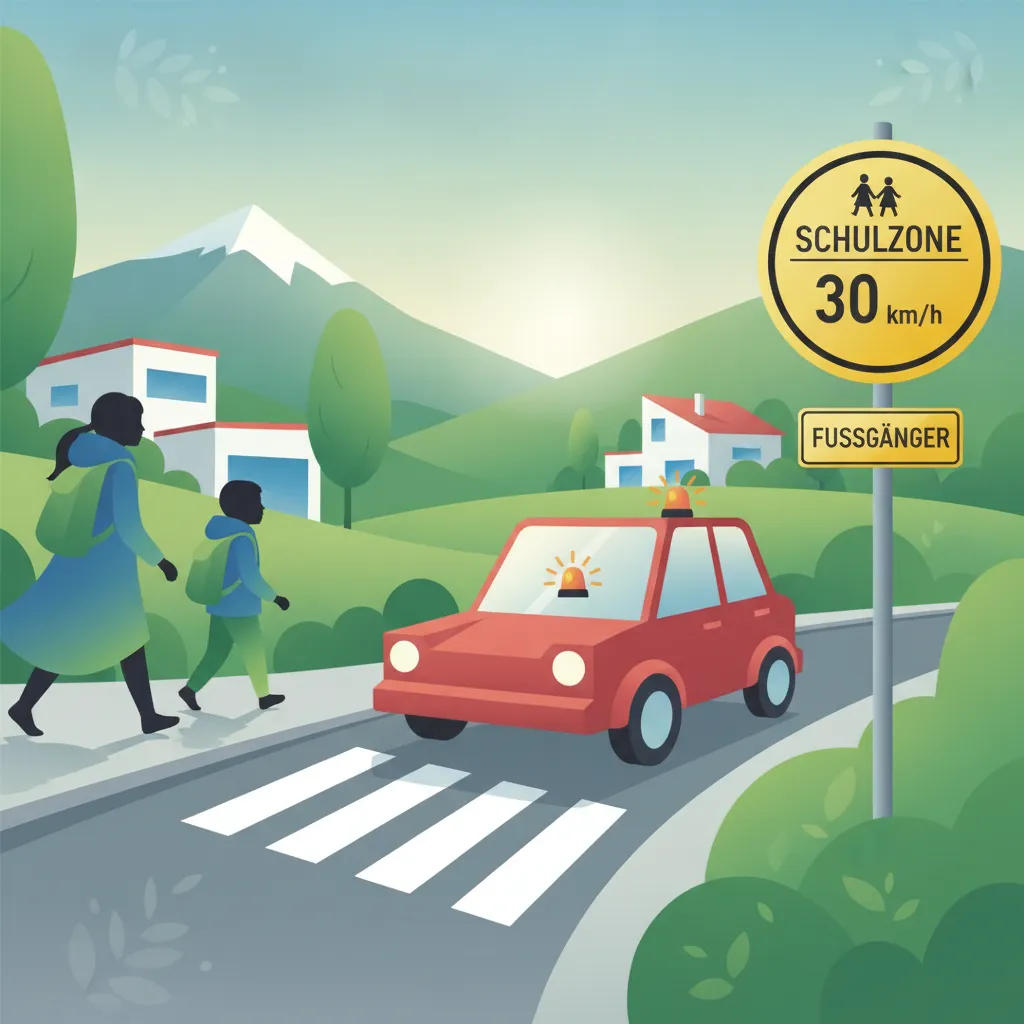
This lesson focuses on school zones, where special speed limits and cautionary measures are required. You will learn to recognize school zone signs, understand reduced speed limits, and be aware of designated child crossing zones. The content also emphasizes the need for heightened vigilance when school buses stop for students to ensure child safety.
Transporting children carries the highest level of responsibility. This lesson covers the specific legal requirements for school buses in Switzerland, including the use of special signs and warning lights. It details the safe procedures for stopping, boarding, and alighting, and the driver's role in supervising children.
This lesson explores the specific considerations for cyclists and pedestrians, who are among the most vulnerable road users. It covers the proper use of bicycle lanes, the minimum safe overtaking distance for cyclists, and the legal requirements for yielding at pedestrian crossings. The content reinforces the need for heightened vigilance around these users.
Sharing road space with trams presents unique challenges, including different priority rules and physical hazards like tracks. This lesson covers the Swiss regulations regarding tram priority at junctions and stops. It also provides practical advice on crossing tram tracks safely and maintaining awareness of tram movements.
This lesson explores pedestrian right-of-way at various crossings, including zebra crossings and pedestrian islands. It emphasizes the need for drivers to reduce speed, anticipate pedestrian movement, and stop safely when required. The content also covers special regulations that apply in school zones, such as reduced speed limits and heightened vigilance.

This lesson delineates the various categories of road users on Swiss roads, highlighting their specific rights and responsibilities. It explains the legal hierarchy that determines priority at intersections and in shared spaces. The content also discusses the unique considerations for vulnerable users, such as children, emphasizing the need for heightened caution.
A stopped bus creates a significant visual obstruction for other road users. This lesson focuses on the risk of pedestrians stepping out from in front of the bus and cyclists passing unexpectedly on either side. It reinforces the need for exhaustive mirror and blind spot checks before moving off to prevent tragic 'pull-away' accidents.

This lesson focuses on safe interaction with large vehicles. It highlights the significant blind spots (or 'no-zones') around trucks and buses and teaches riders how to position themselves to remain visible. The content also provides guidance on overtaking large vehicles safely and anticipating their wide turning radius at intersections.
Master essential Swiss traffic regulations, including speed limits and overtaking prohibitions, applicable to school zones and residential areas. Understand how to apply these rules through practical driving scenarios for Category D drivers.
This lesson focuses on school zones, where special speed limits and cautionary measures are required. You will learn to recognize school zone signs, understand reduced speed limits, and be aware of designated child crossing zones. The content also emphasizes the need for heightened vigilance when school buses stop for students to ensure child safety.
Transporting children carries the highest level of responsibility. This lesson covers the specific legal requirements for school buses in Switzerland, including the use of special signs and warning lights. It details the safe procedures for stopping, boarding, and alighting, and the driver's role in supervising children.
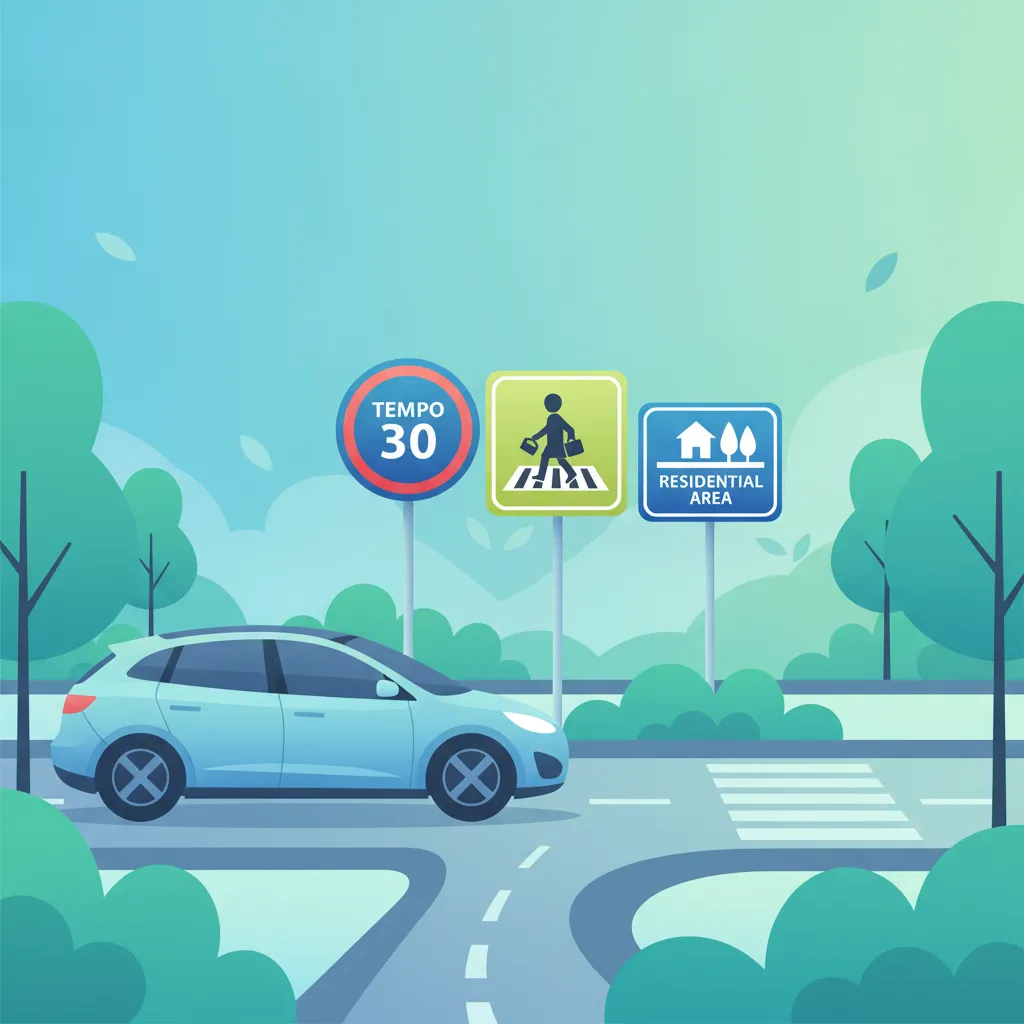
This lesson covers areas with special traffic regulations designed to protect vulnerable road users. Learners will understand the rules and reduced speed limits applicable in Tempo-30 zones, residential areas, and around schools. The content emphasizes the need for heightened awareness and a defensive riding style in these designated zones.
This lesson explores pedestrian right-of-way at various crossings, including zebra crossings and pedestrian islands. It emphasizes the need for drivers to reduce speed, anticipate pedestrian movement, and stop safely when required. The content also covers special regulations that apply in school zones, such as reduced speed limits and heightened vigilance.
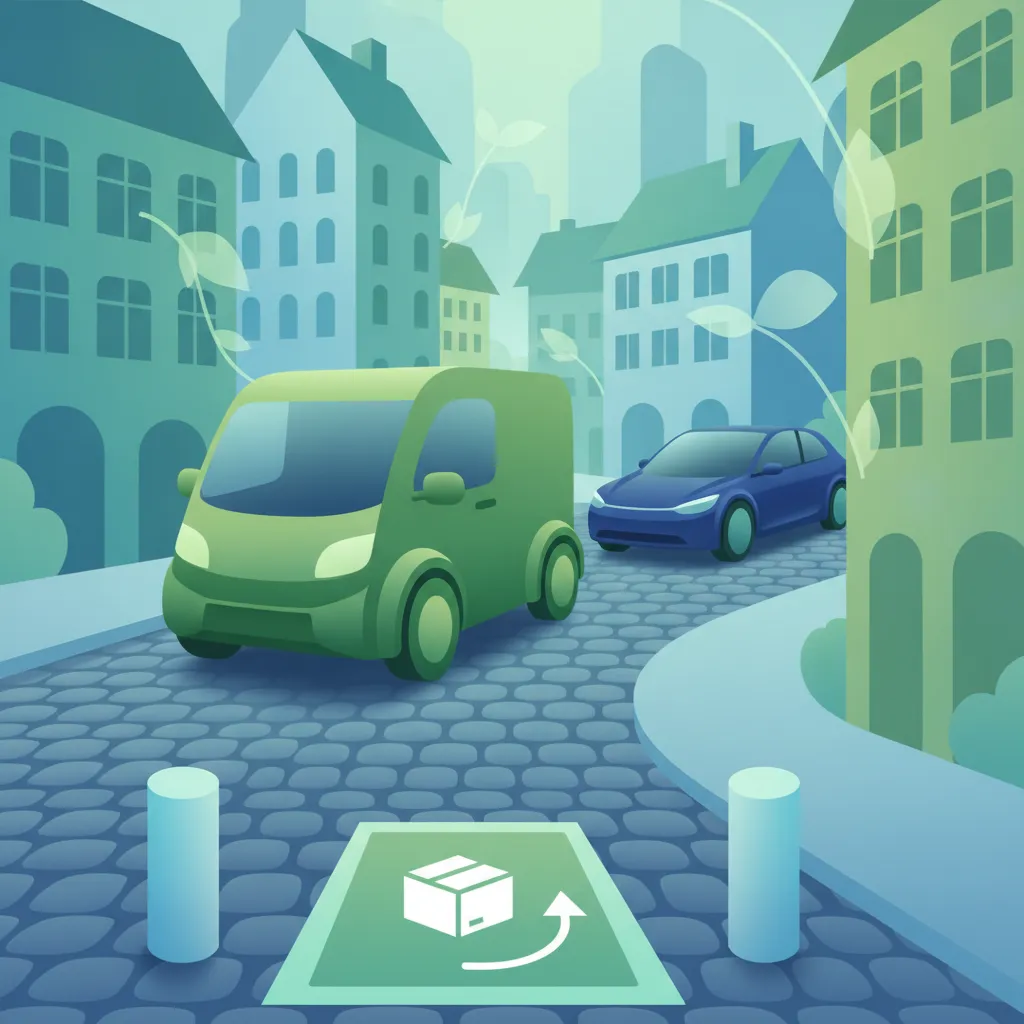
Urban driving requires heightened awareness and careful planning. This lesson covers the challenges of narrow streets, heavy traffic, and the need to identify designated loading and unloading zones. It emphasizes the importance of planning routes in advance to account for time-based access restrictions and to avoid unsuitable roads.
Sharing road space with trams presents unique challenges, including different priority rules and physical hazards like tracks. This lesson covers the Swiss regulations regarding tram priority at junctions and stops. It also provides practical advice on crossing tram tracks safely and maintaining awareness of tram movements.
Motorway driving involves high speeds and requires constant concentration. This lesson covers correct lane discipline, safe procedures for joining and leaving the motorway, and techniques for overtaking other large vehicles. Maintaining appropriate speed and a safe following distance is emphasized throughout.
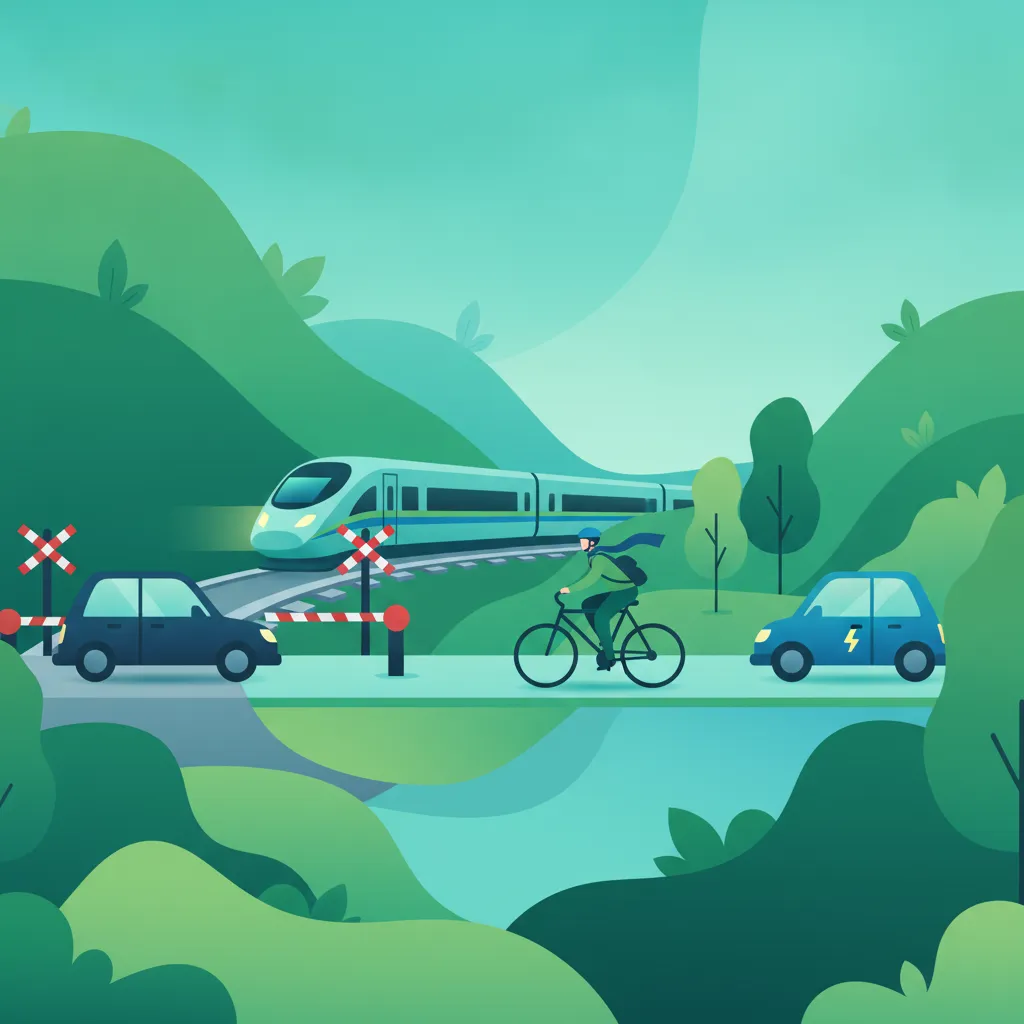
This lesson examines special traffic situations such as railway level crossings and shared zones where different road users coexist. It explains the specific safety procedures required at railway crossings and how to behave in shared zones with mixed traffic. The content also addresses the need to yield to oncoming trains and follow special signage in these unique zones.
Motorway driving requires constant concentration due to high speeds. This lesson emphasizes the importance of staying in the right-hand lane unless overtaking and the specific restrictions on lorry overtaking in Switzerland. It reinforces the need for a following distance of at least four seconds to compensate for the vehicle's long stopping distance and provides guidance on safely merging and exiting.
This lesson details the operation of traffic light systems in Switzerland. It explains the sequence and meaning of red, amber, and green lights, including flashing amber signals. The content also covers specific signals for pedestrians and the priority rules associated with tram signals to ensure safe interaction at controlled intersections.
Find clear answers to common questions learners have about Safe Procedures Around Schools, Playgrounds, and Residential Areas. Learn how the lesson is structured, which driving theory objectives it supports, and how it fits into the overall learning path of units and curriculum progression in Switzerland. These explanations help you understand key concepts, lesson flow, and exam focused study goals.
Due to their size and weight, large passenger vehicles have longer stopping distances and larger blind spots. Reducing speed in residential areas provides the necessary buffer to react to unpredictable movements from children or cyclists.
Always scan for small gaps and motion between parked vehicles. Children are often obscured by cars and may step into the road without checking for traffic, requiring you to be ready to brake instantly.
Yes, hazard perception is a core component of the Swiss exam. You will encounter scenario-based questions that test your ability to anticipate risks in high-traffic pedestrian areas.
While you should always use professional, smooth driving techniques, ensure your vehicle is visible and your positioning allows others to see you well in advance. Avoid unnecessary horn use, but use light signals or position if you need to alert others safely.
Pinpoint specific Swiss traffic rules, road signs, or driving situations you need to master. Use the practice search to start a focused revision session now and build confidence for your official driving theory exam.