
This lesson explores the rigorous safety standards and specific traffic regulations required when transporting children in Switzerland. As part of your Category D training, you will master the use of warning lights, signs, and the critical procedures for managing child passenger movement at bus stops.
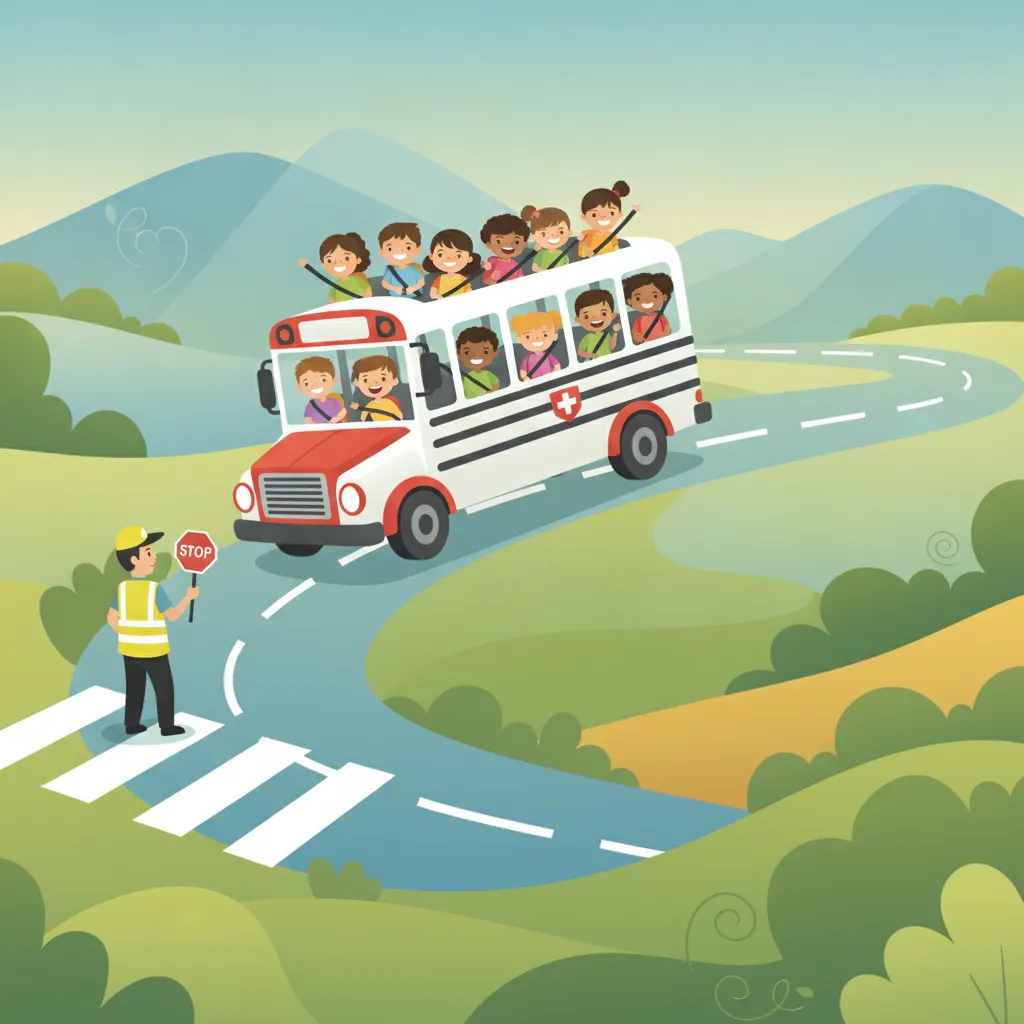
Lesson content overview
Transporting children is among the most responsible tasks a professional Category D driver can undertake. This lesson provides a comprehensive overview of the specific legal requirements, safety protocols, and operational duties for school transport services within Switzerland. It is designed to equip drivers with the knowledge necessary to ensure the highest level of safety for child passengers and other road users.
Understanding these specialized rules, mandated by Swiss law, is crucial for preventing accidents, managing risks, and fostering a safe environment around schools and bus stops. As a driver preparing for your Swiss Category D Driving License Theory Course, mastering these regulations is essential for professional competency and public trust.
The fundamental principle underlying all school transport regulations is the enhanced "duty of care" owed to child passengers. Children are recognized as highly vulnerable road users due to their unpredictable behaviour, smaller size, and developing perception of road hazards. This necessitates a proactive and vigilant approach from every driver involved in school transport.
The driver’s legal and moral obligation extends to ensuring the safety of children from the moment they approach the bus, throughout the journey, and until they have safely departed and are clear of traffic. This comprehensive duty includes adherence to all vehicle signage requirements, meticulous execution of safe boarding and alighting procedures, and active supervision of children at all times.
The unique vulnerability of children requires drivers to anticipate unexpected actions and to prioritize safety above all other considerations, including maintaining traffic flow.
To effectively alert other road users to the presence of a school bus and its child passengers, specific visual indicators and warning systems are legally mandated in Switzerland. These systems are designed to make school transport vehicles highly visible and unmistakable, prompting other drivers to exercise extreme caution.
All vehicles engaged in school transport must be clearly identifiable by a distinctive yellow plate featuring the words "SCHOOL BUS" or "SCHULBUS". This plate is a critical visual cue for other drivers, signaling that children may be boarding, alighting, or otherwise present in the vicinity of the vehicle.
The yellow school bus plate must be displayed prominently on the rear and, in many cases, also on the sides of the bus. Its design, adhering to European standards, ensures universal recognition. The purpose is to create an immediate visual association for any approaching or following traffic, prompting them to slow down and be prepared for potential stops or child movements.
Beyond static signage, school buses are equipped with active warning light systems to signal operational status, particularly during stops for passenger exchange. These lights are paramount for enhancing safety during the most critical phases of school transport: boarding and alighting.
The use of amber flashing lights is mandatory for school buses when the vehicle stops for the purpose of picking up or dropping off passengers. These lights must be activated at least 5 metres before the bus comes to a complete stop. This pre-emptive activation provides an essential warning to following and oncoming traffic, giving them ample time to react by slowing down or stopping.
Mandatory warning lights that flash amber to alert other road users when a school bus stops for boarding or alighting passengers. They must be activated at least 5 meters before stopping.
The amber lights serve as a universal signal of caution, indicating a potential hazard or a change in traffic conditions related to vulnerable road users. Failure to activate these lights at the correct time significantly reduces the bus's visibility and warning effectiveness, increasing the risk of accidents.
In addition to the mandatory amber lights, some school buses may be equipped with red warning lights. These are optional auxiliary lights that can be used to provide an extra visual cue that the bus is stopped for boarding or alighting.
Optional auxiliary lights used on school buses, in addition to amber lights, to provide an extra visual cue that the bus is stopped for boarding/alighting. They must not be confused with brake lights.
It is crucial that these red warning lights are distinct from the vehicle's standard brake lights and are used only when the bus is stationary for passenger exchange. Activating them while the bus is in motion could confuse other drivers, potentially leading to dangerous reactions such as sudden braking. The primary goal of both amber and red warning lights is to unequivocally communicate the bus's operational state to all surrounding traffic.
The process of stopping to allow children to board or alight is highly critical and demands strict adherence to a specific protocol. These procedures are designed to minimize children's exposure to moving traffic and ensure their safe entry and exit from the bus.
Every stop at a designated school bus halt requires a systematic approach to ensure maximum safety.
Anticipate and Signal: Begin gradually reducing speed well in advance of the stop. Check mirrors, signal your intention to pull over, and activate the amber flashing lights at least 5 metres before the designated stopping point.
Select Safe Stopping Point: Choose a location that ensures the bus does not obstruct traffic unnecessarily, but prioritises child safety. The bus must stop at a distance of no less than 2 metres from the curb. This space is crucial for allowing doors to open fully without impeding traffic and for children to exit onto a safe area.
Engage Additional Warnings (Optional): If the bus is equipped with red warning lights, activate them once the bus is fully stationary and before opening the doors. Ensure these are not confused with brake lights.
Verify Clear Area Before Opening Doors: This is a critical safety check. Before opening the doors, the driver must thoroughly check all mirrors, blind spots, and the immediate surroundings to confirm that the area around the doors is absolutely clear of moving vehicles, pedestrians, or cyclists. Only open doors when it is safe to do so.
Supervise Boarding/Alighting: Maintain active visual supervision of children as they enter or exit the bus. Ensure they use the handrails, do not rush, and proceed to or from a safe area. If a child needs to cross the road, provide clear instructions and ensure it is safe before they proceed.
Close Doors and Deactivate Warnings: Once all children have safely boarded or alighted, and the doors are fully closed, deactivate the red (if used) and amber warning lights.
Re-enter Traffic Safely: Before moving, perform a final check of mirrors and blind spots. Signal your intention to re-enter traffic and proceed smoothly only when the path is clear and safe.
Many incidents at bus stops stem from a few common errors. Drivers must avoid stopping abruptly without warning, failing to use the amber flashing lights, or opening doors into traffic before ensuring the area is clear. Stopping too close to the curb can also restrict door opening, forcing children to navigate a confined space and potentially step into the road.
Never open bus doors before you are absolutely certain that the immediate area is clear of all moving traffic and hazards. Children may instinctively rush out, placing them in immediate danger.
The responsibility for child safety extends far beyond the mechanical operation of the bus. The driver plays an active and continuous role in supervising children, particularly during boarding, alighting, and while the vehicle is in motion.
During the boarding process, the driver must monitor each child as they enter, ensuring they find a seat or a designated standing area safely before the bus begins to move. Similarly, during alighting, the driver must observe children as they exit, ensuring they step onto a safe surface and do not rush into traffic. If an assistant is present, they may assist, but the ultimate responsibility rests with the driver.
Once the bus is in motion, children must be either seated or standing in designated areas. It is the driver's duty to ensure that no child moves freely about the aisle, stands on seats, or engages in behaviour that could compromise their safety during sudden braking or turns. Seat belt use, where available, should be encouraged or enforced according to company policy and legal requirements.
Children often exhibit impulsive behaviour and may not fully grasp traffic dangers. A responsible school bus driver is constantly scanning not just for traffic, but also for potential hazards related to children both inside and outside the bus. This proactive vigilance is key to preventing accidents caused by children's unpredictable actions.
Operating a school bus requires heightened awareness, especially when driving through designated school zones, near playgrounds, or in residential areas where children are likely to be present. These environments demand additional caution and specific adherence to traffic rules.
School zones typically enforce reduced speed limits, often 30 km/h, to enhance safety for children. It is mandatory for school bus drivers to strictly observe these reduced limits. Driving at a lower speed significantly increases reaction time, shortens stopping distances, and reduces the severity of potential collisions.
Even if no children are immediately visible, drivers must maintain the reduced speed in these zones, as children can appear unexpectedly from behind parked cars, bushes, or buildings.
School bus drivers must be particularly vigilant around pedestrians and cyclists, especially children on foot or bicycles. At designated crossings, pedestrians always have priority.
The mandatory action for drivers to stop and allow pedestrians to cross safely at a zebra crossing, giving them priority.
If a child is waiting to cross at a zebra crossing, the bus must stop and allow them to cross safely before proceeding. Cyclists, being vulnerable road users, must also be given adequate space and consideration when the bus is stopping or moving near them. Clear signalling and a patient approach are vital to prevent conflicts and ensure their safety.
Operating a school transport service in Switzerland involves significant legal and administrative responsibilities that extend beyond daily driving duties. These regulations ensure that both the vehicle and the driver meet stringent safety and competency standards.
School transport services and their drivers must maintain specific documentation:
The Swiss driving license category required for operating buses and coaches weighing over 3,500 kg and designed for more than eight passengers, in addition to the driver. Specific endorsements may be needed for school transport.
All aspects of school transport operation must comply with the Regulation of the Road Traffic (RVV), which governs traffic rules in Switzerland. This includes general traffic laws as well as specific provisions for special transport services. Ignorance of these rules is not an excuse for non-compliance and can lead to severe penalties.
Understanding common mistakes and their potential consequences is crucial for preventing them. Violations of school transport rules can have serious implications for child safety and lead to significant legal penalties for the driver and operator.
Safe school transport requires adaptability. Drivers must adjust their procedures based on environmental conditions, road types, and specific operational contexts to maintain the highest safety standards.
The role of a school bus driver in Switzerland extends far beyond simply transporting children from one point to another. It embodies a profound duty of care, requiring meticulous attention to detail, adherence to specific legal requirements, and proactive risk management. By consistently applying the rules for identification, warning systems, safe stopping, and vigilant supervision, professional Category D drivers safeguard the lives of their young passengers and contribute significantly to overall road safety.
This lesson covers the heightened duty of care and specific legal requirements for operating school transport services in Switzerland under Category D regulations. Key topics include mandatory identification signage (yellow SCHULBUS plate), warning light systems (amber flashing lights activated 5m before stopping, optional red lights), and detailed safe stopping procedures requiring a minimum 2-metre distance from the curb. Drivers must actively supervise children during boarding and alighting, enforce reduced 30 km/h speeds in school zones, and yield to pedestrians at zebra crossings. Additional operational requirements include maintaining passenger manifests, complying with RVV regulations, and adapting procedures for weather conditions and environmental contexts such as urban, mountainous, or residential areas.
A short set of high-value points that capture the most important learning from this lesson.
Swiss school buses must display yellow SCHULBUS plates and activate amber flashing lights at least 5 metres before stopping for passenger exchange
Drivers must stop at least 2 metres from the curb to allow safe door operation and prevent children stepping into traffic
School zone speed limits of 30 km/h apply even when no children are immediately visible due to unpredictable child behaviour
The driver's duty of care extends from children approaching the bus through safe alighting until they are clear of traffic
Red warning lights are optional and must never be confused with brake lights or activated while the bus is in motion
Explore all units and lessons included in this driving theory course.
Amber lights = mandatory warning when stopping; Red lights = optional extra alert, never for motion use
Never open doors until mirrors, blind spots, and immediate surroundings are confirmed completely clear
Passenger manifest must be checked before departure and at each significant stop for accountability
Yield to pedestrians at zebra crossings, particularly children waiting to cross in front of the bus
Environmental conditions (rain, snow, fog) require increased following distances and enhanced visibility measures
Failing to activate amber warning lights before stopping, reducing visibility for other road users
Opening doors before verifying the area around doors is clear of moving traffic and pedestrians
Stopping too close to the curb (less than 2m), restricting door opening and forcing children toward traffic
Exceeding 30 km/h speed limits in school zones, dramatically increasing stopping distances and collision severity
Neglecting passenger manifest checks, compromising accountability and child safety in emergency situations
Lesson content overview
A short set of high-value points that capture the most important learning from this lesson.
Swiss school buses must display yellow SCHULBUS plates and activate amber flashing lights at least 5 metres before stopping for passenger exchange
Drivers must stop at least 2 metres from the curb to allow safe door operation and prevent children stepping into traffic
School zone speed limits of 30 km/h apply even when no children are immediately visible due to unpredictable child behaviour
The driver's duty of care extends from children approaching the bus through safe alighting until they are clear of traffic
Red warning lights are optional and must never be confused with brake lights or activated while the bus is in motion
Explore all units and lessons included in this driving theory course.
Amber lights = mandatory warning when stopping; Red lights = optional extra alert, never for motion use
Never open doors until mirrors, blind spots, and immediate surroundings are confirmed completely clear
Passenger manifest must be checked before departure and at each significant stop for accountability
Yield to pedestrians at zebra crossings, particularly children waiting to cross in front of the bus
Environmental conditions (rain, snow, fog) require increased following distances and enhanced visibility measures
Failing to activate amber warning lights before stopping, reducing visibility for other road users
Opening doors before verifying the area around doors is clear of moving traffic and pedestrians
Stopping too close to the curb (less than 2m), restricting door opening and forcing children toward traffic
Exceeding 30 km/h speed limits in school zones, dramatically increasing stopping distances and collision severity
Neglecting passenger manifest checks, compromising accountability and child safety in emergency situations
Explore search topics learners often look for when studying Rules and Responsibilities for School Transport Services. These topics reflect common questions about road rules, driving situations, safety guidance, and lesson level theory preparation for learners in Switzerland.
Browse additional driving theory lessons that cover connected traffic rules, road signs, and common driving situations related to this topic. Improve your understanding of how different rules interact across everyday traffic scenarios.
Understand the critical interactions between school buses and vulnerable road users like pedestrians and cyclists in Switzerland. This lesson covers rules for school zones, crossings, and the driver's enhanced duty of care.

This lesson focuses on general driving safety in areas with a high concentration of children. It stresses the importance of significantly reducing speed, being prepared for unexpected events, and scanning for children between parked cars. The driver must exhibit maximum vigilance in these high-risk environments at all times.
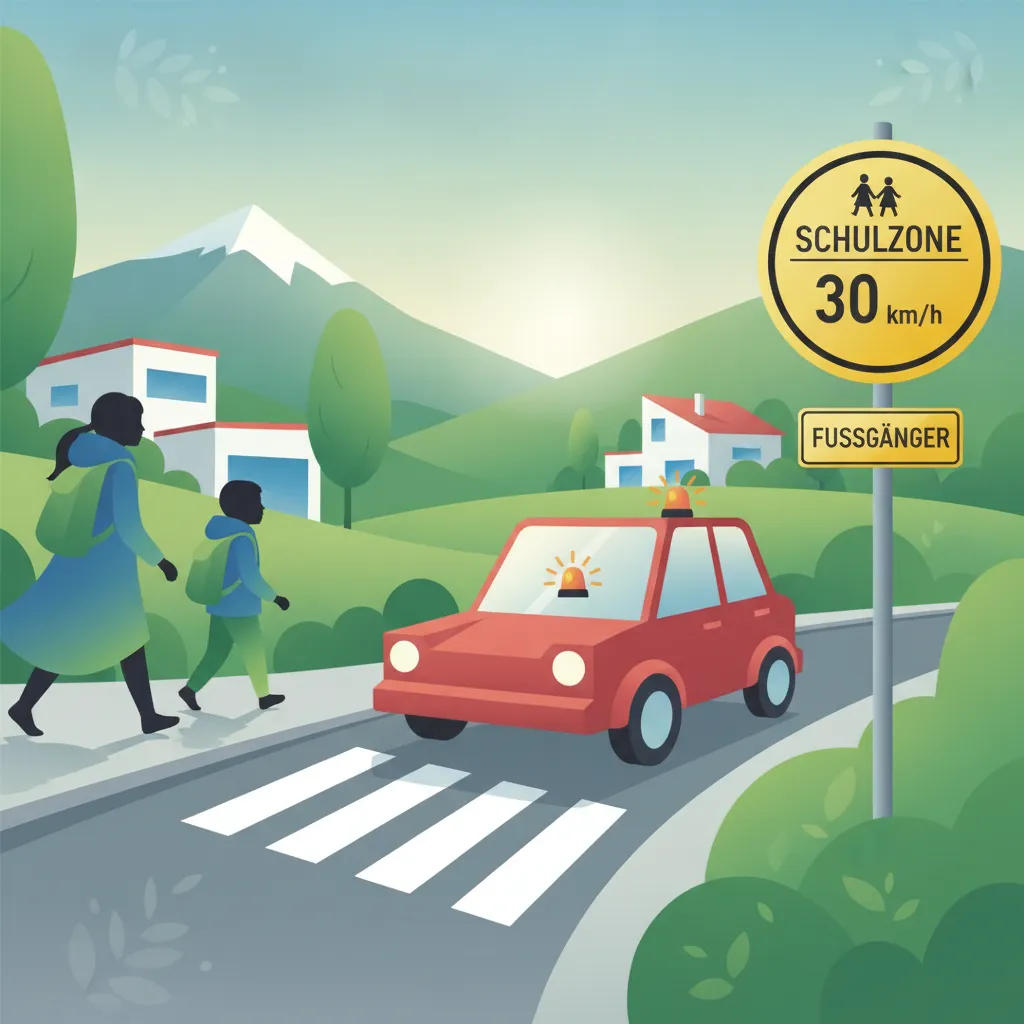
This lesson focuses on school zones, where special speed limits and cautionary measures are required. You will learn to recognize school zone signs, understand reduced speed limits, and be aware of designated child crossing zones. The content also emphasizes the need for heightened vigilance when school buses stop for students to ensure child safety.
This lesson explores pedestrian right-of-way at various crossings, including zebra crossings and pedestrian islands. It emphasizes the need for drivers to reduce speed, anticipate pedestrian movement, and stop safely when required. The content also covers special regulations that apply in school zones, such as reduced speed limits and heightened vigilance.
A stopped bus creates a significant visual obstruction for other road users. This lesson focuses on the risk of pedestrians stepping out from in front of the bus and cyclists passing unexpectedly on either side. It reinforces the need for exhaustive mirror and blind spot checks before moving off to prevent tragic 'pull-away' accidents.
Departing from a bus stop is a high-risk manoeuvre. This lesson details the critical sequence of actions: checking all passengers are clear of the doors, performing a comprehensive mirror and blind spot check, signalling, and waiting for a safe gap in traffic. This systematic approach is essential for preventing collisions with overtaking vehicles, cyclists, or pedestrians.
Pedestrians, cyclists, motorcyclists, and e-scooter riders are extremely vulnerable in any interaction with a heavy vehicle. This lesson instills a defensive mindset, teaching drivers to be hyper-aware of VRUs, especially near junctions, crossings, and cycle lanes. It focuses on anticipation and giving VRUs extra space, as they can be unpredictable and are often hidden in blind spots.
Standing passengers are particularly vulnerable to sudden vehicle movements. This lesson covers the driver's responsibility to adapt their driving style when people are standing. It emphasizes even smoother control, heightened awareness, and clear communication to minimize the risk of falls and injuries.
This lesson focuses on safe interaction with large vehicles. It highlights the significant blind spots (or 'no-zones') around trucks and buses and teaches riders how to position themselves to remain visible. The content also provides guidance on overtaking large vehicles safely and anticipating their wide turning radius at intersections.

Buses and coaches require significantly more distance to stop than cars. This lesson explains why the 'two-second rule' is insufficient and teaches the appropriate methods for calculating a safe gap in various conditions. Maintaining an adequate safety cushion is one of the most important defensive driving skills.

This lesson focuses on the rules governing interactions with public transport vehicles like buses and trams. It explains the priority given to these vehicles at stops and the use of dedicated lanes. Additionally, the content covers tram track crossing procedures and correct vehicle positioning near public transport stops to ensure safety.
Learn how to adapt school bus operations for adverse weather, difficult road types like mountain passes, and specific vehicle loads in Switzerland. Essential knowledge for ensuring passenger safety in varying conditions.
Weather has a profound impact on vehicle handling and visibility. This lesson teaches you how to reduce speed, increase following distances, and use controls smoothly to maintain traction in poor conditions. It also covers the legal requirements and practical application of snow chains in winter.
This lesson focuses on general driving safety in areas with a high concentration of children. It stresses the importance of significantly reducing speed, being prepared for unexpected events, and scanning for children between parked cars. The driver must exhibit maximum vigilance in these high-risk environments at all times.

Driving a large vehicle on mountain passes is a demanding skill. This lesson covers selecting the correct gear for both ascents and descents to maintain control and avoid overheating the brakes. It also explains the specific priority rules that apply on mountain roads and the importance of being aware of sudden weather changes.
Rural driving requires a different mindset from urban driving. This lesson covers how to position your vehicle on narrow roads, how to use passing places effectively, and how to anticipate hazards like slow-moving farm machinery, animals, and concealed junctions. Managing vehicle width and height is a key focus.
This lesson focuses on school zones, where special speed limits and cautionary measures are required. You will learn to recognize school zone signs, understand reduced speed limits, and be aware of designated child crossing zones. The content also emphasizes the need for heightened vigilance when school buses stop for students to ensure child safety.
The legal speed limit is a maximum, not a target. This lesson teaches the professional driver's approach to speed management, which involves constantly assessing traffic, road, and weather conditions. You will learn to adjust your speed to ensure you can always stop safely within the distance you can see to be clear.
Motorway driving involves high speeds and requires constant concentration. This lesson covers correct lane discipline, safe procedures for joining and leaving the motorway, and techniques for overtaking other large vehicles. Maintaining appropriate speed and a safe following distance is emphasized throughout.

This lesson examines the impact of various weather conditions on driving safety. It explains how to adjust speed in low visibility and the risks of aquaplaning in heavy rain. The content also covers using snow chains in snowy conditions, handling icy surfaces, and dealing with strong winds, particularly on bridges and open roads.
Driving a bus in older parts of a city requires exceptional spatial awareness and precise control. This lesson focuses on assessing clearances, managing front and rear overhang, and negotiating tight turns around parked cars and buildings. A key theme is slow, careful, and deliberate manoeuvring to avoid contact.
This lesson examines the impact of weather and visibility on driving safety and speed selection. It covers how fog, rain, snow, and darkness affect visibility and reaction times, providing guidelines on adjusting speed. It also includes strategies for improving visibility, such as proper headlamp use, to ensure you can adapt to varying weather conditions.
Find clear answers to common questions learners have about Rules and Responsibilities for School Transport Services. Learn how the lesson is structured, which driving theory objectives it supports, and how it fits into the overall learning path of units and curriculum progression in Switzerland. These explanations help you understand key concepts, lesson flow, and exam focused study goals.
Swiss vehicles designated for school transport must display the official school bus sign (the yellow square with the black child silhouette) and, in many cases, are equipped with specific flashing warning lights to alert other road users that children are boarding or alighting.
Yes, as a professional driver, you hold a high duty of care. You must ensure that boarding and alighting occur in a safe, controlled manner, monitoring the area through your mirrors and cameras until all children are safely clear of the vehicle's danger zones.
While standard bus stop procedures prioritize traffic flow and scheduled timing, school transport regulations emphasize extra time for children's slower reaction speeds, mandatory use of designated signs, and often stricter protocols for stopping in residential areas to minimize road crossing hazards.
You must exercise extreme caution. When you encounter a school bus with hazard or warning lights active, you should prepare for sudden pedestrian movement and reduce your speed significantly to ensure you can stop immediately if a child attempts to cross the road.
Pinpoint specific Swiss traffic rules, road signs, or driving situations you need to master. Use the practice search to start a focused revision session now and build confidence for your official driving theory exam.