
This lesson focuses on the high-stakes responsibility of identifying and anticipating the actions of vulnerable road users while operating a bus or coach. You will learn to scan for pedestrians, cyclists, and children in busy urban environments, directly preparing you for the hazard perception requirements of your Swiss Category D theory exam.
Lesson content overview
As a professional driver holding a Swiss Category D Driving License, your responsibility extends far beyond simply operating a large passenger vehicle. A critical aspect of your duty of care is the identification and anticipation of vulnerable road users (VRUs). These individuals – pedestrians, cyclists, and motorcyclists – lack the protective enclosure of a vehicle and are at a significantly higher risk of severe injury in a collision. This lesson will equip you with the knowledge and strategies to proactively manage these risks, ensuring the safety of everyone on the road.
Vulnerable Road Users (VRUs) are defined as road participants who are more likely to be injured in a collision due to their lack of protective equipment or significant physical mass compared to a motor vehicle. For bus and coach drivers, this category primarily includes:
The practical implication for professional drivers is that VRUs frequently interact with larger vehicles in shared spaces. While they often have specific rights of way at zebra crossings, pedestrian signals, and designated cyclist lanes (unless signage indicates otherwise), relying solely on these rules is insufficient. Drivers must actively compensate for the VRUs' inherent vulnerability and potential unpredictability. A common misunderstanding is assuming VRUs will always obey traffic signals or that they are easily seen from a distance.
Operating a bus or coach under a Swiss Category D Driving License comes with an elevated legal and ethical responsibility – known as a heightened duty of care. This obligation requires you to protect your passengers, other road users, and especially vulnerable individuals. The sheer size, weight, and stopping distances of buses make collisions with VRUs particularly severe. Therefore, proper identification and anticipation are not just good practice; they are critical for safe urban and suburban transport operations and are mandated by Swiss transport regulations.
The risk of collision with VRUs is disproportionately high for larger vehicles due to:
This lesson builds upon foundational knowledge of vehicle dynamics, blind spots, and safe stopping, feeding into later modules on specific hazards near bus stops, school transport, and high-traffic areas. The main theme is the proactive management of risk through early detection and anticipatory driving.
Effective protection of VRUs stems from a set of core driving principles that professional drivers must internalise and apply consistently.
Definition: Continuous scanning for pedestrians, cyclists, and motorcyclists, even when they are not in the immediate path or appear to be outside the flow of traffic.
Purpose: VRUs can appear suddenly, especially from behind, from obscured positions, or when emerging from parked vehicles. Constant vigilance helps detect them early.
Implications: Drivers must adopt a disciplined scanning routine, using all mirrors (internal and external), and actively checking areas known to be blind spots. This means looking beyond other vehicles and actively searching.
Definition: Adjusting speed and trajectory based on the predicted actions of VRUs, rather than simply reacting to their immediate movements.
Purpose: Provides sufficient time and space to react safely to unexpected or sudden VRU movements. It transforms driving from reactive to proactive, improving overall safety.
Implications: Requires early assessment of surroundings, interpreting environmental cues (e.g., children near a school, open car doors), making pre-emptive speed adjustments, and maintaining safe following distances to create a safety buffer.
Definition: Actively identifying and compensating for zones around the vehicle that are not directly visible from the driver's seat, despite proper mirror adjustment.
Purpose: VRUs, particularly cyclists and motorcyclists, can easily become hidden within a bus's extensive blind spots. Without active compensation, they remain invisible until it's too late.
Implications: Drivers must routinely use mirrors, perform quick head checks (shoulder checks) before changing lanes or turning, and utilise external camera systems where available. Regular mirror adjustments are crucial.
Definition: Paying particular attention to peripheral vision to detect vulnerable users approaching from the side or angles that might not be directly in the main field of view.
Purpose: VRUs often enter the vehicle’s path from side streets, driveways, or by unexpectedly stepping off curbs into pedestrian crossings. Peripheral awareness helps detect these movements.
Implications: Adopt a wider visual scanning angle, constantly move your eyes, and adjust speed when approaching intersections, parked vehicles, or areas with high VRU activity.
Definition: Maintaining a significantly larger following distance than mandated for passenger cars, specifically due to the longer stopping distances of buses and coaches.
Purpose: Allows considerably more reaction time for the driver to respond to unexpected VRU movements that may appear ahead, or to vehicles ahead that stop suddenly for VRUs.
Implications: Apply a trailing distance of at least 4 seconds in urban areas (below 60 km/h) and a minimum of 5 seconds on higher-speed routes (above 60 km/h). This is a critical safety margin.
Definition: Proactively reducing vehicle speed in zones identified as having a high presence of VRUs (e.g., near schools, bus stops, residential areas, pedestrian zones).
Purpose: Lower speeds dramatically reduce stopping distance and afford the driver more reaction time to observe and respond to VRU actions. It also reduces the severity of any potential collision.
Implications: Follow specific speed limits for VRU zones as mandated by Swiss law (e.g., 30 km/h in school zones), and be prepared to reduce speed even further based on actual VRU presence and activity.
Definition: The overarching legal and ethical obligation to protect vulnerable road users and passengers as part of professional transport operations.
Purpose: Reflects the higher responsibility placed upon professional drivers due to the public service nature of passenger transport and the potential consequences of errors.
Implications: This principle must be upheld at all times, not just during high-risk scenarios. It dictates a proactive, cautious, and defensive driving style, particularly during boarding/alighting activities and near any VRU interaction points.
Beyond the core principles, specific strategies and a deep understanding of common VRU behaviour are crucial for safe operation.
The larger dimensions of a bus create extensive blind spots that significantly increase the risk for VRUs.
Practical Measures:
Always assume a VRU is present in your blind spot, especially when making a turn or changing lanes, until you have positively identified that the area is clear.
Anticipatory driving involves constantly asking "what if?" and preparing for potential hazards. This requires developing a keen observation skill and understanding common VRU behaviours.
Adjusting driving behaviour (speed, position, attention) based on the predicted actions of other road users, environmental cues, and potential hazards, rather than merely reacting to events as they unfold.
For a bus or coach, the concept of a safe following distance is amplified due to vehicle weight and braking characteristics. The standard two-second rule for passenger cars is insufficient.
How to Measure: Choose a fixed point (e.g., a road sign or tree) and count "one thousand one, one thousand two..." after the vehicle ahead passes it. If your front bumper reaches that point before you finish counting to four or five, you are too close.
Reducing speed is the most effective way to mitigate risk in areas with high VRU presence.
Compliance with Swiss traffic law is paramount for professional drivers. Several key regulations directly address the interaction between vehicles and vulnerable road users.
Statement: Drivers must yield to pedestrians who have stepped onto a marked pedestrian crossing (zebra crossing) or who are clearly in the process of crossing. This also applies at pedestrian islands and during green pedestrian signals.
Applicability: Mandatory at all designated pedestrian crossings across Switzerland.
Rationale: Pedestrians are inherently unprotected. Stopping prevents collisions and demonstrates the driver's duty of care.
Correct Example: Approaching a zebra crossing, a child steps off the pavement. The bus driver slows, stops well before the crossing, and waits for the child to cross completely before proceeding.
Incorrect Example: The bus driver proceeds without stopping, assuming the child will wait, forcing the child to hurry or stop.
Statement: A bus must maintain at least a 4-second distance behind a vehicle traveling below 60 km/h in urban areas and a 5-second distance when traveling above 60 km/h (e.g., on higher-speed urban routes or intercity roads).
Applicability: All urban and intercity roadways; this rule applies regardless of VRU presence but is particularly critical when VRUs might appear unexpectedly in front.
Rationale: Buses have significantly longer stopping distances due to their mass and laden weight. This increased gap provides essential reaction time.
Correct Example: Driving through a busy shopping district at 40 km/h, the bus driver maintains a 4-second gap to the car in front, allowing time to react if the car brakes for a pedestrian crossing.
Incorrect Example: Following a car too closely, resulting in insufficient reaction time when the car abruptly stops for a cyclist.
Statement: Speed must be reduced to the posted limit (often 30 km/h) in school zones, residential areas, and near pedestrian crossings. Even if the limit is higher, drivers must adapt their speed to conditions and VRU presence.
Applicability: Clearly marked zones; speed must be adjusted regardless of traffic flow.
Rationale: Lower speeds reduce stopping distance and significantly decrease the severity of potential collisions with VRUs.
Correct Example: Reducing speed to 20 km/h when approaching a primary school during dismissal time, scanning for children who might run into the road, even if the posted limit is 30 km/h.
Incorrect Example: Maintaining 50 km/h in a 30 km/h school zone, assuming the bus’s size and perceived authority compensate for the increased risk.
Statement: When a cyclist is traveling in a designated bike lane parallel to the bus route, the bus driver must not encroach upon that space and must yield when the cyclist is merging into the traffic lane or crossing the bus's path.
Applicability: Applies whenever a designated bike lane is present, including at merging points and intersections.
Rationale: Cyclists are vulnerable. Intrusion into their dedicated space or failure to yield during a merge risks causing them to lose balance, fall, or be struck.
Correct Example: Approaching an intersection where a dedicated bike lane merges into the main traffic lane for a right turn, the bus driver slows down and allows the cyclist ahead to merge safely before proceeding.
Incorrect Example: The bus cuts across the bike lane to overtake a vehicle, forcing a cyclist in the lane to brake sharply or swerve.
Statement: Vehicles must come to a complete stop at designated bus stops before passengers embark or alight. The bus must stop in a position that does not block pedestrian crossings or force passengers into the roadway.
Applicability: Formal bus stops, roadside pick-up points, and temporary stops in residential areas.
Rationale: Prevents passengers (who are also VRUs once outside the vehicle) from stepping into traffic and ensures their safety during the most vulnerable part of their journey.
Correct Example: The bus approaches a stop, ensures it halts completely before the pedestrian crossing at the stop, opens doors, and allows passengers to exit onto the pavement safely.
Incorrect Example: The bus pulls too far forward, stopping directly on a pedestrian crossing, forcing alighting passengers to navigate live traffic. Or, it stops too far from the curb, creating a hazardous step for passengers.
Understanding common scenarios where VRU collisions occur helps drivers proactively prevent them.
Safe driving around VRUs is highly dependent on adapting to various conditions and specific interactions.
The strategies discussed are rooted in fundamental principles of human perception and vehicle dynamics.
Let's look at practical situations to reinforce correct behaviour.
Setting: A busy urban intersection during daylight hours, with moderate vehicle and pedestrian traffic. A marked zebra crossing is present just before the intersection.
Relevant Rule: Drivers must yield to pedestrians on the crossing.
Correct Behaviour: The bus driver approaches the intersection at a reduced speed, scanning both sides of the road for pedestrians. Seeing a group of children waiting at the crossing, the driver slows down further and brings the bus to a complete stop before the zebra lines, making eye contact with the children. The driver waits patiently for all children to cross safely before proceeding.
Incorrect Behaviour: The bus driver sees the children but assumes they will wait. The bus continues to approach the crossing, forcing the children to either hurry or remain on the pavement, creating a dangerous situation and potential for conflict.
Setting: A school zone (signposted 30 km/h) during school dismissal time on a temperate afternoon. Children are streaming out of the school and congregating near the pavement.
Relevant Rule: Speed limit reduced to 30 km/h; anticipate sudden pedestrian movements.
Correct Behaviour: The bus driver, noticing the time and location, reduces speed to 20 km/h (below the posted limit) well in advance of the school gates. The driver maintains an increased following distance from vehicles ahead and continuously scans for children who might run or walk into the road without looking. The driver covers the brake and is prepared to stop instantly.
Incorrect Behaviour: The bus driver maintains 30 km/h, feeling that this is the legal limit. Due to the higher speed, when a child unexpectedly steps off the curb to retrieve a dropped item, the driver has to brake sharply, causing discomfort for passengers and a near-miss.
Setting: An urban street with a dedicated bike lane running parallel to the bus lane. Ahead, the bike lane merges into the main traffic lane as a right turn approaches. A cyclist is riding in the bike lane, approaching the merge point.
Relevant Rule: Yield to cyclists merging into the traffic lane.
Correct Behaviour: The bus driver observes the cyclist in the mirror and through a head check. Recognising the upcoming merge, the driver reduces speed and creates a safe gap, allowing the cyclist to merge smoothly into the traffic lane ahead of the bus before proceeding.
Incorrect Behaviour: The bus driver, wanting to maintain speed, pulls alongside the cyclist and accelerates, effectively cutting off the cyclist's path into the main lane and forcing them to brake sharply or risk a collision.
Setting: A dark evening. The bus approaches a well-lit bus stop that is immediately followed by an unlit pedestrian crossing. Several pedestrians are waiting at the bus stop and some are approaching the crossing.
Relevant Rule: Use dipped beams, adapt speed for night conditions, and anticipate pedestrians stepping onto the crossing.
Correct Behaviour: The bus driver approaches with dipped beams (avoiding dazzling pedestrians or other drivers), significantly reduces speed, and intently scans the crossing area. The driver stops the bus completely before the unlit pedestrian crossing, with the doors aligned for safe boarding/alighting on the pavement. The driver continues to scan for pedestrians using the crossing before moving off.
Incorrect Behaviour: The bus driver uses high beams unnecessarily, temporarily blinding pedestrians. The driver fails to reduce speed sufficiently, stopping with the bus doors directly on the unlit crossing, creating a hazard for alighting passengers who step into a potentially unobserved area.
Setting: Light rain is falling, the road is wet, and visibility is moderately reduced. Traffic is moving at a steady pace through a mixed urban and suburban area.
Relevant Rule: Adjust speed for conditions; increase following distance, intensify scanning.
Correct Behaviour: The bus driver immediately reduces speed below the usual limit for the road, increasing the following distance to at least 5 seconds. The driver activates dipped headlights and windscreen wipers, and focuses intently on scanning for VRUs, understanding that they may be harder to see in the rain (due to dark clothing, reflections, or spray) and their movements may be less predictable.
Incorrect Behaviour: The bus driver maintains near-standard speed and following distance, relying on automatic wipers. This leads to longer braking distances and reduced reaction time if a cyclist, already less visible in the rain, suddenly turns or loses balance.
To excel as a Swiss Category D driver and ensure the highest level of safety for vulnerable road users, remember these critical actions:
This lesson addresses the critical responsibility of Swiss Category D drivers to identify and anticipate Vulnerable Road Users (VRUs), which includes pedestrians, cyclists, and motorcyclists who lack vehicle protection and are at higher risk of severe injury. Professional bus drivers operate under a heightened legal duty of care, requiring continuous environmental scanning, systematic mirror and head checks to manage extensive blind spots, and anticipatory driving that adjusts speed and trajectory based on predicted VRU behavior rather than reacting to immediate movements. Specific Swiss regulations mandate minimum following distances of 4 seconds in urban areas and 5 seconds on higher-speed routes, yield requirements at pedestrian crossings, and reduced speeds in high-risk zones such as school areas. Understanding VRU behavioral patterns—children's unpredictability, elderly hesitation, distracted users, and cyclist merging behavior—is essential for proactive hazard management and accident prevention.
A short set of high-value points that capture the most important learning from this lesson.
Vulnerable Road Users (VRUs) include pedestrians, cyclists, and motorcyclists who lack vehicle protection and require heightened awareness from bus drivers
Swiss Category D drivers have a legally heightened duty of care due to the severity of potential collisions between large vehicles and VRUs
Systematic mirror checks every 5-8 seconds combined with head checks are essential to compensate for extensive bus blind spots
Anticipatory driving transforms driving from reactive to proactive by predicting VRU behavior based on environment, age, and environmental cues
Early detection and anticipation are the cornerstones of preventing VRU collisions rather than relying on emergency braking
Explore all units and lessons included in this driving theory course.
Buses must maintain at least 4-second following distance below 60 km/h and 5-second distance above 60 km/h due to longer stopping distances
Pedestrians on marked zebra crossings (Fussgängerstreifen) always have right of way once they have stepped onto the crossing
Assume a VRU is present in your blind spot until you have positively verified the area is clear through mirror checks and head checks
Speed must be reduced to 30 km/h in school zones, but you should be prepared to drive even slower based on actual VRU activity
When stopping at bus stops, the entire bus must clear any pedestrian crossing to allow safe passage for alighting passengers and other VRUs
Assuming VRUs will always obey traffic signals or yield as expected, when in reality they may be distracted, elderly, or children acting unpredictably
Neglecting to perform head checks (shoulder checks) before turning or changing lanes, relying solely on mirrors which cannot show all blind spots
Maintaining standard passenger car following distances instead of the required 4-5 second gaps appropriate for heavy vehicles
Driving at exactly the posted 30 km/h speed limit in school zones without reducing further during active periods like dismissal time
Stopping at bus stops with the bus overlapping a pedestrian crossing, forcing passengers to step into traffic to reach the pavement
Lesson content overview
A short set of high-value points that capture the most important learning from this lesson.
Vulnerable Road Users (VRUs) include pedestrians, cyclists, and motorcyclists who lack vehicle protection and require heightened awareness from bus drivers
Swiss Category D drivers have a legally heightened duty of care due to the severity of potential collisions between large vehicles and VRUs
Systematic mirror checks every 5-8 seconds combined with head checks are essential to compensate for extensive bus blind spots
Anticipatory driving transforms driving from reactive to proactive by predicting VRU behavior based on environment, age, and environmental cues
Early detection and anticipation are the cornerstones of preventing VRU collisions rather than relying on emergency braking
Explore all units and lessons included in this driving theory course.
Buses must maintain at least 4-second following distance below 60 km/h and 5-second distance above 60 km/h due to longer stopping distances
Pedestrians on marked zebra crossings (Fussgängerstreifen) always have right of way once they have stepped onto the crossing
Assume a VRU is present in your blind spot until you have positively verified the area is clear through mirror checks and head checks
Speed must be reduced to 30 km/h in school zones, but you should be prepared to drive even slower based on actual VRU activity
When stopping at bus stops, the entire bus must clear any pedestrian crossing to allow safe passage for alighting passengers and other VRUs
Assuming VRUs will always obey traffic signals or yield as expected, when in reality they may be distracted, elderly, or children acting unpredictably
Neglecting to perform head checks (shoulder checks) before turning or changing lanes, relying solely on mirrors which cannot show all blind spots
Maintaining standard passenger car following distances instead of the required 4-5 second gaps appropriate for heavy vehicles
Driving at exactly the posted 30 km/h speed limit in school zones without reducing further during active periods like dismissal time
Stopping at bus stops with the bus overlapping a pedestrian crossing, forcing passengers to step into traffic to reach the pavement
Explore search topics learners often look for when studying Identifying and Anticipating the Actions of Vulnerable Road Users. These topics reflect common questions about road rules, driving situations, safety guidance, and lesson level theory preparation for learners in Switzerland.
Browse additional driving theory lessons that cover connected traffic rules, road signs, and common driving situations related to this topic. Improve your understanding of how different rules interact across everyday traffic scenarios.
Explore common risks and scenarios involving pedestrians, cyclists, and motorcyclists in various Swiss traffic environments. Learn how weather, lighting, and road types impact VRU safety and require specific driving adjustments for Category D drivers.
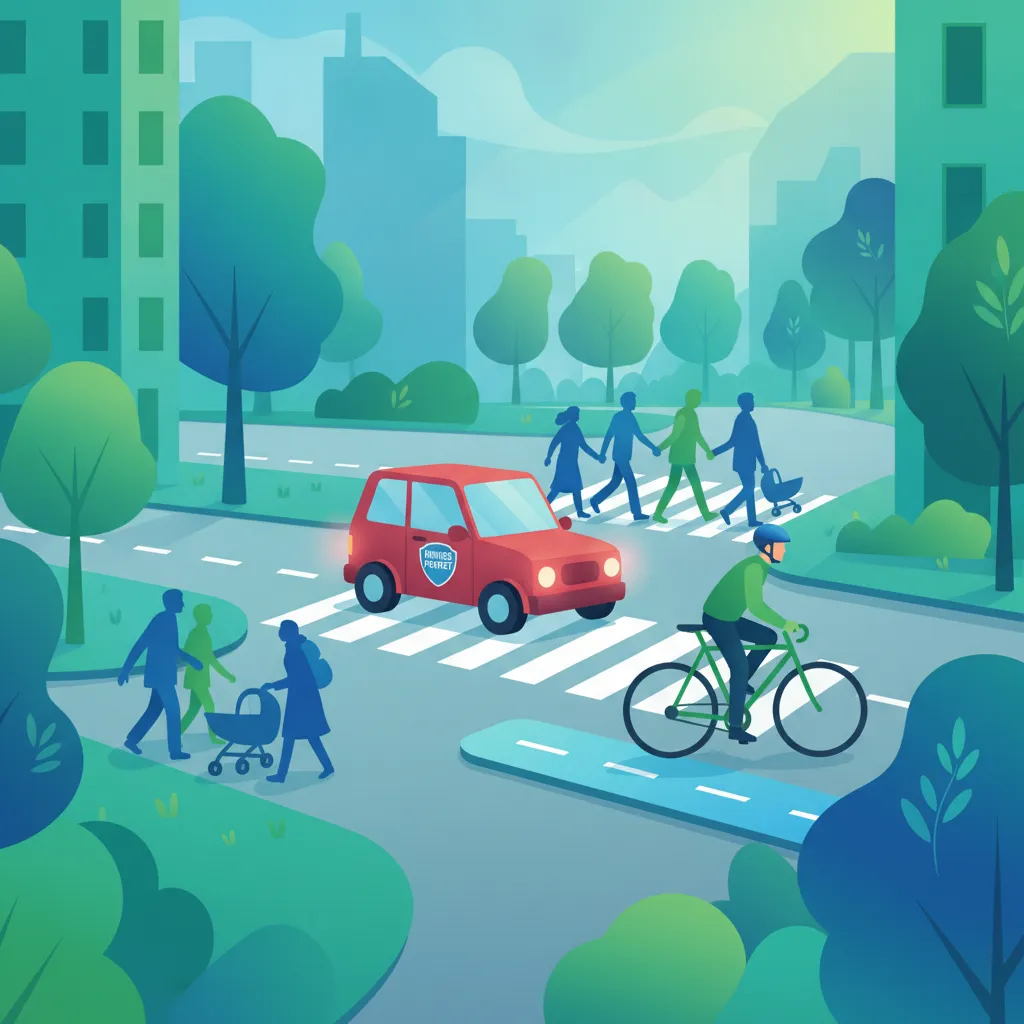
Pedestrians, cyclists, motorcyclists, and e-scooter riders are extremely vulnerable in any interaction with a heavy vehicle. This lesson instills a defensive mindset, teaching drivers to be hyper-aware of VRUs, especially near junctions, crossings, and cycle lanes. It focuses on anticipation and giving VRUs extra space, as they can be unpredictable and are often hidden in blind spots.
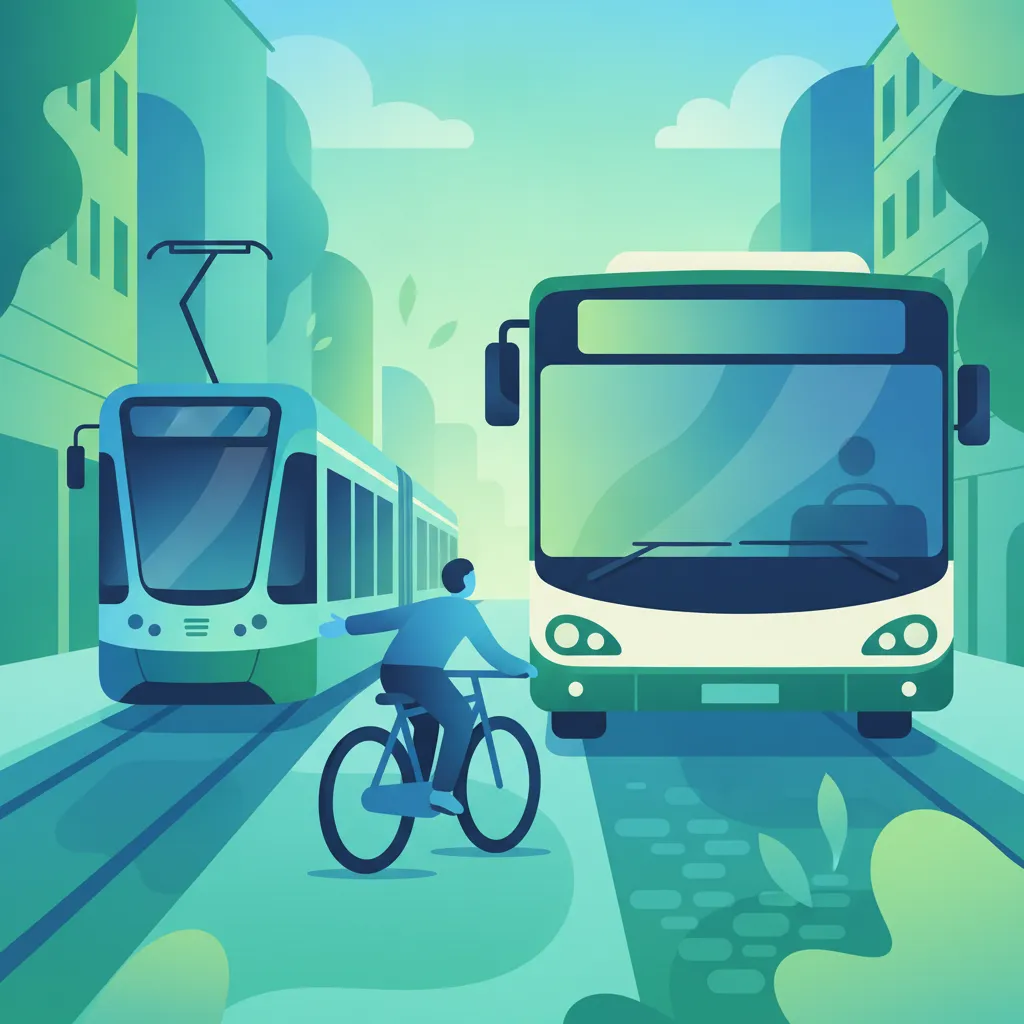
This lesson focuses on safe interaction with large vehicles. It highlights the significant blind spots (or 'no-zones') around trucks and buses and teaches riders how to position themselves to remain visible. The content also provides guidance on overtaking large vehicles safely and anticipating their wide turning radius at intersections.
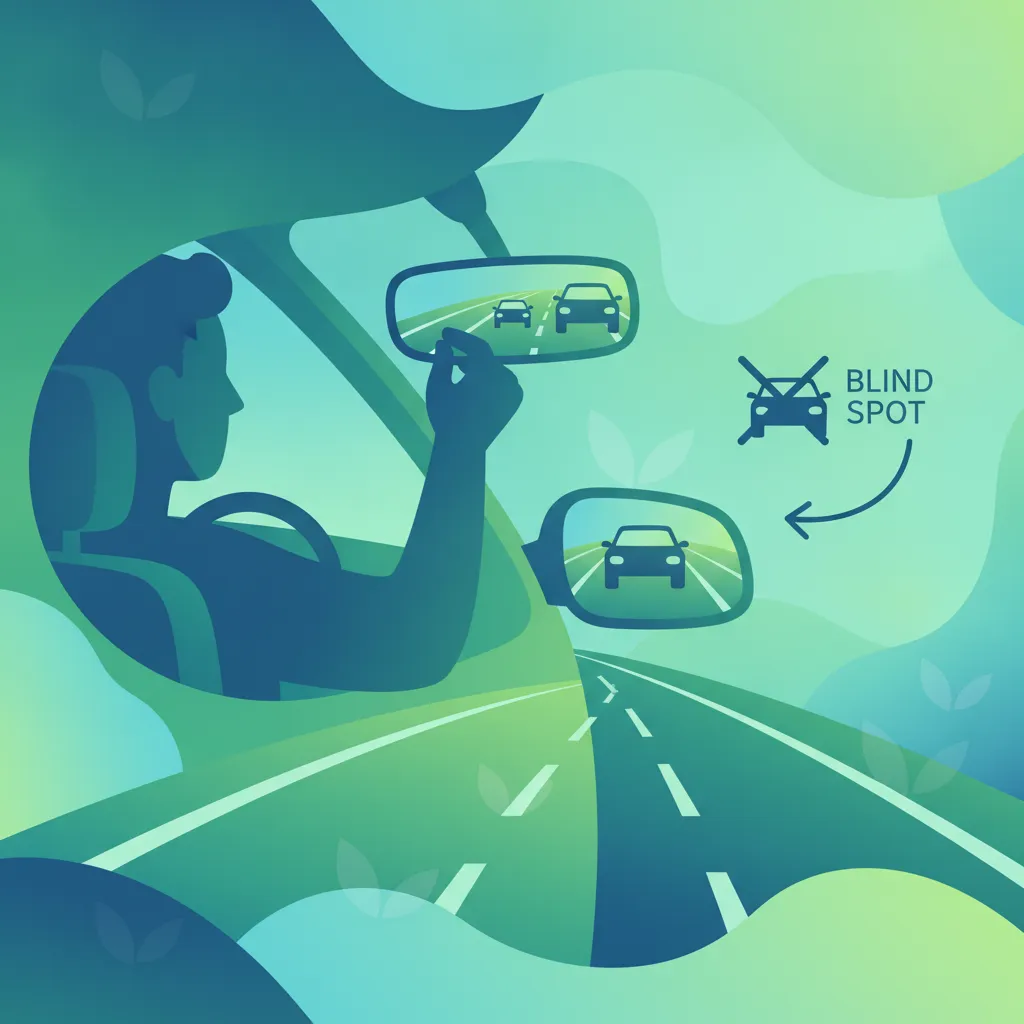
Despite the complex mirror systems, large areas around a truck remain hidden from the driver's view. This lesson maps out these significant blind spots: directly in front, behind, and along both sides of the vehicle. It teaches drivers to be constantly aware of these 'no-zones' and to anticipate that smaller vehicles, cyclists, or pedestrians may be hidden within them, especially before changing lanes or turning.
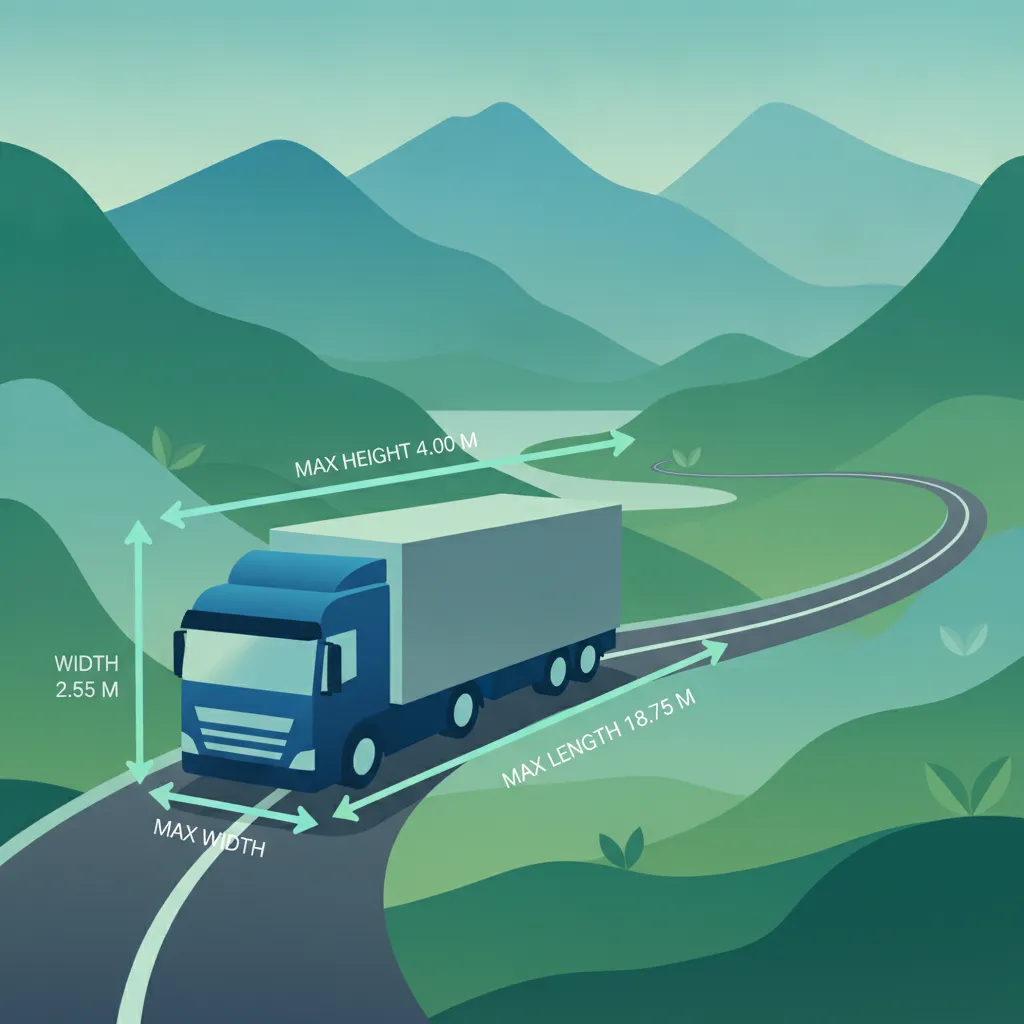
Swiss law strictly regulates the maximum dimensions of commercial vehicles to ensure they can safely navigate the infrastructure. This lesson specifies the standard limits for vehicle height (4.0m), width (2.55m), and length for various lorry and trailer combinations. Adhering to these dimensions is crucial for avoiding collisions with bridges, tunnels, and other structures, and for navigating narrow roads.
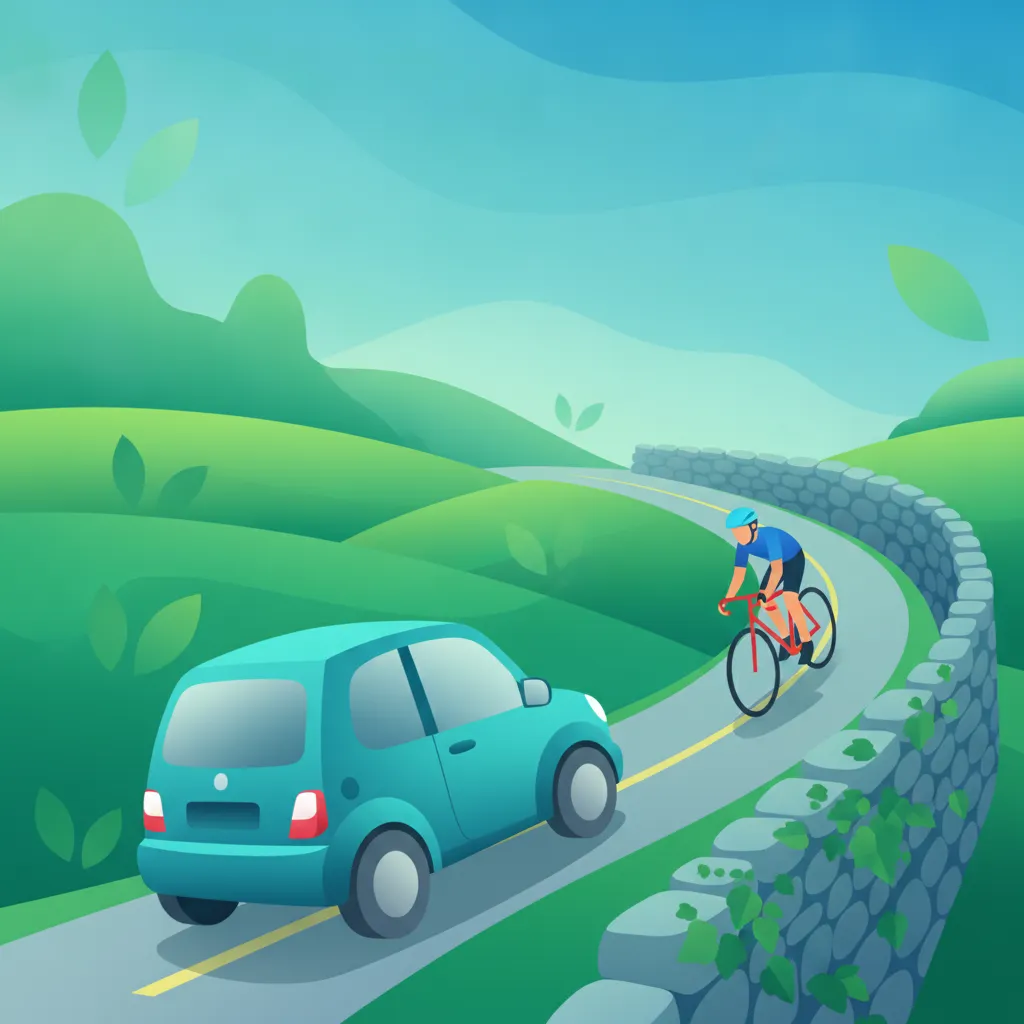
Rural roads present challenges like narrow lanes, poor surfaces, sharp bends, and limited visibility. This lesson teaches drivers how to position their large vehicle to maximize space and visibility, anticipate oncoming traffic at blind corners, and be aware of specific rural hazards. These hazards include slow-moving agricultural vehicles, animals on the road, and concealed farm entrances.
Heavy goods vehicles are fitted with specific safety structures to mitigate the severity of collisions with smaller vehicles and vulnerable road users. This lesson explains the function of the rear underrun bar, which prevents cars from going underneath the truck in a rear-end collision. It also covers side guards, which are designed to stop cyclists and pedestrians from falling under the vehicle's wheels during a side impact.
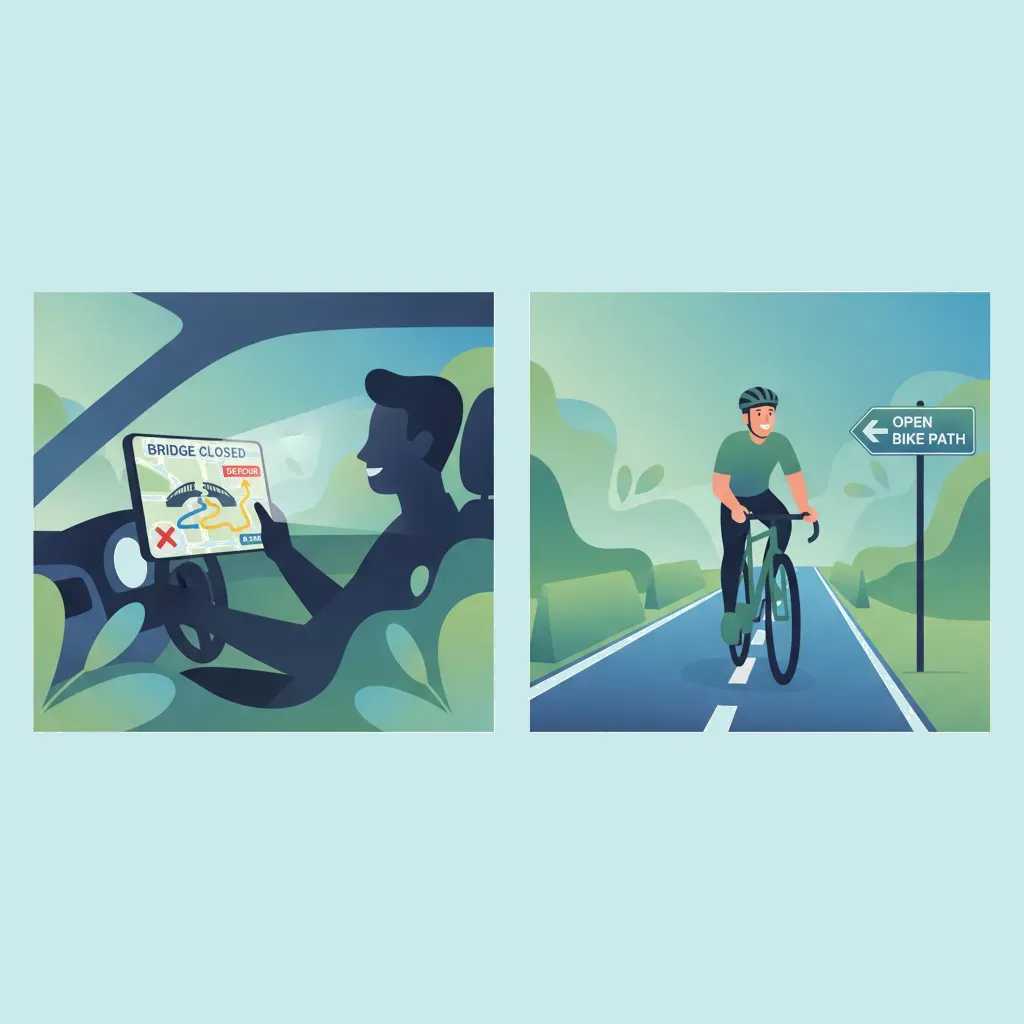
Unlike cars, heavy vehicles cannot travel on every road. This lesson stresses the importance of using HGV-specific satellite navigation systems or carefully checking maps to plan routes that avoid low bridges, weak bridges, and roads with weight or width restrictions. Proper planning saves time, fuel, and prevents dangerous situations or costly damage.
This lesson focuses on strategies for safely interacting with non-standard traffic common on rural roads. It covers how to anticipate the behaviour of slow-moving farm equipment and tourist vehicles, and the legal requirement to yield to emergency services. The importance of patience and safe passing opportunities is stressed.

Heavy vehicles, especially those with a high centre ofgravity, are susceptible to rolling over. This lesson examines the primary causes, including excessive speed on bends or roundabouts, sudden steering manoeuvres, and the 'sloshing' effect of liquid loads in tankers. It reinforces that maintaining a sensible speed and driving smoothly are the best ways to mitigate this serious risk.
Rural driving requires a different mindset from urban driving. This lesson covers how to position your vehicle on narrow roads, how to use passing places effectively, and how to anticipate hazards like slow-moving farm machinery, animals, and concealed junctions. Managing vehicle width and height is a key focus.
Master advanced strategies for identifying and anticipating vulnerable road users, including detailed blind spot management and anticipatory driving. Understand the professional driver's duty of care and Swiss regulations for ensuring VRU safety.
This lesson introduces defensive driving principles, focusing on hazard anticipation, continuous scanning, and proactive positioning. You will learn how to anticipate potential hazards by observing traffic patterns and maintaining situational awareness. Emphasis is placed on proactive speed management to avoid dangerous situations before they arise.
Pedestrians, cyclists, motorcyclists, and e-scooter riders are extremely vulnerable in any interaction with a heavy vehicle. This lesson instills a defensive mindset, teaching drivers to be hyper-aware of VRUs, especially near junctions, crossings, and cycle lanes. It focuses on anticipation and giving VRUs extra space, as they can be unpredictable and are often hidden in blind spots.
This lesson focuses on general driving safety in areas with a high concentration of children. It stresses the importance of significantly reducing speed, being prepared for unexpected events, and scanning for children between parked cars. The driver must exhibit maximum vigilance in these high-risk environments at all times.
This lesson covers the immediate actions to take following a collision. The priorities are to prevent further incidents by securing the scene, to assess the situation for injuries, and to alert the emergency services. You will learn the correct procedures for making the area safe for yourself, your passengers, and other road users.
This lesson emphasizes the broad responsibilities of holding a driver's licence in Switzerland, including adherence to traffic laws and maintaining vehicle roadworthiness. It covers legal obligations related to insurance, registration, and reporting accidents, as well as the consequences of violations. The content reinforces the duty of care drivers owe to all other road users.
This lesson provides a structured guide for managing the scene of a road traffic accident. It covers the internationally recognized priorities: assess for danger, make the scene safe, send for help by calling emergency services (112), and provide first aid to the injured if trained to do so. It also details the legal requirement to stop and exchange information after being involved in a collision.
Heavy goods vehicles are fitted with specific safety structures to mitigate the severity of collisions with smaller vehicles and vulnerable road users. This lesson explains the function of the rear underrun bar, which prevents cars from going underneath the truck in a rear-end collision. It also covers side guards, which are designed to stop cyclists and pedestrians from falling under the vehicle's wheels during a side impact.
Sharing road space with trams presents unique challenges, including different priority rules and physical hazards like tracks. This lesson covers the Swiss regulations regarding tram priority at junctions and stops. It also provides practical advice on crossing tram tracks safely and maintaining awareness of tram movements.
After stopping for an emergency, making the scene safe is the top priority. This lesson details the procedure: activate hazard warning lights, put on high-visibility clothing before exiting the cab, and place the warning triangle at the correct distance behind the vehicle (at least 100m on motorways). This warns approaching traffic and creates a safer environment for the driver and emergency responders.
This lesson focuses on strategies for safely interacting with non-standard traffic common on rural roads. It covers how to anticipate the behaviour of slow-moving farm equipment and tourist vehicles, and the legal requirement to yield to emergency services. The importance of patience and safe passing opportunities is stressed.
Find clear answers to common questions learners have about Identifying and Anticipating the Actions of Vulnerable Road Users. Learn how the lesson is structured, which driving theory objectives it supports, and how it fits into the overall learning path of units and curriculum progression in Switzerland. These explanations help you understand key concepts, lesson flow, and exam focused study goals.
Cyclists are small, fast, and often move in your blind spots. In the Swiss theory exam, demonstrating awareness of a cyclist's position and expected path is crucial for safety and passing hazard perception modules.
Yes, Swiss law mandates extreme caution near schools and playgrounds. You must be prepared to stop at any time for children, who are considered highly unpredictable road users.
A bus has significant blind spots and a larger swept path. You must start your observation earlier and maintain a wider safety cushion to avoid startling pedestrians or causing accidents during tight maneuvers.
The 'Look-Last' check is your final sweep of mirrors and surroundings before moving away from a stop. It is the last chance to spot a cyclist or pedestrian entering your blind spot, preventing a potential collision.
Pinpoint specific Swiss traffic rules, road signs, or driving situations you need to master. Use the practice search to start a focused revision session now and build confidence for your official driving theory exam.