This lesson details the specific motorway rules and professional protocols for operating D1, D, D1E, and DE vehicles on the French autoroute network. You will learn to navigate complex road environments while managing passenger safety and compliance with heavy vehicle regulations.

Lesson content overview
Driving passenger vehicles—such as buses, motorcoaches, and heavy passenger-vehicle combinations—on French high-speed motorways (autoroutes) requires a deep understanding of specific safety regulations, physical vehicle dynamics, and strict legal requirements. Operating under the French passenger vehicle licenses (categories D1, D, D1E, and DE) carries heavy professional responsibilities.
Because of their physical size, high passenger carrying capacity, and increased weight, large passenger vehicles are subject to distinct rules on speed, lane discipline, toll plazas (péages), and emergency procedures. This lesson provides a comprehensive guide to navigating these high-speed environments safely, efficiently, and in full compliance with the French Code de la Route.
French motorways are designed to facilitate uninterrupted, high-speed travel across regions, completely separated from local traffic, pedestrian crossings, and slow-moving vehicles. For drivers holding a Category D or D1 license, these routes are key to intercity transport, long-distance touring, and scheduled regional services.
To maintain the high-capacity, safe flow of traffic, motorways rely on strict discipline. Large passenger vehicles, which can weigh up to several tonnes and carry dozens of passengers, have significantly longer stopping distances and larger blind spots than standard passenger cars. Consequently, rules regarding lane positioning, speed limits under various weather conditions, and emergency protocols are tightly regulated.
Merging a vehicle that can be up to 15 meters long into a fast-moving stream of traffic requires planning, precise speed management, and clear signaling. Drivers must rely on the acceleration lane (voie d'accélération) to build sufficient speed before entering the main carriageway.
Assess Traffic Early: As you enter the slip road and approach the acceleration lane, look through your left side mirrors and over your shoulder to evaluate the speed and density of the traffic on the main carriageway.
Build Speed on the Acceleration Lane: Utilize the full length of the acceleration lane to match the flow of traffic. For category D vehicles, this means accelerating steadily to match the speed of vehicles in the right-hand lane (typically between 80 km/h and 90 km/h for heavy traffic or up to the legal speed limit).
Signal Your Intention Early: Activate your left indicator at least 5 seconds before you reach the end of the lane. This gives drivers on the main road ample warning that a long vehicle is preparing to merge.
Identify and Secure a Safe Gap: Find a gap in the right-hand lane that allows your vehicle to merge without forcing other road users to brake or change lanes abruptly. Remember, you do not have priority; the traffic already on the motorway has the right-of-way.
Seamless Integration: Merge smoothly into the right lane. Once fully merged, deactivate your indicator and establish a safe following distance (at least a 2-second gap, ideally more for heavy coaches).
Speed limits on French motorways are highly structured, differing by vehicle category, trailer status, and weather conditions. Operating at the correct speed is not only a matter of law but is critical to managing the momentum and kinetic energy of heavy passenger transport.
Under the Code de la Route, the maximum permissible speeds for passenger vehicles on motorways are defined as follows:
When environmental conditions deteriorate further, legal speed limits are adjusted to protect public safety:
Failing to adjust your speed when the weather turns wet is a serious infraction. If it begins to rain, a driver of a Category D bus must immediately reduce their maximum speed from 130 km/h to 110 km/h to comply with French law and account for increased wet-braking distances.
To prevent heavy, slower-moving vehicles from blocking overtaking lanes and disrupting high-speed traffic flow, French motorway regulations enforce strict lane restrictions based on vehicle weight.
Any vehicle or vehicle combination with a Maximum Authorized Mass (MAM / Poids Total Autorisé en Charge - PTAC) exceeding 3.5 tonnes is strictly prohibited from using the leftmost lane on motorways that have three or more lanes in the same direction. This rule applies directly to almost all standard Category D coaches and Category DE combinations.
When overtaking a slower vehicle in a permitted lane, you must follow a strict safety routine:
Most motorways in France are toll roads managed by private operators. Navigating a toll plaza (péage) in a large passenger vehicle requires choosing the correct lane and managing payment efficiently to avoid delays and traffic disruption.
As you approach a toll plaza, reduce your speed systematically. Overhead electronic signs indicate the types of payment accepted in each lane:
The hard shoulder (bande d'arrêt d'urgence - BAU) is a safety lane reserved strictly for emergencies, breakdowns, and authorized emergency services. Stopping on the hard shoulder for non-emergencies (such as driver rest, passenger toilet breaks, or checking routes) is highly illegal and extremely dangerous.
If your vehicle suffers a mechanical failure, tire puncture, or a medical emergency that makes it impossible to reach the next exit or rest area, you must execute the emergency protocol immediately:
Position the Vehicle: Move as far to the right of the hard shoulder as possible, ideally close to the grass verge or safety barrier, keeping the wheels turned slightly to the right (away from the traffic lanes).
Activate Warning Lights: Immediately turn on your hazard warning lights (feux de détresse) to alert vehicles approaching from behind.
Evacuate Passengers Safely: This is the most critical step for professional drivers. Do not let passengers stay inside the coach. Have them exit through the right-side doors (away from traffic) and guide them to stand behind the metal safety barriers (glissières de sécurité).
Wear High-Visibility Vests: The driver and any co-drivers/assistants must wear approved retro-reflective yellow safety vests before stepping out of the vehicle.
Do Not Use a Warning Triangle: On French motorways, placing a warning triangle on the road is generally not required for heavy vehicles if doing so places the driver in danger. The high speed of traffic makes walking along the highway to place a triangle highly unsafe. Rely on your hazard lights instead.
Call for Assistance: Use the orange emergency call boxes (bornes d'appel d'urgence) placed every 2 km along the motorway, or dial 112. Emergency call boxes connect you directly to the motorway operator, who can geolocate your position and dispatch heavy vehicle recovery services quickly.
Driver fatigue is a significant risk factor in long-distance passenger transportation. To manage this, French motorways feature two types of rest areas: basic rest areas (aires de repos) and service areas (aires de service).
Professional drivers must plan stops exclusively at areas marked with coach symbols. These areas are designed with:
Always park only in designated bus bays. Parking a large coach in spaces reserved for light passenger cars or blocking truck lanes can result in fines and creates a safety hazard for other drivers trying to navigate the rest area.
Strict enforcement of motorway regulations is maintained through speed cameras, automated toll enforcement, and police patrols. Violations committed while operating a professional passenger vehicle carry severe penalties, which can affect your professional driving credentials.
| Infraction | Safety Risk | Legal Consequence | Corrective Action |
|---|---|---|---|
| Exceeding Speed Limit in Rain (e.g., driving 130 km/h instead of 110 km/h) | Increased risk of aquaplaning, significantly extended stopping distance. | Fines up to €135, penalty points on the driving license. | Reduce speed as soon as rain begins to fall. |
| Using Prohibited Left Lane (for vehicles > 3.5 tonnes) | Disrupts traffic flow, increases risk of side-swipe collisions with fast cars. | Fines up to €135, potential loss of professional license points. | Stay in the two rightmost lanes; never enter the leftmost lane of a 3+ lane road. |
| Illegal Stop on the Hard Shoulder | High risk of being struck by distracted drivers drifting off the main lanes. | Fines up to €135, 3 penalty points. | Only stop for genuine emergencies; use rest areas for all non-emergency stops. |
| Failure to Pay Tolls (Toll Evasion) | Illegal bypass of payment systems, financial fraud. | Heavy administrative fines (up to €750) and prosecution. | Ensure Télépéage badges are active or use manual payment lanes. |
Explore all units and lessons included in this driving theory course.
Lesson content overview
Explore all units and lessons included in this driving theory course.
Explore search topics learners often look for when studying Motorway Rules for Passenger Vehicles. These topics reflect common questions about road rules, driving situations, safety guidance, and lesson level theory preparation for learners in France.
Browse additional driving theory lessons that cover connected traffic rules, road signs, and common driving situations related to this topic. Improve your understanding of how different rules interact across everyday traffic scenarios.
Learn the official safety protocols for managing breakdowns, vehicle evacuations, and emergency stops on the autoroute network. This guide covers how to secure passengers behind safety barriers and use emergency call systems to maintain compliance with the French Code de la route for professional drivers.

This lesson details the emergency protocols for handling mechanical breakdowns or tire blowouts on public highways and motorways. Drivers will learn how to park the vehicle in the safest possible location, activate hazard warning lights, and deploy the reflective warning triangle. It teaches precise commands and steps for evacuating passengers quickly through safety exits, positioning them behind protective guardrails.
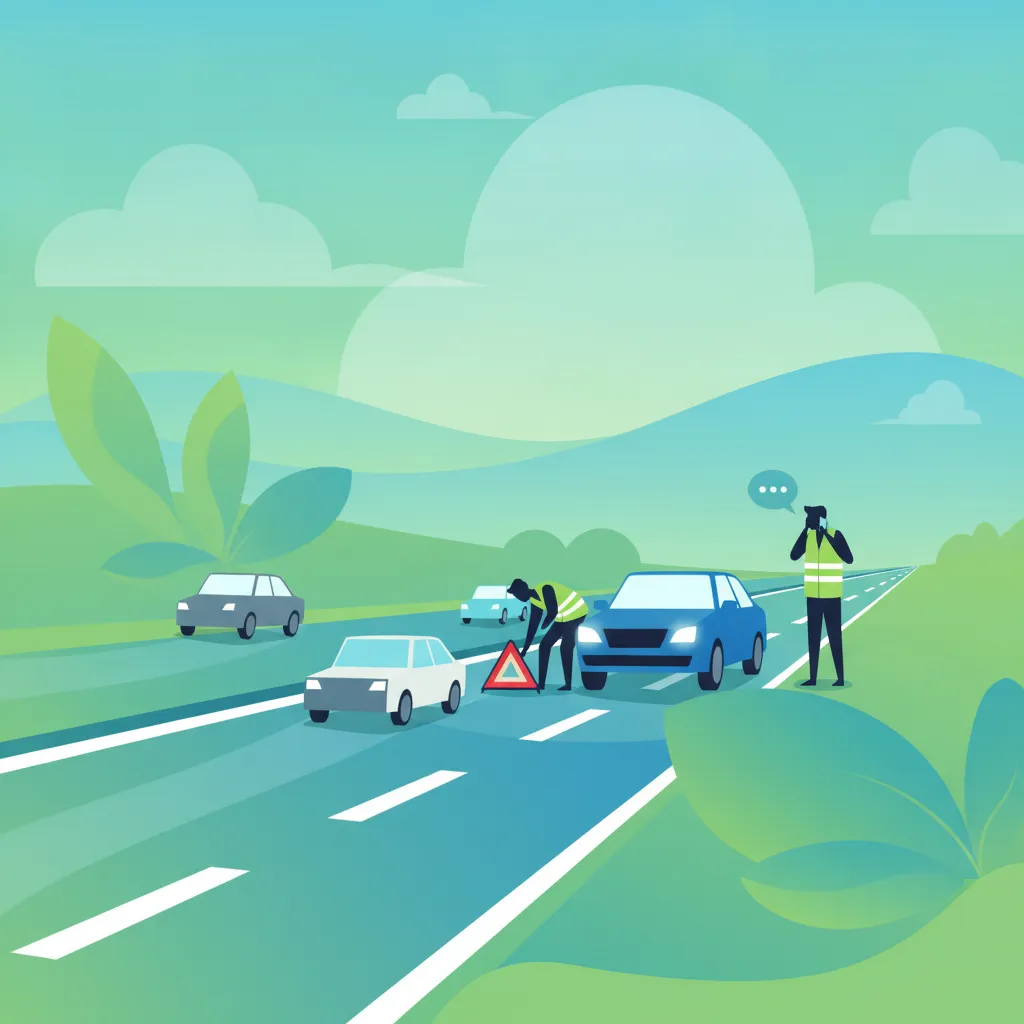
In this lesson, drivers will learn the essential steps to take following an accident involving a goods vehicle. The content covers contacting emergency services via 112, providing first aid, and safely positioning the vehicle to protect other road users. Learners will be instructed on documenting the incident, notifying insurance providers, and fulfilling legal obligations for accident reporting, including gathering witness statements.
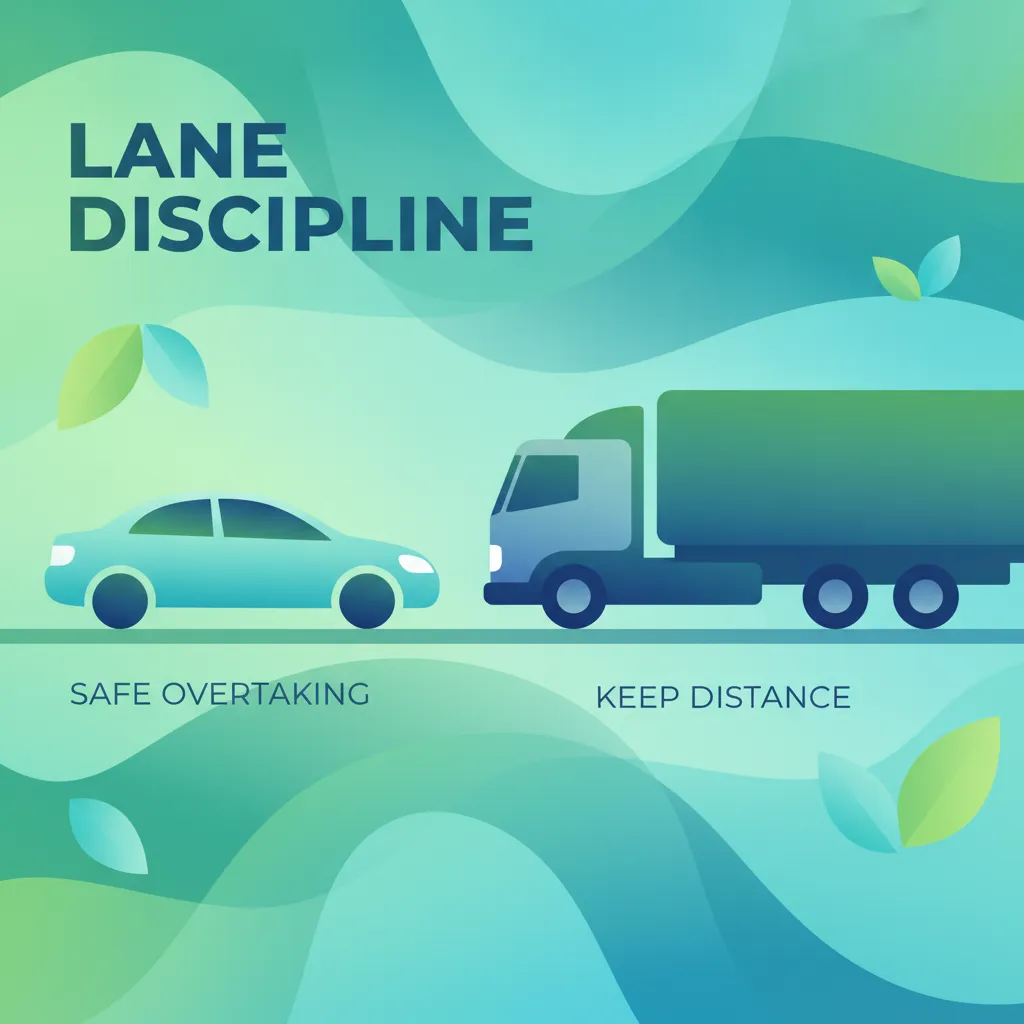
This lesson focuses on the specific considerations for operating goods vehicles on French motorways, including lane selection, speed management, and proper merging techniques. Learners will understand the importance of maintaining lane discipline, using appropriate overtaking practices, and respecting motorway-specific speed limits for heavy vehicles. The content also covers the use of emergency lanes and the handling of traffic flow.
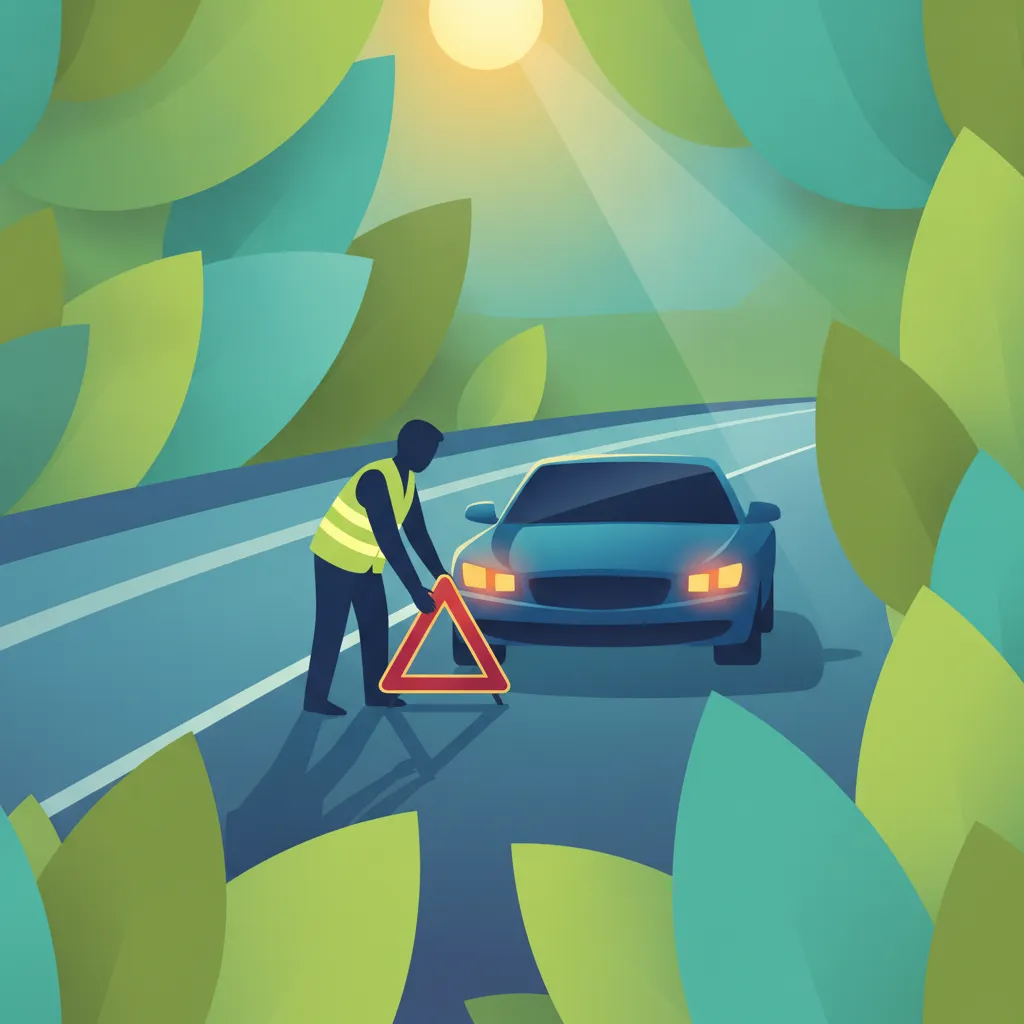
In this lesson, learners will be equipped with the essential steps to take in the event of an emergency involving their goods vehicle, such as accidents, spills, or fires. The content covers the correct usage of the European emergency number 112, immediate safety measures to protect the scene, and the required use of driver emergency equipment like fire extinguishers and spill kits. Additionally, the lesson details the obligatory reporting processes, documentation of incidents, and cooperation with emergency services and law enforcement.

This lesson covers immediate response steps for critical on-board events, including passenger medical emergencies and engine compartment fires. Learners will study the location and proper application of fire extinguishers, safety hammers, and first aid kits. It also explains how to coordinate effectively with French emergency services (SAMU, Fire Brigade) and reassure passengers to maintain calm during an incident.

This lesson examines how goods vehicle drivers should approach and navigate roadworks zones and temporary traffic restrictions. Learners will be taught to recognize temporary speed limit signs, follow detour routes safely, and respect lane closures. The content also highlights the importance of maintaining safe distances from workers, adjusting for reduced lane width, and ensuring compliance with temporary regulations to avoid penalties.
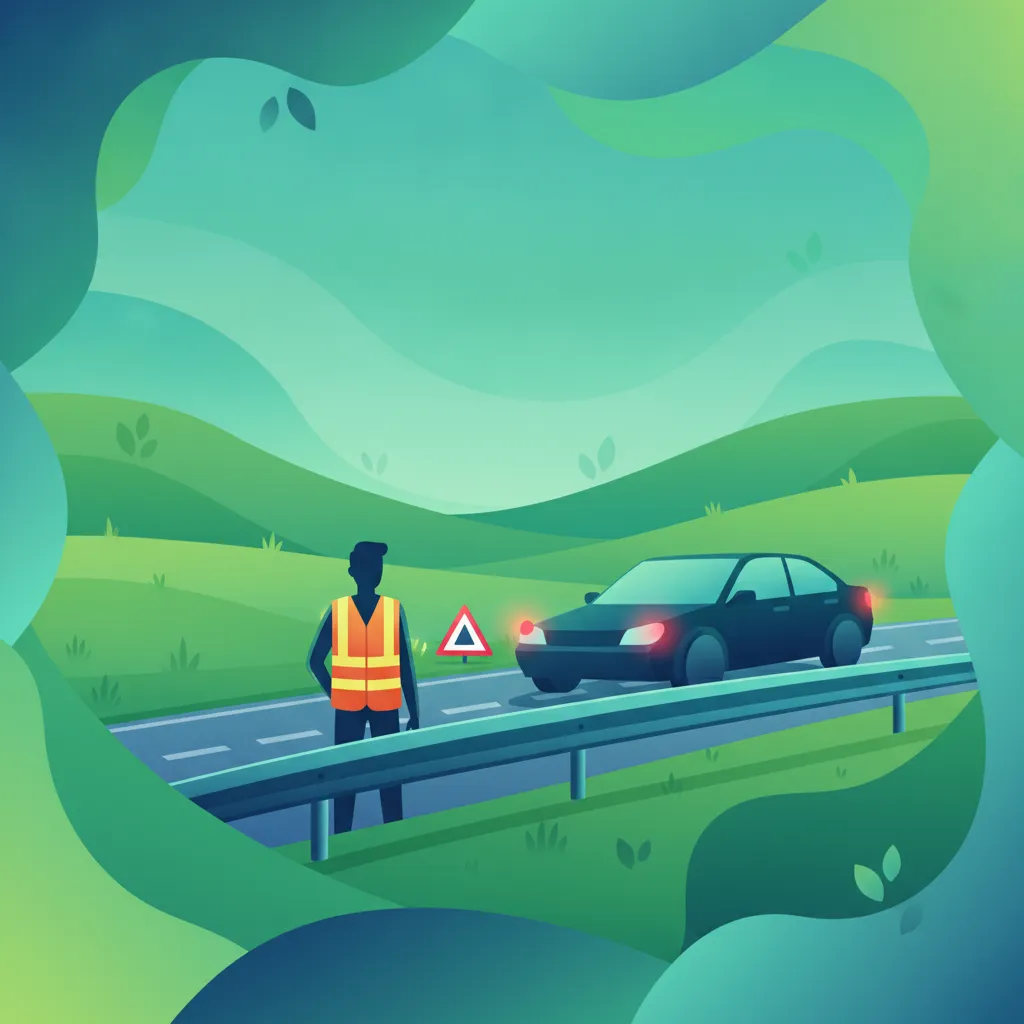
Learners will learn the immediate steps to take following an accident or vehicle breakdown, including contacting emergency services (112), providing first aid, and securing the accident scene. The lesson also covers the necessary administrative actions such as completing the official French 'constat amiable' and reporting the incident to insurance providers. Knowing these procedures ensures that riders respond effectively in emergencies.
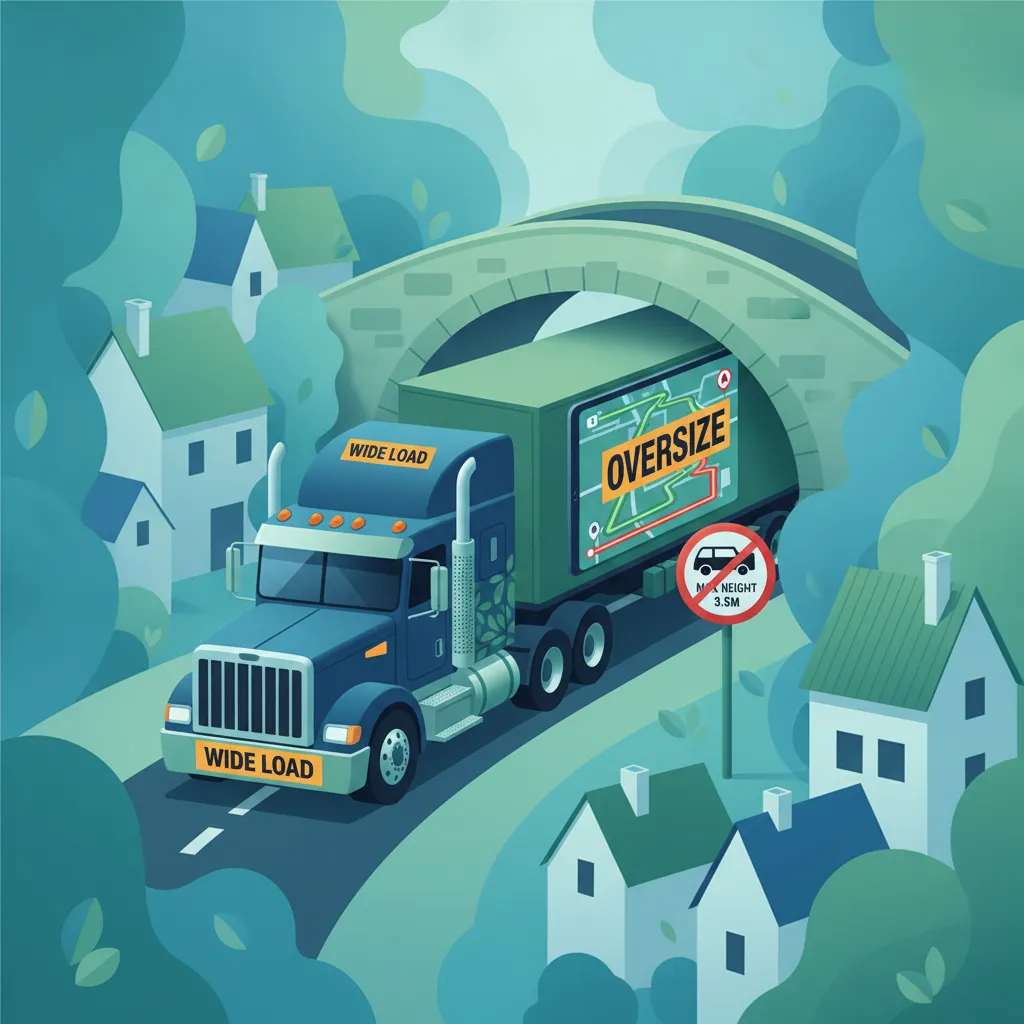
This lesson provides strategies for planning routes that accommodate oversized goods vehicles while complying with French road restrictions. Learners will learn how to identify prohibited routes, evaluate bridge and tunnel limitations, and obtain necessary access permits. The content also addresses the use of specialised GPS systems for heavy vehicle routing and the importance of contingency planning for detours, ensuring safe and efficient transport operations.
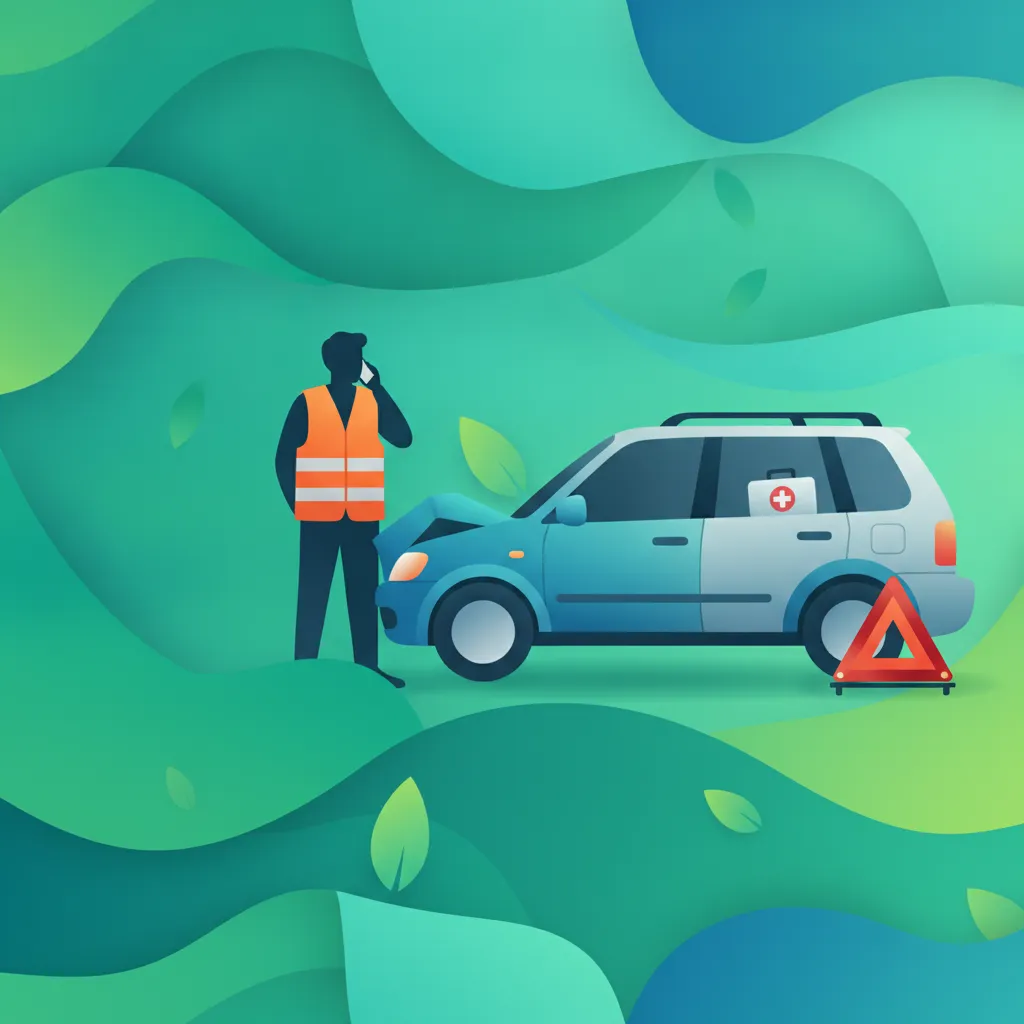
This lesson provides a clear, step-by-step procedure to follow if you witness or are involved in a traffic accident in France. You will learn how to secure the scene using your mandatory hazard triangle and yellow vest to prevent secondary collisions. Crucially, it explains how to contact emergency services via 112 and covers basic first-aid rules, including the absolute ban on removing an injured rider's helmet unless necessary.

French motorways (autoroutes) are fast, controlled-access roads with unique laws regulating lane discipline and emergencies. This lesson teaches standard lane-use: cruising in the right lane and reserving the middle or left lanes exclusively for passing. You will study emergency procedures, the use of orange emergency call boxes, safety barrier rules, and navigating toll booths (peages) safely.
Compare the distinct driving requirements for large passenger vehicles when transitioning between complex urban traffic and high-speed motorway networks. Understand the differences in lane discipline, speed management, and vehicle positioning necessary for professional drivers operating in diverse French road environments.

This lesson analyzes the various traffic challenges unique to operating large passenger vehicles in historic and modern French urban areas. Drivers will learn to manage narrow street layouts, double-parked delivery trucks, and high-density multi-lane roundabouts safely. The lesson emphasizes defensive driving strategies, route adjustments, and maintaining mental focus under severe schedule and time pressures.

This lesson examines the regulatory limits and environmental controls applied to large passenger vehicles operating in dense French urban centers. Drivers will study the Crit'Air clean air sticker system and low-emission zones (ZFE) that restrict access for older, high-polluting vehicles. It also addresses navigating physical constraints, such as narrow streets, tight turning radii, and strict municipal weight limits.
This lesson focuses on the specific considerations for operating goods vehicles on French motorways, including lane selection, speed management, and proper merging techniques. Learners will understand the importance of maintaining lane discipline, using appropriate overtaking practices, and respecting motorway-specific speed limits for heavy vehicles. The content also covers the use of emergency lanes and the handling of traffic flow.

This lesson focuses on maneuvering in extremely crowded areas, passenger terminals, or narrow streets blocked by parked vehicles and obstacles. Drivers will learn to assess clearance distances precisely before committing to narrow pathways. The content teaches steering techniques that maintain stability, optimize space usage, and prioritize public safety during slow-speed, high-difficulty maneuvers.
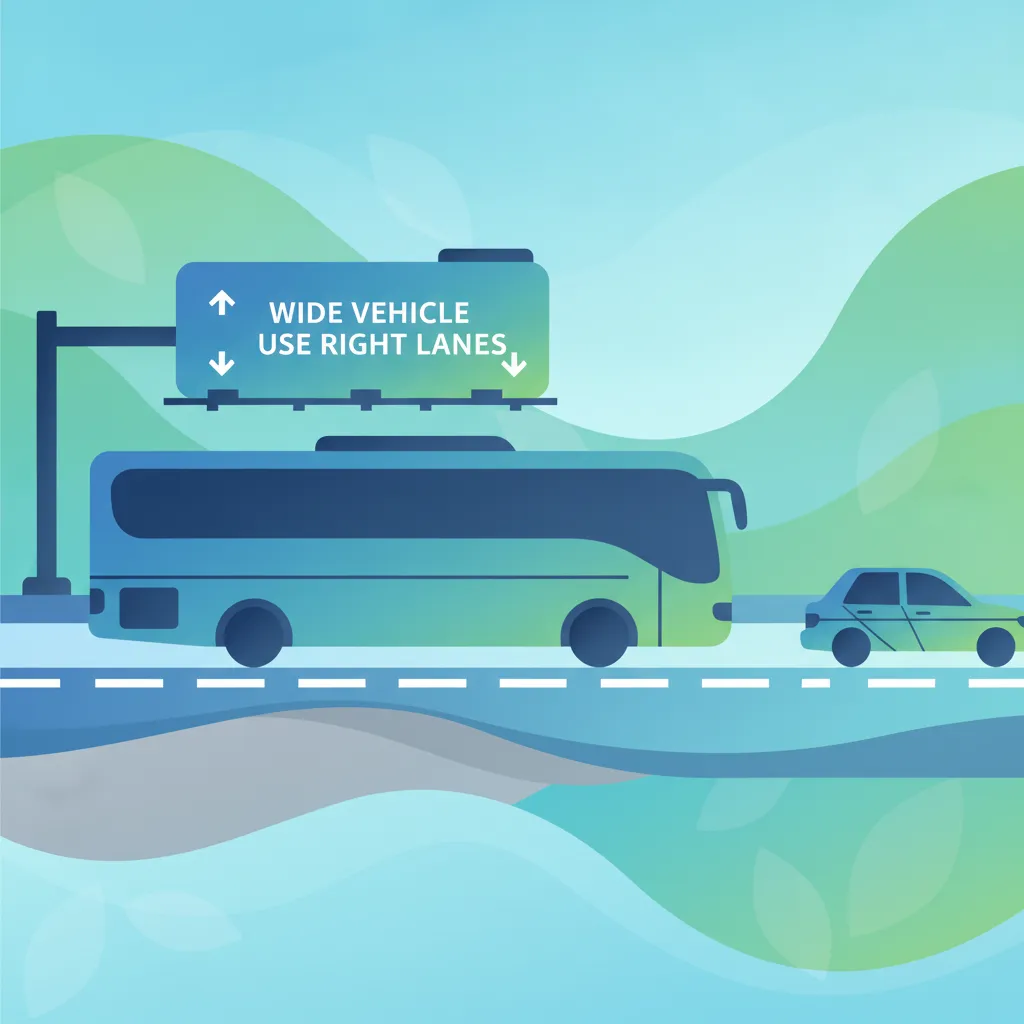
This lesson details the rules of lane discipline for operating wider and longer passenger transport vehicles on highway and city networks. Learners will explore proper lane positioning to prevent encroachment on adjacent lanes or sidewalks. It also covers the step-by-step visual and signaling sequence required to perform safe lane changes, avoiding sudden movements that could startle other drivers.

This lesson covers the physical dimensions of passenger vehicles and how their high profile, length, and width alter spatial awareness on the road. Learners will study tail-swing mechanics and track the path of the rear wheels during sharp turns to avoid hitting roadside obstacles. Accurate measurement of overhead structures, bridges, and underpass clearances is taught to prevent catastrophic structural collisions.
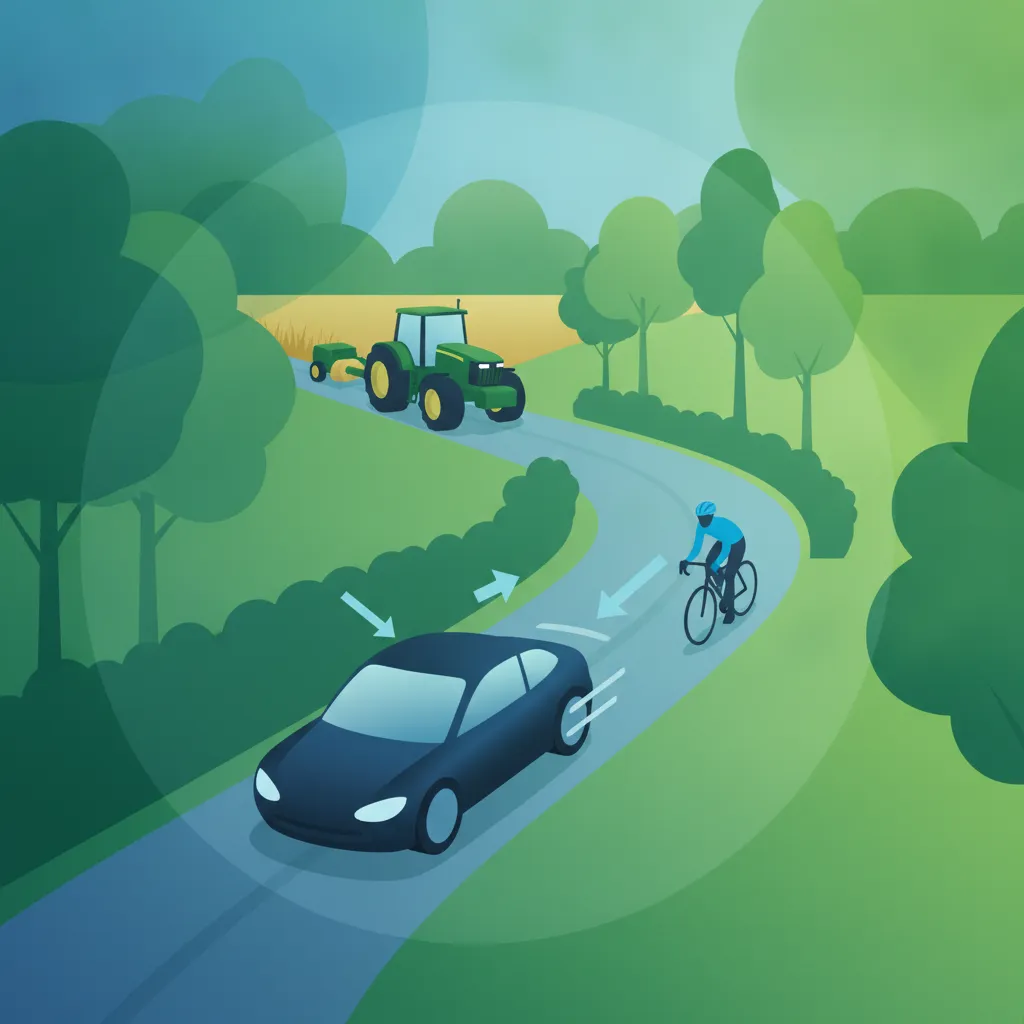
This lesson analyzes the complex driving conditions found on French secondary and rural road networks (routes départementales). Drivers will learn steering and braking techniques to descend steep gradients safely using engine retarding systems without overheating the service brakes. Anticipating agricultural machinery, domestic livestock, unlit intersections, and narrow bridges is also taught in depth.

This lesson addresses the challenges of positioning near larger vehicles such as cars, vans, buses, and lorries on French roads. Learners will learn to identify blind spots (angles morts), maintain a safe distance, and position themselves to maximize visibility and predictability. Understanding these dynamics is crucial for AM riders to avoid dangerous situations and ensure safe overtaking and lane sharing.

This lesson focuses on the unique challenges of performing deliveries in dense urban areas. Learners will explore best practices for loading and unloading safely, navigating traffic congestion, and minimizing risks to pedestrians and cyclists. The content also covers compliance with city regulations for delivery zones, scheduling considerations, and the importance of careful maneuvering to avoid accidents.

In this lesson, drivers will learn strategies to avoid conflicts with smaller vehicles, such as cars and vans, which may not be as visible in large vehicle blind spots. The content emphasizes maintaining adequate spacing, using proper lane discipline, and being aware of small vehicles' behavior during lane changes and turns. Learners will also be introduced to communication techniques, such as signalling and eye contact.
Find clear answers to common questions learners have about Motorway Rules for Passenger Vehicles. Learn how the lesson is structured, which driving theory objectives it supports, and how it fits into the overall learning path of units and curriculum progression in France. These explanations help you understand key concepts, lesson flow, and exam focused study goals.
Yes, buses and coaches are subject to specific speed limits in France. Generally, coaches are limited to 100 km/h on motorways, provided they are equipped with speed limiters and ABS systems, compared to the 130 km/h limit for standard passenger cars.
On motorways with three or more lanes, heavy vehicles are often restricted to the two right-hand lanes. You must check local signage, as regional exceptions may apply depending on traffic density or tunnel regulations.
Prioritize passenger safety by moving to a safe area if possible. If stuck on the hard shoulder, activate hazard lights, ensure passengers stay away from traffic behind the crash barrier, and use emergency phones to contact authorities immediately.
When approaching tolls, always look for lanes marked with a height restriction sign that accommodates your vehicle. Choose lanes that offer sufficient width and clearance for a bus or coach to avoid damaging the vehicle or the toll infrastructure.
Ready to focus your study? Use the practice search to find exactly the French driving theory questions you need for the Code de la route and permis de conduire ETG. Refine your knowledge on specific topics or challenging rules to boost your confidence and exam readiness.