This lesson provides an in-depth look at the information signs used across the German road network to guide drivers toward their destination. By understanding these visual markers, you will be able to navigate motorways and urban roads with precision, ensuring you are prepared for both the theoretical exam and real-world driving. This is a critical component of mastering the comprehensive German StVO sign system.
Lesson content overview
Navigating Germany's extensive road network, from bustling city streets to high-speed Autobahnen, requires a keen understanding of its comprehensive traffic sign system. Among these, information signs (German: Informationszeichen) play a crucial, albeit non-mandatory, role in guiding drivers. Unlike regulatory signs that enforce rules or warning signs that indicate hazards, information signs provide helpful data, directions, and details about services and destinations. This lesson will delve into the various types of information signs you'll encounter, explaining their purpose, interpretation, and how to use them effectively for safe and efficient travel across Germany.
Information signs are part of Germany's official Straßenverkehrs-Ordnung (StVO), the traffic code that governs all road users. Their primary function is to equip drivers with the necessary information to make informed decisions about their journey. This can range from knowing the distance to an upcoming city to identifying the presence of a fuel station or a historical landmark. These signs are typically rectangular or square, often blue with white text or symbols, or sometimes brown for tourist information.
Their clear, standardized design ensures that drivers can quickly understand and react to the guidance provided, regardless of their origin. By offering proactive information, these signs contribute significantly to route planning, fatigue management, and overall road safety, helping to reduce stress and unexpected maneuvers.
While other categories of traffic signs demand specific actions (e.g., stopping at a Stop sign) or warn of dangers (e.g., sharp bend ahead), information signs offer non-mandatory guidance. This means they do not legally compel a driver to perform a specific action, but rather provide data that facilitates better decision-making.
The core principles of informational signs are:
Understanding these principles is fundamental to correctly interpreting and utilizing information signs throughout your driving career in Germany.
Directional information signs are arguably the most frequently encountered type of informational signage. They are crucial for navigation, helping drivers confirm their route and anticipate upcoming turns, exits, or destinations.
Destination signs indicate the names of towns, cities, or specific areas, along with the distances to them. On motorways (Autobahnen), these signs become even more critical, often appearing several kilometers in advance of an exit to give drivers ample time to prepare. They typically feature blue backgrounds with white text for motorways and yellow backgrounds with black text for other major roads.
For example, a sign reading "München 120 km" provides a clear indication of the remaining distance to Munich if you continue straight. On Autobahnen, you will frequently see specific exit signs (Anschlussstelle) that indicate the exit number and the towns accessible from that exit.
Drivers should use this information to:
Beyond general destination signs, specific distance markers (Entfernungstafeln) provide precise information about upcoming junctions, exits, or significant locations. These are vital for safe lane positioning and speed adjustments, especially on high-speed roads.
These signs are typically placed at regular intervals, often several kilometers before an exit, then again at shorter distances (e.g., 2 km, 1 km, 500 m) as you approach. Their purpose is to reinforce navigational information and allow drivers to make timely, smooth transitions. Ignoring or misjudging these distances is a common cause of sudden braking or dangerous lane changes at the last moment.
Part of effective journey planning involves knowing where to find essential services. German information signs excel at providing clear indications for a variety of facilities along the road.
Standardized pictograms are used to quickly convey the availability of specific services. These symbols are often found within larger blue informational signs, particularly for rest areas and service stations on motorways, or on smaller individual signs.
Here are some common service facility symbols:
These symbols allow for quick identification, which is crucial when driving at speed, giving drivers time to decide whether to stop or continue. It's important to familiarize yourself with these common pictograms to avoid confusion, such as mistaking a restaurant symbol for a fuel station.
On longer journeys, especially on the Autobahn, rest areas (Rastplätze) and service areas (Rasthöfe) are indispensable for driver safety and comfort. Information signs clearly mark these facilities.
A Rastplatz typically offers parking, benches, and sometimes public toilets. These are simpler facilities designed for short breaks. A Rasthof (often referred to as an Autobahnraststätte) is a more comprehensive service area, typically including fuel stations, restaurants, hotels, shops, and sometimes even repair services. Signs for Rasthöfe will often combine multiple service symbols to indicate the range of facilities available.
Utilizing these designated areas for breaks is essential for combating driver fatigue, which is a major cause of accidents. Planning stops in advance, guided by these signs, ensures a safer and more relaxed journey.
Germany is rich in cultural heritage and natural beauty. To encourage exploration, special tourist information signs (Touristische Unterrichtungstafeln) guide drivers to attractions, historic sites, and scenic routes. These signs are distinctively brown with white text and/or symbols.
These signs can point to various attractions, such as:
While these signs encourage sightseeing, drivers must remember that they are not regulatory. You are still required to follow all other traffic rules, especially regarding stopping and parking. Always plan to stop only in designated parking areas associated with the attraction, not on the roadside itself, which is generally prohibited and dangerous.
Although informational signs are non-mandatory in terms of enforcement, their purpose is to provide crucial guidance that indirectly supports compliance with traffic laws and promotes safe driving practices under the StVO.
While informational signs themselves do not dictate speed limits, the information they provide—such as distances to exits or junctions—requires drivers to adapt their behavior to ensure safety. According to the StVO, drivers must adjust their speed to prevailing road, traffic, visibility, and weather conditions.
When an exit sign appears, especially on motorways, drivers should:
Information signs for rest areas (Rastplatz) and service areas (Rasthof) indicate locations where stopping is permitted and encouraged. Drivers may stop, rest, or park their vehicle in these designated areas for a reasonable period.
However, it is strictly prohibited to stop unnecessarily on the carriageway (the main part of the road) or hard shoulder (unless for an emergency) to access a service indicated by a sign. This rule, outlined in StVO § 41, is critical for maintaining traffic flow and preventing dangerous obstructions and rear-end collisions. Accessing services should always be done via designated exits and entry ramps into the service area itself.
Furthermore, while rest areas are for temporary stops, extended stays (e.g., parking for multiple days) might be subject to local regulations or incur fees in private service areas (Rasthöfe).
Misunderstanding or neglecting information signs can lead to unsafe situations and frustrating detours. Common mistakes include:
The effectiveness and interpretation of information signs can be influenced by various driving conditions.
While informational signs primarily guide the driver, timely and predictable actions based on these signs indirectly benefit all road users:
Understanding these terms is essential for comprehensive knowledge of German traffic signs:
Here are some real-world examples of how information signs guide drivers:
Informational signs are silent communicators, providing crucial data that empowers drivers to make conscious, safe, and efficient decisions. They reduce cognitive load, allowing drivers to focus on the immediate driving environment rather than struggling with navigation. By providing timely alerts for exits, services, and attractions, they contribute to:
Ultimately, mastering the interpretation of information signs is a fundamental skill for any driver in Germany, ensuring not just compliance with theory but also fostering a safer, more confident, and enjoyable driving experience.
German information signs (Informationszeichen) provide non-mandatory navigational guidance through directional signs, distance markers, and service facility symbols, complementing the regulatory and warning sign system under the StVO. Directional signs on motorways feature blue backgrounds with white text showing destinations and distances, while tourist signs use distinctive brown backgrounds. Service symbols like Zeichen 390 for fuel and Zeichen 392 for restaurants enable quick identification of facilities, with Rastplätze offering basic rest stops and Rasthöfe providing comprehensive services. Drivers must use this information proactively for safe lane changes and route planning while remembering that stopping to access services requires using designated areas, not the carriageway or hard shoulder.
A short set of high-value points that capture the most important learning from this lesson.
Information signs (Informationszeichen) are non-mandatory guidance tools that provide navigational data, unlike regulatory or warning signs which enforce rules or indicate hazards
Directional signs on the Autobahn use blue backgrounds with white text, while rural roads use yellow backgrounds with black text
Service facility signs use standardized pictograms: fuel (Zeichen 390), restaurant (Zeichen 392), hotel (Zeichen 391), and others to quickly convey available services
Rest areas (Rastplätze) offer basic amenities like parking and toilets, while service areas (Rasthöfe) provide comprehensive facilities including fuel, food, and accommodation
Tourist information signs are brown with white symbols and point to attractions, but stopping must still occur only in designated parking areas
Explore all units and lessons included in this driving theory course.
Information signs do not legally compel actions; they only provide data for informed decision-making
Distance markers appear at regular intervals (e.g., 2 km, 1 km, 500 m) before exits to allow safe lane changes
Zeichen 390 = petrol station, Zeichen 392 = restaurant, Zeichen 391 = hotel, Zeichen 386 = rest area, Zeichen 331 = distance table
On motorways, exit signs (Anschlussstelle) show exit numbers and accessible towns from that junction
You must not stop on the carriageway or hard shoulder to access a service; use designated exits and entry ramps instead
Missing exits due to not reading directional signs early enough, leading to sudden lane changes or missed turns
Confusing service facility symbols, such as mistaking the restaurant pictogram for a fuel station symbol
Stopping unnecessarily on the roadway or hard shoulder when seeing a service sign, creating dangerous obstructions
Treating information signs like regulatory signs—for example, slowing significantly at a destination sign as if it were a hazard warning
Assuming indicated services are guaranteed to be open or available, leading to unnecessary detours if closed
Lesson content overview
A short set of high-value points that capture the most important learning from this lesson.
Information signs (Informationszeichen) are non-mandatory guidance tools that provide navigational data, unlike regulatory or warning signs which enforce rules or indicate hazards
Directional signs on the Autobahn use blue backgrounds with white text, while rural roads use yellow backgrounds with black text
Service facility signs use standardized pictograms: fuel (Zeichen 390), restaurant (Zeichen 392), hotel (Zeichen 391), and others to quickly convey available services
Rest areas (Rastplätze) offer basic amenities like parking and toilets, while service areas (Rasthöfe) provide comprehensive facilities including fuel, food, and accommodation
Tourist information signs are brown with white symbols and point to attractions, but stopping must still occur only in designated parking areas
Explore all units and lessons included in this driving theory course.
Information signs do not legally compel actions; they only provide data for informed decision-making
Distance markers appear at regular intervals (e.g., 2 km, 1 km, 500 m) before exits to allow safe lane changes
Zeichen 390 = petrol station, Zeichen 392 = restaurant, Zeichen 391 = hotel, Zeichen 386 = rest area, Zeichen 331 = distance table
On motorways, exit signs (Anschlussstelle) show exit numbers and accessible towns from that junction
You must not stop on the carriageway or hard shoulder to access a service; use designated exits and entry ramps instead
Missing exits due to not reading directional signs early enough, leading to sudden lane changes or missed turns
Confusing service facility symbols, such as mistaking the restaurant pictogram for a fuel station symbol
Stopping unnecessarily on the roadway or hard shoulder when seeing a service sign, creating dangerous obstructions
Treating information signs like regulatory signs—for example, slowing significantly at a destination sign as if it were a hazard warning
Assuming indicated services are guaranteed to be open or available, leading to unnecessary detours if closed
Explore search topics learners often look for when studying Information Signs. These topics reflect common questions about road rules, driving situations, safety guidance, and lesson level theory preparation for learners in Germany.
Browse additional driving theory lessons that cover connected traffic rules, road signs, and common driving situations related to this topic. Improve your understanding of how different rules interact across everyday traffic scenarios.
Learn to interpret German information signs providing guidance for navigation and essential services. Understand directional signs, distance markers, and symbols for fuel stations, rest stops, and attractions on all road types.
This lesson focuses on interpreting various road markings, from lane lines and directional arrows to stop lines and pedestrian crossings. It explains the rules associated with solid versus broken lines and how to navigate temporary markings found in construction zones. Correctly reading these markings is vital for proper lane discipline and safety.
This lesson introduces the various categories of German road signs, focusing on their meaning and application for AM riders. It covers regulatory signs like speed limits, warning signs for hazards, and informational signs for guidance. Learners will be ableto identify signs by their shape, color, and symbols, ensuring correct interpretation while riding.
This lesson examines the specific hazards associated with driving on rural roads. It covers how to handle narrow lanes, sharp bends, and poor road surfaces, as well as how to anticipate and safely interact with slow-moving agricultural vehicles or livestock. Strategies for speed adaptation due to limited visibility and the risks associated with overtaking in these conditions are thoroughly discussed.

This lesson focuses on the specific challenges and dangers associated with driving on rural roads ('Landstraßen'). It highlights common hazards such as sharp, blind corners, unmarked junctions, hidden farm entrances, and the presence of slow-moving agricultural vehicles or wildlife. The lesson emphasizes the need for appropriate speed selection and caution when overtaking in these environments.

This lesson explains the various types of road markings and their significance for guiding traffic and ensuring safety. It covers the difference between solid and broken lines for lane separation and overtaking rules, the function of stop lines at intersections, and the markings for pedestrian crosswalks. You will also learn to interpret directional arrows, bicycle lane markings, and other symbols painted on the road.
This lesson focuses on warning signs, which are designed to alert drivers to potential dangers or unusual conditions on the road ahead. You will learn to identify signs indicating sharp bends, upcoming intersections, railway crossings, road works, and risks like slippery surfaces or wildlife. Recognizing these signs allows you to anticipate hazards and adjust your driving proactively.
This lesson introduces the classification of rural roads and explains how speed limits are determined in these non-urban areas. It covers the German national speed limit for rural roads and how to identify local or temporary restrictions. Learners will understand the importance of adapting their speed to the road's characteristics, such as width, surface condition, and visibility, not just the posted limit.

This lesson explains the concept of a priority road ('Vorfahrtstraße'), where you have right-of-way over traffic from intersecting roads. You will learn to recognize the signs that mark the beginning and end of a priority road. The lesson also covers how priority is managed through signals, including standard traffic lights, the special 'Grünpfeil' (green arrow) sign, and the overriding authority of a police officer directing traffic.
This lesson covers regulatory signs, which are legally enforceable and command specific actions from drivers. You will learn the meaning of critical signs such as the stop sign, yield sign, no-entry signs, and various parking and stopping prohibitions. The content also explains signs that establish speed limits, one-way streets, and restricted areas like environmental or pedestrian zones.
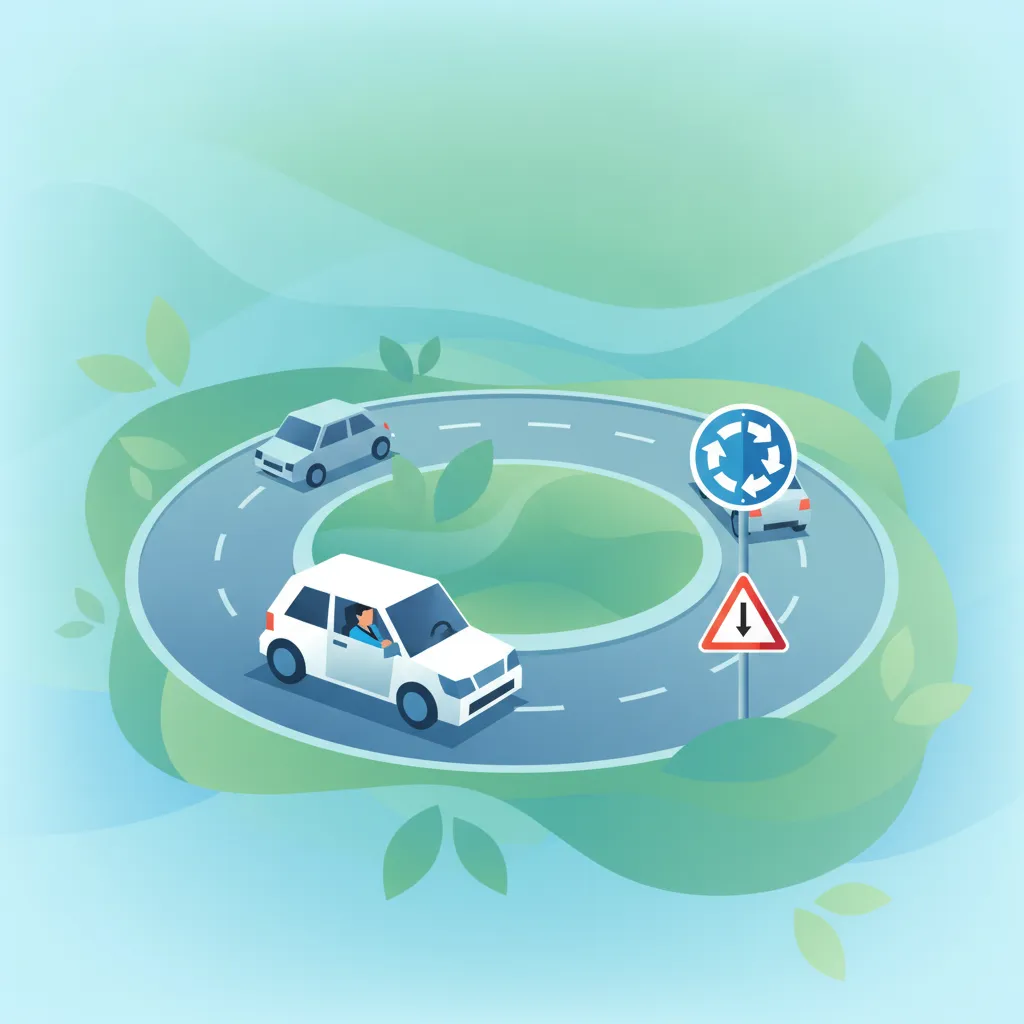
This lesson provides clear instructions on how to navigate roundabouts in Germany. It explains the crucial rule of yielding to traffic already inside the circle, proper lane choice for your intended exit, and the correct use of signals. Safe interaction with cyclists and pedestrians at roundabout exits is also covered.
Gain a comprehensive understanding of German road signs and markings. This includes regulatory, warning, information, and supplementary signs, as well as road surface indicators and traffic lights, essential for safe driving.
This lesson covers regulatory signs, which are legally enforceable and command specific actions from drivers. You will learn the meaning of critical signs such as the stop sign, yield sign, no-entry signs, and various parking and stopping prohibitions. The content also explains signs that establish speed limits, one-way streets, and restricted areas like environmental or pedestrian zones.
This lesson introduces the various categories of German road signs, focusing on their meaning and application for AM riders. It covers regulatory signs like speed limits, warning signs for hazards, and informational signs for guidance. Learners will be ableto identify signs by their shape, color, and symbols, ensuring correct interpretation while riding.
This lesson focuses on warning signs, which are designed to alert drivers to potential dangers or unusual conditions on the road ahead. You will learn to identify signs indicating sharp bends, upcoming intersections, railway crossings, road works, and risks like slippery surfaces or wildlife. Recognizing these signs allows you to anticipate hazards and adjust your driving proactively.
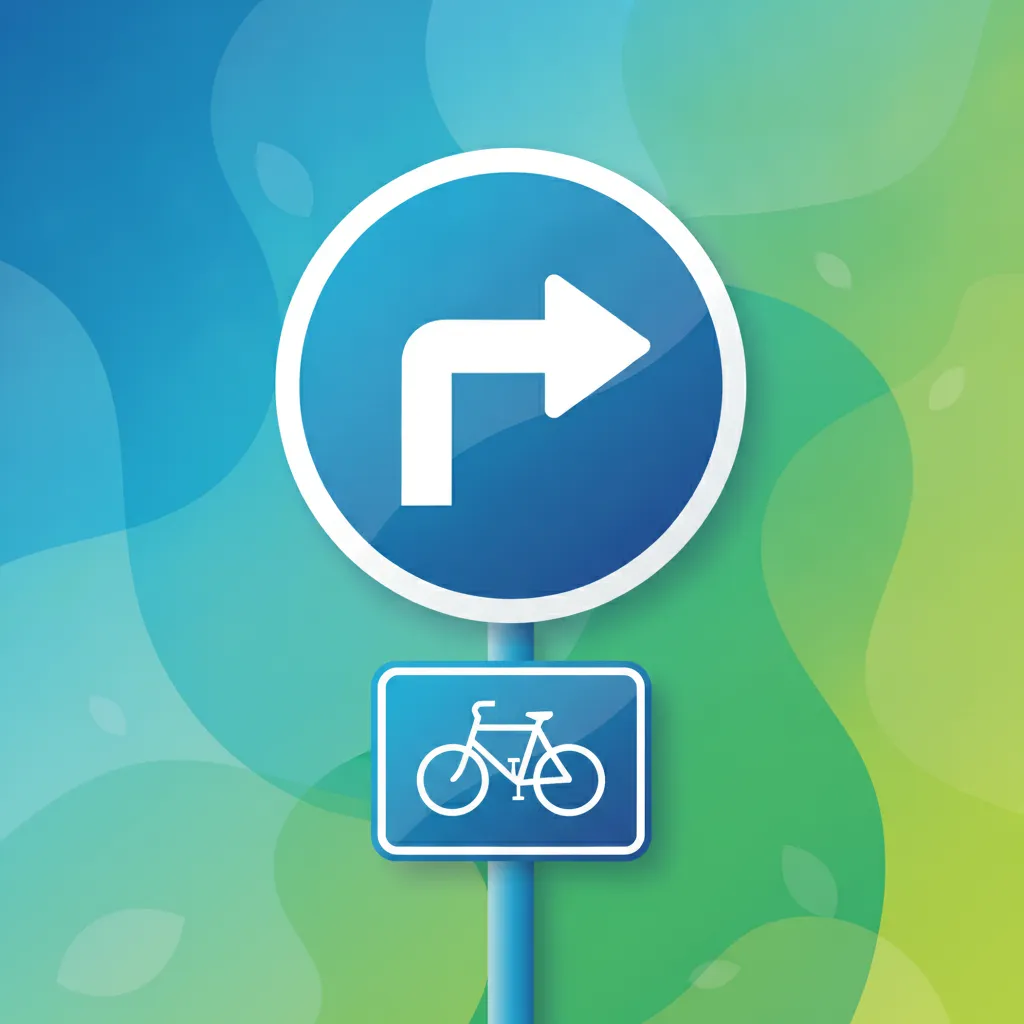
This lesson is dedicated to supplementary signs ('Zusatzzeichen'), which appear below main signs to provide additional, specific information. You will learn how these signs modify the primary rule, for example by specifying time restrictions, excepting certain types of vehicles, or indicating a specific distance. Correctly interpreting these signs is essential for understanding the full context of a traffic regulation.
This lesson explains the various types of road markings and their significance for guiding traffic and ensuring safety. It covers the difference between solid and broken lines for lane separation and overtaking rules, the function of stop lines at intersections, and the markings for pedestrian crosswalks. You will also learn to interpret directional arrows, bicycle lane markings, and other symbols painted on the road.
This lesson focuses on interpreting various road markings, from lane lines and directional arrows to stop lines and pedestrian crossings. It explains the rules associated with solid versus broken lines and how to navigate temporary markings found in construction zones. Correctly reading these markings is vital for proper lane discipline and safety.

Effective communication is critical for road safety, and this lesson details the correct use of a vehicle's signaling devices. It explains when and how to use turn signals (indicators), hazard warning lights, the horn, and headlight flashes to clearly communicate your intentions to other road users. Proper signaling helps prevent misunderstandings and is a key component of defensive and cooperative driving.

This lesson provides comprehensive guidance on using vehicle signals to communicate with other road users. It covers the correct timing and use of turn indicators, the application of hand signals when necessary, and the proper use of hazard lights. Effective signaling is presented as a cornerstone of predictable and safe driving.

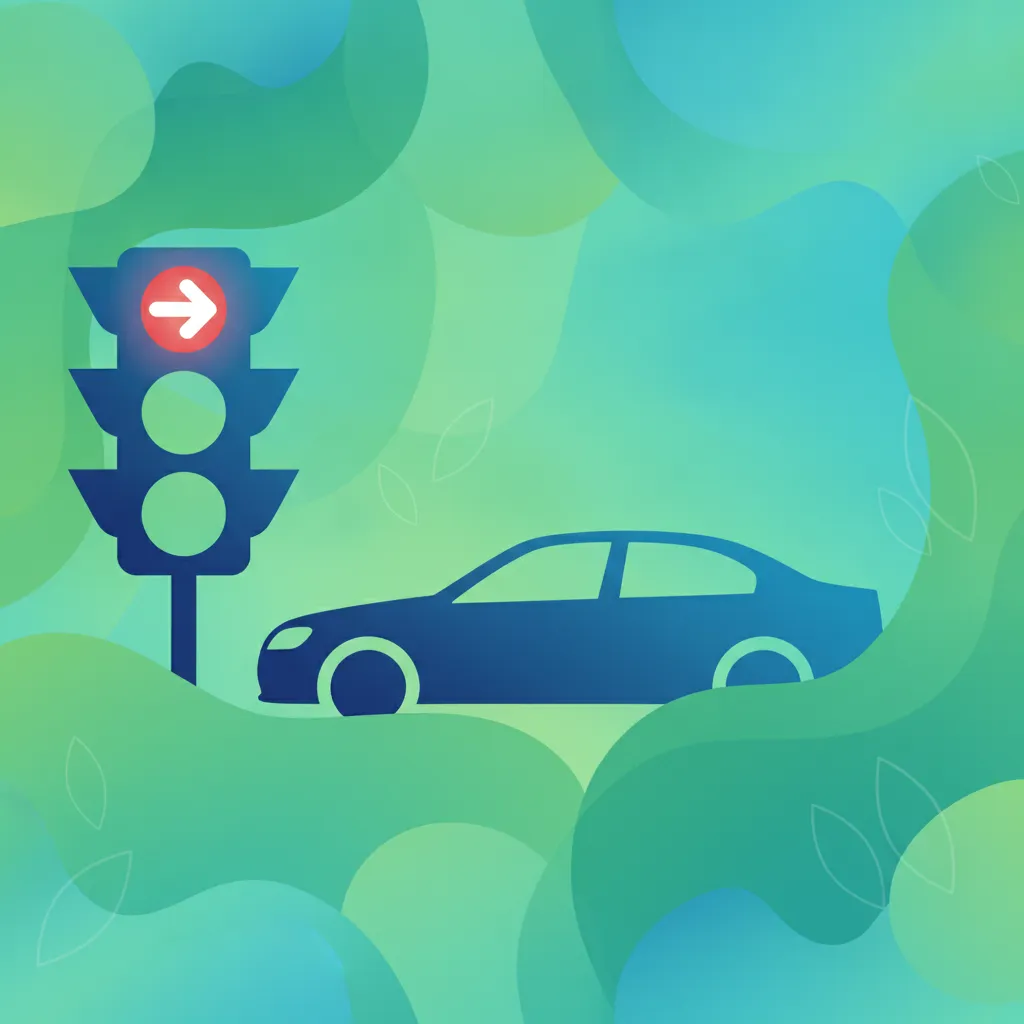
This lesson provides a thorough explanation of traffic light systems ('Lichtzeichenanlagen') used in Germany. It details the meaning of red, amber, and green lights and the correct response to each phase of the signal sequence. The lesson also covers special signals, such as the green arrow for turning right on red, pedestrian and cyclist signals, and the authority of signals given by a police officer, which override all other signs.
This lesson familiarizes drivers with the various special traffic signals and signs that apply exclusively to buses and other public transport vehicles. It covers the interpretation of bus-only signals (often showing bars or letters), flashing priority indicators, and lane-use control signs. Correctly understanding these signals is crucial for legal compliance and for taking advantage of public transport priority measures in urban areas.
Find clear answers to common questions learners have about Information Signs. Learn how the lesson is structured, which driving theory objectives it supports, and how it fits into the overall learning path of units and curriculum progression in Germany. These explanations help you understand key concepts, lesson flow, and exam focused study goals.
Regulatory signs, like speed limits or stop signs, impose a legal duty you must follow. Information signs provide helpful data, such as directions, distance, or the location of services like fuel stations, to assist your navigation.
Colors indicate the road type. Signs for the Autobahn have a blue background, while those for federal roads (Bundesstraßen) are yellow, and local city destinations are usually white with black text.
No, service signs are for informational purposes. However, being able to identify them quickly is crucial for answering scenario-based questions where you might need to locate the nearest emergency exit, rest area, or hospital.
Focus on identifying the symbols within the signs. Most service signs use universal pictograms. Practice by observing signs on your daily commute and checking the official StVO sign catalogue to associate the visual symbol with its function.
Begin your targeted revision now. Use our practice search to quickly find specific German driving theory questions. Filter by StVO rules, road signs, or hazard perception to create your focused study plan. Master challenging areas and prepare confidently for your theoretical driving test.