
This lesson explores the essential components of a motorcycle braking system, covering disc and drum brakes, and the crucial role of Anti-lock Braking Systems (ABS). Understanding these systems is vital for safe riding and passing your theory exam, as you will need to demonstrate knowledge of both mechanical function and effective braking technique.

Lesson content overview
The braking system is arguably the most crucial safety component of any motorcycle. It is responsible for converting the vehicle's kinetic energy—the energy of motion—into thermal energy, allowing you to slow down or stop efficiently and safely. A thorough understanding of its components, their functionality, and proper maintenance is indispensable for every rider preparing for their German Motorcycle Licence Theory Course. This knowledge forms the foundation for safe riding practices, enabling you to anticipate issues and react effectively in diverse road conditions.
Safe deceleration is a fundamental skill in motorcycling. The ability to control your speed and stop promptly is paramount for avoiding hazards, reacting to unexpected events, and maintaining overall road safety. A well-maintained and properly understood braking system significantly reduces stopping distances and helps you retain control of your motorcycle, even in emergency situations. This section explores the underlying principles that allow your motorcycle to shed speed effectively.
Every moving object possesses kinetic energy, which increases exponentially with speed. To bring a motorcycle to a halt, this energy must be dissipated. The braking system performs this vital task by converting kinetic energy into heat through friction. This process allows your motorcycle to decelerate, transferring the energy safely away from the motion of the wheels. The more efficiently your brakes can perform this energy conversion, the shorter your stopping distance will be.
Disc brakes are the most common type of braking system found on modern motorcycles, particularly on the front wheel where the majority of braking force is applied. Their design provides strong, consistent, and fade-resistant braking performance, which is critical for high-speed deceleration and demanding riding conditions.
A disc brake system consists of several key components working in concert. When the brake lever or pedal is actuated, hydraulic pressure is transmitted through brake fluid to a caliper. The caliper houses one or more pistons that push brake pads—friction material—against both sides of a rotating metal disc, known as the rotor. This clamping action creates friction, slowing the rotation of the wheel.
There are different types of calipers:
Disc brakes offer several significant advantages:
Due to these advantages, disc brakes are almost universally used on the front wheels of motorcycles and are increasingly common on rear wheels as well, especially on performance-oriented and larger touring models.
Regular inspection of your disc brake components is vital for safety.
Brake pads are consumable items designed to wear down over time. It's crucial to regularly check their thickness.
The rotors themselves are also subject to wear and tear. Over time, heavy braking can cause them to become grooved, warped, or thin.
While less common on modern front wheels, drum brakes are still found on the rear wheels of many motorcycles, particularly older models, scooters, and some lighter, more cost-effective bikes. They operate on a different principle than disc brakes but perform the same essential function of generating friction to slow the wheel.
A drum brake system consists of a rotating drum, which is attached to the wheel hub, and two curved brake shoes, located inside the drum. When the brake lever or pedal is engaged, a cam or hydraulic piston pushes the brake shoes outward. These shoes press against the inner surface of the rotating drum, creating friction that slows the wheel.
There are typically two main designs for brake shoes within a drum:
Drum brakes are frequently employed on the rear wheels of motorcycles for several reasons:
Inspecting drum brakes requires a bit more effort than disc brakes due to their enclosed nature. However, regular checks are just as important.
Brake shoes, like pads, have friction material that wears down over time. While not always visible without disassembling the drum, many drum brake systems have an external wear indicator. This indicator, often a pointer on the brake cam or lever, shows how much the shoes have moved outward. If the pointer reaches a specified mark, it indicates that the shoes are nearing their wear limit and require replacement. Worn shoes will reduce braking effectiveness and can damage the drum.
The inner surface of the brake drum can also wear, become scored, or go out of round over time. A professional inspection may be needed to determine if the drum needs resurfacing or replacement. Irregularities in the drum can cause inconsistent braking or a dragging sensation.
The Anti-lock Braking System (ABS) is a critical safety feature that has revolutionized motorcycle braking. It is designed to prevent wheel lock-up during hard braking, especially on slippery or uneven surfaces, thereby allowing the rider to maintain steering control and reduce the risk of a fall.
Motorcycles can be equipped with different configurations of ABS:
ABS is particularly beneficial in emergency braking situations, especially on wet, gravel, or low-grip surfaces. It allows riders to apply maximum brake pressure without fear of locking the wheels, significantly reducing stopping distances and enhancing control.
Riders new to ABS may initially find the pulsating sensation at the brake lever or pedal unsettling during an ABS activation. This sensation is normal and indicates the system is working as intended. It is crucial for riders to resist the urge to release the brakes when they feel this pulsation, and instead, maintain firm pressure on the levers.
Modern motorcycles with ABS are equipped with a warning light on the instrument panel, usually labeled "ABS." This light typically illuminates briefly when the ignition is turned on as the system performs a self-check and then turns off. If the ABS warning light remains illuminated after the self-check, or if it illuminates while riding, it indicates a fault within the ABS system.
While the friction components (pads, shoes, rotors, drums) are the most visible parts of the braking system, other essential elements ensure the entire system functions correctly and safely.
Brake fluid is the non-compressible hydraulic fluid that transmits the force from your brake lever or pedal to the brake calipers or wheel cylinders. It plays a critical role in the efficiency and responsiveness of your braking system.
The brake levers (front brake) and pedals (rear brake) are your primary interface with the braking system. The tactile feedback they provide, known as "lever feel," is crucial for understanding your brakes' condition and performance.
Effective braking on a motorcycle isn't just about applying maximum force; it's about applying the right amount of force to the right wheel at the right time. This concept, known as balanced braking, is fundamental to maintaining stability and achieving the shortest possible stopping distances.
When a motorcycle decelerates, the laws of physics dictate that weight is transferred from the rear wheel to the front wheel. This phenomenon is called weight transfer. The faster and harder you brake, the more weight shifts forward.
Given the principle of weight transfer, the ideal distribution of braking force on a motorcycle is not 50/50.
The optimal braking strategy must be adapted to various riding conditions:
Regular inspection and maintenance are not just good practice; they are legal requirements for safe operation on German roads. Adhering to these standards ensures your safety and compliance with traffic regulations.
Every time you prepare to ride, a quick check of your braking system should be part of your pre-ride inspection:
Check Brake Lever/Pedal Feel: Ensure the front and rear brake levers/pedals feel firm and responsive, without excessive play or sponginess.
Verify Brake Light Function: Apply both the front and rear brakes individually to confirm that the brake light illuminates correctly for each.
Inspect Brake Fluid Levels: Visually check the brake fluid reservoirs for both front and rear brakes (if separate) to ensure fluid is between the minimum and maximum marks.
Visual Inspection of Pads/Shoes: For disc brakes, quickly check the visible thickness of the brake pads. For drum brakes, if an external wear indicator is present, check its position.
Listen for Unusual Noises: Pay attention to any squealing, grinding, or rubbing noises during a test gentle brake application.
In Germany, as part of the TÜV (Technischer Überwachungsverein) inspection, your motorcycle's braking system must meet stringent safety standards. This includes:
Failing to maintain your braking system to these standards can result in penalties, a failed vehicle inspection, and, more importantly, a significant risk to your safety.
Neglecting brake maintenance or ignoring warning signs can lead to dangerous situations:
Mastering your motorcycle's braking system is a cornerstone of safe riding. It involves a continuous cycle of understanding, inspection, and adaptation.
This lesson covers the essential components and functionality of motorcycle braking systems, including disc and drum brake mechanics, ABS operation, and brake fluid maintenance. Understanding weight transfer is crucial for applying balanced braking force (70-80% front, 20-30% rear) to maintain stability. The lesson emphasizes recognizing normal versus abnormal brake lever feel, performing pre-ride brake checks, and adhering to German TÜV inspection standards for pad thickness, rotor condition, and fluid replacement intervals. These technical foundations are essential for both passing the theory exam and ensuring safe riding on German roads.
A short set of high-value points that capture the most important learning from this lesson.
Kinetic energy is converted into heat through friction when brakes are applied, making efficient energy conversion essential for shorter stopping distances.
Disc brakes use calipers to clamp brake pads against a rotor, while drum brakes use shoes that press outward against an enclosed drum.
ABS prevents wheel lock-up by monitoring wheel speed sensors and rapidly modulating brake pressure to maintain traction and steering control.
Weight transfer during braking shifts load to the front wheel, allowing it to handle 70-80% of braking force while the rear handles 20-30%.
Changes in brake lever feel, such as sponginess or pulsation, signal hydraulic or rotor issues that require immediate inspection.
Explore all units and lessons included in this driving theory course.
Brake pads and rotors have minimum thickness specifications that must be met for legal road use in Germany.
Single-channel ABS monitors only the front wheel, while dual-channel ABS monitors and controls both wheels independently.
Brake fluid is hygroscopic and must be replaced every two years to prevent moisture contamination and reduced boiling point.
A firm, consistent lever feel indicates a healthy system; spongy feel suggests air bubbles or contaminated fluid, while excessive hardness may indicate worn pads or a seized caliper.
In emergency braking on an ABS-equipped motorcycle, maintain firm, progressive pressure on both brakes and trust the system to modulate pressure.
Assuming the rear brake should provide equal or greater stopping power; the front brake does 70-80% of the work due to weight transfer.
Releasing the brakes when feeling ABS pulsation, which reduces effectiveness and can cause loss of control.
Ignoring a spongy brake lever as minor; it can indicate dangerous air in the hydraulic system or contaminated brake fluid.
Relying on rear brake alone or excessively, which easily causes rear wheel lock-up and skidding.
Neglecting regular brake fluid replacement, leading to decreased boiling point and potential brake failure during heavy braking.
Lesson content overview
A short set of high-value points that capture the most important learning from this lesson.
Kinetic energy is converted into heat through friction when brakes are applied, making efficient energy conversion essential for shorter stopping distances.
Disc brakes use calipers to clamp brake pads against a rotor, while drum brakes use shoes that press outward against an enclosed drum.
ABS prevents wheel lock-up by monitoring wheel speed sensors and rapidly modulating brake pressure to maintain traction and steering control.
Weight transfer during braking shifts load to the front wheel, allowing it to handle 70-80% of braking force while the rear handles 20-30%.
Changes in brake lever feel, such as sponginess or pulsation, signal hydraulic or rotor issues that require immediate inspection.
Explore all units and lessons included in this driving theory course.
Brake pads and rotors have minimum thickness specifications that must be met for legal road use in Germany.
Single-channel ABS monitors only the front wheel, while dual-channel ABS monitors and controls both wheels independently.
Brake fluid is hygroscopic and must be replaced every two years to prevent moisture contamination and reduced boiling point.
A firm, consistent lever feel indicates a healthy system; spongy feel suggests air bubbles or contaminated fluid, while excessive hardness may indicate worn pads or a seized caliper.
In emergency braking on an ABS-equipped motorcycle, maintain firm, progressive pressure on both brakes and trust the system to modulate pressure.
Assuming the rear brake should provide equal or greater stopping power; the front brake does 70-80% of the work due to weight transfer.
Releasing the brakes when feeling ABS pulsation, which reduces effectiveness and can cause loss of control.
Ignoring a spongy brake lever as minor; it can indicate dangerous air in the hydraulic system or contaminated brake fluid.
Relying on rear brake alone or excessively, which easily causes rear wheel lock-up and skidding.
Neglecting regular brake fluid replacement, leading to decreased boiling point and potential brake failure during heavy braking.
Explore search topics learners often look for when studying Braking System Components and Functionality. These topics reflect common questions about road rules, driving situations, safety guidance, and lesson level theory preparation for learners in Germany.
Browse additional driving theory lessons that cover connected traffic rules, road signs, and common driving situations related to this topic. Improve your understanding of how different rules interact across everyday traffic scenarios.
Understand the essential parts of a motorcycle's braking system, including disc and drum brakes. Learn about the function of ABS, how to check brake pad and rotor wear, and the importance of balanced braking force distribution in German motorcycle theory.

This lesson explains the function of a vehicle's braking system and the technology designed to enhance its effectiveness. It describes how the Anti-lock Braking System (ABS) prevents wheels from locking up during hard braking, allowing the driver to maintain steering control. The role of the Electronic Stability Program (ESP) in preventing skids is also covered.
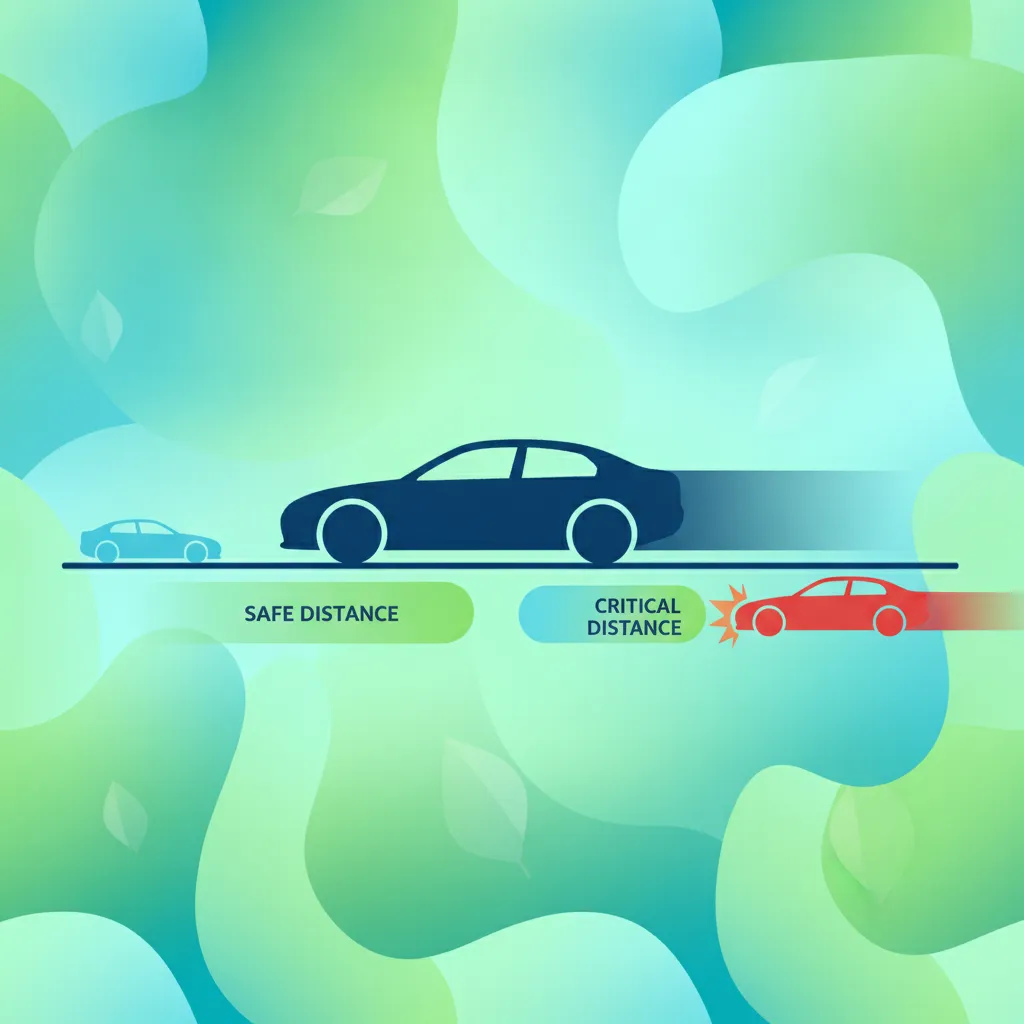
This lesson breaks down the concept of total stopping distance into reaction distance and braking distance. It teaches various braking techniques, including how to perform an emergency stop safely and the function of an Anti-lock Braking System (ABS). The relationship between speed, road condition, and braking effectiveness is a central theme.

This lesson introduces the fundamentals of a motorcycle's braking system, emphasizing the dominant role of the front brake due to forward weight transfer during deceleration. It explains how to apply both front and rear brakes in a coordinated manner to achieve maximum, stable stopping power. The content also covers how to modulate brake pressure smoothly and progressively to avoid losing traction and locking a wheel.

This lesson provides instruction on how to react and perform an emergency stop in a critical situation. It covers the technique of applying maximum braking force progressively and firmly without locking the wheels. For motorcycles equipped with an Anti-lock Braking System (ABS), the lesson explains how the system works and how the rider should respond when it activates to maintain steering control.

This lesson delves into the critical control systems of a passenger vehicle: steering, braking, and acceleration. It explains the mechanics of hydraulic and pneumatic brakes and the function of safety aids like ABS and ESP. Learners will understand how to apply smooth acceleration and deceleration techniques to ensure passenger comfort and maintain vehicle stability under various driving conditions.
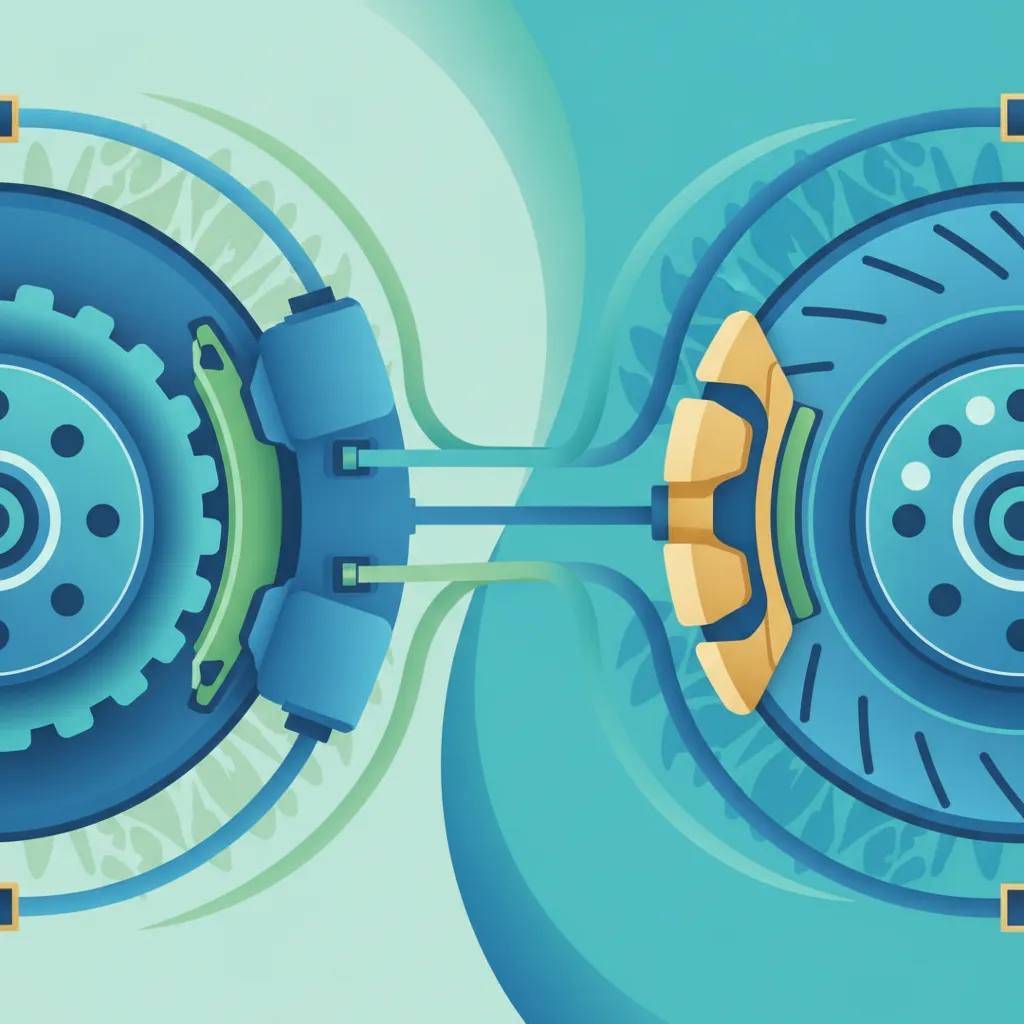
This lesson introduces the various braking systems in heavy vehicles, including service brakes, air brakes, and retarders. It explains the functional principles of each system, such as how compressed air is used and the role of retarders in reducing service brake wear. The content also covers the importance of dual-circuit systems and fail-safe mechanisms.
This lesson teaches riders how to conduct a simple but crucial pre-ride inspection of their vehicle. It provides step-by-step guidance on checking tyre pressure and tread depth, verifying brake function, and ensuring all lights are operational. Regular maintenance is presented as a fundamental responsibility for every rider.
Explore how motorcycle braking systems, including ABS, contribute to stability. This lesson covers balanced braking force between front and rear wheels, assessing brake condition, and understanding control for safer riding in German traffic situations.

This lesson introduces the fundamental principles of motorcycle balance, explaining the role of the gyroscopic effect in creating stability at speed. It demystifies the concept of countersteering, teaching learners how a push on the handlebar initiates a lean and turns the motorcycle. The lesson also covers how rider body positioning and weight transfer influence balance during both low-speed and high-speed maneuvers.
This lesson introduces the fundamentals of a motorcycle's braking system, emphasizing the dominant role of the front brake due to forward weight transfer during deceleration. It explains how to apply both front and rear brakes in a coordinated manner to achieve maximum, stable stopping power. The content also covers how to modulate brake pressure smoothly and progressively to avoid losing traction and locking a wheel.

This lesson covers the appropriate steps to take in the event of a vehicle breakdown or an accident. It details procedures for safely moving the motorcycle out of traffic, making the area visible with hazard warnings, and contacting emergency services. The content emphasizes personal safety and the correct protocol for managing the scene until professional help arrives.
This lesson provides instruction on how to react and perform an emergency stop in a critical situation. It covers the technique of applying maximum braking force progressively and firmly without locking the wheels. For motorcycles equipped with an Anti-lock Braking System (ABS), the lesson explains how the system works and how the rider should respond when it activates to maintain steering control.

This lesson teaches crucial risk awareness and accident prevention strategies for motorcyclists. It examines common accident scenarios and teaches riders how to identify potential hazards in advance. Key concepts include defensive riding, maintaining situational awareness, and understanding how a proactive mindset contributes to a safer riding experience on the road.

This lesson examines how various road surfaces and conditions affect tyre grip and traction. It teaches riders to recognize and adapt to hazards like wet patches, loose gravel, or oil spills. The content covers techniques for maintaining control through smooth throttle and brake inputs, preventing traction loss while accelerating, braking, and cornering on compromised surfaces.

This lesson details the correct procedures for entering a motorway, using the acceleration lane to match traffic speed, and merging safely. It reinforces the strict lane discipline required, including keeping to the right lane except when overtaking. The content also provides guidance on maintaining increased following distances and performing safe lane changes at high speeds.
This lesson breaks down the concept of total stopping distance into reaction distance and braking distance. It teaches various braking techniques, including how to perform an emergency stop safely and the function of an Anti-lock Braking System (ABS). The relationship between speed, road condition, and braking effectiveness is a central theme.

This lesson examines how different weather conditions, such as rain, strong winds, and fog, directly impact motorcycle safety. It explains how wet surfaces reduce tyre grip and increase braking distances, requiring smoother rider inputs. The content also provides strategies for managing reduced visibility and the physical effects of crosswinds on the motorcycle's stability.

This lesson details the safe approach and navigation of various intersection types, including those controlled by traffic lights, stop signs, and give-way signs. Emphasis is placed on comprehensive observation of traffic flow, establishing eye contact with other road users, and ensuring clear visibility before proceeding. The lesson also covers correct lane positioning for turning and the importance of anticipating pedestrian movements.
Find clear answers to common questions learners have about Braking System Components and Functionality. Learn how the lesson is structured, which driving theory objectives it supports, and how it fits into the overall learning path of units and curriculum progression in Germany. These explanations help you understand key concepts, lesson flow, and exam focused study goals.
Because of weight transfer during deceleration, the majority of the bike's mass shifts to the front wheel, significantly increasing available grip. This makes the front brake your primary stopping tool, though both must be used for optimal stability.
No, ABS is a safety aid that helps prevent wheel lock-up during hard braking. You must still practice proper brake control and technique to maintain control, especially when navigating bends or riding on loose surfaces.
During your pre-ride check, visually inspect the thickness of the friction material on the pads. If they are near or below the manufacturer's wear limit, they must be replaced immediately to ensure braking performance and avoid rotor damage.
Using only the rear brake in an emergency results in significantly longer stopping distances and a higher risk of the rear wheel locking up, which can lead to a loss of control and skidding.
Begin your targeted revision now. Use our practice search to quickly find specific German driving theory questions. Filter by StVO rules, road signs, or hazard perception to create your focused study plan. Master challenging areas and prepare confidently for your theoretical driving test.