
Mastering your position on the road is crucial for moped safety, especially in busy urban environments. This lesson, part of the 'Road Signs, Traffic Lights & Road Markings for AM Riders' unit, will teach you how to navigate Icelandic city streets effectively, ensuring you are visible to other road users and can avoid common hazards.
Lesson content overview
Navigating urban roads safely and efficiently on a Category AM moped requires more than just knowing traffic rules; it demands strategic road positioning. This lesson provides a comprehensive guide to optimal moped placement on city streets, emphasizing visibility, hazard avoidance, and adherence to Icelandic traffic regulations. By mastering these principles, riders can significantly reduce collision risks, enhance their presence to other road users, and ensure a smoother, safer journey.
Proper road positioning is a fundamental skill that directly impacts your safety as a moped rider. On busy urban roads, where traffic density is high and hazards are numerous, your position in the lane determines how well you are seen by others, your reaction time to unexpected events, and your ability to avoid potential dangers. This module builds upon foundational knowledge of basic traffic rules, protective gear, and urban traffic flow, linking directly to broader concepts of lane use, turning techniques, and speed management.
The primary goal of strategic road positioning is to maximize your visibility to other drivers while creating a safe buffer zone around your moped. This involves a continuous assessment of your surroundings and proactive adjustments to your lane position. A moped's smaller size can make it less conspicuous in traffic, highlighting the critical need for deliberate placement that compensates for this inherent vulnerability.
Effective road positioning on urban streets is guided by several core principles that, when applied consistently, create a proactive approach to safety. These principles work in concert to ensure you are not only seen but also predictable to other road users.
Visibility positioning means intentionally placing your moped where you can be seen earliest by drivers both ahead and behind you. This early detection is crucial as it provides other road users with more time to perceive your presence, process your intentions, and adjust their speed and path accordingly. Riders should generally avoid hugging the extreme edges of the lane, which can often place them in blind spots, especially near larger vehicles or parked cars.
Lane discipline refers to staying within the designated boundaries of your travel lane and respecting all lane markings. This practice reduces the potential for conflict with adjacent traffic and promotes consistent, predictable traffic flow. Moped riders must not use sidewalks, pavements, or weave between lanes unless specifically permitted by law (e.g., during slow-moving traffic in designated areas, which is rarely the case in Iceland for mopeds).
Hazard avoidance involves positioning your moped to stay clear of common urban dangers. These can include road debris, potholes, oil slicks, drainage grates, and the significant risk of vehicle doors opening unexpectedly. By consciously selecting the safest part of the lane, you mitigate the risk of physical injury and avoid the need for sudden, dangerous evasive maneuvers. Maintaining adequate lateral clearance from parked vehicles is a prime example of this principle in action.
Your lane position should be dynamic, adapting to the current speed and density of traffic. In faster-moving traffic, a more central and steady lane position can be safer, allowing greater reaction time and ensuring you are clearly visible. In contrast, slower or congested traffic might offer more flexibility, though visibility and hazard avoidance remain paramount. Constant reassessment of your speed relative to the surrounding flow is key.
Continuous assessment of the road surface condition is vital, as it directly impacts your moped's grip and stability. Wet, icy, sandy, or uneven surfaces can significantly reduce traction. Your lane position should be chosen to accommodate these variables, preferring areas of the road that offer the best possible grip and drainage. This proactive adjustment helps prevent loss of control.
To put the core principles into practice, it's helpful to break down road positioning into specific, actionable concepts. Each concept addresses a different aspect of safe urban riding.
Ensuring visibility means actively choosing a lane position that keeps your moped within the field of view of other drivers for the longest possible detection time. This includes both forward visibility (being seen by vehicles ahead and those approaching from the opposite direction) and rear visibility (being seen by vehicles behind you).
Riding near the center of your lane, rather than hugging the curb, is a critical practical application of this concept. Hugging the curb often places a moped in the blind spot of parked cars, buses, or trucks, and makes you less conspicuous to drivers making turns or changing lanes. Icelandic traffic law, as per Regulation §73, mandates that vehicles maintain a visible position to other road users at all times. A common misconception is that riding at the extreme edge of the lane makes it easier for others to overtake; however, this significantly reduces your visibility and increases your risk of a collision. For instance, on a straight urban road, positioning your moped midway between the lane markings ensures drivers ahead and behind can see you clearly and react safely.
Lane discipline is about strictly adhering to the boundaries of your designated travel lane. This applies whether you are on a single-lane, two-way street or a multi-lane one-way street. For moped riders, this means never riding on sidewalks, pavements, or between lanes of moving traffic unless specifically permitted by local regulations (which is generally not the case for mopeds in Iceland).
The use of designated lanes is mandatory; encroaching into an adjacent lane without signaling and proper checks, or riding on the wrong side of the road, is prohibited and highly unsafe. A common misunderstanding is that riding on the pavement can help avoid traffic, but this is not only illegal but also extremely dangerous for pedestrians and creates unpredictable situations for drivers re-entering traffic. For example, on a one-way street with two lanes, an AM rider should stay in the right lane unless they are actively passing another vehicle, at which point they briefly move to the left lane before returning.
Proactive hazard avoidance involves strategically positioning your moped to steer clear of predictable urban dangers. This includes debris avoidance, where you select a lane area free of obstacles like gravel, glass, or fallen cargo, and dooring avoidance, where you maintain a safe lateral distance from parked cars.
Practically, this means maintaining at least a 1-meter lateral clearance from parked cars. This distance provides a crucial buffer zone, giving you time and space to react if a door suddenly opens. Riding too close to parked vehicles places you directly in the "dooring zone," a high-risk area. Icelandic traffic law, in Regulation §79, explicitly requires riders to keep a safe distance from parked vehicles. Imagine a scenario where a row of cars is parked along the right side of the road; the correct action is to shift slightly left, occupying more of the traffic lane, to ensure you are clear of any opening doors.
Always maintain at least 1 meter of lateral clearance from parked vehicles. This buffer zone is essential to protect against unexpected car doors opening into your path.
Your lane position should dynamically adjust based on the current traffic speed and density. This "speed-appropriate positioning" ensures you have adequate reaction and stopping distances relative to other vehicles.
In high-speed situations, occupying a central lane position allows for faster reaction to changes ahead and makes you more visible to drivers approaching from behind. Conversely, in low-speed or stop-and-go traffic, you might ride closer to the curb (while still maintaining visibility and dooring clearance), but this flexibility diminishes as speeds increase. Icelandic Regulation §61 stipulates that riders must not impede the normal flow of traffic. A common mistake is riding at the far edge of the lane during high-speed travel, which can necessitate abrupt lane changes if you encounter hazards or need to react to other traffic. For instance, in a 40 km/h zone with steady traffic flow, an AM rider should generally stay near the center-left of the lane to remain visible while maintaining a safe following distance.
Road surface awareness involves continuously monitoring the condition of the road and adapting your lane position to ensure optimal traction and safety. This includes detecting wet surfaces and moving to lane areas with better drainage, or identifying uneven surfaces like potholes or gravel and actively avoiding them.
Practically, this might involve shifting slightly left if the right side of the lane is covered with water spray from a preceding vehicle, or moving to a clearer part of the road to avoid a patch of gravel. Your ability to maintain control of your moped is paramount, and Regulation §54 implicitly requires riders to adapt to conditions to maintain control. Failing to adjust your position for hazardous road conditions can easily lead to a loss of control. For example, after street cleaning, if you notice wet patches on the right side of your lane, shifting to the left, drier portion of the lane is a smart, proactive safety measure.
Adhering to specific Icelandic traffic regulations is not just about legality; it's about establishing a predictable and safe presence on the road. These rules are designed to minimize conflict and ensure smooth traffic flow for all users.
Maintain a visible position: According to Icelandic Road Traffic Regulation §73, all vehicles, including mopeds, are legally required to maintain a position that ensures they are visible to other road users at all times. This means actively positioning yourself where you can be seen early by drivers both ahead and behind, such as riding centrally in your lane. Riding on a sidewalk or hugging the curb to the point of being obscured would be a violation.
Stay within designated lane markings: Regulation §61 mandates that vehicles must stay within their designated travel lanes and respect all lane markings. This rule is crucial for preventing unpredictable vehicle trajectories and reducing the risk of side-swipes or head-on collisions. An AM rider must keep their moped between the solid lane lines and not ride between lanes of moving traffic or on pavements.
Keep a safe lateral distance from parked cars: Icelandic Regulation §79 specifically addresses the risk of dooring, requiring riders to maintain a safe lateral distance from parked vehicles. This legally binding rule aims to reduce the risk of collisions caused by suddenly opening doors. A minimum of 1 meter of clearance is generally recommended and considered safe practice. Riding directly alongside a row of parked cars is illegal and dangerous.
Yield to larger vehicles' blind spots: While not always a specific positioning rule, Regulation §84 emphasizes the responsibility of drivers to be aware of and avoid the blind spots of larger vehicles when overtaking or being overtaken. For moped riders, this means actively positioning yourself where the driver of a bus or truck can see you in their mirrors, rather than lingering in zones they cannot monitor. Positioning your moped slightly offset to the left side of the lane, visible in a truck's side mirror, is a correct application. Riding directly behind a large vehicle, where you are completely invisible, is a common error.
Adjust position for road surface conditions: Although not codified by a single article, the general duty of care (implied by Regulation §54 regarding maintaining vehicle control) requires riders to continuously assess and adjust their position based on road surface conditions. This is crucial for improving traction and reducing the risk of skidding or losing control. If a lane is covered in water, shifting to a part of the lane with better drainage is a correct and responsible action.
Understanding common errors in road positioning helps riders proactively avoid dangerous situations.
Road positioning is not static; it must adapt to the ever-changing conditions around you.
At night or in foggy conditions, maintaining a central lane position is vital. This ensures you are illuminated by your moped's headlights, making you visible to approaching vehicles, and helps you see potential hazards. Always use appropriate reflective gear and ensure your lights are clean and functioning correctly.
If your moped is heavily loaded or has low tire pressure, its handling characteristics will be affected. In such cases, occupying the most stable part of the lane (typically the center) and maintaining a more conservative position is advisable to compensate for reduced control.
When sharing the lane with cyclists or pedestrians (where permitted for cyclists), maintain a safe lateral distance. For cyclists, this should be at least 1.5 meters to allow for their unpredictable movements and to prevent any buffeting from your moped. Anticipate their lane changes or sudden swerves to avoid road hazards.
The link between proper road positioning and moped safety is direct and undeniable.
Think of your lane position as your personal safety bubble. The more centrally you ride, the larger and more protective that bubble generally becomes, allowing you more space and time to react to unexpected situations.
Let's look at real-world examples to illustrate effective road positioning.
Mastering road positioning is a continuous process of observation, assessment, and adjustment. For Icelandic Category AM moped riders, this skill is foundational to safe urban travel.
The core idea is to always maintain a clearly visible and predictable position on urban roads, one that adheres to lane discipline and proactively avoids hazards.
Before and during your ride, always ask yourself: "Am I clearly visible to others?" "Am I maintaining a safe distance from potential hazards?" "Am I respecting lane markings?" "Am I adapting to current weather and road conditions?"
Always comply with Icelandic traffic regulations concerning lane usage, maintaining visibility, and safe distances, particularly §§61, 73, 79, and 84. These rules are designed to protect you and other road users.
By consistently applying these principles and best practices, Category AM riders can significantly enhance their safety, reduce the risk of collisions, and confidently navigate the dynamic environment of urban roads in Iceland.
This lesson teaches Icelandic Category AM moped riders how to position themselves safely on urban roads by maximizing visibility, maintaining lanediscipline, and proactively avoiding hazards. Key principles include riding centrally in the lane, keeping at least 1 meter clearance from parked cars, and adapting position based on traffic speed and road conditions. The lesson covers specific Icelandic regulations (§§61, 73, 79, 84), explains blind spot dangers and dooring risks, and provides practical scenarios demonstrating correct versus incorrect positioning choices. Mastering these principles is essential for both passing the theory exam and ensuring real-world safety in Icelandic urban traffic.
A short set of high-value points that capture the most important learning from this lesson.
Position your moped centrally within the lane to maximize visibility to drivers ahead and behind, which provides more reaction time for both you and other road users.
Maintain at least 1 meter of lateral clearance from parked vehicles to avoid the dooring hazard, which is legally required under Icelandic Regulation §79.
Adjust your lane position dynamically based on traffic speed and density; central positioning becomes more critical as speeds increase.
Continuously monitor road surface conditions and shift to safer lane areas when encountering wet patches, gravel, or uneven surfaces.
Actively avoid blind spots of larger vehicles by positioning your moped where the driver's mirrors can see you, rather than lingering beside or directly behind trucks and buses.
Explore all units and lessons included in this driving theory course.
Icelandic Road Traffic Regulation §73 requires all vehicles to maintain a visible position to other road users at all times.
Regulation §61 mandates staying within designated lane markings; mopeds must not use sidewalks or weave between lanes in Iceland.
The dooring zone is a high-risk area; riding close to parked cars creates minimal reaction time if a door opens unexpectedly.
In high-speed traffic, hugging the curb or lane edge reduces your safety margin and makes lane changes more dangerous.
Wet or compromised road surfaces reduce traction; shift to lane areas with better drainage and grip.
Riding too close to parked cars increases dooring collision risk and violates safe lateral distance requirements.
Lingering in blind spots of buses or trucks where the driver cannot see you in their mirrors is extremely dangerous.
Hugging the extreme right edge of the lane during fast-moving traffic reduces visibility and reaction options.
Failing to adjust lane position for road hazards like potholes, gravel, or wet patches can lead to loss of control.
Riding on sidewalks or pavements to avoid traffic is illegal for mopeds and creates unpredictable hazards for pedestrians.
Lesson content overview
A short set of high-value points that capture the most important learning from this lesson.
Position your moped centrally within the lane to maximize visibility to drivers ahead and behind, which provides more reaction time for both you and other road users.
Maintain at least 1 meter of lateral clearance from parked vehicles to avoid the dooring hazard, which is legally required under Icelandic Regulation §79.
Adjust your lane position dynamically based on traffic speed and density; central positioning becomes more critical as speeds increase.
Continuously monitor road surface conditions and shift to safer lane areas when encountering wet patches, gravel, or uneven surfaces.
Actively avoid blind spots of larger vehicles by positioning your moped where the driver's mirrors can see you, rather than lingering beside or directly behind trucks and buses.
Explore all units and lessons included in this driving theory course.
Icelandic Road Traffic Regulation §73 requires all vehicles to maintain a visible position to other road users at all times.
Regulation §61 mandates staying within designated lane markings; mopeds must not use sidewalks or weave between lanes in Iceland.
The dooring zone is a high-risk area; riding close to parked cars creates minimal reaction time if a door opens unexpectedly.
In high-speed traffic, hugging the curb or lane edge reduces your safety margin and makes lane changes more dangerous.
Wet or compromised road surfaces reduce traction; shift to lane areas with better drainage and grip.
Riding too close to parked cars increases dooring collision risk and violates safe lateral distance requirements.
Lingering in blind spots of buses or trucks where the driver cannot see you in their mirrors is extremely dangerous.
Hugging the extreme right edge of the lane during fast-moving traffic reduces visibility and reaction options.
Failing to adjust lane position for road hazards like potholes, gravel, or wet patches can lead to loss of control.
Riding on sidewalks or pavements to avoid traffic is illegal for mopeds and creates unpredictable hazards for pedestrians.
Explore search topics learners often look for when studying Road Positioning on Urban Roads. These topics reflect common questions about road rules, driving situations, safety guidance, and lesson level theory preparation for learners in Iceland.
Browse additional driving theory lessons that cover connected traffic rules, road signs, and common driving situations related to this topic. Improve your understanding of how different rules interact across everyday traffic scenarios.
Understand how to adjust your moped's lane position based on varying traffic speeds and density in Icelandic urban areas. This lesson covers maintaining visibility and predictable movement within the broader traffic flow for safer riding.
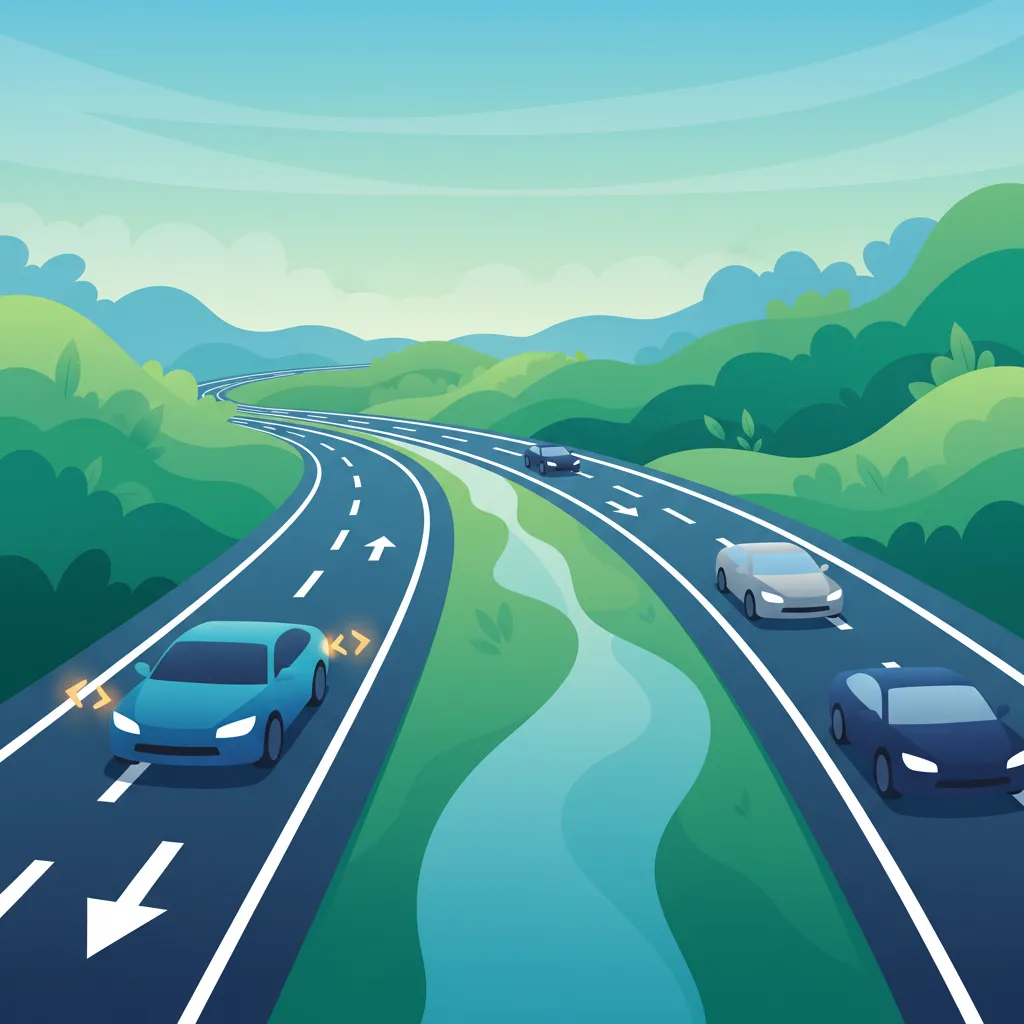
This lesson details the fundamentals of lane discipline and proper turning techniques for moped riders. It covers the correct use of turn signals, judging appropriate cornering speed, and executing safe lane changes. The material provides a step-by-step guide to navigating intersections and curves with control and predictability, ensuring safety for the rider and other road users.
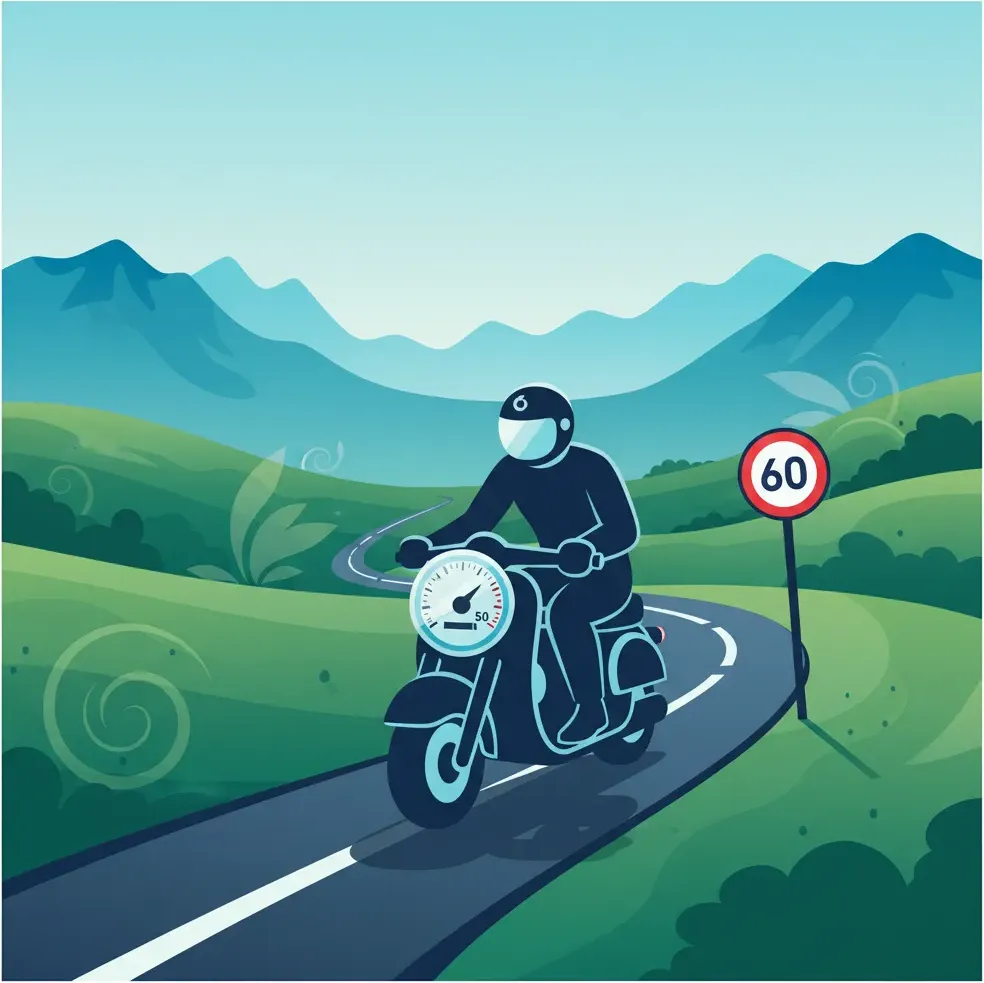
This lesson covers the statutory speed limits applicable to Category AM vehicles in various environments, from urban centers to rural roads. It emphasizes the critical importance of adapting speed to conditions such as rain, wind, or poor visibility. Riders will learn practical techniques for managing acceleration and maintaining a safe, legal speed at all times.
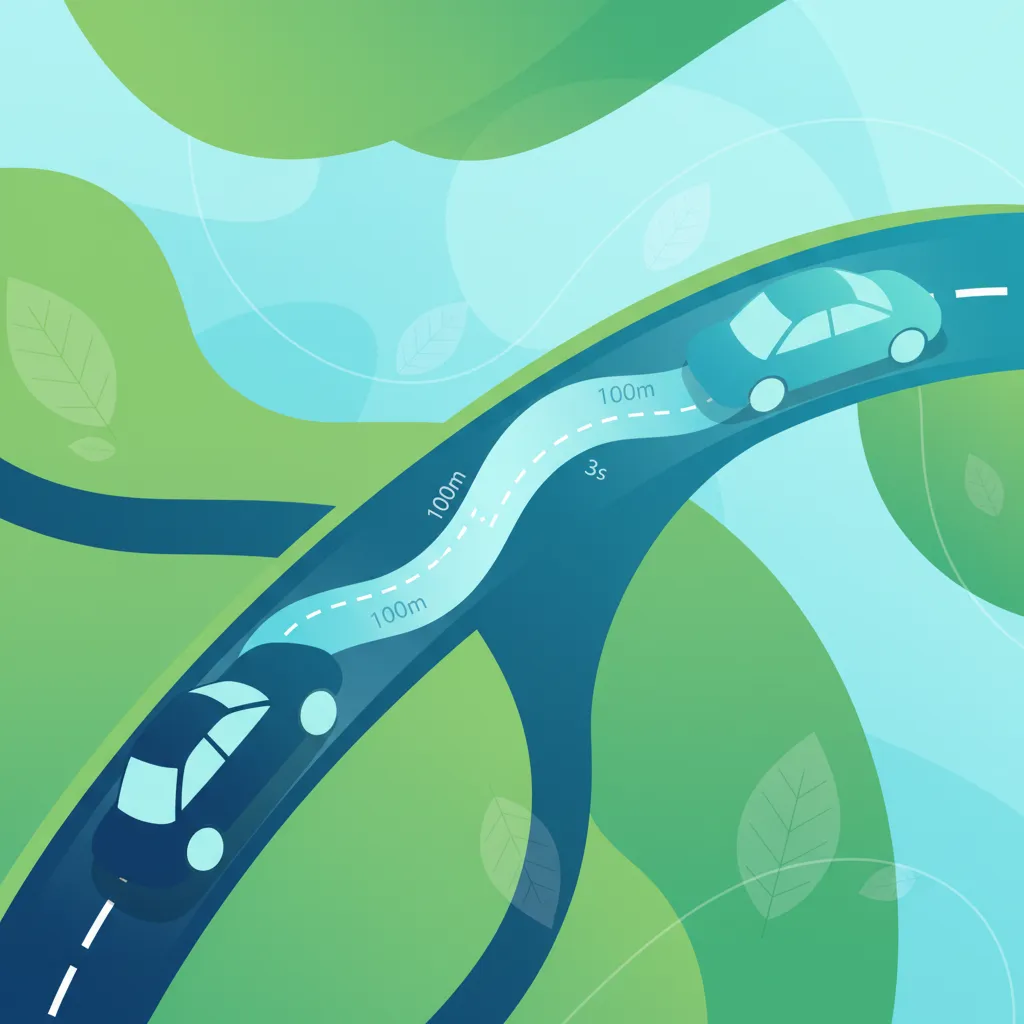
This lesson focuses on the concept of maintaining a safe following distance using the time-gap method. It explains how to create a sufficient buffer zone to react to sudden stops by the vehicle ahead. Riders will learn to adjust this gap based on speed, weather, and visibility to prevent rear-end collisions and ensure adequate reaction time.
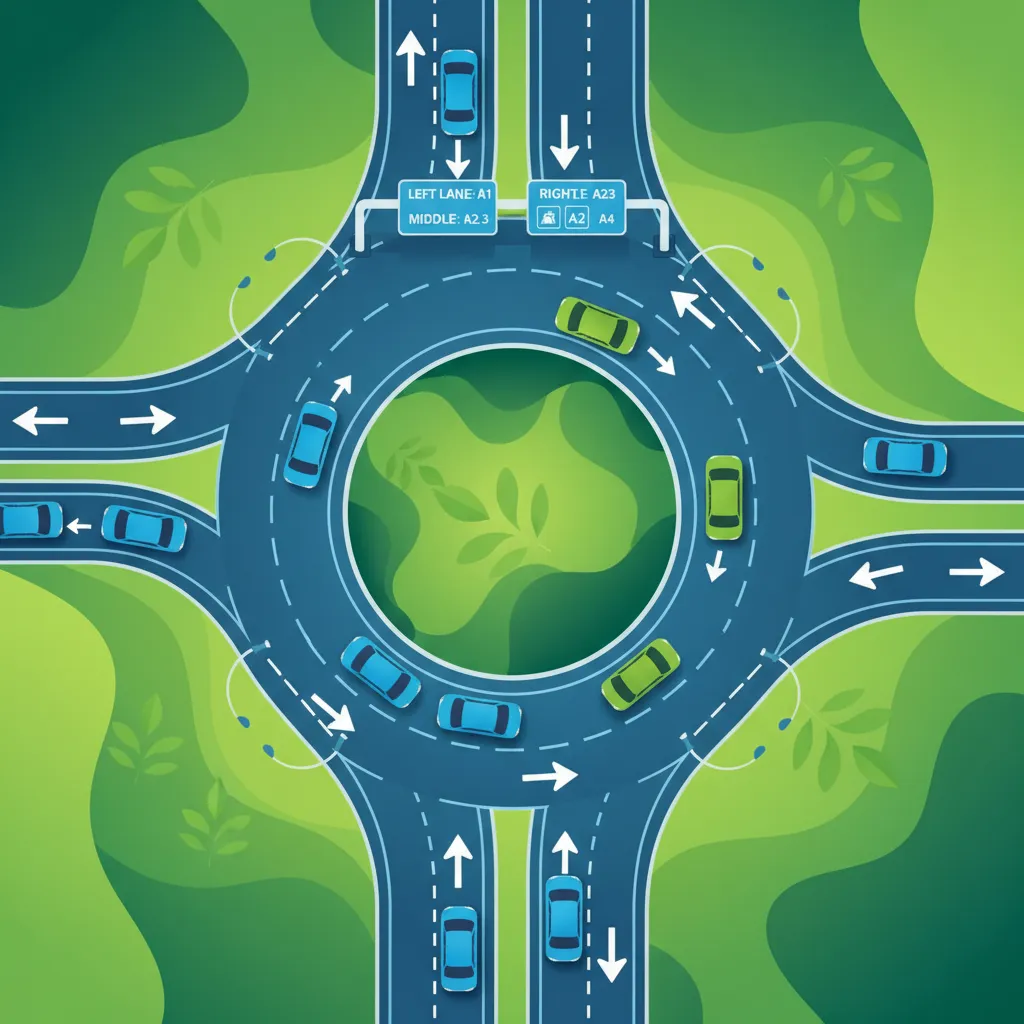
This lesson provides a detailed guide to navigating roundabouts, focusing on the rule to yield to circulating traffic before entering. It covers correct lane positioning for different exits, proper signaling, and maintaining a safe speed within the roundabout. Special guidance is provided for moped riders to enhance their visibility and safety among larger vehicles.
This lesson provides a contextual overview of Iceland's traffic law hierarchy, explaining how national statutes, road codes, and local rules interact. Learners will understand the precedence of national laws and how to interpret regulations in different jurisdictions. This knowledge ensures riders can correctly apply the relevant rules in any driving scenario, ensuring consistent legal compliance.
This lesson examines regulatory signs that impose legal obligations, focusing on those most relevant to moped riders like speed limits and mandatory direction signs. Learners will understand how sign shapes and colors convey specific commands or prohibitions. Attention is given to signs with vehicle-specific restrictions, ensuring riders know when rules apply directly to them.

This lesson dissects the three-color traffic light system, detailing the meaning of red, amber, and green signals, including flashing lights and directional arrows. It explains how signal timing impacts moped riders and the legal requirement to obey all signals at intersections. Proper interpretation is crucial for navigating signalized junctions safely and avoiding conflicts with other traffic.

This lesson focuses on methods to enhance a rider's visibility, covering high-visibility clothing, reflective materials, and strategic lighting. Learners will understand how to use daytime running lights and position themselves to minimize time in others' blind spots. These proactive techniques are essential for being seen by other road users, significantly reducing the risk of collisions.

This lesson explores the conduct required at uncontrolled crossings where the right-hand rule typically applies. It emphasizes the need to reduce speed, be prepared to stop, and establish clear communication with other road users. Riders will learn to assess the situation carefully and proceed only when it is confirmed to be safe, a critical skill for rural and residential areas.
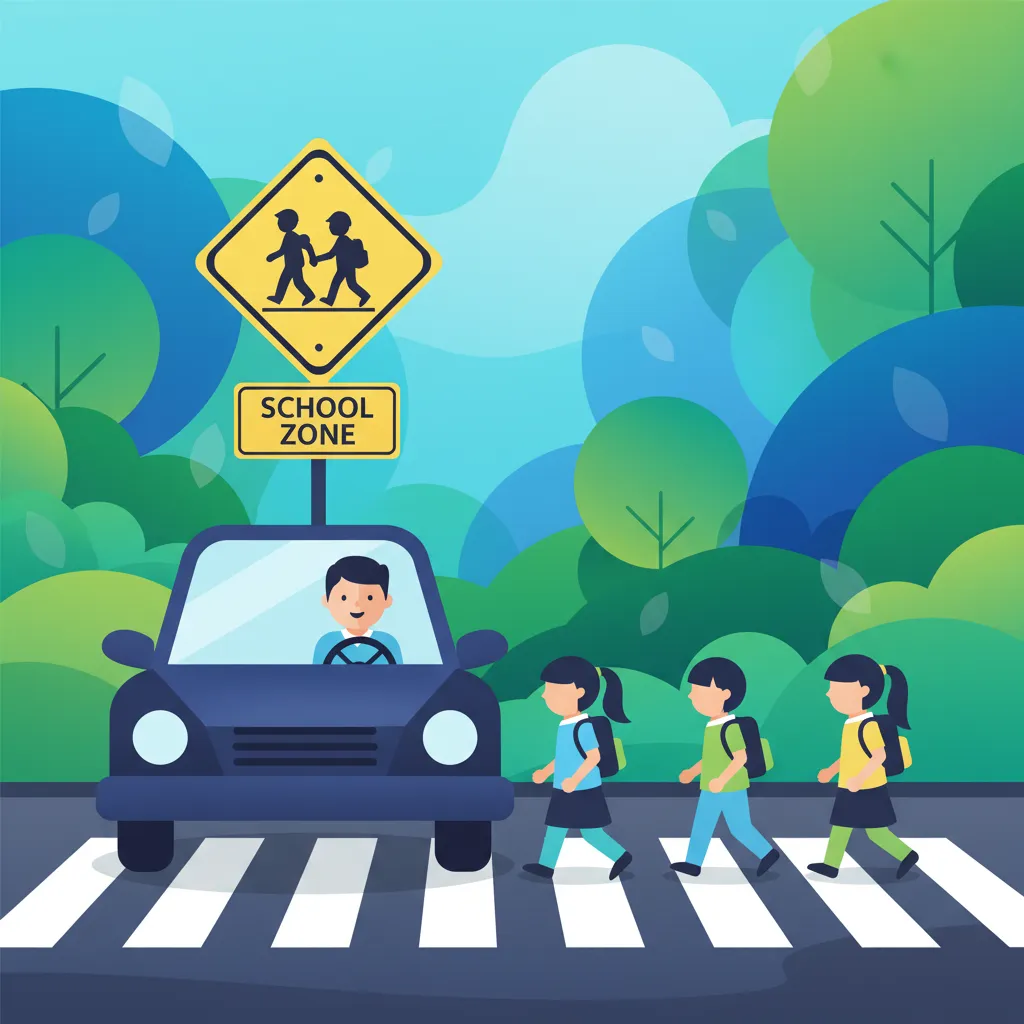
This lesson covers the strict rules governing pedestrian crossings and school zones, where riders have a heightened duty of care. It details the obligation to yield to pedestrians, recognize school zone signage, and reduce speed significantly. Riders learn to be extra vigilant for the unpredictable movements of children and other vulnerable road users in these sensitive areas.
Learn to navigate complex urban road positioning scenarios, focusing on avoiding dooring risks from parked cars and understanding the critical blind spots of larger vehicles. Enhance your safety by mastering advanced hazard avoidance techniques specific to Icelandic urban environments.

This lesson investigates the significant hazards posed by parked vehicles, particularly the risk of a driver opening a door into a rider's path. It teaches techniques for maintaining a safe buffer zone and scanning for signs of occupancy in parked cars. Riders will learn how to anticipate this common urban danger and plan escape routes to avoid sudden collisions.
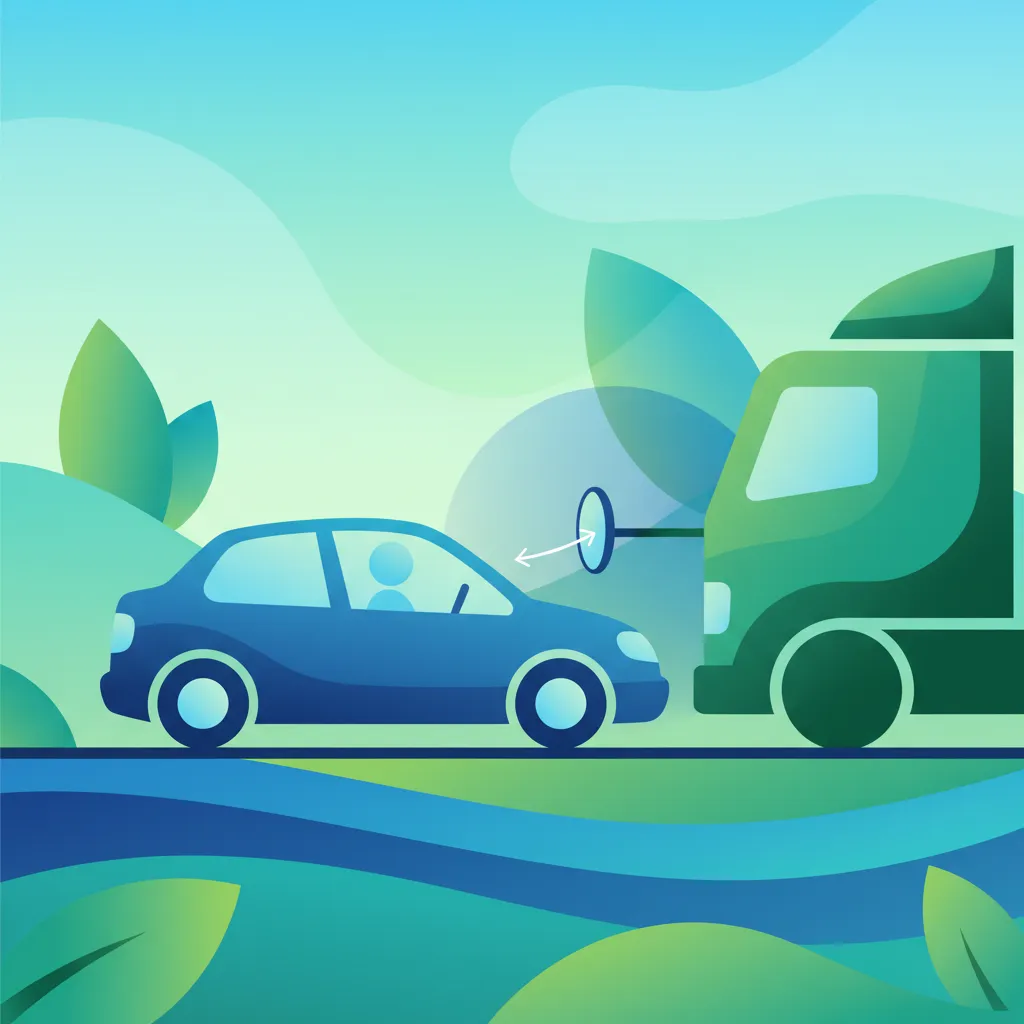
This lesson explores the blind spot zones of cars, trucks, and buses, highlighting the vulnerability of moped riders. It provides effective strategies for positioning your vehicle to remain visible to other drivers at all times. Riders will learn to anticipate lane changes and movements from larger vehicles, significantly reducing the risk of being unseen in traffic.
This lesson details the fundamentals of lane discipline and proper turning techniques for moped riders. It covers the correct use of turn signals, judging appropriate cornering speed, and executing safe lane changes. The material provides a step-by-step guide to navigating intersections and curves with control and predictability, ensuring safety for the rider and other road users.
This lesson familiarizes learners with signs that warn of upcoming hazards, such as sharp curves, slippery surfaces, or animal crossings. It emphasizes the importance of early hazard recognition and response, which is especially critical for vulnerable moped riders. Understanding these signs allows riders to anticipate road conditions and adjust their riding strategy accordingly for increased safety.
This lesson focuses on methods to enhance a rider's visibility, covering high-visibility clothing, reflective materials, and strategic lighting. Learners will understand how to use daytime running lights and position themselves to minimize time in others' blind spots. These proactive techniques are essential for being seen by other road users, significantly reducing the risk of collisions.
This lesson explores the conduct required at uncontrolled crossings where the right-hand rule typically applies. It emphasizes the need to reduce speed, be prepared to stop, and establish clear communication with other road users. Riders will learn to assess the situation carefully and proceed only when it is confirmed to be safe, a critical skill for rural and residential areas.
This lesson provides a detailed guide to navigating roundabouts, focusing on the rule to yield to circulating traffic before entering. It covers correct lane positioning for different exits, proper signaling, and maintaining a safe speed within the roundabout. Special guidance is provided for moped riders to enhance their visibility and safety among larger vehicles.
This lesson focuses on the concept of maintaining a safe following distance using the time-gap method. It explains how to create a sufficient buffer zone to react to sudden stops by the vehicle ahead. Riders will learn to adjust this gap based on speed, weather, and visibility to prevent rear-end collisions and ensure adequate reaction time.
This lesson examines the psychological factors crucial for safe riding, promoting a defensive mindset and heightened risk awareness. It provides strategies for managing stress, identifying potential hazards early, and making proactive decisions to prevent dangerous situations. Cultivating mental discipline and a safety-conscious attitude is fundamental to long-term rider safety on Icelandic roads.
This lesson focuses on interpreting road surface markings, including solid and broken lines that govern lane changes and positioning. Learners will understand the rules associated with turning arrows, pedestrian crossings, and markings for dedicated lanes. Correctly reading these markings is essential for maintaining proper lane discipline and navigating complex road layouts safely.
Find clear answers to common questions learners have about Road Positioning on Urban Roads. Learn how the lesson is structured, which driving theory objectives it supports, and how it fits into the overall learning path of units and curriculum progression in Iceland. These explanations help you understand key concepts, lesson flow, and exam focused study goals.
For moped riders, road positioning is critical because mopeds are less visible and more vulnerable than cars. Correct positioning ensures you are seen by drivers of larger vehicles, helps you avoid hazards like potholes or debris, and creates a safety buffer, especially around parked cars where dooring is a risk. It's a key aspect of defensive riding.
To avoid dooring, maintain a safe distance from parked vehicles – typically at least one metre. Position yourself in the lane so that even if a car door opens suddenly, you have space to react or pass safely. Always scan parked cars for signs of occupants who might open a door without looking.
The best lane position is usually not in the gutter or far to the side, but rather in a position that makes you visible and safe from both traffic to your side and parked cars. This often means riding in the 'primary riding position' – roughly one-third of the way across the lane – where drivers merging or turning will see you clearly.
Road markings like lane lines, box junctions, and 'give way' markings guide your positioning. For instance, you should position yourself to anticipate entering a roundabout or to ensure clear visibility at an intersection. Always be aware of lane endings or merge points and adjust your position accordingly.
No, your position should be dynamic. You need to move within your lane to maintain visibility, especially when passing parked cars, approaching junctions, or being overtaken. Always be looking ahead for potential hazards and adjust your position to maintain a safe space.
Utilize our advanced practice set search to pinpoint the exact Icelandic driving theory topics you need to review. Filter by subject, difficulty, or question type to create a highly effective study plan and ensure you are fully prepared for your official driving licence test in Iceland.