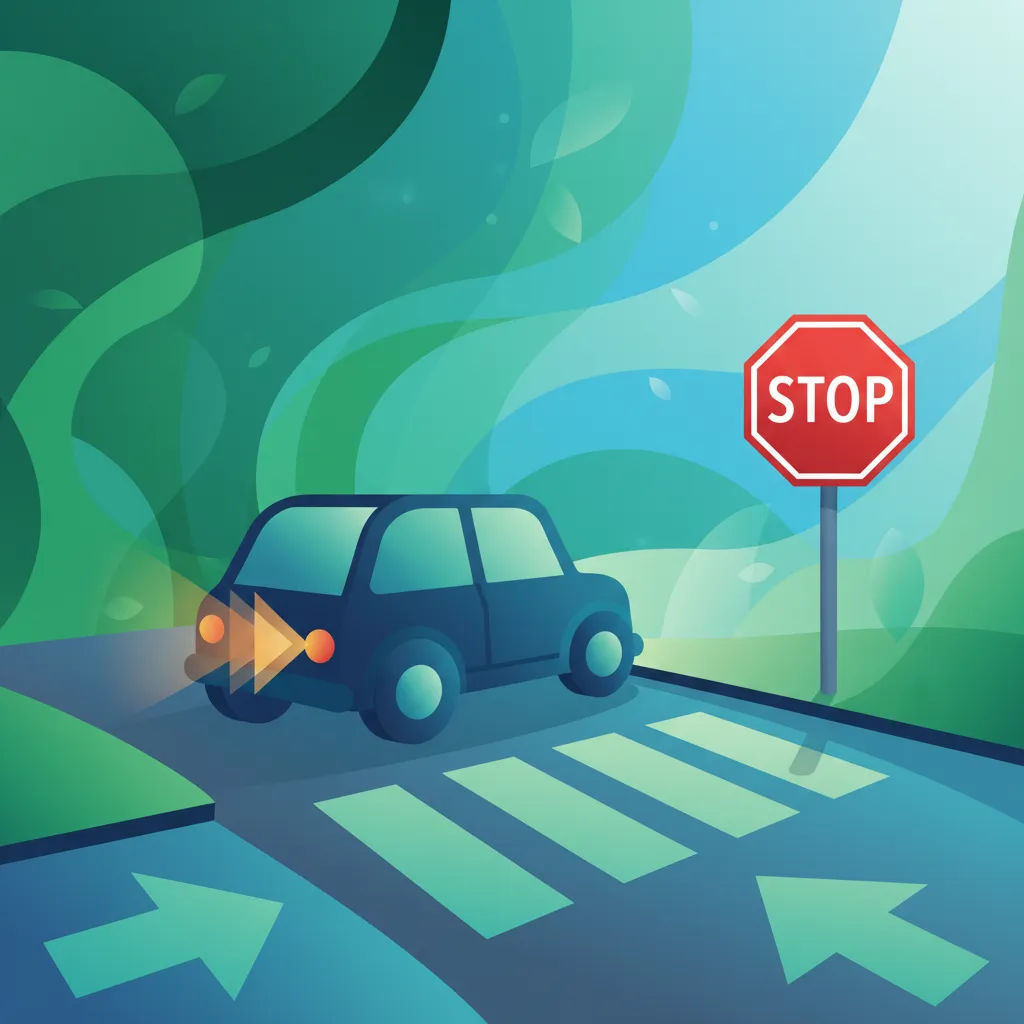
This lesson focuses on executing safe turns and proper signalling, a key skill for navigating Icelandic roads and passing your Category B theory exam. We will cover essential techniques for lane positioning, checking blind spots, and understanding turning radius to ensure you can complete turns safely and confidently. Mastering these principles is vital for smooth traffic flow and avoiding common errors tested in the exam.
Lesson content overview
Navigating turns safely is a fundamental skill for every driver, crucial for smooth traffic flow and collision prevention. In the Official Icelandic Driving License B Theory Course, understanding the principles of turning and the correct use of signals is paramount. This lesson provides a comprehensive guide to executing right and left turns, emphasizing proper lane positioning, critical blind spot checks, and the legal requirements for signaling in Iceland.
Turning involves a combination of vehicle control, legal obligations, and an understanding of physics, all coordinated to create a predictable and safe manoeuvre. By mastering these principles, drivers can significantly reduce the risk of accidents involving other vehicles, cyclists, and pedestrians, ensuring a safer driving environment for everyone.
Safe turning principles are built upon several core concepts that ensure predictability and minimize conflict with other road users. These include clear communication of intent, correct vehicle placement, awareness of physical limitations, and vigilance for hidden dangers.
Signalling is your primary way of communicating intentions to other drivers, pedestrians, and cyclists. It provides an early warning system, allowing others to anticipate your actions and adjust their speed or position accordingly. Timely and correct use of your vehicle's turn indicators dramatically reduces the risk of sudden braking or unexpected collisions.
An amber light on a vehicle that flashes to warn other road users of an intended change in direction (left or right turn, or lane change).
Failing to signal, or signalling too late, can lead to confusion, frustration, and dangerous situations for other road users. Conversely, leaving a signal on after completing a turn can also be misleading, potentially causing other drivers to misinterpret your next move. The signal must remain active until the vehicle has fully completed its turn and has established its new direction.
Every vehicle has a unique turning radius, which is the minimum curve it can follow when turning. This radius is determined by the vehicle's dimensions, particularly its wheelbase, and its steering geometry. It dictates how much space your vehicle needs to complete a turn without encroaching on adjacent lanes, hitting the curb, or crossing into oncoming traffic.
Being aware of your vehicle's turning radius is especially important on tight corners, in narrow streets, and when navigating intersections with complex lane markings. Larger vehicles naturally have a wider turning radius, requiring more space and often a slightly wider approach to avoid clipping curbs or encroaching on other lanes. This also applies when driving on gravel roads or in winter conditions, where reduced tire grip can effectively increase the space needed for a safe turn.
Blind spots are areas around your vehicle that are not visible in your rear-view or side mirrors. These areas can hide entire vehicles, motorcycles, or critically, cyclists and pedestrians, making them especially dangerous when turning or changing lanes. A quick, physical shoulder check, turning your head to glance directly into these blind spots, is a mandatory safety step.
This check should be performed both before activating your turn signal (to ensure the path is clear to begin the manoeuvre) and again before you actually begin to steer into the turn (to confirm the path remains clear, especially from fast-approaching vulnerable users). Relying solely on mirrors is insufficient and can lead to serious side collisions.
Yielding means giving priority to other road users before proceeding with your turn. This fundamental rule is in place to maintain order in traffic and prevent collisions. In Iceland, as in most countries, specific yielding rules apply when turning, particularly for left turns and when interacting with pedestrians and cyclists.
Unless a dedicated traffic signal (like a green arrow) grants you exclusive right-of-way, you must yield to oncoming traffic when turning left. Similarly, when turning right, you must yield to pedestrians crossing your intended path and often to cyclists travelling straight ahead in their designated lanes. Understanding and correctly applying these yielding rules are vital for preventing accidents at intersections.
The effectiveness of your turn signal depends entirely on its timely and correct activation. It's not just about turning it on, but about turning it on at the right moment and maintaining it appropriately.
Your vehicle's turn indicators are electrical devices that flash amber lights at the front, side, and rear of your vehicle. They are distinct from hazard lights, which flash all indicators simultaneously and are only to be used when your vehicle is stationary and poses a danger to traffic. For normal turning or lane changes, only the specific left or right indicator should be used.
A system that flashes all turn indicators simultaneously to warn other road users of a stationary vehicle that is posing a danger or obstruction. Not to be used for normal turning intentions.
Some modern vehicles have automatic turn signal cancellation systems that deactivate the signal once the steering wheel returns to its straight position after a turn. However, drivers must always be prepared to manually cancel the signal if it does not turn off automatically, or if a turn is aborted, to avoid misleading other road users.
In Iceland, drivers are legally required to activate their turn indicator at least five seconds before initiating an intended turn or lane change. This fixed time requirement is crucial regardless of your speed, ensuring that other road users have ample time to react and adjust.
Important Legal Requirement: In Iceland, the turn indicator must be activated for a minimum of five seconds before starting your turn. Failure to do so is a common violation and reduces safety significantly.
On higher-speed roads, such as motorways or major rural routes, while the 5-second rule still applies, it's often prudent to signal even earlier. Signalling at least 150 metres before an exit or turn allows for even greater warning, especially considering the longer stopping distances required at higher speeds. Early signalling is a courtesy and a safety measure that enhances overall traffic flow and reduces sudden braking.
Proper lane positioning is as crucial as signalling. It communicates your intention visually and ensures you can complete your turn without interfering with other traffic or vulnerable road users.
When preparing for a right turn, you should position your vehicle as close as safely possible to the right-hand curb or the right edge of the road. On multi-lane roads with designated right-turn lanes, you must move into that lane early enough to signal and make the turn smoothly.
Cutting across a lane laterally just before a turn, or attempting a right turn from a left-hand lane (unless clearly marked for such a manoeuvre, which is rare), is illegal and extremely dangerous. Your early positioning provides clear visual confirmation of your intent, reinforcing your signal.
For a left turn, you should position your vehicle in the leftmost lane designated for your direction of travel. If there is a dedicated left-turn lane, you must use it. On roads without dedicated turn lanes, move towards the centre line (or the right side of the centre line if a two-way road) but remain within your lane.
It is illegal and hazardous to attempt a left turn from a lane designated for oncoming traffic or a right-turn lane. Like right turns, early and correct lane positioning for a left turn minimizes confusion and the risk of collision, particularly with oncoming vehicles or those behind you who might be intending to go straight.
Interacting safely with cyclists and pedestrians requires heightened awareness and adherence to specific yielding rules. These vulnerable road users are often harder to see and more susceptible to serious injury in a collision.
Cyclist lanes are dedicated spaces for bicycles, often located adjacent to vehicle lanes and marked with symbols or painted lines. When turning, drivers must be acutely aware of cyclists using these lanes.
Cyclist Awareness: Always assume a cyclist might be in your blind spot or approaching in a dedicated lane. A thorough shoulder check is your best defense.
Pedestrians are also vulnerable, especially at intersections where they might be crossing your intended path. When making any turn, you must give way to pedestrians who are already crossing or are about to cross the road you are turning into. Even if you have a green light for your turn, if a pedestrian is crossing, you must stop and allow them to pass safely. Never intimidate or rush pedestrians.
Adhering to specific Icelandic traffic regulations for turning is not just about avoiding fines; it's about ensuring the safety of all road participants.
| Regulation | Rule Statement | Applicability | Legal Status | Rationale | Correct Example | Incorrect Example |
|---|---|---|---|---|---|---|
| Signal Timing | Activate turn indicator at least 5 seconds before the intended turn. | All turning manoeuvres on public roads. | Mandatory | Provides adequate warning to other road users, allowing them to adjust. | Driver signals a left turn 6 seconds before reaching the intersection. | Driver flashes the left indicator for 1 second just as they begin to turn. |
| Lane Position | Initiate a turn from the lane designated for that direction (e.g., right-turn lane for right, leftmost for left). | Intersections, roundabouts, junctions. | Mandatory | Prevents conflicts with oncoming traffic and pedestrians; ensures predictable path. | Driver moves into the far-right lane early when approaching an intersection for a right turn. | Driver attempts a right turn from the centre lane, cutting across another lane. |
| Blind Spot Check | Perform a visual shoulder check before signalling and again before turning. | All turning manoeuvres. | Mandatory | Detects cyclists, motorcyclists, and vehicles hidden from mirrors. | Before signalling a left turn, the driver glances over their left shoulder to check for cyclists. | Driver relies solely on mirrors and signals a left turn without any physical head check. |
| Yield to Oncoming (Left Turn) | Yield to oncoming vehicles and pedestrians when turning left unless a traffic signal grants exclusive right-of-way. | Unsigned intersections, roundabouts, traffic lights without green arrow. | Mandatory | Prevents collisions with vehicles travelling straight through the intersection. | Driver waits for a clear gap in oncoming traffic before completing a left turn at an uncontrolled intersection. | Driver cuts into the path of an oncoming vehicle, assuming they have priority because they arrived first. |
| Yield to Pedestrians & Cyclists | Give way to pedestrians crossing the intended path and cyclists travelling straight in adjacent cyclist lane. | Intersections, pedestrian crossings, cyclist lanes. | Mandatory | Protects vulnerable road users who are harder to see and more fragile. | Driver stops and allows a cyclist in the bike lane to pass straight through before turning right. | Driver proceeds with a left turn, forcing a pedestrian who is crossing the street to stop or hurry. |
| Signal Cancellation | Turn indicator must be cancelled automatically after the turn is completed; manual cancellation is acceptable. | All turns. | Mandatory (equipment regulation) | Prevents misleading indications to other road users. | The turn indicator automatically switches off as the steering wheel straightens after the turn. | The driver forgets to cancel the right turn indicator after completing the turn, confusing drivers behind. |
| Turning Radius Compliance | Vehicle must not cross lane markings or encroach on opposite direction lane while completing a turn. | All turns where lane markings exist. | Mandatory | Maintains lane discipline and safety of opposing traffic. | Driver completes a left turn, staying entirely within the designated left-turn lane, not crossing the centre line. | Driver sweeps wide during a tight right turn, momentarily encroaching into the adjacent lane or oncoming traffic lane. |
Many accidents and near-misses during turns stem from common errors that are easily preventable with proper training and vigilance.
Safe turning is not a one-size-fits-all procedure; it must be adapted to the prevailing driving conditions, road type, and even the vehicle you are operating.
Icelandic weather can be unpredictable, significantly impacting driving safety, especially during turns.
Following a consistent procedure ensures all critical safety checks and legal requirements are met for every turn.
Approach and Prepare: As you approach the turning point, reduce your speed to a safe level for the turn. Observe all road markings, traffic signs, and signals, and prepare to position your vehicle correctly in the appropriate lane.
First Blind Spot Check: Perform a quick, thorough shoulder glance in the direction of your intended turn to check for any hidden vehicles, motorcyclists, or cyclists.
Activate Turn Signal: Once your blind spot is clear, activate your turn indicator for at least five seconds before you begin to steer into the turn. Ensure it is clearly visible and understood by other road users.
Yield Assessment: Identify any oncoming traffic (for left turns), pedestrians, or cyclists that have priority. Assess the traffic situation and wait for a safe gap to proceed.
Second Blind Spot Check (Before Steering): Just before you begin to turn the steering wheel, perform another quick shoulder glance to re-confirm that the path is still clear, especially for fast-moving vulnerable road users.
Initiate Steering: Once the path is clear and you have yielded as necessary, smoothly begin to turn the steering wheel, guiding your vehicle along the appropriate turning radius.
Complete Turn and Maintain Signal: Continue steering through the turn, ensuring your vehicle stays within its designated lane. Keep your turn signal active until your vehicle is fully turned and has established its new direction.
Deactivate Signal: Allow the automatic system to cancel the signal, or manually switch it off once your vehicle is straight in the new lane.
The rules governing turns and signalling are not arbitrary; they are rooted in fundamental principles of human perception, vehicle dynamics, and traffic psychology.
By understanding the underlying reasons for these rules, you not only learn what to do but why it is essential, fostering a deeper sense of responsibility and promoting safer driving habits.
Executing safe turns in Icelandic traffic requires proper lane positioning, timely signalling (minimum 5 seconds in Iceland), and mandatory blind spot checks before and during the manoeuvre. Right turns are made from the rightmost lane and left turns from the leftmost lane, with cyclists and pedestrians always having priority to travel straight through their designated spaces. Understanding your vehicle's turning radius is essential for completing turns without encroaching on other lanes, especially on Iceland's gravel roads or in adverse weather where reduced grip increases the space needed for a safe turn.
A short set of high-value points that capture the most important learning from this lesson.
Activate your turn indicator at least five seconds before turning; on motorways signal at least 150 metres before the exit
You must perform a physical shoulder check both before signalling AND again just before you begin to steer into the turn
Position your vehicle correctly well in advance: right turns from the rightmost lane or curb side, left turns from the leftmost lane or centre line
Always yield to oncoming traffic when turning left, and to pedestrians and cyclists in their paths regardless of your signal priority
Your vehicle's turning radius is determined by its size and driving conditions; reduce speed and widen your path on gravel, ice, or wet roads
Explore all units and lessons included in this driving theory course.
Turn signal must remain active throughout the entire turn and be cancelled only after the vehicle has straightened in the new lane
When turning right, yield to cyclists travelling straight in any cyclist lane; when turning left, yield to cyclists travelling straight on your right
Blind spots hide cyclists, motorcyclists, and pedestrians mirrors cannot see; shoulder checks are mandatory for safety legality
Larger vehicles, heavy loads, and trailers increase turning radius requiring earlier signalling and wider turns
On Icelandic gravel roads or slippery conditions, your effective turning radius increases; slow down and smooth your steering inputs
Signalling too late (less than 5 seconds) which gives other road users insufficient time to react and adjust
Attempting a turn from a lane not designated for that direction, such as turning right from the centre lane
Relying solely on mirrors and skipping the mandatory physical shoulder glance to check blind spots
Cutting corners too sharply or failing to account for turning radius, causing encroachment on adjacent lanes or the curb
Leaving the turn signal on after completing the turn, which misleads other drivers about your next intended move
Lesson content overview
A short set of high-value points that capture the most important learning from this lesson.
Activate your turn indicator at least five seconds before turning; on motorways signal at least 150 metres before the exit
You must perform a physical shoulder check both before signalling AND again just before you begin to steer into the turn
Position your vehicle correctly well in advance: right turns from the rightmost lane or curb side, left turns from the leftmost lane or centre line
Always yield to oncoming traffic when turning left, and to pedestrians and cyclists in their paths regardless of your signal priority
Your vehicle's turning radius is determined by its size and driving conditions; reduce speed and widen your path on gravel, ice, or wet roads
Explore all units and lessons included in this driving theory course.
Turn signal must remain active throughout the entire turn and be cancelled only after the vehicle has straightened in the new lane
When turning right, yield to cyclists travelling straight in any cyclist lane; when turning left, yield to cyclists travelling straight on your right
Blind spots hide cyclists, motorcyclists, and pedestrians mirrors cannot see; shoulder checks are mandatory for safety legality
Larger vehicles, heavy loads, and trailers increase turning radius requiring earlier signalling and wider turns
On Icelandic gravel roads or slippery conditions, your effective turning radius increases; slow down and smooth your steering inputs
Signalling too late (less than 5 seconds) which gives other road users insufficient time to react and adjust
Attempting a turn from a lane not designated for that direction, such as turning right from the centre lane
Relying solely on mirrors and skipping the mandatory physical shoulder glance to check blind spots
Cutting corners too sharply or failing to account for turning radius, causing encroachment on adjacent lanes or the curb
Leaving the turn signal on after completing the turn, which misleads other drivers about your next intended move
Explore search topics learners often look for when studying Turning Principles and Signalling. These topics reflect common questions about road rules, driving situations, safety guidance, and lesson level theory preparation for learners in Iceland.
Browse additional driving theory lessons that cover connected traffic rules, road signs, and common driving situations related to this topic. Improve your understanding of how different rules interact across everyday traffic scenarios.
Explore complex turning situations and intersection navigation specific to Icelandic roads. This lesson clarifies priority rules at multi-lane junctions, roundabout procedures, and how to safely execute turns in challenging traffic conditions and adverse weather.
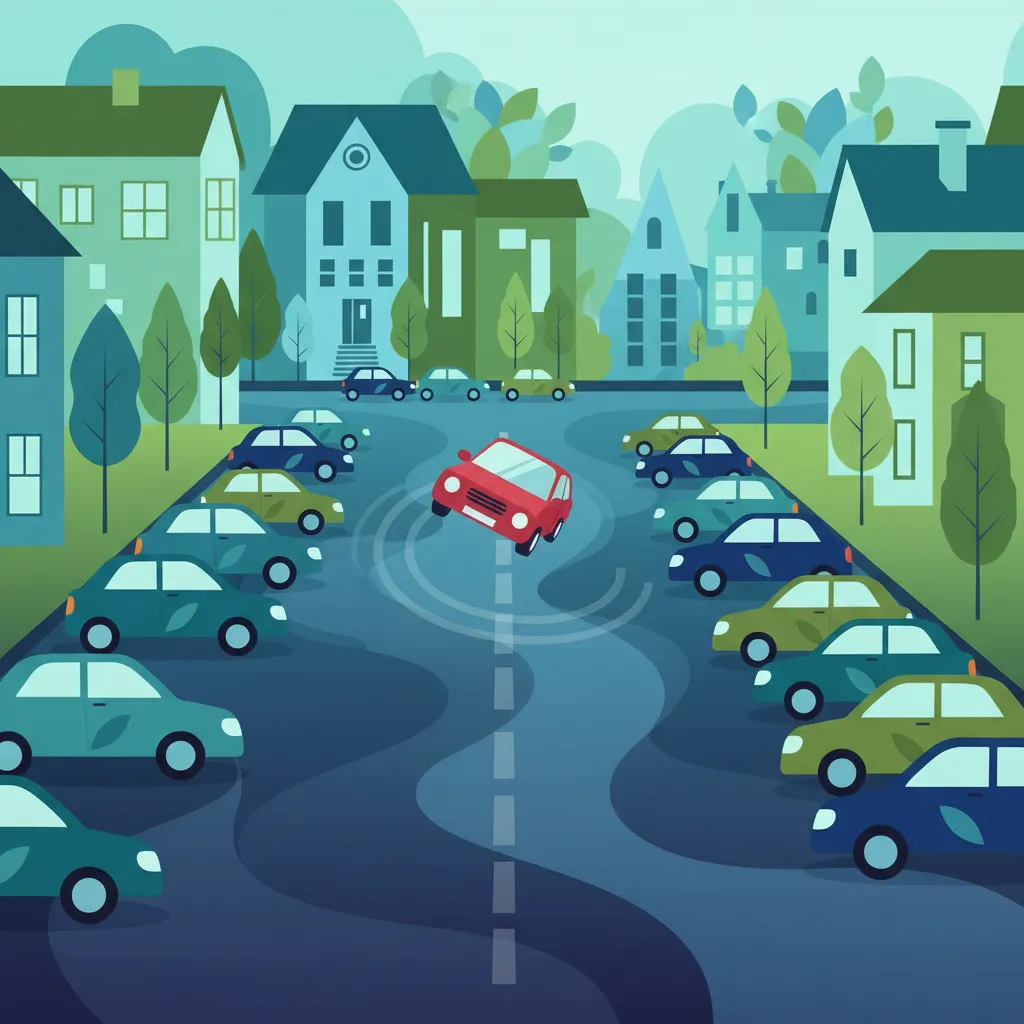
This lesson covers the conditions under which U-turns and three-point turns are permitted in Iceland, focusing on road width, visibility, and legal restrictions. The content outlines the step-by-step procedure for safely performing a three-point turn in confined spaces, including correct mirror usage and blind spot checks. Learners also explore scenarios where U-turns are prohibited, such as on narrow gravel roads or where signage explicitly bans such manoeuvres.
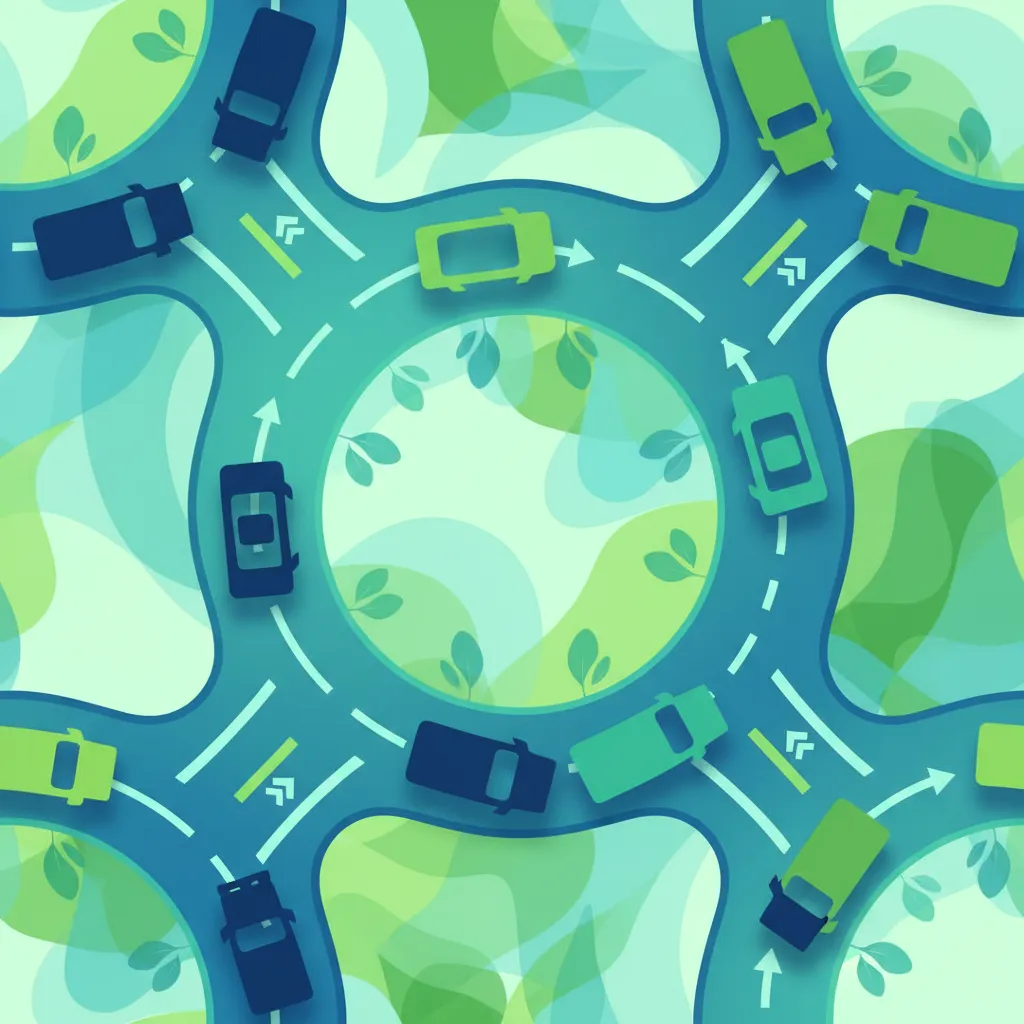
This lesson focuses on the operation of roundabouts, which are common in Icelandic towns and rural areas, and explains how drivers must yield to circulating traffic upon entry. The content covers how to interpret roundabout signage and follow lane markings to maintain correct positioning. Students also learn strategies for safe exit, handling multi-lane roundabouts, and recognizing deceptive entries that require heightened vigilance for smooth navigation.
This lesson focuses on the operation of traffic lights in Iceland, describing standard three-phase cycles (red, amber, green) and variations such as flashing amber for yielding. Learners will also explore dedicated signals for pedestrians, cyclists, and turning movements, including arrow indications. The lesson explains how signal timing integrates with right-of-way rules at intersections, ensuring drivers can interpret and respond to each light state to maintain safety.
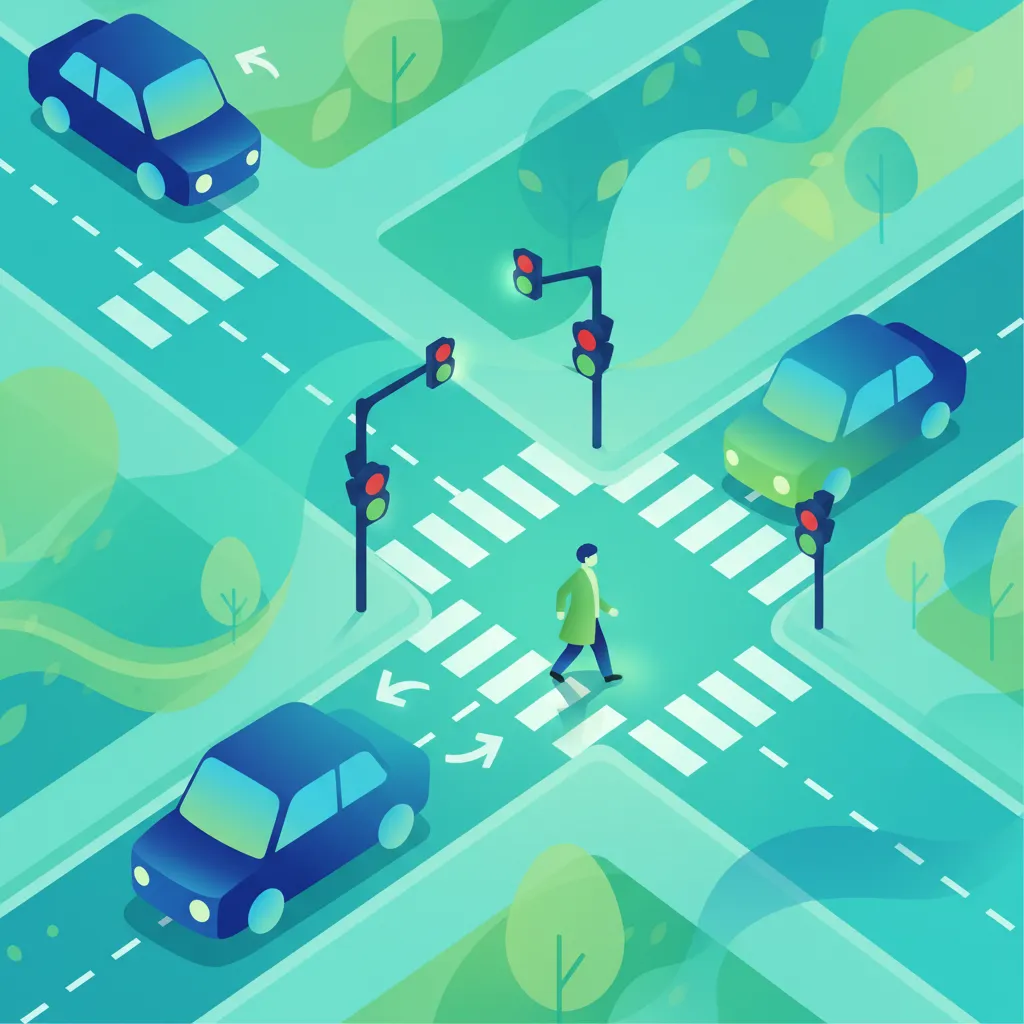
This lesson examines various intersection configurations in Iceland, including those controlled by traffic lights, four-way stops, and uncontrolled intersections without signals. Learners study how priority is determined in each scenario through signage, road markings, and the relative position of vehicles. The lesson also covers specific turning regulations and highlights the importance of assessing sight lines to ensure safe passage through complex junctions.
This lesson details the fundamentals of lane discipline and proper turning techniques for moped riders. It covers the correct use of turn signals, judging appropriate cornering speed, and executing safe lane changes. The material provides a step-by-step guide to navigating intersections and curves with control and predictability, ensuring safety for the rider and other road users.
This lesson dissects the three-color traffic light system, detailing the meaning of red, amber, and green signals, including flashing lights and directional arrows. It explains how signal timing impacts moped riders and the legal requirement to obey all signals at intersections. Proper interpretation is crucial for navigating signalized junctions safely and avoiding conflicts with other traffic.

This lesson outlines the regulations governing pedestrian crossings, including zebra crossings, pedestrian traffic lights, and the driver’s obligations to yield. Learners will study how to identify crosswalk markings, interpret pedestrian signal phases, and understand the enhanced caution required in school zones and areas with high foot traffic. The content also emphasizes the need for drivers to anticipate vulnerable pedestrians and provide additional yielding in low-visibility conditions.
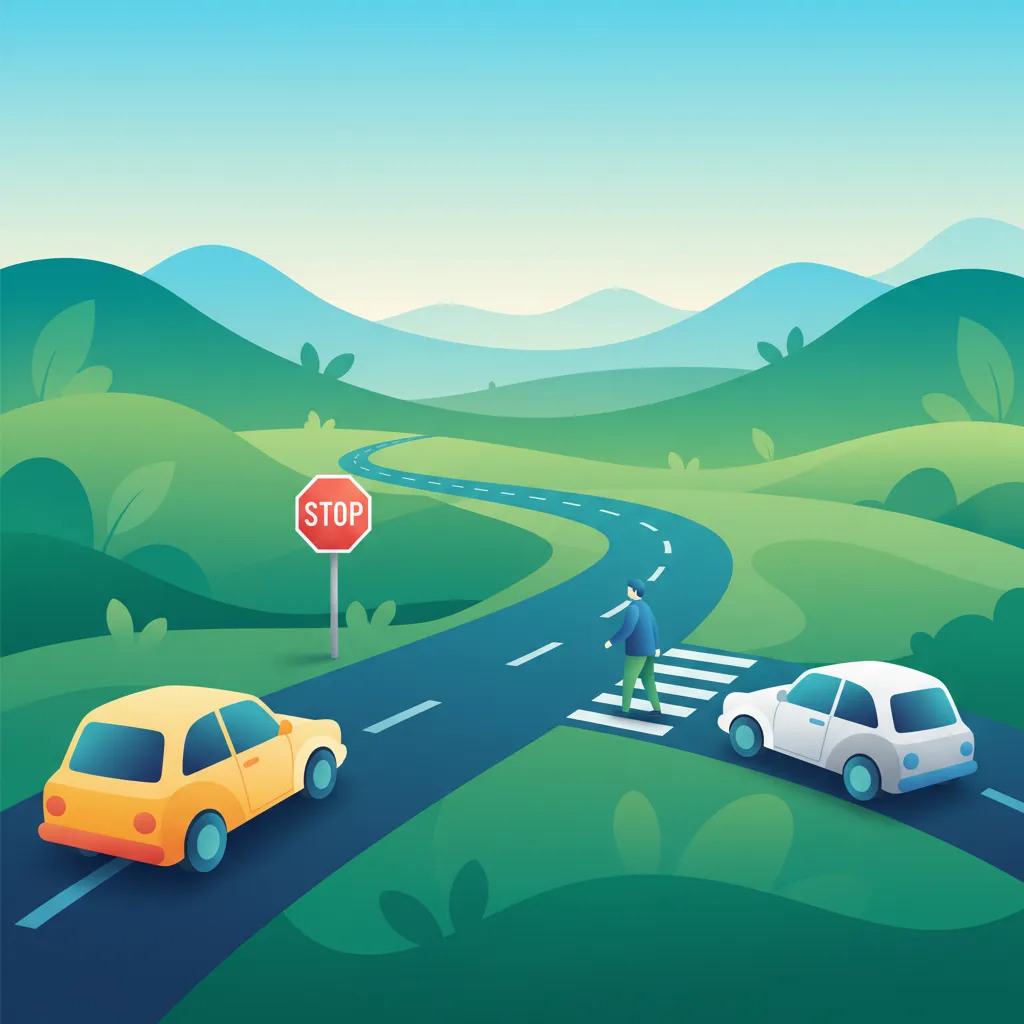
This lesson introduces the fundamental concepts of right-of-way in Iceland, explaining the priority hierarchy that dictates when a driver must yield to others. Learners study the meaning of give-way and yield signs, the distinction between main and side roads, and how stop signs and markings affect vehicle positioning. By understanding these legal obligations, students will be able to determine correct actions at any junction, reducing the risk of collisions.
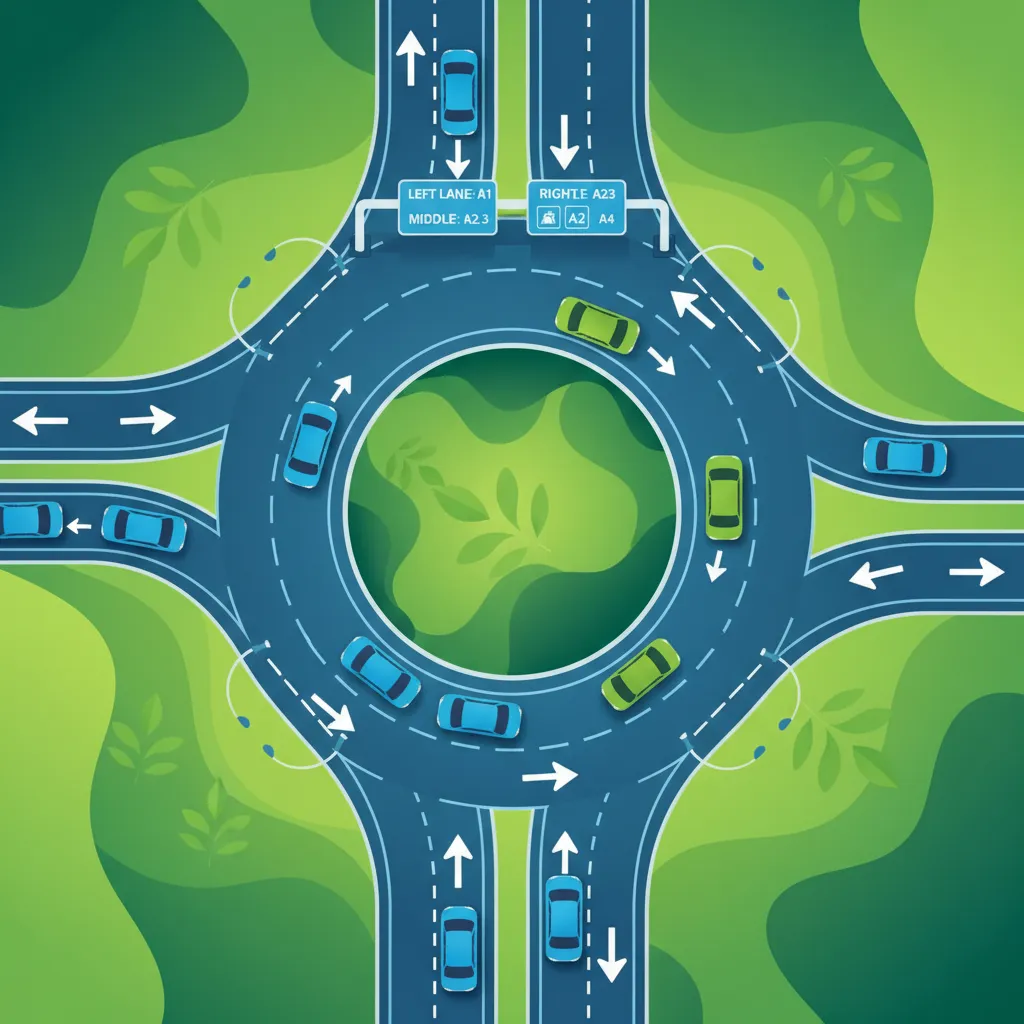
This lesson provides a detailed guide to navigating roundabouts, focusing on the rule to yield to circulating traffic before entering. It covers correct lane positioning for different exits, proper signaling, and maintaining a safe speed within the roundabout. Special guidance is provided for moped riders to enhance their visibility and safety among larger vehicles.
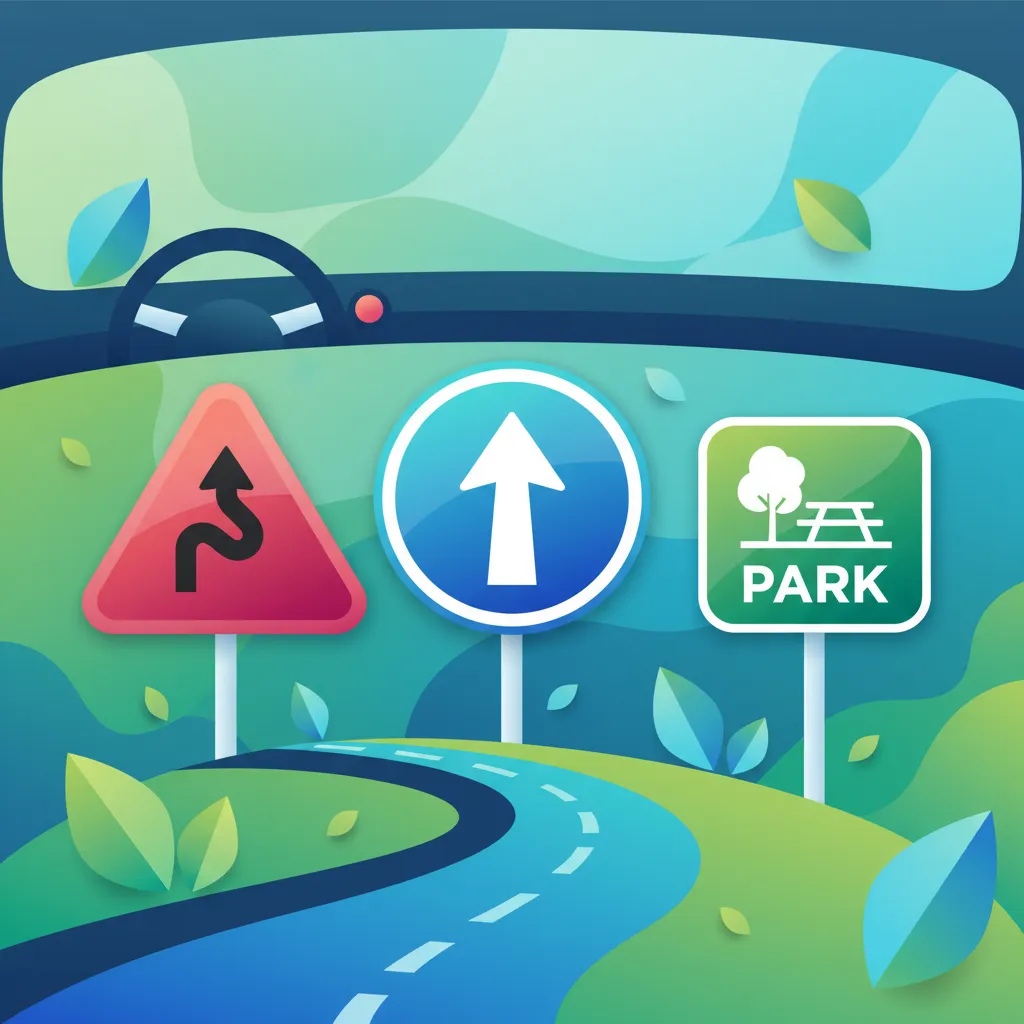
This lesson categorizes Icelandic road signs into regulatory signs that dictate mandatory actions, warning signs that alert drivers to hazards, and informational signs that provide guidance. It explains the distinctive shapes and colour schemes for each category, such as circles for prohibitions and triangles for warnings. By mastering these conventions, students will be able to interpret sign intent instantly and adapt their driving behaviour accordingly to comply with legal obligations.
Learn about frequent mistakes drivers make when turning and how to avoid them, with a strong focus on cyclist and pedestrian safety. Understand critical blind spot checks, correct yielding procedures, and the importance of timely signalling in Icelandic traffic.
This lesson focuses on the operation of roundabouts, which are common in Icelandic towns and rural areas, and explains how drivers must yield to circulating traffic upon entry. The content covers how to interpret roundabout signage and follow lane markings to maintain correct positioning. Students also learn strategies for safe exit, handling multi-lane roundabouts, and recognizing deceptive entries that require heightened vigilance for smooth navigation.
This lesson covers the conditions under which U-turns and three-point turns are permitted in Iceland, focusing on road width, visibility, and legal restrictions. The content outlines the step-by-step procedure for safely performing a three-point turn in confined spaces, including correct mirror usage and blind spot checks. Learners also explore scenarios where U-turns are prohibited, such as on narrow gravel roads or where signage explicitly bans such manoeuvres.
This lesson outlines the regulations governing pedestrian crossings, including zebra crossings, pedestrian traffic lights, and the driver’s obligations to yield. Learners will study how to identify crosswalk markings, interpret pedestrian signal phases, and understand the enhanced caution required in school zones and areas with high foot traffic. The content also emphasizes the need for drivers to anticipate vulnerable pedestrians and provide additional yielding in low-visibility conditions.
This lesson details the fundamentals of lane discipline and proper turning techniques for moped riders. It covers the correct use of turn signals, judging appropriate cornering speed, and executing safe lane changes. The material provides a step-by-step guide to navigating intersections and curves with control and predictability, ensuring safety for the rider and other road users.
This lesson introduces the fundamental concepts of right-of-way in Iceland, explaining the priority hierarchy that dictates when a driver must yield to others. Learners study the meaning of give-way and yield signs, the distinction between main and side roads, and how stop signs and markings affect vehicle positioning. By understanding these legal obligations, students will be able to determine correct actions at any junction, reducing the risk of collisions.
This lesson provides a detailed guide to navigating roundabouts, focusing on the rule to yield to circulating traffic before entering. It covers correct lane positioning for different exits, proper signaling, and maintaining a safe speed within the roundabout. Special guidance is provided for moped riders to enhance their visibility and safety among larger vehicles.
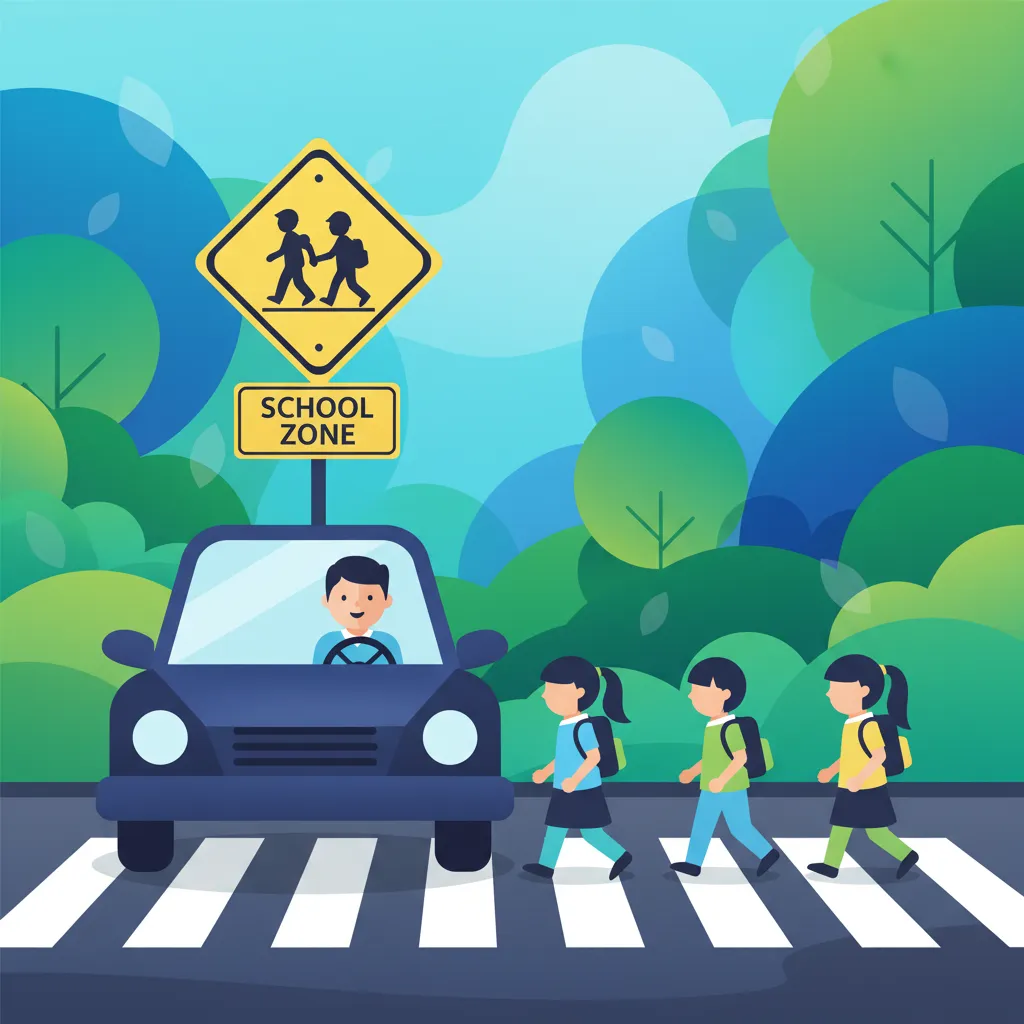
This lesson covers the strict rules governing pedestrian crossings and school zones, where riders have a heightened duty of care. It details the obligation to yield to pedestrians, recognize school zone signage, and reduce speed significantly. Riders learn to be extra vigilant for the unpredictable movements of children and other vulnerable road users in these sensitive areas.
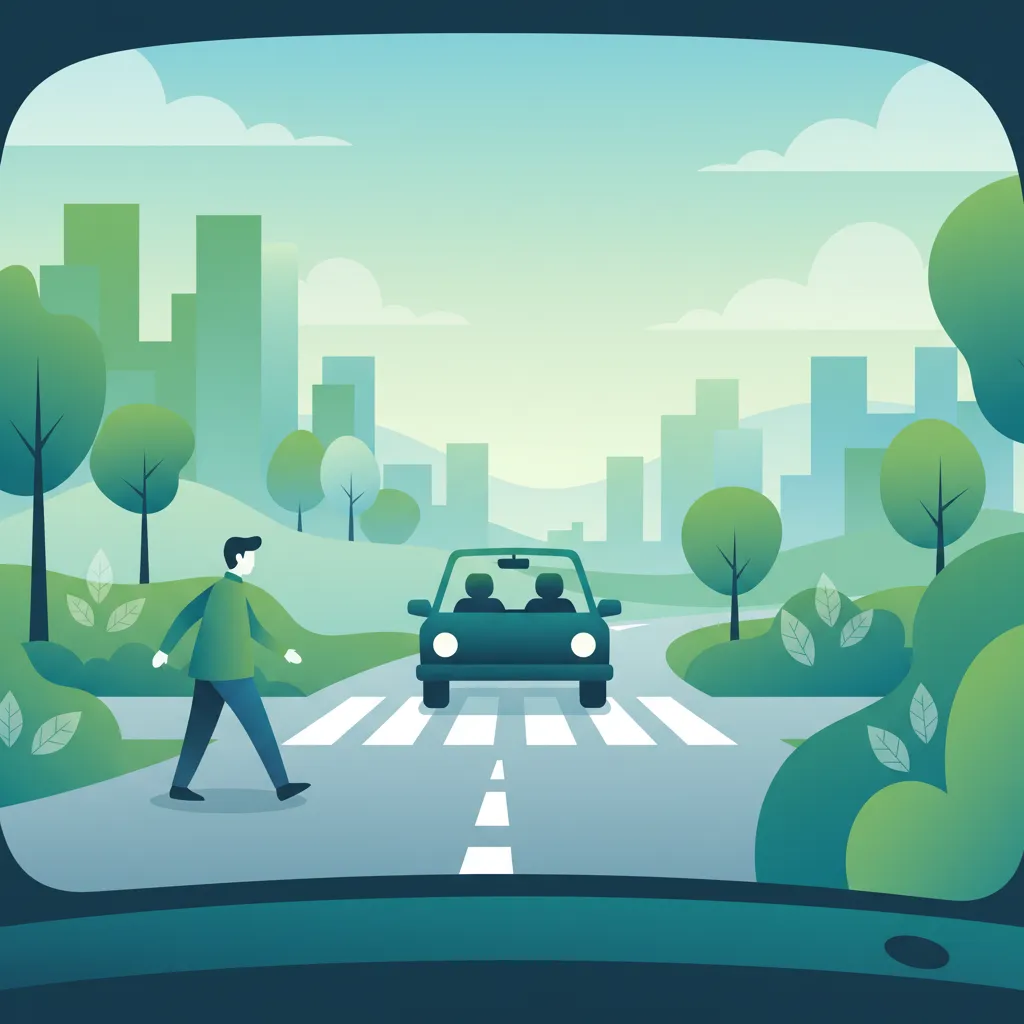
This lesson explores the conduct required at uncontrolled crossings where the right-hand rule typically applies. It emphasizes the need to reduce speed, be prepared to stop, and establish clear communication with other road users. Riders will learn to assess the situation carefully and proceed only when it is confirmed to be safe, a critical skill for rural and residential areas.
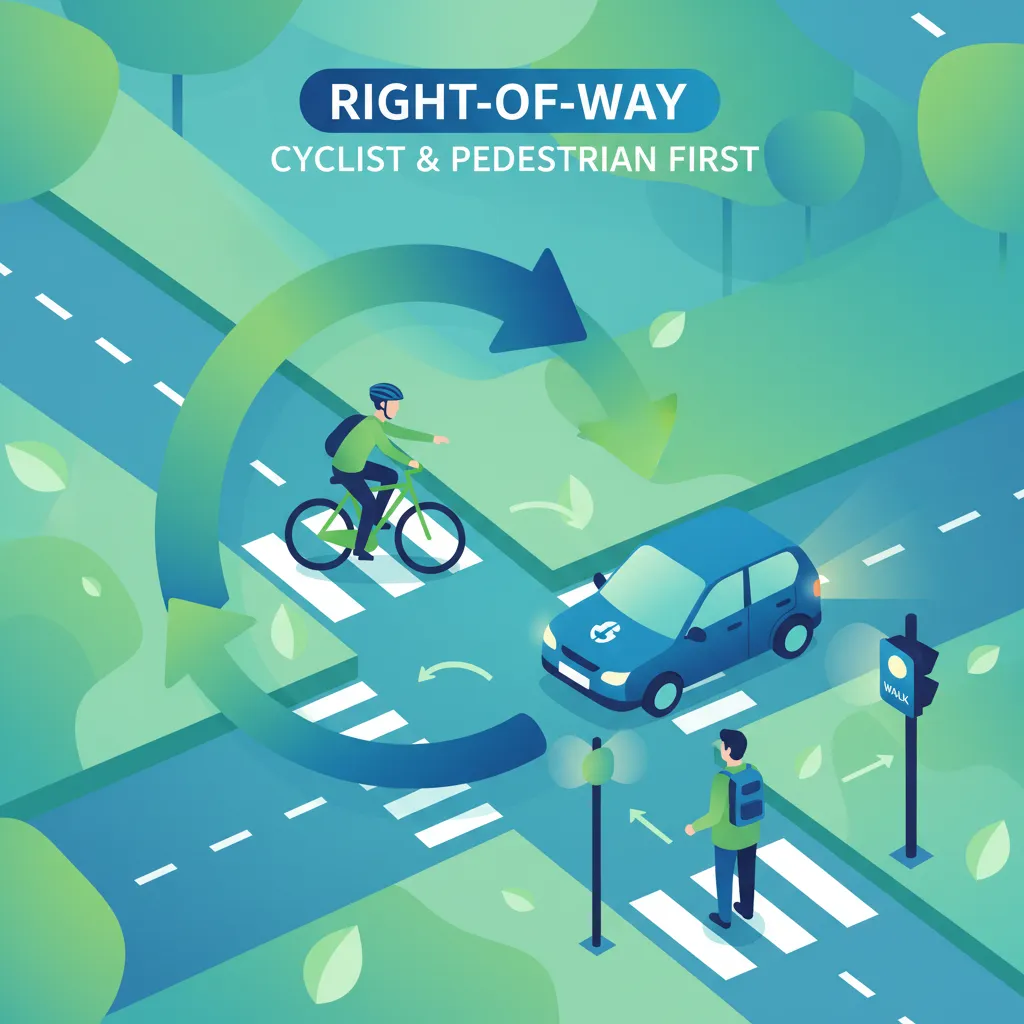
This lesson examines the legal framework defining right-of-way, distinguishing between priority and secondary roads, and detailing yielding responsibilities. It teaches riders how to assess intersections and approach safely based on Icelandic traffic law. Understanding these principles is critical for preventing collisions and ensuring smooth traffic flow at all types of junctions.

This lesson focuses on the interaction between motor vehicles and cyclists or e-scooter users on Icelandic roads, exploring the dedicated cyclist lane system and safe overtaking regulations. The content covers the required minimum passing distance, the legal status of e-scooters, and the importance of awareness when sharing narrow urban streets. Recommended signaling practices are also discussed to alert vulnerable users of your intentions, especially during nighttime riding.
Find clear answers to common questions learners have about Turning Principles and Signalling. Learn how the lesson is structured, which driving theory objectives it supports, and how it fits into the overall learning path of units and curriculum progression in Iceland. These explanations help you understand key concepts, lesson flow, and exam focused study goals.
In Iceland, you must signal your intention to turn at least 30 meters before the turn, or sooner if traffic conditions allow for clearer communication. The signal should be activated well in advance to give other road users ample time to react, especially in complex traffic situations or at higher speeds.
For a left turn on a multi-lane road, you should position your vehicle in the leftmost available lane designated for traffic moving in your direction. If there are specific lanes marked for left turns, use the appropriate one. Always check for cyclists in the left-turn lane or adjacent cycle paths before commencing the turn.
Blind spots are areas around your vehicle that cannot be seen directly in your mirrors or through your windows. Cyclists are particularly vulnerable as they can easily be hidden in these spots. Thoroughly checking your blind spot, often with a quick physical head turn, is essential to ensure no cyclists or other smaller vehicles are present before changing lanes or turning.
The turning radius is the radius of the circle your vehicle makes when turning. Larger vehicles have a wider turning radius. Understanding this helps you avoid mounting curbs, hitting parked cars, or encroaching on other lanes during turns. You must select a safe path that accommodates your vehicle's turning radius, especially on sharper corners or in tight urban spaces.
If you miss your intended turn, do not stop abruptly or attempt a sudden manoeuvre. Instead, continue to the next safe opportunity to turn, such as the next intersection or a designated U-turn area if permitted. Safely reroute yourself rather than creating a hazard by forcing a turn.
Utilize our advanced practice set search to pinpoint the exact Icelandic driving theory topics you need to review. Filter by subject, difficulty, or question type to create a highly effective study plan and ensure you are fully prepared for your official driving licence test in Iceland.