
This lesson explores the essential vehicle lighting systems and their legal usage as required by the Codice della Strada. Understanding when to activate specific lights is vital for your safety and success in the Italian Patente B theory exam.
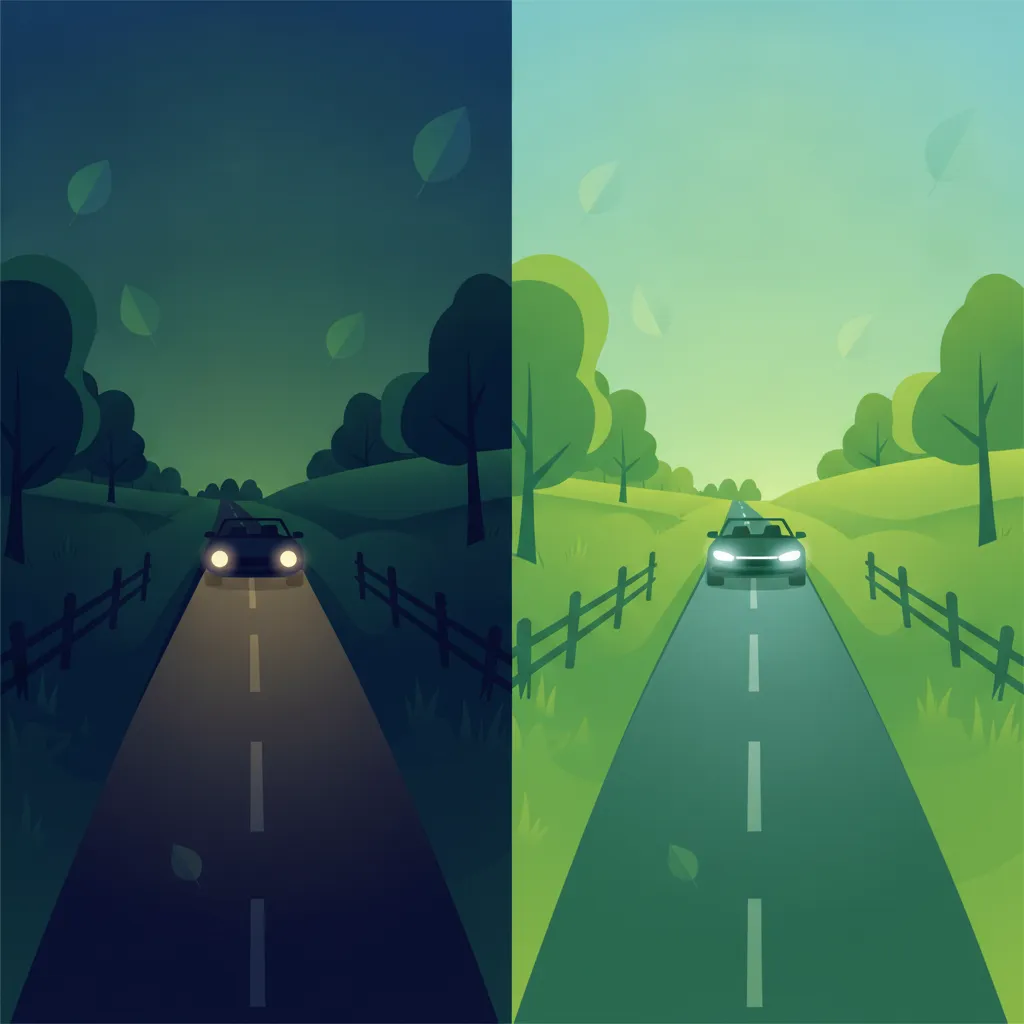
Lesson content overview
Driving safely on Italian roads requires a thorough understanding of your vehicle's lighting systems and the legal requirements for their use. This comprehensive guide, essential for your Italian Patente B theory preparation, details how different lights contribute to your visibility, communicate your intentions to other road users, and comply with the Codice della Strada (Italian Road Code). Mastering these principles is crucial for preventing accidents, especially during night driving or in adverse weather conditions.
Vehicle lighting isn't just about seeing; it's also about being seen and communicating. Several fundamental principles underpin the design and mandatory use of a vehicle's lighting systems.
Visibility refers to a driver's ability to clearly perceive road conditions, potential obstacles, traffic signals, and other road users. Adequate forward visibility is paramount for making timely and safe decisions, allowing for appropriate reactions to hazards. The type of lighting you use directly impacts your visibility, with different lights designed for varying external conditions, from bright daylight to dense fog or complete darkness.
Vehicle lights serve as a critical means of signal communication, conveying your intentions to others on the road. Turn signals, brake lights, and hazard warning lights all reduce uncertainty for other drivers and pedestrians, allowing them to anticipate your actions and react accordingly. This proactive communication is a cornerstone of defensive driving, minimizing the risk of collisions.
Legal compliance means adhering to the specific regulations outlined in the Codice della Strada regarding the activation and use of all lighting devices. These laws are designed to standardize lighting practices, ensuring consistent safety standards across all drivers. Non-compliance can lead to penalties and, more importantly, increase the risk of accidents. Drivers must activate specific lights under defined circumstances, such as during nighttime or in conditions of poor visibility.
Modern vehicle lighting systems also incorporate principles of energy management, aiming for efficient use of vehicle power without compromising the function of other critical systems. This includes the development of automatic lighting systems and daytime running lights (DRL), which contribute to safety while being mindful of battery consumption. Drivers must understand these systems and their manual override options to ensure continuous lighting reliability.
Every light on your vehicle has a specific purpose and set of rules for its activation. Understanding each one is crucial for safe and legal driving.
Low beam headlights, known as anabbaglianti in Italian, are the primary headlight setting used for normal night driving. They are engineered to illuminate the road ahead without causing glare to oncoming traffic or the driver of a vehicle you are following. The beam is directed downwards and slightly to the right, providing sufficient illumination for safe speeds while minimizing dazzle.
High beam headlights, or abbaglianti, offer a longer and brighter illumination range than low beams. They are designed for use on roads without oncoming traffic or when following another vehicle at a safe distance, significantly increasing visibility in dark, unlit areas.
Never use high beams in foggy conditions. The light reflects off the fog particles, creating a 'white wall' effect that significantly reduces your own visibility rather than improving it.
Fog lights (fendinebbia) are auxiliary lamps positioned low on the vehicle's front and sometimes at the rear. Front fog lights project a short, wide, flat beam that cuts under fog, heavy rain, snow, or dust, helping to illuminate the road surface without reflecting light back into the driver's eyes. Rear fog lights are bright red lights designed to make your vehicle more visible to those following you in severely reduced visibility.
Daytime Running Lights (DRLs), or luci diurne, are lights that automatically illuminate when the vehicle's engine is running. Their primary purpose is to increase the vehicle's conspicuity to other road users during daylight hours, making it easier for others to spot your vehicle.
Hazard warning lights, often called frecce di emergenza or quattro frecce (four arrows) in Italy, activate all turn signal bulbs simultaneously (both front and rear). Their purpose is to warn other road users of a stationary vehicle that poses an obstruction or a vehicle moving very slowly under exceptional circumstances.
Turn signals, also known as indicators or frecce, are flashing lights that communicate a driver's intention to turn, change lanes, or maneuver. They provide crucial advance warning to other drivers and pedestrians, allowing them to anticipate and react safely.
Brake lights, or luci di stop, are red lights located at the rear of the vehicle that illuminate when the driver presses the brake pedal. Their purpose is to signal deceleration or stopping to following vehicles, providing them with crucial reaction time.
Many modern vehicles are equipped with automatic lighting systems that use light-sensitive sensors to activate headlights, low beams, or DRLs based on ambient light conditions. These systems are designed to reduce driver workload and improve safety by ensuring lights are on when needed.
The Codice della Strada specifies precise rules for the use of vehicle lighting to ensure maximum safety. Adherence to these regulations is mandatory for all drivers in Italy.
Low beams (anabbaglianti) are fundamental for safe night driving and in poor visibility.
High beams (abbaglianti) provide powerful illumination but must be used judiciously to avoid blinding other road users.
Fog lights (fendinebbia) are specialized for severe visibility reduction.
Hazard warning lights (frecce di emergenza) are for emergency situations.
Turn signals (indicatori di direzione) are essential for clear communication.
Vehicles with automated lighting systems must still comply with legal standards.
DRLs enhance visibility during the day.
Brake lights are crucial for rear-end collision prevention.
Ignoring or misusing vehicle lighting systems can lead to dangerous situations and legal penalties. Understanding common mistakes is key to avoiding them.
One of the most dangerous misuses of lighting is failing to dim high beams (abbaglianti) when an oncoming vehicle is within 150 meters. This can cause temporary blindness, known as glare, for the oncoming driver, significantly increasing the risk of a head-on collision. Always switch to low beams immediately upon seeing oncoming traffic.
Activating fog lights in clear weather is a common violation. Front fog lights can be overly bright and cause unnecessary glare for other drivers, while rear fog lights are extremely intense and can be dazzling, especially at night. Fog lights should only be used when visibility is severely reduced (less than 100 meters).
Drivers sometimes mistakenly use hazard lights (frecce di emergenza) while driving through heavy rain, snow, or traffic congestion. This is incorrect and confusing for other drivers, as it can be misinterpreted as a signal for an emergency stop or an obstacle. Hazard lights are primarily for stationary vehicles posing a hazard or for very slow movement in exceptional circumstances.
Failing to signal before a turn or lane change is a major cause of collisions, particularly side-swipes or rear-end incidents. On busy roads, especially motorways, not indicating your intentions can leave other drivers with no time to react safely. Always activate your turn indicator well in advance, providing at least 30 meters warning (or 150 meters on motorways/fast roads for certain maneuvers).
While convenient, automatic lighting systems can fail or misinterpret ambient light conditions. Assuming your automatic headlights are always functioning correctly without occasional verification can lead to driving without required illumination in low-light situations, especially at dusk or in tunnels where they might not activate promptly.
A frequent error is forgetting to switch off rear fog lights (fendinebbia posteriori) once visibility improves. These lights are very bright and can be intensely dazzling to following drivers in clear conditions, causing discomfort and potentially obscuring their view of your brake lights. Always turn them off as soon as visibility exceeds 100 meters.
Driving on any public road after sunset or before sunrise without activating low beams (anabbaglianti) is illegal and extremely dangerous. It significantly reduces your ability to see the road and makes your vehicle almost invisible to other road users, especially from the rear if only DRLs are on.
Daytime Running Lights (DRLs) are designed to increase visibility during the day. They are not powerful enough to illuminate the road at night, and often, they do not activate the vehicle's rear lights. Relying on DRLs alone after sunset or in poor visibility is akin to driving without proper lights, leading to inadequate illumination and rendering your vehicle highly vulnerable to rear-end collisions.
Driving with non-functional brake lights (e.g., due to a burnt-out bulb) eliminates a critical warning signal for trailing vehicles. This dramatically increases the risk of rear-end collisions, as drivers behind you will have no indication that you are slowing down or stopping. Regular checks of all lights, especially brake lights, are essential.
The appropriate use of lighting is highly dependent on various external factors. Drivers must adapt their lighting strategy to current conditions.
Every decision about your vehicle's lighting has direct safety consequences.
Regularly check all your vehicle's lights, including brake lights and indicators. A simple walk-around before driving, or asking someone to confirm your brake lights are working, can prevent serious safety issues.
Let's explore some common driving situations to solidify your understanding of lighting requirements.
Setting: You are driving on an unlit, winding rural road in Italy after sunset. The weather is clear, and there's no street lighting. Correct Behavior:
Setting: You are traveling on an autostrada during a foggy morning. Visibility has suddenly dropped to approximately 70 meters. Correct Behavior:
Setting: Your vehicle unexpectedly breaks down and comes to a stop on the shoulder of a busy Italian road at dusk. Correct Behavior:
The regulations surrounding vehicle lighting are not arbitrary; they are deeply rooted in principles of physics, human perception, and statistical safety data.
Mastering vehicle lighting systems is a fundamental aspect of safe driving and essential for your Italian Patente B theory exam.
By understanding and correctly applying the rules for each lighting system, you significantly enhance visibility, improve communication with other road users, and contribute to safer roads for everyone, fully complying with the Codice della Strada.
This lesson covers the complete range of vehicle lighting systems required for Italian road safety and the Patente B exam, detailing when each light type must or must not be used. Key regulations include mandatory low beam use from sunset to sunrise, in tunnels, and when visibility falls below 150 meters; high beam dimming requirements within 150 meters of other traffic; and fog light restrictions tied to the 100-meter visibility threshold. The lesson emphasizes that proper lighting serves three purposes: enhancing driver visibility, communicating intentions to other road users, and ensuring legal compliance with the Codice della Strada. Understanding these rules is essential for both passing the theory exam and developing safe driving habits that prevent accidents in low-visibility conditions.
A short set of high-value points that capture the most important learning from this lesson.
Low beams (anabbaglianti) are mandatory from sunset to sunrise, in all tunnels regardless of time, and whenever visibility drops below 150 meters due to weather or environmental conditions.
High beams (abbaglianti) must be dimmed to low beams when approaching oncoming traffic or following another vehicle within 150 meters to prevent dangerous glare.
Fog lights (fendinebbia) are only permitted when visibility is below 100 meters; rear fog lights must be switched off immediately once visibility improves beyond this threshold.
Daytime Running Lights (DRL/luci diurne) do not replace low beams at night or in poor visibility since they typically do not illuminate the vehicle's rear.
Hazard warning lights (frecce di emergenza) are exclusively for stationary vehicles posing a hazard and must not be used while driving except in specific emergency situations.
Explore all units and lessons included in this driving theory course.
Remember the 150-meter rule: always switch from high to low beams when an oncoming vehicle or vehicle ahead is within 150 meters.
Remember the 100-meter threshold: fog lights activate only when visibility drops below 100 meters and rear fog lights must be turned off as soon as visibility exceeds 100 meters.
Remember the 30-meter urban warning distance for turn signals, with 150 meters recommended on motorways and extra-urban roads.
Remember that DRLs provide daytime conspicuity only and are legally insufficient as the sole lighting after sunset or in tunnels.
Remember that automatic lighting systems require driver verification; always confirm lights are active when conditions demand them.
Using high beams in foggy conditions creates a reflective 'white wall' effect that worsens visibility rather than improving it.
Leaving rear fog lights on after visibility improves causes intense dazzle for following drivers and is illegal.
Relying on DRLs alone at night provides inadequate road illumination and leaves the vehicle rear invisible to other drivers.
Using hazard lights while driving in heavy rain or traffic congestion confuses other drivers about your actual status or intentions.
Neglecting to activate turn signals at least 30 meters before a turn in urban areas, especially in complex traffic situations.
Lesson content overview
A short set of high-value points that capture the most important learning from this lesson.
Low beams (anabbaglianti) are mandatory from sunset to sunrise, in all tunnels regardless of time, and whenever visibility drops below 150 meters due to weather or environmental conditions.
High beams (abbaglianti) must be dimmed to low beams when approaching oncoming traffic or following another vehicle within 150 meters to prevent dangerous glare.
Fog lights (fendinebbia) are only permitted when visibility is below 100 meters; rear fog lights must be switched off immediately once visibility improves beyond this threshold.
Daytime Running Lights (DRL/luci diurne) do not replace low beams at night or in poor visibility since they typically do not illuminate the vehicle's rear.
Hazard warning lights (frecce di emergenza) are exclusively for stationary vehicles posing a hazard and must not be used while driving except in specific emergency situations.
Explore all units and lessons included in this driving theory course.
Remember the 150-meter rule: always switch from high to low beams when an oncoming vehicle or vehicle ahead is within 150 meters.
Remember the 100-meter threshold: fog lights activate only when visibility drops below 100 meters and rear fog lights must be turned off as soon as visibility exceeds 100 meters.
Remember the 30-meter urban warning distance for turn signals, with 150 meters recommended on motorways and extra-urban roads.
Remember that DRLs provide daytime conspicuity only and are legally insufficient as the sole lighting after sunset or in tunnels.
Remember that automatic lighting systems require driver verification; always confirm lights are active when conditions demand them.
Using high beams in foggy conditions creates a reflective 'white wall' effect that worsens visibility rather than improving it.
Leaving rear fog lights on after visibility improves causes intense dazzle for following drivers and is illegal.
Relying on DRLs alone at night provides inadequate road illumination and leaves the vehicle rear invisible to other drivers.
Using hazard lights while driving in heavy rain or traffic congestion confuses other drivers about your actual status or intentions.
Neglecting to activate turn signals at least 30 meters before a turn in urban areas, especially in complex traffic situations.
Explore search topics learners often look for when studying Lighting Systems and Visibility Requirements. These topics reflect common questions about road rules, driving situations, safety guidance, and lesson level theory preparation for learners in Italy.
Browse additional driving theory lessons that cover connected traffic rules, road signs, and common driving situations related to this topic. Improve your understanding of how different rules interact across everyday traffic scenarios.
Understand the mandatory usage of headlights, fog lights, and indicators under various Italian driving conditions. This lesson covers visibility requirements and the Codice della Strada regulations for safe illumination.
This lesson covers the complete set of lighting, reflective equipment, and protective guards mandated for heavy vehicles. It explains the function of each light, from headlights to side markers, and the importance of keeping them clean and operational to ensure the vehicle is visible to others. The lesson also details the legal requirements and safety purpose of side guards and rear underrun protection, which are designed to protect vulnerable road users in a collision.
This lesson details the proper and legal application of a vehicle's horn, lights, and signals as primary communication tools. It explains the specific circumstances for using high beams, low beams, and fog lights to maximize visibility without dazzling other drivers. The content also clarifies the rules for using the horn, turn indicators, and hazard lights to signal intentions, warn of danger, or indicate an emergency situation.
This lesson focuses on the vital systems for visibility and communication: mirrors, lighting, and signals. It provides instruction on the proper adjustment of mirrors to minimize blind spots and the correct use of headlamps, indicators, and brake lights as per Italian regulations. The content underscores how maintaining these systems in full working order is crucial for being seen and signalling intentions clearly in traffic.
This lesson details the essential protective equipment required for legal and safe moped operation in Italy. It covers legal standards for helmets, the benefits of wearing protective gloves and boots, and the importance of high-visibility clothing. You will also learn the correct use of your vehicle's lighting system for visibility during both day and night.
This lesson is focused on strategies to increase a motorcyclist's conspicuity in traffic. It explains the benefits of using high-visibility clothing in fluorescent colors for daytime riding and the critical role of reflective materials at night. The content also covers how proper use of lighting, including daytime running lights, can significantly reduce the risk of accidents by making the rider more noticeable to others.
This lesson explains the function of Italian traffic light systems and the meaning of various road markings. You will learn the rules for red, amber, and green signals, including flashing lights and directional arrows. It also covers how to interpret lane lines, stop lines, and other surface markings that dictate correct vehicle positioning and movement.
This lesson teaches drivers how to adapt their technique for various adverse weather conditions. It explains the risks of reduced grip and visibility in rain, fog, snow, and ice, and the need to significantly increase following distances and reduce speed. The content covers how to avoid and correct skids, the proper use of lights in poor visibility, and the legal requirements for winter tyres or snow chains in certain areas.
This lesson emphasizes the importance of clear communication and cooperative behavior among all road users to prevent conflicts and enhance safety. It details the proper and legal use of vehicle signals, such as turn indicators and hazard lights, as well as the appropriate use of the horn. The content also explores the role of non-verbal cues like eye contact and courtesy gestures in creating a predictable and safe driving environment.
Learn about frequent errors drivers make with headlights, fog lights, and signals. This lesson uses practical scenarios to highlight how to avoid unsafe lighting practices and comply with Italian road laws.
This lesson details the proper and legal application of a vehicle's horn, lights, and signals as primary communication tools. It explains the specific circumstances for using high beams, low beams, and fog lights to maximize visibility without dazzling other drivers. The content also clarifies the rules for using the horn, turn indicators, and hazard lights to signal intentions, warn of danger, or indicate an emergency situation.
This lesson covers the complete set of lighting, reflective equipment, and protective guards mandated for heavy vehicles. It explains the function of each light, from headlights to side markers, and the importance of keeping them clean and operational to ensure the vehicle is visible to others. The lesson also details the legal requirements and safety purpose of side guards and rear underrun protection, which are designed to protect vulnerable road users in a collision.
This lesson focuses on the vital systems for visibility and communication: mirrors, lighting, and signals. It provides instruction on the proper adjustment of mirrors to minimize blind spots and the correct use of headlamps, indicators, and brake lights as per Italian regulations. The content underscores how maintaining these systems in full working order is crucial for being seen and signalling intentions clearly in traffic.
This lesson is focused on strategies to increase a motorcyclist's conspicuity in traffic. It explains the benefits of using high-visibility clothing in fluorescent colors for daytime riding and the critical role of reflective materials at night. The content also covers how proper use of lighting, including daytime running lights, can significantly reduce the risk of accidents by making the rider more noticeable to others.
This lesson provides an in-depth focus on sharing the road with the most vulnerable users. It teaches drivers to be acutely aware of pedestrians at crossings, cyclists filtering through traffic, and motorcyclists who may be in blind spots. The lesson emphasizes the importance of leaving extra space, signaling intentions clearly, and exercising extreme caution at junctions, where the majority of serious incidents occur.
This lesson details the essential protective equipment required for legal and safe moped operation in Italy. It covers legal standards for helmets, the benefits of wearing protective gloves and boots, and the importance of high-visibility clothing. You will also learn the correct use of your vehicle's lighting system for visibility during both day and night.
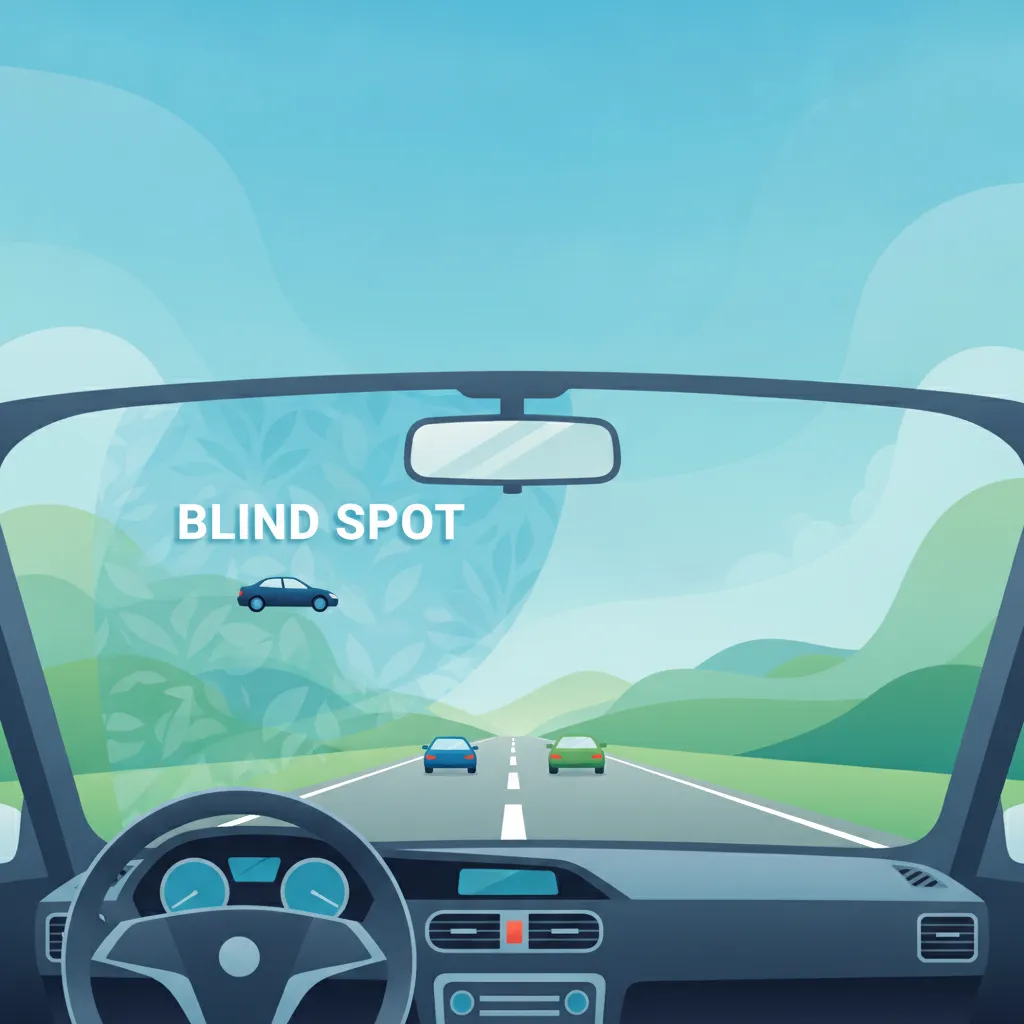
This lesson highlights the large blind spots—or 'no-zones'—that exist to the front, back, and sides of a heavy vehicle, where smaller vehicles, cyclists, and pedestrians can disappear from view. It teaches proactive scanning techniques, the importance of anticipating hazards, and how to use mirrors and direct vision effectively to manage these high-risk areas. Awareness and mitigation of blind spots are crucial for preventing collisions, especially in urban traffic.
This lesson addresses the critical responsibility of protecting vulnerable road users, such as pedestrians, cyclists, and motorcyclists, who are most at risk in a collision with a heavy vehicle. It teaches drivers to be hyper-aware in urban settings, to anticipate the unpredictable movements of VRUs, and to provide ample space, especially when turning at junctions. A key focus is on scanning for VRUs in blind spots before moving off or making any maneuver.
This lesson explains the critical importance of a continuous and systematic visual scan for maintaining 360-degree awareness around the vehicle. It details the correct technique for using interior and exterior mirrors in conjunction with direct vision and shoulder checks to effectively identify hazards. The content emphasizes the need to be aware of blind spots before any maneuver, such as changing lanes or turning.
This lesson emphasizes the importance of clear communication and cooperative behavior among all road users to prevent conflicts and enhance safety. It details the proper and legal use of vehicle signals, such as turn indicators and hazard lights, as well as the appropriate use of the horn. The content also explores the role of non-verbal cues like eye contact and courtesy gestures in creating a predictable and safe driving environment.
Find clear answers to common questions learners have about Lighting Systems and Visibility Requirements. Learn how the lesson is structured, which driving theory objectives it supports, and how it fits into the overall learning path of units and curriculum progression in Italy. These explanations help you understand key concepts, lesson flow, and exam focused study goals.
You must switch to low beams immediately when approaching oncoming traffic, when following another vehicle closely to avoid dazzling the driver, or when driving in sufficiently lit urban areas.
Rear fog lights are mandatory when visibility is under 50 meters. Front fog lights are optional but recommended in conditions of poor visibility due to fog, rain, or snow.
No, parking lights are meant for when the vehicle is stationary. You must use low-beam headlights when driving in conditions where visibility is reduced or during the night.
Questions often present a specific scenario, such as driving in a tunnel or at night, and ask you to select the correct lighting configuration from the options provided.
Start searching now to pinpoint exactly which Italian driving theory topics, road signs, or traffic rules you need to master. Use our advanced filters to build a custom practice session and ensure you're fully prepared for every aspect of your official driving licence exam.