
This lesson explores the role of Advanced Driver-Assistance Systems (ADAS) in modern vehicles and their integration into Italian traffic law. You will learn to distinguish between driver aid and automated driving, ensuring you understand that the human driver remains fully responsible for every road maneuver.

Lesson content overview
Modern vehicles are increasingly equipped with sophisticated technologies designed to enhance safety and comfort on the road. These Advanced Driver Assistance Systems (ADAS) serve as valuable aids, providing support in various driving scenarios. However, it is crucial for every driver seeking an Italian Patente B (driving license) to understand that these systems are assistive only; they do not replace the driver's ultimate responsibility to maintain full control of the vehicle at all times.
This lesson explores the functions and operational principles of common ADAS features like lane-keeping assist, blind-spot monitoring, and adaptive cruise control. More importantly, it highlights their inherent limitations and emphasizes the legal and practical obligations of the driver in Italy, ensuring that technology is used as a supplement, not a substitute, for attentive and responsible driving.
Advanced Driver Assistance Systems (ADAS) are electronic systems developed to help drivers with specific tasks, making driving safer and more comfortable. They typically use a combination of sensors, cameras, radar, and software to monitor the vehicle's surroundings and the driver's actions. The primary goal of ADAS is to reduce the risk of accidents, mitigate their severity, and lessen driver fatigue, especially during long journeys.
These systems represent a significant leap in vehicle technology, moving towards greater automation in specific functions. However, they operate within defined boundaries and are designed to work in conjunction with an alert human driver. Understanding their functional objectives and how they interact with the driving environment is fundamental for their safe and effective use.
To leverage the benefits of ADAS safely and avoid potential hazards, drivers must adhere to several core principles. These principles ensure that while technology provides support, human judgment and control remain paramount.
The most fundamental principle of operating a vehicle equipped with ADAS is that the driver must always retain full authority and control over the vehicle's operation. Regardless of how advanced a system may seem, the driver is ultimately responsible for steering, accelerating, braking, and observing the road. ADAS functions as a co-pilot, not a replacement for the pilot.
In Italy, the Codice della Strada (Highway Code) strictly mandates that the driver remains in full control of their vehicle at all times. ADAS technology does not diminish this legal obligation.
Every ADAS feature has specific operational boundaries within which it can function reliably. These boundaries are defined by factors such as speed ranges, environmental conditions (e.g., weather, light), road types, and the clarity of road markings. For example, a lane-keeping assist system might only work above a certain speed and require visible lane markings.
Drivers must be aware that if these boundaries are exceeded, the system may disengage, perform incorrectly, or issue warnings. It is the driver's responsibility to understand these limitations and be prepared to take over manual control immediately when conditions are suboptimal or outside the system's design envelope.
The Human-Machine Interface (HMI) refers to the signals and warnings that ADAS systems use to communicate with the driver. These can be visual alerts on the instrument cluster, auditory beeps, haptic feedback through the steering wheel, or vibrations in the seat. Developing an awareness of these alerts is crucial for safe operation.
Drivers must learn to recognize and correctly interpret these signals. For instance, a specific warning light might indicate that a system is temporarily unavailable due to bad weather, or an audible chime could alert the driver to an imminent collision. Misinterpreting or ignoring HMI signals can lead to dangerous situations.
ADAS systems are designed to complement, not replace, core driving tasks. This means that fundamental driving skills such as diligent observation, proper vehicle positioning, making informed decisions, and executing maneuvers safely remain essential. Technology assists in these areas but does not relieve the driver of their duty to perform them.
For example, while blind-spot monitoring provides valuable warnings, it does not eliminate the need for traditional mirror checks and shoulder checks before changing lanes. Drivers must continue to apply comprehensive driving practices, using ADAS as an additional layer of support rather than a sole point of reliance.
Modern vehicles can be equipped with a variety of ADAS features, each designed to assist in particular driving situations. Here, we delve into some of the most common and impactful systems that drivers might encounter.
Lane-Keeping Assist (LKA) is a system that actively helps keep the vehicle centered within its detected lane. It typically uses a camera mounted behind the rearview mirror to identify lane markings. When the system detects that the vehicle is drifting out of its lane without the turn signal being activated, it can apply gentle steering torque to guide the vehicle back into the lane.
A feature often integrated with LKA, LDW provides an auditory or visual alert (or haptic feedback like steering wheel vibration) to the driver when the vehicle begins to unintentionally drift out of its lane. Unlike LKA, LDW typically does not apply steering correction.
Practical Meaning: LKA is particularly useful on motorways or well-marked multi-lane roads, helping to reduce driver fatigue on long journeys and potentially preventing accidents caused by momentary inattention.
Common Misunderstandings: Many drivers mistakenly believe LKA will steer the car perfectly on its own, even around sharp bends or when lane markings are faded or absent. It requires clear markings and often driver input (hands on the wheel) to function.
Examples: On a long, straight stretch of the autostrada, LKA can help maintain a steady lane position, allowing the driver to focus more on monitoring traffic ahead and around them. If the driver's hands are removed from the steering wheel for too long, the system will typically issue a warning and may disengage.
Blind-Spot Monitoring (BSM) is a safety system designed to alert drivers to the presence of other vehicles in their blind spots – areas not visible in the rearview or side mirrors. It uses radar sensors, typically located in the rear bumper, to detect vehicles in adjacent lanes.
When a vehicle is detected in the blind spot, a visual alert usually illuminates in the corresponding side mirror or on the A-pillar inside the vehicle. If the driver activates the turn signal while a vehicle is detected in the blind spot, an additional auditory warning may sound to prevent an unsafe lane change.
Practical Meaning: BSM significantly enhances awareness during lane changes, especially in heavy traffic or when merging onto high-speed roads. It acts as an extra pair of "eyes" to cover areas that are notoriously difficult for drivers to see.
Common Misunderstandings: A frequent error is assuming BSM eliminates the need for manual mirror checks and shoulder checks (a quick glance over the shoulder). BSM sensors can have limitations; for instance, they may not reliably detect motorcycles, bicycles, or very fast-approaching vehicles under all conditions.
Examples: When preparing to change lanes on a busy city street, the BSM light illuminates in your left mirror, indicating a car is positioned just where you wouldn't easily see it. You then check your mirrors, perform a shoulder check, and wait for the lane to clear before moving.
Adaptive Cruise Control (ACC) is an advanced version of traditional cruise control. While conventional cruise control maintains a set speed, ACC goes further by automatically adjusting the vehicle's speed to maintain a safe pre-set following distance from the vehicle ahead. It uses radar or camera technology to detect leading vehicles.
Some advanced ACC systems, known as Stop-and-Go ACC, can even bring the vehicle to a complete stop in heavy traffic and then resume acceleration once traffic starts moving again. Others can integrate with traffic sign recognition to adjust the cruising speed based on detected speed limits.
Practical Meaning: ACC greatly reduces driver workload during long journeys and in moderate to heavy motorway traffic, as it manages acceleration and deceleration to keep a safe gap.
Common Misunderstandings: It is crucial not to confuse ACC with autonomous driving. ACC does not steer the vehicle, recognize traffic lights or stop signs, or react to unexpected obstacles like pedestrians or animals suddenly entering the road. The driver must remain vigilant and ready to brake or steer manually.
Examples: While cruising on the autostrada at 130 km/h, the car ahead slows down. Your ACC system automatically reduces your speed to maintain a 2-second following distance. When the leading car speeds up or changes lanes, your vehicle smoothly accelerates back to the set speed.
Automatic Emergency Braking (AEB) is a critical safety system designed to prevent or mitigate collisions. Using radar, cameras, or a combination of both, AEB continuously monitors the road ahead for potential obstacles such as other vehicles, pedestrians, or cyclists.
If the system detects an imminent collision and the driver does not react sufficiently, AEB can first warn the driver (e.g., with visual and auditory alerts) and then automatically apply the brakes with varying force, up to full emergency braking.
Practical Meaning: AEB acts as a crucial last line of defense, providing an invaluable safety net. Studies have shown that AEB systems can significantly reduce the incidence and severity of rear-end collisions.
Common Misunderstandings: Drivers should never assume AEB will prevent every collision. Its effectiveness is limited by factors such as speed, road conditions, sensor cleanliness, and the nature of the obstacle. It is an assist system, not an infallible crash prevention mechanism. The driver remains responsible for braking safely.
Examples: You are driving through a city center, and a child suddenly runs into the road from behind a parked car. Your AEB system immediately detects the child, sounds a warning, and applies the brakes, significantly reducing your speed before you can fully react.
Traffic Sign Recognition (TSR) is a camera-based system that identifies and interprets traffic signs encountered on the road. Typically, a camera mounted near the rearview mirror scans for signs such as speed limits, no-passing zones, and warning signs.
The detected signs are then displayed prominently on the vehicle's instrument cluster or head-up display, providing the driver with real-time information about current regulations.
Practical Meaning: TSR helps drivers stay aware of changing speed limits and other important road rules, reducing the chance of unintentional violations, especially in unfamiliar areas or zones with frequent changes in limits.
Common Misunderstandings: Drivers must understand that TSR is an aid, not a definitive authority. The system may occasionally misread signs (e.g., confusing a side road's speed limit for the main road's, or failing to detect temporary signs, faded signs, or signs obscured by weather). Drivers are legally obliged to observe and obey physical road signs themselves.
Examples: After exiting a tunnel on the autostrada, the TSR system immediately updates the displayed speed limit from 70 km/h to 130 km/h on your dashboard, reminding you of the change.
A Driver Monitoring System (DMS) is designed to assess the driver's state of attention and alertness. Using interior cameras, usually infrared, DMS monitors the driver's face, eye movements, and head position to detect signs of drowsiness, distraction, or inattention.
If the system detects that the driver is drowsy (e.g., prolonged eye closure, yawning) or distracted (e.g., looking away from the road for too long), it will issue warnings, which can range from auditory alerts to visual prompts on the dashboard.
Practical Meaning: DMS plays a vital role in enhancing safety by actively identifying and alerting drivers to fatigue or distraction, which are significant contributors to road accidents. It encourages drivers to take breaks or refocus their attention.
Common Misunderstandings: DMS is not a substitute for adequate rest or responsible behavior. It is an alert system. Drivers must still proactively manage their fatigue levels, plan for rest stops on long journeys, and avoid driving when feeling overly tired or unwell.
Examples: During a long night drive, the DMS detects that your eyelids are heavy and you've been looking away from the road more frequently. It triggers an audible alert and displays a message suggesting you take a break, prompting you to pull over safely.
In Italy, the use of Advanced Driver Assistance Systems is governed by the overarching principles of the Codice della Strada (Italian Highway Code). These regulations consistently place the primary responsibility for safe vehicle operation squarely on the driver, regardless of the presence of ADAS technology.
Understanding these legal requirements is essential for all drivers, particularly those preparing for the Italian Patente B theory test.
The fundamental principle enshrined in Italian road law is that the driver must always maintain full control of the vehicle. This is covered by various articles within the Codice della Strada, emphasizing vigilance and the ability to intervene immediately. ADAS functions as an aid, not a substitute for this duty.
Vehicle manufacturers are legally obligated to clearly inform drivers about the operational boundaries and limitations of their ADAS features. Drivers, in turn, have the responsibility to familiarize themselves with these details, typically found in the vehicle's owner's manual. Misuse or overreliance due to ignorance of these limitations is not an excuse for accidents.
Failure to adhere to these principles, whether through overreliance, inattention, or misunderstanding of system limitations, can lead to serious consequences. This includes traffic violations, fines, license points, and, most importantly, the risk of accidents, injury, or even fatalities. In the event of an accident where ADAS was active, investigators will still assess driver behavior and attention.
While ADAS significantly contributes to road safety and comfort, it's vital to recognize their inherent limitations and how various conditions can affect their performance. Drivers must always compensate for these potential shortcomings.
The sensors (cameras, radar, lidar) that ADAS systems rely on can be severely impacted by environmental factors:
The effectiveness of ADAS also varies significantly with the driving environment:
Drivers often fall into traps when using ADAS:
The introduction of ADAS has significantly enhanced road safety, but it fundamentally redefines the driver's role. Understanding the underlying principles of human factors and vehicle physics is key to using these systems responsibly.
Advanced Driver Assistance Systems (ADAS) are increasingly common features in modern vehicles, offering significant benefits for safety and driving comfort. Systems such as Lane-Keeping Assist (LKA), Blind-Spot Monitoring (BSM), Adaptive Cruise Control (ACC), Automatic Emergency Braking (AEB), Traffic Sign Recognition (TSR), and Driver Monitoring Systems (DMS) provide valuable support to the driver.
However, the core message for all drivers, especially those preparing for their Italian Patente B, is that driver responsibility remains paramount. ADAS are assistive technologies; they do not replace the need for an attentive, engaged, and skilled driver. Understanding the operational boundaries, potential limitations due to environmental conditions or road types, and the appropriate human-machine interface responses is crucial. Drivers must actively monitor the road and the system's performance, ready to intervene and take full control at any moment. Misinterpretation or overreliance on ADAS can lead to dangerous situations and does not absolve the driver of legal liability under the Codice della Strada.
This lesson covers six key Advanced Driver Assistance Systems (LKA, BSM, ACC, AEB, TSR, DMS) found in modern vehicles, explaining their functions, practical applications, and critical limitations. While ADAS significantly enhances safety and reduces driver fatigue, the Codice della Strada makes clear that drivers remain fully responsible for vehicle control at all times. Environmental conditions, road types, and sensor limitations mean these systems can disengage or provide unreliable information, requiring drivers to monitor the road and intervene immediately when necessary. Automation complacency poses a genuine psychological risk that learners must actively counter through continued vigilance.
A short set of high-value points that capture the most important learning from this lesson.
ADAS technologies assist drivers but never replace human control or legal responsibility under the Codice della Strada
Each ADAS system (LKA, BSM, ACC, AEB, TSR, DMS) operates within specific speed ranges, road types, and environmental conditions
Environmental factors such as heavy rain, fog, poor lighting, and faded lane markings significantly reduce ADAS reliability
Automation complacency is a documented psychological risk where drivers become dangerously overreliant on assistance systems
Italian law holds drivers fully liable for accidents even when ADAS was active at the time of the incident
Explore all units and lessons included in this driving theory course.
Lane-Keeping Assist requires clear lane markings and typically disengages on sharp curves, winding roads, or when lane lines are faded
Blind-Spot Monitoring supplements but never replaces mandatory mirror checks and shoulder checks before lane changes
Adaptive Cruise Control manages speed and distance only - it does not steer, detect traffic lights, or react to pedestrians and animals
Automatic Emergency Braking cannot guarantee collision prevention; its effectiveness depends on speed, road surface, and sensor conditions
Traffic Sign Recognition is an informational aid only; physical road signs always take legal precedence over dashboard displays
Assuming ADAS functions reliably in all weather conditions when heavy rain, snow, fog, and glare can disable or impair sensors
Relying solely on Blind-Spot Monitoring and omitting manual mirror and shoulder checks before changing lanes
Treating Adaptive Cruise Control as autonomous driving and failing to remain ready to intervene in complex traffic situations
Assuming AEB will prevent every collision, leading drivers to not maintain safe following distances or attentiveness
Ignoring or dismissing HMI warnings (dashboard alerts, chimes, steering wheel vibrations) assuming the system will handle the situation
Lesson content overview
A short set of high-value points that capture the most important learning from this lesson.
ADAS technologies assist drivers but never replace human control or legal responsibility under the Codice della Strada
Each ADAS system (LKA, BSM, ACC, AEB, TSR, DMS) operates within specific speed ranges, road types, and environmental conditions
Environmental factors such as heavy rain, fog, poor lighting, and faded lane markings significantly reduce ADAS reliability
Automation complacency is a documented psychological risk where drivers become dangerously overreliant on assistance systems
Italian law holds drivers fully liable for accidents even when ADAS was active at the time of the incident
Explore all units and lessons included in this driving theory course.
Lane-Keeping Assist requires clear lane markings and typically disengages on sharp curves, winding roads, or when lane lines are faded
Blind-Spot Monitoring supplements but never replaces mandatory mirror checks and shoulder checks before lane changes
Adaptive Cruise Control manages speed and distance only - it does not steer, detect traffic lights, or react to pedestrians and animals
Automatic Emergency Braking cannot guarantee collision prevention; its effectiveness depends on speed, road surface, and sensor conditions
Traffic Sign Recognition is an informational aid only; physical road signs always take legal precedence over dashboard displays
Assuming ADAS functions reliably in all weather conditions when heavy rain, snow, fog, and glare can disable or impair sensors
Relying solely on Blind-Spot Monitoring and omitting manual mirror and shoulder checks before changing lanes
Treating Adaptive Cruise Control as autonomous driving and failing to remain ready to intervene in complex traffic situations
Assuming AEB will prevent every collision, leading drivers to not maintain safe following distances or attentiveness
Ignoring or dismissing HMI warnings (dashboard alerts, chimes, steering wheel vibrations) assuming the system will handle the situation
Explore search topics learners often look for when studying Driver Assistance Systems and Their Limitations. These topics reflect common questions about road rules, driving situations, safety guidance, and lesson level theory preparation for learners in Italy.
Browse additional driving theory lessons that cover connected traffic rules, road signs, and common driving situations related to this topic. Improve your understanding of how different rules interact across everyday traffic scenarios.
Understand the boundaries of ADAS features like lane assist and adaptive cruise control. This lesson clarifies driver obligations under the Italian Codice della Strada and how technology complements, not replaces, your role.

This lesson covers the driver's legal responsibility for ensuring the safety of all passengers. It details the mandatory use of seat belts (cinture di sicurezza) for all occupants in both front and rear seats. The content provides a thorough explanation of the laws regarding child restraint systems, covering the different types of car seats required based on a child's age, weight, and height, and how to install them correctly.

This lesson introduces the various electronic driver aids designed to improve visibility and safety during low-speed maneuvering. It covers the use of reversing cameras, blind-spot monitoring systems, and ultrasonic proximity sensors that provide visual and audible warnings. Learners will understand that while these technologies are valuable tools, they are aids to—not replacements for—the driver's own diligent observation and skill.
This lesson provides critical guidance on how to safely share the road with vulnerable users, including pedestrians, cyclists, motorcyclists, and children. It highlights the importance of increased awareness in specific areas like school zones and crosswalks. The content teaches techniques for maintaining a safe lateral distance when overtaking, checking blind spots thoroughly, and anticipating the often unpredictable movements of these users.

This lesson is dedicated to the vital concept of 'distanza di sicurezza', the safe following distance required to avoid a rear-end collision. It explains how this distance is not fixed but varies with speed and conditions, covering practical methods like the 'two-second rule' to help judge it accurately. Maintaining this space cushion provides the necessary time to react and brake safely if the vehicle ahead stops suddenly.

This lesson provides an in-depth focus on sharing the road with the most vulnerable users. It teaches drivers to be acutely aware of pedestrians at crossings, cyclists filtering through traffic, and motorcyclists who may be in blind spots. The lesson emphasizes the importance of leaving extra space, signaling intentions clearly, and exercising extreme caution at junctions, where the majority of serious incidents occur.
This lesson focuses on the comprehensive duties of a motorcyclist, from ensuring vehicle and equipment legality to following traffic regulations. It covers key obligations mandated by the Codice della Strada, such as mandatory insurance coverage and adherence to environmental rules. The material reinforces the importance of responsible road conduct and the legal consequences of non-compliance.

This lesson introduces the philosophy and techniques of defensive driving, a proactive approach focused on anticipating and mitigating potential hazards. It teaches drivers to maintain constant situational awareness by scanning the road ahead, behind, and to the sides. The content covers how to manage the space around the vehicle, identify potential escape routes, and predict the actions of other road users to prevent dangerous situations from developing.

This lesson details the profound and dangerous effects of alcohol and drugs on driving ability, including impaired coordination, slowed reaction time, and poor judgment. It specifies the legal blood alcohol concentration (BAC) limits in Italy, including the strict zero-tolerance policy for beginner drivers. The content also outlines the severe legal consequences of a DUI conviction, which can include heavy fines, license revocation, and imprisonment.
This lesson focuses on the specific regulations applicable to beginner drivers (neopatentati) during their first three years of holding a Patente B. It outlines the stricter speed limits on motorways and main roads, as well as the restrictions on vehicle power-to-weight ratios. Furthermore, it details the absolute zero-tolerance policy for alcohol consumption and the increased penalties for traffic violations during this probationary period.

This lesson addresses the specific challenges of sharing the road with two-wheeled motor vehicles like motorcycles and scooters. It highlights their reduced visibility and stability compared to cars, requiring drivers to double-check blind spots and maintain a greater following distance. The content also discusses common behaviors like lane filtering and the need for drivers to be predictable and signal intentions clearly.
Learn how key ADAS features such as Automatic Emergency Braking (AEB), Blind-Spot Monitoring (BSM), and Traffic Sign Recognition (TSR) work. Understand their specific roles in enhancing safety and comfort on Italian roads.
This lesson introduces the various electronic driver aids designed to improve visibility and safety during low-speed maneuvering. It covers the use of reversing cameras, blind-spot monitoring systems, and ultrasonic proximity sensors that provide visual and audible warnings. Learners will understand that while these technologies are valuable tools, they are aids to—not replacements for—the driver's own diligent observation and skill.
This lesson explains the function of the vehicle's braking system and key active safety technologies. It details how the Anti-lock Braking System (ABS) prevents wheels from locking during hard braking, allowing the driver to maintain steering control. The content also covers Electronic Stability Control (ESC), which helps prevent skidding by automatically applying brakes to individual wheels to stabilize the vehicle.
This lesson introduces the philosophy and techniques of defensive driving, a proactive approach focused on anticipating and mitigating potential hazards. It teaches drivers to maintain constant situational awareness by scanning the road ahead, behind, and to the sides. The content covers how to manage the space around the vehicle, identify potential escape routes, and predict the actions of other road users to prevent dangerous situations from developing.

This lesson introduces the fundamental components of a passenger vehicle and their basic functions. It explains the role of the engine, transmission, steering, and braking systems in controlling the car's movement. The content provides a high-level overview to help drivers understand the mechanical principles behind their vehicle's operation and recognize the importance of each system's proper functioning.

This lesson provides a comprehensive guide to a vehicle's lighting systems and their correct use according to the Codice della Strada. It explains the functions of low beams, high beams, fog lights, and daytime running lights, detailing when each should be used to ensure visibility for the driver and by other road users. Proper use of lighting is critical for safety during night driving and in conditions of poor visibility.
This lesson provides an in-depth focus on sharing the road with the most vulnerable users. It teaches drivers to be acutely aware of pedestrians at crossings, cyclists filtering through traffic, and motorcyclists who may be in blind spots. The lesson emphasizes the importance of leaving extra space, signaling intentions clearly, and exercising extreme caution at junctions, where the majority of serious incidents occur.

This lesson details the proper and legal application of a vehicle's horn, lights, and signals as primary communication tools. It explains the specific circumstances for using high beams, low beams, and fog lights to maximize visibility without dazzling other drivers. The content also clarifies the rules for using the horn, turn indicators, and hazard lights to signal intentions, warn of danger, or indicate an emergency situation.
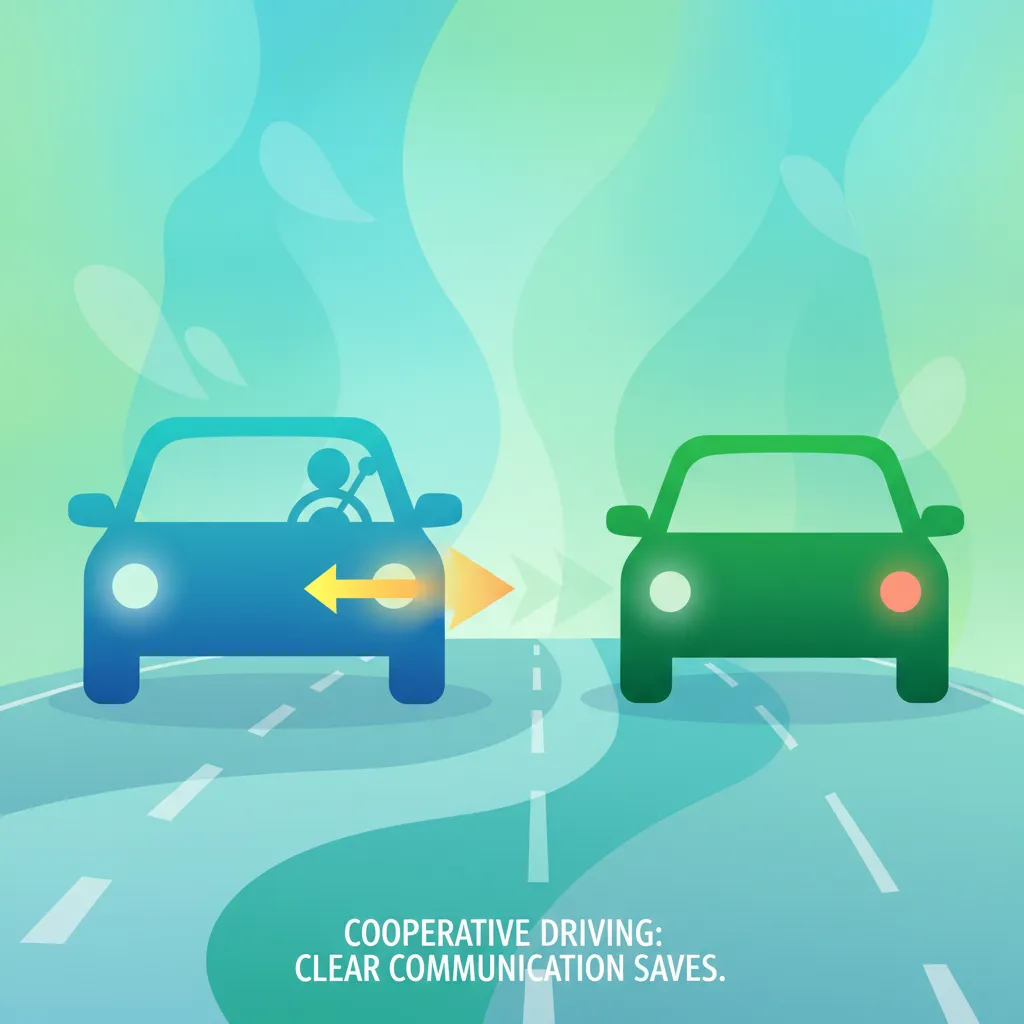
This lesson emphasizes the importance of clear communication and cooperative behavior among all road users to prevent conflicts and enhance safety. It details the proper and legal use of vehicle signals, such as turn indicators and hazard lights, as well as the appropriate use of the horn. The content also explores the role of non-verbal cues like eye contact and courtesy gestures in creating a predictable and safe driving environment.
This lesson is dedicated to the vital concept of 'distanza di sicurezza', the safe following distance required to avoid a rear-end collision. It explains how this distance is not fixed but varies with speed and conditions, covering practical methods like the 'two-second rule' to help judge it accurately. Maintaining this space cushion provides the necessary time to react and brake safely if the vehicle ahead stops suddenly.

This lesson introduces the official classification of road users as defined by the Italian Codice della Strada. It distinguishes between various categories, including pedestrians, two-wheeled vehicles, passenger cars, public transport, and heavy goods vehicles. Understanding these classifications is crucial for anticipating behavior and applying the correct traffic rules and safety precautions for each group, especially for vulnerable road users.
Find clear answers to common questions learners have about Driver Assistance Systems and Their Limitations. Learn how the lesson is structured, which driving theory objectives it supports, and how it fits into the overall learning path of units and curriculum progression in Italy. These explanations help you understand key concepts, lesson flow, and exam focused study goals.
No. In Italian theory, you must always remain in full control. These systems are designed to assist, not replace, the driver's focus and reaction time.
No, sensors can be severely compromised by adverse weather. You must adapt your driving style accordingly because reliance on technology during poor visibility is a dangerous error.
Yes, the theory test includes questions about the purpose of systems like ABS, ESC, and adaptive cruise control, focusing on their function and the driver's duty to monitor them.
Active safety systems (ADAS) only support the driver, whereas autonomous systems control the vehicle; currently, the driver remains legally liable for all actions taken by the vehicle.
Start searching now to pinpoint exactly which Italian driving theory topics, road signs, or traffic rules you need to master. Use our advanced filters to build a custom practice session and ensure you're fully prepared for every aspect of your official driving licence exam.