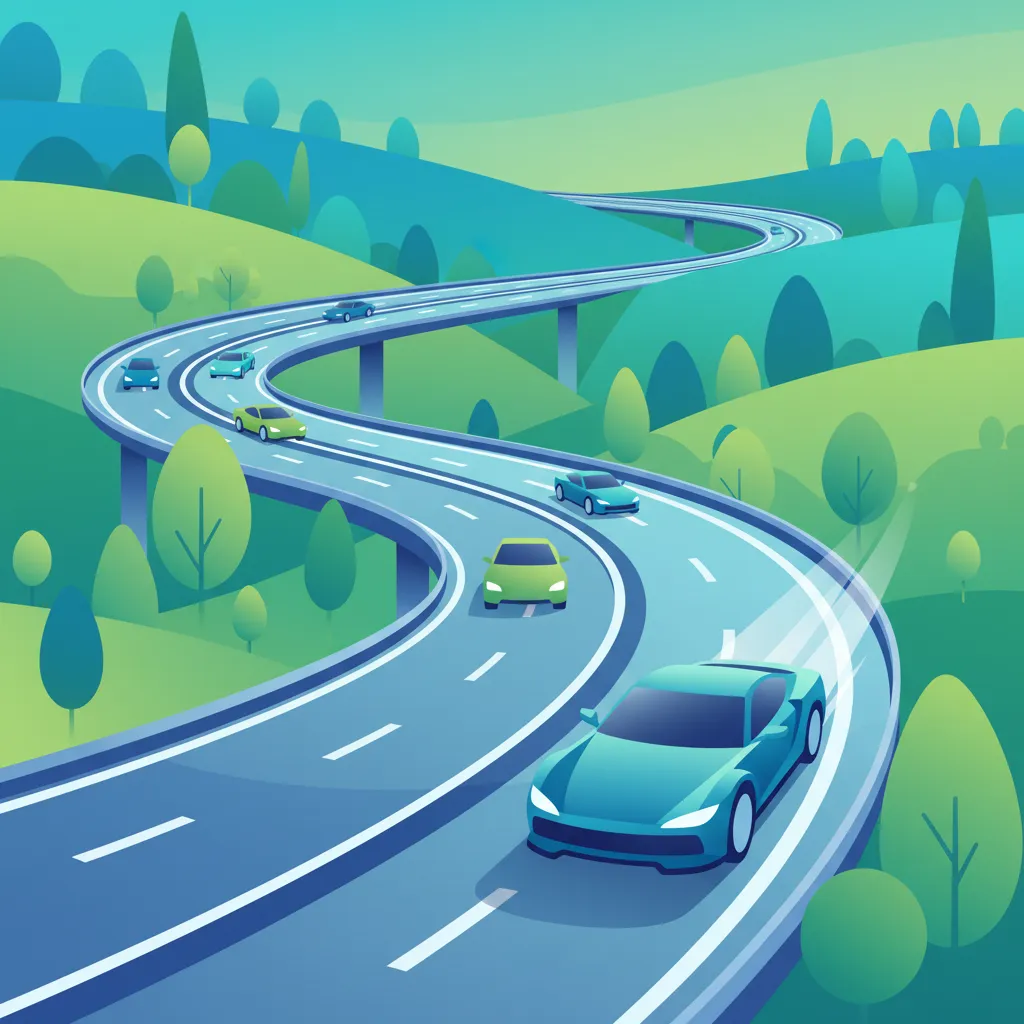
This lesson provides essential guidance on how to safely enter high-speed roads such as expressways (droga ekspresowa) and motorways (autostrada) in Poland. It explains the critical role of the acceleration lane, emphasizing the need to match the flow of traffic on the main carriageway. By the end, you will understand the importance of precise signaling, thorough mirror checks, and vital blind spot observations, preparing you for safe real-world driving and relevant questions on your Polish Category B theory exam.
Lesson content overview
Entering high-speed roads such as expressways (droga ekspresowa) and motorways (autostrada) safely is a critical skill for every driver in Poland. The merging process, often underestimated, requires precise timing, accurate judgment, and strict adherence to traffic laws. This lesson, part of your Polish Category B License Preparation, will equip you with the knowledge and techniques to perform this maneuver confidently and safely, ensuring smooth traffic flow and preventing dangerous situations.
Effective merging isn't just about getting onto the road; it's about seamlessly integrating your vehicle into fast-moving traffic without causing disruption or risk to yourself or others. Improper merging is a significant contributor to collisions on high-speed roads, making a thorough understanding of this procedure essential for both your theory exam and your practical driving experience.
The merging process always begins on a dedicated acceleration lane (pas włączania), often referred to as an on-ramp. This lane runs parallel to the main carriageway of the expressway or motorway and is specifically designed to allow vehicles to increase their speed to match the flow of traffic before entering.
Definition: An acceleration lane is a dedicated section of road that allows a driver to gain sufficient speed to safely join the main flow of traffic on a higher-speed road. It is marked with dashed lines that separate it from the main carriageway.
There are primarily two types:
Your primary task on the acceleration lane is to build speed. Do not use this lane for overtaking other vehicles that are also attempting to merge. Its sole purpose is to facilitate a safe entry onto the main road, not to maneuver past other merging traffic. Staying within the lane markings is crucial until you have safely merged.
One of the most fundamental principles of safe merging is speed matching. This means you must accelerate your vehicle on the acceleration lane to a speed that is as close as possible to the speed of the traffic already on the main carriageway.
Why Speed Matching is Vital: When vehicles travel at similar speeds, their relative velocity is minimal. This reduces the need for either the merging driver or the main-lane drivers to brake abruptly, significantly lowering the risk of rear-end collisions. If you merge too slowly, vehicles on the main road will be forced to slow down, potentially causing a dangerous chain reaction. Conversely, merging too fast can make it difficult to find a gap and react safely.
To effectively match speed, you must be aware of the typical speed limits:
Do not fixate on maintaining the maximum speed limit if traffic flow is slower. Your goal is to match the actual flow of traffic. If main-lane traffic is moving at 100 km/h due to congestion, you should aim for that speed.
As you accelerate, continuously check your mirrors to observe the speed and density of traffic in the lane you intend to enter. This continuous assessment will help you determine the appropriate speed to reach.
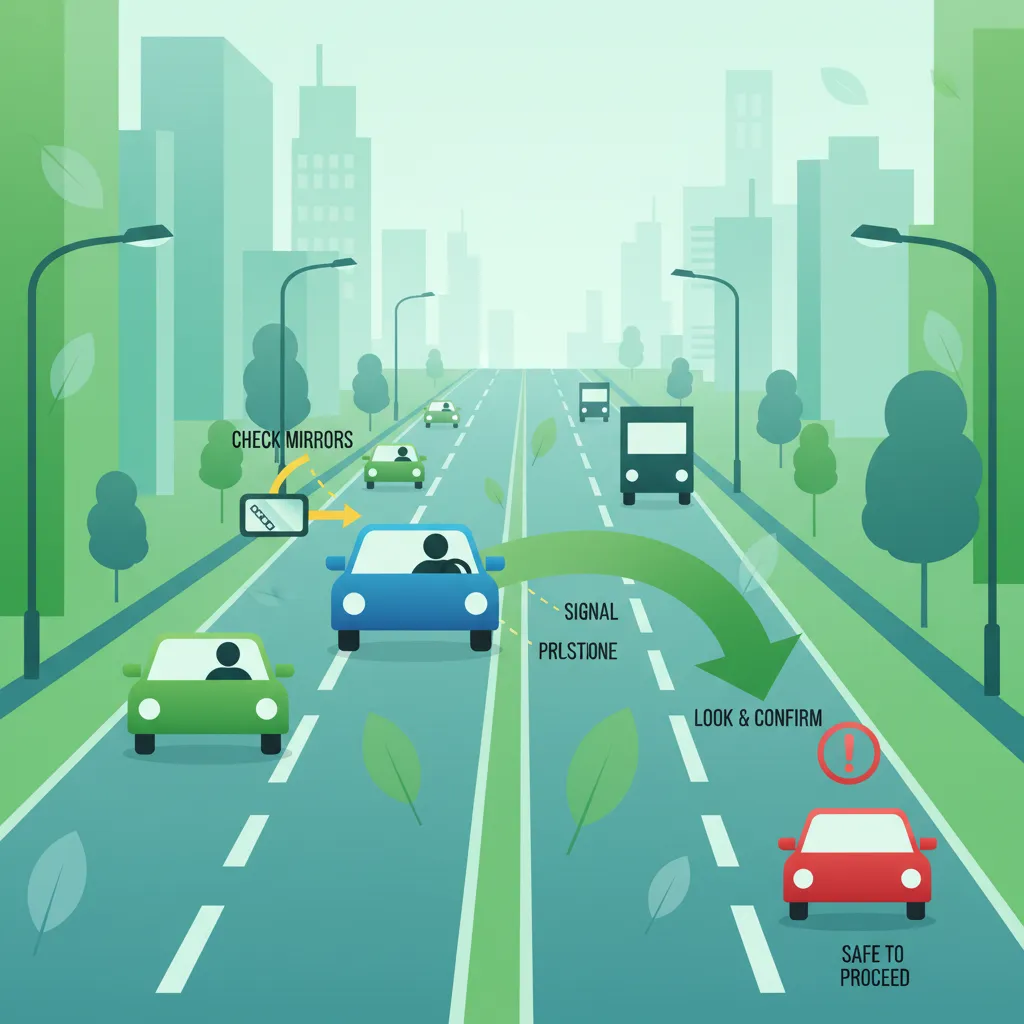
Effective communication with other road users is paramount during the merging process. Your vehicle's turn signal (kierunkowskaz) is your primary tool for indicating your intention to merge.
Legal Requirement for Signaling Distance: According to Polish regulations (specifically, the Rozporządzenie Ministra Infrastruktury z dnia 31 sierpnia 2002 r. in conjunction with the Road Traffic Act), when driving on roads where the speed limit exceeds 50 km/h, the turn signal must be activated at least 200 metres before the point of merging.
This extended signaling distance is crucial for high-speed roads. It provides sufficient warning to drivers on the main carriageway, giving them ample time to adjust their speed or lane position if necessary to facilitate your merge.
When and How to Signal:
Activate Early: Turn on your left turn signal (for merging into the left lane) or right turn signal (for merging into the right lane) as soon as you are within 200 metres of the merge point, usually as you are accelerating on the ramp.
Maintain Signal: Keep the signal activated continuously throughout the entire merging maneuver, until your vehicle is fully in the main lane and the rear of your vehicle has passed the merge point.
Cancel After Merge: Once safely in the new lane, cancel the signal.
Failing to signal, or signaling too late, can lead to confusion, sudden braking, and an increased risk of collisions. It may also result in a fine. Remember, the signal communicates your intent; it does not grant you the right-of-way.
Before and during your merge, you must have a complete understanding of the traffic around you. This involves using your mirrors and performing a critical blind spot check.
Using Your Mirrors:
While mirrors are invaluable, they have limitations. Every vehicle has blind spots (martwe pole) – areas around the vehicle that are not visible in any mirror. These are typically to the sides and slightly behind your vehicle.
The Critical Blind Spot Check: Before you begin to steer into the main lane, perform a quick, decisive over-the-shoulder glance in the direction you intend to merge. This brief turn of the head allows you to visually confirm that no vehicle is lurking in your blind spot. This check should be performed immediately after your mirror checks and before you commit to the lane change.
Many side-impact collisions on high-speed roads occur because drivers rely solely on their mirrors and miss a vehicle in their blind spot. Always physically check your blind spot.
A fundamental legal principle governing merging is that drivers on the acceleration lane must yield (ustąpić pierwszeństwa) to traffic already traveling on the main carriageway of the expressway or motorway.
Polish Road Traffic Act (Prawo o ruchu drogowym): Article 37 § 1 of the Polish Road Traffic Act explicitly states that a driver joining a road from an adjacent area, a service road, or a driveway, or entering a road from a merging lane, must yield to vehicles already moving on it.
This rule is in place to maintain the integrity of traffic flow on high-speed roads. Vehicles already traveling at high speeds should not be forced to slow down or swerve because a vehicle is entering their lane.
The Yield sign (Znak D-31) reinforces this obligation at specific interchanges. If you encounter this sign at the end of an acceleration lane, it serves as an explicit reminder that you do not have priority. You must be prepared to slow down or even stop if a safe gap does not present itself. However, ideally, you should aim to merge without stopping by skillfully matching speed and identifying a suitable gap.
Failing to yield is not only dangerous but also a legal violation, and can lead to penalties for dangerous driving.
Once you have matched your speed and checked for blind spots, the next critical step is gap acceptance – deciding whether there is a sufficient space (gap) in the main-lane traffic to merge safely.
What Constitutes a Safe Gap? A safe gap is a space between vehicles that allows you to merge without forcing the drivers ahead or behind you to brake or swerve. It's not just about distance; it's also about time.
Time-to-Collision (TTC) and the 2-Second Rule: A common guideline taught in driver education is the 2-second rule for following distance. While not a strict legal requirement for merging, it's a good principle. It means that there should be at least a 2-second time interval between your vehicle and the vehicle in front of you, and between your vehicle and the vehicle behind you, after you have merged. At high speeds, this translates to a significant distance. For example, at 100 km/h, a 2-second gap is approximately 56 metres. However, for merging, it’s often safer to aim for a larger gap, especially as you are still accelerating slightly.
Practical Judgment and Risks:
With your speed matched, signal active, mirrors and blind spots checked, and a safe gap identified, you can now execute the merge.
Smooth Entry:
Gentle Steering: Guide your vehicle smoothly into the chosen lane, maintaining your acceleration to match the traffic flow. Avoid abrupt steering inputs.
Straighten Up: Once your vehicle is fully within the new lane, straighten your steering wheel.
Cancel Signal: Turn off your turn signal.
Lane Discipline After Merging: Once you are fully on the main carriageway, you become part of the regular traffic flow and must adhere to standard lane discipline (dyscyplina pas ruchu).
Merging procedures must be adapted to various environmental and traffic conditions to maintain safety.
Reduced natural light impacts depth perception and visibility.
These vehicles have different dynamics.
Temporary road layouts can significantly alter merging patterns.
When traffic is heavy, available gaps are smaller and less frequent.
If an obstacle or sudden hazard appears on the acceleration lane, requiring you to abort the merge:
Understanding common mistakes can help you avoid them.
Adhering to legal regulations is not only about avoiding penalties but primarily about ensuring safety for all road users. Key provisions from Polish law governing merging include:
Always remember that traffic regulations are minimum standards for safe driving. In challenging conditions, defensive driving practices often require exceeding these minimums, such as allowing larger gaps or signaling earlier than legally required.
To solidify your understanding of merging procedures and related traffic rules, explore these additional resources and practice questions.
Safe merging onto Polish expressways and motorways requires using the acceleration lane to build speed matching the main carriageway flow, activating turn signals at least 200 metres before merging, performing both mirror checks and physical blind spot checks, and always yielding right-of-way to vehicles already on the main road. The core obligation is governed by Article 37 § 1 of the Polish Road Traffic Act, reinforced by the D-31 Yield sign at interchanges. Gap acceptance should follow the 2-second rule as a minimum, with adjustments for adverse weather, heavy vehicles, nighttime, and dense traffic conditions. After merging, maintain lane discipline and avoid weaving, as the acceleration lane serves only for acceleration, not overtaking.
A short set of high-value points that capture the most important learning from this lesson.
The acceleration lane is designed solely for building speed to match main carriageway traffic; it is not for overtaking other merging vehicles.
Speed matching is essential—your target speed is the actual flow of traffic, not necessarily the maximum limit, especially in congestion.
Polish law requires turn signal activation at least 200 metres before the merge point on roads with speed limits exceeding 50 km/h.
Drivers on the acceleration lane must always yield to traffic already on the main carriageway under Polish Road Traffic Act Article 37 § 1.
Always perform a physical over-the-shoulder blind spot check in addition to mirror checks before merging, as mirrors have blind spots.
Explore all units and lessons included in this driving theory course.
Expressways (droga ekspresowa) typically allow 120 km/h; motorways (autostrada) typically allow 140 km/h for passenger vehicles up to 3.5 tonnes.
The Yield sign (Znak D-31) is often placed at motorway and expressway entries, explicitly reminding drivers of the yield obligation.
Use the 2-second rule as a gap assessment guide, translating to approximately 56 metres at 100 km/h, though larger gaps are safer for merging.
Merging lane purpose: acceleration only—never overtake another vehicle on the ramp before entering the main carriageway.
After merging, remain in your entered lane; immediately weaving across multiple lanes violates lane discipline rules and is dangerous.
Activating the turn signal too late or too close to the merge point, reducing warning time for main-carriageway drivers.
Merging at a speed significantly below main-lane traffic, forcing other drivers to brake sharply and creating rear-end collision risk.
Relying solely on mirrors and skipping the over-the-shoulder blind spot check, which can miss vehicles in the blind spot area.
Attempting to merge into a gap that is too small, forcing main-lane drivers to brake or swerve.
Overtaking another vehicle on the acceleration lane before merging, which creates unpredictable traffic patterns and violates the lane's purpose.
Lesson content overview
A short set of high-value points that capture the most important learning from this lesson.
The acceleration lane is designed solely for building speed to match main carriageway traffic; it is not for overtaking other merging vehicles.
Speed matching is essential—your target speed is the actual flow of traffic, not necessarily the maximum limit, especially in congestion.
Polish law requires turn signal activation at least 200 metres before the merge point on roads with speed limits exceeding 50 km/h.
Drivers on the acceleration lane must always yield to traffic already on the main carriageway under Polish Road Traffic Act Article 37 § 1.
Always perform a physical over-the-shoulder blind spot check in addition to mirror checks before merging, as mirrors have blind spots.
Explore all units and lessons included in this driving theory course.
Expressways (droga ekspresowa) typically allow 120 km/h; motorways (autostrada) typically allow 140 km/h for passenger vehicles up to 3.5 tonnes.
The Yield sign (Znak D-31) is often placed at motorway and expressway entries, explicitly reminding drivers of the yield obligation.
Use the 2-second rule as a gap assessment guide, translating to approximately 56 metres at 100 km/h, though larger gaps are safer for merging.
Merging lane purpose: acceleration only—never overtake another vehicle on the ramp before entering the main carriageway.
After merging, remain in your entered lane; immediately weaving across multiple lanes violates lane discipline rules and is dangerous.
Activating the turn signal too late or too close to the merge point, reducing warning time for main-carriageway drivers.
Merging at a speed significantly below main-lane traffic, forcing other drivers to brake sharply and creating rear-end collision risk.
Relying solely on mirrors and skipping the over-the-shoulder blind spot check, which can miss vehicles in the blind spot area.
Attempting to merge into a gap that is too small, forcing main-lane drivers to brake or swerve.
Overtaking another vehicle on the acceleration lane before merging, which creates unpredictable traffic patterns and violates the lane's purpose.
Explore search topics learners often look for when studying Proper Merging onto Expressways and Motorways. These topics reflect common questions about road rules, driving situations, safety guidance, and lesson level theory preparation for learners in Poland.
Browse additional driving theory lessons that cover connected traffic rules, road signs, and common driving situations related to this topic. Improve your understanding of how different rules interact across everyday traffic scenarios.
Learn how to safely merge onto Polish expressways and motorways during adverse weather, at night, or with heavy vehicles. This lesson covers adjustments needed for challenging conditions and specific vehicle types.

This lesson details the rules and best practices for driving on Poland's fastest roads. It covers the higher speed limits, the strict lane discipline of keeping right except to overtake, and prohibitions on stopping. The aim is to ensure drivers can handle the demands of sustained high-speed travel safely and efficiently.
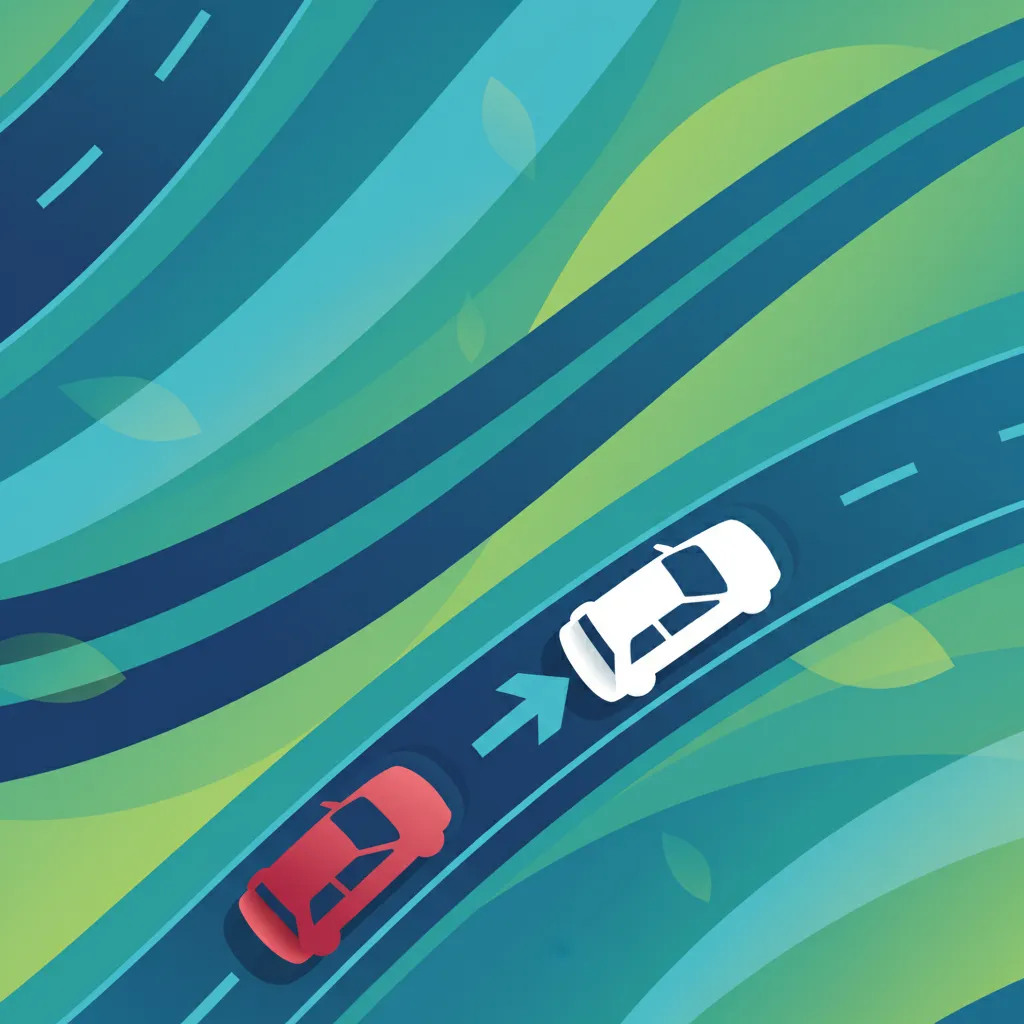
In this lesson, learners focus on the complex task of merging onto highways and changing lanes at high speeds, following Polish highway regulations. The content covers the use of acceleration lanes for building speed, selecting appropriate gaps, and positioning the motorcycle safely within traffic flow. It also highlights blind-spot monitoring, proper signaling, and the importance of maintaining a safety margin when entering or exiting lanes for hazard-free highway integration.
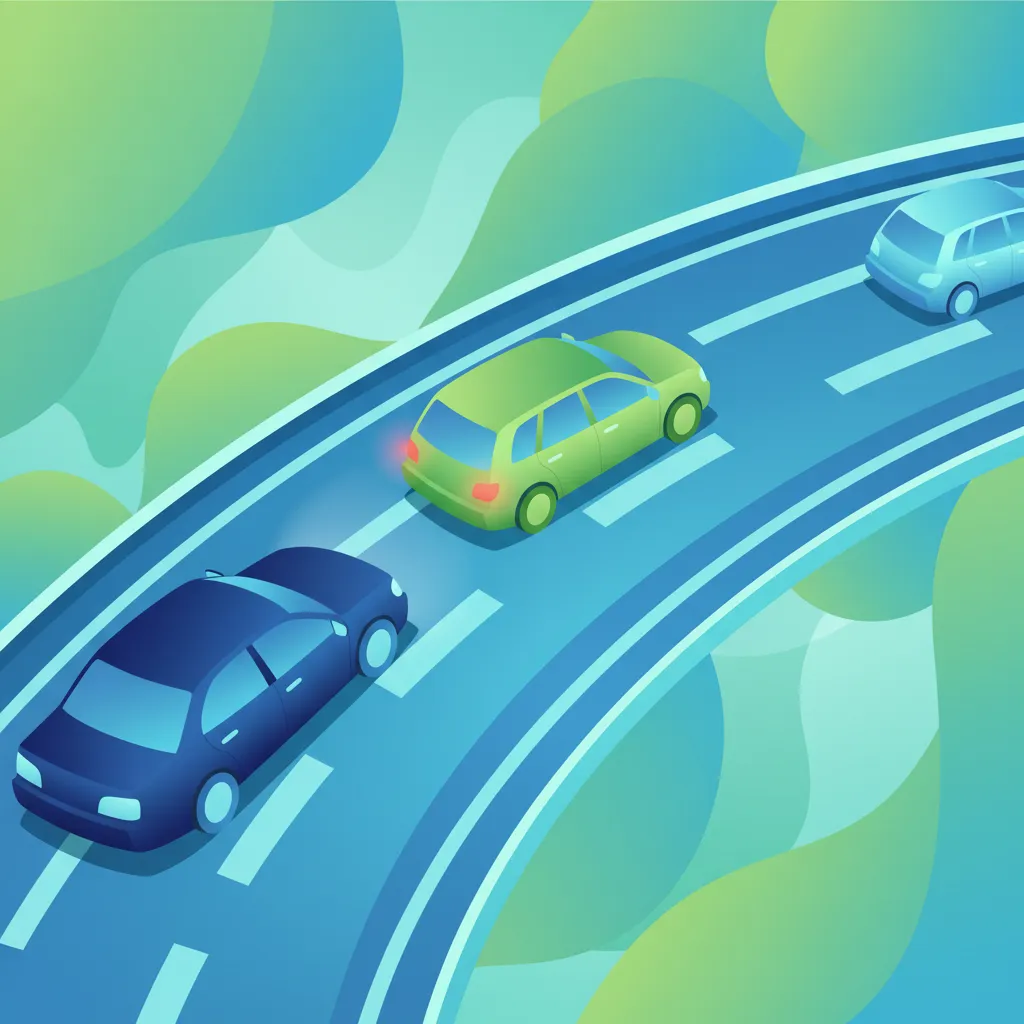
This lesson details the critical process of merging onto a high-speed motorway. It explains how to use the full length of the acceleration lane to build up to the speed of the flowing traffic, which is essential for a smooth and safe entry. Learners will study techniques for judging gaps in traffic, signaling intentions clearly, and performing thorough mirror and blind spot checks before executing the merge, ensuring a seamless integration into the highway environment.
This lesson provides a focused guide on the techniques for entering and exiting high-speed roads. It explains the purpose of acceleration lanes for getting up to speed and deceleration lanes for slowing down safely away from the main traffic flow. Correct observation, signaling, and speed adjustment are emphasized for seamless transitions.
This lesson prepares drivers for the event of a vehicle breakdown on a motorway or expressway. It details the correct procedure: pulling over to the emergency lane, activating hazard lights, and placing the warning triangle at the legally required distance. The importance of wearing a reflective vest when outside the vehicle is also a key safety point.
This lesson examines the specific rules and etiquette for riding on Polish motorways and high-speed highways, focusing on proper lane positioning, entry via acceleration lanes, and maintaining appropriate following distances. Learners will study overtaking protocols at high speeds, proper use of deceleration lanes for exits, and techniques for aerodynamic positioning. The content also covers safe lane changes and emergency lane usage to ensure efficient travel.

In this lesson, learners explore riding on rural and countryside roads, where road markings may be sparse and surface conditions varied. The content covers safe overtaking in single-lane sections, interaction with agricultural vehicles and animals, and the handling of gravel or uneven surfaces. Learners will also study the importance of anticipating curves and adjusting speed to light conditions, equipping them with the skills needed for safe countryside travel.
This lesson provides a comprehensive breakdown of the right-of-way rules that govern intersections. It explains the clear directives given by traffic lights, stop signs, and yield signs, and clarifies the procedures at unmarked or uncontrolled intersections, where the 'priority to the right' rule often applies. Learners will understand the legal hierarchy of these rules to make correct, safe, and predictable decisions when navigating through any junction, reducing the risk of conflict with other traffic.
This lesson addresses advanced scenarios, including multi-lane intersections and interactions with vulnerable road users. It reinforces the legal obligation to give absolute priority to pedestrians at marked crossings (zebra crossings). The content also covers navigating around traffic islands and using dedicated turning lanes in complex urban environments.
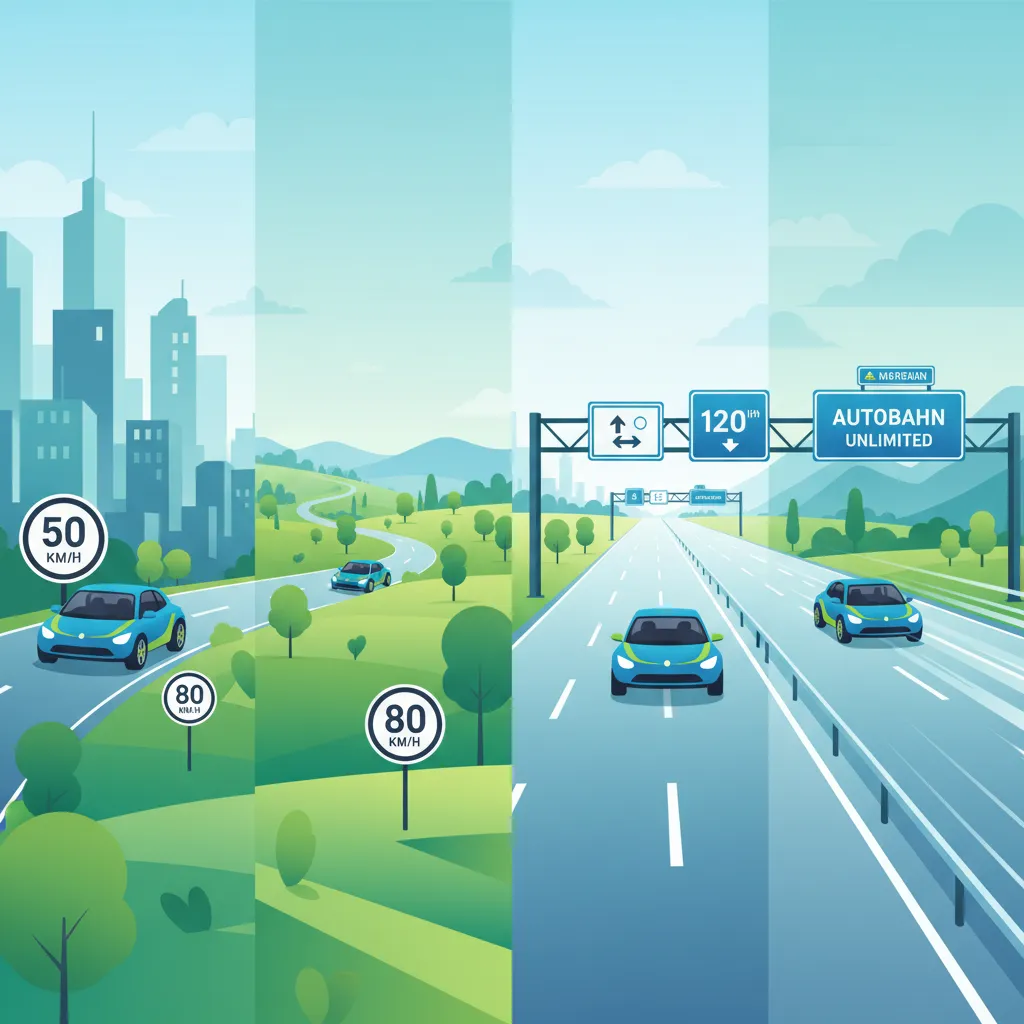
This lesson details the statutory speed limits for different road environments in Poland. It covers the 50 km/h limit in built-up areas (obszar zabudowany), as well as the higher limits for rural roads, expressways, and motorways. Understanding these default limits is fundamental for legal and safe driving across the country.
Understand and avoid typical mistakes drivers make when merging onto expressways and motorways in Poland. This lesson details violations like late signaling, insufficient speed matching, and blind spot oversights.
In this lesson, learners focus on the complex task of merging onto highways and changing lanes at high speeds, following Polish highway regulations. The content covers the use of acceleration lanes for building speed, selecting appropriate gaps, and positioning the motorcycle safely within traffic flow. It also highlights blind-spot monitoring, proper signaling, and the importance of maintaining a safety margin when entering or exiting lanes for hazard-free highway integration.
This lesson details the rules and best practices for driving on Poland's fastest roads. It covers the higher speed limits, the strict lane discipline of keeping right except to overtake, and prohibitions on stopping. The aim is to ensure drivers can handle the demands of sustained high-speed travel safely and efficiently.
This lesson details the critical process of merging onto a high-speed motorway. It explains how to use the full length of the acceleration lane to build up to the speed of the flowing traffic, which is essential for a smooth and safe entry. Learners will study techniques for judging gaps in traffic, signaling intentions clearly, and performing thorough mirror and blind spot checks before executing the merge, ensuring a seamless integration into the highway environment.
This lesson provides a focused guide on the techniques for entering and exiting high-speed roads. It explains the purpose of acceleration lanes for getting up to speed and deceleration lanes for slowing down safely away from the main traffic flow. Correct observation, signaling, and speed adjustment are emphasized for seamless transitions.
This lesson prepares drivers for the event of a vehicle breakdown on a motorway or expressway. It details the correct procedure: pulling over to the emergency lane, activating hazard lights, and placing the warning triangle at the legally required distance. The importance of wearing a reflective vest when outside the vehicle is also a key safety point.
This lesson examines the specific rules and etiquette for riding on Polish motorways and high-speed highways, focusing on proper lane positioning, entry via acceleration lanes, and maintaining appropriate following distances. Learners will study overtaking protocols at high speeds, proper use of deceleration lanes for exits, and techniques for aerodynamic positioning. The content also covers safe lane changes and emergency lane usage to ensure efficient travel.
This lesson addresses advanced scenarios, including multi-lane intersections and interactions with vulnerable road users. It reinforces the legal obligation to give absolute priority to pedestrians at marked crossings (zebra crossings). The content also covers navigating around traffic islands and using dedicated turning lanes in complex urban environments.
This lesson provides strategies for safely navigating the numerous intersections typical of urban environments. It reinforces the application of priority rules in situations with limited visibility and high traffic volume. Techniques for making turns in narrow streets and being aware of pedestrians and cyclists at junctions are central to the instruction.
This lesson details the legal framework for overtaking in Poland. It explains how to interpret road markings, such as solid and double solid lines, and prohibition signs that forbid passing. The content emphasizes the critical need for sufficient sight distance and a clear path before initiating an overtaking maneuver to ensure safety.
This lesson adapts lane-changing principles for the challenging environment of dense city traffic. It reinforces the critical 'mirror, signal, maneuver' sequence, with a strong focus on checking blind spots immediately before moving. The content advises on judging gaps in traffic and executing the lane change smoothly and decisively.
Find clear answers to common questions learners have about Proper Merging onto Expressways and Motorways. Learn how the lesson is structured, which driving theory objectives it supports, and how it fits into the overall learning path of units and curriculum progression in Poland. These explanations help you understand key concepts, lesson flow, and exam focused study goals.
The primary purpose of an acceleration lane is to allow you to increase your vehicle's speed to match the flow of traffic on the main carriageway of the motorway or expressway. This minimizes disruption and enhances safety for both you and other drivers when merging, preventing you from entering at a dangerously low speed.
It's safe to merge when you have matched the speed of the traffic on the main carriageway and have identified a sufficient gap to enter without causing other drivers to brake or swerve. You must use your mirrors, perform a crucial shoulder check for blind spots, and signal your intentions clearly. Never force your way in.
No, generally, vehicles already on the main carriageway of a Polish motorway or expressway have priority. As the merging driver, it is your responsibility to find a safe gap and adjust your speed accordingly. While courteous drivers may move over or adjust their speed, you must not assume they will.
The biggest mistake is often failing to match the speed of main traffic or not performing adequate observations, especially the shoulder check for blind spots. Hesitation at the end of the acceleration lane or stopping unnecessarily can also create dangerous situations and lead to exam failure.
Build custom practice sessions tailored precisely to your needs. Focus on areas requiring improvement, review specific Polish road signs, or master complex traffic rules to ensure full preparation for your official driving license exam.