
This lesson explores the critical challenges of operating agricultural vehicles in Poland under adverse seasonal conditions. You will learn to identify specific hazards like mud, snow, fog, and heavy rain, understanding their impact on vehicle control and visibility. Mastering these techniques is crucial for the Polish Category T driving theory exam and for ensuring safety on rural roads throughout the year.
Lesson content overview
Operating agricultural vehicles, such as tractors and trailers (Category T), demands heightened awareness and specialized skills, particularly when confronted with seasonal weather hazards. Mud, snow, ice, fog, and heavy rain drastically alter driving conditions, posing significant risks to vehicle stability, braking efficiency, and driver visibility. This lesson delves into the specific challenges presented by these elements and outlines the essential adjustments and legal compliance required to ensure safety on both public roads and farm terrains in Poland.
Seasonal weather conditions fundamentally change the way a vehicle interacts with its environment. For Category T operators, who often manage heavy machinery and transport substantial loads, these changes are amplified, making proactive driving and adherence to regulations paramount.
Traction refers to the grip between your tires and the road surface, which is essential for accelerating, braking, and steering. This grip is quantified by the coefficient of friction (μ). On dry, clean asphalt, the coefficient of friction is relatively high (e.g., around 0.7-0.8), providing ample grip. However, in adverse conditions:
Reduced friction directly translates to a loss of control, increased stopping distances, and difficulty in maintaining a desired path.
Visibility is your ability to see and be seen. Weather phenomena like fog, heavy rain, and snow significantly reduce visibility range, limiting how far you can clearly see obstacles, other road users, and road markings.
When visibility is poor, your reaction time becomes critically important. Since the time it takes to react remains constant, you need more distance to perceive hazards and respond safely.
The braking distance is the distance a vehicle travels from the moment the brakes are applied until it comes to a complete stop. This distance is directly influenced by speed, vehicle weight, and the coefficient of friction.
Agricultural vehicles, being heavy, already have longer braking distances than passenger cars. This necessitates a significant reduction in speed and a substantial increase in following distance when confronted with any condition that reduces grip.
Understanding the unique characteristics of each seasonal hazard is the first step towards safe operation.
Mud is a common sight in agricultural environments, especially after rain or during thaws. It presents a unique challenge for traction and vehicle control.
Mud can range from a thin, slippery layer over a hard surface to deep, saturated patches.
When encountering mud, the key is to maintain consistent, gentle control:
Reduce Speed: Approach muddy sections slowly. Excessive speed will only lead to loss of control or getting stuck faster.
Engage Low-Range Gears: If your agricultural vehicle is equipped with low-range gears, select them. This provides more torque and finer control over wheel speed, preventing excessive wheel spin.
Maintain Momentum (Carefully): In deeper mud, a steady, slow momentum can help carry the vehicle through. However, this is a delicate balance; too much speed will cause spinning, too little will cause bogging.
Avoid Sudden Movements: Smooth acceleration, gentle braking, and gradual steering inputs are crucial. Abrupt actions can easily break traction and lead to a skid or getting stuck.
Steer Straight: Try to keep your wheels as straight as possible, especially in deep ruts. Turning can drastically reduce traction and make the vehicle slide sideways.
Assess Depth: If possible, stop and check the depth and consistency of the mud before proceeding. Sometimes, an alternative route is the safest option.
Common Misunderstanding: Many drivers mistakenly believe that "more power" will get them through mud. Applying excessive accelerator pressure usually results in wheel spin, digging the tires deeper and causing the vehicle to lose all forward motion and potentially damage the drivetrain.
While specific laws regarding "mud driving" are rare, the general principle of speed adjustment (Art. 21-2 § 1 of Prawo o ruchu drogowym) applies. Drivers must adapt their speed to prevailing road conditions, including mud, to maintain control. Furthermore, leaving mud on public roads from farm machinery is an offense and can create a hazard for other road users, potentially leading to fines or liability for accidents. Vehicles should be cleaned before entering public roads where practical.
Winter conditions, characterized by snow and ice, are among the most dangerous for driving. Category T vehicles, due to their weight and often high center of gravity, are particularly susceptible to loss of control.
Polish law (Prawo o ruchu drogowym, Art. 64) has specific requirements for tire usage during winter. Agricultural vehicles (Category T) must be equipped with tires marked "M+S" (Mud and Snow) or dedicated winter tires from November 1st to March 31st when driving on public roads under winter conditions (i.e., when snow or ice is present). These tires have a specific tread pattern and rubber compound designed to provide better grip in low temperatures, snow, and slush. Failure to comply can result in fines and liability in the event of an accident.
Critical Legal Requirement: It is a common misconception that winter tires are optional for tractors. For Category T vehicles in Poland, they are legally required during specific winter months when winter conditions are present on public roads, and they are crucial for safety.
Fog is essentially a ground-level cloud, dramatically reducing visibility and making driving perilous.
Correct lighting is crucial for both seeing and being seen in fog:
Common Misunderstanding: Using high beams in fog is a frequent error. It's counterproductive and dangerous. Fog lights are also not for general use; they are conditional and must be switched off when visibility improves or when they might dazzle others.
Heavy rain is a common occurrence and poses immediate risks to driving safety, primarily due to reduced traction and impaired visibility.
Adhering to legal requirements is not just about avoiding penalties; it's fundamental to road safety, especially in challenging weather. The Prawo o ruchu drogowym (Polish Road Traffic Act) specifies several obligations for drivers.
A designation on a tire indicating a tread pattern and rubber compound suitable for enhanced grip in winter conditions, specifically mud and snow.
As per Art. 64 of Prawo o ruchu drogowym, Category T vehicles are legally required to be equipped with M+S marked tires or dedicated winter tires when operating on public roads under winter conditions (i.e., when snow or ice is present on the road surface) during the period from November 1st to March 31st. This regulation is critical for ensuring adequate traction and control during the colder months.
Art. 21-2 § 1 of Prawo o ruchu drogowym states that a driver must adapt their speed not only to traffic conditions but also to road conditions, visibility, and vehicle load. This is a crucial general principle that underlies all safe driving in adverse weather. It means that even if a posted speed limit is 50 km/h, if snow, ice, fog, or heavy rain make it unsafe to drive at that speed, you are legally obligated to reduce your speed to a safe level. This is often far below the maximum allowed speed.
When in doubt, slow down. It is always better to arrive late than not at all.
Art. 39 § 2 of Prawo o ruchu drogowym mandates the use of dipped beam headlights at night and in reduced visibility conditions such as fog, heavy rain, or snow. High beams are specifically prohibited when visibility is reduced below 100 meters, as they cause excessive glare.
The standard headlamp setting that directs light downwards and slightly to the side, providing illumination without dazzling oncoming drivers or those ahead.
Art. 40 § 5 details the use of fog lights:
According to Art. 41 § 3 of Prawo o ruchu drorogowym, hazard warning lights may be turned on when the vehicle is stopped on the road due to a breakdown or an accident, or when visibility is so severely reduced that movement is unsafe. This warns other road users of a stationary hazard. They should not be used while driving normally, even in very bad weather, unless you are making an emergency stop.
Art. 43 § 2 explicitly states that wipers must be used when visibility through the windshield is impaired by precipitation. This is a direct mandate to activate and maintain wipers at an effective speed during rain or snowfall to ensure the driver's forward view remains clear. Furthermore, vehicle systems like defoggers and defrosters must be functional and used to prevent interior window condensation, which can also significantly obscure vision.
Art. 44 § 1 of Prawo o ruchu drogowym requires that any load carried by a vehicle must be secured and evenly distributed to prevent sudden shifts that could affect vehicle stability. This is critically important on low-traction surfaces like mud, snow, or ice. A shifting load can drastically alter the vehicle's center of gravity, making it prone to skidding, losing control, or even rolling over, especially when cornering or braking gently.
Ignoring the principles of safe driving in adverse weather can lead to severe consequences. Here are some common violations and their potential outcomes:
Safe driving in seasonal hazards is dynamic, requiring adjustments based on various factors.
Pedestrians, cyclists, and other road users become particularly vulnerable in adverse weather.
In genuine emergency response situations (e.g., an agricultural vehicle assisting in a local emergency), certain lighting or speed regulations might be relaxed, provided it is done safely and with appropriate emergency signaling (e.g., flashing amber lights). However, the general principles of safe operation always take precedence.
Understanding the underlying principles reinforces the "why" behind safe driving practices.
Traction is directly proportional to the force pressing the tire onto the road and the coefficient of friction. When rain, snow, or ice lowers the coefficient of friction, the available grip decreases. To maintain control, the forces applied by the driver (acceleration, braking, steering) must be reduced proportionally. This is why slowing down is the primary defense: it reduces the kinetic energy that needs to be managed and gives the tires more time to find grip.
Human perception has limits. Our eyes struggle with depth and distance in low visibility, and our brains need time to process information. Drivers often underestimate the slipperiness of black ice or the true density of fog due to overconfidence or familiarity. Deliberate speed reduction and heightened sensory awareness (looking, listening) combat these psychological biases.
Statistics consistently show a significant increase in accidents during adverse weather conditions. Proactive driving involves:
Risk compensation, where drivers feel safer due to winter tires and therefore drive faster, is a dangerous trap. The emphasis must always be on consistent safe behavior, regardless of equipment.
Applying theoretical knowledge to practical situations is vital.
Setting: You are driving a tractor with a loaded trailer on a familiar unpaved farm road after several days of heavy rain. You encounter a long stretch with deep, standing mud. Decision Point: How should you proceed through this challenging section? Correct Behavior: You reduce your speed significantly to about 5 km/h, engage a low-range gear (if available) to maximize torque control, and maintain a steady, gentle pace. You keep the steering wheel as straight as possible, avoiding any sudden turns or aggressive acceleration, which could cause wheel spin or bogging. Before entering, you check for alternative routes or assess the mud's depth. Incorrect Behavior: You accelerate to "power through" the mud quickly, believing momentum is key. This causes the wheels to spin uncontrollably, digging deeper into the mud and getting the tractor and trailer stuck, potentially damaging the drive train.
Setting: It's mid-January, and a light layer of fresh snow covers a residential street where children might be playing. You are driving an empty tractor. Decision Point: What adjustments are necessary for your tires and speed? Correct Behavior: Your tractor is equipped with M+S marked tires as required by law. You reduce your speed to below 30 km/h, increase your following distance, and use smooth, gentle inputs for steering and braking. You constantly scan for children or other vulnerable road users who might be less visible in the snow. Incorrect Behavior: You assume the fresh snow is not too slippery and maintain a speed of 40-50 km/h, relying on the tractor's weight. Your tires are standard summer treads, which offer poor grip on snow. This puts you at high risk of skidding if you need to brake suddenly or turn.
Setting: You are driving a tractor on a rural public road early in the morning. Visibility suddenly drops to about 60 meters due to dense fog. Decision Point: How should you use your vehicle's lighting and adjust your driving? Correct Behavior: You immediately switch from daylight running lights to your dipped beam headlights. Since visibility is below 100 meters, you activate your front fog lights. As visibility is also below 50 meters, you activate your rear fog light to make your vehicle visible from behind. You reduce your speed to about 20 km/h, allowing you to stop within the visible distance, and increase your following distance significantly. You avoid using high beams. Incorrect Behavior: You switch on your high beams, thinking they will penetrate the fog better, which only reflects light back and reduces your vision. You fail to use your rear fog light, making your slow-moving tractor an invisible hazard for following traffic. You maintain a speed of 40 km/h, overdriving your visibility.
Setting: A sudden, heavy downpour begins while you are driving a tractor on a local asphalt road, causing water to pool on the surface. You are approaching a stop sign. Decision Point: How should you prepare for braking and maintain visibility? Correct Behavior: You immediately activate your windshield wipers to their highest effective speed and turn on your dipped beam headlights. You also ensure your defogger is working to clear any interior condensation. You significantly reduce your speed and begin to apply the brakes very gently and progressively much earlier than usual, allowing for a longer stopping distance to avoid hydroplaning or skidding. Incorrect Behavior: You continue at a higher speed, expecting the tractor's weight to "push" the water away. You brake abruptly at the last moment, causing the wheels to lock or hydroplane, leading to a skid and potential failure to stop at the intersection. You neglect to activate the rear defogger, impairing rearward vision.
Seasonal weather profoundly impacts the safety of operating agricultural vehicles. Mud, snow, ice, fog, and heavy rain each demand specific driving adjustments and adherence to Polish traffic law. The core principles revolve around:
By understanding the physics of these hazards, anticipating their effects, and proactively adjusting your driving, you can significantly mitigate risks and ensure safe operation of your agricultural vehicle in all seasons.
This lesson covers how seasonal weather hazards—mud, snow, ice, fog, and heavy rain—affect traction, braking, and visibility for Polish Category T agricultural vehicles. It explains the physics of grip loss, provides specific driving techniques for each condition, and details Polish legal requirements including mandatory M+S winter tires (November 1–March 31), conditional fog light usage (100m front/50m rear thresholds), and speed adaptation obligations under Prawo o ruchu drogowym. Critical skills include reducing speed to match stopping distance to visible road, using gentle smooth inputs on low-traction surfaces, and understanding how heavy loads amplify instability risks on slippery terrain.
A short set of high-value points that capture the most important learning from this lesson.
Traction is quantified by the coefficient of friction (μ), which drops dramatically on wet (0.7→0.5), snowy (0.4→0.2), and icy (0.1→0.2) surfaces, fundamentally altering vehicle control.
Braking distances extend significantly in adverse conditions: wet roads double stopping distance, snow extends it 3-4 times, and ice can extend it 10 times or more.
M+S or winter tires are legally mandatory for Category T vehicles from November 1st to March 31st when winter conditions (snow or ice) are present on public roads.
Front fog lights may only be used when visibility falls below 100 meters and no oncoming traffic exists; rear fog lights must be used when visibility drops below 50 meters.
Speed must be adapted to conditions even when below posted limits; if you cannot see 30 meters ahead, you must be able to stop in less than 30 meters.
Explore all units and lessons included in this driving theory course.
Mud requires low-range gears, gentle steering with wheels straight, and steady momentum; excessive acceleration causes wheel spin and getting stuck.
Black ice is invisible, forms on bridges and shaded areas, and provides almost no grip—react to glistening patches and lack of tire tracks in snow.
High beams are prohibited in fog and heavy rain as they reflect off water droplets, creating a wall of glare that blinds the driver.
Wipers must be activated when visibility through the windshield is impaired—this is a direct legal requirement under Polish traffic law.
Loaded agricultural vehicles have drastically longer braking distances and higher instability risk on slippery surfaces due to load shift.
Using high beams in fog, which reflects light back and drastically reduces visibility instead of improving it.
Believing more power will get through deep mud; excessive throttle causes wheel spin, digging tires deeper and potentially damaging the drivetrain.
Driving with summer tires during winter conditions when M+S tires are legally required, creating dangerous reduced grip.
Sudden or sharp braking on wet or icy surfaces, causing wheel lock-up, skidding, and loss of control.
Neglecting interior window condensation, which creates dangerous blind spots even when exterior visibility appears adequate.
Lesson content overview
A short set of high-value points that capture the most important learning from this lesson.
Traction is quantified by the coefficient of friction (μ), which drops dramatically on wet (0.7→0.5), snowy (0.4→0.2), and icy (0.1→0.2) surfaces, fundamentally altering vehicle control.
Braking distances extend significantly in adverse conditions: wet roads double stopping distance, snow extends it 3-4 times, and ice can extend it 10 times or more.
M+S or winter tires are legally mandatory for Category T vehicles from November 1st to March 31st when winter conditions (snow or ice) are present on public roads.
Front fog lights may only be used when visibility falls below 100 meters and no oncoming traffic exists; rear fog lights must be used when visibility drops below 50 meters.
Speed must be adapted to conditions even when below posted limits; if you cannot see 30 meters ahead, you must be able to stop in less than 30 meters.
Explore all units and lessons included in this driving theory course.
Mud requires low-range gears, gentle steering with wheels straight, and steady momentum; excessive acceleration causes wheel spin and getting stuck.
Black ice is invisible, forms on bridges and shaded areas, and provides almost no grip—react to glistening patches and lack of tire tracks in snow.
High beams are prohibited in fog and heavy rain as they reflect off water droplets, creating a wall of glare that blinds the driver.
Wipers must be activated when visibility through the windshield is impaired—this is a direct legal requirement under Polish traffic law.
Loaded agricultural vehicles have drastically longer braking distances and higher instability risk on slippery surfaces due to load shift.
Using high beams in fog, which reflects light back and drastically reduces visibility instead of improving it.
Believing more power will get through deep mud; excessive throttle causes wheel spin, digging tires deeper and potentially damaging the drivetrain.
Driving with summer tires during winter conditions when M+S tires are legally required, creating dangerous reduced grip.
Sudden or sharp braking on wet or icy surfaces, causing wheel lock-up, skidding, and loss of control.
Neglecting interior window condensation, which creates dangerous blind spots even when exterior visibility appears adequate.
Explore search topics learners often look for when studying Seasonal Hazards: Mud, Snow, Fog, and Rain. These topics reflect common questions about road rules, driving situations, safety guidance, and lesson level theory preparation for learners in Poland.
Browse additional driving theory lessons that cover connected traffic rules, road signs, and common driving situations related to this topic. Improve your understanding of how different rules interact across everyday traffic scenarios.
Understand the physics behind seasonal driving hazards. Learn how mud, snow, fog, and rain affect vehicle traction, braking distances, and visibility, with explanations relevant to Polish Category T driving theory.

This lesson teaches drivers how to adapt their speed, following distance, and control inputs to safely navigate adverse conditions. It covers the challenges posed by rain, snow, and ice, explaining the loss of traction and the increased risk of skidding or aquaplaning. The content provides specific strategies for driving in fog, which reduces visibility, and strong crosswinds, which can affect the stability of a high-sided vehicle, promoting a proactive and defensive driving mindset.
This lesson focuses on the specific challenges of driving in rainy conditions. It explains the phenomenon of hydroplaning, where tires lose contact with the road surface, and how to prevent it by reducing speed. The importance of good tire condition, effective windscreen wipers, and extending following distances is also covered in detail.
This lesson covers the fundamental procedures for starting and stopping a tractor, with emphasis on selecting the appropriate gear and clutch engagement for smooth motion. It explains how to manage traction on soft fields, loose gravel, and wet paved roads, and how to calculate safe stopping distances. The content also discusses hill starts and the prevention of wheel slip during acceleration and deceleration.
This lesson focuses on the skills needed for safe winter driving. It explains how to use gentle acceleration, steering, and braking to avoid losing traction on snow and ice. The lesson also discusses how to recognize and handle a skid, and the critical role that appropriate winter tires play in maintaining vehicle control.

This lesson details the specific driving adjustments needed for adverse weather. It focuses on how rain, snow, and ice affect vehicle dynamics and driver perception. Learners will study techniques to prevent hydroplaning, use winter tires effectively, and increase following distances on slippery surfaces while using safety systems like fog lights.
This lesson focuses on the specific challenges of riding in rain, detailing how wet road surfaces reduce tyre grip and increase braking distances. Learners will learn about hydroplaning risk, the importance of deep tyre tread, and the need for smooth throttle and brake modulation to maintain stability. The content also covers visibility concerns, such as proper headlamp use and the selection of waterproof clothing, so riders can safely navigate wet conditions.

This lesson focuses on the braking systems found on Category T vehicles, covering both service brakes for motion control and parking brakes for stability. It examines how braking performance varies with load and terrain and outlines safe stopping distances. The lesson also explains the operation of the power take-off (PTO), describing how power is transferred to implements and the safety precautions required during use.
This lesson introduces defensive driving principles for rural settings, teaching learners how to continually scan the environment and anticipate potential hazards. It discusses the unique challenges posed by slow-moving agricultural traffic, field entrances, and unpredictable farm equipment maneuvers. The lesson emphasizes proactive decision-making and early brake application to avoid collisions in mixed traffic.
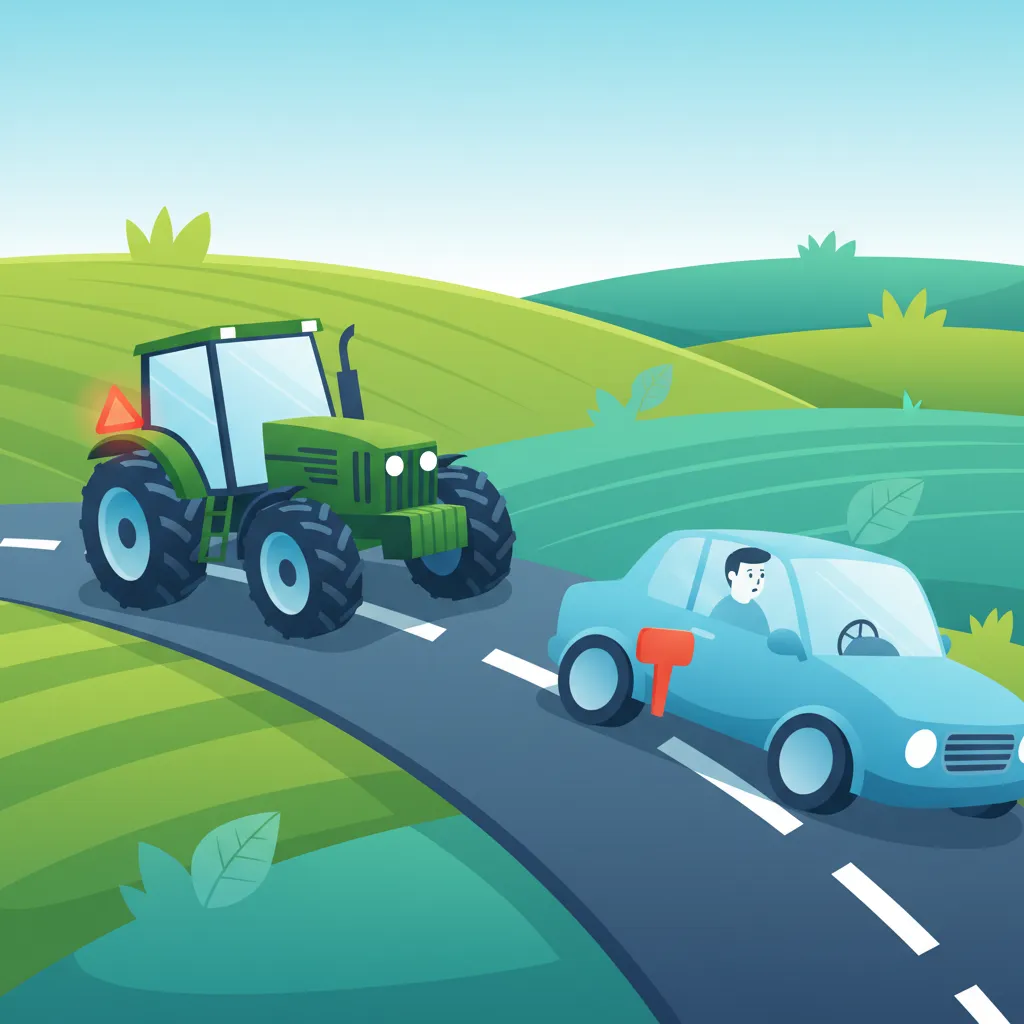
This lesson introduces hazard perception concepts specific to agricultural vehicles, teaching learners how to identify potential dangers such as unexpected farm equipment or changing road conditions. It outlines a systematic approach to visual scanning, risk evaluation, and timely decision-making to avoid accidents. The lesson provides guidelines for interpreting scenario simulations that mirror real-world rural road hazards.

This lesson delves into the physics of load management, teaching learners how to calculate payloads, locate the center of gravity, and distribute weight to preserve stability. The lesson addresses methods for securing cargo using straps and tie-downs, while also covering the effect of load shift on braking. Proper load planning ensures compliance with legal regulations and mitigates risks associated with trailer sway.
Identify and understand common driver errors when facing seasonal hazards like mud, snow, fog, and rain in Poland. Learn about the consequences of incorrect speed, lighting, and tire usage for Category T drivers.
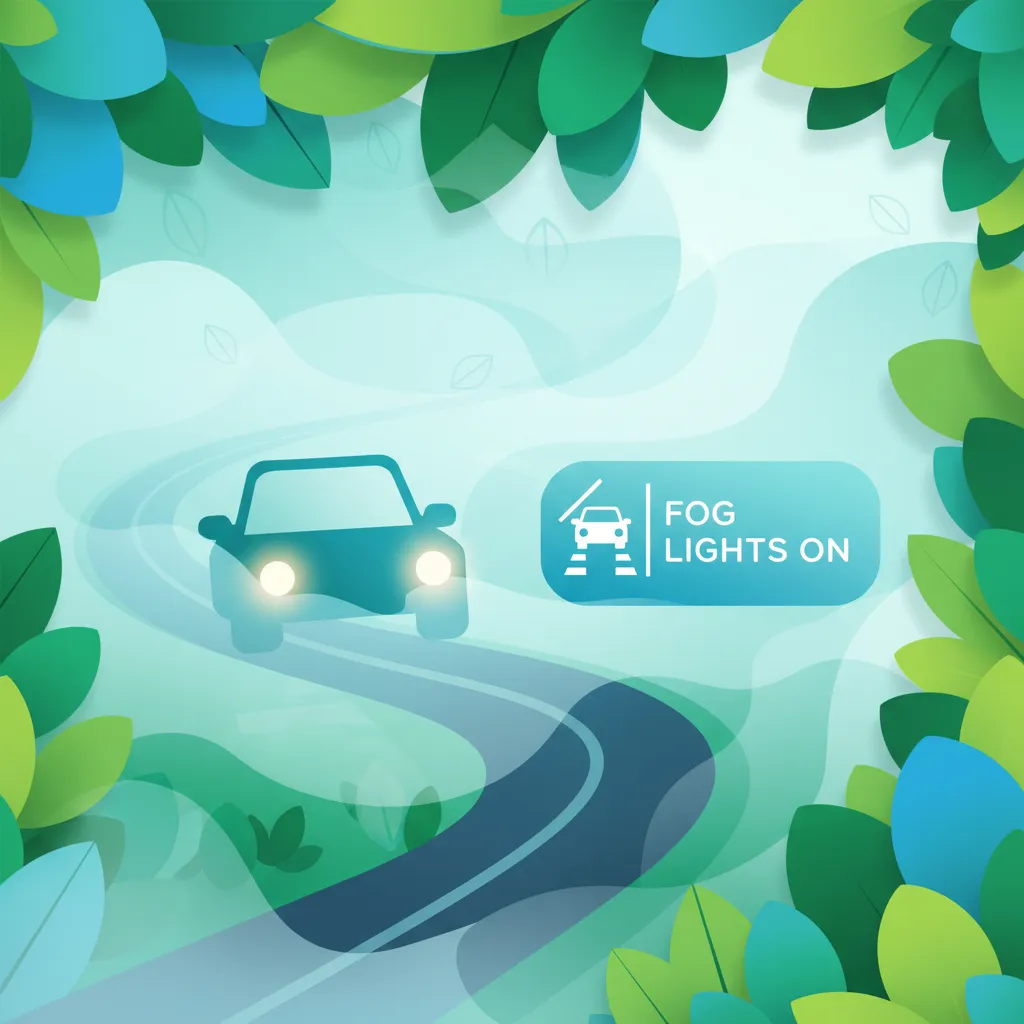
This lesson provides essential guidance for driving in fog, one of the most dangerous conditions. It instructs on the correct use of low-beam headlights and fog lights to maximize visibility without causing glare. The core advice is to significantly reduce speed and use the edge of the road or markings as a guide.
This lesson teaches the crucial concept that drivers must always adapt their speed to the current conditions. It explains how factors like rain, fog, ice, heavy traffic, and poor visibility reduce safety margins and require a lower speed than the posted limit. This principle of defensive driving is essential for preventing accidents in challenging situations.
This lesson focuses on the specific challenges of driving in rainy conditions. It explains the phenomenon of hydroplaning, where tires lose contact with the road surface, and how to prevent it by reducing speed. The importance of good tire condition, effective windscreen wipers, and extending following distances is also covered in detail.

This lesson explores the unique characteristics of driving on rural roads. It highlights potential hazards such as sharp, unbanked curves, poor road surfaces, and limited visibility due to hills and vegetation. The content teaches drivers to anticipate these conditions and adjust their speed and position to navigate safely.
This lesson details the specific driving adjustments needed for adverse weather. It focuses on how rain, snow, and ice affect vehicle dynamics and driver perception. Learners will study techniques to prevent hydroplaning, use winter tires effectively, and increase following distances on slippery surfaces while using safety systems like fog lights.
This lesson prepares drivers for the event of a vehicle breakdown on a motorway or expressway. It details the correct procedure: pulling over to the emergency lane, activating hazard lights, and placing the warning triangle at the legally required distance. The importance of wearing a reflective vest when outside the vehicle is also a key safety point.
This lesson teaches drivers how to adapt their speed, following distance, and control inputs to safely navigate adverse conditions. It covers the challenges posed by rain, snow, and ice, explaining the loss of traction and the increased risk of skidding or aquaplaning. The content provides specific strategies for driving in fog, which reduces visibility, and strong crosswinds, which can affect the stability of a high-sided vehicle, promoting a proactive and defensive driving mindset.
This lesson focuses on the skills needed for safe winter driving. It explains how to use gentle acceleration, steering, and braking to avoid losing traction on snow and ice. The lesson also discusses how to recognize and handle a skid, and the critical role that appropriate winter tires play in maintaining vehicle control.

This lesson addresses the challenges of driving after dark. It covers the correct use of high and low beam headlights to see and be seen, and techniques to avoid being dazzled by oncoming traffic. The content also touches on the increased risk of fatigue and reduced ability to judge speed and distance at night.
This lesson emphasizes the importance of systematic observation for safe driving. It teaches how to correctly adjust and use rearview and side mirrors to monitor traffic, and explains why shoulder checks are essential for detecting hazards in blind spots. These techniques are fundamental for safe lane changes, turns, and overall situational awareness.
Find clear answers to common questions learners have about Seasonal Hazards: Mud, Snow, Fog, and Rain. Learn how the lesson is structured, which driving theory objectives it supports, and how it fits into the overall learning path of units and curriculum progression in Poland. These explanations help you understand key concepts, lesson flow, and exam focused study goals.
Driving agricultural vehicles in mud significantly reduces tire traction, leading to skidding and loss of steering control. It also increases stopping distances and can cause mud to be spread onto public roads, creating hazards for other drivers.
In heavy fog, your speed should be greatly reduced to ensure you can stop within the visible distance ahead. Polish regulations emphasize safe speed for prevailing conditions; for Category T vehicles, this means driving slowly enough to react to unexpected obstacles or changes in the road.
Yes, under Polish law, when visibility is reduced due to snow or heavy rain, you must use dipped headlights. Fog lights may also be used in very thick fog or if visibility drops below 50 meters, but they are not a substitute for dipped headlights in rain or snow.
Seasonal conditions like ice or mud severely affect trailer stability. Reduced traction can cause trailers to jackknife or lose control, especially during braking or cornering. Proper load distribution and very cautious driving are essential to prevent dangerous swaying or overturning.
Ice drastically increases braking distances for all vehicles, including heavy agricultural machinery. For Category T vehicles, a braking distance on ice can be many times longer than on dry asphalt, requiring extreme caution, lower speeds, and gentle braking to avoid skidding.
Build custom practice sessions tailored precisely to your needs. Focus on areas requiring improvement, review specific Polish road signs, or master complex traffic rules to ensure full preparation for your official driving license exam.