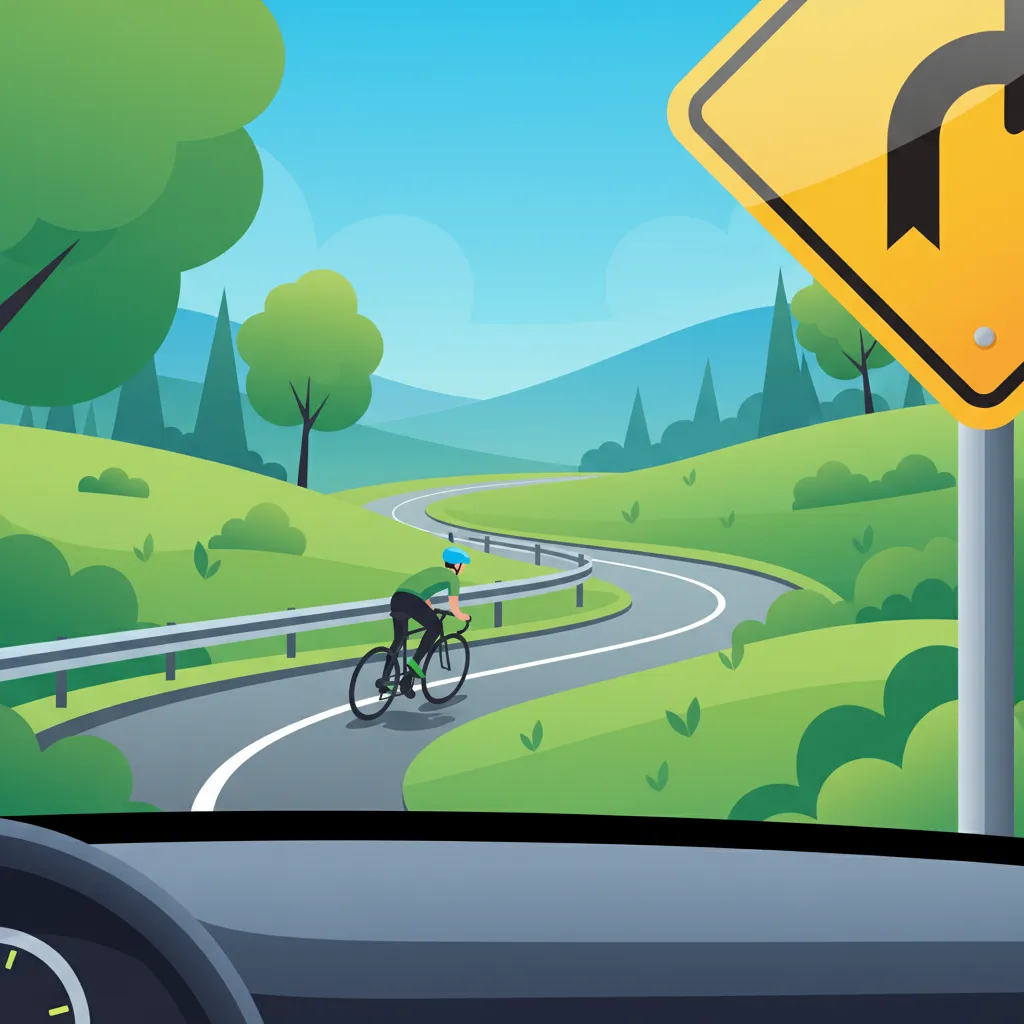
Welcome to the 'Road Signs, Markings, and Surface Indicators' unit! This lesson focuses on warning signs, crucial for anticipating hazards and maintaining safety on Polish roads. Understanding these signs is vital for your Category A theory exam and for riding your motorcycle defensively.
Lesson content overview
When riding a motorcycle in Poland, anticipating potential hazards is paramount for safety. Warning signs serve as crucial alerts, providing advance notice of upcoming road conditions or dangers that require immediate attention and adjustment from the rider. This lesson delves into the specific warning signs relevant to motorcyclists, emphasizing how to interpret them, understand their implications for two-wheeled vehicles, and apply appropriate riding strategies in accordance with Polish road law (Prawo o ruchu drogowym). Mastering the art of hazard anticipation through these signs is a cornerstone of safe and defensive riding, reducing the risk of accidents and ensuring compliance with national standards for the Category A license.
Warning signs are a fundamental part of the Polish road signage system, designed to alert all road users to potential dangers ahead. For motorcyclists, however, the interpretation and response to these signs often carry unique considerations due to the inherent dynamics of a two-wheeled vehicle. These signs are proactive safety cues, allowing riders to prepare for hazards before they become directly observable, thus preventing sudden, reactive maneuvers that can lead to loss of control or collisions.
Early hazard perception is critical for motorcyclists. Unlike cars, motorcycles have a smaller contact patch with the road, making them more susceptible to changes in road surface, lean angle, and braking efficiency. Warning signs provide precious seconds to adjust speed, modify lane position, and prepare the motorcycle and body for the approaching condition. This advanced notice is particularly vital for maintaining stability, optimizing braking distances, and ensuring overall rider visibility within the traffic flow. Correct interpretation and timely reaction to these signs significantly reduce crash risk and help riders comply with the legal expectations set forth in the Prawo o ruchu drogowym.
Polish warning signs operate on several key principles to ensure effective communication and rider safety. Understanding these principles is essential for any motorcyclist.
Advance Warning: Warning signs are strategically placed a prescribed distance before a hazard. This allows motorcyclists sufficient time to process the information, anticipate the danger, and execute necessary adjustments to their speed, gear, and riding posture well in advance, promoting anticipatory actions over potentially dangerous reactive ones.
Standardized Symbolism: All warning signs in Poland adhere to a uniform design: a triangular shape with a red border, a white background, and a black symbol depicting the specific hazard. This standardized symbolism ensures immediate recognition regardless of language, enabling motorcyclists to quickly grasp the meaning even with a brief glance while navigating traffic.
Motorcycle-Specific Risk Modulation: While general, some warning signs carry additional, distinct relevance for two-wheeled vehicles. For instance, tram tracks or certain surface irregularities pose a significantly higher risk to a motorcycle's stability than to a car. Recognising these differing vehicle dynamics requires motorcyclists to potentially alter their lane position, reduce speed more aggressively, or employ specific riding techniques (e.g., crossing tram tracks perpendicularly).
Risk-Based Prioritization: The severity and potential impact of a hazard are reflected in how signs are presented. More severe hazards, such as sharp hairpin curves or areas with extremely slippery surfaces, might be signposted with larger symbols, additional supplementary plates, or in combination with regulatory signs. Motorcyclists must treat these signs with an elevated level of caution compared to less severe warnings.
Concurrent Signage Hierarchy: In instances where multiple signs are present, it's crucial to understand their hierarchy. Warning signs generally supersede informational signs, indicating that while information is provided, safety adjustments dictated by a warning sign take precedence. However, warning signs are subordinate to prohibitory or regulatory signs if a direct conflict exists, meaning a rider must always obey a regulatory speed limit or prohibition, even if a warning sign indicates a general hazard that might suggest a different action.
This section details specific warning signs commonly encountered on Polish roads, highlighting their particular implications for motorcyclists and the necessary adjustments required for safe navigation.
Curves and bends are integral parts of any road, but they present unique challenges for motorcyclists. Warning signs for curves indicate the direction and severity of an upcoming turn, demanding precise control over speed, lean angle, and road positioning.
Signs indicating simple curves (A-1, A-2) feature a single arrow pointing either right or left. Double curve signs (A-3, A-4) show two arrows, indicating a sequence of curves with a change in direction, for example, a curve to the right followed immediately by a curve to the left. For motorcyclists, these signs mean it's time to reduce speed, assess the curve's radius, and select an appropriate entry line. It is crucial to adjust speed before entering the curve, maintaining a steady throttle through the bend, and gradually accelerating upon exit. Overtaking is generally prohibited in certain curve zones, particularly those with limited visibility, as per Polish traffic law.
More complex signs, such as those indicating hairpin turns or a series of curves, feature multiple arrows forming a tighter "U" shape or a longer sequence. These demand greater caution. A hairpin turn, often found in mountainous or winding rural areas, requires significant speed reduction and precise lean angle management. Motorcyclists should adopt a smooth, controlled approach, focusing on a wide entry, late apex, and a strong exit, always maintaining ample road space. The series of curves sign implies a continuous need for dynamic speed and lean adjustments, requiring sustained focus.
When approaching any curve, look through the bend to identify its exit. This helps you gauge the curve's severity and adjust your speed and lean angle more accurately. Avoid target fixation on the immediate foreground.
The "slippery road" sign (A-14) is critical for motorcyclists, as reduced traction can lead to immediate loss of control. This triangular sign typically shows a car skidding with wavy lines, indicating that the road surface may be treacherous when wet, icy, or contaminated.
Upon seeing a general slippery road sign, motorcyclists must immediately increase their following distance, reduce speed significantly, and avoid any abrupt throttle inputs, braking, or steering. Smoothness is key. Even on seemingly dry roads, areas prone to wetness (like shaded patches or bridges) can become suddenly slippery. The rider must be prepared to adjust to prevailing road conditions at all times.
While the general A-14 sign covers many scenarios, sometimes supplementary plates or specific signs may indicate ice (snowflake symbol) or oil/paint spills (droplet symbol). Ice, even in small patches, is extremely dangerous for motorcycles, demanding crawling speeds and minimal lean. Oil or paint spills are equally hazardous, requiring riders to steer around them if safe to do so, or to reduce speed to an absolute minimum and cross with caution, keeping the motorcycle upright. Never assume that two-wheeled vehicles are less affected by surface friction; in fact, their smaller contact patch makes them more vulnerable.
The "animal crossing" sign (A-18a, typically depicting a deer silhouette) alerts riders to zones where wild animals or livestock are likely to cross the road. These signs are common in forested regions, near agricultural lands, or in rural areas.
Upon seeing this sign, motorcyclists must significantly reduce speed, scan the roadside intently, and be prepared to brake or steer gently to avoid a collision. Animals can be unpredictable, especially at dawn, dusk, or night when visibility is poor. Riding closer to the road edge (where safe) can sometimes improve sight lines into ditches or dense vegetation. Failure to adapt speed and exercise extreme vigilance in these zones can lead to severe accidents and legal penalties for not giving way to animals.
The "tram tracks" warning sign (A-21) is particularly vital in Polish urban areas with extensive tram networks. This sign indicates the presence of tram tracks crossing or running parallel to the road, which pose a distinct hazard to motorcyclists.
Motorcycle wheels can easily get caught in the narrow gap of the tram rails, leading to a loss of balance and a fall. When encountering this sign, riders must reduce speed significantly and, if possible, cross the tracks perpendicularly (at a 90-degree angle) to minimize the risk of a wheel catching. If crossing at a shallow angle is unavoidable, it must be done at a very low speed (typically not exceeding 20 km/h) and with extreme caution, maintaining the motorcycle as upright as possible. Some urban zones may even prohibit motorcycles from riding on or along tram tracks entirely.
The "construction/work zone" warning sign (A-14b, often showing an excavator or road work symbol) indicates temporary changes in road layout and potential hazards. These zones often feature uneven surfaces, loose gravel, temporary lane shifts, reduced speed limits, and the presence of workers or equipment.
Upon seeing this sign, motorcyclists must anticipate significant changes. This includes preparing for abrupt lane changes, potential debris, reduced surface quality, and the presence of workers who may be focused on their tasks and less aware of traffic. Speed must be adjusted downwards, and extra distance should be maintained from workers and construction machinery. Temporary speed limits, indicated by supplementary signs, must be strictly adhered to, and overtaking is frequently prohibited within work zones unless explicitly allowed by signage. Ignoring temporary markings or assuming permanent traffic rules still apply unchanged can lead to dangerous situations.
Warning signs illustrating a broken line or a wavy line (A-15, A-16) indicate "uneven surface" or "potholes" ahead. These signs alert riders to physical irregularities in the road that can significantly affect motorcycle stability and control.
Upon encountering such a sign, motorcyclists must decrease speed substantially. Depending on the severity of the irregularities, riders may need to adjust their body position to absorb bumps, allowing the motorcycle's suspension to work effectively without transferring excessive forces directly to the rider or causing the wheels to lose contact with the ground. Riding over potholes or significant bumps at high speed can overload the suspension, damage the vehicle, or lead to a dangerous loss of traction and control. Overtaking on or near known irregularities is generally not advised, as it reduces the ability to react to sudden changes in the road.
Compliance with warning signs is not just a matter of safety; it is a legal obligation under Polish law. The Prawo o ruchu drogowym specifies several key rules that motorcyclists must follow when encountering these hazard indicators.
When a warning sign indicates a hazard, the rider is legally obligated to adjust their speed to a level that ensures safe navigation of that hazard. This applies to all warning signs, whether they denote curves, slippery surfaces, animal crossings, or work zones. The rationale is to match the vehicle's dynamics with prevailing road conditions, thereby preserving control and preventing accidents. Failure to adapt speed appropriately can lead to penalties.
For example, if a motorcyclist sees a "slippery when wet" sign, they must reduce their speed significantly (e.g., from 50 km/h to 30 km/h) before reaching the potentially slippery section, rather than reacting only when traction is already compromised.
Overtaking is frequently prohibited within the influence zone of a warning sign, especially when it indicates a hazardous condition such as a sharp curve, a work zone, or limited visibility. These restrictions are often reinforced by supplementary plates or solid line pavement markings.
The primary reason for these prohibitions is the reduced visibility and increased reaction time requirements that make overtaking unsafe in such areas. A motorcyclist must maintain their position behind a slower vehicle in these zones, even if it means temporary delay, as attempting to overtake could result in a serious collision.
While not always explicitly mandated by a specific sign, national guidelines strongly recommend that riders maintain at least a 2-second following distance after passing a hazard warning sign. This distance should be extended to 3 seconds or more in adverse weather conditions, such as rain, fog, or icy patches.
This practice allows for sufficient time to react to emergent hazards that may appear suddenly within the warned zone. For instance, after passing an "animal crossing" sign, maintaining a 3-second gap provides a crucial buffer if an animal suddenly enters the road, allowing the rider adequate time to brake safely without tailgating the vehicle ahead.
In urban areas with tram tracks, a specific rule applies to motorcyclists. When crossing tram tracks, the rider must do so at an angle not exceeding 30 degrees to the tracks and at a speed not exceeding 20 km/h, unless otherwise indicated by supplementary signs.
This mandatory rule is designed to significantly reduce the risk of a motorcycle wheel getting caught in the rail groove, which can cause an immediate loss of balance and a fall. Adhering to this precise technique is crucial for safety in tram-heavy cities like Warsaw or Kraków.
Even experienced motorcyclists can sometimes make critical errors when interpreting warning signs, leading to dangerous situations. Awareness of these common misunderstandings is crucial for safer riding.
The meaning of a warning sign is not static; it changes with prevailing conditions. Motorcyclists must develop the ability to interpret signs within their immediate environmental context.
In adverse weather such as heavy rain, fog, or snow, the safe speed indicated by a hazard sign must be reduced further than in dry conditions. For example, a "wet road" sign already suggests caution, but heavy rainfall on top of that demands an even lower speed, greater following distance, and extremely gentle control inputs. At night, reflective signs help, but overall visibility diminishes, requiring riders to reduce speed earlier and rely more on their headlights to spot hazards within the warned zone.
The type of road significantly influences how a warning sign should be interpreted. Urban environments, for instance, are more likely to feature tram tracks, pedestrian zones, and complex intersections, making signs like "tram tracks" or "slippery surface" (due to spilled liquids) more critical. Rural areas, conversely, will have a higher prevalence of "animal crossing" or "series of curves" signs, demanding a focus on wildlife vigilance and curve negotiation skills. The surrounding environment helps predict the nature and immediacy of the hazard.
The condition of the motorcycle and the experience level of the rider also modulate the appropriate response to a warning sign. A heavily loaded motorcycle, for example, will have longer braking distances and altered handling characteristics, requiring greater caution and lower speeds when approaching hazards. Similarly, a motorcycle with worn tires will have reduced traction, especially on slippery surfaces. Less experienced riders should err on the side of extreme caution, reducing speed more significantly and leaving larger margins for error than seasoned riders.
Applying theoretical knowledge to real-world situations is crucial for safe motorcycle riding. Here are examples of how to react to warning signs in various scenarios:
Urban Curve at Night
Rural Wet Road
Tram Track Crossing
Construction Zone on Highway
Animal Crossing at Dusk
Understanding the scientific and psychological principles behind hazard anticipation reinforces the critical importance of reacting correctly to warning signs.
Human Perception and Reaction Time: The average human reaction time is approximately 1 second from perceiving a stimulus to initiating a response. Warning signs provide crucial lead time (often 100-200 metres before the hazard) for a rider to perceive, process, decide, and then execute an action (like braking or adjusting lean). Without this advance warning, reactions would be entirely reactive, often too late to prevent an incident.
Physics of Lean and Traction: The required lean angle (θ) for a motorcycle in a curve is directly related to its speed (v) and the curve's radius (r) by the formula θ = arctan(v²/(g·r)), where g is gravity. Reducing speed significantly lowers the required lean angle, thereby decreasing the demands on tire traction and reducing the chance of skidding, especially on surfaces with compromised grip.
Coefficient of Friction: Road surfaces have a coefficient of friction (traction) that varies greatly. Wet surfaces can reduce this coefficient by half or more compared to dry conditions. This drastically increases braking distances and reduces available grip for cornering. A "slippery surface" warning sign is a direct alert to this reduction in friction, mandating adjustments to speed and control inputs. Braking distance, for example, increases roughly proportionally to the square of your speed, making speed reduction the most effective safety measure.
Psychological Factors: Drivers often underestimate the severity of hazards or overestimate their own ability to react. Proactive warning signs counteract this natural human bias by providing an explicit, standardized alert. Data from Polish traffic studies often highlight that a significant percentage of motorcycle accidents near curves involve a failure to adjust speed appropriately, underscoring the gap between perceived and actual risk.
This lesson covers Polish warning signs essential for motorcycle safety, focusing on curves, slippery surfaces, animal crossings, tram tracks, and construction zones. Motorcyclists must understand that warning signs provide advance notice to adjust speed, positioning, and technique before reaching hazards, and that their two-wheeled vehicles require more conservative responses than cars. The triangular red-bordered signs follow standardized symbolism, while specific Polish regulations mandate actions such as crossing tram tracks at no more than 30 degrees and 20 km/h. Key dangers include tram track wheel entrapment, reduced traction on slippery surfaces, and unpredictable animal behavior, each requiring distinct anticipatory strategies. Real-world scenarios demonstrate correct versus incorrect responses, emphasizing that proactive adjustment based on warning signs significantly reduces crash risk compared to reactive maneuvers.
A short set of high-value points that capture the most important learning from this lesson.
Warning signs provide critical lead time (often 100-200 metres) for motorcyclists to perceive, process, decide, and execute actions before reaching a hazard.
Polish warning signs use standardized triangular design with red borders, white backgrounds, and black symbols for immediate recognition while riding.
Tram tracks (sign A-21) require crossing at an angle not exceeding 30 degrees and at speeds not exceeding 20 km/h to prevent wheel entrapment.
Speed reduction before curves lowers required lean angle and decreases traction demands, directly improving safety according to the physics of motorcycle dynamics.
Warning signs carry additional weight for motorcycles due to their smaller contact patch, making them more vulnerable to surface conditions than four-wheeled vehicles.
Explore all units and lessons included in this driving theory course.
The hierarchy is clear: prohibitory/regulatory signs override warning signs when conflicts exist, so always obey posted speed limits even if a warning sign suggests a different speed.
A slippery road sign (A-14) applies regardless of current weather; shaded patches, bridges, and oil residue can create unexpected slick spots on otherwise dry roads.
Animal crossing zones (A-18a) demand maximum vigilance at dawn, dusk, and night when visibility is reduced and wildlife is most active.
In construction zones, temporary speed limits and overtaking restrictions override normal rules and must be strictly followed until explicitly changed.
Following distance should be increased to at least 3 seconds in adverse conditions or after passing hazard warnings to allow adequate reaction time.
Underestimating double curves by misreading them as single curves, leading to insufficient speed reduction before entering the first bend.
Crossing tram tracks at shallow angles at high speed, which risks wheel catching in the rail groove and immediate loss of balance.
Ignoring a slippery surface sign on dry days, failing to account for shaded areas, bridges, or residual moisture that create unexpected low-traction zones.
Attempting to overtake in construction zones despite supplementary 'no overtaking' signs, creating dangerous collision risks with workers and equipment.
Riding over potholes or significant bumps without reducing speed, which can damage suspension, cause punctures, or lead to momentary traction loss.
Lesson content overview
A short set of high-value points that capture the most important learning from this lesson.
Warning signs provide critical lead time (often 100-200 metres) for motorcyclists to perceive, process, decide, and execute actions before reaching a hazard.
Polish warning signs use standardized triangular design with red borders, white backgrounds, and black symbols for immediate recognition while riding.
Tram tracks (sign A-21) require crossing at an angle not exceeding 30 degrees and at speeds not exceeding 20 km/h to prevent wheel entrapment.
Speed reduction before curves lowers required lean angle and decreases traction demands, directly improving safety according to the physics of motorcycle dynamics.
Warning signs carry additional weight for motorcycles due to their smaller contact patch, making them more vulnerable to surface conditions than four-wheeled vehicles.
Explore all units and lessons included in this driving theory course.
The hierarchy is clear: prohibitory/regulatory signs override warning signs when conflicts exist, so always obey posted speed limits even if a warning sign suggests a different speed.
A slippery road sign (A-14) applies regardless of current weather; shaded patches, bridges, and oil residue can create unexpected slick spots on otherwise dry roads.
Animal crossing zones (A-18a) demand maximum vigilance at dawn, dusk, and night when visibility is reduced and wildlife is most active.
In construction zones, temporary speed limits and overtaking restrictions override normal rules and must be strictly followed until explicitly changed.
Following distance should be increased to at least 3 seconds in adverse conditions or after passing hazard warnings to allow adequate reaction time.
Underestimating double curves by misreading them as single curves, leading to insufficient speed reduction before entering the first bend.
Crossing tram tracks at shallow angles at high speed, which risks wheel catching in the rail groove and immediate loss of balance.
Ignoring a slippery surface sign on dry days, failing to account for shaded areas, bridges, or residual moisture that create unexpected low-traction zones.
Attempting to overtake in construction zones despite supplementary 'no overtaking' signs, creating dangerous collision risks with workers and equipment.
Riding over potholes or significant bumps without reducing speed, which can damage suspension, cause punctures, or lead to momentary traction loss.
Explore search topics learners often look for when studying Warning Signs and Hazard Anticipation. These topics reflect common questions about road rules, driving situations, safety guidance, and lesson level theory preparation for learners in Poland.
Browse additional driving theory lessons that cover connected traffic rules, road signs, and common driving situations related to this topic. Improve your understanding of how different rules interact across everyday traffic scenarios.
Understand the specific warning signs used in Poland that alert motorcyclists to potential hazards. Learn how to interpret these signs for effective hazard anticipation and safer riding.

This lesson examines the variety of pavement markings that define lane structures, traffic flow, and special zones on Polish roads. Learners will study solid and broken lines, lane division markings, and the distinct symbols for bicycle lanes, bus lanes, and tram tracks, all of which affect motorcyclist positioning. The lesson also addresses surface texture indicators that signal changing road conditions, enabling riders to maintain correct lane discipline.
This lesson examines the family of regulatory signs that dictate mandatory actions and prohibitions on Polish roads, emphasizing how each sign influences motorcyclist behaviour. Learners will explore the stop, give way, speed limit, and no overtaking signs, understanding the legal obligations they impose. The lesson also highlights signs that specifically affect motorcycles, such as lane restrictions, ensuring riders recognize and obey regulations unique to two-wheel traffic.

This lesson focuses on informational signs that provide drivers with essential data for navigation and travel planning. Learners will explore signs indicating distances, highway exits, service areas, and speed zone changes, learning how these signs impact route selection and riding strategy. The lesson also addresses the interpretation of direction arrows and road number signs, enabling riders to integrate sign information into effective journey planning and maintain situational awareness.
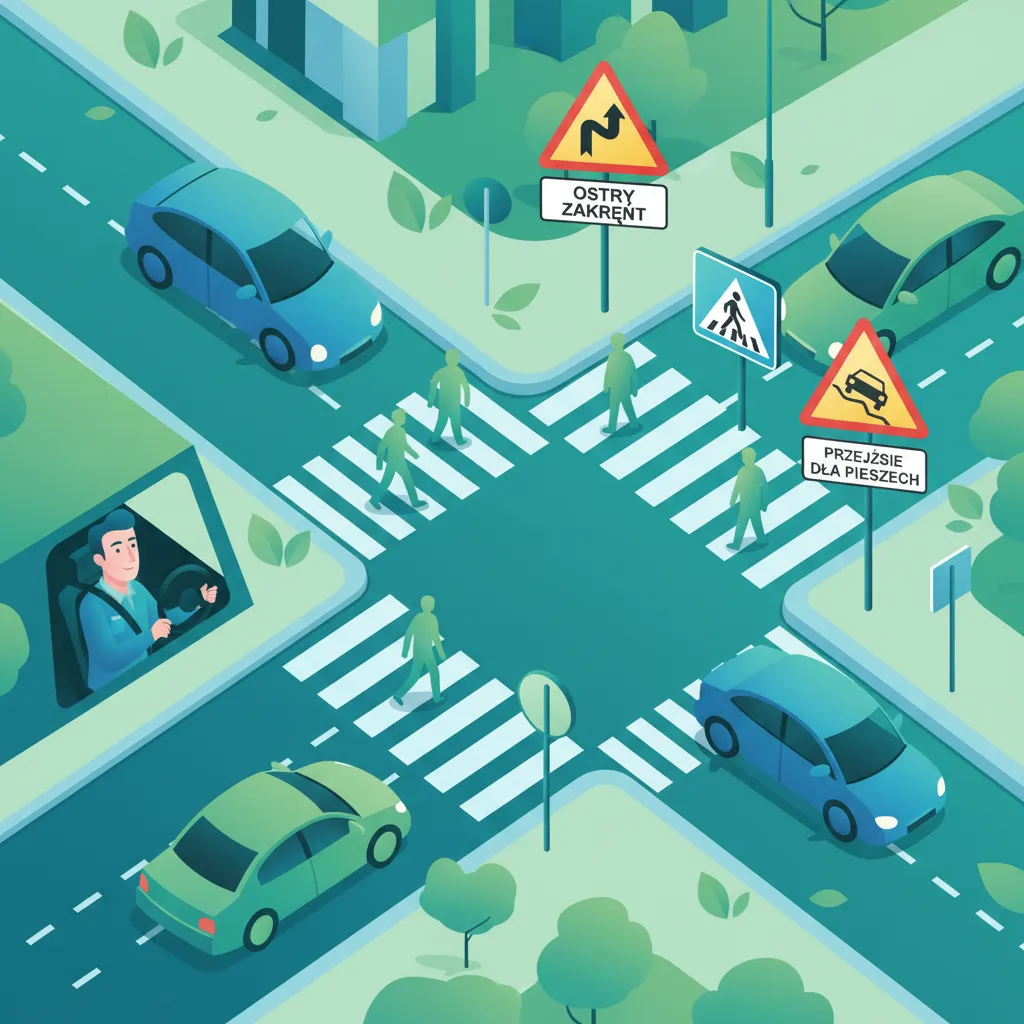
This lesson focuses on triangular warning signs, which are designed to alert drivers to upcoming hazards on the road. It covers the interpretation of various pictograms that indicate dangers like sharp turns, animal crossings, or road construction. Understanding these signs allows a driver to anticipate conditions and adjust their driving proactively.

This lesson introduces the fundamental principles of right-of-way on Polish roads, explaining how priority road signs determine the flow of traffic at intersections. Learners will explore the hierarchy of vehicle classes and the specific obligations that arise when approaching a yield line or a give-way sign. The content details the legal precedence of main road traffic over secondary road traffic, helping riders safely navigate intersections and avoid right-of-way infractions.
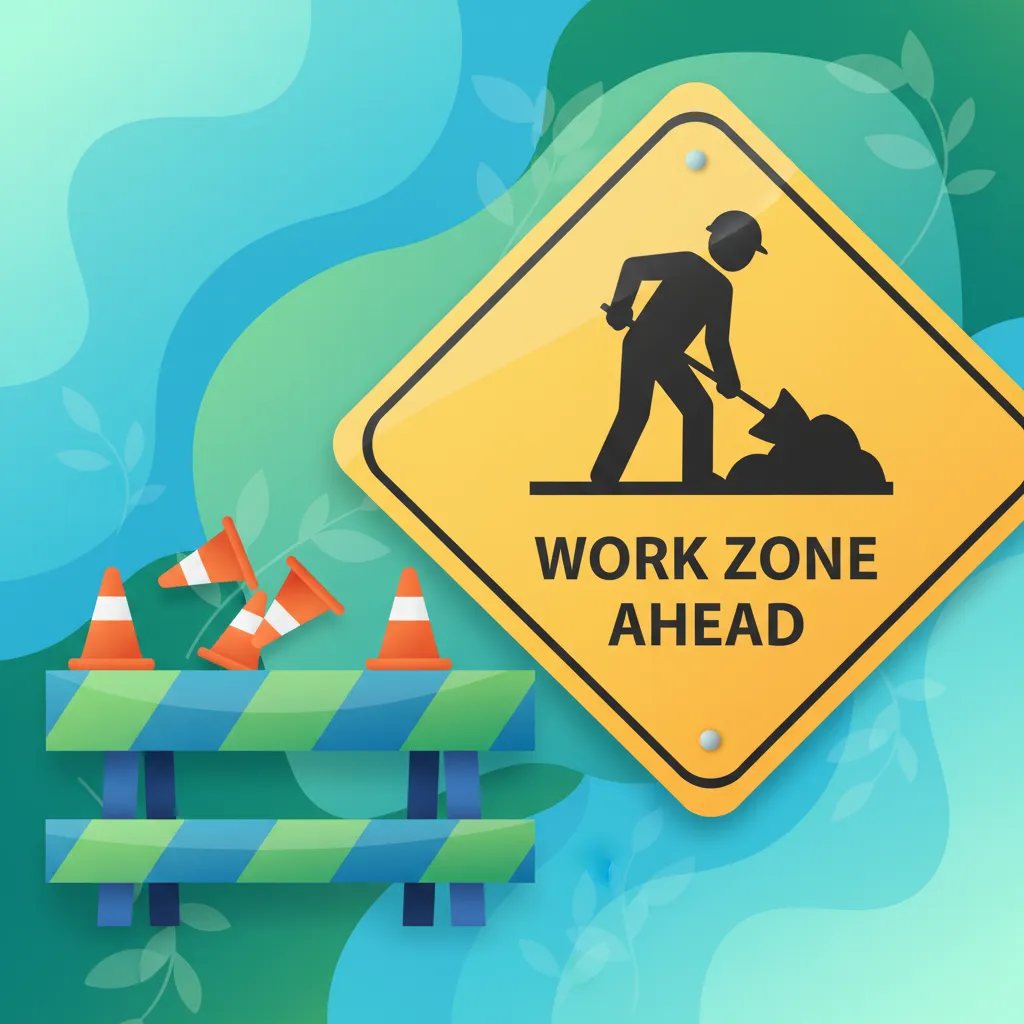
In this lesson, learners explore the temporary signs that appear during road construction or maintenance activities, focusing on how they alter normal traffic patterns. The content covers signs indicating lane shifts, temporary speed limits, detour routes, and equipment zones where workers are present. The lesson emphasizes the importance of slowing down, staying alert, and obeying temporary regulations to navigate safely through work zones while ensuring compliance.
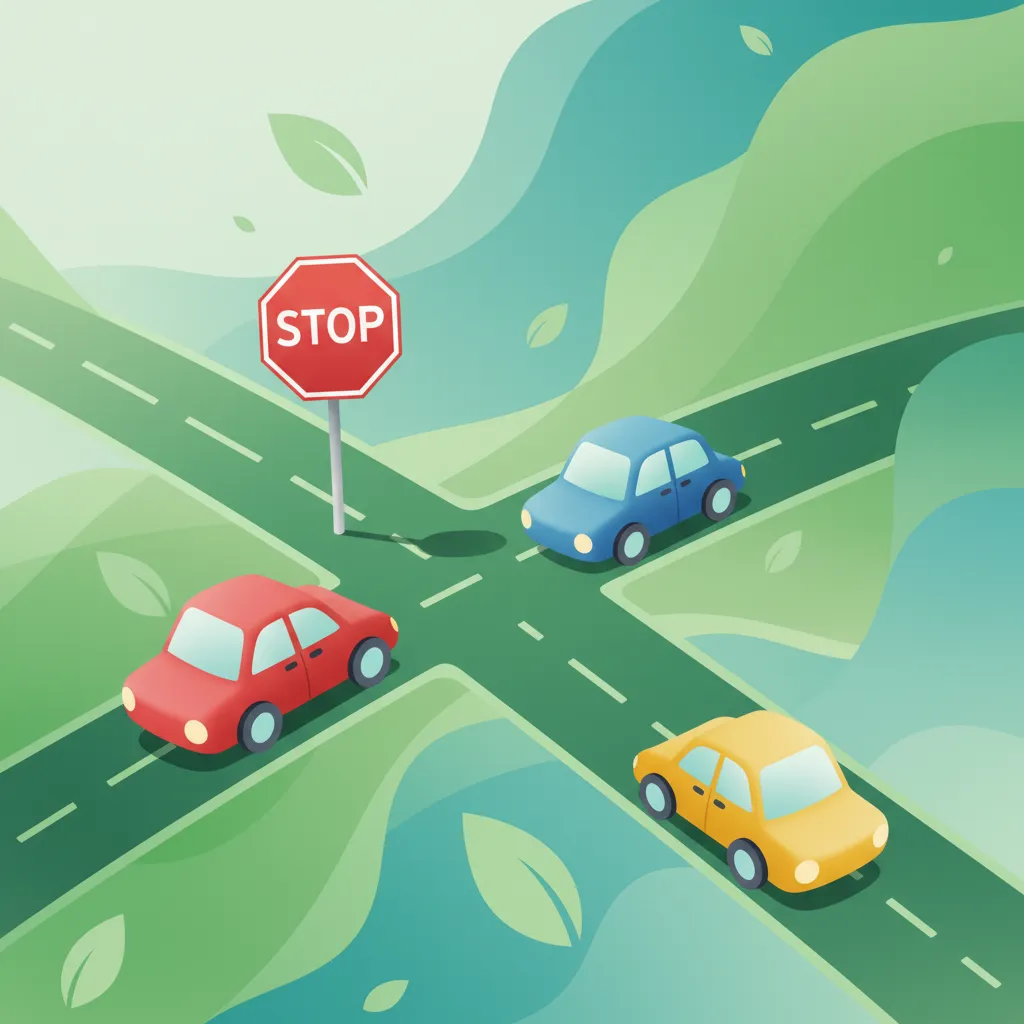
In this lesson, learners examine the specific actions required at stop signs and give-way intersections under Polish traffic regulations. The content explains the legal requirement for a full stop before the stop line, incorporating a visual scan of all directions before proceeding. It also covers the give-way protocol, where riders must yield to traffic already in the intersection or on the main road, emphasizing the need for correct positioning and observation.
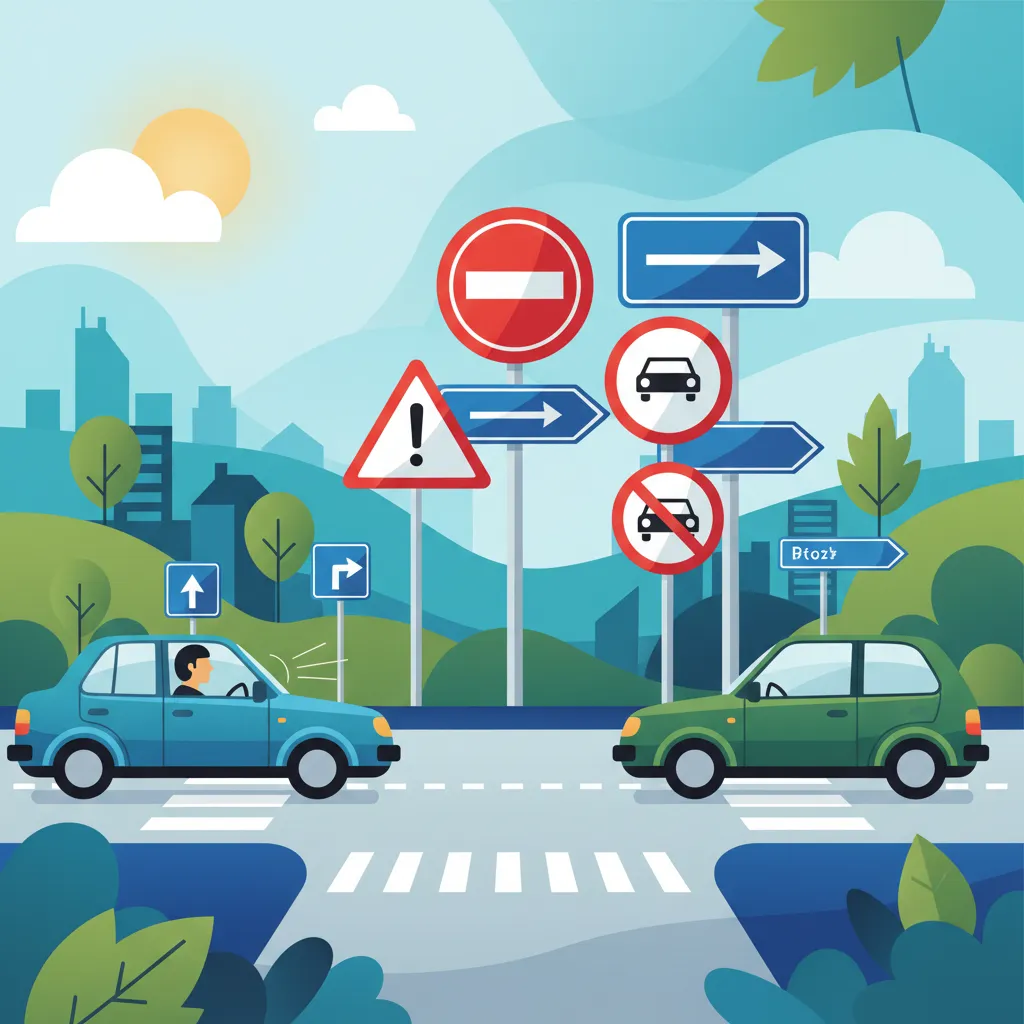
This lesson provides a foundational understanding of the Polish road sign system, categorizing signs into three main types: warning, prohibitory/mandatory, and informational. It explains the significance of different shapes and color codes, enabling drivers to quickly interpret their meaning and legal obligation. By mastering the visual language of road signs, learners will be equipped to make correct and safe decisions in any traffic situation they encounter.
In this lesson, learners examine the core legal obligations that apply to motorcyclists operating on Polish roads, including the mandatory use of helmets, periodic vehicle inspections, and the necessity of valid insurance and registration. The content details the classification of traffic offences and explains the associated penalty system, including fines, demerit points, and potential licence suspension. Additionally, the lesson outlines procedural requirements for accident reporting and interaction with law enforcement, providing a comprehensive view of a rider’s legal responsibilities.

In this lesson, learners explore riding on rural and countryside roads, where road markings may be sparse and surface conditions varied. The content covers safe overtaking in single-lane sections, interaction with agricultural vehicles and animals, and the handling of gravel or uneven surfaces. Learners will also study the importance of anticipating curves and adjusting speed to light conditions, equipping them with the skills needed for safe countryside travel.
Explore how warning signs highlight hazards with unique implications for motorcyclists, such as tram tracks, slippery surfaces, and sharp curves. Learn essential riding adjustments for Polish roads.
This lesson focuses on triangular warning signs, which are designed to alert drivers to upcoming hazards on the road. It covers the interpretation of various pictograms that indicate dangers like sharp turns, animal crossings, or road construction. Understanding these signs allows a driver to anticipate conditions and adjust their driving proactively.
This lesson examines the variety of pavement markings that define lane structures, traffic flow, and special zones on Polish roads. Learners will study solid and broken lines, lane division markings, and the distinct symbols for bicycle lanes, bus lanes, and tram tracks, all of which affect motorcyclist positioning. The lesson also addresses surface texture indicators that signal changing road conditions, enabling riders to maintain correct lane discipline.
In this lesson, learners explore riding on rural and countryside roads, where road markings may be sparse and surface conditions varied. The content covers safe overtaking in single-lane sections, interaction with agricultural vehicles and animals, and the handling of gravel or uneven surfaces. Learners will also study the importance of anticipating curves and adjusting speed to light conditions, equipping them with the skills needed for safe countryside travel.
This lesson focuses on informational signs that provide drivers with essential data for navigation and travel planning. Learners will explore signs indicating distances, highway exits, service areas, and speed zone changes, learning how these signs impact route selection and riding strategy. The lesson also addresses the interpretation of direction arrows and road number signs, enabling riders to integrate sign information into effective journey planning and maintain situational awareness.
This lesson examines the family of regulatory signs that dictate mandatory actions and prohibitions on Polish roads, emphasizing how each sign influences motorcyclist behaviour. Learners will explore the stop, give way, speed limit, and no overtaking signs, understanding the legal obligations they impose. The lesson also highlights signs that specifically affect motorcycles, such as lane restrictions, ensuring riders recognize and obey regulations unique to two-wheel traffic.

In this lesson, learners focus on the identification and management of blind spots that affect motorcyclists, particularly when sharing the road with larger vehicles such as trucks and buses. The content covers the use of side mirrors, head-turn techniques, and optimal rider positioning to minimize blind-spot exposure. Learners will also study the characteristics of blind spots at intersections and during overtaking maneuvers to reduce collision risk.
In this lesson, learners explore the temporary signs that appear during road construction or maintenance activities, focusing on how they alter normal traffic patterns. The content covers signs indicating lane shifts, temporary speed limits, detour routes, and equipment zones where workers are present. The lesson emphasizes the importance of slowing down, staying alert, and obeying temporary regulations to navigate safely through work zones while ensuring compliance.

This lesson focuses on the unique demands of urban riding within Polish cities, addressing traffic lights, pedestrian zones, one-way streets, and the presence of tram tracks. Learners will study safe lane positioning on narrow roads, blind-spot management, and how to share the road with buses and cyclists. The content also covers strategies for navigating stop-and-go traffic, anticipating signal changes, and maintaining visibility in dense urban environments.
In this lesson, learners examine the specific actions required at stop signs and give-way intersections under Polish traffic regulations. The content explains the legal requirement for a full stop before the stop line, incorporating a visual scan of all directions before proceeding. It also covers the give-way protocol, where riders must yield to traffic already in the intersection or on the main road, emphasizing the need for correct positioning and observation.
This lesson provides a foundational understanding of the Polish road sign system, categorizing signs into three main types: warning, prohibitory/mandatory, and informational. It explains the significance of different shapes and color codes, enabling drivers to quickly interpret their meaning and legal obligation. By mastering the visual language of road signs, learners will be equipped to make correct and safe decisions in any traffic situation they encounter.
Find clear answers to common questions learners have about Warning Signs and Hazard Anticipation. Learn how the lesson is structured, which driving theory objectives it supports, and how it fits into the overall learning path of units and curriculum progression in Poland. These explanations help you understand key concepts, lesson flow, and exam focused study goals.
Warning signs (typically yellow or orange) alert you to potential hazards ahead, requiring you to anticipate and adjust your riding. Regulatory signs (often red and white or blue) indicate rules you MUST follow, like speed limits or prohibitions. For Category A riders, understanding both is crucial for safe navigation and exam success in Poland.
Signs indicating slippery surfaces, especially after rain or frost, are critical for motorcyclists as reduced grip can easily lead to skidding. On your Category A theory test, you’ll need to know that these signs mean you must reduce speed significantly, avoid sudden braking or acceleration, and increase your distance from other vehicles.
An animal crossing sign warns you to be extra vigilant, especially at dawn, dusk, or night. Reduce your speed, scan the verges of the road, and be prepared to brake suddenly if an animal appears. For your theory exam, remember that this sign requires heightened awareness of potential, unpredictable obstacles.
Many Category A theory test questions assess your ability to anticipate hazards using visual cues, including warning signs. Understanding what a warning sign signifies (e.g., a sharp curve) allows you to predict the danger and demonstrate safe reaction strategies, which is key to passing your exam.
Yes, signs indicating tram tracks, road works with uneven surfaces, or narrow bridges can present unique challenges for motorcyclists due to their smaller tyre contact patch and reduced stability. It’s vital to know how to interpret these signs and adapt your riding accordingly for safety and exam preparation.
Build custom practice sessions tailored precisely to your needs. Focus on areas requiring improvement, review specific Polish road signs, or master complex traffic rules to ensure full preparation for your official driving license exam.