
This lesson explains the critical legal requirements for wearing a protective helmet when operating a Category AM vehicle in Belgium. By understanding these safety standards, you will ensure you are fully compliant with the highway code and prepared for essential theory exam questions regarding rider protection.
Lesson content overview
Operating a Category AM vehicle in Belgium, such as a moped or a speed pedelec, comes with specific responsibilities, paramount among them being the mandatory use of a safety helmet. This lesson, part of the Official Belgian Driving Theory Course for Category AM License, provides a comprehensive overview of the legal obligations, safety standards, and practical advice for helmet selection, fitting, and maintenance. Understanding and adhering to these requirements is not merely about avoiding penalties; it is a critical step in safeguarding your life on the road, significantly reducing the risk of severe head injuries in the event of an accident.
The human brain is remarkably vulnerable to impact forces, making head protection a primary safety measure for any exposed vehicle operator. The Belgian Highway Code reflects this fundamental truth by mandating that riders of small, exposed vehicles, specifically those in Category AM, must wear a safety helmet. This legal requirement underscores the significant risks associated with two-wheeled and similar vehicles where riders are directly exposed to the environment and potential impacts.
In Belgium, it is a statutory obligation for all operators of Category AM vehicles to wear a certified safety helmet whenever the vehicle is in motion. This rule applies universally to all mopeds, speed pedelecs, and other similar small, exposed motorized vehicles, regardless of the trip's duration or distance. There are virtually no exemptions to this rule, with medical exemptions being extremely rare and requiring specific, verifiable documentation. This strict adherence is a cornerstone of road safety legislation, aiming to protect the most vulnerable road users.
Failure to wear a legally compliant helmet while operating a Category AM vehicle can result in significant fines and other administrative penalties, such as points on your driver's license. The primary rationale behind this legislation is the profound public health benefit derived from reducing severe head injuries.
The requirement for helmet use is not an isolated rule; it is an integral part of broader strategies for rider visibility, the use of other protective gear, and overall road safety. A properly worn helmet complements other safety measures by ensuring that, in the unfortunate event of a collision or fall, the rider's most vital organ receives the maximum possible protection. This integration emphasizes a holistic approach to safety, where each protective element works together to minimize risk.
For a helmet to be legally compliant in Belgium, it must meet specific European safety standards. These standards ensure that helmets are designed and manufactured to offer effective protection under crash conditions. Knowing these standards and how to identify them is crucial for every Category AM rider.
The primary mandatory European standard for helmets is ECE 22.05. This certification confirms that a helmet has undergone rigorous testing protocols to assess its protective capabilities. The ECE 22.05 standard covers several critical aspects:
Only helmets marked with the ECE 22.05 label are legally permitted for use on Category AM vehicles in Belgium. It is important to note that newer standards, such as ECE 22.06, have been introduced, offering even more stringent testing requirements. If a helmet is certified under ECE 22.06, it also fulfills the legal requirement.
A legally compliant helmet will have a label, usually sewn into the chin strap or affixed to the inner padding, indicating its certification. This label typically features a capital "E" followed by a number inside a circle, which identifies the country that granted the approval (e.g., E1 for Germany, E6 for Belgium, E3 for Italy). Below this, a series of numbers confirms the ECE standard (e.g., "05" for ECE 22.05 or "06" for ECE 22.06) and the specific approval number. Always look for this mark before purchasing and using a helmet. Without this specific marking, a helmet, regardless of its appearance, is not legal for use on public roads in Belgium for Category AM vehicles.
Even a certified helmet offers suboptimal protection if it does not fit correctly. A helmet that is too loose can shift upon impact, exposing parts of the head, while one that is too tight can be uncomfortable and distracting. Proper sizing and a secure fit are critical for the helmet to perform its protective function effectively.
The correct helmet size is determined by the circumference of your head.
Use a flexible tape measure.
Wrap the tape measure around your head, positioning it about 2.5 centimetres (one inch) above your eyebrows and ears, across the widest part of your head.
Note the measurement in centimetres.
Compare this measurement to the manufacturer's sizing chart for the specific helmet model you are considering. Helmet sizes (e.g., XS, S, M, L, XL) vary between brands, so always consult the chart.
Once you have a helmet that matches your head circumference, the next step is to ensure a secure and comfortable fit.
Positioning: The helmet should sit level on your head, covering your forehead without obstructing your vision. The front edge should be approximately 1-2 finger widths above your eyebrows.
Snugness: It should feel snug all around your head, with even pressure distribution. There should be no pressure points that cause discomfort or pain.
Movement Check: With the chin strap fastened, try to move the helmet from side to side and up and down. There should be minimal movement of the helmet independent of your head. Your scalp and skin should move with the helmet.
Vision and Breathing: Ensure your peripheral vision is unobstructed and that you can breathe easily. The cheek pads should press firmly against your cheeks without pushing your face forward excessively.
The retention system refers to the strap and buckle mechanism that keeps the helmet securely on your head during a ride and especially during an impact. This system must be fastened snugly, but comfortably, at all times. When properly tightened, the strap should not allow the helmet to be pulled off your head or to rotate freely. You should be able to insert only one or two fingers between the strap and your chin. Never ride with an unfastened or loosely fastened retention system; its effectiveness is entirely dependent on proper use. Most modern helmets feature adjustable straps and often a dial-type fitting system to fine-tune the fit.
A helmet's protective capabilities can diminish over time or after an impact, even without visible damage. Regular inspection and timely replacement are crucial to ensure it continues to offer optimal protection.
Helmets should undergo regular visual and tactile inspections. Look for any signs of damage to the outer shell, such as cracks, deep scratches, or dents. Pay close attention to the integrity of the inner EPS liner by gently compressing it to check for unusual softness or deformation. Also, inspect the chin strap and buckle for fraying, tears, or any signs of malfunction. The comfort padding inside should also be checked for degradation. If any part of the helmet appears compromised, its protective capacity may be reduced.
There are two primary reasons to replace a helmet:
Treat your helmet with care. Avoid dropping it, especially on hard surfaces. Store it in a cool, dry place away from direct sunlight and harsh chemicals, which can degrade materials.
Understanding the rules is one thing; adhering to them consistently is another. Riders must be aware of the pitfalls that can lead to non-compliance, both legally and in terms of safety.
In Belgium, riding a Category AM vehicle without a legally compliant and properly worn helmet is a serious offense. Penalties typically include:
These legal consequences are designed to reinforce the importance of helmet use, reflecting the significant safety benefits helmets provide.
Several common mistakes can compromise helmet effectiveness or lead to legal violations:
The mandatory helmet law for Category AM vehicles is a direct response to the heightened vulnerability of moped and speed pedelec riders. These vehicles offer minimal physical protection in a collision, making the rider's body, particularly the head, highly susceptible to injury.
Numerous studies and accident statistics consistently demonstrate that proper helmet use is statistically linked to a significant reduction in the severity of head injuries and a decrease in mortality rates in the event of an accident. Helmets designed to ECE standards are engineered to absorb and distribute the kinetic energy of an impact, protecting the brain from concussions, skull fractures, and more severe traumatic brain injuries. Without a helmet, the head directly absorbs the full force of an impact, leading to potentially life-altering or fatal consequences.
Beyond direct impacts, helmets also play a crucial role in mitigating rotational forces. These forces, which occur when the head suddenly twists or snaps, can cause diffuse axonal injuries (DAI) – a severe type of traumatic brain injury where nerve fibers are torn. A well-fitted helmet, securely fastened, helps to stabilize the head during an accident, reducing the rotational forces transmitted to the brain.
While helmets themselves may not directly enhance visibility in the same way reflective clothing or lights do, many helmets come in bright colors or include reflective elements that contribute to a rider's overall conspicuity, particularly in low-light conditions. Ultimately, a helmet is a foundational component of a rider's protective ensemble, working in concert with other gear, vehicle lighting, and defensive riding strategies to ensure the safest possible journey.
This lesson covers the mandatory legal requirement for certified helmet use when operating Category AM vehicles in Belgium, including mopeds and speed pedelecs. Learners must understand that only ECE 22.05 or ECE 22.06 certified helmets are legally compliant, identifiable by the certification label on the chin strap. The lesson provides detailed guidance on measuring head circumference, achieving a secure and comfortable fit, and regularly inspecting helmets for damage or wear. Key safety points include replacing helmets after any significant impact and every five years due to material degradation. Understanding these requirements ensures both legal compliance and maximum protection against head injuries in the event of an accident.
A short set of high-value points that capture the most important learning from this lesson.
All Category AM vehicle operators in Belgium are legally required to wear a certified safety helmet at all times when the vehicle is in motion, with virtually no exemptions.
Only helmets bearing the ECE 22.05 or ECE 22.06 certification label are legally compliant for use on mopeds and speed pedelecs in Belgium.
A proper helmet fit is essential: the helmet must sit level, cover the forehead, and have minimal independent movement when the chin strap is fastened.
Helmets must be replaced immediately after any significant impact, even without visible damage, because the internal crumple zone materials lose their protective capacity.
Most manufacturers recommend replacing helmets every five years due to material degradation from UV exposure, sweat, and general wear.
Explore all units and lessons included in this driving theory course.
ECE certification label shows an 'E' in a circle with a country code (E1-E6) and standard number (05 or 06) sewn into the chin strap or inner padding.
The correct helmet size is measured by wrapping a tape around the head approximately 2.5 cm above the eyebrows, then comparing to manufacturer sizing charts.
The retention system (chin strap and buckle) must be snug enough that only one or two fingers fit between the strap and chin.
Visible signs requiring helmet replacement include cracks, deep scratches, dents, and any softness or deformation in the inner EPS foam liner.
Short trips and low speeds do not exempt riders from helmet requirements; most accidents occur close to home.
Wearing non-certified helmets such as bicycle helmets, skate helmets, or uncertified models that do not meet ECE standards for motorized vehicles.
Wearing an improperly fitted helmet that is too loose, sits too high exposing the forehead, or can be shifted independently of the head.
Believing helmet use is unnecessary for very short trips or low-speed riding, when in fact most accidents occur near home at lower speeds.
Continuing to use a helmet after it has sustained an impact, assuming no visible external damage means no compromised protection.
Using helmets designed for non-motorized sports like cycling, skateboarding, or skiing, which do not meet the impact and retention standards required for mopeds.
Lesson content overview
A short set of high-value points that capture the most important learning from this lesson.
All Category AM vehicle operators in Belgium are legally required to wear a certified safety helmet at all times when the vehicle is in motion, with virtually no exemptions.
Only helmets bearing the ECE 22.05 or ECE 22.06 certification label are legally compliant for use on mopeds and speed pedelecs in Belgium.
A proper helmet fit is essential: the helmet must sit level, cover the forehead, and have minimal independent movement when the chin strap is fastened.
Helmets must be replaced immediately after any significant impact, even without visible damage, because the internal crumple zone materials lose their protective capacity.
Most manufacturers recommend replacing helmets every five years due to material degradation from UV exposure, sweat, and general wear.
Explore all units and lessons included in this driving theory course.
ECE certification label shows an 'E' in a circle with a country code (E1-E6) and standard number (05 or 06) sewn into the chin strap or inner padding.
The correct helmet size is measured by wrapping a tape around the head approximately 2.5 cm above the eyebrows, then comparing to manufacturer sizing charts.
The retention system (chin strap and buckle) must be snug enough that only one or two fingers fit between the strap and chin.
Visible signs requiring helmet replacement include cracks, deep scratches, dents, and any softness or deformation in the inner EPS foam liner.
Short trips and low speeds do not exempt riders from helmet requirements; most accidents occur close to home.
Wearing non-certified helmets such as bicycle helmets, skate helmets, or uncertified models that do not meet ECE standards for motorized vehicles.
Wearing an improperly fitted helmet that is too loose, sits too high exposing the forehead, or can be shifted independently of the head.
Believing helmet use is unnecessary for very short trips or low-speed riding, when in fact most accidents occur near home at lower speeds.
Continuing to use a helmet after it has sustained an impact, assuming no visible external damage means no compromised protection.
Using helmets designed for non-motorized sports like cycling, skateboarding, or skiing, which do not meet the impact and retention standards required for mopeds.
Explore search topics learners often look for when studying Helmet Use and Legal Requirements. These topics reflect common questions about road rules, driving situations, safety guidance, and lesson level theory preparation for learners in Belgium.
Browse additional driving theory lessons that cover connected traffic rules, road signs, and common driving situations related to this topic. Improve your understanding of how different rules interact across everyday traffic scenarios.
Understand the crucial ECE 22.05 and 22.06 safety certifications required for helmets used on Category AM vehicles in Belgium. Learn how to identify compliant gear to meet Belgian highway code regulations and ensure rider safety.
This lesson covers the legal and safety requirements for motorcycle helmets in Belgium, with a focus on ECE certification standards. It explains the critical importance of a proper fit and how to correctly secure helmet straps for optimal effectiveness. You will also learn procedures for regular maintenance and how to inspect a helmet for damage that could compromise its protective capabilities.

This lesson provides a comprehensive overview of the mandatory lighting systems for all Category AM vehicles under Belgian law. It details the required functions of headlamps, rear lights, brake lights, and turn signals, explaining their importance for communication and visibility. Learners will understand the legal standards for this equipment and how to perform simple pre-ride checks to ensure all lights are functioning correctly.
Beyond the mandatory helmet, this lesson explores other forms of personal protective equipment that significantly reduce the risk of injury. It explains the functions of specialized gloves, jackets, trousers, and boots, focusing on their abrasion resistance and impact protection qualities. Learners will understand how to choose gear that provides a balance of safety, weather protection, and comfort for different riding conditions.

This lesson outlines the complete process for obtaining a Category AM license in Belgium, starting with the minimum age and health requirements. It details the sequence of theoretical and practical exams that candidates must pass to demonstrate their competence. The content also explains the administrative procedures for vehicle registration and securing mandatory insurance, ensuring all legal prerequisites are understood before riding.

This lesson focuses on the legal duties and responsibilities that an AM vehicle operator must uphold on Belgian roads. It covers critical rules such as adhering to speed limits, correctly applying right-of-way principles, and following regulations for overtaking other vehicles. The lesson also explains the system of fines and penalty points for traffic violations, emphasizing the legal consequences of non-compliance to foster responsible driving habits.
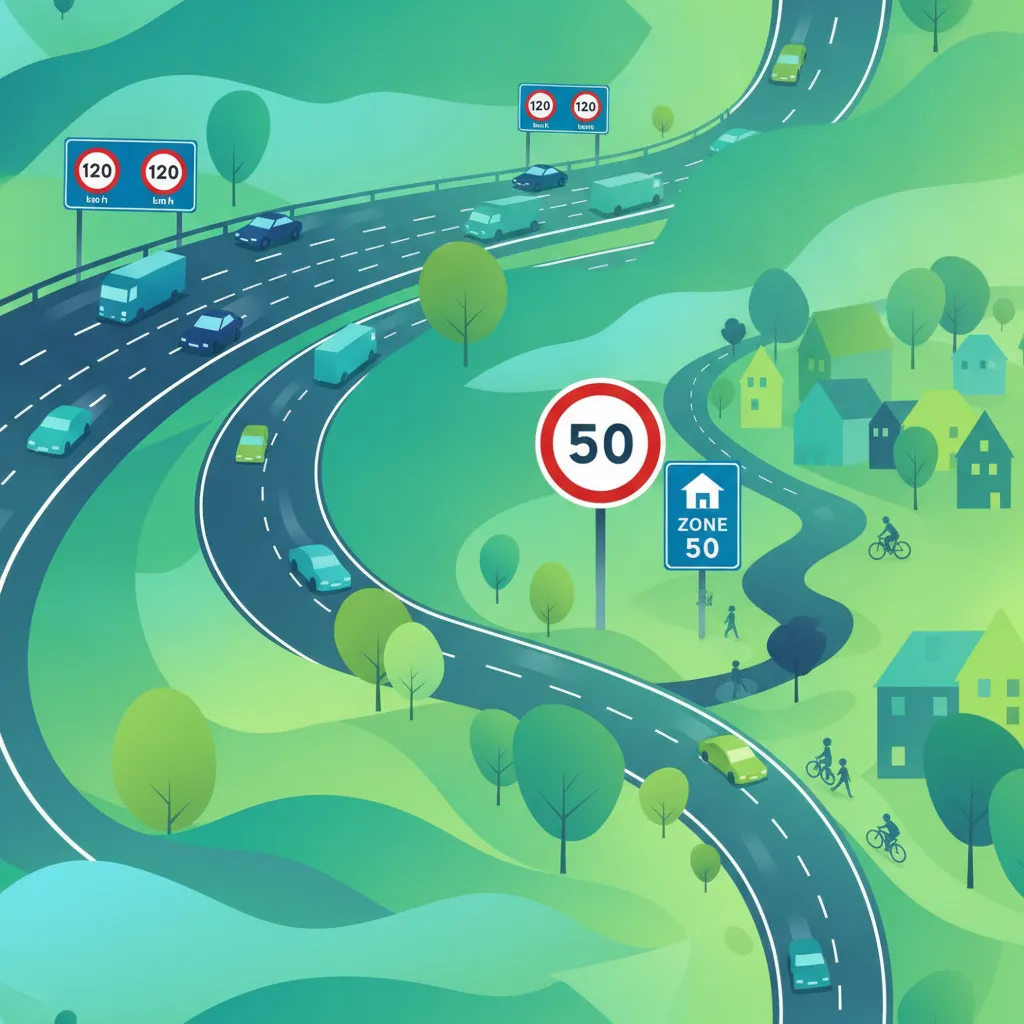
This lesson details the various legal speed limits applicable in Belgium, including those for urban, residential, and school zones. It explains the underlying safety rationale for these limits, linking speed to the severity of accidents and the time available to react to hazards. Learners will understand the difference between the maximum legal speed and a safe, appropriate speed for the prevailing conditions.

This lesson provides a clear definition of the Category AM license as specified by Belgian law. It details the specific types of vehicles covered, such as mopeds, light quadricycles, and speed pedelecs, outlining their legal limits on engine capacity and maximum speed. Learners will understand the permissions granted by an AM license and the specific context of their participation in public traffic as motor vehicle operators.

This lesson focuses on the unique hazards associated with riding after dark. It emphasizes the importance of a fully functional lighting system and the use of reflective gear to be seen by others. The content explains how darkness affects depth perception and peripheral vision, requiring riders to reduce their speed to compensate for shorter sight distances and potential fatigue.

This lesson explains how clothing choices significantly enhance a rider's visibility to other road users. It details the benefits of wearing bright, fluorescent colors for daytime conspicuity and the function of retro-reflective materials for nighttime safety. The content provides practical guidance on selecting appropriate apparel and maintaining its reflective properties to ensure maximum effectiveness.
Learn about frequent mistakes in helmet fitting and usage for Category AM vehicles in Belgium. Discover essential guidelines on when to replace your helmet due to age or impact, ensuring continued safety and legal compliance.
This lesson covers the legal and safety requirements for motorcycle helmets in Belgium, with a focus on ECE certification standards. It explains the critical importance of a proper fit and how to correctly secure helmet straps for optimal effectiveness. You will also learn procedures for regular maintenance and how to inspect a helmet for damage that could compromise its protective capabilities.
Beyond the mandatory helmet, this lesson explores other forms of personal protective equipment that significantly reduce the risk of injury. It explains the functions of specialized gloves, jackets, trousers, and boots, focusing on their abrasion resistance and impact protection qualities. Learners will understand how to choose gear that provides a balance of safety, weather protection, and comfort for different riding conditions.
This lesson explains how clothing choices significantly enhance a rider's visibility to other road users. It details the benefits of wearing bright, fluorescent colors for daytime conspicuity and the function of retro-reflective materials for nighttime safety. The content provides practical guidance on selecting appropriate apparel and maintaining its reflective properties to ensure maximum effectiveness.
This lesson details the essential protective gear that motorcyclists should wear, including specialized jackets, pants, gloves, and boots. It explains the importance of materials with high abrasion resistance and the function of integrated impact protectors. The content also addresses Belgian regulations concerning mandatory protective equipment and how to select appropriate gear for different weather conditions.
This lesson provides a clear and structured guide for responding to on-road emergencies such as a mechanical breakdown or a traffic accident. It details the steps for securing the scene safely, including the use of a warning triangle and high-visibility vest. Learners will understand how and when to contact emergency services via the 112 number and the basic principles of assisting anyone who may be injured.

This lesson is dedicated to warning signs, which are designed to alert drivers to potential dangers ahead. It covers the interpretation of signs indicating sharp curves, steep gradients, slippery surfaces, and the presence of pedestrians or animals. By understanding these warnings, riders can anticipate potential hazards and adjust their speed and position proactively for safer travel.
This lesson provides a comprehensive overview of the mandatory lighting systems for all Category AM vehicles under Belgian law. It details the required functions of headlamps, rear lights, brake lights, and turn signals, explaining their importance for communication and visibility. Learners will understand the legal standards for this equipment and how to perform simple pre-ride checks to ensure all lights are functioning correctly.
This lesson provides essential guidance on the correct procedures to follow in the event of a breakdown or a crash. It covers how to secure the scene to prevent further incidents, the legal obligations to assist if you are involved or witness an accident, and how to effectively contact emergency services. The content also reviews the legally required emergency equipment, such as a high-visibility vest.

This lesson focuses on the specific challenges of riding in adverse conditions such as rain, fog, and darkness, which severely reduce visibility. It provides practical strategies for riders to increase their own conspicuity through the use of lights and reflective gear. The content also explains how to adapt riding behavior, such as reducing speed and increasing following distance, to safely manage these high-risk situations.
This lesson focuses on the unique hazards associated with riding after dark. It emphasizes the importance of a fully functional lighting system and the use of reflective gear to be seen by others. The content explains how darkness affects depth perception and peripheral vision, requiring riders to reduce their speed to compensate for shorter sight distances and potential fatigue.
Find clear answers to common questions learners have about Helmet Use and Legal Requirements. Learn how the lesson is structured, which driving theory objectives it supports, and how it fits into the overall learning path of units and curriculum progression in Belgium. These explanations help you understand key concepts, lesson flow, and exam focused study goals.
Yes, wearing a helmet that complies with current legal standards is strictly mandatory for the driver and any passenger on all Category AM vehicles, including mopeds and speed pedelecs, throughout Belgium.
You must ensure your helmet carries the appropriate approval marking, such as the ECE 22.05 or 22.06 label. These labels confirm the helmet has passed rigorous safety testing required for use on Belgian roads.
No, a standard bicycle helmet does not provide the required protection level for motorized AM vehicles. You must use a helmet specifically certified for motorcycle or moped use to be legally compliant.
Yes, failing to wear a properly fastened, certified helmet is a traffic violation. It can result in significant fines and, in the event of an accident, may impact your insurance coverage and liability.
Ready to focus your Belgian driving theory revision? Utilize our powerful search tool to pinpoint exact topics, road signs, or difficulty levels. Engage with practice questions that directly address your learning needs and solidify your understanding of Belgian traffic laws for your upcoming exam.