
This lesson introduces the foundational requirements for obtaining your Category AM license in Belgium. You will learn the legal definitions of the small vehicles you are permitted to operate and the specific registration and age criteria required to start riding safely and legally.
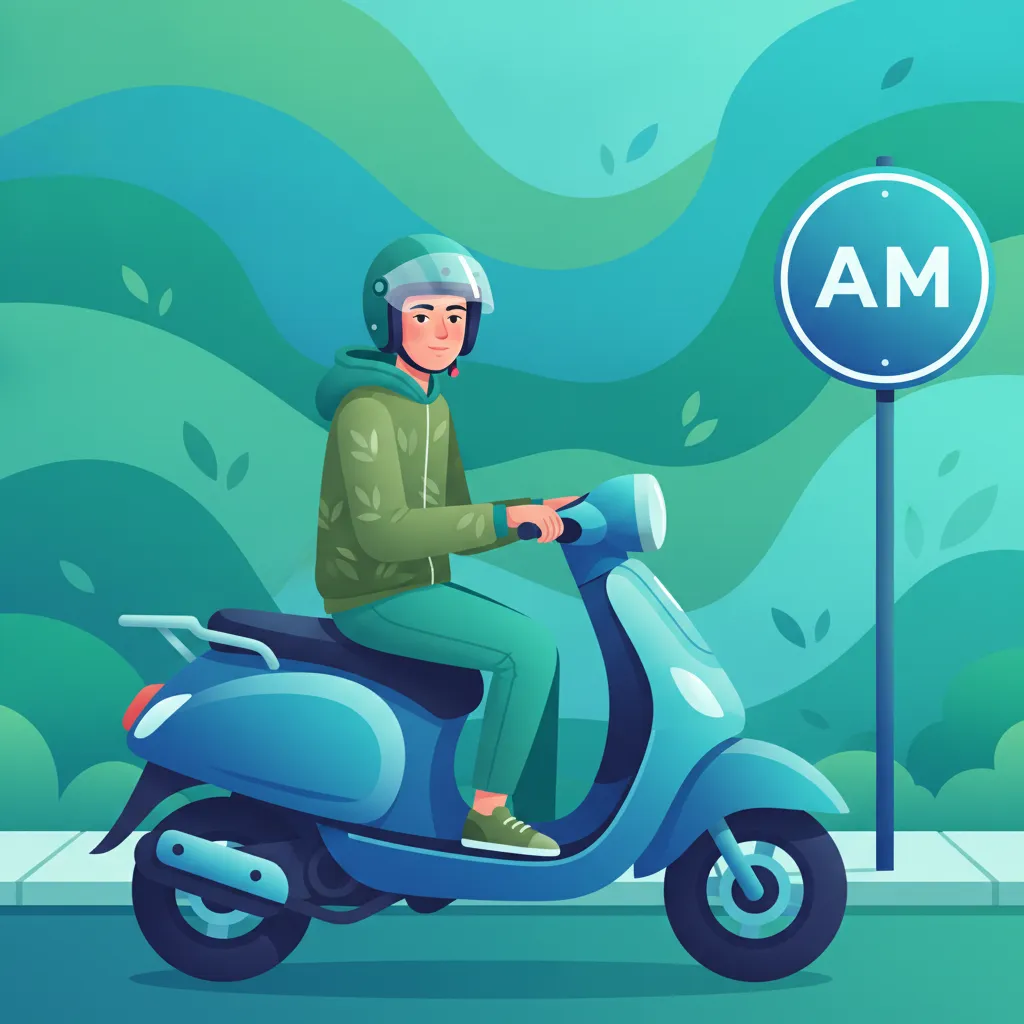
Lesson content overview
Obtaining a driving license in Belgium involves understanding various categories, each granting permission to operate specific types of vehicles. For those looking to drive mopeds, light quadricycles, or speed pedelecs, the Category AM driving license is the essential credential. This lesson provides a thorough overview of the Category AM license, detailing the vehicles it covers, the necessary eligibility criteria, and the legal obligations for its holders, as defined by Belgian law.
Understanding the precise scope and limitations of the AM license is fundamental for all prospective drivers. It ensures you know which vehicles you are legally permitted to operate, the responsibilities that come with them, and the critical safety considerations unique to these often more exposed vehicles. This foundational knowledge is crucial for safe, responsible, and lawful participation in public traffic.
The Category AM driving license in Belgium is specifically designed for the operation of certain categories of light motor vehicles that generally have limited speed and power. This classification aims to ensure that even operators of smaller, less powerful vehicles possess adequate theoretical knowledge and practical skills, thereby enhancing safety for themselves and all other road users.
The Category AM license in Belgium permits the operation of various types of mopeds (classified as L1e, L2e, L3e), light quadricycles (L6e, L7e), and speed pedelecs, all typically constrained by maximum speed and engine capacity.
This license category plays a vital role in road safety by setting clear boundaries and requirements for vehicles that, despite their smaller size, are integral to the traffic flow and require specific handling and awareness.
The AM driving license is a subcategory within the broader Belgian licensing system, specifically tailored for vehicles that present lower risks compared to cars or motorcycles due to their inherent design limitations. These limitations primarily concern maximum speed and engine capacity or motor power. The rationale behind this specific category is to allow individuals to operate these vehicles from a younger age, provided they demonstrate competency and adherence to specific safety regulations. It forms the initial step for many young drivers into the world of motor vehicle operation on public roads.
The Category AM license encompasses a distinct set of vehicle types, each with its own specific technical characteristics and legal classifications. It is crucial to distinguish between these to ensure compliance with Belgian traffic laws.
Mopeds are a core component of the AM category, distinguished by their engine capacity and maximum design speed. Belgian law categorizes mopeds into several types:
Beyond two and three-wheeled mopeds, the AM license also permits the operation of light quadricycles. These are small, four-wheeled vehicles designed for urban and suburban use.
Speed pedelecs represent a modern category of electric bicycles that blur the lines between bicycles and mopeds due to their higher speed capabilities.
A speed pedelec is an electric pedal-assisted bicycle that provides motor support up to a maximum speed of 45 km/h, requiring a Category AM license for operation in Belgium.
Unlike standard electric bikes that assist up to 25 km/h, speed pedelecs offer assistance up to 45 km/h, classifying them as motor vehicles under Belgian law. Consequently, operators must hold a Category AM license, and the vehicles are subject to specific regulations concerning registration, insurance, and helmet use. This distinction is critical for understanding their legal status on Belgian roads.
To obtain a Category AM driving license in Belgium, candidates must meet specific age and medical criteria, ensuring they are prepared and fit for the responsibilities of operating a motor vehicle.
The minimum age for obtaining a Category AM license in Belgium is 15 years old. This relatively low age reflects the perceived lower risk associated with the vehicles in this category due to their speed and power limitations. However, it is important to note that even at 15, young drivers are expected to demonstrate a clear understanding of traffic rules and a mature attitude towards road safety. The theoretical exam can be taken from 15 years old, and the practical exam from 16 years old.
All applicants for a driving license, including Category AM, must satisfy certain medical requirements. This typically involves the provision of a medical certificate indicating fitness to drive. This certificate confirms that the applicant has no physical or mental conditions that would impair their ability to safely operate a motor vehicle. Eyesight, hearing, and general cognitive functions are usually assessed to ensure the driver poses no undue risk to themselves or other road users. The exact requirements for the medical examination are specified by Belgian transport authorities.
Holding a Category AM license and operating vehicles under its purview comes with a set of crucial administrative and legal obligations. These requirements ensure accountability, road safety, and compliance with national laws.
All Category AM vehicles, including mopeds and speed pedelecs, must be registered with Belgian authorities and display a distinctive registration plate. This plate serves as a unique identifier for the vehicle, crucial for enforcement, accident identification, and general road management. The process for registration typically involves submitting vehicle documentation to the Directorate for Vehicle Registration (DIV).
Failing to properly register your Category AM vehicle or display its registration plate is a serious violation under Belgian law and can result in significant penalties.
Operating any motor vehicle on public roads in Belgium necessitates mandatory third-party liability insurance. This insurance covers damages or injuries you might cause to other road users or their property in the event of an accident. It is a fundamental requirement to protect victims and ensure financial accountability. Without valid insurance, it is illegal to drive your Category AM vehicle on public roads.
When operating a Category AM vehicle, drivers are legally required to carry specific documentation. This typically includes:
These documents must be presented to law enforcement officers upon request. Failure to carry the required documentation can lead to fines.
Operating a Category AM vehicle on Belgian roads requires strict adherence to a specific set of rules and regulations. These are designed to ensure the safety of the driver, passengers, and other road users, particularly given the often-exposed nature of these vehicles.
The most defining characteristic of Category AM vehicles is their maximum speed limit of 45 km/h. This limit is absolute and applies regardless of the general speed limits for other vehicles on a particular road. Operators must always maintain their speed at or below this maximum.
For operators of almost all Category AM vehicles, mandatory helmet use is a non-negotiable safety requirement. Helmets are proven to significantly reduce the risk and severity of head injuries in the event of a collision or fall.
To ensure visibility and safe operation, Category AM vehicles must comply with specific equipment obligations:
All these rules and regulations are enshrined in Belgian road law. Non-compliance carries legal consequences, which can range from monetary fines to more severe penalties, such as vehicle impoundment or license suspension. Enforcement is strict, and ignorance of the law is not considered a valid defense. It is the responsibility of every Category AM license holder to be fully aware of and adhere to these regulations.
Operating a Category AM vehicle involves unique safety challenges, primarily due to the rider's exposure and the vehicle's smaller size and lower power compared to cars and trucks. Adopting a proactive and defensive driving approach is critical for risk reduction.
Small vehicles like mopeds and light quadricycles can be harder for other, larger road users to spot, especially in busy traffic, at intersections, or during lane changes.
Weather conditions significantly impact the safety and handling of Category AM vehicles.
The safe operation of any vehicle hinges on its proper maintenance. For Category AM vehicles, which often experience significant wear and tear, regular checks are vital.
Proper maintenance not only prevents breakdowns but also directly contributes to your safety and the safety of others on the road.
Despite clear regulations, certain violations and misunderstandings regarding the Category AM license and its associated vehicles are common. Awareness of these can help new drivers avoid pitfalls.
Attempting to operate a Category AM vehicle without the appropriate license or disregarding safety regulations not only risks legal penalties but significantly increases the likelihood of serious accidents.
The Category AM license in Belgium is your gateway to safely and legally operating specific light motor vehicles. This includes various types of mopeds (L1e, L2e, L3e), light quadricycles (L6e, L7e), and speed pedelecs, all constrained by a maximum design speed of 45 km/h.
To obtain this license, you must be at least 15 years old for the theoretical exam (16 for practical) and meet medical fitness requirements. Once licensed, you bear the responsibility for ensuring your vehicle is properly registered, displays a visible license plate, and is covered by mandatory third-party liability insurance.
Key operational rules include strict adherence to the 45 km/h speed limit, mandatory use of a homologated helmet (specific type for speed pedelecs), and ensuring your vehicle meets all equipment requirements, particularly regarding lighting and safety features. By understanding and complying with these regulations, you contribute to your own safety and the overall safety of Belgian roads, operating your Category AM vehicle responsibly and within the bounds of the law.
The Category AM license in Belgium permits operation of mopeds, light quadricycles, and speed pedelecs up to 45 km/h, with specific technical definitions distinguishing each vehicle type based on wheels, engine capacity (50 cm³ max for combustion), and motor power (4 kW max for electric). To obtain the license, candidates must be at least 15 years old for theory and 16 for practical, pass a medical fitness assessment, and meet administrative requirements including vehicle registration with DIV and mandatory third-party liability insurance. Key operational rules include strict adherence to the 45 km/h speed limit, mandatory helmet use (with NTA 8776 certification required for speed pedelecs), proper vehicle equipment including lights and brakes, and prohibition from motorways. Learners should focus on vehicle classification distinctions, documentation requirements, and safety considerations to avoid common violations and ensure lawful road use.
A short set of high-value points that capture the most important learning from this lesson.
Category AM license in Belgium covers mopeds (L1e, L2e, L3e), light quadricycles (L6e, L7e), and speed pedelecs, all limited to 45 km/h maximum speed
Mopeds are defined by engine capacity of 50 cm³ or electric motor power up to 4 kW, while speed pedelecs are electric pedal-assisted bikes requiring motor support up to 45 km/h
Minimum age to obtain AM license is 15 years for the theory exam and 16 years for the practical exam and full license operation
All AM vehicles must be registered with the DIV, display a registration plate, and have mandatory third-party liability insurance before road use
Helmet use is mandatory for all AM vehicles, with speed pedelecs requiring a specific NTA 8776 certified bicycle helmet rather than a standard moped helmet
Explore all units and lessons included in this driving theory course.
Maximum speed limit for all AM vehicles is strictly 45 km/h regardless of road type or general speed limits in effect
Speed pedelecs providing motor assistance up to 45 km/h are classified as motor vehicles and require an AM license, unlike standard e-bikes limited to 25 km/h
When operating on public roads, carry your AM license, vehicle registration certificate, and insurance document at all times
AM vehicles are prohibited from motorways and express roads reserved for faster traffic
Moped classifications L1e (two-wheeled), L2e (three-wheeled), and L3e (two-wheeled, any engine type) all share the 45 km/h limit
Assuming helmets are optional for short trips or certain vehicles; helmets are mandatory for all AM vehicle operators
Modifying mopeds or speed pedelecs to exceed 45 km/h, which changes the vehicle's legal classification and results in severe penalties
Failing to register the vehicle or operate without valid third-party liability insurance, rendering the vehicle illegal for road use
Not adjusting driving style for wet or windy conditions; small vehicles are more affected by weather and have reduced grip
Believing one can drive alone at age 15; the practical exam and full driving privileges require being at least 16 years old
Lesson content overview
A short set of high-value points that capture the most important learning from this lesson.
Category AM license in Belgium covers mopeds (L1e, L2e, L3e), light quadricycles (L6e, L7e), and speed pedelecs, all limited to 45 km/h maximum speed
Mopeds are defined by engine capacity of 50 cm³ or electric motor power up to 4 kW, while speed pedelecs are electric pedal-assisted bikes requiring motor support up to 45 km/h
Minimum age to obtain AM license is 15 years for the theory exam and 16 years for the practical exam and full license operation
All AM vehicles must be registered with the DIV, display a registration plate, and have mandatory third-party liability insurance before road use
Helmet use is mandatory for all AM vehicles, with speed pedelecs requiring a specific NTA 8776 certified bicycle helmet rather than a standard moped helmet
Explore all units and lessons included in this driving theory course.
Maximum speed limit for all AM vehicles is strictly 45 km/h regardless of road type or general speed limits in effect
Speed pedelecs providing motor assistance up to 45 km/h are classified as motor vehicles and require an AM license, unlike standard e-bikes limited to 25 km/h
When operating on public roads, carry your AM license, vehicle registration certificate, and insurance document at all times
AM vehicles are prohibited from motorways and express roads reserved for faster traffic
Moped classifications L1e (two-wheeled), L2e (three-wheeled), and L3e (two-wheeled, any engine type) all share the 45 km/h limit
Assuming helmets are optional for short trips or certain vehicles; helmets are mandatory for all AM vehicle operators
Modifying mopeds or speed pedelecs to exceed 45 km/h, which changes the vehicle's legal classification and results in severe penalties
Failing to register the vehicle or operate without valid third-party liability insurance, rendering the vehicle illegal for road use
Not adjusting driving style for wet or windy conditions; small vehicles are more affected by weather and have reduced grip
Believing one can drive alone at age 15; the practical exam and full driving privileges require being at least 16 years old
Explore search topics learners often look for when studying What Is Category AM?. These topics reflect common questions about road rules, driving situations, safety guidance, and lesson level theory preparation for learners in Belgium.
Browse additional driving theory lessons that cover connected traffic rules, road signs, and common driving situations related to this topic. Improve your understanding of how different rules interact across everyday traffic scenarios.
Understand the specific definitions of mopeds (L1e, L2e, L3e), light quadricycles (L6e), and speed pedelecs permitted under the Belgian Category AM driving license, including their legal speed and power limitations for driving theory.

This lesson outlines the complete process for obtaining a Category AM license in Belgium, starting with the minimum age and health requirements. It details the sequence of theoretical and practical exams that candidates must pass to demonstrate their competence. The content also explains the administrative procedures for vehicle registration and securing mandatory insurance, ensuring all legal prerequisites are understood before riding.
This lesson focuses on the legal duties and responsibilities that an AM vehicle operator must uphold on Belgian roads. It covers critical rules such as adhering to speed limits, correctly applying right-of-way principles, and following regulations for overtaking other vehicles. The lesson also explains the system of fines and penalty points for traffic violations, emphasizing the legal consequences of non-compliance to foster responsible driving habits.

This lesson provides a comprehensive overview of the mandatory lighting systems for all Category AM vehicles under Belgian law. It details the required functions of headlamps, rear lights, brake lights, and turn signals, explaining their importance for communication and visibility. Learners will understand the legal standards for this equipment and how to perform simple pre-ride checks to ensure all lights are functioning correctly.
This lesson provides a detailed overview of the Belgian motorcycle licence framework, explaining the distinctions between categories A1, A2, and the full A licence. It outlines the specific age and skill prerequisites for each level of certification. Furthermore, it covers the mandatory legal requirements such as obtaining a medical certificate, securing proper insurance, and completing the vehicle registration process.
This lesson covers the absolute legal requirement for all Category AM vehicle operators in Belgium to wear a safety helmet. It explains the specific safety standards and certifications that helmets must meet to be legally compliant. Learners will be taught how to select the correct size, achieve a secure fit, and conduct regular inspections to ensure the helmet's protective integrity is maintained.
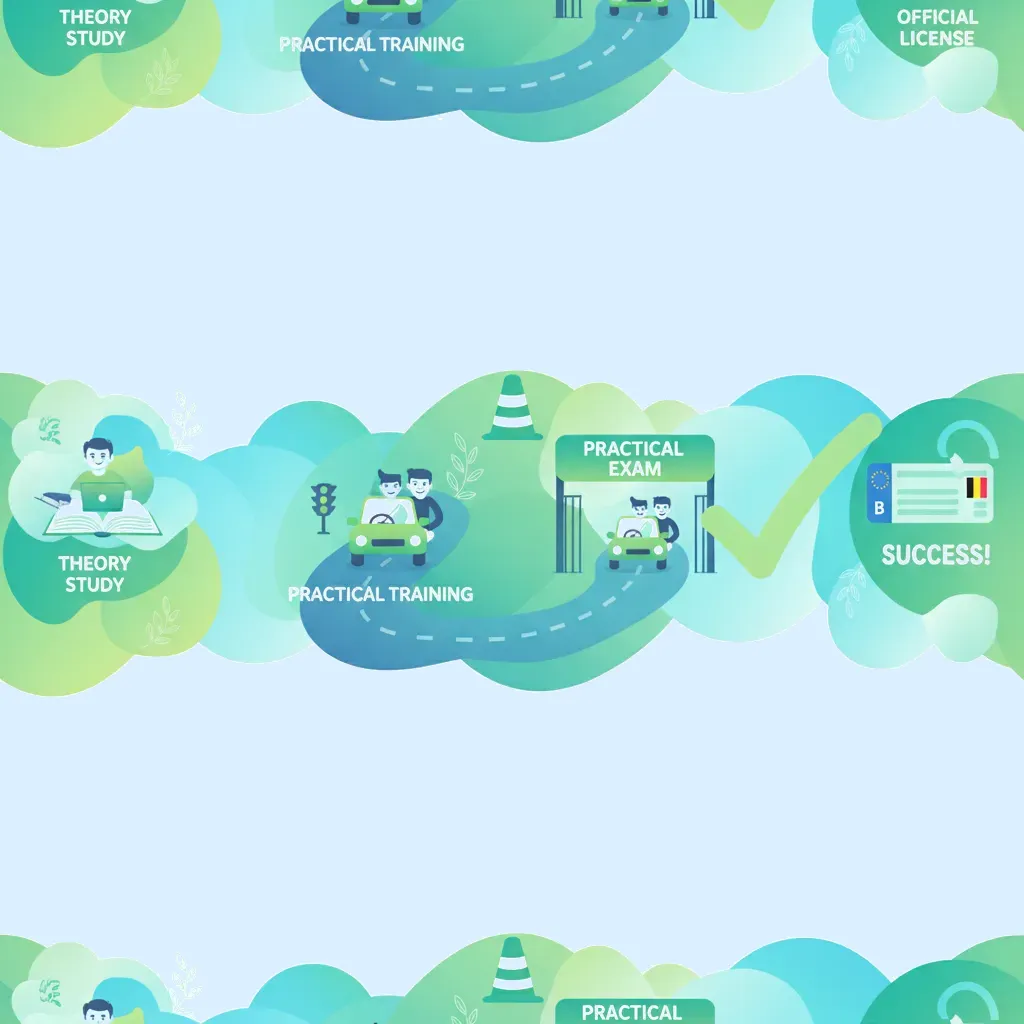
This lesson explains the complete procedure for acquiring a Belgian motorcycle licence, from registering for the theory examination to successfully passing the practical test. It provides a comprehensive list of required documentation, such as identity proof and medical certificates, and clarifies the associated fees. You will also learn about the progression routes available for moving from A1 to A2 and ultimately to a full Category A licence.

This lesson outlines the system of penalties for traffic violations in Belgium, ensuring riders are fully aware of the consequences of illegal behavior. It covers common offenses like speeding and explains the structure of fines and the demerit point system that can lead to license suspension. The content emphasizes the significant financial and legal repercussions of non-compliance, reinforcing the importance of lawful and responsible riding.
This lesson details the spectrum of obligations that apply to drivers, from basic compliance with traffic signs to responsibilities like vehicle upkeep and accident reporting. Learners will understand the importance of maintaining a vehicle in a roadworthy condition. It also covers the legal expectations for safe driving practices, including the use of safety equipment.
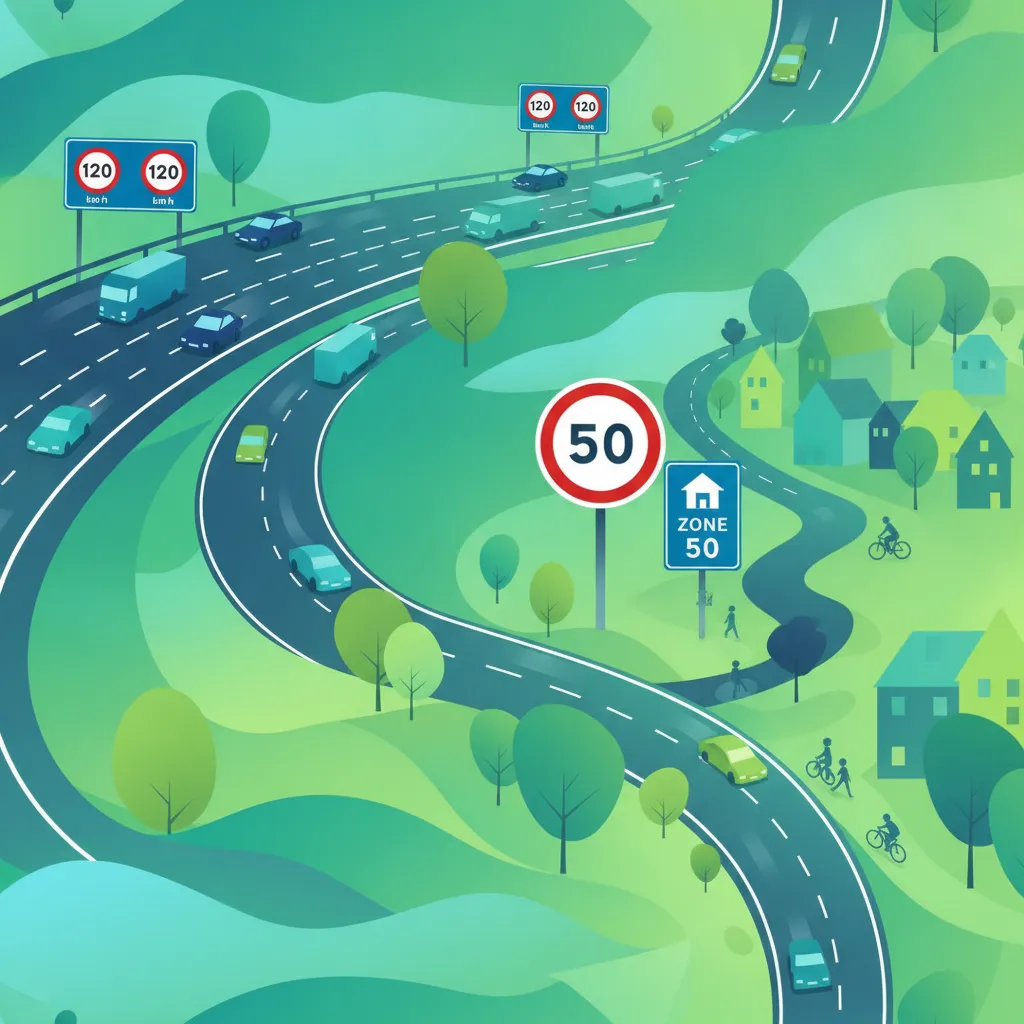
This lesson details the various legal speed limits applicable in Belgium, including those for urban, residential, and school zones. It explains the underlying safety rationale for these limits, linking speed to the severity of accidents and the time available to react to hazards. Learners will understand the difference between the maximum legal speed and a safe, appropriate speed for the prevailing conditions.
Learn about the essential rules and legal obligations for Category AM license holders in Belgium, including vehicle registration, mandatory insurance, helmet use, and speed limits for mopeds and speed pedelecs.
This lesson focuses on the legal duties and responsibilities that an AM vehicle operator must uphold on Belgian roads. It covers critical rules such as adhering to speed limits, correctly applying right-of-way principles, and following regulations for overtaking other vehicles. The lesson also explains the system of fines and penalty points for traffic violations, emphasizing the legal consequences of non-compliance to foster responsible driving habits.
This lesson outlines the complete process for obtaining a Category AM license in Belgium, starting with the minimum age and health requirements. It details the sequence of theoretical and practical exams that candidates must pass to demonstrate their competence. The content also explains the administrative procedures for vehicle registration and securing mandatory insurance, ensuring all legal prerequisites are understood before riding.
This lesson outlines the system of penalties for traffic violations in Belgium, ensuring riders are fully aware of the consequences of illegal behavior. It covers common offenses like speeding and explains the structure of fines and the demerit point system that can lead to license suspension. The content emphasizes the significant financial and legal repercussions of non-compliance, reinforcing the importance of lawful and responsible riding.
This lesson provides a comprehensive overview of the mandatory lighting systems for all Category AM vehicles under Belgian law. It details the required functions of headlamps, rear lights, brake lights, and turn signals, explaining their importance for communication and visibility. Learners will understand the legal standards for this equipment and how to perform simple pre-ride checks to ensure all lights are functioning correctly.

This lesson details the specific conditions for obtaining a Category B licence, including age limits, health criteria, and the structure of the two-part examination process. The legal framework governing the issuance and renewal of licences is examined, alongside the role of the licensing authority. Understanding these prerequisites equips learners to navigate the administrative process.
This lesson covers the absolute legal requirement for all Category AM vehicle operators in Belgium to wear a safety helmet. It explains the specific safety standards and certifications that helmets must meet to be legally compliant. Learners will be taught how to select the correct size, achieve a secure fit, and conduct regular inspections to ensure the helmet's protective integrity is maintained.
This lesson details the spectrum of obligations that apply to drivers, from basic compliance with traffic signs to responsibilities like vehicle upkeep and accident reporting. Learners will understand the importance of maintaining a vehicle in a roadworthy condition. It also covers the legal expectations for safe driving practices, including the use of safety equipment.
Find clear answers to common questions learners have about What Is Category AM?. Learn how the lesson is structured, which driving theory objectives it supports, and how it fits into the overall learning path of units and curriculum progression in Belgium. These explanations help you understand key concepts, lesson flow, and exam focused study goals.
Category AM covers mopeds with a maximum speed of 45 km/h, light quadricycles, and speed pedelecs that meet the specific Belgian legal criteria for power and speed assistance.
Yes, in Belgium, you generally must be at least 16 years old to obtain a Category AM license. Specific requirements regarding theoretical and practical training also apply.
Only those classified as mopeds under 50cc or with an electric motor equivalent are covered. High-powered motorcycles or scooters exceeding the AM speed and power limits require a higher category license.
Yes, speed pedelecs that provide assistance up to 45 km/h are classified within the AM category in Belgium, and you must adhere to all traffic rules applicable to this license.
Ready to focus your Belgian driving theory revision? Utilize our powerful search tool to pinpoint exact topics, road signs, or difficulty levels. Engage with practice questions that directly address your learning needs and solidify your understanding of Belgian traffic laws for your upcoming exam.