
In this lesson, we explore the legal speed limits for Category AM vehicles across different road types in Belgium. You will learn the importance of matching your speed to road conditions and how these rules are tested in the official AM theory exam.
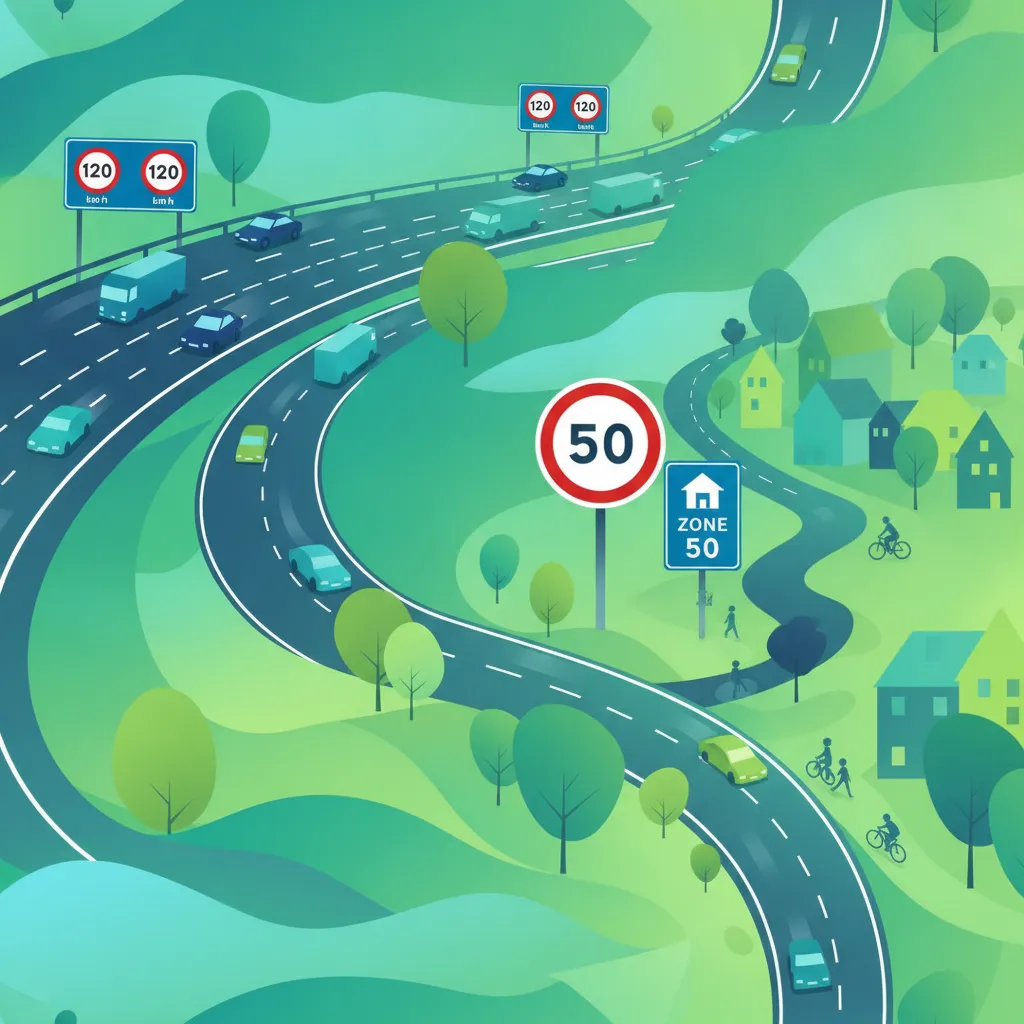
Lesson content overview
Operating a Category AM vehicle, such as a moped or speed pedelec, requires a thorough understanding of speed limits and their underlying safety rationale. As vulnerable road users, AM license holders must be particularly vigilant in managing their speed, not only to comply with the law but also to ensure their own safety and that of others. This lesson will explore the various legal speed limits in Belgium, the fundamental reasons why they exist, and the critical distinction between the maximum legal speed and a safe, appropriate speed for the prevailing conditions.
Speed is perhaps the most significant factor influencing the severity and outcome of road accidents. Every decision you make behind the handlebars concerning your speed has direct consequences on your ability to react to hazards, the distance needed to stop, and the forces involved in a collision. Mastering speed management is therefore paramount for safe driving and a core component of defensive driving.
Understanding the physics of speed is crucial for grasping its impact on safety. When your vehicle moves, it possesses kinetic energy, which is the energy of motion.
Remember that for AM vehicles, your own body is often the first point of impact. Minimizing speed directly reduces the forces your body must withstand in a crash.
Legal speed limits are the maximum speeds permitted by law for different types of roads and specific zones. These limits are not arbitrary; they are set after careful risk analysis, considering road design, potential hazards, and the presence of vulnerable road users. It is mandatory for all drivers, including AM license holders, to strictly observe these limits.
In Belgium, speed limits are generally indicated by signage. However, there are default speed limits that apply if no specific sign is present. These defaults vary based on whether you are inside or outside a built-up area (agglomération) and the type of road.
For most Category AM license holders, especially moped riders, you will often encounter roads where the maximum legal speed limit is 70 km/h. This is a common limit for roads outside built-up areas without specific signage, or on certain urban arterial roads. However, always be alert for posted signs that may override these general limits.
Even if no speed limit sign is immediately visible, a default speed limit still applies based on the road type and location (e.g., within or outside a built-up area). Ignorance of these default limits is not an excuse for speeding.
Within built-up areas, specific zones are designated with lower speed limits to enhance safety, particularly for pedestrians and cyclists. These zones are clearly marked and demand extra caution.
Within certain parts of built-up areas, speed limits can be set to protect the higher density of road users. While the general default in a built-up area (agglomération) is 50 km/h, some main urban roads might have a higher limit, such as 70 km/h, if explicitly signed. Conversely, smaller streets and specialized zones within urban areas will have much lower limits. Always look for the signs.
Residential zones are areas predominantly used by residents, often characterized by narrower streets, parked cars, and increased pedestrian activity, especially children playing. To safeguard these vulnerable road users, speed limits in residential zones are significantly reduced.
The typical speed limit in a residential zone is 30 km/h. These zones often have specific rules regarding parking and priority. It is crucial to respect this limit, as it provides residents with a safer environment and gives drivers more time to react to unexpected movements from children, pets, or pedestrians.
School zones are areas around educational institutions where the presence of children, often distracted or unpredictable, necessitates even stricter speed controls. Speed limits in school zones are among the lowest and are rigorously enforced.
During school hours, the speed limit in a school zone is typically 20 km/h. This extremely low limit allows drivers maximum time to react to children who might dart into the road or be obscured by parked vehicles. Always be prepared to stop instantly when driving through these areas. Even outside school hours, it's wise to exercise extra caution in these locations.
Speed limits are not always static. Conditions on the road can change, necessitating temporary or dynamic adjustments to ensure safety and manage traffic flow.
Temporary speed limits are put in place for specific durations or conditions, such as during roadworks, special events, or hazardous situations. These limits override any permanent speed limits for the stretch of road where they are displayed.
They are usually identified by their distinct appearance, often with a yellow background or a supplementary panel indicating the reason (e.g., "Roadworks"). It is critical to obey these temporary limits, as they protect workers, drivers navigating altered road layouts, and maintain safety in potentially dangerous environments. Exceeding temporary limits can result in higher penalties due to the increased risk involved.
On some motorways or major arterial roads, especially near urban centers, you might encounter variable message signs (VMS) that display dynamic speed limits. These signs can change the speed limit in real-time based on traffic congestion, weather conditions, or incident alerts.
Variable speed limits are legally binding and must be adhered to as they appear. They are a tool for intelligent traffic management, aiming to smooth traffic flow and prevent accidents by reducing speeds when conditions warrant.
A fundamental principle of safe driving is understanding the difference between the maximum legal speed and the safe driving speed.
The highest speed at which a vehicle is permitted to travel on a particular road or in a specific zone, as stipulated by law and indicated by signage or default rules.
The speed that is appropriate for the prevailing conditions, including weather, road surface, traffic density, visibility, and the presence of other road users. This speed may be, and often is, lower than the maximum legal speed.
The law mandates that drivers must always travel at a speed suitable for the prevailing conditions, even if that speed is significantly lower than the posted legal limit. Simply staying under the legal maximum does not guarantee safety. Failure to adjust your speed to conditions, even if you are below the posted limit, can still constitute a traffic offense (e.g., "driving at an inappropriate speed") and is a dangerous practice.
For AM license holders on lighter, more exposed vehicles, the need to adjust to a safe speed is even more critical. Your vehicle's stability, braking capability, and your personal protection are less forgiving of mistakes or poor judgment regarding speed.
Many factors dictate what constitutes a safe speed at any given moment:
Road signs are your primary source of information regarding legal speed limits. It is vital to correctly identify and understand their meaning.
Standard speed limit signs are circular with a red border and a black number on a white background. They indicate the maximum speed allowed from the point where the sign is placed.
A speed limit remains in effect until you pass a sign that indicates a new speed limit or a sign that marks the end of all previous speed limits. The "End of all local prohibitions" sign cancels all previous speed restrictions (except for those specific to certain vehicle categories or temporary situations).
Always be actively scanning for speed limit signs. Do not assume the speed limit remains the same just because you haven't seen a new sign for a while.
While strict observance of speed limits is mandatory, enforcement authorities in Belgium often apply a small "grace period" or tolerance for minor speed exceedances. This period acknowledges that slight, momentary fluctuations in speed can occur.
A brief allowance for minor excesses in speed where a driver may not be penalized, provided the exceedance is small and the driver promptly reduces their speed back within legal limits. This is not a legal right to exceed the speed limit.
This tolerance is not a license to intentionally exceed the speed limit by a few kilometers per hour. It's an operational guideline for enforcement, recognizing technical measurement tolerances and human reaction times. For example, if you briefly exceed the limit by 5 km/h and immediately correct it, you are less likely to be penalized than if you maintain that excess for an extended period. The exact thresholds and duration of this "grace period" are at the discretion of enforcement and can vary, but generally, it applies to very minor and quickly corrected deviations.
Never rely on the grace period as a buffer. Any speed above the legal limit is technically a violation. Drive to the limit, not above it.
Many drivers inadvertently or intentionally commit speeding violations. Being aware of these common pitfalls can help you avoid them.
For AM license holders, who themselves are vulnerable road users, understanding the impact of speed on pedestrians, cyclists, and other exposed individuals is paramount.
The penalty structure in Belgium often reflects this increased risk: fines for speeding are typically higher in residential and school zones due to the elevated danger to vulnerable road users.
Let's look at a few common driving situations to reinforce your understanding of speed limits and safe speed.
Scenario 1: Driving Through a Residential Zone at Night.
Scenario 2: Approaching a School Zone During School Hours.
Scenario 3: Highway Driving in Heavy Rain.
Scenario 4: Temporary Speed Limit Due to Roadworks.
Understanding speed limits and their rationale is not merely about avoiding fines; it is fundamentally about saving lives and preventing injuries. As an AM license holder, operating a small, exposed vehicle, you bear a heightened responsibility to manage your speed proactively and defensively.
Always distinguish between the maximum legal speed and the safe driving speed, adapting to prevailing conditions. Respect specific zones like residential and school areas, where lower limits protect the most vulnerable. Remember that every kilometer per hour above a safe speed exponentially increases the risks of severe accidents, longer stopping distances, and reduced reaction time. By consistently adhering to legal limits and, more importantly, choosing a speed appropriate for the circumstances, you contribute significantly to road safety for yourself and everyone else.
This lesson covers the legal speed limits for Category AM vehicles (mopeds and speed pedelecs) in Belgium across different road types and zones, with specific limits of 70 km/h on general roads, 30 km/h in residential areas, and 20 km/h in school zones during school hours. It explains the physics behind why speed matters—kinetic energy increases exponentially and stopping distance grows with the square of speed—making higher speeds dramatically more dangerous for vulnerable riders. The lesson emphasizes the critical legal distinction between the maximum legal speed and the safe driving speed appropriate for current conditions, including weather, road surface, and traffic density. Learners should understand Belgian road sign codes (C43, F4a, F4b), recognize when default limits apply without signage, and know that temporary or variable limits always override permanent ones. Practical scenarios reinforce how to apply these rules in real driving situations.
A short set of high-value points that capture the most important learning from this lesson.
Speed limits for AM vehicles vary by zone: typically 70 km/h on open roads, 30 km/h in residential zones, and 20 km/h in school zones during school hours.
Kinetic energy increases exponentially with speed—doubling your speed quadruples the energy, dramatically increasing injury severity in any collision.
Stopping distance grows with the square of your speed, meaning 70 km/h requires roughly four times the braking distance of 35 km/h.
The maximum legal speed and the safe driving speed are different—you must always drive at a speed suitable for current conditions, even if below the posted limit.
Belgian road signs (C43, F4a, F4b) indicate zone boundaries; speed limits remain in effect until you pass an end sign or a new limit sign.
Explore all units and lessons included in this driving theory course.
Residential zones (marked by F4a signs) have a mandatory 30 km/h limit to protect pedestrians and children.
School zones (marked by F4b signs) require 20 km/h during school hours—these limits are strictly enforced with higher penalties.
Temporary speed limits (usually on yellow signs) override permanent limits and must be obeyed immediately.
Default speed limits apply even without visible signage—knowing whether you are inside or outside a built-up area (agglomération) determines your baseline limit.
For AM riders, your body is often the first point of impact, making speed reduction even more critical for your personal safety.
Assuming the legal speed limit is always safe—failing to reduce speed for rain, fog, poor visibility, or heavy traffic is dangerous even if within the limit.
Missing temporary speed limit signs during roadworks, which override permanent limits and carry higher penalties if violated.
Driving at the maximum 30 km/h in a poorly-lit residential street at night instead of reducing further for the reduced visibility.
Not scanning continuously for speed limit signs and assuming a previously seen limit still applies further down the road.
Relying on cruise control on roads with variable speed limit signs, which are legally binding the moment they change.
Lesson content overview
A short set of high-value points that capture the most important learning from this lesson.
Speed limits for AM vehicles vary by zone: typically 70 km/h on open roads, 30 km/h in residential zones, and 20 km/h in school zones during school hours.
Kinetic energy increases exponentially with speed—doubling your speed quadruples the energy, dramatically increasing injury severity in any collision.
Stopping distance grows with the square of your speed, meaning 70 km/h requires roughly four times the braking distance of 35 km/h.
The maximum legal speed and the safe driving speed are different—you must always drive at a speed suitable for current conditions, even if below the posted limit.
Belgian road signs (C43, F4a, F4b) indicate zone boundaries; speed limits remain in effect until you pass an end sign or a new limit sign.
Explore all units and lessons included in this driving theory course.
Residential zones (marked by F4a signs) have a mandatory 30 km/h limit to protect pedestrians and children.
School zones (marked by F4b signs) require 20 km/h during school hours—these limits are strictly enforced with higher penalties.
Temporary speed limits (usually on yellow signs) override permanent limits and must be obeyed immediately.
Default speed limits apply even without visible signage—knowing whether you are inside or outside a built-up area (agglomération) determines your baseline limit.
For AM riders, your body is often the first point of impact, making speed reduction even more critical for your personal safety.
Assuming the legal speed limit is always safe—failing to reduce speed for rain, fog, poor visibility, or heavy traffic is dangerous even if within the limit.
Missing temporary speed limit signs during roadworks, which override permanent limits and carry higher penalties if violated.
Driving at the maximum 30 km/h in a poorly-lit residential street at night instead of reducing further for the reduced visibility.
Not scanning continuously for speed limit signs and assuming a previously seen limit still applies further down the road.
Relying on cruise control on roads with variable speed limit signs, which are legally binding the moment they change.
Explore search topics learners often look for when studying Understanding Speed Limits and Their Rationale. These topics reflect common questions about road rules, driving situations, safety guidance, and lesson level theory preparation for learners in Belgium.
Browse additional driving theory lessons that cover connected traffic rules, road signs, and common driving situations related to this topic. Improve your understanding of how different rules interact across everyday traffic scenarios.
Understand how weather, road conditions, traffic, and visibility impact the safe speed for AM license holders in Belgium. Learn to choose speeds below the legal limit when necessary for your safety.

This lesson focuses on the legal duties and responsibilities that an AM vehicle operator must uphold on Belgian roads. It covers critical rules such as adhering to speed limits, correctly applying right-of-way principles, and following regulations for overtaking other vehicles. The lesson also explains the system of fines and penalty points for traffic violations, emphasizing the legal consequences of non-compliance to foster responsible driving habits.
This lesson covers the principles of effective braking, distinguishing between controlled, progressive braking and emergency braking techniques. It breaks down the total stopping distance into reaction distance and braking distance, explaining how speed and road surface conditions dramatically affect the latter. Learners will understand how to use both front and rear brakes correctly to stop quickly and safely without losing control.
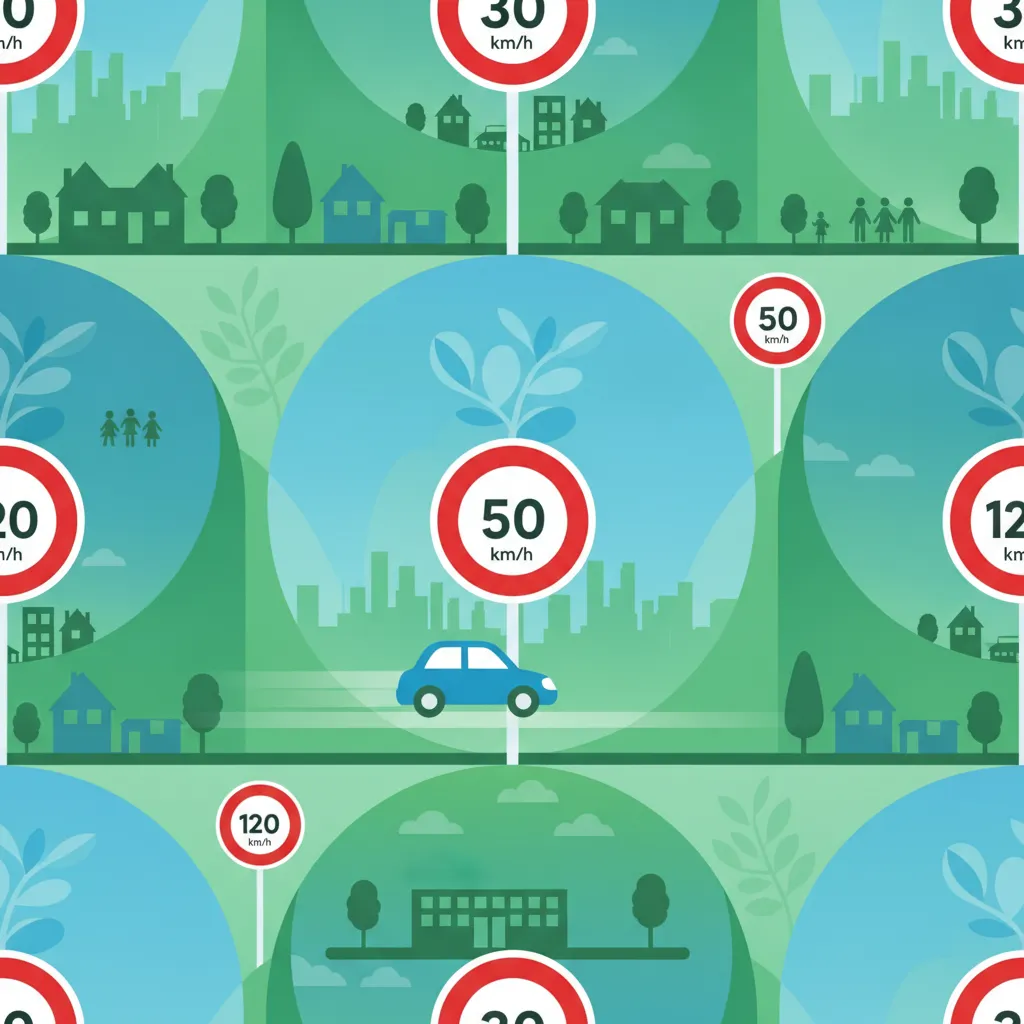
This lesson outlines the specific speed limits applicable in various zones, such as residential areas, rural roads, and motorways in Belgium. Learners will recognize different speed limit signs and understand the rationale behind the speed settings. The lesson also covers variable speed limits and the importance of adjusting speed to road and traffic conditions.
This lesson covers the principles of effective speed management, which involves more than just adhering to the posted limit. It explains how to choose a speed that is appropriate for the prevailing traffic, road, and weather conditions. The content details the legal speed limits for different types of roads in Belgium and the severe consequences of speeding.
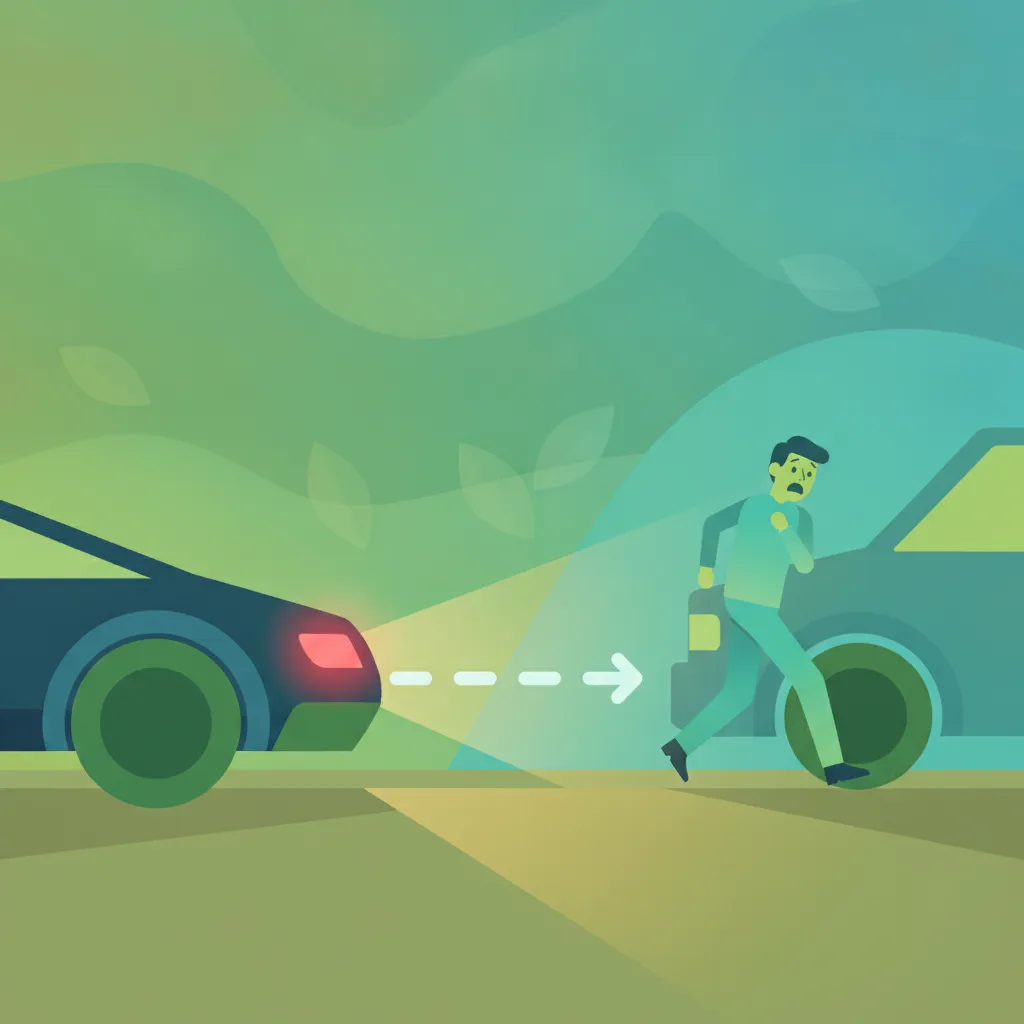
In this lesson, learners will explore the concept of a safe following distance, primarily through the application of the two-second rule. It also breaks down the components of total stopping distance: perception-reaction time and braking distance. Learners will understand how to adjust these distances based on their speed, vehicle, and current road conditions.

This lesson teaches the importance of smooth control over the vehicle's speed. It covers how to apply the throttle for gentle acceleration and how to decelerate smoothly using both the brakes and engine braking. The content encourages riders to look ahead and anticipate changes in traffic flow, allowing for gradual speed adjustments that enhance safety, comfort, and control.
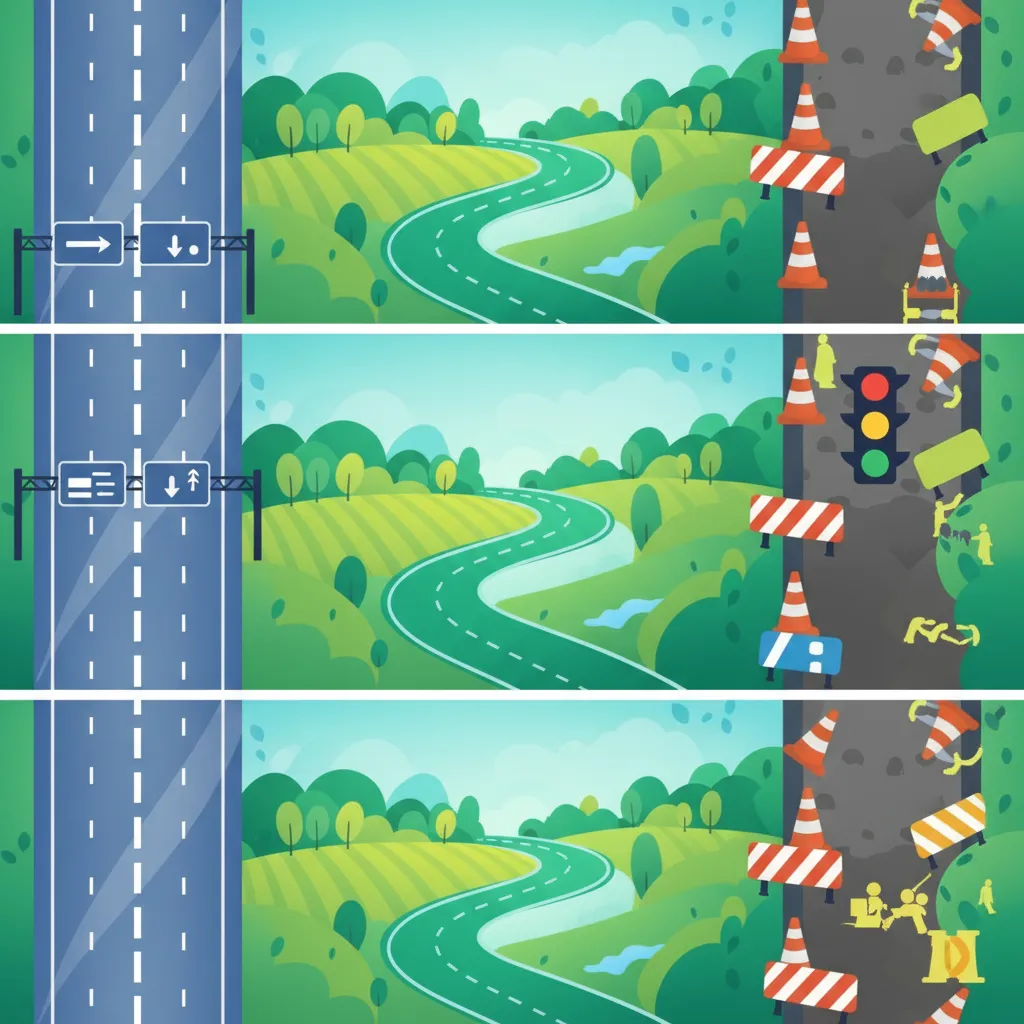
This lesson covers the specific challenges of driving on motorways, rural roads, and navigating roadworks. Learners will review lane discipline on high-speed roads and identify hazards common to rural roads, such as sharp bends and wildlife. It also explains the importance of adjusting speed and following temporary signage in construction zones.

The focus of this lesson is on maintaining proper lane discipline, especially on motorways and other high-speed roads. Learners will explore the rules for changing lanes, overtaking, and positioning in the correct lane based on speed and traffic flow. Emphasis is placed on safe merging techniques and adherence to all lane markings for fluid traffic movement.

This lesson outlines the system of penalties for traffic violations in Belgium, ensuring riders are fully aware of the consequences of illegal behavior. It covers common offenses like speeding and explains the structure of fines and the demerit point system that can lead to license suspension. The content emphasizes the significant financial and legal repercussions of non-compliance, reinforcing the importance of lawful and responsible riding.
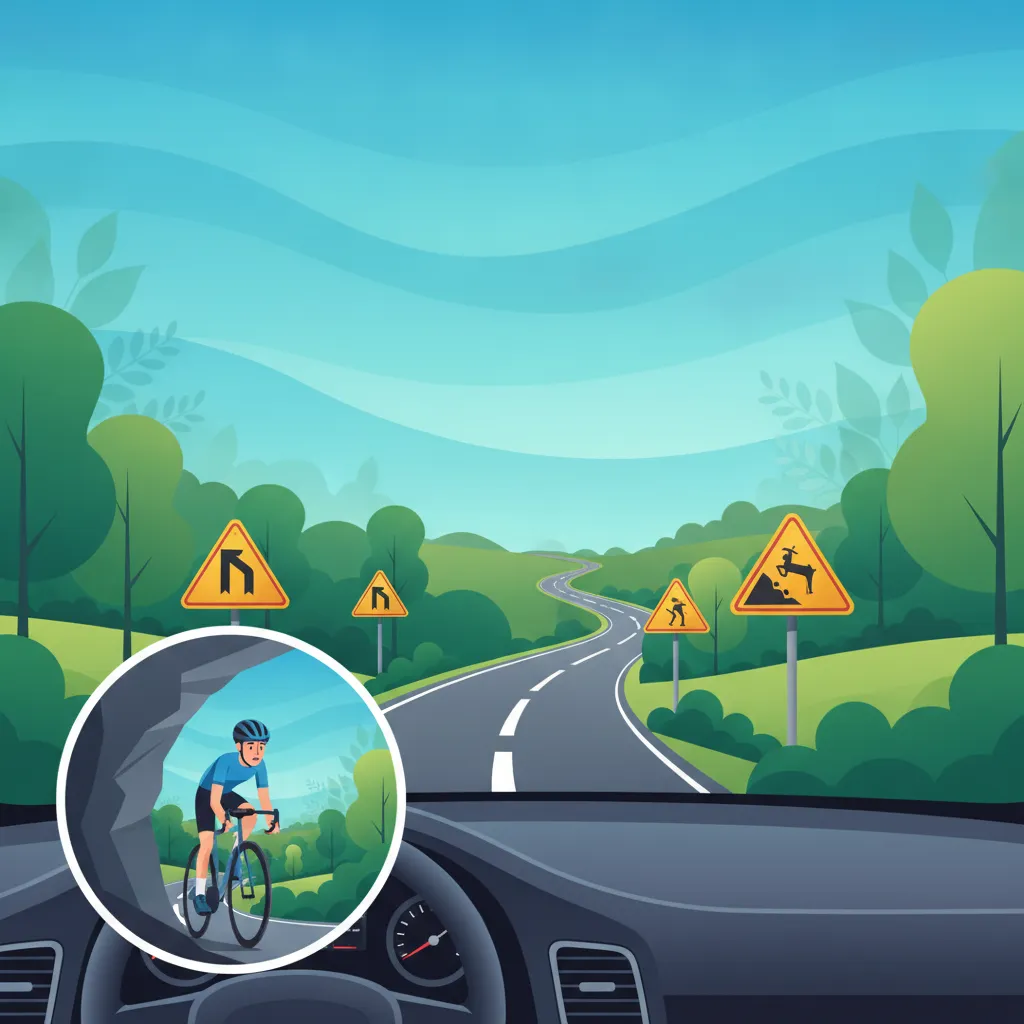
This lesson is dedicated to warning signs, which are designed to alert drivers to potential dangers ahead. It covers the interpretation of signs indicating sharp curves, steep gradients, slippery surfaces, and the presence of pedestrians or animals. By understanding these warnings, riders can anticipate potential hazards and adjust their speed and position proactively for safer travel.
Master the specific speed limits in Belgian urban, residential, and school zones. Learn the rationale behind these reduced limits and how they protect vulnerable road users.
This lesson outlines the specific speed limits applicable in various zones, such as residential areas, rural roads, and motorways in Belgium. Learners will recognize different speed limit signs and understand the rationale behind the speed settings. The lesson also covers variable speed limits and the importance of adjusting speed to road and traffic conditions.
This lesson focuses on the legal duties and responsibilities that an AM vehicle operator must uphold on Belgian roads. It covers critical rules such as adhering to speed limits, correctly applying right-of-way principles, and following regulations for overtaking other vehicles. The lesson also explains the system of fines and penalty points for traffic violations, emphasizing the legal consequences of non-compliance to foster responsible driving habits.
This lesson covers the specific challenges of driving on motorways, rural roads, and navigating roadworks. Learners will review lane discipline on high-speed roads and identify hazards common to rural roads, such as sharp bends and wildlife. It also explains the importance of adjusting speed and following temporary signage in construction zones.

This lesson provides a clear definition of the Category AM license as specified by Belgian law. It details the specific types of vehicles covered, such as mopeds, light quadricycles, and speed pedelecs, outlining their legal limits on engine capacity and maximum speed. Learners will understand the permissions granted by an AM license and the specific context of their participation in public traffic as motor vehicle operators.
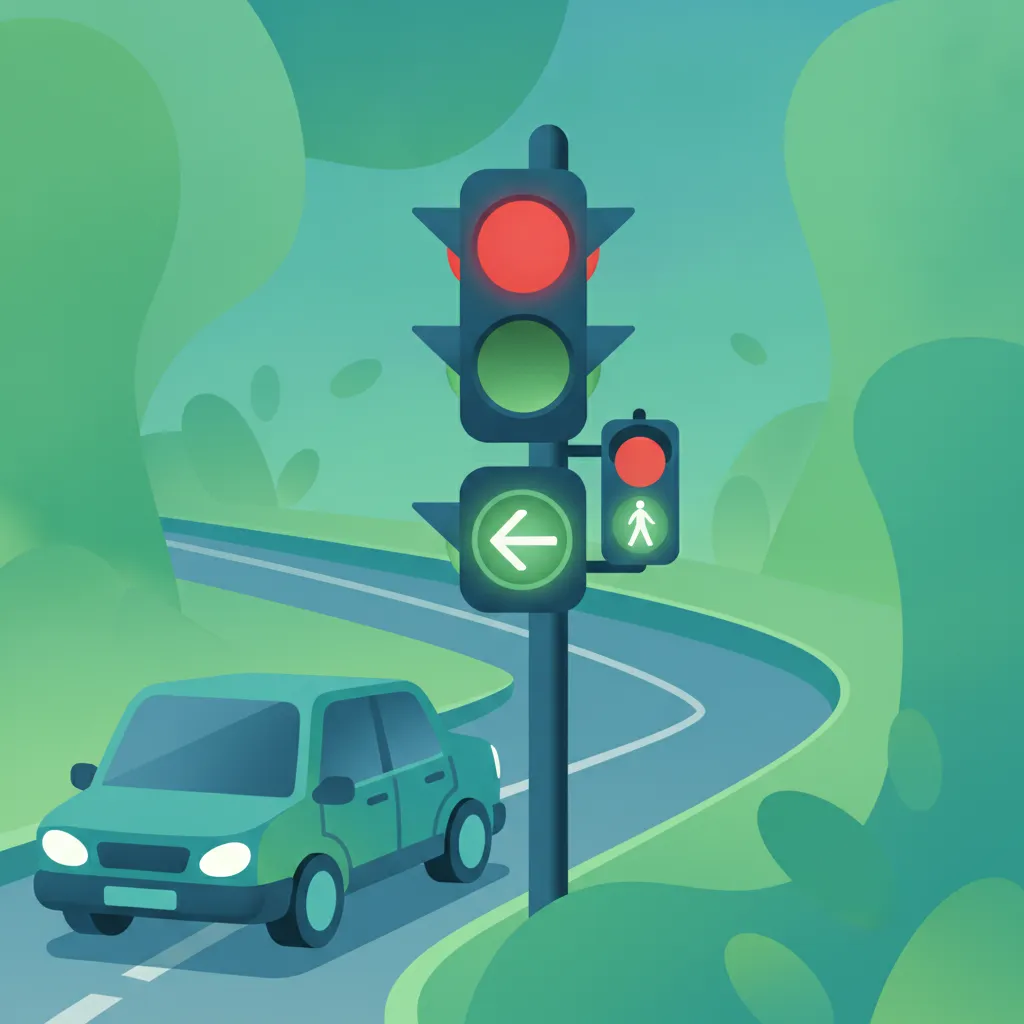
This lesson provides a detailed explanation of traffic light systems and the correct response to each signal. It covers the standard red, amber, and green light sequence, as well as specific signals for pedestrians and cyclists that AM riders must also obey. The meaning of flashing amber and red lights is also clarified to ensure correct and safe behavior at signalized intersections.

This lesson focuses on the rules governing pedestrian crossings, including marked zebra crossings and signal-controlled crossings. Special attention is given to school zones and residential areas where pedestrian activity is high. Learners will understand how to recognize and respect pedestrian priority in various crossing scenarios to ensure their safety.
This lesson covers the principles of effective braking, distinguishing between controlled, progressive braking and emergency braking techniques. It breaks down the total stopping distance into reaction distance and braking distance, explaining how speed and road surface conditions dramatically affect the latter. Learners will understand how to use both front and rear brakes correctly to stop quickly and safely without losing control.

This lesson outlines the complete process for obtaining a Category AM license in Belgium, starting with the minimum age and health requirements. It details the sequence of theoretical and practical exams that candidates must pass to demonstrate their competence. The content also explains the administrative procedures for vehicle registration and securing mandatory insurance, ensuring all legal prerequisites are understood before riding.
This lesson covers the principles of effective speed management, which involves more than just adhering to the posted limit. It explains how to choose a speed that is appropriate for the prevailing traffic, road, and weather conditions. The content details the legal speed limits for different types of roads in Belgium and the severe consequences of speeding.
This lesson provides a step-by-step guide to executing turns and lane changes safely and efficiently. It covers the critical sequence of checking mirrors, signaling intent, and performing a head check for blind spots before any maneuver. Learners will also understand how to manage their speed and balance during cornering to maintain full control of the vehicle.
Find clear answers to common questions learners have about Understanding Speed Limits and Their Rationale. Learn how the lesson is structured, which driving theory objectives it supports, and how it fits into the overall learning path of units and curriculum progression in Belgium. These explanations help you understand key concepts, lesson flow, and exam focused study goals.
Yes, they are subject to different categories of the traffic code. Mopeds (Class A or B) have specific maximum speeds, and speed pedelecs must follow rules for bicycles while being subject to specific moped-related speed restrictions in certain zones.
No, the speed limit is the maximum allowed speed under ideal conditions. You must always adjust your speed based on traffic density, weather, road surface quality, and your own visibility to maintain complete control of your vehicle.
School zones are typically marked with specific regulatory signs indicating reduced speed limits to protect children. You must strictly observe these, as they are high-risk areas where unexpected movements are common.
The AM theory exam focuses primarily on rules relevant to small motorized vehicles. While you should know the general road rules applicable to all road users, questions will centre on your responsibilities as an AM vehicle rider.
Ready to focus your Belgian driving theory revision? Utilize our powerful search tool to pinpoint exact topics, road signs, or difficulty levels. Engage with practice questions that directly address your learning needs and solidify your understanding of Belgian traffic laws for your upcoming exam.