
This lesson guides you through the essential administrative requirements for obtaining your Category AM license in Belgium. Understanding these eligibility criteria and the registration process is the first step in your journey toward legal and safe riding. It provides the foundation for the subsequent technical training modules in this curriculum.

Lesson content overview
Welcome to this comprehensive guide on obtaining your Category AM driver's license in Belgium. This lesson is a crucial step in the Official Belgian Driving Theory Course for Category AM License, providing a thorough understanding of the legal requirements and administrative procedures necessary to legally operate a moped or speed pedelec. Navigating the world of driving licenses involves several key stages, from meeting personal eligibility criteria to ensuring your vehicle is properly registered and insured.
Understanding these foundational aspects ensures not only your compliance with Belgian traffic law but also your safety and the safety of other road users. This lesson will detail each step, from the moment you consider applying for a license to the final administrative processes that allow you to ride legally on Belgian roads.
The journey to acquiring a Category AM license in Belgium is structured to ensure that every driver possesses the necessary maturity, health, theoretical knowledge, and practical skills. This structured approach is designed to minimise risks on the road, particularly for operators of small, exposed vehicles like mopeds and speed pedelecs, who are considered vulnerable road users.
Before you can even consider getting behind the handlebars, a series of prerequisites must be met. These include age and health stipulations, followed by educational and examination phases. Concurrently, the vehicle itself must be brought into legal compliance through registration and mandatory insurance. Each step builds upon the previous one, forming a robust legal framework that underpins road safety in Belgium.
One of the most fundamental requirements for obtaining a Category AM driver's license in Belgium is meeting the minimum age criterion. For a Category AM license, which permits the driving of mopeds and speed pedelecs, you must be at least 16 years old. This age requirement is legally mandated by the Belgian Highway Code, Article 9.1, and is consistent across the country.
This minimum age is set to ensure that applicants possess a basic level of maturity and cognitive development deemed necessary for safely operating a motorised vehicle in public traffic. Attempting to apply or undertake any part of the licensing process before your 16th birthday will not be accepted. It is important not to confuse the age requirement for Category AM with other license categories, such as A1 (for light motorcycles) or B (for cars), which have different minimum age stipulations. Planning your application around this age milestone is crucial for a smooth process.
Beyond age, an applicant's physical and mental fitness to drive is paramount for road safety. All candidates for a Category AM license must demonstrate adequate health fitness. This typically involves obtaining a medical certificate issued by a licensed medical professional, confirming that you meet the minimum health standards required to operate a small motorised vehicle safely.
The assessment usually covers several key areas. Foremost among these is visual acuity, ensuring you can clearly see road signs, traffic signals, and other road users. Other aspects include general physical fitness, hearing ability, and the absence of conditions that might impair your judgment or reaction times, such as certain neurological disorders or severe sleep conditions. This certificate is a mandatory prerequisite, often required before you can even sit for the theory exam. It serves to protect not only the driver but also all other participants in traffic.
Before you can prove your knowledge and skills in examinations, you are typically required to undergo recognised driver education. This educational phase is crucial for building a strong theoretical foundation and, subsequently, practical competence. For a Category AM license, this often involves enrolling in an approved driving school that offers specific training for mopeds and speed pedelecs.
Driver education programs are structured to impart essential knowledge about traffic rules, road signs, defensive driving techniques, and the specific characteristics of operating a Category AM vehicle. While self-study for the theory exam is possible, structured lessons often provide a more comprehensive understanding and better preparation. It ensures you have received formal instruction on critical safety protocols and legal responsibilities before you are tested.
The theory examination is your first formal assessment on the path to obtaining a Category AM license. This test evaluates your understanding of the Belgian Highway Code, traffic signs, road markings, priority rules, and general road safety principles relevant to moped and speed pedelec drivers. It is usually presented in a digital, multiple-choice format at an official examination centre.
To pass the theory exam, candidates typically need to achieve a specific minimum score, often around 85%. Successfully passing this exam is a non-negotiable prerequisite before you are allowed to schedule your practical driving test. It ensures that you possess the necessary cognitive understanding of how to behave safely and legally on the road. Without a passing theory grade, you cannot progress to the practical application of your driving skills.
Study the Belgian Highway Code: Focus on sections relevant to mopeds and general traffic rules.
Attend Theory Lessons (Optional but Recommended): Approved driving schools offer structured courses.
Practice with Mock Tests: Utilise online resources or study materials to simulate the exam environment.
Obtain a Health Certificate: Ensure you have your medical certificate confirming fitness to drive.
Book Your Exam: Schedule your theory test at an official examination centre.
Pass the Exam: Aim for the minimum required score to progress.
Once you have successfully passed the theory examination, the next major hurdle is the practical examination. This on-road test assesses your ability to apply your theoretical knowledge in real-world driving situations, demonstrating your competence in handling a Category AM vehicle safely and proficiently. The test evaluates various skills, including vehicle control, manoeuvring, interaction with other traffic, and adherence to traffic rules.
During the practical exam, an official examiner will observe your driving as you navigate a prescribed route, which often includes various road types, intersections, roundabouts, and potentially specific manoeuvring tasks. You will be expected to demonstrate proper road positioning, correct use of signals, appropriate speed management, and safe observation techniques. It is crucial to remember that merely passing the theory does not grant you the license; you must prove your practical ability under the scrutiny of a qualified examiner. This test confirms that you can operate your vehicle safely and responsibly in a live traffic environment.
Before you can take your practical driving test on your own vehicle or even use it on public roads, the vehicle itself must be legally registered. Vehicle registration is the official process of recording your moped or speed pedelec in the national vehicle registry. This administrative step is mandatory and ensures that your vehicle is known to the authorities and that its ownership is legally documented.
The registration process typically involves submitting specific documents, such as proof of ownership (e.g., invoice, certificate of conformity), identification, and crucially, proof of mandatory insurance. Once registered, your vehicle will be assigned a unique registration number, and you will receive a registration certificate (kentekenbewijs/certificat d'immatriculation) and a license plate. This entire process must be completed before your practical driving test. Attempting to take the practical exam on an unregistered vehicle will result in immediate disqualification.
Alongside registration, securing mandatory insurance is a critical legal requirement for all Category AM vehicles in Belgium. Specifically, you must obtain at least third-party liability insurance (BA-verzekering/assurance RC). This type of insurance is designed to provide financial protection in the event that you cause damage or injury to a third party (other road users, pedestrians, property) while operating your vehicle.
Proof of valid third-party liability insurance is a prerequisite for vehicle registration and must be presented during the registration process. Furthermore, you must have active insurance coverage when you attend your practical driving test. This insurance protects you from potentially crippling financial claims and ensures that victims of accidents caused by you receive compensation. Without this mandatory insurance, your vehicle cannot be legally registered or used on public roads, and you will not be allowed to take your practical exam.
Navigating the licensing and registration process can sometimes present challenges. Being aware of common mistakes can help you avoid delays and complications.
Adherence to specific rules and regulations is not optional but a legal necessity throughout the Category AM license acquisition process. These rules are put in place to ensure public safety and a consistent standard for all drivers.
Obtaining a Category AM driver's license in Belgium is a structured process designed to ensure road safety and legal compliance. It begins with meeting strict eligibility criteria, including a minimum age of 16 years and demonstrating health fitness through a medical certificate. Following these initial requirements, candidates must complete an educational requirement, typically at an approved driving school, which prepares them for the theory examination.
Passing the theory exam is a critical gateway to the practical examination, where real-world driving skills are assessed. Simultaneously, the vehicle intended for use must undergo vehicle registration and be covered by mandatory third-party liability insurance. Both registration and insurance are indispensable prerequisites for the practical test and legal road use. Adhering to this sequence of requirements and understanding the legal obligations at each stage will ensure a smooth, compliant, and ultimately successful journey towards your Category AM license, preparing you for responsible and safe driving on Belgian roads.
Obtaining a Belgian Category AM license requires meeting specific eligibility criteria including being at least 16 years old and obtaining a medical certificate, followed by passing both a theory exam and a practical driving test at an approved examination centre. The vehicle must be registered in the national registry and covered by mandatory third-party liability insurance before the practical exam can be taken. Common pitfalls include neglecting to secure insurance before vehicle registration, attending the theory exam without a health certificate, and using unregistered vehicles for training or testing. Understanding and following this sequential process ensures legal compliance and a smooth path to obtaining your license.
A short set of high-value points that capture the most important learning from this lesson.
The minimum age for a Category AM license in Belgium is 16 years, as mandated by Article 9.1 of the Belgian Highway Code
A medical certificate confirming health fitness is a mandatory prerequisite before you can sit for the theory exam
You must pass the theory exam before being eligible to schedule the practical driving test
Your vehicle must be fully registered and insured with third-party liability coverage before the practical exam
The licensing sequence is: eligibility verification → theory exam → practical exam, with vehicle compliance required throughout
Explore all units and lessons included in this driving theory course.
Category AM covers mopeds and speed pedelecs with a maximum design speed of 45 km/h
Third-party liability insurance (BA-verzekering) is legally required and must be secured before vehicle registration can be completed
Attempting the practical exam with an unregistered vehicle will result in immediate disqualification
Self-study for the theory exam is permitted, but formal driving school lessons are recommended for better preparation
Using an unregistered or uninsured vehicle on public roads is illegal and can result in fines and vehicle impoundment
Applying for or starting the licensing process before turning 16, as age requirements are strictly enforced
Attempting to register the vehicle before securing mandatory third-party liability insurance, as proof of insurance is required for registration
Arriving at the theory exam without a valid health certificate, which is a prerequisite for taking the test
Using an unregistered or uninsured vehicle for practical training on public roads, which is illegal regardless of training purposes
Confusing Category AM age requirements with other license categories such as A1 or B, which have different minimum ages
Lesson content overview
A short set of high-value points that capture the most important learning from this lesson.
The minimum age for a Category AM license in Belgium is 16 years, as mandated by Article 9.1 of the Belgian Highway Code
A medical certificate confirming health fitness is a mandatory prerequisite before you can sit for the theory exam
You must pass the theory exam before being eligible to schedule the practical driving test
Your vehicle must be fully registered and insured with third-party liability coverage before the practical exam
The licensing sequence is: eligibility verification → theory exam → practical exam, with vehicle compliance required throughout
Explore all units and lessons included in this driving theory course.
Category AM covers mopeds and speed pedelecs with a maximum design speed of 45 km/h
Third-party liability insurance (BA-verzekering) is legally required and must be secured before vehicle registration can be completed
Attempting the practical exam with an unregistered vehicle will result in immediate disqualification
Self-study for the theory exam is permitted, but formal driving school lessons are recommended for better preparation
Using an unregistered or uninsured vehicle on public roads is illegal and can result in fines and vehicle impoundment
Applying for or starting the licensing process before turning 16, as age requirements are strictly enforced
Attempting to register the vehicle before securing mandatory third-party liability insurance, as proof of insurance is required for registration
Arriving at the theory exam without a valid health certificate, which is a prerequisite for taking the test
Using an unregistered or uninsured vehicle for practical training on public roads, which is illegal regardless of training purposes
Confusing Category AM age requirements with other license categories such as A1 or B, which have different minimum ages
Explore search topics learners often look for when studying Eligibility & Registration. These topics reflect common questions about road rules, driving situations, safety guidance, and lesson level theory preparation for learners in Belgium.
Browse additional driving theory lessons that cover connected traffic rules, road signs, and common driving situations related to this topic. Improve your understanding of how different rules interact across everyday traffic scenarios.
Understand the full process for obtaining a Category AM license in Belgium. This lesson covers age, health, education, theory and practical exams, plus vehicle registration and mandatory insurance.
This lesson provides a clear definition of the Category AM license as specified by Belgian law. It details the specific types of vehicles covered, such as mopeds, light quadricycles, and speed pedelecs, outlining their legal limits on engine capacity and maximum speed. Learners will understand the permissions granted by an AM license and the specific context of their participation in public traffic as motor vehicle operators.
This lesson focuses on the legal duties and responsibilities that an AM vehicle operator must uphold on Belgian roads. It covers critical rules such as adhering to speed limits, correctly applying right-of-way principles, and following regulations for overtaking other vehicles. The lesson also explains the system of fines and penalty points for traffic violations, emphasizing the legal consequences of non-compliance to foster responsible driving habits.

This lesson provides a comprehensive overview of the mandatory lighting systems for all Category AM vehicles under Belgian law. It details the required functions of headlamps, rear lights, brake lights, and turn signals, explaining their importance for communication and visibility. Learners will understand the legal standards for this equipment and how to perform simple pre-ride checks to ensure all lights are functioning correctly.
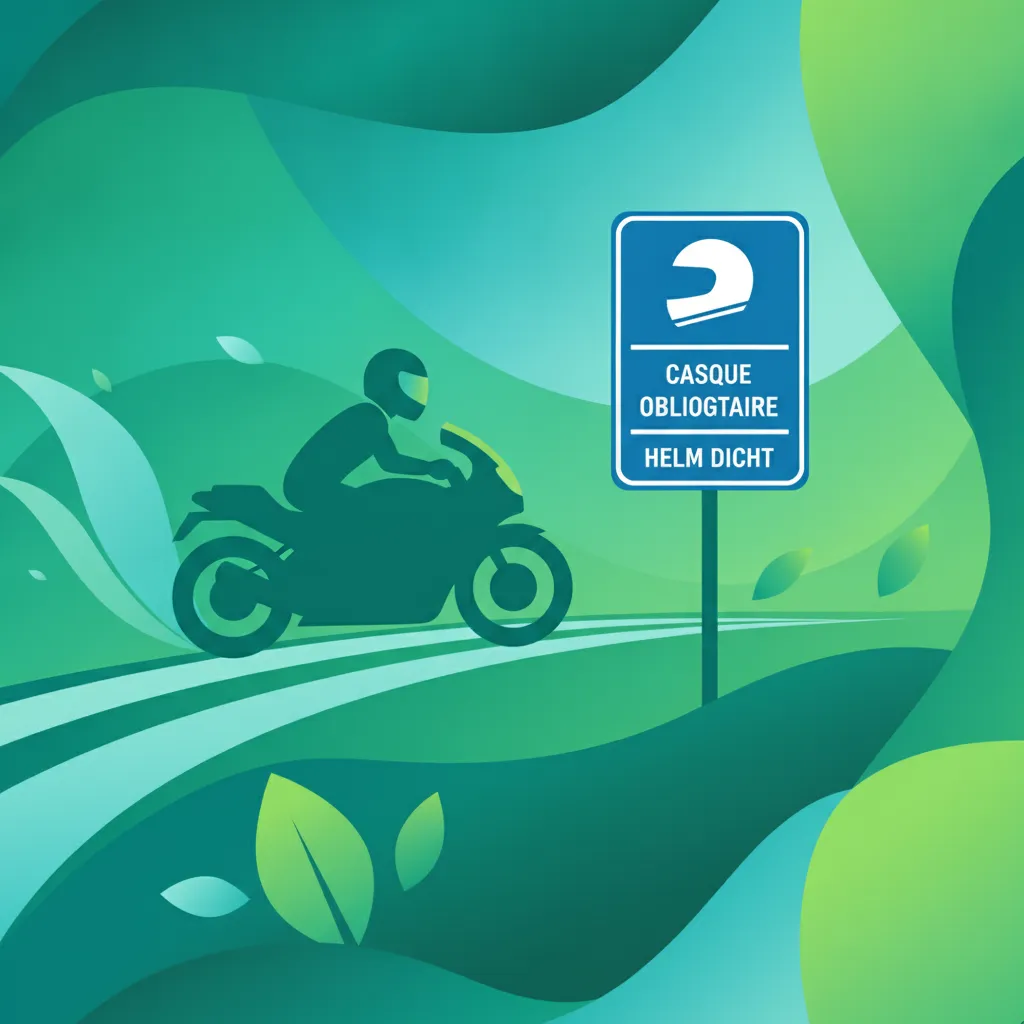
This lesson covers the absolute legal requirement for all Category AM vehicle operators in Belgium to wear a safety helmet. It explains the specific safety standards and certifications that helmets must meet to be legally compliant. Learners will be taught how to select the correct size, achieve a secure fit, and conduct regular inspections to ensure the helmet's protective integrity is maintained.
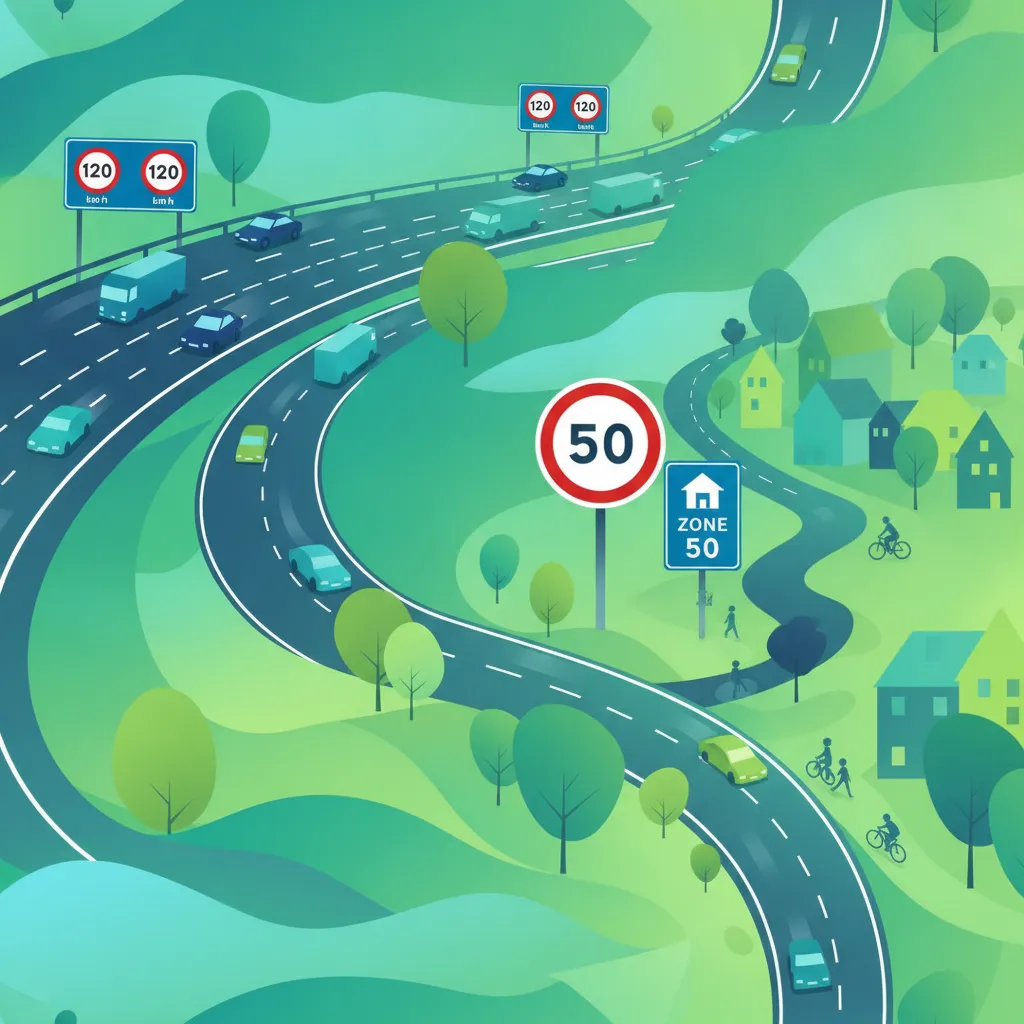
This lesson details the various legal speed limits applicable in Belgium, including those for urban, residential, and school zones. It explains the underlying safety rationale for these limits, linking speed to the severity of accidents and the time available to react to hazards. Learners will understand the difference between the maximum legal speed and a safe, appropriate speed for the prevailing conditions.
This lesson provides a detailed overview of the Belgian motorcycle licence framework, explaining the distinctions between categories A1, A2, and the full A licence. It outlines the specific age and skill prerequisites for each level of certification. Furthermore, it covers the mandatory legal requirements such as obtaining a medical certificate, securing proper insurance, and completing the vehicle registration process.
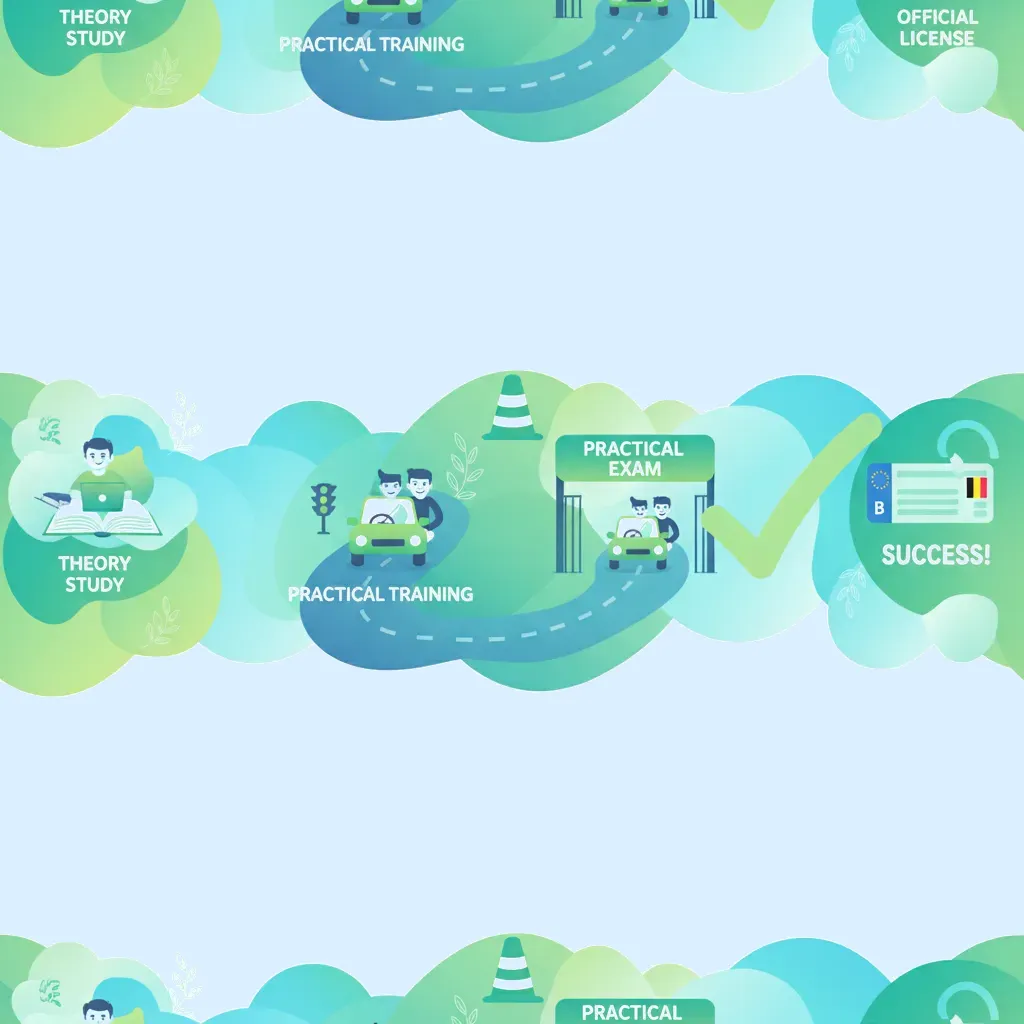
This lesson explains the complete procedure for acquiring a Belgian motorcycle licence, from registering for the theory examination to successfully passing the practical test. It provides a comprehensive list of required documentation, such as identity proof and medical certificates, and clarifies the associated fees. You will also learn about the progression routes available for moving from A1 to A2 and ultimately to a full Category A licence.

This lesson teaches the importance of smooth control over the vehicle's speed. It covers how to apply the throttle for gentle acceleration and how to decelerate smoothly using both the brakes and engine braking. The content encourages riders to look ahead and anticipate changes in traffic flow, allowing for gradual speed adjustments that enhance safety, comfort, and control.
Learn about frequent mistakes and legal challenges applicants face when getting a Category AM license in Belgium. Avoid issues with vehicle registration, insurance, and exam prerequisites.
This lesson provides a clear definition of the Category AM license as specified by Belgian law. It details the specific types of vehicles covered, such as mopeds, light quadricycles, and speed pedelecs, outlining their legal limits on engine capacity and maximum speed. Learners will understand the permissions granted by an AM license and the specific context of their participation in public traffic as motor vehicle operators.
This lesson focuses on the legal duties and responsibilities that an AM vehicle operator must uphold on Belgian roads. It covers critical rules such as adhering to speed limits, correctly applying right-of-way principles, and following regulations for overtaking other vehicles. The lesson also explains the system of fines and penalty points for traffic violations, emphasizing the legal consequences of non-compliance to foster responsible driving habits.
This lesson provides a comprehensive overview of the mandatory lighting systems for all Category AM vehicles under Belgian law. It details the required functions of headlamps, rear lights, brake lights, and turn signals, explaining their importance for communication and visibility. Learners will understand the legal standards for this equipment and how to perform simple pre-ride checks to ensure all lights are functioning correctly.
This lesson covers the absolute legal requirement for all Category AM vehicle operators in Belgium to wear a safety helmet. It explains the specific safety standards and certifications that helmets must meet to be legally compliant. Learners will be taught how to select the correct size, achieve a secure fit, and conduct regular inspections to ensure the helmet's protective integrity is maintained.
This lesson outlines the system of penalties for traffic violations in Belgium, ensuring riders are fully aware of the consequences of illegal behavior. It covers common offenses like speeding and explains the structure of fines and the demerit point system that can lead to license suspension. The content emphasizes the significant financial and legal repercussions of non-compliance, reinforcing the importance of lawful and responsible riding.
This lesson provides a detailed overview of the Belgian motorcycle licence framework, explaining the distinctions between categories A1, A2, and the full A licence. It outlines the specific age and skill prerequisites for each level of certification. Furthermore, it covers the mandatory legal requirements such as obtaining a medical certificate, securing proper insurance, and completing the vehicle registration process.
This lesson explains the complete procedure for acquiring a Belgian motorcycle licence, from registering for the theory examination to successfully passing the practical test. It provides a comprehensive list of required documentation, such as identity proof and medical certificates, and clarifies the associated fees. You will also learn about the progression routes available for moving from A1 to A2 and ultimately to a full Category A licence.
This lesson details the various legal speed limits applicable in Belgium, including those for urban, residential, and school zones. It explains the underlying safety rationale for these limits, linking speed to the severity of accidents and the time available to react to hazards. Learners will understand the difference between the maximum legal speed and a safe, appropriate speed for the prevailing conditions.

This lesson focuses on the unique hazards associated with riding after dark. It emphasizes the importance of a fully functional lighting system and the use of reflective gear to be seen by others. The content explains how darkness affects depth perception and peripheral vision, requiring riders to reduce their speed to compensate for shorter sight distances and potential fatigue.
Find clear answers to common questions learners have about Eligibility & Registration. Learn how the lesson is structured, which driving theory objectives it supports, and how it fits into the overall learning path of units and curriculum progression in Belgium. These explanations help you understand key concepts, lesson flow, and exam focused study goals.
In Belgium, you can generally begin the process for a Category AM license at 16 years of age. You must pass both a theoretical exam and a practical training session to be fully licensed.
Yes, every vehicle registered under the Category AM license, including mopeds and speed pedelecs, requires mandatory third-party liability insurance in Belgium before it can be used on public roads.
The theory exam focuses primarily on traffic rules, road signs, and safe behavior. However, basic knowledge of vehicle documentation and registration status is required to understand your legal responsibilities as a rider.
No, it is strictly prohibited to operate any vehicle requiring an AM license on public roads without valid registration documents and plates. You must ensure the vehicle is legally registered in your name or the owner's name before riding.
Ready to focus your Belgian driving theory revision? Utilize our powerful search tool to pinpoint exact topics, road signs, or difficulty levels. Engage with practice questions that directly address your learning needs and solidify your understanding of Belgian traffic laws for your upcoming exam.