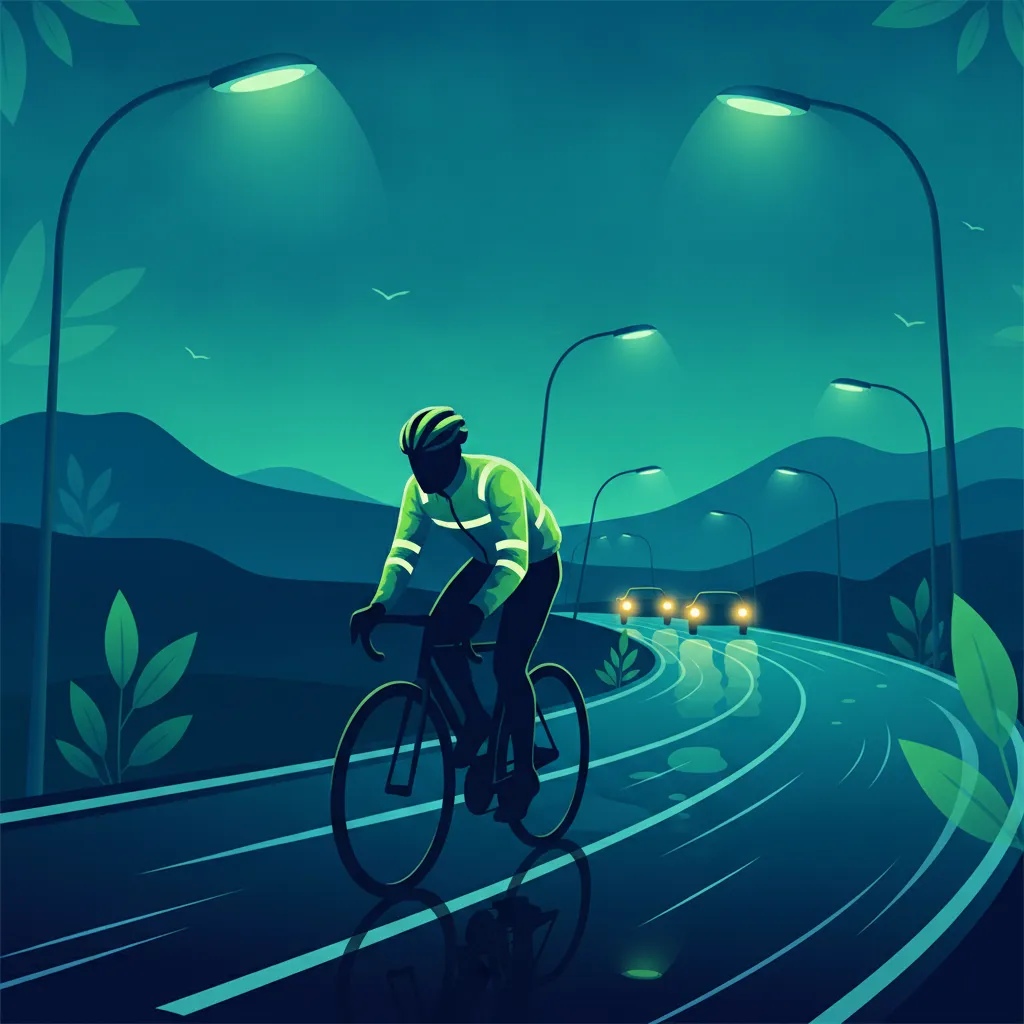
This lesson explores the specific challenges of riding your moped or speed pedelec after dark on Belgian roads. You will learn how to optimize your visibility and adjust your riding technique to handle the reduced sight distances and increased risks encountered at night.
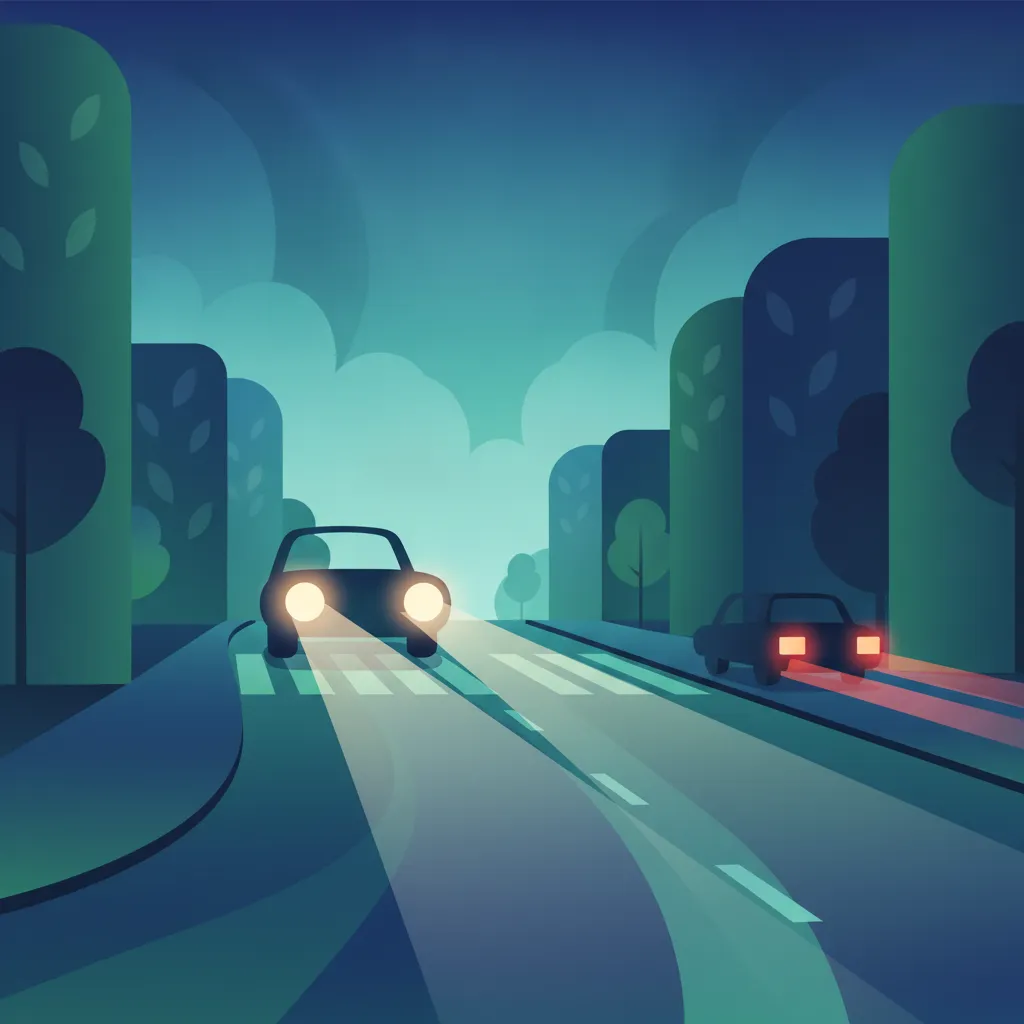
Lesson content overview
Riding a moped or speed pedelec after dark presents a unique set of challenges that demand heightened awareness and specific safety measures. As an operator of a small, exposed vehicle, your visibility to other road users is significantly reduced in low-light conditions, and your own ability to perceive hazards is compromised. This lesson, part of the Official Belgian Driving Theory Course for Category AM License, explores these critical issues, emphasizing the importance of a fully functional lighting system, appropriate reflective gear, and adaptive riding strategies to ensure your safety and the safety of others on Belgian roads.
The human eye is not designed for optimal performance in low-light conditions. When riding at night, several visual and perceptual capabilities are significantly diminished, directly affecting your ability to ride safely.
One of the most immediate effects of darkness is the drastic reduction in sight distance. This refers to the maximum distance you can clearly see ahead on the road. At night, even with your headlights on, the illuminated area is much shorter than what you can see during the day. This limited sight distance means you have less time to identify potential hazards, react to changing road conditions, or notice other road users, especially those without adequate lighting.
Your headlights only illuminate a finite distance. If you're traveling too fast, you might not be able to stop within the distance you can see, a critical safety principle known as the "stopping within sight distance" rule.
Darkness severely impairs two crucial visual functions:
The combined effect of reduced sight distance, poor depth perception, and limited peripheral vision means that your brain receives less information about the riding environment. This demands a proactive approach to safety, primarily by adjusting your speed and enhancing your visibility.
Beyond the fundamental limitations, night riding can also introduce glare and hasten eye fatigue. Glare from oncoming headlights or poorly aligned vehicle lights can temporarily blind you, creating momentary "whiteouts" that completely obscure the road ahead. This effect is often more pronounced on wet roads where light reflects more intensely. Prolonged concentration in low-light conditions, coupled with the strain of discerning objects in the darkness, can lead to quicker eye fatigue, diminishing your alertness and reaction times even further.
Your vehicle's lighting system and your personal reflective gear are your most important tools for safety when riding at night in Belgium. They serve a dual purpose: helping you see the road and ensuring that other road users see you.
A properly functioning and correctly used lighting system is legally mandatory and absolutely crucial for safe night riding for AM license holders.
Your moped or speed pedelec must be equipped with a headlight that can project both a dipped beam and, typically, a high beam.
Always check your headlight alignment. Misaligned headlights can either fail to illuminate the road effectively or, worse, blind oncoming drivers, creating a hazardous situation for everyone.
Your moped or speed pedelec must also have a functional taillight that remains illuminated whenever your headlights are on. This red light makes you visible to vehicles approaching from behind. Equally important are your brake lights, which must illuminate brightly when you apply the brakes, signaling your intention to slow down or stop. Ensure both your front and rear brake lights are working correctly before every night ride.
Functional turn signals (indicators) are essential for communicating your intentions to other road users, especially at night when hand signals might be less visible. Use them consistently when turning, changing lanes, or pulling over. In case of a breakdown or emergency, your hazard warning lights (all four indicators flashing simultaneously) make your stationary vehicle more visible, particularly if you are stopped in a dangerous location.
Beyond active lighting, all motor vehicles, including mopeds and speed pedelecs, must be equipped with functioning reflectors. These passive safety devices reflect light from other vehicles, making you visible even if your own lights fail or are momentarily obscured. Ensure your front (white), side (amber), and rear (red) reflectors are clean and undamaged.
While your vehicle's lights are vital, personal reflective gear provides an additional layer of protection, dramatically increasing your conspicuity to other road users.
As an AM license holder, you operate a relatively small vehicle that can easily be overlooked in traffic, especially at night. Reflective materials work by bouncing light directly back to its source, meaning that even a small amount of light from another vehicle's headlights can make you stand out brightly in the dark. This significantly reduces the risk of being involved in a collision, particularly being hit from behind or from the side at intersections.
While not always legally mandated for riders themselves in all situations, wearing reflective gear is strongly recommended by the Belgian Highway Code for mopeds and speed pedelecs, especially outside built-up areas. Consider incorporating the following:
Effective night riding isn't just about equipment; it's also about adjusting your riding behaviour and strategy to compensate for the inherent challenges of darkness.
The single most critical adjustment you must make when riding at night is to reduce your speed. This is directly linked to the principle of sight distance adjustment.
The practice of reducing your riding speed to ensure you can always stop safely within the distance you can clearly see ahead, illuminated by your headlights.
On a typical Belgian road with a maximum speed limit of 45 km/h for AM license holders, you might need to ride significantly slower, perhaps 30-35 km/h, on unlit or winding sections at night, even if the legal limit technically permits 45 km/h. The posted speed limit is the maximum allowed under ideal conditions, not a target speed for all conditions.
At night, you must actively compensate for your reduced visual input by heightening your other senses and adopting a highly defensive riding posture.
Increasing your following distance from other vehicles is crucial at night. This provides more time and space to react if the vehicle ahead brakes suddenly or encounters an unforeseen hazard. The general rule of leaving a two-second gap should be increased, especially in poor visibility. This is particularly important when following cars that may create a "blind spot" for you with their taillights, reducing your ability to see further down the road.
The Belgian Highway Code (Code de la Route / Wegcode) has specific regulations concerning lighting and visibility that AM license holders must adhere to.
Regular maintenance of your lighting system isn't just a best practice; it's a legal requirement that contributes directly to your safety.
Check Headlight Functionality: Ensure both dipped and high beams work and are clean.
Verify Taillight and Brake Lights: Confirm they illuminate correctly. Test both front and rear brake levers.
Inspect Turn Signals: Check all four indicators flash brightly and at the correct rate.
Clean Lenses: Dirty or dusty light lenses significantly reduce light output. Wipe them clean before each ride.
Check Reflector Cleanliness: Ensure all reflectors are clean and unobstructed.
While the Belgian Highway Code may not always legally mandate reflective clothing for moped riders in all situations, it is highly recommended, especially for riding outside built-up areas or on unlit roads. Wearing a reflective vest or clothing with reflective elements significantly boosts your chances of being seen by other drivers, making you a more prominent presence on the road. Prioritize safety over convenience; a small investment in reflective gear can make a life-saving difference.
Being aware of typical pitfalls associated with night riding can help you proactively avoid dangerous situations.
One of the most frequent errors at night is misjudging distances. The lack of clear visual cues can make it difficult to ascertain how far away another vehicle is, or how fast it's approaching. This can lead to unsafe overtaking maneuvers, misjudging the speed of an oncoming car when turning, or failing to give sufficient clearance to parked vehicles.
When in doubt about distance or speed, always err on the side of caution. Slow down, wait, and ensure you have ample space and time before proceeding.
Night riding, especially over longer distances or after a full day, can induce fatigue much faster than daytime riding. The constant strain on your eyes and the heightened concentration required can lead to reduced alertness, slower reaction times, and an increased likelihood of making errors. If you feel tired, pull over in a safe, well-lit area and take a break. A short rest can significantly improve your alertness. Avoid riding at night if you are already feeling sleepy.
Even on urban streets with streetlights, you should never become complacent. Streetlights can create shadows and variations in light intensity, making certain areas dark and difficult to see. They also don't replace the need for your own vehicle lights and reflective gear, as your lights are specifically designed to illuminate your path and make you visible. Always operate with your dipped beam on, even on well-lit streets, and continue to wear reflective gear.
Night riding for AM license holders in Belgium demands a comprehensive approach to safety. Your ability to see and be seen is severely compromised after dark, making you more vulnerable to accidents. By understanding the limitations of human vision in low light, diligently maintaining your vehicle's lighting system, investing in high-visibility reflective gear, and adopting a cautious, speed-adjusted riding strategy, you can significantly mitigate the risks. Always remember that the responsibility for safe riding rests with you, and prudent decisions after dark can make all the difference.
Night riding for AM license holders in Belgium requires understanding how darkness compromises vision through reduced sight distance, impaired depth perception, and limited peripheral awareness. Learners must master Belgium's mandatory lighting rules (dipped beam from sunset to sunrise and whenever visibility is under 200m) and understand when high beam is appropriate. Speed adjustment is critical—reduce speed so you can always stop within your illuminated sight distance, even if this means riding below the 45 km/h limit. Reflective gear and a functioning lighting system work together to make you visible, while defensive scanning and increased following distances compensate for reduced visual input. Common pitfalls include misjudging distances, becoming complacent on lit roads, and failing to maintain equipment.
A short set of high-value points that capture the most important learning from this lesson.
Your headlights only illuminate a finite distance—always ride slowly enough to stop within what you can see ahead (stopping within sight distance rule)
Dipped beam is mandatory from sunset to sunrise and whenever visibility drops below 200 metres in Belgium
Darkness severely impairs depth perception and peripheral vision, making distance judgments and hazard detection much harder
Reflective gear dramatically increases your visibility to other road users and is strongly recommended for AM riders outside built-up areas
Even on well-lit urban streets, never become complacent—streetlights create shadows and your own lights serve your specific path and visibility needs
Explore all units and lessons included in this driving theory course.
Switch to dipped beam when approaching oncoming traffic, following another vehicle closely, or riding in populated or well-lit areas
Speed limits (like 45 km/h for AM) are maximums under ideal conditions, not targets for night riding—reduce speed significantly on unlit or winding roads
Increase your following distance beyond the standard two-second gap to compensate for reduced reaction time and limited visibility
Check all lights (headlights, taillights, brake lights) and reflectors before every night ride—dirty lenses significantly reduce effectiveness
If you feel fatigued while night riding, pull over in a safe, well-lit area for a break rather than continuing
Assuming street lighting means you can ride at daytime speeds or skip wearing reflective gear—shadows and dark spots persist even on lit roads
Misjudging distances and speeds of oncoming vehicles due to poor depth perception at night, leading to unsafe overtaking or turning decisions
Using high beam inappropriately in urban areas or when approaching other vehicles, creating dangerous glare for yourself and others
Riding too fast for your sight distance, meaning you cannot stop safely if a hazard appears at the edge of your headlight beam
Neglecting regular lighting maintenance—dim or misaligned headlights severely compromise both your vision and your visibility to others
Lesson content overview
A short set of high-value points that capture the most important learning from this lesson.
Your headlights only illuminate a finite distance—always ride slowly enough to stop within what you can see ahead (stopping within sight distance rule)
Dipped beam is mandatory from sunset to sunrise and whenever visibility drops below 200 metres in Belgium
Darkness severely impairs depth perception and peripheral vision, making distance judgments and hazard detection much harder
Reflective gear dramatically increases your visibility to other road users and is strongly recommended for AM riders outside built-up areas
Even on well-lit urban streets, never become complacent—streetlights create shadows and your own lights serve your specific path and visibility needs
Explore all units and lessons included in this driving theory course.
Switch to dipped beam when approaching oncoming traffic, following another vehicle closely, or riding in populated or well-lit areas
Speed limits (like 45 km/h for AM) are maximums under ideal conditions, not targets for night riding—reduce speed significantly on unlit or winding roads
Increase your following distance beyond the standard two-second gap to compensate for reduced reaction time and limited visibility
Check all lights (headlights, taillights, brake lights) and reflectors before every night ride—dirty lenses significantly reduce effectiveness
If you feel fatigued while night riding, pull over in a safe, well-lit area for a break rather than continuing
Assuming street lighting means you can ride at daytime speeds or skip wearing reflective gear—shadows and dark spots persist even on lit roads
Misjudging distances and speeds of oncoming vehicles due to poor depth perception at night, leading to unsafe overtaking or turning decisions
Using high beam inappropriately in urban areas or when approaching other vehicles, creating dangerous glare for yourself and others
Riding too fast for your sight distance, meaning you cannot stop safely if a hazard appears at the edge of your headlight beam
Neglecting regular lighting maintenance—dim or misaligned headlights severely compromise both your vision and your visibility to others
Explore search topics learners often look for when studying Night Riding and Visibility Challenges. These topics reflect common questions about road rules, driving situations, safety guidance, and lesson level theory preparation for learners in Belgium.
Browse additional driving theory lessons that cover connected traffic rules, road signs, and common driving situations related to this topic. Improve your understanding of how different rules interact across everyday traffic scenarios.
Learn essential visibility techniques for riding mopeds and speed pedelecs at night in Belgium. This lesson covers vehicle lighting, reflective gear, and how to ensure you are seen by other road users, crucial for AM license holders.
This lesson focuses on techniques and equipment designed to enhance a rider's visibility on the road. It covers the effective use of reflective materials on clothing and the motorcycle itself, as well as the legal requirements for lighting under Belgian law. You will learn strategies to improve your conspicuity during the day, at night, and in adverse weather conditions.
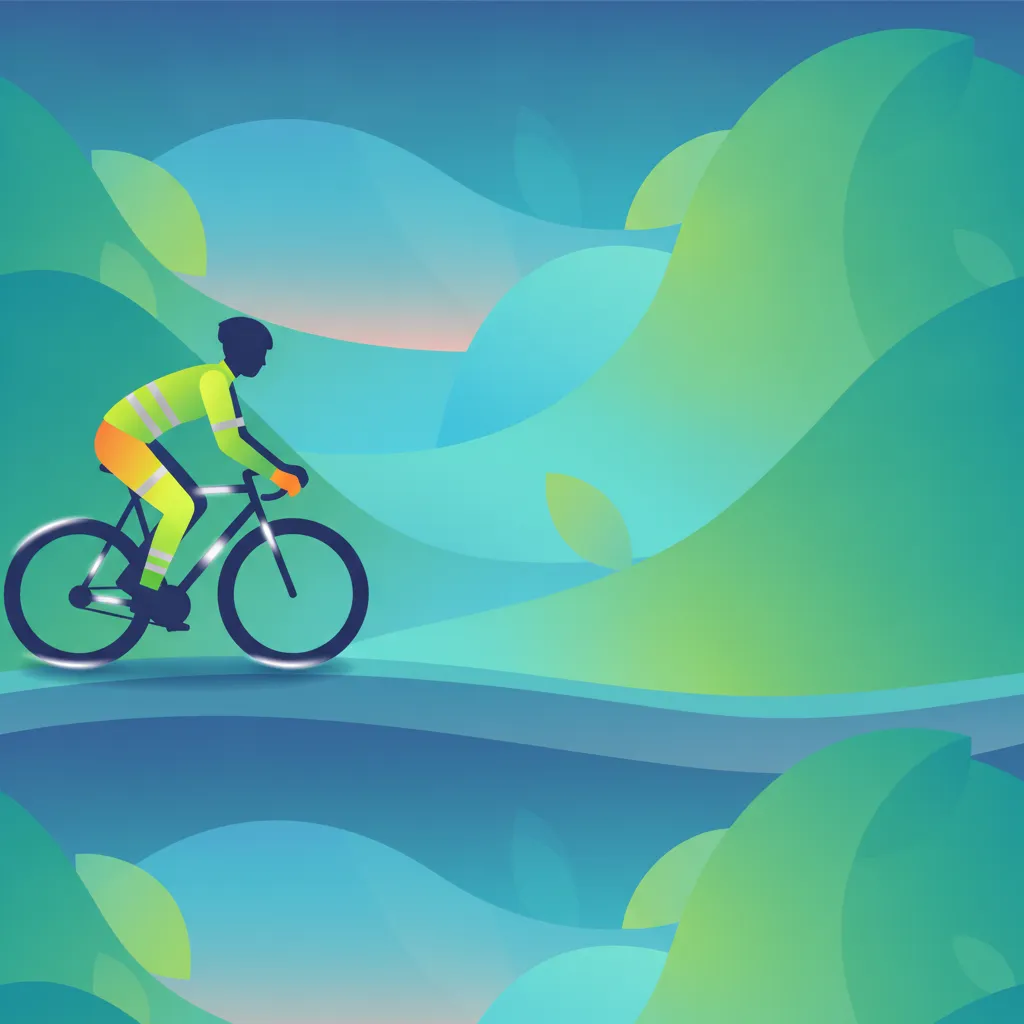
This lesson explains how clothing choices significantly enhance a rider's visibility to other road users. It details the benefits of wearing bright, fluorescent colors for daytime conspicuity and the function of retro-reflective materials for nighttime safety. The content provides practical guidance on selecting appropriate apparel and maintaining its reflective properties to ensure maximum effectiveness.
This lesson addresses the unique challenges of riding after dark, focusing on the correct use of high and low beam headlights to maximize visibility. It offers techniques for coping with glare from other vehicles and for adapting to the body's natural reduction in visual acuity at night. The content also emphasizes the heightened risk of fatigue during night rides and strategies to manage it.
This lesson focuses on the specific challenges of riding in adverse conditions such as rain, fog, and darkness, which severely reduce visibility. It provides practical strategies for riders to increase their own conspicuity through the use of lights and reflective gear. The content also explains how to adapt riding behavior, such as reducing speed and increasing following distance, to safely manage these high-risk situations.
This lesson provides a comprehensive overview of the mandatory lighting systems for all Category AM vehicles under Belgian law. It details the required functions of headlamps, rear lights, brake lights, and turn signals, explaining their importance for communication and visibility. Learners will understand the legal standards for this equipment and how to perform simple pre-ride checks to ensure all lights are functioning correctly.
Night driving presents unique challenges, including reduced visibility and glare from oncoming vehicles. This lesson covers proper headlight usage, eye adaptation, and techniques for driving safely at night. It also addresses tunnel navigation, focusing on speed limits, appropriate lighting, and understanding emergency procedures inside tunnels.
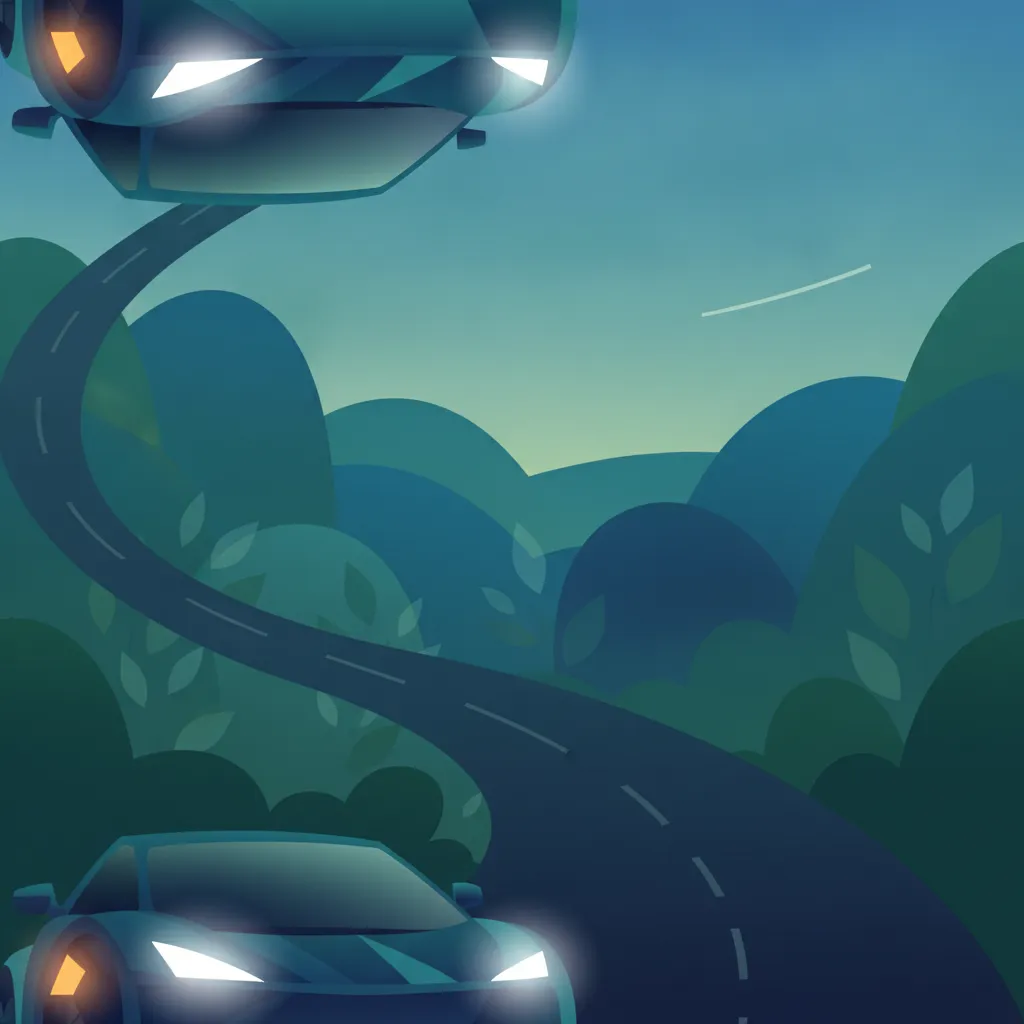
This lesson details the proper use of all vehicle lights and signaling devices. It explains when to use low and high beams, fog lights, hazard lights, and turn signals to communicate effectively with other road users. Correct lighting usage improves visibility and safety, especially in adverse weather conditions and during hours of darkness.
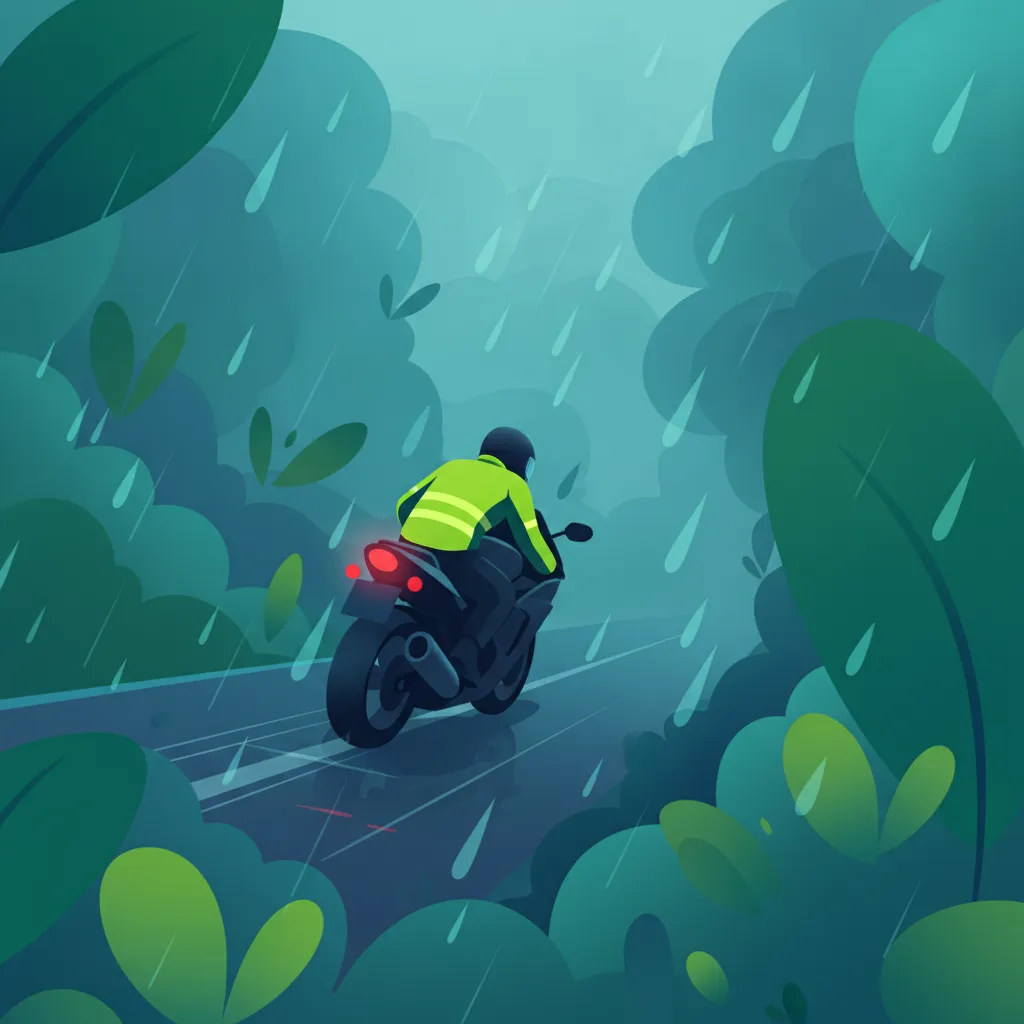
This lesson details the specific precautions and techniques required for riding in rain and fog. It explains how water on the road affects tyre grip and braking distances, and how to avoid aquaplaning. You will learn the correct use of lights to be seen in low visibility and how to adjust your speed and following distance accordingly.
Understand the challenges night riding presents to your vision and perception. This lesson explains reduced sight distance, depth perception issues, and glare, offering theoretical knowledge for safer AM license operation in Belgium.
This lesson focuses on the specific challenges of riding in adverse conditions such as rain, fog, and darkness, which severely reduce visibility. It provides practical strategies for riders to increase their own conspicuity through the use of lights and reflective gear. The content also explains how to adapt riding behavior, such as reducing speed and increasing following distance, to safely manage these high-risk situations.
Night driving presents unique challenges, including reduced visibility and glare from oncoming vehicles. This lesson covers proper headlight usage, eye adaptation, and techniques for driving safely at night. It also addresses tunnel navigation, focusing on speed limits, appropriate lighting, and understanding emergency procedures inside tunnels.
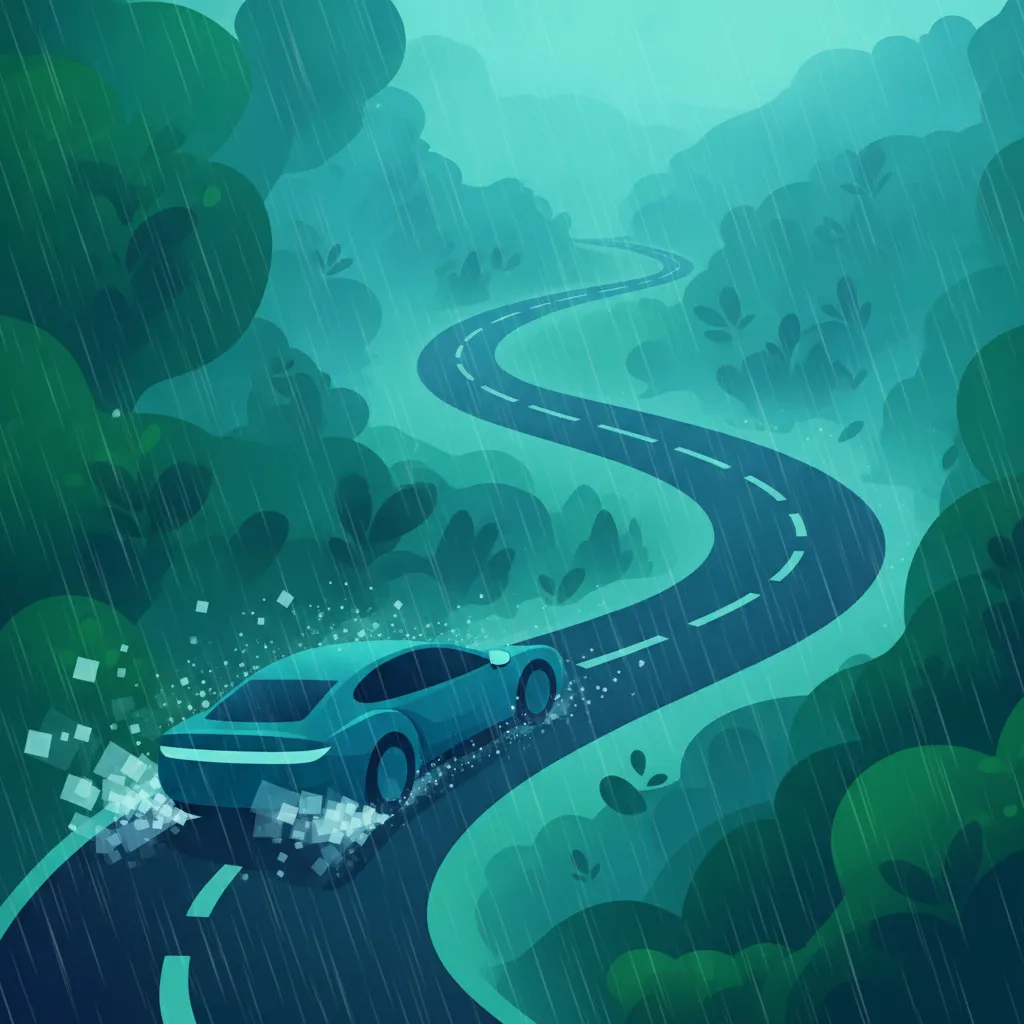
This lesson focuses on driving safely in adverse weather like rain, fog, and low sun glare, which affects road friction and visibility. It provides guidelines on speed adaptation, maintaining a safe following distance, and the proper use of vehicle equipment like lights and wipers. Learners will understand how to reduce risks like hydroplaning and skidding.
This lesson addresses the unique challenges of riding after dark, focusing on the correct use of high and low beam headlights to maximize visibility. It offers techniques for coping with glare from other vehicles and for adapting to the body's natural reduction in visual acuity at night. The content also emphasizes the heightened risk of fatigue during night rides and strategies to manage it.
This lesson explains how clothing choices significantly enhance a rider's visibility to other road users. It details the benefits of wearing bright, fluorescent colors for daytime conspicuity and the function of retro-reflective materials for nighttime safety. The content provides practical guidance on selecting appropriate apparel and maintaining its reflective properties to ensure maximum effectiveness.
This lesson focuses on techniques and equipment designed to enhance a rider's visibility on the road. It covers the effective use of reflective materials on clothing and the motorcycle itself, as well as the legal requirements for lighting under Belgian law. You will learn strategies to improve your conspicuity during the day, at night, and in adverse weather conditions.
This lesson details the proper use of all vehicle lights and signaling devices. It explains when to use low and high beams, fog lights, hazard lights, and turn signals to communicate effectively with other road users. Correct lighting usage improves visibility and safety, especially in adverse weather conditions and during hours of darkness.
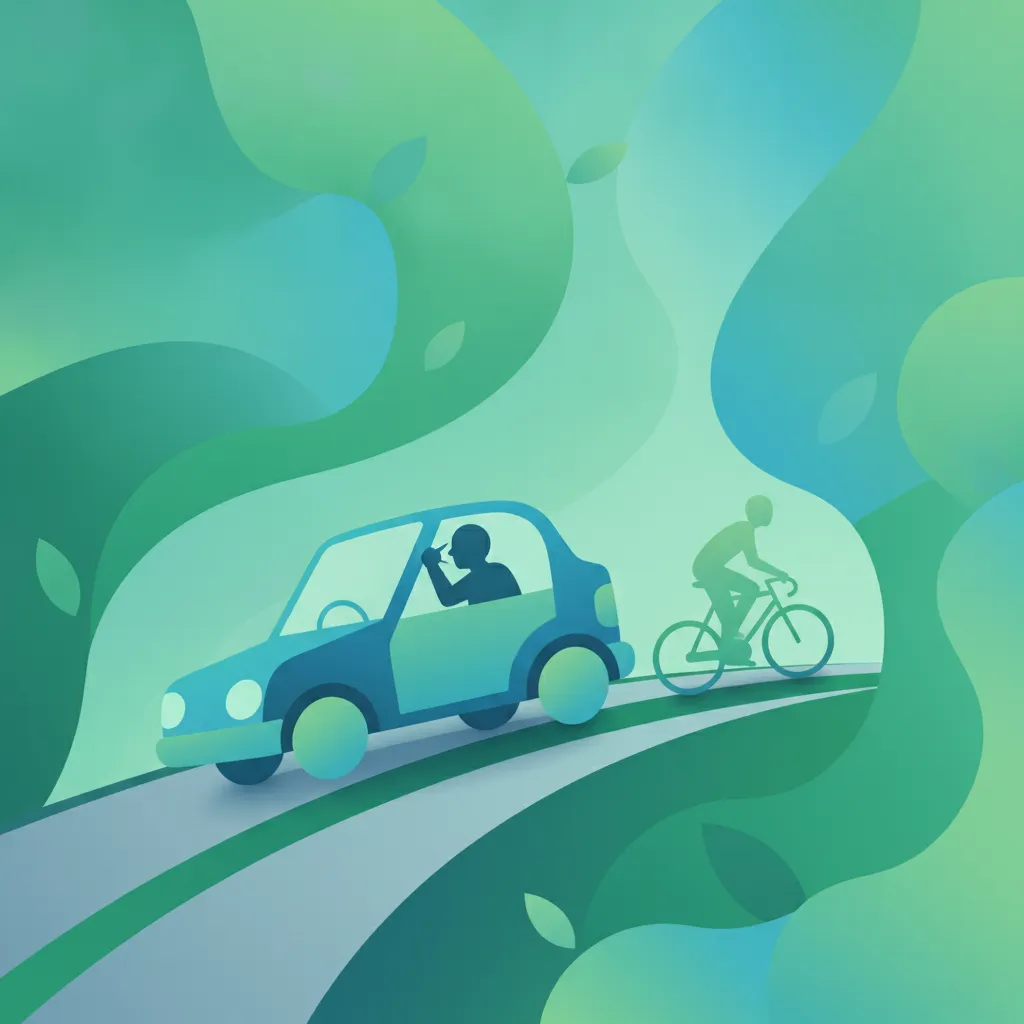
This lesson explains the concept of strategic road positioning to enhance safety and visibility. It teaches riders how to select the best position within a lane to be seen by other drivers and to have a good view of the road ahead. A key focus is on identifying and staying out of the large blind spots of cars, vans, and trucks to prevent dangerous situations.
This lesson provides a comprehensive overview of the mandatory lighting systems for all Category AM vehicles under Belgian law. It details the required functions of headlamps, rear lights, brake lights, and turn signals, explaining their importance for communication and visibility. Learners will understand the legal standards for this equipment and how to perform simple pre-ride checks to ensure all lights are functioning correctly.
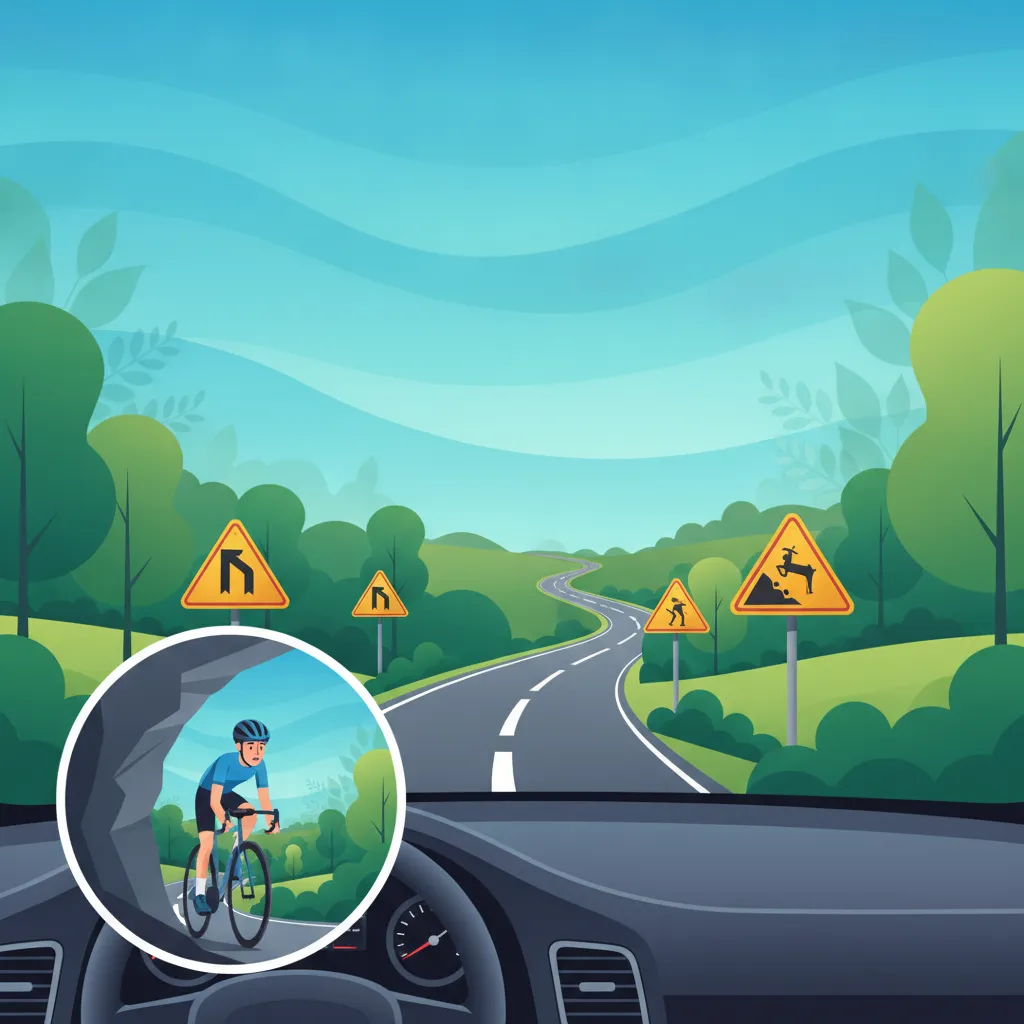
This lesson is dedicated to warning signs, which are designed to alert drivers to potential dangers ahead. It covers the interpretation of signs indicating sharp curves, steep gradients, slippery surfaces, and the presence of pedestrians or animals. By understanding these warnings, riders can anticipate potential hazards and adjust their speed and position proactively for safer travel.
Find clear answers to common questions learners have about Night Riding and Visibility Challenges. Learn how the lesson is structured, which driving theory objectives it supports, and how it fits into the overall learning path of units and curriculum progression in Belgium. These explanations help you understand key concepts, lesson flow, and exam focused study goals.
You are required to have a working white headlight and a red taillight active at night or in low visibility conditions. These ensure you can see the road ahead and that other drivers can identify your position on the road.
At night, your sight distance is limited to the range of your headlights. Since you cannot see as far ahead, you must reduce your speed to ensure you can stop within the distance that is clearly illuminated in front of you.
While specific items of clothing may vary, the law requires you to be visible. High-visibility and reflective gear are strongly recommended and often essential for your safety to ensure other road users can see you in the dark.
In the dark, your pupils dilate to let in more light, but this reduces your depth perception and peripheral vision. This makes it harder to spot hazards like side-road traffic or pedestrians, requiring you to remain more vigilant and scan the road constantly.
Ready to focus your Belgian driving theory revision? Utilize our powerful search tool to pinpoint exact topics, road signs, or difficulty levels. Engage with practice questions that directly address your learning needs and solidify your understanding of Belgian traffic laws for your upcoming exam.