
This lesson teaches you how to adapt your driving style to unpredictable Belgian weather conditions, such as heavy rain, dense fog, and low sun glare. It is a critical component of your Category B theory preparation, as understanding how to maintain traction and visibility is vital for both passing the theory exam and staying safe on the road.
Lesson content overview
Driving conditions can change rapidly, and adverse weather significantly increases the risk of road incidents. For drivers in Belgium preparing for their Category B licence, understanding how to safely navigate rain, fog, snow, ice, and even low sun glare is crucial. This lesson provides essential knowledge and practical guidelines to help you adapt your driving style and vehicle use to maintain safety and control in challenging atmospheric conditions.
Adverse weather profoundly impacts the fundamental elements of driving: the interaction between your vehicle's tyres and the road surface, and your ability to see and react to hazards. When these elements are compromised, the risk of accidents, such as skidding or hydroplaning, increases dramatically.
Simultaneously, weather phenomena like heavy rain, dense fog, falling snow, or the blinding glare of a low sun significantly degrade visibility. This reduces the distance at which you can perceive road markings, traffic signs, other vehicles, and potential hazards, giving you less time to react.
The combined effect of reduced friction and compromised visibility necessitates a proactive approach to driving. You cannot rely on your normal driving habits or expect your vehicle to perform as it would in clear, dry conditions. Adjusting your speed, increasing your following distance, and correctly using your vehicle's safety equipment are not just recommendations; they are critical strategies for mitigating risks and enhancing overall road safety. These adjustments allow you more time to react, reduce the likelihood of losing control, and ensure you can stop safely within your visible clear distance.
Safe driving in challenging conditions is built upon understanding a few fundamental principles that dictate how your vehicle interacts with its environment and how you, as a driver, must adapt.
As mentioned, various weather elements introduce substances between your tyres and the road, such as water, ice, or snow. This drastically reduces the available grip.
Your ability to see is paramount to safe driving. Weather conditions like fog, heavy rain, or snow create a physical barrier between your eyes and the road ahead, shortening your effective line of sight. This means you have less time to identify and react to potential dangers. Proper use of vehicle lighting and maintaining clean windows are key to maximizing what little visibility is available.
Your vehicle is equipped with features designed to enhance safety in adverse weather. Understanding and correctly using components like headlights, fog lights, windshield wipers, defoggers, and ensuring your tyres are in good condition are fundamental. These tools are your primary means of maintaining visibility and traction when conditions deteriorate. Neglecting their proper use or maintenance significantly compromises your safety and that of others.
Each type of adverse weather presents unique challenges and requires specific adaptations to your driving technique and vehicle setup.
Rain is a common occurrence in Belgium and quickly turns roads into slippery surfaces.
Even light rain can make roads surprisingly slick, as it mixes with oil and dust to create a greasy film. Heavy rain, however, poses more significant threats due to large amounts of standing water and reduced visibility caused by spray from other vehicles and the rain itself. In heavy rain, your vehicle's headlights should be on (dipped beams) to ensure you are visible to others, and your wipers should be set to an appropriate speed to maintain a clear windshield.
To prevent hydroplaning, which can occur at speeds as low as 70 km/h on severely wet roads, you must:
Fog drastically reduces visibility, often making it impossible to see more than a few car lengths ahead. Driving in fog requires extreme caution and correct use of your vehicle's lighting.
In Belgium, front fog lights may be used when visibility is reduced to less than 50 metres due to fog, heavy rain, or snow. Rear fog lights are mandatory when front fog lights are on and visibility is below 50 metres. These are intensely bright red lights designed to make your vehicle more conspicuous from behind.
Snow and ice are perhaps the most dangerous adverse weather conditions, leading to a severe loss of traction.
Black ice is particularly treacherous because it is a thin, transparent layer of ice that is extremely difficult to see. It often forms on shaded areas of the road, bridges, and overpasses. If you suspect black ice, avoid sudden movements and gently reduce your speed. The key is to drive smoothly, with gentle acceleration, braking, and steering inputs.
Winter tyres are specifically designed to provide better grip in low temperatures (below 7°C), snow, and ice. Their softer rubber compounds and unique tread patterns enhance traction and reduce braking distances in winter conditions. While not universally mandatory in Belgium, they are highly recommended during winter months, especially if you drive in regions prone to snow and ice.
Low sun glare, particularly during sunrise or sunset, can be as blinding as driving into high beams. It can temporarily obscure your vision of the road ahead, traffic signals, and other road users.
Strong crosswinds, especially on open stretches of road or bridges, can significantly affect vehicle stability. High-sided vehicles like vans, lorries, and cars with trailers are particularly susceptible.
High winds can cause your vehicle to drift across its lane, making it difficult to maintain a straight course. You should:
Regardless of the specific weather condition, certain fundamental adaptations are always necessary to ensure safety.
One of the most critical adjustments you must make is to your speed. The posted speed limits are maximums for ideal driving conditions, not targets for all conditions.
The two-second rule is a minimum guideline for normal, dry conditions. In adverse weather, this minimum must be significantly increased.
To check your following distance, choose a fixed point ahead (e.g., a road sign). When the vehicle in front passes that point, start counting "one thousand one, one thousand two..." If you reach the same point before you've finished counting the required number of seconds, you are following too closely.
Proper use of your vehicle's lighting system is vital for both your visibility of the road and making your vehicle visible to other road users.
As per Belgian regulations:
A clear windshield is non-negotiable for safe driving in adverse weather. Your windshield wipers must be in good working order and activated as soon as rain or snow begins to fall. Adjust their speed to match the intensity of the precipitation. Regular checks of your wiper blades are essential, as worn blades can streak and reduce visibility.
Your vehicle's defogging system (heating and air conditioning) is vital for keeping your windows clear of condensation, both inside and out. Use your demister settings to ensure all windows remain clear, especially the front and rear screens.
Your tyres are the only part of your vehicle in contact with the road, making their condition critical.
Understanding and adhering to specific Belgian traffic laws regarding adverse weather is not only crucial for safety but also for legal compliance.
In Belgium, dipped beams must be used at night and during the day in conditions of reduced visibility, such as heavy rain, snow, or fog. High beams are prohibited when visibility is impaired and must always be dimmed for oncoming traffic or when following another vehicle.
As highlighted earlier, Belgian law states that front fog lights may be used when visibility is reduced to less than 50 metres due to fog, heavy rain, or snow. Rear fog lights are mandatory when front fog lights are on and visibility is below 50 metres. They must be switched off once visibility improves beyond 50 metres.
Belgian traffic law explicitly requires drivers to adapt their speed to road conditions, weather, and visibility. This means that even if you are below the posted speed limit, you could still be driving too fast for the prevailing conditions and face penalties if an incident occurs. The obligation is to ensure you can stop safely and maintain full control of your vehicle.
While specific legal minimums for following distance in adverse weather might not be explicitly defined as a fixed number of seconds in Belgian law, the general principle of maintaining a safe distance that allows for a safe stop is a legal obligation. Safety recommendations strongly advise increasing your following distance to at least 3-4 seconds in rain, fog, or snow, and even more on ice.
The minimum legal tyre tread depth in Belgium is 1.6 mm across the central three-quarters of the tyre's width and around its entire circumference. Driving with tyres below this minimum is illegal and extremely dangerous, especially in wet conditions.
Being aware of common errors drivers make in adverse weather can help you avoid them.
Driving at the speed limit in heavy rain or snow:
Using high beams in fog:
Leaving rear fog lights on after the fog clears:
Following too closely in rain or fog:
Driving with worn tyre tread in wet conditions:
Understanding the underlying reasons for these rules reinforces their importance and helps you make better decisions on the road.
The laws of physics dictate a direct relationship: reduced friction significantly extends your braking distance. This is because the force required to slow your vehicle down (friction) is diminished. Simultaneously, reduced visibility shortens the distance at which you can identify a hazard. If your stopping distance is longer than your visible distance, you cannot avoid hitting an obstacle that suddenly appears.
Your reaction time, the interval between perceiving a hazard and initiating an action (like braking), remains relatively constant, usually around 1.5 to 2 seconds for an alert driver. However, in adverse weather, your perception distance (how far ahead you can actually see) is shortened. Therefore, to ensure you have enough total stopping distance, your speed must be reduced. At higher speeds, even a small increase in reaction time or stopping distance can have severe consequences.
Many drivers tend to underestimate the impact of adverse weather conditions on their vehicle's performance and their own ability to react. This overconfidence is a significant factor in weather-related accidents. Education and consistent application of safe driving practices are crucial to overcoming this bias and promoting a safer driving culture.
Driving in adverse weather conditions requires heightened awareness, proactive adjustments, and correct use of your vehicle's equipment.
By diligently applying these principles and regulations, you will significantly enhance your safety and the safety of others on Belgian roads, no matter the weather.
This lesson covers essential adaptations for driving in Belgian weather conditions including rain, fog, snow, ice, glare, and wind. Key principles include reducing speed to maintain control within your visible stopping distance, extending the two-second rule to 3-4 seconds or more depending on conditions, and using vehicle lighting correctly—specifically activating fog lights only below 50 metres visibility and always switching them off when conditions improve. The content also emphasises tyre condition with Belgium's 1.6mm legal minimum and 3mm wet-weather recommendation, explains hydroplaning physics, and highlights that violating speed adaptation rules can result in penalties even when below the posted limit. Understanding these principles is critical for both passing the Belgian Category B theory exam and developing real-world hazard perception skills.
A short set of high-value points that capture the most important learning from this lesson.
Adverse weather reduces both tyre-road friction and driver visibility, requiring proactive speed and following distance adjustments
In Belgium, front fog lights may only be used when visibility drops below 50 metres, with rear fog lights mandatory at that threshold
Your braking distance more than doubles on wet roads compared to dry conditions, making speed reduction critical
Hydroplaning can occur at speeds as low as 70 km/h on severely wet roads with insufficient tyre tread
Belgian law requires drivers to adapt speed to conditions, meaning you can be penalised even below the posted limit if conditions are dangerous
Explore all units and lessons included in this driving theory course.
Use dipped beams in reduced visibility; high beams are prohibited in fog as they worsen visibility through reflection
Increase following distance: 3-4 seconds for rain/fog/snow, 10+ seconds on ice or black ice
Tyre tread must be at least 1.6mm legally in Belgium, but 3mm minimum is recommended for wet weather performance
Switch off fog lights immediately once visibility improves beyond 50 metres to avoid dazzling other drivers
Winter tyres are highly recommended below 7°C even though not universally mandatory in Belgium
Driving at the speed limit in heavy rain or snow, ignoring drastically reduced friction and visibility
Using high beams in fog, which causes light to reflect off fog droplets and worsens visibility
Leaving rear fog lights on after fog clears, dazzling following drivers and risking fines
Following too closely in rain or fog with insufficient gap for longer stopping distances
Using worn tyres in wet conditions, preventing effective water evacuation and risking hydroplaning
Lesson content overview
A short set of high-value points that capture the most important learning from this lesson.
Adverse weather reduces both tyre-road friction and driver visibility, requiring proactive speed and following distance adjustments
In Belgium, front fog lights may only be used when visibility drops below 50 metres, with rear fog lights mandatory at that threshold
Your braking distance more than doubles on wet roads compared to dry conditions, making speed reduction critical
Hydroplaning can occur at speeds as low as 70 km/h on severely wet roads with insufficient tyre tread
Belgian law requires drivers to adapt speed to conditions, meaning you can be penalised even below the posted limit if conditions are dangerous
Explore all units and lessons included in this driving theory course.
Use dipped beams in reduced visibility; high beams are prohibited in fog as they worsen visibility through reflection
Increase following distance: 3-4 seconds for rain/fog/snow, 10+ seconds on ice or black ice
Tyre tread must be at least 1.6mm legally in Belgium, but 3mm minimum is recommended for wet weather performance
Switch off fog lights immediately once visibility improves beyond 50 metres to avoid dazzling other drivers
Winter tyres are highly recommended below 7°C even though not universally mandatory in Belgium
Driving at the speed limit in heavy rain or snow, ignoring drastically reduced friction and visibility
Using high beams in fog, which causes light to reflect off fog droplets and worsens visibility
Leaving rear fog lights on after fog clears, dazzling following drivers and risking fines
Following too closely in rain or fog with insufficient gap for longer stopping distances
Using worn tyres in wet conditions, preventing effective water evacuation and risking hydroplaning
Explore search topics learners often look for when studying Driving in Adverse Weather Conditions. These topics reflect common questions about road rules, driving situations, safety guidance, and lesson level theory preparation for learners in Belgium.
Browse additional driving theory lessons that cover connected traffic rules, road signs, and common driving situations related to this topic. Improve your understanding of how different rules interact across everyday traffic scenarios.
Understand the specific legal requirements in Belgium for driving safely in rain, fog, snow, and other challenging weather. Covers speed, lights, and equipment rules.
This lesson provides crucial advice for riding in rainy conditions, a frequent occurrence in Belgium. It explains how water on the road surface dramatically reduces tire grip, extends stopping distances, and creates a risk of hydroplaning. Riders will learn how to adjust their speed, increase following distances, and manage reduced visibility from rain and road spray to maintain safety.
This lesson focuses on the specific challenges of riding in adverse conditions such as rain, fog, and darkness, which severely reduce visibility. It provides practical strategies for riders to increase their own conspicuity through the use of lights and reflective gear. The content also explains how to adapt riding behavior, such as reducing speed and increasing following distance, to safely manage these high-risk situations.
This lesson details the specific precautions and techniques required for riding in rain and fog. It explains how water on the road affects tyre grip and braking distances, and how to avoid aquaplaning. You will learn the correct use of lights to be seen in low visibility and how to adjust your speed and following distance accordingly.

This lesson teaches riders how to modify their technique and preparation in response to various weather conditions beyond just rain. It covers how to handle strong crosswinds, the effects of extreme heat on both the rider and the motorcycle, and the precautions for riding in cold temperatures. The focus is on proactive adaptation to ensure safety and comfort regardless of the weather.
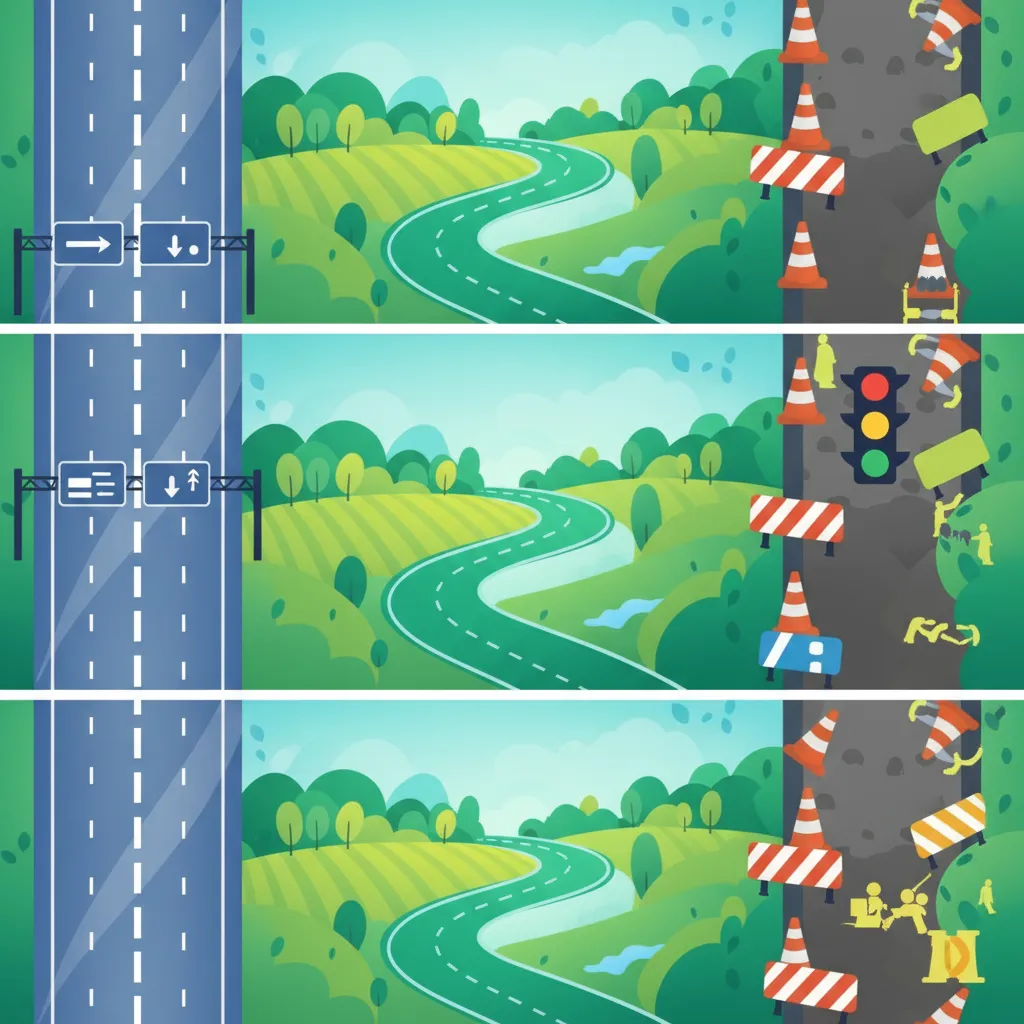
This lesson covers the specific challenges of driving on motorways, rural roads, and navigating roadworks. Learners will review lane discipline on high-speed roads and identify hazards common to rural roads, such as sharp bends and wildlife. It also explains the importance of adjusting speed and following temporary signage in construction zones.
This lesson details the proper use of all vehicle lights and signaling devices. It explains when to use low and high beams, fog lights, hazard lights, and turn signals to communicate effectively with other road users. Correct lighting usage improves visibility and safety, especially in adverse weather conditions and during hours of darkness.
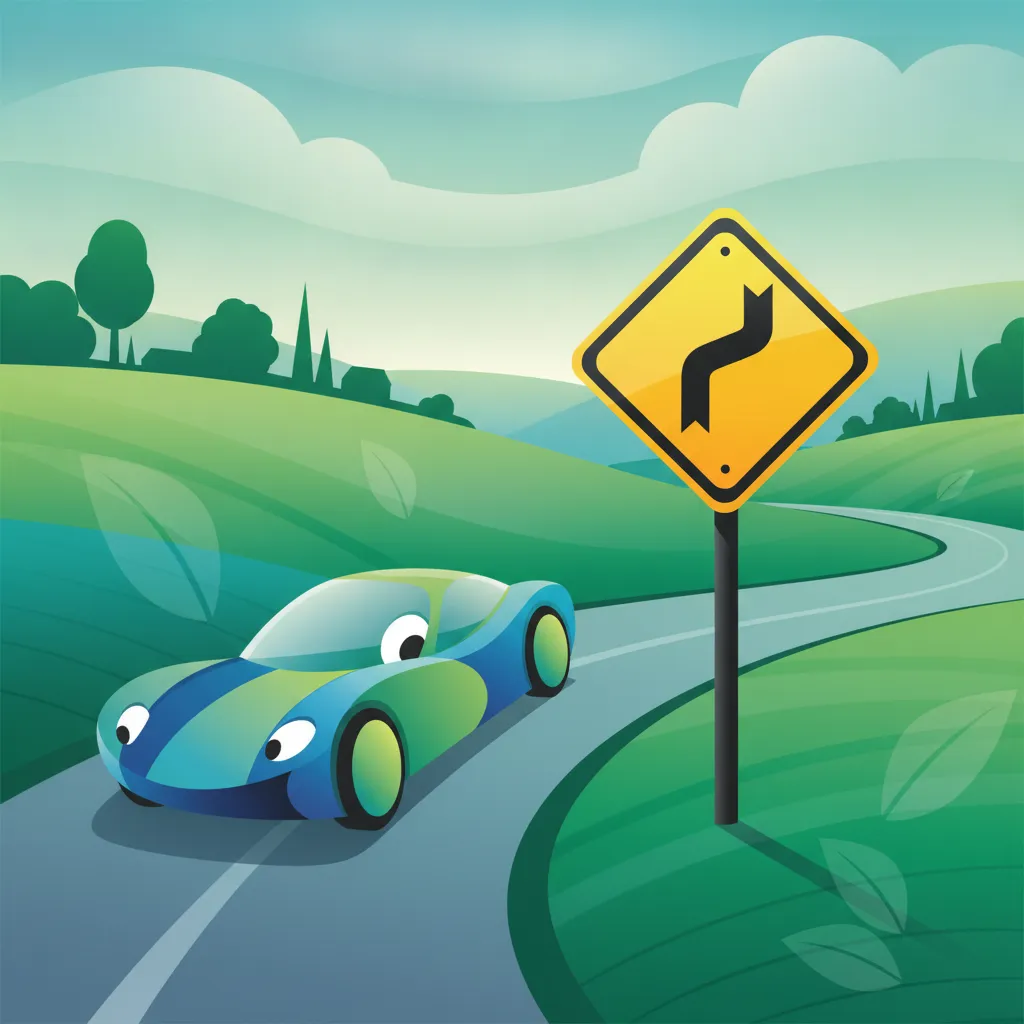
This lesson focuses on warning signs designed to alert drivers to potential hazards ahead. Topics include warnings for sharp curves, steep gradients, slippery surfaces, and zones with high pedestrian or wildlife activity. Learners will understand how to correctly interpret these signs and adjust their driving behavior to maintain safety on the road.
Learn to identify and manage risks like hydroplaning and reduced visibility caused by adverse weather. Focuses on essential speed adaptation and control techniques for safe driving.
This lesson covers the specific challenges of driving on motorways, rural roads, and navigating roadworks. Learners will review lane discipline on high-speed roads and identify hazards common to rural roads, such as sharp bends and wildlife. It also explains the importance of adjusting speed and following temporary signage in construction zones.
This lesson provides crucial advice for riding in rainy conditions, a frequent occurrence in Belgium. It explains how water on the road surface dramatically reduces tire grip, extends stopping distances, and creates a risk of hydroplaning. Riders will learn how to adjust their speed, increase following distances, and manage reduced visibility from rain and road spray to maintain safety.
This lesson details the specific precautions and techniques required for riding in rain and fog. It explains how water on the road affects tyre grip and braking distances, and how to avoid aquaplaning. You will learn the correct use of lights to be seen in low visibility and how to adjust your speed and following distance accordingly.
Driving safely requires anticipating potential hazards before they become immediate threats. This lesson covers hazard perception techniques, such as effective road scanning and identifying high-risk situations. Learners will practice recognizing common hazards and learn how to formulate a safe response plan in advance to avoid accidents.
This lesson focuses on warning signs designed to alert drivers to potential hazards ahead. Topics include warnings for sharp curves, steep gradients, slippery surfaces, and zones with high pedestrian or wildlife activity. Learners will understand how to correctly interpret these signs and adjust their driving behavior to maintain safety on the road.
This lesson focuses on the specific challenges of riding in adverse conditions such as rain, fog, and darkness, which severely reduce visibility. It provides practical strategies for riders to increase their own conspicuity through the use of lights and reflective gear. The content also explains how to adapt riding behavior, such as reducing speed and increasing following distance, to safely manage these high-risk situations.
This lesson focuses on the critical skill of managing traction by understanding how tyres interact with different road surfaces. It teaches you to identify and react to low-grip surfaces such as wet roads, gravel, painted markings, and manhole covers. You will learn how to adjust your speed, braking, and cornering to prevent loss of traction and maintain control.
This lesson details the proper use of all vehicle lights and signaling devices. It explains when to use low and high beams, fog lights, hazard lights, and turn signals to communicate effectively with other road users. Correct lighting usage improves visibility and safety, especially in adverse weather conditions and during hours of darkness.
This lesson teaches riders how to modify their technique and preparation in response to various weather conditions beyond just rain. It covers how to handle strong crosswinds, the effects of extreme heat on both the rider and the motorcycle, and the precautions for riding in cold temperatures. The focus is on proactive adaptation to ensure safety and comfort regardless of the weather.
Find clear answers to common questions learners have about Driving in Adverse Weather Conditions. Learn how the lesson is structured, which driving theory objectives it supports, and how it fits into the overall learning path of units and curriculum progression in Belgium. These explanations help you understand key concepts, lesson flow, and exam focused study goals.
You must use the rear fog light when visibility is reduced to less than 100 meters due to heavy fog or falling snow. It is strictly prohibited to use it during heavy rain, as the reflection can dazzle drivers behind you.
Because road grip is significantly reduced, the standard two-second rule is insufficient. You should increase your following distance to at least three or four seconds to allow for the increased stopping distance required on wet pavement.
The primary danger is the combination of dust, oil, and water, which creates a very slippery surface known as 'greasy road'. This significantly reduces tyre grip and increases the risk of skidding or loss of control.
You must stay calm, avoid sudden braking or sharp steering inputs, and gently ease off the accelerator. Keep the steering wheel straight until the tyres regain contact with the road surface and you feel the car respond to your inputs again.
Ready to focus your Belgian driving theory revision? Utilize our powerful search tool to pinpoint exact topics, road signs, or difficulty levels. Engage with practice questions that directly address your learning needs and solidify your understanding of Belgian traffic laws for your upcoming exam.