
This lesson explores the severe impact of alcohol and drugs on your ability to operate a moped or speed pedelec safely. It serves as a vital part of the final unit in your Category AM course, focusing on risk behavior and legal consequences. You will learn why impairment is incompatible with safe riding and how it impacts your standing under Belgian traffic law.
Lesson content overview
Riding a moped or speed pedelec (Category AM vehicle) on Belgian roads demands complete focus, swift reaction, and sound judgment. Any substance that impairs these critical abilities poses a severe threat not only to the rider but also to other road users. This lesson delves into the profound dangers of operating a vehicle under the influence of alcohol or drugs, outlining how these substances degrade essential riding skills and detailing the stringent legal repercussions enforced by Belgian law. Understanding these risks is fundamental to responsible road use and obtaining your Category AM license.
Operating a Category AM vehicle, such as a moped or speed pedelec, places you among the most vulnerable road users. Your limited protection means that even minor errors, particularly those stemming from impaired judgment or slow reactions, can lead to severe or fatal consequences. Alcohol and drugs directly attack the core faculties required for safe riding: perception, decision-making, and physical control. The effects are often insidious, making riders overestimate their capabilities while simultaneously reducing their ability to cope with unexpected situations.
This section will explore the specific ways various substances compromise your ability to ride safely, detailing the physiological impacts and the practical implications for navigating complex traffic scenarios.
Alcohol is a central nervous system depressant that profoundly affects cognitive functions and motor skills, even at low doses. As a rider, the precise control, balance, and quick decision-making needed for safe travel are among the first abilities to be compromised. The effects are not uniform; they depend on the amount consumed, the individual's physiology, and the speed of consumption.
Even a small amount of alcohol can begin to dull your senses and slow your processing speed. Alcohol first impacts higher brain functions like judgment and reasoning, leading to increased risk-taking and a false sense of confidence. As more alcohol is consumed, it progressively impairs motor control, coordination, and reaction time, making it difficult to maintain balance, steer accurately, or execute precise braking maneuvers. Vision can also be affected, leading to tunnel vision or difficulty adjusting to changes in light.
Alcohol can also induce drowsiness, especially during monotonous riding, significantly increasing the risk of losing control or falling asleep at the handlebars.
In Belgium, strict legal limits are in place to define when a person is considered unfit to ride due to alcohol consumption. Blood Alcohol Concentration (BAC) measures the amount of alcohol in your bloodstream, expressed as a percentage. Exceeding these limits carries severe legal consequences.
The amount of alcohol present in a person’s bloodstream, typically expressed as a percentage (e.g., 0.05% means 0.05 grams of alcohol per 100 milliliters of blood).
The Belgian highway code distinguishes between experienced and novice riders when setting BAC limits, acknowledging the heightened risk associated with inexperience.
Remember that even if you feel "fine" after a drink, your BAC might still exceed the legal limit. It is always safest to avoid alcohol entirely if you plan to ride.
Several factors determine how quickly alcohol enters your bloodstream and how long it takes to metabolize, making it difficult to estimate your BAC accurately without a test.
Beyond alcohol, a wide array of drugs, both legal and illegal, can severely impair your ability to ride a Category AM vehicle safely. The impact of drugs can be unpredictable, varying significantly based on the substance, dosage, individual sensitivity, and potential interactions with other medications or alcohol.
Belgium, like many countries, enforces a strict zero-tolerance policy for certain illicit drugs when it comes to driving or riding. This means that any detectable amount of these substances in your system can lead to a charge of riding under the influence, regardless of whether you "feel" impaired. This policy covers substances like:
These drugs profoundly alter perception, cognitive function, and motor skills, making safe riding impossible. They can induce hallucinations, paranoia, extreme drowsiness, heightened aggression, or a dangerous sense of invincibility, all of which are catastrophic behind the handlebars.
It is a common misconception that if a drug is legally prescribed or available over-the-counter, it is safe to use while riding. However, many medications carry side effects that can significantly impair your riding ability.
Always read the warning labels on all medications, both prescription and over-the-counter. If a label advises against operating heavy machinery or driving, it applies equally, if not more, to riding a Category AM vehicle. Consult your doctor or pharmacist about the potential impact of your medication on your riding ability.
The combination of alcohol with any drug, even mild ones, can lead to a synergistic effect, where the combined impairment is far greater than the sum of their individual effects. For example, mixing alcohol with antihistamines can lead to extreme sedation and a dramatic reduction in reaction time, making riding exceptionally hazardous.
Regardless of the substance, the primary concern for road safety revolves around how alcohol and drugs compromise three fundamental aspects of riding: reaction time, coordination, and judgment.
The interval between perceiving a hazard (e.g., a child running into the road, a sudden stop by the vehicle ahead) and initiating the appropriate physical response (e.g., braking, steering).
Substances like alcohol and many drugs significantly prolong a rider's reaction time. This delay can have catastrophic consequences, especially for AM riders who have less protection and are often underestimated by other traffic.
The ability to execute smooth, controlled, and precise movements, which is essential for steering, braking, maintaining balance, and operating the controls of a Category AM vehicle.
Riding a moped or speed pedelec requires a high degree of fine motor control and balance. Alcohol and drugs directly interfere with the brain's ability to coordinate these movements.
The capacity to accurately assess complex situations, perceive potential hazards, and make safe, rational decisions under pressure, such as choosing appropriate speed, maintaining safe distances, or deciding when it is safe to overtake.
Perhaps the most dangerous effect of alcohol and drugs is their impact on judgment. These substances can alter your perception of risk and your assessment of your own abilities.
Riding under the influence (RUI) of alcohol or drugs is a serious offense in Belgium, carrying substantial legal and financial penalties. These consequences are designed to deter such dangerous behavior and protect all road users.
The penalties for DUI are typically tiered, increasing in severity with higher BAC levels or the presence of prohibited drugs.
Beyond direct fines and license issues, riding under the influence can lead to a cascade of other problems:
The legal consequences for riding under the influence of drugs can be particularly severe, often mirroring those for high BAC alcohol offenses, especially given the zero-tolerance policy for illicit substances.
In Belgium, the presence of alcohol in your system, even if slightly above the legal limit, is automatically considered an indication of impairment under the law. You do not need to demonstrate visible signs of intoxication for a DUI charge to be valid. The legal system aims to prevent dangerous situations rather than react only after an accident has occurred.
The only sure way to avoid the dangers and legal penalties of riding under the influence is to commit to never mixing substances with riding. Responsible planning and decision-making are paramount.
Designate a Sober Rider: If you are with friends, ensure at least one person remains sober and can transport others or is available to pick you up.
Utilize Public Transport: If you plan to consume alcohol or drugs, use public transport, taxis, or ride-sharing services.
Plan Ahead: If you drive to an event where you might drink, arrange for an alternative ride home in advance. Never assume you will "sober up" quickly.
Understand "One Drink" is Not Always Safe: For novice AM riders, even a single alcoholic drink can push you over the 0.02% BAC limit. For experienced riders, the 0.05% limit can be reached more easily than anticipated, especially with multiple drinks or if you are tired.
Check Medication Labels: Always read warning labels on all medications and consult your doctor or pharmacist about side effects that could impact riding.
Wait it Out: If you have consumed alcohol, allow sufficient time for your body to metabolize it. Remember, it takes approximately one hour per standard drink, but this can vary. Err on the side of caution.
If in Doubt, Don't Ride: This simple rule is the most effective. If you have any doubt about your sobriety or alertness, do not get on your Category AM vehicle.
The influence of alcohol and drugs on riding ability represents one of the most significant threats to road safety for Category AM riders. These substances severely compromise your ability to perceive, react, and make sound judgments, turning a routine ride into a high-risk gamble. Belgium’s strict BAC limits, zero-tolerance drug policies, and severe penalties for DUI underscore the gravity of this issue.
By understanding how alcohol and drugs impair your skills and by committing to sober riding, you not only protect yourself from severe legal and financial consequences but, more importantly, you safeguard your life and the lives of others on the road. Always make the responsible choice: if you've consumed alcohol or drugs, do not ride.
This lesson explains how alcohol and drugs severely compromise the essential skills required for safe moped and speed pedelec riding, including reaction time, coordination, balance, and judgment. It details Belgium's specific legal framework, with 0.05% BAC for experienced riders and a stricter 0.02% for novice riders during their first two years, plus a zero-tolerance policy for illicit drugs. The content covers physiological effects of alcohol, the dangers of combining substances, impacts of prescription medications, and the substantial legal and financial penalties for DUI convictions including fines, license suspension, vehicle impoundment, and personal liability for damages.
A short set of high-value points that capture the most important learning from this lesson.
Alcohol is a central nervous system depressant that progressively impairs judgment, coordination, reaction time, and vision even at low doses
Belgian law sets the legal BAC limit at 0.05% for experienced AM riders and a stricter 0.02% for novice riders within their first two years
Belgium enforces a zero-tolerance policy for illicit drugs; any detectable amount of substances like cannabis, cocaine, or amphetamines leads to DUI charges
The body metabolizes approximately one standard drink per hour, and no shortcuts like coffee or cold showers speed up this process
Riding under the influence invalidates vehicle insurance, leaving riders personally liable for all damages and medical costs
Explore all units and lessons included in this driving theory course.
Novice AM riders are subject to the stricter 0.02% BAC limit during their first two years of licensing
Substance impairment directly degrades the three critical riding faculties: reaction time, coordination, and judgment
Combining alcohol with any drug creates a synergistic effect where combined impairment exceeds the sum of individual effects
Prescription and OTC medications can impair riding ability even when legally obtained; always check warning labels
The presence of alcohol above the legal limit is automatic legal presumption of impairment regardless of visible intoxication signs
Assuming they are fit to ride after feeling 'fine' following alcohol consumption, not accounting for actual BAC levels
Believing that food consumption prevents intoxication or significantly reduces BAC; it only slows absorption
Assuming prescribed or OTC medications are safe for riding without checking for side effects like drowsiness or dizziness
Underestimating how quickly the 0.02% novice limit can be exceeded with even a single drink
Thinking they can 'sober up' quickly before riding through coffee, cold showers, or exercise
Lesson content overview
A short set of high-value points that capture the most important learning from this lesson.
Alcohol is a central nervous system depressant that progressively impairs judgment, coordination, reaction time, and vision even at low doses
Belgian law sets the legal BAC limit at 0.05% for experienced AM riders and a stricter 0.02% for novice riders within their first two years
Belgium enforces a zero-tolerance policy for illicit drugs; any detectable amount of substances like cannabis, cocaine, or amphetamines leads to DUI charges
The body metabolizes approximately one standard drink per hour, and no shortcuts like coffee or cold showers speed up this process
Riding under the influence invalidates vehicle insurance, leaving riders personally liable for all damages and medical costs
Explore all units and lessons included in this driving theory course.
Novice AM riders are subject to the stricter 0.02% BAC limit during their first two years of licensing
Substance impairment directly degrades the three critical riding faculties: reaction time, coordination, and judgment
Combining alcohol with any drug creates a synergistic effect where combined impairment exceeds the sum of individual effects
Prescription and OTC medications can impair riding ability even when legally obtained; always check warning labels
The presence of alcohol above the legal limit is automatic legal presumption of impairment regardless of visible intoxication signs
Assuming they are fit to ride after feeling 'fine' following alcohol consumption, not accounting for actual BAC levels
Believing that food consumption prevents intoxication or significantly reduces BAC; it only slows absorption
Assuming prescribed or OTC medications are safe for riding without checking for side effects like drowsiness or dizziness
Underestimating how quickly the 0.02% novice limit can be exceeded with even a single drink
Thinking they can 'sober up' quickly before riding through coffee, cold showers, or exercise
Explore search topics learners often look for when studying Influence of Alcohol and Drugs on Riding Ability. These topics reflect common questions about road rules, driving situations, safety guidance, and lesson level theory preparation for learners in Belgium.
Browse additional driving theory lessons that cover connected traffic rules, road signs, and common driving situations related to this topic. Improve your understanding of how different rules interact across everyday traffic scenarios.
Understand the severe impact of alcohol and drugs on AM license riding in Belgium. Learn about Belgian blood alcohol concentration limits, how substances impair skills like reaction time and judgment, and the legal consequences of impaired riding.
This lesson details the dangerous effects of alcohol and drugs on a rider's coordination, judgment, and reaction time. It clearly outlines the legal blood alcohol concentration (BAC) limits for motorists in Belgium and the severe legal penalties for violations. The content also addresses the risks associated with riding while under the influence of prescription or over-the-counter medications.
This lesson explains how alcohol and drugs impair driving abilities, including reaction time, judgment, and coordination. Learners will study the legal blood alcohol concentration (BAC) limits in Belgium and the zero-tolerance policy for illicit substances. It also details the severe legal and personal consequences of driving while impaired.
This lesson outlines the system of penalties for traffic violations in Belgium, ensuring riders are fully aware of the consequences of illegal behavior. It covers common offenses like speeding and explains the structure of fines and the demerit point system that can lead to license suspension. The content emphasizes the significant financial and legal repercussions of non-compliance, reinforcing the importance of lawful and responsible riding.
This lesson focuses on the legal duties and responsibilities that an AM vehicle operator must uphold on Belgian roads. It covers critical rules such as adhering to speed limits, correctly applying right-of-way principles, and following regulations for overtaking other vehicles. The lesson also explains the system of fines and penalty points for traffic violations, emphasizing the legal consequences of non-compliance to foster responsible driving habits.
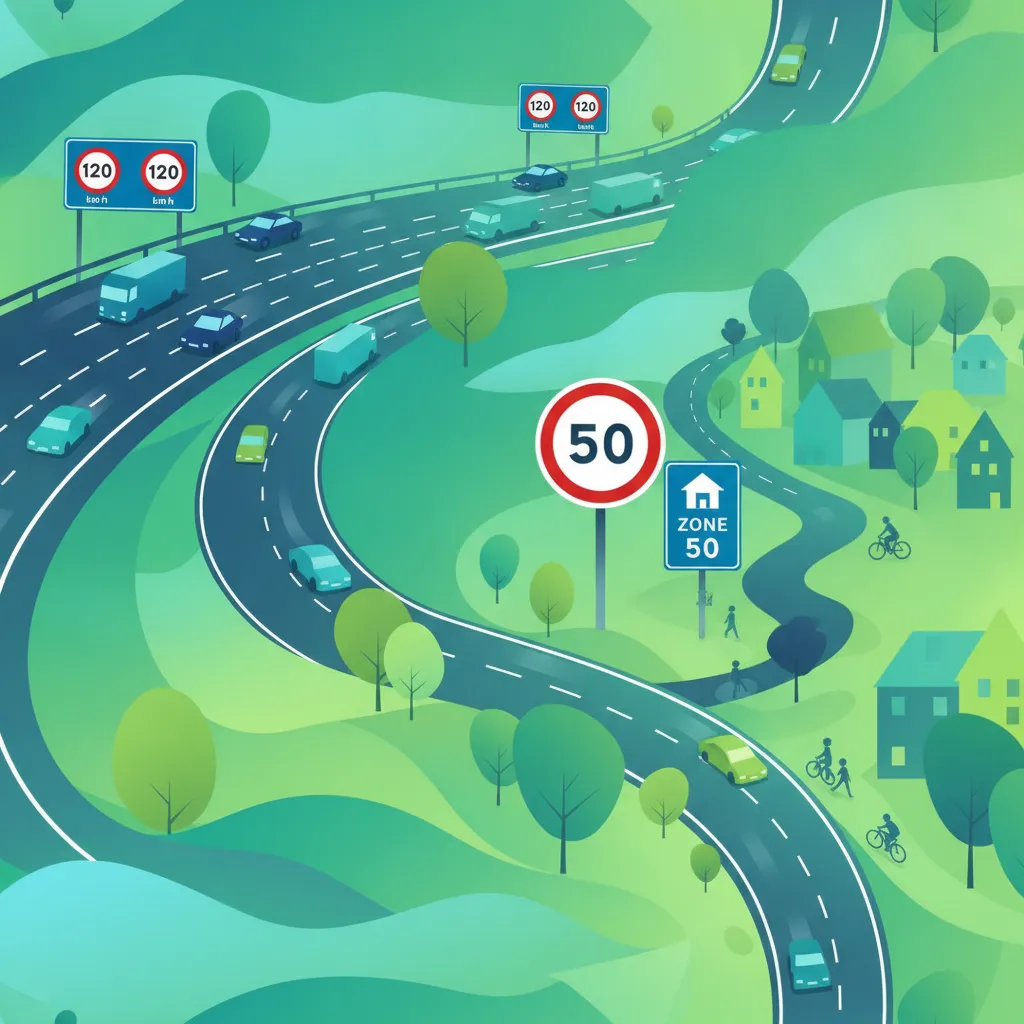
This lesson details the various legal speed limits applicable in Belgium, including those for urban, residential, and school zones. It explains the underlying safety rationale for these limits, linking speed to the severity of accidents and the time available to react to hazards. Learners will understand the difference between the maximum legal speed and a safe, appropriate speed for the prevailing conditions.
Explore how alcohol and drugs critically impair essential AM riding skills such as coordination and judgment. This lesson details the physiological effects and the significant legal and personal repercussions in Belgium for riding under the influence.
This lesson details the dangerous effects of alcohol and drugs on a rider's coordination, judgment, and reaction time. It clearly outlines the legal blood alcohol concentration (BAC) limits for motorists in Belgium and the severe legal penalties for violations. The content also addresses the risks associated with riding while under the influence of prescription or over-the-counter medications.
This lesson outlines the system of penalties for traffic violations in Belgium, ensuring riders are fully aware of the consequences of illegal behavior. It covers common offenses like speeding and explains the structure of fines and the demerit point system that can lead to license suspension. The content emphasizes the significant financial and legal repercussions of non-compliance, reinforcing the importance of lawful and responsible riding.
This lesson explains how alcohol and drugs impair driving abilities, including reaction time, judgment, and coordination. Learners will study the legal blood alcohol concentration (BAC) limits in Belgium and the zero-tolerance policy for illicit substances. It also details the severe legal and personal consequences of driving while impaired.
This lesson provides crucial advice for riding in rainy conditions, a frequent occurrence in Belgium. It explains how water on the road surface dramatically reduces tire grip, extends stopping distances, and creates a risk of hydroplaning. Riders will learn how to adjust their speed, increase following distances, and manage reduced visibility from rain and road spray to maintain safety.
This lesson focuses on the unique hazards associated with riding after dark. It emphasizes the importance of a fully functional lighting system and the use of reflective gear to be seen by others. The content explains how darkness affects depth perception and peripheral vision, requiring riders to reduce their speed to compensate for shorter sight distances and potential fatigue.
This lesson focuses on the legal duties and responsibilities that an AM vehicle operator must uphold on Belgian roads. It covers critical rules such as adhering to speed limits, correctly applying right-of-way principles, and following regulations for overtaking other vehicles. The lesson also explains the system of fines and penalty points for traffic violations, emphasizing the legal consequences of non-compliance to foster responsible driving habits.
This lesson is dedicated to warning signs, which are designed to alert drivers to potential dangers ahead. It covers the interpretation of signs indicating sharp curves, steep gradients, slippery surfaces, and the presence of pedestrians or animals. By understanding these warnings, riders can anticipate potential hazards and adjust their speed and position proactively for safer travel.
This lesson details the various legal speed limits applicable in Belgium, including those for urban, residential, and school zones. It explains the underlying safety rationale for these limits, linking speed to the severity of accidents and the time available to react to hazards. Learners will understand the difference between the maximum legal speed and a safe, appropriate speed for the prevailing conditions.
This lesson provides a step-by-step guide to executing turns and lane changes safely and efficiently. It covers the critical sequence of checking mirrors, signaling intent, and performing a head check for blind spots before any maneuver. Learners will also understand how to manage their speed and balance during cornering to maintain full control of the vehicle.
This lesson provides a clear and structured guide for responding to on-road emergencies such as a mechanical breakdown or a traffic accident. It details the steps for securing the scene safely, including the use of a warning triangle and high-visibility vest. Learners will understand how and when to contact emergency services via the 112 number and the basic principles of assisting anyone who may be injured.
Find clear answers to common questions learners have about Influence of Alcohol and Drugs on Riding Ability. Learn how the lesson is structured, which driving theory objectives it supports, and how it fits into the overall learning path of units and curriculum progression in Belgium. These explanations help you understand key concepts, lesson flow, and exam focused study goals.
In Belgium, the legal limit for alcohol in the blood is 0.5 per mille for all drivers, including those with a Category AM license. However, if you are a novice or under certain conditions, zero-tolerance policies may apply, and it is safest to not drink at all before riding.
Drugs, including illicit substances and certain prescribed medications, can severely distort your perception, slow your reaction times, and impair your motor coordination. On an exposed vehicle like a moped, these impairments significantly increase the risk of losing control or failing to notice hazards.
Yes, a conviction for riding under the influence with an AM license creates a criminal record and can result in heavy fines, license suspension, or a mandatory requirement to retake theory or practical exams. This will negatively impact your future driving privileges for all vehicle categories.
Exam questions often present specific scenarios, such as the effect of a certain number of drinks on reaction time or the legal consequences of refusal to take a breathalyzer test. You will need to demonstrate knowledge of both the law and the physiological effects of impairment.
Ready to focus your Belgian driving theory revision? Utilize our powerful search tool to pinpoint exact topics, road signs, or difficulty levels. Engage with practice questions that directly address your learning needs and solidify your understanding of Belgian traffic laws for your upcoming exam.