
This lesson explores critical techniques for operating your vehicle safely when Belgian roads are wet or rain-soaked. By understanding how moisture affects grip and visibility, you will gain the knowledge needed to handle your AM vehicle with confidence during your theory test and in real-world traffic.
Lesson content overview
Riding a moped or speed pedelec, especially with an AM license, demands heightened awareness of road conditions, particularly in adverse weather. In Belgium, where rain is a common occurrence, understanding how wet surfaces affect your vehicle's performance and your safety is not just beneficial—it's essential. This lesson delves into the critical challenges posed by riding in rain and wet conditions, offering practical strategies and outlining your legal responsibilities to ensure safe travel.
Water on the road surface dramatically changes how your small vehicle interacts with its environment. It reduces the friction between your tires and the road, extends stopping distances, and can severely impair visibility. Recognizing these fundamental changes is the first step towards adapting your riding behavior.
Traction refers to the grip or friction between your tires and the road surface. This friction is what allows your vehicle to accelerate, brake, and corner effectively. When rain falls, it creates a lubricating film between your tires and the asphalt, significantly reducing this crucial grip.
The friction force between the tires of a vehicle and the road surface, which enables movement, braking, and steering control.
Even a thin layer of water can diminish traction, making it harder to maintain control. This loss of grip means:
Painted road markings, metal drain covers, manhole covers, and even fallen leaves or oil slicks become exceptionally slippery when wet, acting like ice patches for your tires. Always exercise extreme caution when encountering these on a wet road.
One of the most critical effects of reduced traction in wet conditions is the increase in stopping distance. The total stopping distance is comprised of two main components:
On a wet road, the braking distance can double or even triple compared to dry conditions, even at the same speed. This means if you normally stop in 10 metres on a dry road, you might need 20-30 metres on a wet one. Failing to account for this extended stopping distance is a leading cause of rear-end collisions and other accidents in the rain.
Never assume your vehicle will stop as quickly on a wet road as it does on a dry one. Always anticipate and brake earlier and more gently.
Rain doesn't just affect the road; it severely impacts visibility for all road users. As a moped or speed pedelec rider, you are particularly vulnerable to these effects.
Reduced visibility means you have less time to identify hazards and react to changing traffic situations. It also means other drivers and pedestrians may have a harder time seeing you, increasing your risk of being involved in an accident.
One of the most dangerous phenomena associated with riding in wet conditions is hydroplaning (also known as aquaplaning).
A condition where a layer of water builds up between the tires of a vehicle and the road surface, causing the tires to lose contact with the road and the rider to lose control of the vehicle.
Hydroplaning occurs when your tires cannot displace the water fast enough, creating a wedge of water that lifts the tire off the road surface. When this happens, you lose all steering, braking, and acceleration control. It can occur in different forms:
Mopeds and speed pedelecs, with their relatively narrow tires and lighter weight, can be susceptible to hydroplaning, especially at higher speeds or when encountering significant puddles. Worn tires with insufficient tread depth significantly increase the risk, as they cannot channel water away effectively.
To counteract the dangers of reduced traction, increased stopping distances, and limited visibility, riders must make specific adjustments to their behavior.
The most critical adjustment you can make in the rain is to reduce your speed. This is a legal requirement in Belgium (Belgian Highway Code, Article 12) and a fundamental safety principle.
Given the extended stopping distances on wet roads, it is imperative to increase the gap between your vehicle and the one in front of you.
Making sure you are seen by other road users is just as important as being able to see yourself.
Consider equipping your helmet with a Pinlock anti-fog insert if you frequently ride in wet or cold weather. This drastically improves visor clarity.
Sudden movements are the enemy of traction on wet roads. Every input you make to your moped or speed pedelec should be smooth and gradual.
Your tires are the only part of your vehicle touching the road, making their condition paramount for safety in the rain.
The Belgian Highway Code (Code de la route / Wegcode) places clear responsibilities on drivers and riders to adapt to prevailing conditions.
Large puddles or areas of standing water are prime locations for hydroplaning.
Intersections, pedestrian crossings, and traffic light stop lines often feature painted markings, which become exceptionally slippery when wet.
When following other vehicles, especially trucks or buses, road spray can severely reduce your forward visibility.
Riding a moped or speed pedelec in rain and wet conditions requires a proactive and adaptable approach. The core principles revolve around understanding the physics of wet roads, recognizing the increased risks, and consciously adjusting your riding technique. By reducing speed, increasing following distance, ensuring maximum visibility, maintaining your tires, and controlling your vehicle smoothly, you can significantly mitigate the dangers and ensure a safer journey on Belgian roads, regardless of the weather.
This lesson covers essential wet weather riding techniques for Belgian AM licence candidates, explaining how water reduces tire traction and extends stopping distances significantly. It details the danger of hydroplaning and the importance of reducing speed, increasing following distances, and using headlights legally. Riders learn to make smooth, gradual inputs for braking and steering, maintain proper tire tread depth, and recognize that painted markings and metal surfaces become particularly hazardous when wet. The content references specific Belgian Highway Code articles mandating speed adaptation and lighting use, preparing riders for both the theory exam and real-world rainy conditions common in Belgium.
A short set of high-value points that capture the most important learning from this lesson.
Wet roads dramatically reduce tire traction, extending braking distances by two to three times compared to dry conditions
Hydroplaning occurs when tires cannot displace water fast enough, causing complete loss of steering and braking control
Reducing speed by 20-30% in rain gives tires more time to channel water away and reduces the risk of hydroplaning
Dipped beam headlights are legally mandatory in Belgium during rain, fog, or reduced visibility regardless of time of day
Painted road markings, manhole covers, and drain covers become exceptionally slippery when wet, acting like ice patches for two-wheeled vehicles
Explore all units and lessons included in this driving theory course.
Total stopping distance equals thinking distance plus braking distance—both components increase on wet surfaces
The Belgian Highway Code Article 12 requires adapting speed to visibility, road conditions, and presence of other users, not just posted limits
Worn tires with insufficient tread depth cannot channel water effectively and significantly increase hydroplaning risk
Smooth, gradual inputs for braking, accelerating, and steering are essential on wet roads—sudden movements cause skids
Three to four second following distance (versus two seconds in dry conditions) provides crucial extra reaction and braking space
Assuming braking distance remains the same in light rain—even a thin water layer noticeably reduces grip
Braking heavily on painted road markings or manhole covers when wet, causing front wheel lock-up and skidding
Failing to use headlights during rain, not realizing it is a mandatory legal requirement under Belgian law
Riding at posted speed limits without adjusting for reduced traction, visibility, or increased stopping distances
Making sudden steering corrections or aggressive leaning in corners on wet surfaces, leading to loss of control
Lesson content overview
A short set of high-value points that capture the most important learning from this lesson.
Wet roads dramatically reduce tire traction, extending braking distances by two to three times compared to dry conditions
Hydroplaning occurs when tires cannot displace water fast enough, causing complete loss of steering and braking control
Reducing speed by 20-30% in rain gives tires more time to channel water away and reduces the risk of hydroplaning
Dipped beam headlights are legally mandatory in Belgium during rain, fog, or reduced visibility regardless of time of day
Painted road markings, manhole covers, and drain covers become exceptionally slippery when wet, acting like ice patches for two-wheeled vehicles
Explore all units and lessons included in this driving theory course.
Total stopping distance equals thinking distance plus braking distance—both components increase on wet surfaces
The Belgian Highway Code Article 12 requires adapting speed to visibility, road conditions, and presence of other users, not just posted limits
Worn tires with insufficient tread depth cannot channel water effectively and significantly increase hydroplaning risk
Smooth, gradual inputs for braking, accelerating, and steering are essential on wet roads—sudden movements cause skids
Three to four second following distance (versus two seconds in dry conditions) provides crucial extra reaction and braking space
Assuming braking distance remains the same in light rain—even a thin water layer noticeably reduces grip
Braking heavily on painted road markings or manhole covers when wet, causing front wheel lock-up and skidding
Failing to use headlights during rain, not realizing it is a mandatory legal requirement under Belgian law
Riding at posted speed limits without adjusting for reduced traction, visibility, or increased stopping distances
Making sudden steering corrections or aggressive leaning in corners on wet surfaces, leading to loss of control
Explore search topics learners often look for when studying Riding in Rain and Wet Conditions. These topics reflect common questions about road rules, driving situations, safety guidance, and lesson level theory preparation for learners in Belgium.
Browse additional driving theory lessons that cover connected traffic rules, road signs, and common driving situations related to this topic. Improve your understanding of how different rules interact across everyday traffic scenarios.
Understand the critical impact of rain on traction, braking, and visibility for AM licence holders in Belgium. Learn essential adjustments to speed, following distance, and vehicle control to stay safe on wet roads and pass your theory exam.
This lesson details the specific precautions and techniques required for riding in rain and fog. It explains how water on the road affects tyre grip and braking distances, and how to avoid aquaplaning. You will learn the correct use of lights to be seen in low visibility and how to adjust your speed and following distance accordingly.
This lesson focuses on driving safely in adverse weather like rain, fog, and low sun glare, which affects road friction and visibility. It provides guidelines on speed adaptation, maintaining a safe following distance, and the proper use of vehicle equipment like lights and wipers. Learners will understand how to reduce risks like hydroplaning and skidding.
This lesson focuses on the specific challenges of riding in adverse conditions such as rain, fog, and darkness, which severely reduce visibility. It provides practical strategies for riders to increase their own conspicuity through the use of lights and reflective gear. The content also explains how to adapt riding behavior, such as reducing speed and increasing following distance, to safely manage these high-risk situations.
This lesson teaches riders how to modify their technique and preparation in response to various weather conditions beyond just rain. It covers how to handle strong crosswinds, the effects of extreme heat on both the rider and the motorcycle, and the precautions for riding in cold temperatures. The focus is on proactive adaptation to ensure safety and comfort regardless of the weather.
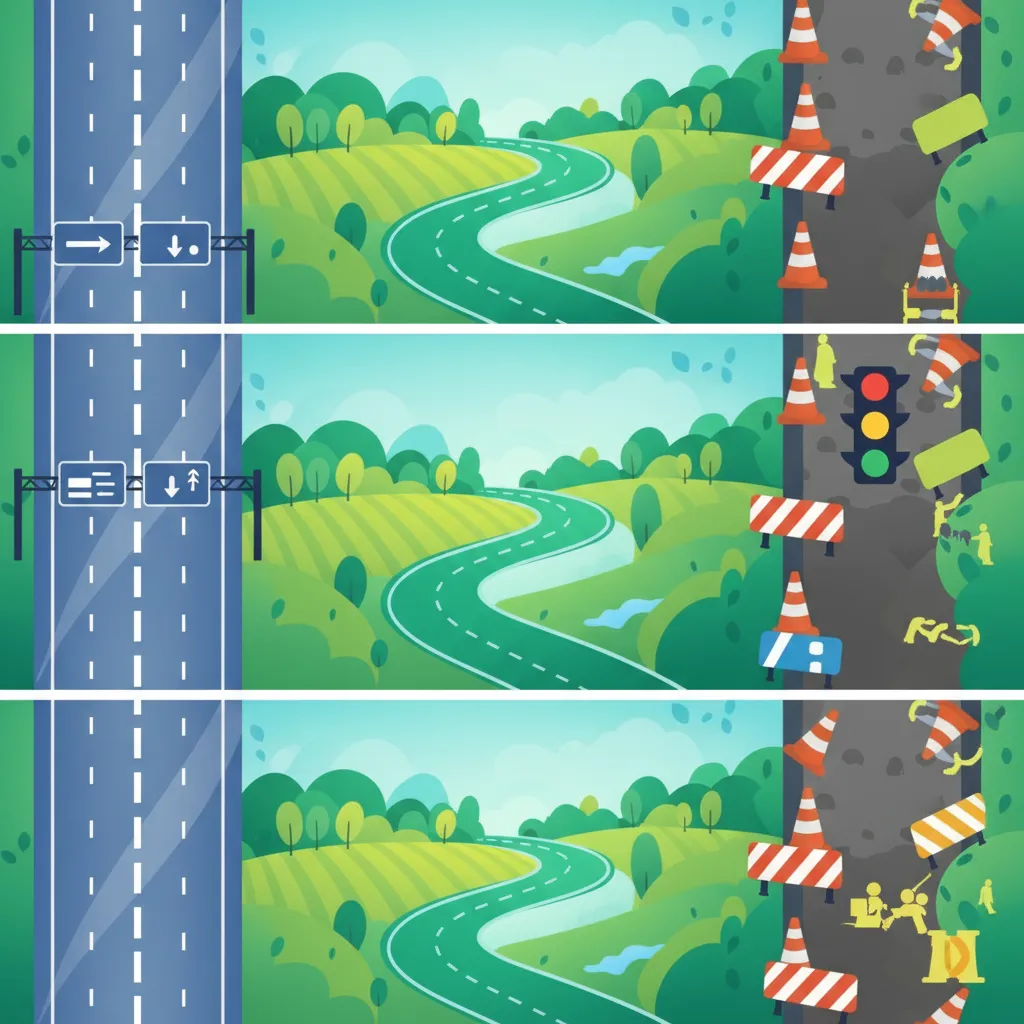
This lesson covers the specific challenges of driving on motorways, rural roads, and navigating roadworks. Learners will review lane discipline on high-speed roads and identify hazards common to rural roads, such as sharp bends and wildlife. It also explains the importance of adjusting speed and following temporary signage in construction zones.
This lesson explores the concept of tire grip, or traction, and its importance for vehicle stability and control. It explains how different road surfaces, such as wet asphalt, gravel, or oily patches, can reduce grip and increase the risk of skidding. The content also highlights the role of correct tire pressure in maintaining optimal contact with the road, helping riders avoid a loss of traction.
This lesson focuses on the critical skill of managing traction by understanding how tyres interact with different road surfaces. It teaches you to identify and react to low-grip surfaces such as wet roads, gravel, painted markings, and manhole covers. You will learn how to adjust your speed, braking, and cornering to prevent loss of traction and maintain control.
Learn advanced techniques for maintaining control of your AM vehicle in rain, focusing on hydroplaning risks, tire grip, and adapting braking and acceleration. This lesson covers essential theory for navigating hazardous wet road conditions safely.
This lesson focuses on driving safely in adverse weather like rain, fog, and low sun glare, which affects road friction and visibility. It provides guidelines on speed adaptation, maintaining a safe following distance, and the proper use of vehicle equipment like lights and wipers. Learners will understand how to reduce risks like hydroplaning and skidding.
Driving safely requires anticipating potential hazards before they become immediate threats. This lesson covers hazard perception techniques, such as effective road scanning and identifying high-risk situations. Learners will practice recognizing common hazards and learn how to formulate a safe response plan in advance to avoid accidents.
This lesson details the specific precautions and techniques required for riding in rain and fog. It explains how water on the road affects tyre grip and braking distances, and how to avoid aquaplaning. You will learn the correct use of lights to be seen in low visibility and how to adjust your speed and following distance accordingly.
This lesson focuses on warning signs designed to alert drivers to potential hazards ahead. Topics include warnings for sharp curves, steep gradients, slippery surfaces, and zones with high pedestrian or wildlife activity. Learners will understand how to correctly interpret these signs and adjust their driving behavior to maintain safety on the road.
This lesson explores the concept of tire grip, or traction, and its importance for vehicle stability and control. It explains how different road surfaces, such as wet asphalt, gravel, or oily patches, can reduce grip and increase the risk of skidding. The content also highlights the role of correct tire pressure in maintaining optimal contact with the road, helping riders avoid a loss of traction.
This lesson covers the specific challenges of driving on motorways, rural roads, and navigating roadworks. Learners will review lane discipline on high-speed roads and identify hazards common to rural roads, such as sharp bends and wildlife. It also explains the importance of adjusting speed and following temporary signage in construction zones.
This lesson details the proper use of all vehicle lights and signaling devices. It explains when to use low and high beams, fog lights, hazard lights, and turn signals to communicate effectively with other road users. Correct lighting usage improves visibility and safety, especially in adverse weather conditions and during hours of darkness.
This lesson focuses on the specific challenges of riding in adverse conditions such as rain, fog, and darkness, which severely reduce visibility. It provides practical strategies for riders to increase their own conspicuity through the use of lights and reflective gear. The content also explains how to adapt riding behavior, such as reducing speed and increasing following distance, to safely manage these high-risk situations.
This lesson focuses on the critical skill of managing traction by understanding how tyres interact with different road surfaces. It teaches you to identify and react to low-grip surfaces such as wet roads, gravel, painted markings, and manhole covers. You will learn how to adjust your speed, braking, and cornering to prevent loss of traction and maintain control.
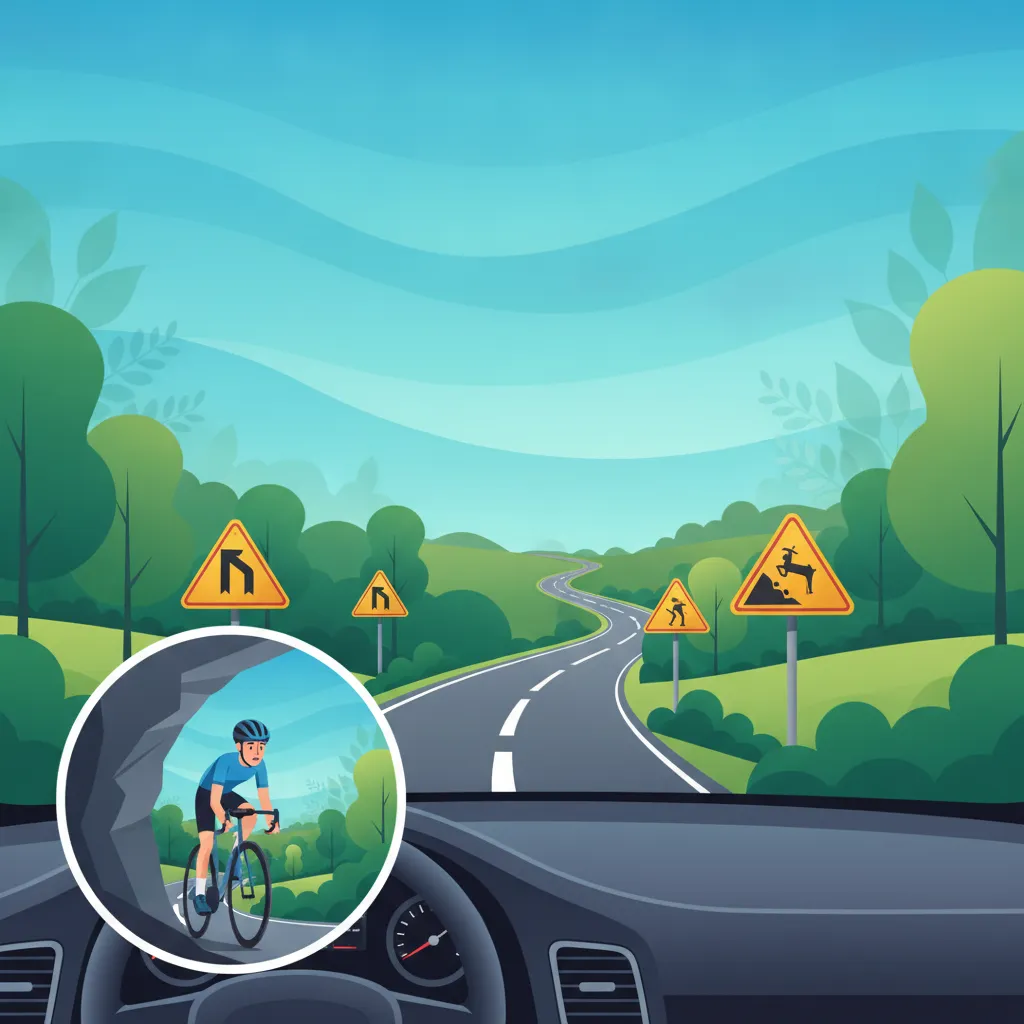
This lesson is dedicated to warning signs, which are designed to alert drivers to potential dangers ahead. It covers the interpretation of signs indicating sharp curves, steep gradients, slippery surfaces, and the presence of pedestrians or animals. By understanding these warnings, riders can anticipate potential hazards and adjust their speed and position proactively for safer travel.
Find clear answers to common questions learners have about Riding in Rain and Wet Conditions. Learn how the lesson is structured, which driving theory objectives it supports, and how it fits into the overall learning path of units and curriculum progression in Belgium. These explanations help you understand key concepts, lesson flow, and exam focused study goals.
Road markings are often made of materials that become extremely slippery when wet. Avoid braking or making sharp turns directly on white painted lines to prevent your tyres from sliding.
On wet roads, your tyres have less friction with the surface, which significantly increases your stopping distance. You must leave a much larger safety gap between you and the vehicle in front than you would in dry weather.
Yes, using your vehicle's lighting in low visibility conditions is crucial. Even during the day, light rain or spray can make you invisible to other drivers, so always ensure your lights are working correctly.
If you feel your steering become light or unresponsive, remain calm and avoid sudden braking or steering. Gently ease off the throttle and keep your handlebars straight until you feel the tyres regain contact with the road surface.
Ready to focus your Belgian driving theory revision? Utilize our powerful search tool to pinpoint exact topics, road signs, or difficulty levels. Engage with practice questions that directly address your learning needs and solidify your understanding of Belgian traffic laws for your upcoming exam.