
This lesson teaches you how to implement a systematic visual scanning strategy to detect potential dangers on Danish roads. As part of your motorcycle training, these skills are crucial for managing risks and ensuring you pass the theory exam for A1, A2, or A licenses.

Lesson content overview
Operating a motorcycle safely requires a heightened level of awareness and proactive skill. Due to their smaller size, reduced stability, and increased vulnerability compared to other vehicles, motorcyclists must actively gather information from their surroundings to anticipate potential hazards long before they become immediate threats. This lesson delves into advanced visual scanning techniques, providing you with the essential tools to systematically observe and interpret the road environment, thereby creating more time and space for safe decision-making on Danish roads.
Visual scanning is more than just looking; it is the continuous, systematic movement of your gaze to gather comprehensive information about the entire traffic environment. For motorcyclists, mastering this skill is paramount. Your ability to detect potential dangers, understand complex traffic situations, and predict the actions of other road users directly impacts your safety and control.
Proactive scanning minimizes the risk of being caught off guard by unforeseen circumstances, such as sudden braking by a vehicle ahead, objects on the road, or other road users emerging from blind spots. It is the cornerstone of defensive riding, allowing you to maintain optimal speed, choose the safest lane position, and execute maneuvers with confidence. This fundamental skill underpins many other safety concepts discussed in the Danish Motorcycle Theory curriculum, including effective mirror use, blind spot management, and strategic lane positioning.
Effective visual scanning for motorcyclists involves four interconnected principles: looking far ahead, scanning near the motorcycle, monitoring side-to-side, and employing a systematic search pattern. Integrating these principles ensures you maintain a comprehensive understanding of your dynamic riding environment.
Definition: Scanning far ahead means continuously directing your gaze towards the horizon and the distant road, typically aiming to look 15 to 30 seconds into your path of travel. This extends beyond the immediate view to identify potential hazards or changes in traffic flow well in advance.
Purpose: The primary purpose of looking far ahead is to provide ample time for planning. By spotting distant traffic lights, approaching junctions, changes in road geometry, or heavy traffic flow early, you can anticipate necessary adjustments to your speed, gear, and lane position. This proactive approach avoids abrupt braking, sudden steering inputs, and last-minute decisions, leading to smoother, safer riding.
Think of scanning far ahead as having a "crystal ball" for the road. The further you can see and understand what's coming, the more time you have to prepare and react safely.
Definition: Near vision scanning involves observing the immediate surroundings of your motorcycle, focusing on the road surface and adjacent vehicles within approximately 1 to 2 seconds of your current position. This is the area directly in front of and around your wheels.
Purpose: While far scanning is for planning, near scanning is for immediate hazard detection. This includes identifying critical, close-range obstacles such as potholes, debris, oil spills, changing road surface conditions (e.g., wet patches), or vehicles that might suddenly decelerate or change direction right in front of you. This rapid detection allows for timely, precise adjustments to avoid immediate threats.
Definition: Side-to-side scanning, also known as horizontal scanning, involves regularly moving your gaze left and right to monitor traffic in adjacent lanes, vehicles attempting to overtake, and potential road users approaching from the sides. This encompasses quick glances into mirrors and over your shoulders.
Purpose: The goal of side-to-side scanning is to identify any vehicles that might be in your blind spots or attempting to merge, overtake, or cross your path. It is crucial before making any lane changes, turns, or merges to confirm the safety of your intended maneuver. Effective side scanning supports appropriate lane positioning and ensures you are aware of your immediate lateral environment.
Definition: A systematic search pattern is a predictable and repeatable sequence of gaze movements that integrates far, near, and side-to-side scanning. Instead of random glances, it establishes a routine for observing all relevant zones around your motorcycle.
Purpose: Implementing a systematic search pattern prevents gaze fixation, where a rider inadvertently stares at one point, and tunnel vision, which narrows your field of view to only the central focus. A consistent pattern ensures that all critical areas of the road environment are monitored regularly, significantly reducing the chance of missing a hazard due to distraction or oversight. For motorcyclists, patterns often resemble a 'Z' or 'V' shape, rapidly shifting focus between different zones.
Building upon the core principles, let's explore these scanning techniques in more detail, along with their practical implications for safe motorcycling.
Far ahead scanning can be further broken down into long-range scanning (15-30 seconds ahead) and intermediate scanning (5-15 seconds ahead). Long-range focus helps you identify major changes like approaching towns, road construction, or significant traffic congestion. Intermediate scanning helps you prepare for specific features like upcoming intersections, traffic lights, curves, or changes in lane configurations.
Practical Application: When approaching a complex intersection in Denmark, your long-range scan would identify the intersection's overall layout and traffic signals. Your intermediate scan would then focus on the specific lanes, potential turning vehicles, and pedestrian crossings as you get closer. This layered approach ensures you are never surprised by what lies ahead.
Common Mistakes: A frequent error is "tuning out" the far distance, focusing only on the vehicle directly in front. This can lead to a delayed reaction to a sudden slowdown several cars ahead or a red light that has been visible for some time, forcing harsh braking.
Near vision scanning includes immediate scanning (0-2 seconds ahead) and transitional scanning (2-5 seconds ahead). Immediate scanning is about directly under your wheels, crucial for spotting small, sudden obstacles. Transitional scanning gives you a brief moment to react to things just beyond your immediate path.
Practical Application: Imagine riding on a rural Danish road. Your immediate scan would detect a small pothole or loose gravel directly in your path, allowing you to steer around it. Your transitional scan might spot a car ahead suddenly activating its brake lights, prompting you to cover your own brakes in anticipation.
Associated Rules: While not a specific scanning rule, maintaining a safe following distance is inherently linked to near vision scanning. If you are too close, you lack the time to react to what your near scan reveals. Danish traffic law implicitly requires maintaining a distance sufficient to stop safely, which is directly supported by effective near vision scanning.
Side-to-side scanning integrates both peripheral vision checks and over-the-shoulder checks. Peripheral vision constantly monitors movement and changes in light or shape in your side vision. Over-the-shoulder checks (often called a "lifesaver" check) are a deliberate head turn to confirm an area not visible in mirrors or peripheral vision, particularly the crucial blind spot.
Practical Application: Before initiating a lane change on a motorway, you would first check your mirrors (side-to-side mirror check), then perform a quick over-the-shoulder check to confirm no vehicle is lurking in your blind spot. This sequence ensures comprehensive awareness of your lateral environment.
Common Mistakes: Relying solely on mirrors is a dangerous mistake. Mirrors have blind spots, and only a physical head turn can fully confirm a clear path, especially for lane changes or turns. Danish traffic rules regarding overtaking and lane changes (e.g., as covered implicitly by § 5 of the Road Traffic Act concerning safe maneuvers) necessitate awareness of blind spots.
Never change lanes or make a significant lateral movement without performing a thorough over-the-shoulder check, even if your mirrors appear clear.
A systematic search pattern, such as a Z-pattern or V-pattern, helps you cover all critical zones consistently. For example, a Z-pattern might involve scanning far ahead, then dropping your gaze to the near road, then quickly glancing left, then right, before returning far ahead. This rhythm ensures no area is consistently overlooked.
Practical Application: While cruising, establish a rhythm: gaze far ahead, then quickly sweep across the road surface directly in front, then check your left mirror, then your right mirror, then perhaps a quick glance over your shoulder if traffic is dense, before repeating the sequence. The frequency and speed of this pattern should adapt to your current speed and traffic conditions.
Common Mistakes: Random or erratic scanning patterns often lead to missed hazards. Riders might fixate on a specific vehicle, overlook an emerging hazard from the side, or miss critical changes in the road surface. Consistent practice builds the habit of a reliable search pattern.
While the Danish Road Traffic Act (Færdselsloven) does not explicitly detail the precise method or frequency of visual scanning, it implicitly requires all drivers, including motorcyclists, to maintain a high degree of vigilance and situational awareness.
The general duty of care stipulated in § 54 and § 74 of the Danish Road Traffic Act mandates that road users must adapt their driving to the circumstances, pay attention, and exercise caution. This legal requirement inherently demands continuous and effective visual scanning. A rider who fails to notice a significant hazard due to poor scanning could be deemed negligent if an incident occurs. Therefore, mastering visual scanning is not just a safety recommendation but a practical interpretation of your legal obligations as a responsible motorcyclist.
Danish traffic regulations, particularly those concerning overtaking and lane changes (e.g., § 5 regarding proper lane usage and ensuring safety before changing direction or lane), necessitate thorough observation. This means that frequent mirror checks, supplemented by crucial over-the-shoulder checks to manage blind spots, are not merely best practices but an implicit legal expectation for safe riding. Neglecting these checks before a maneuver can result in a collision and legal repercussions.
Even experienced riders can fall prey to poor scanning habits. Recognizing these common mistakes is the first step toward correcting them and improving your safety.
Tunnel Vision: This occurs when a rider fixates on a single point (e.g., the car directly ahead, a perceived threat) and neglects to scan the broader environment.
Neglecting Side Checks (Blind Spot Neglect): Failing to perform over-the-shoulder checks before changing lanes or turning.
Speed-Dependent Scanning Failure: Maintaining the same scanning pattern regardless of speed. At higher speeds, your environment changes faster, requiring more frequent and wider scans.
Failure to Scan Intersections Comprehensively: Only looking straight ahead at traffic lights or signs without scanning for cross-traffic, pedestrians, or turning vehicles.
Scanning Only Where Anticipated: Limiting your scanning to areas where you expect hazards (e.g., looking only at driveways on the right side of the road).
Effective visual scanning is dynamic. It must be adapted to a variety of environmental and contextual factors to remain effective.
The relationship between visual scanning and motorcycle safety is a direct cause-and-effect chain:
Train your eyes and mind to be constantly active. Make scanning a subconscious habit, and you will dramatically improve your ability to ride safely and confidently.
Let's look at how effective visual scanning translates into practical riding scenarios.
Approaching an Intersection with Traffic Lights:
Cruising on a Danish Motorway (Motorvej):
Riding Through a Residential Area with Parked Cars:
Visual scanning is the fundamental skill that empowers motorcyclists to ride safely and proactively. It involves a systematic, continuous observation of the road environment by combining:
Employing a systematic search pattern prevents gaze fixation and ensures comprehensive coverage of all critical zones. This dynamic skill must be adapted to changing conditions such as weather, light, road type, and the presence of vulnerable road users. Effective scanning directly translates into increased hazard detection, more time to react, better situational awareness, and ultimately, safer riding decisions. Mastering these strategies is essential for passing your Danish motorcycle theory exam and, more importantly, for a lifetime of safe and confident motorcycling.
Visual scanning is the cornerstone of motorcycle safety, involving systematic observation through far vision (15-30 seconds ahead for planning), near vision (1-2 seconds for immediate threats), and side-to-side checks to monitor adjacent traffic and blind spots. Effective scanning prevents dangerous fixation and tunnel vision while building situational awareness that enables proactive rather than reactive riding. This skill must adapt dynamically to speed, weather conditions, road type (urban, rural, motorway), and the presence of vulnerable road users. Mastering these techniques is essential for passing the Danish motorcycle theory exam (A1, A2, A licenses) and fulfilling the vigilance obligations under Danish traffic law.
A short set of high-value points that capture the most important learning from this lesson.
Use a systematic three-zone scanning pattern combining far ahead (15-30 seconds), near vision (1-2 seconds), and side-to-side checks to detect hazards before they become immediate threats
Far vision enables proactive planning of speed and lane position, while near vision allows immediate reaction to sudden obstacles
A consistent search pattern (Z or V shape) prevents dangerous gaze fixation and tunnel vision
Mirrors alone are insufficient—over-the-shoulder checks are mandatory to verify blind spots before any lateral maneuver
Scanning must be dynamic: increase frequency and range as speed increases to maintain adequate reaction time
Explore all units and lessons included in this driving theory course.
Far scanning: 15-30 seconds ahead for planning; Near scanning: 1-2 seconds for immediate hazards; Side-to-side: mirrors plus head turns
The over-the-shoulder 'lifesaver' check is non-negotiable even when mirrors appear clear
Danish Road Traffic Act §§ 54 and 74 require vigilance; § 5 mandates safe observation before lane changes or turns
Intersections require a left-right-left pattern with extra attention to the direction you're crossing
Speed determines scanning frequency—the faster you go, the quicker your eyes must move
Tunnel vision: fixating on the vehicle ahead and missing hazards outside that narrow focus, such as distant brake lights or side traffic
Neglecting blind spot checks: relying solely on mirrors before lane changes, risking collision with vehicles not visible in mirrors
Speed-independent scanning: using the same scanning pattern at motorway speeds as in city traffic, reducing reaction time
Insufficient intersection scanning: looking only at traffic lights or straight ahead without checking cross-traffic, pedestrians, or turning vehicles
Expectation-based scanning: only watching areas where hazards are anticipated and missing unexpected dangers from unusual locations
Lesson content overview
A short set of high-value points that capture the most important learning from this lesson.
Use a systematic three-zone scanning pattern combining far ahead (15-30 seconds), near vision (1-2 seconds), and side-to-side checks to detect hazards before they become immediate threats
Far vision enables proactive planning of speed and lane position, while near vision allows immediate reaction to sudden obstacles
A consistent search pattern (Z or V shape) prevents dangerous gaze fixation and tunnel vision
Mirrors alone are insufficient—over-the-shoulder checks are mandatory to verify blind spots before any lateral maneuver
Scanning must be dynamic: increase frequency and range as speed increases to maintain adequate reaction time
Explore all units and lessons included in this driving theory course.
Far scanning: 15-30 seconds ahead for planning; Near scanning: 1-2 seconds for immediate hazards; Side-to-side: mirrors plus head turns
The over-the-shoulder 'lifesaver' check is non-negotiable even when mirrors appear clear
Danish Road Traffic Act §§ 54 and 74 require vigilance; § 5 mandates safe observation before lane changes or turns
Intersections require a left-right-left pattern with extra attention to the direction you're crossing
Speed determines scanning frequency—the faster you go, the quicker your eyes must move
Tunnel vision: fixating on the vehicle ahead and missing hazards outside that narrow focus, such as distant brake lights or side traffic
Neglecting blind spot checks: relying solely on mirrors before lane changes, risking collision with vehicles not visible in mirrors
Speed-independent scanning: using the same scanning pattern at motorway speeds as in city traffic, reducing reaction time
Insufficient intersection scanning: looking only at traffic lights or straight ahead without checking cross-traffic, pedestrians, or turning vehicles
Expectation-based scanning: only watching areas where hazards are anticipated and missing unexpected dangers from unusual locations
Explore search topics learners often look for when studying Visual Scanning Strategies for Motorcyclists. These topics reflect common questions about road rules, driving situations, safety guidance, and lesson level theory preparation for learners in Denmark.
Browse additional driving theory lessons that cover connected traffic rules, road signs, and common driving situations related to this topic. Improve your understanding of how different rules interact across everyday traffic scenarios.
Explore how to adjust visual scanning strategies for the unique challenges of urban traffic, rural roads, and high-speed motorways in Denmark. Understand how different environments require varying scanning frequencies and focus.

This lesson prepares riders for the specific hazards of rural roads, which often have less visibility and more unpredictable surfaces. It covers strategies for approaching blind curves, safely passing agricultural machinery, and being vigilant for animals on the road. Adjusting speed to match visibility is a core principle.

This lesson addresses the unique challenges of streets with dedicated cycle lanes and numerous bus stops. It teaches riders how to anticipate pedestrians moving to and from buses and how to position themselves to avoid conflict with cyclists. The goal is to navigate these complex environments smoothly and safely.

This lesson focuses on safe interactions with Denmark's large population of cyclists and other vulnerable road users. It covers the rules for passing cyclists, yielding at pedestrian crossings, and the specific hazard of turning across a bike lane. Developing heightened awareness for these interactions is critical for urban riding.

This lesson contrasts the driving techniques required for rural roads and motorways. It covers managing speed on narrow, winding lanes with potential hazards like farm machinery or animals. The content also explains the principles of safe motorway driving, including maintaining lane discipline, managing high-speed stability, and executing safe overtaking maneuvers.

This lesson provides a guide to motorway riding, a high-speed and demanding environment. It details the process for using acceleration lanes to merge smoothly, maintaining proper lane discipline, and preparing for exits well in advance. Key safety principles like the two-second rule are reinforced for this context.
Learn essential techniques for using mirrors effectively and performing critical over-the-shoulder checks to identify and manage motorcycle blind spots. Understand how these skills are vital for safe lane changes and overall situational awareness in Danish traffic.

This lesson details the proper technique for using mirrors and performing shoulder checks to maintain 360-degree awareness. It explains how to adjust mirrors for maximum visibility and emphasizes that a shoulder check is the only way to see into the vehicle's blind spot. These actions are critical before any change in position, such as turning or changing lanes.

This lesson provides an in-depth look at the blind spots of other vehicles and how to manage them. It teaches riders to recognize the large 'no-zones' around trucks and buses where they cannot be seen. Strategies include avoiding lingering in these areas and positioning the motorcycle for maximum visibility.

This lesson focuses on developing robust observation habits, which are critical for safe driving. It details the proper use of all mirrors and explains the necessity of shoulder checks to cover blind spots before any manoeuvre. You will learn a systematic scanning routine to constantly monitor the traffic environment, helping you anticipate potential hazards and maintain full situational awareness.

This lesson teaches the effective use of mirrors and on-board camera systems for comprehensive spatial awareness. It explains how to correctly adjust all mirrors to minimize blind spots and how to integrate camera views into a regular scanning routine. The content emphasizes the importance of combining mirror checks with direct observation to detect vulnerable road users hidden in blind zones.
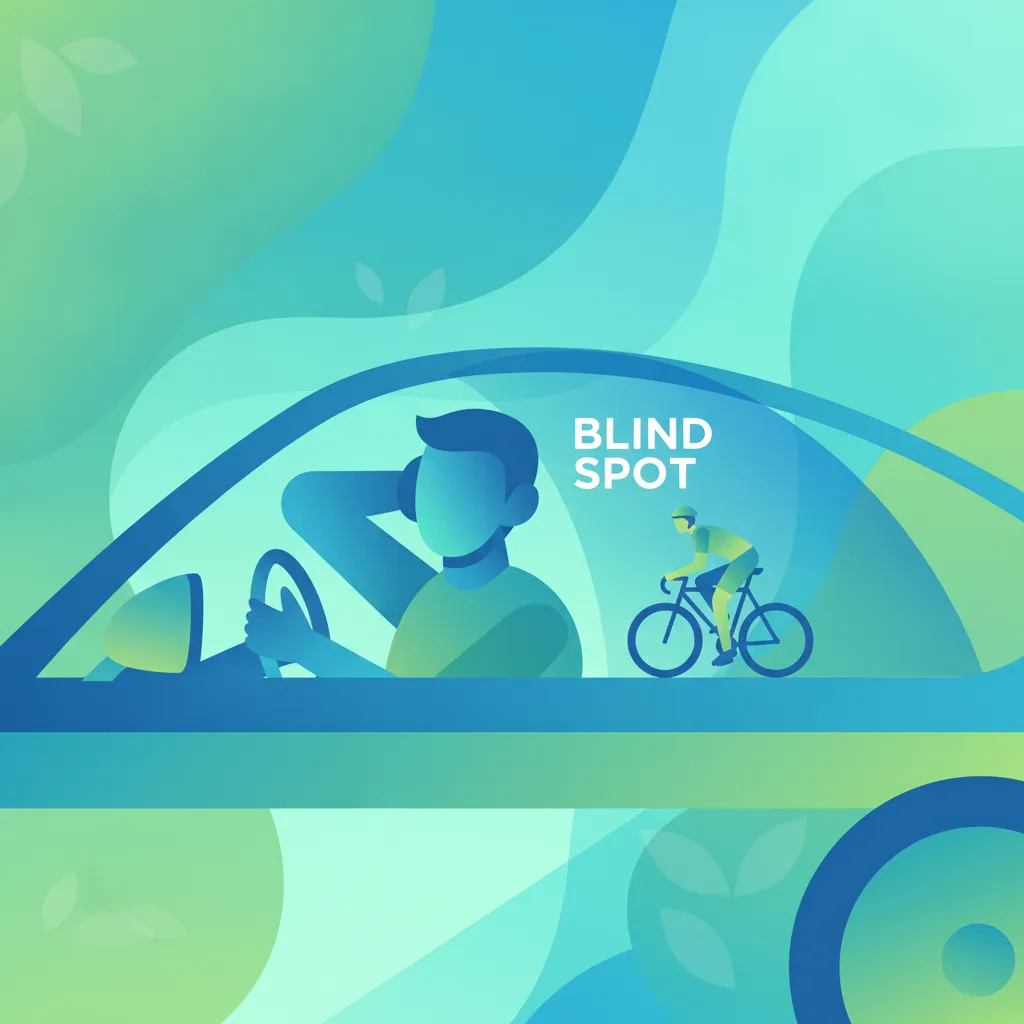
This lesson provides an in-depth analysis of the size and location of blind spots around a typical passenger bus. It teaches systematic scanning patterns that incorporate all mirrors, cameras, and direct head checks to maintain situational awareness. The content highlights high-risk areas where cyclists, pedestrians, or small vehicles can become hidden from view, especially during turns.

This lesson explains the strategic importance of lane positioning for a motorcyclist. It teaches how to select a position within the lane that makes you most visible to other road users and provides an escape route from potential hazards. The content covers how to adjust your position based on traffic, road conditions, and to avoid being in another vehicle's blind spot.

This lesson breaks down the critical skill of overtaking into a safe, repeatable process. It covers how to judge the time and space needed, check for oncoming traffic, and execute the maneuver decisively. The importance of signaling and returning to the lane safely is also emphasized.
This lesson prepares riders for the specific hazards of rural roads, which often have less visibility and more unpredictable surfaces. It covers strategies for approaching blind curves, safely passing agricultural machinery, and being vigilant for animals on the road. Adjusting speed to match visibility is a core principle.

This lesson provides strategies for safe riding after dark, when visibility is significantly reduced. It explains how to use high and low beams effectively, avoid being dazzled by other vehicles' lights, and look for road markings to guide your path. The importance of wearing reflective clothing to be seen is strongly emphasized.
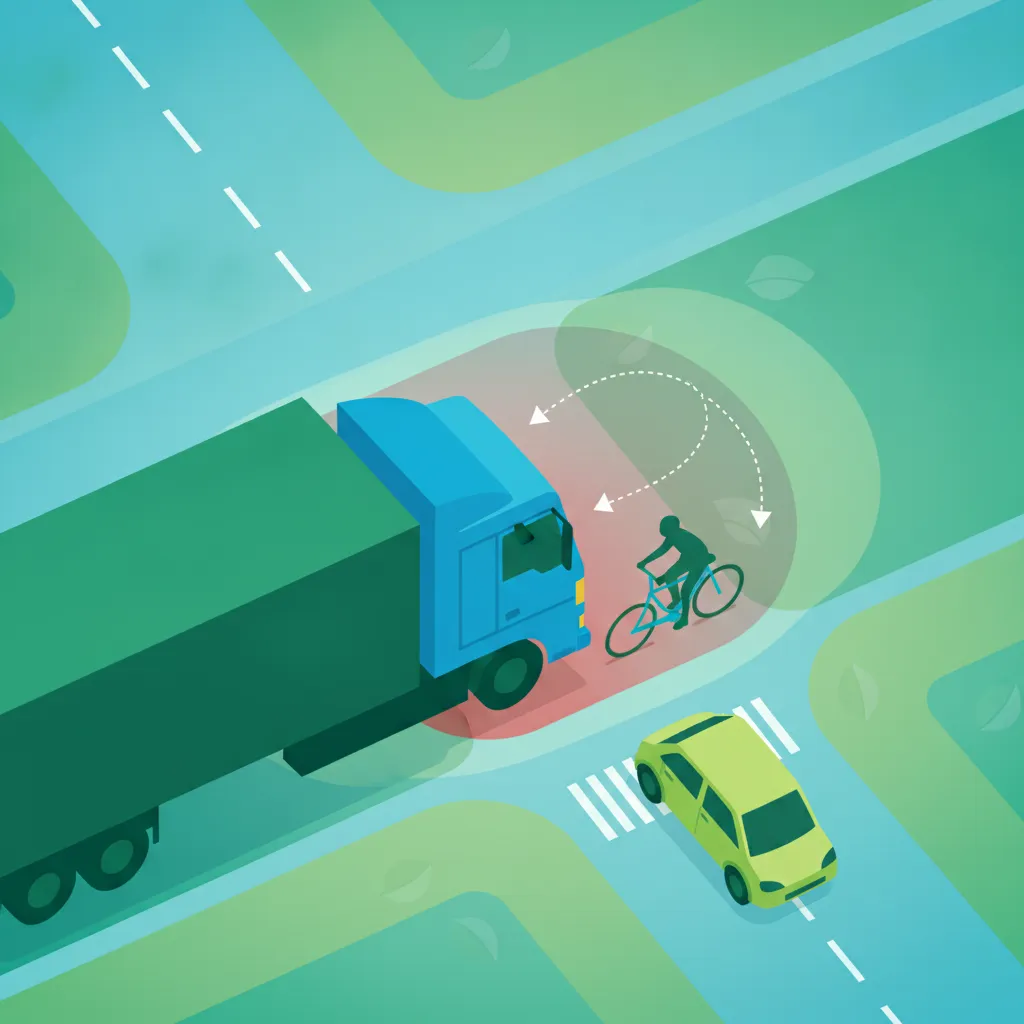
This lesson maps out the extensive blind spots, or 'no-zones,' that exist around a tractor-trailer combination, particularly to the sides and rear. It teaches the proper techniques for adjusting all mirrors to minimize these areas and explains how modern camera systems provide critical visibility. Understanding and compensating for these blind spots is a fundamental skill for preventing collisions, especially during lane changes and turns.
Find clear answers to common questions learners have about Visual Scanning Strategies for Motorcyclists. Learn how the lesson is structured, which driving theory objectives it supports, and how it fits into the overall learning path of units and curriculum progression in Denmark. These explanations help you understand key concepts, lesson flow, and exam focused study goals.
Motorcyclists are more vulnerable and have a narrower profile. You must scan more actively to compensate for blind spots and to ensure other road users see you, as your reaction window is much smaller than that of a car driver.
The three-zone strategy involves scanning far ahead for traffic flow and signs, checking the middle distance for potential conflicts, and monitoring the immediate area for surface hazards or road markings, all while checking your mirrors.
The theory exam often presents complex traffic images. This lesson trains your brain to process these images in a structured way, helping you identify hazards faster, which is critical for correctly answering the hazard perception questions.
Yes. In urban areas, you focus more on lateral movement and intersections for cyclists and pedestrians. In rural settings, your scanning should prioritize distance, wildlife, and road surface changes on bends.
Use our powerful search tool to pinpoint specific Danish driving theory topics, road signs, or traffic situations you need to review. Start exploring relevant practice sets now to reinforce your knowledge and build confidence for your upcoming driving licence exam.