
This lesson teaches you the critical techniques for using mirrors and performing shoulder checks to maintain total awareness on your motorcycle. As part of our comprehensive unit on visibility and communication, you will learn how to eliminate blind spots to ride safely on Danish roads. Mastering these skills is essential for both your theory exam and your practical riding test.

Lesson content overview
Effective mirror use and consistent shoulder checks are fundamental skills for every motorcyclist. They are the cornerstones of maintaining comprehensive situational awareness, allowing you to perceive potential hazards and the positions of other road users around your machine. This lesson, part of your Danish Motorcycle Theory training, will delve into the proper techniques for adjusting your mirrors, performing thorough shoulder checks, and understanding the critical role these actions play in mitigating risks and ensuring safe maneuvering on Danish roads.
Motorcycles, by their nature, are smaller and less visible than cars or trucks. This makes a motorcyclist's ability to see and be seen paramount. Mirrors provide a vital rearward view, while shoulder checks directly address the inherent blind spots that mirrors cannot cover. Together, these techniques form a continuous visual scanning strategy, enabling you to detect traffic, assess gaps, and execute maneuvers like lane changes or turns safely. Without them, you risk making decisions based on incomplete information, significantly increasing the likelihood of collisions.
Principle of Continuous Visual Scanning: Always keep your eyes moving. Integrate mirror checks into your regular scanning pattern, constantly monitoring traffic flow and potential hazards behind and to your sides.
Several core principles underpin the effective use of mirrors and shoulder checks:
Properly adjusted mirrors are your first line of defense against unseen traffic. On a motorcycle, you typically have two exterior mirrors. Unlike a car, there's no interior rear-view mirror. The aim is to maximize your view of the lanes alongside and behind you while minimizing the portion of your own motorcycle visible in the mirror.
Correct mirror adjustment allows you to quickly assess traffic without making excessive head movements. This reduces the time your eyes are off the road ahead, a critical factor for motorcyclists who need to react swiftly to changing road conditions. Incorrectly adjusted mirrors can create large blind spots, giving you a false sense of security.
Sit in Your Normal Riding Position: The most crucial step. Adjust mirrors while you are seated exactly as you would be when riding. Leaning forward or sitting differently will result in inaccurate adjustments.
Exterior Left Side Mirror: Adjust this mirror so you can primarily see the lane directly to your left and behind you. You should see just a sliver of your left arm or shoulder on the inner edge of the mirror. This allows you to monitor traffic approaching from your left side.
Exterior Right Side Mirror: Similarly, adjust the right mirror to give you a clear view of the lane to your right and behind. Again, aim for minimal visibility of your right arm or shoulder. This monitors traffic approaching from your right.
Check Periodically: Mirrors can shift due to vibrations or accidental bumps. Make it a habit to quickly check their alignment before each ride and during longer journeys.
Common Misunderstanding: Do not adjust your mirrors to see a large portion of your own motorcycle. While this might feel reassuring, it significantly reduces your view of the road and creates unnecessary blind spots. You should primarily see the road and traffic.
Even with perfectly adjusted mirrors, there will always be areas around your motorcycle that remain invisible—these are your blind spots. The shoulder check is the only reliable method to directly confirm these areas are clear before you initiate any change in your position.
A quick, deliberate turn of the head over the shoulder to directly view the blind spot area that mirrors cannot cover. It is an essential safety check before any change in direction or lane position.
Motorcycles are narrow and can be easily hidden in another vehicle's blind spot. Conversely, other vehicles, especially smaller ones like bicycles or scooters, or even other motorcycles, can easily disappear into your blind spot. A quick head turn ensures that you have direct visual confirmation that the space you intend to occupy is clear.
The process of performing a shoulder check must be quick and decisive to minimize the time your eyes are away from the road ahead, yet thorough enough to provide a clear view.
Maintain Course and Speed: Before turning your head, ensure your motorcycle is traveling in a straight line and at a consistent speed. Avoid making sudden movements while checking.
Brief Head Turn: Turn your head sharply and swiftly over the shoulder in the direction you intend to move. For example, if changing to the left lane, turn your head over your left shoulder.
Scan the Blind Spot: Your eyes should quickly scan the area that was not visible in your mirror. This is a direct check for any hidden vehicles, cyclists, or pedestrians.
Return Eyes to Ahead: Immediately return your gaze to the road ahead, then execute your maneuver if the path is clear. The entire process should take only a fraction of a second.
Common Error: Some riders might only glance at their side window or quickly flick their eyes without a full head turn. This is insufficient and can lead to missing hazards in the true blind spot. The head turn must be deliberate.
Blind spots are unavoidable areas around any vehicle that cannot be seen using mirrors alone. For motorcyclists, understanding the location and size of these blind spots is crucial for safe riding.
Areas adjacent to your motorcycle that are not visible through your mirrors and require a direct visual check (shoulder check) to confirm they are clear.
Blind spots exist on both sides of your motorcycle, typically extending from just behind your shoulder to a certain distance rearward. They are influenced by the design of your motorcycle, your riding position, and the adjustment of your mirrors.
Even though motorcycles are relatively slim, they still have significant blind spots, and other, larger vehicles on the road often have even bigger ones where a motorcycle can easily become hidden. Awareness of both your own and other vehicles' blind spots is key.
The effectiveness of mirror use and shoulder checks is heavily dependent on their timing. Performing checks too early means the information gathered might no longer be valid, while checking too late leaves insufficient time to react or adjust your maneuver.
The goal is to perform checks at an appropriate distance from your intended maneuver, allowing you to process the information and make safe decisions, while still reflecting the current traffic situation.
High-Speed Roads: On motorways or high-speed rural roads, vehicles approach and close distances much faster. Therefore, your checks must be performed earlier—potentially 100 meters or more before a lane change—to allow adequate time for assessment and reaction.
In Denmark, as in most places, the proper use of mirrors and shoulder checks is not merely a recommendation; it is an integral part of safe and responsible riding, often implicitly or explicitly required by traffic legislation.
Mandatory Before Positional Changes: The Danish traffic code mandates that drivers must always ensure the maneuver can be executed safely without endangering or hindering other road users. This implicitly requires checking mirrors and blind spots. Before any change in position, such as changing lanes, merging, or turning, you must check your mirrors and perform a shoulder check to confirm the path is clear. This is crucial for preventing collisions.
Correct Mirror Adjustment: While specific mirror adjustment angles are not typically legislated, it is a legal requirement that your vehicle is in a safe and roadworthy condition. Properly adjusted mirrors are essential for safe operation, and their absence or maladjustment could be seen as a defect affecting safe driving. Mirrors must be adjusted before starting your journey and regularly checked.
Thorough Shoulder Checks: Although the precise action of a "shoulder turn" might not be detailed in law, the underlying rationale—ensuring 360-degree awareness and safe maneuvering—is a legal obligation. Relying solely on mirrors is considered insufficient due to blind spots. The driver is ultimately responsible for the safety of their maneuver.
Understanding common errors helps in avoiding them and improving your riding safety.
External conditions and your motorcycle's state can impact the effectiveness of your visual checks. Adapting your technique is crucial for continuous safety.
The reasoning behind meticulous mirror use and shoulder checks is rooted in the limitations of human perception and the dynamics of traffic. Your forward vision, while crucial, only covers a fraction of your surroundings. Mirrors extend this field of view, but their two-dimensional nature and fixed angles cannot reveal everything. The shoulder check adds the vital third dimension, a direct, unfiltered view into the blind spot.
By understanding how vehicles move and how quickly situations can change, you can appreciate that a momentary lapse in awareness can lead to severe consequences. Proper timing and consistent application of these techniques are not just about passing a test; they are about embedding safe habits that protect you and others on the road, fostering a proactive rather than reactive riding style.
To ride safely and confidently, especially as a motorcyclist navigating Danish roads, remember these key points:
By integrating these techniques into your riding habits, you significantly enhance your ability to perceive and react to your environment, becoming a safer and more responsible motorcyclist.
This lesson covers essential mirror and shoulder check techniques for motorcyclists, emphasizing that continuous visual scanning is critical because motorcycles are smaller and less visible than other vehicles. Properly adjusted mirrors maximize view of traffic beside and behind while minimizing your own motorcycle in the frame. The shoulder check is indispensable as it is the only method to directly confirm blind spots are clear before any maneuver. Visual checks must be timed appropriately and adapted to conditions such as weather, lighting, and road type. In Denmark, checking mirrors and blind spots before positional changes is effectively mandatory under traffic safety obligations, making these skills essential for both the theory exam and practical riding.
A short set of high-value points that capture the most important learning from this lesson.
Motorcycles are smaller and less visible than cars, making comprehensive visual scanning essential for safe riding
Shoulder checks are the only reliable method to directly see blind spot areas that mirrors cannot cover
Never rely solely on mirrors before any positional change - always combine mirror use with a deliberate shoulder check
Your lane position directly affects mirror effectiveness and blind spot size - optimal positioning maximizes visibility
Timing of visual checks matters: perform them early enough to plan but close enough to reflect current traffic conditions
Explore all units and lessons included in this driving theory course.
Perform a shoulder check before every lane change, merge, turn, overtaking, or moving away from the curb
On motorways and high-speed roads, check mirrors 100+ meters before executing lane changes to account for faster closing speeds
Glance at your mirrors before braking, especially suddenly, to be aware of following traffic
Integrate mirror checks into your regular scanning pattern every 5-8 seconds during continuous riding
Clean mirrors frequently in rain and increase shoulder check frequency in poor visibility conditions
Relying solely on mirrors and skipping the shoulder check, risking side-swipe collisions with vehicles in blind spots
Adjusting mirrors to see too much of your own motorcycle, creating large blind spots and false security
Performing the shoulder check too late, leaving insufficient time to react if a hazard is detected
Only glancing at side mirrors without a full head turn, which fails to properly scan the true blind spot area
Riding too close to lane lines, which pushes adjacent vehicles further into blind spots and limits mirror effectiveness
Lesson content overview
A short set of high-value points that capture the most important learning from this lesson.
Motorcycles are smaller and less visible than cars, making comprehensive visual scanning essential for safe riding
Shoulder checks are the only reliable method to directly see blind spot areas that mirrors cannot cover
Never rely solely on mirrors before any positional change - always combine mirror use with a deliberate shoulder check
Your lane position directly affects mirror effectiveness and blind spot size - optimal positioning maximizes visibility
Timing of visual checks matters: perform them early enough to plan but close enough to reflect current traffic conditions
Explore all units and lessons included in this driving theory course.
Perform a shoulder check before every lane change, merge, turn, overtaking, or moving away from the curb
On motorways and high-speed roads, check mirrors 100+ meters before executing lane changes to account for faster closing speeds
Glance at your mirrors before braking, especially suddenly, to be aware of following traffic
Integrate mirror checks into your regular scanning pattern every 5-8 seconds during continuous riding
Clean mirrors frequently in rain and increase shoulder check frequency in poor visibility conditions
Relying solely on mirrors and skipping the shoulder check, risking side-swipe collisions with vehicles in blind spots
Adjusting mirrors to see too much of your own motorcycle, creating large blind spots and false security
Performing the shoulder check too late, leaving insufficient time to react if a hazard is detected
Only glancing at side mirrors without a full head turn, which fails to properly scan the true blind spot area
Riding too close to lane lines, which pushes adjacent vehicles further into blind spots and limits mirror effectiveness
Explore search topics learners often look for when studying Mirror Use and Shoulder Checks Techniques. These topics reflect common questions about road rules, driving situations, safety guidance, and lesson level theory preparation for learners in Denmark.
Browse additional driving theory lessons that cover connected traffic rules, road signs, and common driving situations related to this topic. Improve your understanding of how different rules interact across everyday traffic scenarios.
Expand your situational awareness with advanced techniques for mirror use and shoulder checks. Learn how to manage blind spots effectively in complex Danish traffic situations, crucial for motorcyclists.

This lesson provides an in-depth look at the blind spots of other vehicles and how to manage them. It teaches riders to recognize the large 'no-zones' around trucks and buses where they cannot be seen. Strategies include avoiding lingering in these areas and positioning the motorcycle for maximum visibility.

This lesson provides an in-depth analysis of the size and location of blind spots around a typical passenger bus. It teaches systematic scanning patterns that incorporate all mirrors, cameras, and direct head checks to maintain situational awareness. The content highlights high-risk areas where cyclists, pedestrians, or small vehicles can become hidden from view, especially during turns.

This lesson introduces proactive visual scanning techniques essential for motorcyclist safety. It explains how to use a systematic search pattern to look far, near, and side-to-side to detect potential hazards before they become immediate threats. Mastering this skill allows riders to create more time and space to react to changing road conditions.

This lesson explains the strategic importance of lane positioning for a motorcyclist. It teaches how to select a position within the lane that makes you most visible to other road users and provides an escape route from potential hazards. The content covers how to adjust your position based on traffic, road conditions, and to avoid being in another vehicle's blind spot.

This lesson breaks down the critical skill of overtaking into a safe, repeatable process. It covers how to judge the time and space needed, check for oncoming traffic, and execute the maneuver decisively. The importance of signaling and returning to the lane safely is also emphasized.

This lesson prepares riders for the specific hazards of rural roads, which often have less visibility and more unpredictable surfaces. It covers strategies for approaching blind curves, safely passing agricultural machinery, and being vigilant for animals on the road. Adjusting speed to match visibility is a core principle.

This lesson maps out the extensive blind spots, or 'no-zones,' that exist around a tractor-trailer combination, particularly to the sides and rear. It teaches the proper techniques for adjusting all mirrors to minimize these areas and explains how modern camera systems provide critical visibility. Understanding and compensating for these blind spots is a fundamental skill for preventing collisions, especially during lane changes and turns.

This lesson teaches the effective use of mirrors and on-board camera systems for comprehensive spatial awareness. It explains how to correctly adjust all mirrors to minimize blind spots and how to integrate camera views into a regular scanning routine. The content emphasizes the importance of combining mirror checks with direct observation to detect vulnerable road users hidden in blind zones.

This lesson focuses on developing robust observation habits, which are critical for safe driving. It details the proper use of all mirrors and explains the necessity of shoulder checks to cover blind spots before any manoeuvre. You will learn a systematic scanning routine to constantly monitor the traffic environment, helping you anticipate potential hazards and maintain full situational awareness.
Identify and understand common errors in mirror adjustment and shoulder checks for motorcyclists. Learn how to avoid these mistakes to ensure safety and compliance with Danish traffic rules.
This lesson focuses on developing robust observation habits, which are critical for safe driving. It details the proper use of all mirrors and explains the necessity of shoulder checks to cover blind spots before any manoeuvre. You will learn a systematic scanning routine to constantly monitor the traffic environment, helping you anticipate potential hazards and maintain full situational awareness.
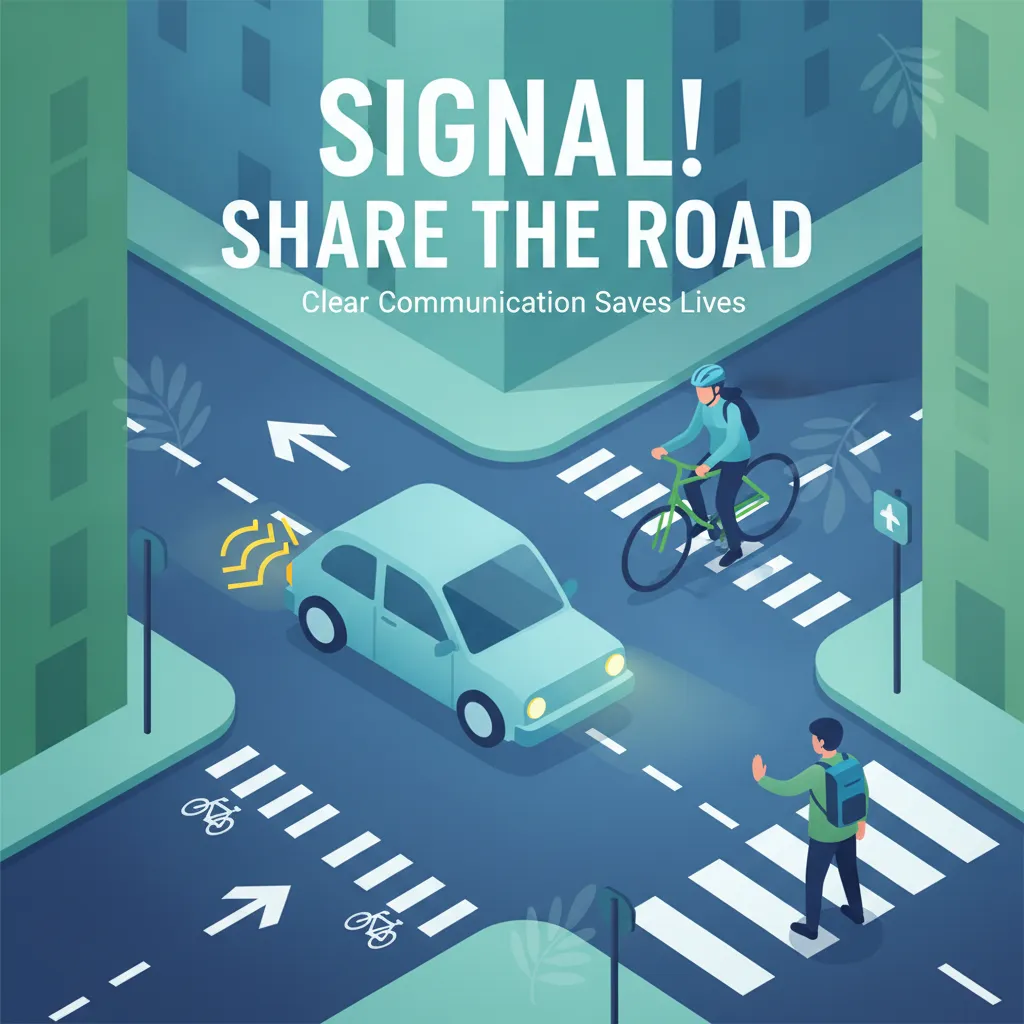
This lesson focuses on the different ways motorcyclists can communicate their intentions to others. It covers the correct use of electronic signals, standard hand signals, and the importance of making eye contact with drivers. Clear and early communication is essential for preventing conflicts and ensuring predictable interactions in traffic.

This lesson details the systematic pre-ride inspection process that all motorcyclists must perform. It covers critical safety checks, including verifying correct tyre pressure, assessing brake pad wear, and ensuring all lights are functional. Regular completion of these checks is essential for preventing mechanical failures and ensuring rider safety.
This lesson breaks down the critical skill of overtaking into a safe, repeatable process. It covers how to judge the time and space needed, check for oncoming traffic, and execute the maneuver decisively. The importance of signaling and returning to the lane safely is also emphasized.
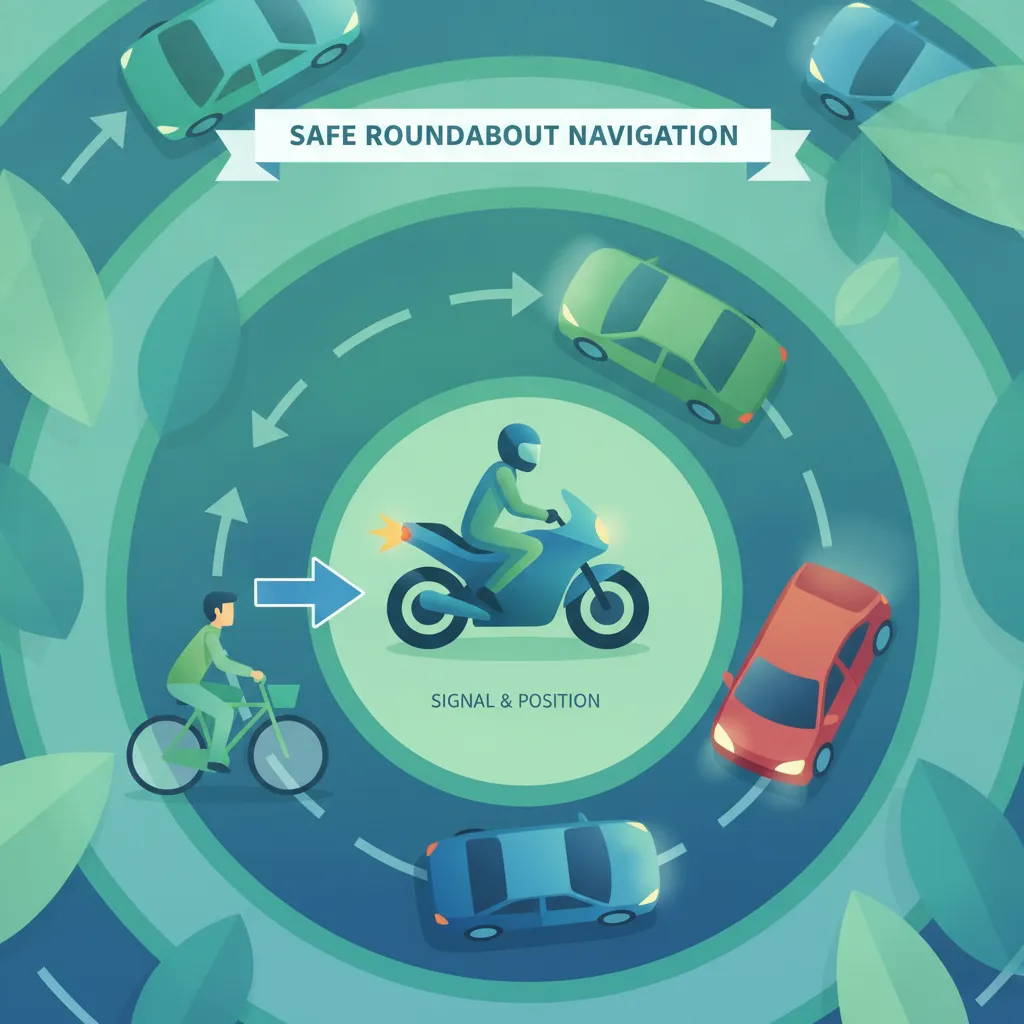
This lesson details the specific skills needed to navigate roundabouts on a motorcycle. It explains how to approach at a safe speed, select the correct lane based on your intended exit, and yield to circulating traffic. Proper use of signals to indicate intentions when entering and exiting is also covered.
This lesson prepares riders for the specific hazards of rural roads, which often have less visibility and more unpredictable surfaces. It covers strategies for approaching blind curves, safely passing agricultural machinery, and being vigilant for animals on the road. Adjusting speed to match visibility is a core principle.

This lesson provides a systematic approach to safely navigating intersections. It covers how to interpret priority signs and traffic signals, establish right-of-way, and scan for potential conflicts from all directions. The importance of clear sightlines and anticipating the movements of other vehicles is a key focus.
This lesson teaches the effective use of mirrors and on-board camera systems for comprehensive spatial awareness. It explains how to correctly adjust all mirrors to minimize blind spots and how to integrate camera views into a regular scanning routine. The content emphasizes the importance of combining mirror checks with direct observation to detect vulnerable road users hidden in blind zones.
This lesson provides an in-depth look at the blind spots of other vehicles and how to manage them. It teaches riders to recognize the large 'no-zones' around trucks and buses where they cannot be seen. Strategies include avoiding lingering in these areas and positioning the motorcycle for maximum visibility.
This lesson explains the strategic importance of lane positioning for a motorcyclist. It teaches how to select a position within the lane that makes you most visible to other road users and provides an escape route from potential hazards. The content covers how to adjust your position based on traffic, road conditions, and to avoid being in another vehicle's blind spot.
Find clear answers to common questions learners have about Mirror Use and Shoulder Checks Techniques. Learn how the lesson is structured, which driving theory objectives it supports, and how it fits into the overall learning path of units and curriculum progression in Denmark. These explanations help you understand key concepts, lesson flow, and exam focused study goals.
Even with perfectly adjusted mirrors, there are significant blind spots to the side and rear of your motorcycle that mirrors cannot cover. A physical shoulder check is the only way to confirm that the space you intend to move into is actually clear, which is a mandatory safety requirement for the test.
You must perform a shoulder check every time you change your lateral position on the road. This includes changing lanes, pulling out from the curb, turning into side roads, or merging into traffic. If you do not perform these checks, it will likely be marked as a failure during a practical assessment.
Yes, always adjust your mirrors while seated in your normal riding position. You should be able to see a small portion of your own elbow or arm in the inside edge of the mirror, with the rest of the view dedicated to the road and traffic behind you.
Absolutely. In cities, you are constantly sharing the road with cyclists, e-bike riders, and pedestrians. A quick shoulder check can prevent a collision with a cyclist trying to pass you on the inside, which is a common scenario in busy Danish intersections.
Use our powerful search tool to pinpoint specific Danish driving theory topics, road signs, or traffic situations you need to review. Start exploring relevant practice sets now to reinforce your knowledge and build confidence for your upcoming driving licence exam.