
This lesson focuses on the unique challenges of operating large passenger vehicles on rural roads and motorways. You will learn to manage speed in varying environments, maintain lane discipline, and execute safe maneuvers to ensure passenger safety.

Lesson content overview
Driving a passenger transport vehicle, such as a bus or coach, demands exceptional skill and heightened awareness, especially when transitioning between diverse road environments. This lesson focuses on the distinct techniques and considerations required for safe and efficient operation on Danish rural roads and motorways. Mastering these environments is crucial for the safety and comfort of your passengers, ensuring smooth journeys across various conditions.
Rural routes often present a tapestry of challenges, from narrow, winding lanes to unexpected hazards like farm machinery or livestock. Motorways, by contrast, require a different skillset, emphasizing high-speed stability, precise lane discipline, and strategic overtaking maneuvers. As a professional driver, understanding and adapting to these varying demands is fundamental to mitigating risks and upholding the highest standards of passenger transport.
Rural roads are defined as public roads located outside densely built-up areas. In Denmark, these roads often serve agricultural communities and connect smaller towns, differing significantly from urban streets and high-capacity motorways. They are characterized by their varied nature, which demands continuous vigilance and adaptable driving techniques.
Danish rural roads typically feature one lane per direction, often without a central barrier or extensive shoulders. Their design frequently includes sharper bends, undulating terrain, and variable road surfaces. While speed limits are generally lower than on motorways, the inherent variability of these roads often necessitates driving at speeds significantly below the posted maximums.
Potential hazards are numerous and diverse:
Adjusting your speed to the prevailing conditions, rather than simply adhering to the posted limit, is the cornerstone of safe rural driving. For a Category D vehicle, this becomes even more critical due to its size and weight.
Overtaking on rural roads is inherently riskier than on motorways and should only be undertaken with extreme caution. The narrowness, bends, and potential for hidden hazards make opportunities scarce and short-lived.
Never overtake on a bend, at an intersection, or when approaching a crest where visibility is limited. Always ensure you have a clear view of the road ahead for a sufficient distance to complete the maneuver safely.
When considering an overtake:
An area around your vehicle that cannot be seen using the mirrors, requiring a head check to visually confirm it is clear before making a maneuver.
As a Category D driver, anticipating and safely interacting with the unique hazards of rural environments is paramount.
Motorways (motorveje) in Denmark are designed for high-speed, high-volume traffic, offering a stark contrast to rural roads. They typically feature multiple lanes in each direction, controlled access points (slip roads), and no at-grade intersections, allowing for more consistent speeds and smoother traffic flow. However, the higher speeds introduce their own set of challenges and safety requirements.
Danish motorways are built to specific engineering standards to facilitate safe travel at higher speeds. This includes gradual curves, consistent lane widths, and clear signage.
Merging onto and diverging from motorways are critical maneuvers that require precision and cooperation with existing traffic.
Use the Slip Road Effectively: Accelerate gradually on the slip road (acceleration lane) to match the speed of traffic already on the motorway. Do not enter the motorway slowly.
Check Mirrors and Blind Spots: Continuously monitor the motorway traffic, especially the rightmost lane, for a safe gap.
Signal Your Intention: Indicate your intention to merge clearly and in good time.
Merge Smoothly: When a safe and sufficient gap appears, steer smoothly into the rightmost lane. Avoid abrupt braking or sudden acceleration that could disrupt traffic flow.
Adjust Speed: Once merged, adjust your speed to the prevailing traffic flow and the legal limit.
Plan Ahead: Observe road signs well in advance to identify your exit. Position your vehicle in the appropriate lane (often the rightmost, but sometimes a left exit) in ample time.
Signal Early: Indicate your intention to exit using your turn signal well before reaching the diverging point.
Maintain Speed on Motorway: Do not slow down on the main carriageway before entering the slip road (deceleration lane).
Enter Slip Road and Decelerate: Move smoothly onto the slip road. Begin decelerating only once you are fully off the main motorway carriageway and onto the deceleration lane.
Adjust to New Road Conditions: Adapt your speed to the lower limits and different conditions of the exit road.
Maintaining proper lane discipline is a fundamental aspect of safe and efficient motorway driving. In Denmark, the rule is to keep to the rightmost lane unless you are overtaking.
The increased speeds on motorways make maintaining a safe following distance more critical than ever.
Overtaking on motorways requires careful planning and execution, always using the left lane(s) in Denmark.
Assess Opportunity: Ensure the lane to your left is clear, and there's enough space ahead to complete the overtake without having to cut back in abruptly or speed excessively.
Check Mirrors and Blind Spots: Perform thorough checks using your mirrors and a head check to ensure the left lane is clear of other vehicles, especially motorcycles which can be hard to see.
Signal Clearly: Indicate your intention to move left with your turn signal.
Move Left Smoothly: Change lanes smoothly, accelerating to overtake the slower vehicle. Maintain a safe lateral distance.
Complete Overtake: Continue in the left lane until you can see the overtaken vehicle completely in your interior mirror.
Signal and Return Right: Signal your intention to return to the right lane and steer smoothly back into it. Do not "lane hog" by staying in the left lane longer than necessary.
Overtaking on the right is generally prohibited on Danish motorways, unless specific signage or traffic management systems (e.g., in heavy, slow-moving traffic) indicate otherwise. Always overtake on the left.
Adhering to specific Danish road traffic regulations is non-negotiable for all drivers, especially for those transporting passengers.
Understanding and observing speed limits is paramount for safety and legality.
The general overtaking rules apply, but the size and weight of a coach require extra caution and planning.
Clear communication with other road users is vital.
Beyond the general guidelines, specific conditions dictate an even greater following distance.
Driving conditions are rarely static. Professional drivers must constantly assess and adapt to environmental, road, and vehicle-specific variations.
Weather significantly impacts vehicle handling, visibility, and braking efficiency.
The nature of Category D vehicles (buses and coaches) means they are large, heavy, and often carry many passengers, which influences all aspects of driving.
Understanding frequent errors helps in developing proactive defensive driving habits.
Safe and professional driving on Danish rural roads and motorways hinges on a blend of alertness, adaptability, and adherence to regulations.
This lesson covers the distinct driving techniques required for Category D drivers on Danish rural roads and motorways, emphasizing that speed must always suit the conditions—sharper bends, poor visibility, and adverse weather demand lower speeds even if below the posted limit. It establishes clear lane discipline rules: keep right except when overtaking on motorways, and return to the right lane promptly after passing. The content highlights specific hazards for large passenger vehicles, including the heightened risk of overturning on bends, susceptibility to crosswinds, and longer braking distances that require substantially increased following distances. Finally, it reinforces mandatory practices such as daytime dipped headlights in Denmark, proper use of turn signals, and thorough blind spot checks before any maneuver.
A short set of high-value points that capture the most important learning from this lesson.
Speed must always be matched to road conditions and visibility, not just the posted limit—sharper bends and poorer visibility demand greater speed reductions.
On Danish motorways, keep to the rightmost lane unless actively overtaking, and return to it as soon as the maneuver is safely complete.
A heavy Category D vehicle requires significantly longer following distances than cars—at least three to four seconds at motorway speeds.
Due to their high center of gravity and large side profile, coaches are particularly vulnerable to overturning on bends and to crosswinds on exposed roads.
Daytime dipped headlights are mandatory in Denmark at all times while driving, regardless of weather conditions.
Explore all units and lessons included in this driving theory course.
General rural speed limit is 80 km/h; motorway limit is typically 110 km/h with possible 130 km/h sections, but Category D vehicles may face lower limits.
Overtaking on the right is prohibited on Danish motorways—always use the left lane(s) for passing.
When approaching a bend, reduce speed before entering the curve to maintain stability and passenger comfort; braking mid-turn is dangerous for high vehicles.
In fog, never use high beams as they reflect light back and worsen visibility—use dipped beam and fog lights if fitted.
Large coaches have extensive blind spots requiring both mirror checks and physical head checks before any lane change or maneuver.
Reducing speed inside a bend rather than beforehand, which destabilizes a high centre-of-gravity vehicle and risks overturning.
Lane hogging—unnecessarily occupying middle or left lanes on motorways—which impedes faster traffic and is a traffic infraction.
Entering a motorway too slowly from the slip road instead of accelerating to match the flow of traffic on the main carriageway.
Attempting to overtake on rural roads without sufficient visibility, particularly at bends or crests where oncoming traffic cannot be seen.
Neglecting to adjust following distance for heavy loads or adverse weather, underestimating the increased braking distance of a fully loaded coach.
Lesson content overview
A short set of high-value points that capture the most important learning from this lesson.
Speed must always be matched to road conditions and visibility, not just the posted limit—sharper bends and poorer visibility demand greater speed reductions.
On Danish motorways, keep to the rightmost lane unless actively overtaking, and return to it as soon as the maneuver is safely complete.
A heavy Category D vehicle requires significantly longer following distances than cars—at least three to four seconds at motorway speeds.
Due to their high center of gravity and large side profile, coaches are particularly vulnerable to overturning on bends and to crosswinds on exposed roads.
Daytime dipped headlights are mandatory in Denmark at all times while driving, regardless of weather conditions.
Explore all units and lessons included in this driving theory course.
General rural speed limit is 80 km/h; motorway limit is typically 110 km/h with possible 130 km/h sections, but Category D vehicles may face lower limits.
Overtaking on the right is prohibited on Danish motorways—always use the left lane(s) for passing.
When approaching a bend, reduce speed before entering the curve to maintain stability and passenger comfort; braking mid-turn is dangerous for high vehicles.
In fog, never use high beams as they reflect light back and worsen visibility—use dipped beam and fog lights if fitted.
Large coaches have extensive blind spots requiring both mirror checks and physical head checks before any lane change or maneuver.
Reducing speed inside a bend rather than beforehand, which destabilizes a high centre-of-gravity vehicle and risks overturning.
Lane hogging—unnecessarily occupying middle or left lanes on motorways—which impedes faster traffic and is a traffic infraction.
Entering a motorway too slowly from the slip road instead of accelerating to match the flow of traffic on the main carriageway.
Attempting to overtake on rural roads without sufficient visibility, particularly at bends or crests where oncoming traffic cannot be seen.
Neglecting to adjust following distance for heavy loads or adverse weather, underestimating the increased braking distance of a fully loaded coach.
Explore search topics learners often look for when studying Driving on Rural Roads and Motorways. These topics reflect common questions about road rules, driving situations, safety guidance, and lesson level theory preparation for learners in Denmark.
Browse additional driving theory lessons that cover connected traffic rules, road signs, and common driving situations related to this topic. Improve your understanding of how different rules interact across everyday traffic scenarios.
Understand the specific risks associated with rural and motorway driving for Category D passenger transport. This lesson details common hazards like blind spots, weather impacts, and high-speed dynamics, focusing on risk mitigation strategies.

This lesson addresses the combined challenges of navigating narrow rural roads and driving in adverse weather. It explains how to adapt speed and braking techniques for conditions like heavy rain, fog, or ice, which are common on rural routes. The content also integrates these factors into route planning, teaching drivers how to select the safest and most appropriate path while avoiding local weight or height restrictions.

This lesson prepares riders for the specific hazards of rural roads, which often have less visibility and more unpredictable surfaces. It covers strategies for approaching blind curves, safely passing agricultural machinery, and being vigilant for animals on the road. Adjusting speed to match visibility is a core principle.

This lesson equips you with the knowledge to drive safely in challenging weather conditions. It explains the risk of aquaplaning in heavy rain, how to counteract strong crosswinds, and the correct use of lights in darkness and fog. The core principle is adapting your speed and increasing your following distance to compensate for reduced visibility and traction.

This lesson covers the core principles of defensive driving in an urban context. It teaches drivers how to anticipate the actions of other road users, maintain safe following distances in dense traffic, and navigate complex intersections with multiple signals. The content emphasizes heightened awareness of pedestrians, cyclists, and unexpected events common in Danish city environments.
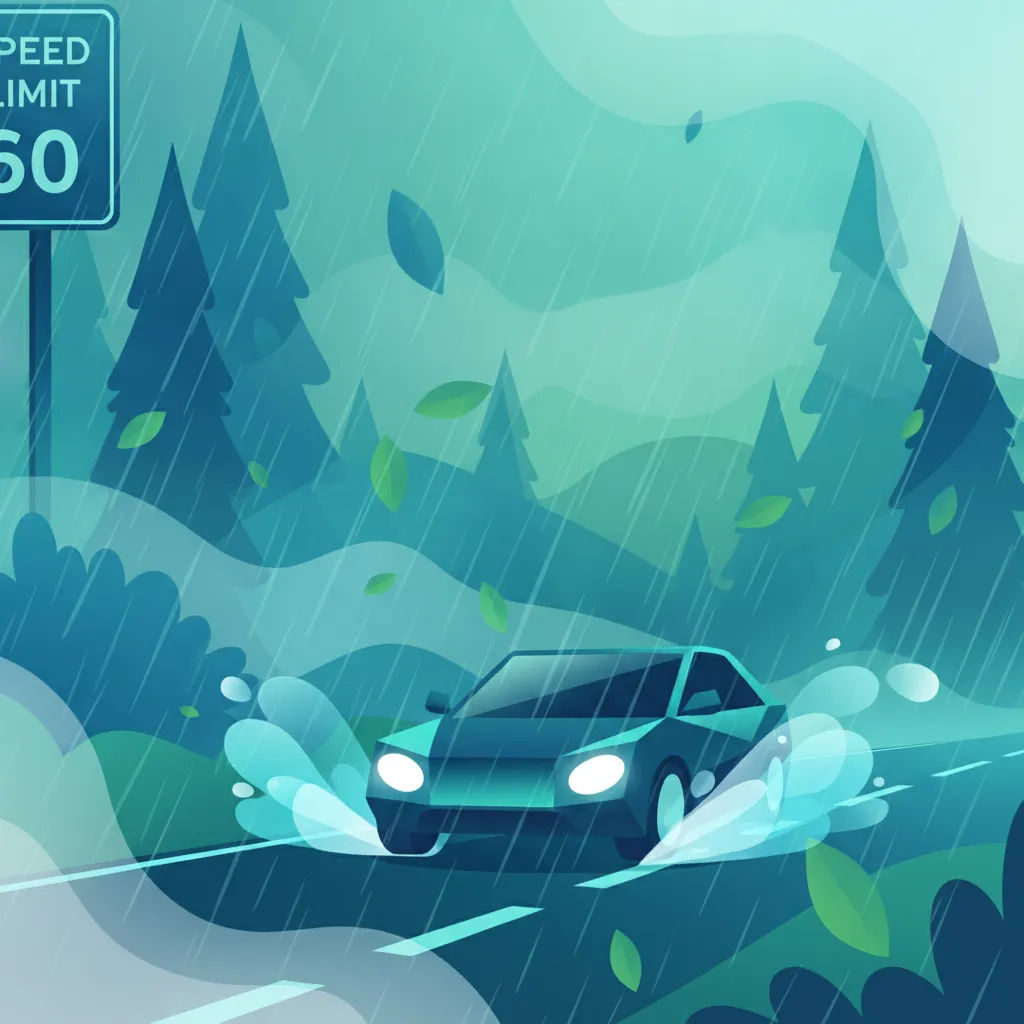
This lesson explains how to adjust driving techniques for adverse conditions. It covers the effects of rain, snow, ice, and fog on tire grip and visibility, emphasizing the need to increase following distances and reduce speed. The content also details the correct use of lights for night driving and in poor weather to ensure the bus is visible to others.

This lesson addresses the unique challenges of driving in tourist-heavy urban centers alongside cyclists. It teaches drivers to anticipate the behavior of individuals who may be distracted or unfamiliar with local traffic rules. The content provides strategies for communicating intentions clearly and navigating safely around large groups, luggage, and cyclists.

This lesson provides critical guidance for driving in environments with heavy cycle traffic, typical of Danish cities. It focuses on identifying and yielding to cyclists in dedicated bike lanes, especially when turning right across their path. The content emphasizes advanced observation skills to detect cyclists in blind spots and the importance of giving adequate space.

This lesson teaches you to identify warning signs that alert drivers to upcoming hazards and changing road conditions. It covers common signs such as sharp curves, school zones, animal crossings, and temporary conditions like roadworks or slippery surfaces. Understanding these signs is crucial for anticipating risks and adjusting your driving to ensure safety on all types of Danish roads.
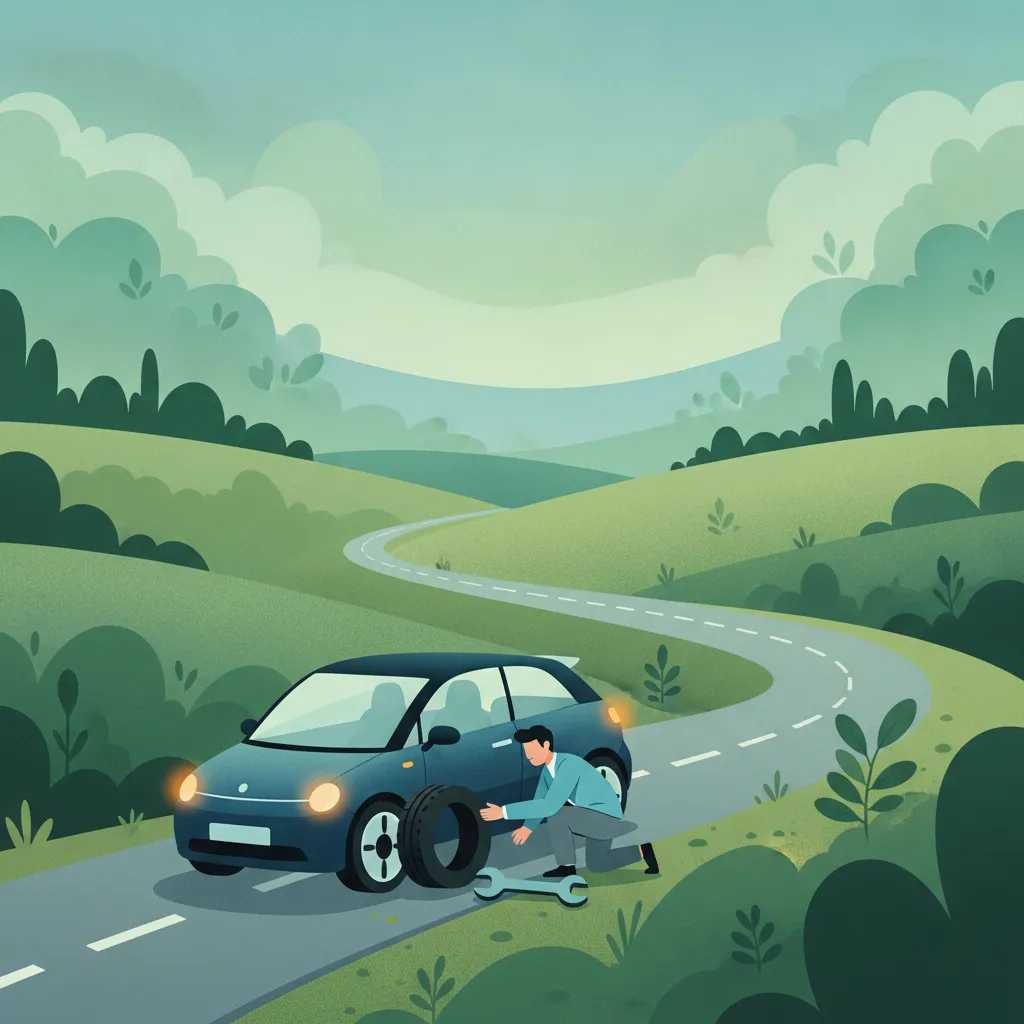
This lesson provides a clear, safety-oriented protocol for handling a vehicle breakdown or tyre failure. It covers how to safely maneuver the vehicle to the roadside, the correct use of hazard lights and warning triangles to alert other traffic, and procedures for contacting assistance. Adhering to these steps, as required by Danish law, is critical for protecting yourself and other road users from further incident.

This lesson introduces cooperative driving as a fundamental element of road safety in Denmark. It highlights the social responsibility of drivers to act predictably, anticipate the actions of others, and maintain courteous interactions with all road users. By fostering mutual respect and cooperation, you will learn how to reduce the potential for conflict and enhance overall traffic safety.
Master the essential Danish traffic rules and driving techniques for rural roads and motorways specific to Category D passenger vehicles. Learn about speed adaptation, safe overtaking, lane discipline, and smooth entry/exit maneuvers.

This lesson provides essential training for driving on motorways. It details the correct procedure for using acceleration lanes to merge safely into fast-moving traffic, maintaining proper lane discipline, and executing safe overtaking manoeuvres. You will also learn the importance of keeping a safe following distance and planning for your exit well in advance.

This lesson explains the principles of correct lane discipline, including proper positioning within your lane and adherence to road markings. It provides a clear, safe procedure for changing lanes, which includes signalling your intentions early, checking mirrors, and performing a final shoulder check for the blind spot. Mastering this process is essential for smooth and safe navigation in multi-lane traffic.
This lesson prepares riders for the specific hazards of rural roads, which often have less visibility and more unpredictable surfaces. It covers strategies for approaching blind curves, safely passing agricultural machinery, and being vigilant for animals on the road. Adjusting speed to match visibility is a core principle.

This lesson provides a guide to motorway riding, a high-speed and demanding environment. It details the process for using acceleration lanes to merge smoothly, maintaining proper lane discipline, and preparing for exits well in advance. Key safety principles like the two-second rule are reinforced for this context.
This lesson covers the correct techniques for various turning manoeuvres, including how to signal, position your vehicle, and judge gaps in traffic. It also details the legal and safety protocols for overtaking, emphasizing the importance of assessing speed, distance, and oncoming traffic. A thorough understanding of these procedures is crucial for navigating intersections and two-lane roads safely.

This lesson focuses on the rules and best practices for operating heavy vehicles on motorways and interchanges. It details Danish regulations regarding lane usage and speed limits for lorries, and explains safe techniques for merging into and exiting high-speed traffic. Maintaining a safe and appropriate following distance to allow for longer stopping distances is a key focus of the content.
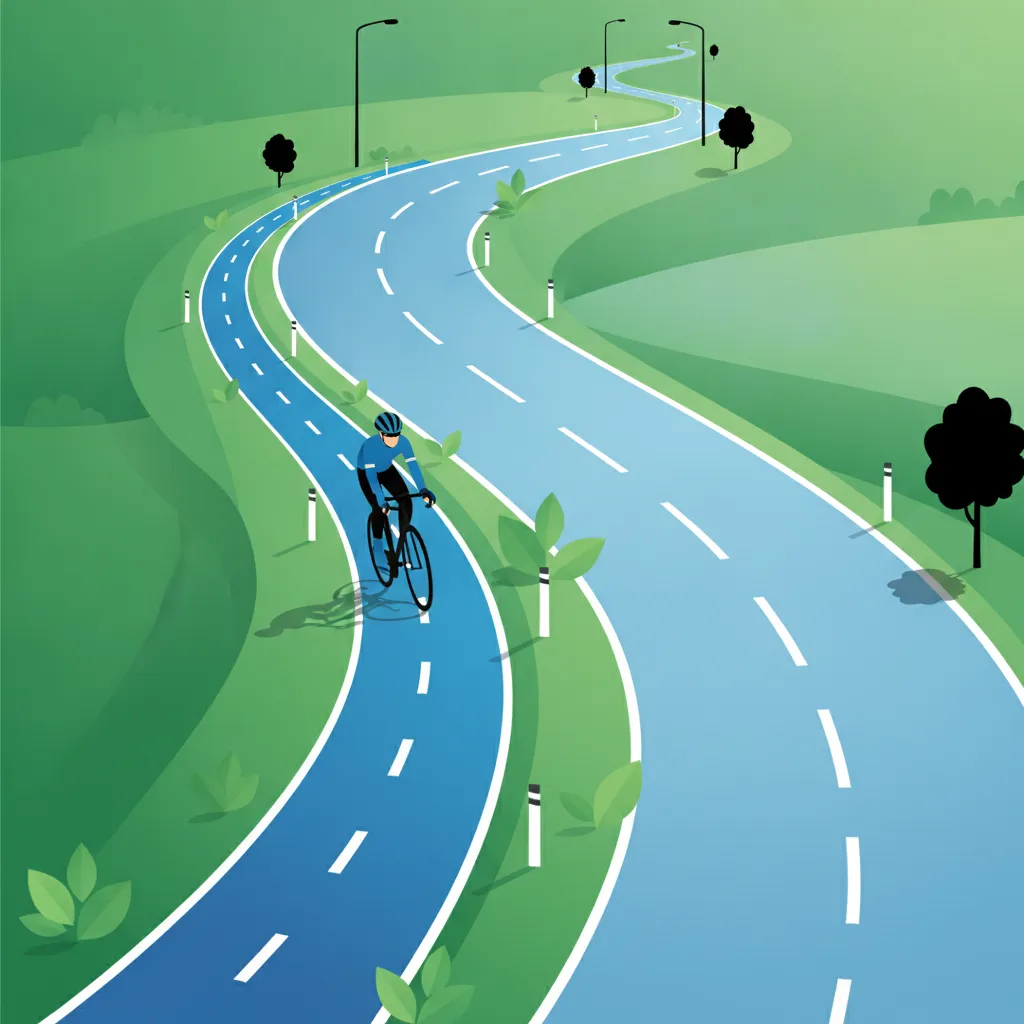
This lesson focuses on interpreting the various markings painted on Danish road surfaces. It explains the rules associated with solid and broken lane lines, directional arrows, and special-purpose lanes for buses and cyclists. Understanding these markings is crucial for maintaining correct lane discipline and safely navigating complex road layouts.
This lesson introduces cooperative driving as a fundamental element of road safety in Denmark. It highlights the social responsibility of drivers to act predictably, anticipate the actions of others, and maintain courteous interactions with all road users. By fostering mutual respect and cooperation, you will learn how to reduce the potential for conflict and enhance overall traffic safety.
This lesson addresses the combined challenges of navigating narrow rural roads and driving in adverse weather. It explains how to adapt speed and braking techniques for conditions like heavy rain, fog, or ice, which are common on rural routes. The content also integrates these factors into route planning, teaching drivers how to select the safest and most appropriate path while avoiding local weight or height restrictions.
This lesson details the meaning and application of various road surface markings, including lane dividers, solid and broken lines, and directional arrows. You will also learn to interpret the full sequence of traffic light signals, including the specific rules for the amber (yellow) light phase. A proper understanding of these systems is vital for maintaining correct lane discipline and adhering to traffic controls.
Find clear answers to common questions learners have about Driving on Rural Roads and Motorways. Learn how the lesson is structured, which driving theory objectives it supports, and how it fits into the overall learning path of units and curriculum progression in Denmark. These explanations help you understand key concepts, lesson flow, and exam focused study goals.
The main danger is the limited space combined with the bus width, making it difficult to pass oncoming traffic or navigate tight curves without off-tracking, while also being alert for unpredictable animals or slow-moving farm machinery.
Yes, as a professional driver, you must follow specific lane discipline rules. You should generally remain in the rightmost lane unless overtaking or when specific traffic conditions dictate otherwise, while also being mindful of speed limit differences compared to passenger cars.
The significant length of a bus means it takes longer to complete an overtaking maneuver. You must ensure there is sufficient gap and clear visibility before committing, and always monitor your blind spots carefully before pulling back into the lane.
Always scan for mud or debris on the road which can reduce grip, and be prepared for large, slow-moving agricultural machinery that might be pulling out onto the road with limited visibility.
Use our powerful search tool to pinpoint specific Danish driving theory topics, road signs, or traffic situations you need to review. Start exploring relevant practice sets now to reinforce your knowledge and build confidence for your upcoming driving licence exam.