This lesson guides you through the mandatory methods for signalling your intentions as a rider of a stor knallert. By mastering both electronic indicators and hand signals, you ensure your movements are predictable and safe for all road users in Denmark. This understanding is essential for your Category AM theory exam and your future riding practice.

Lesson content overview
Effective signalling is a fundamental aspect of safe and predictable driving, especially for Category AM (stor knallert) riders who share the road with various other vehicle types. This lesson provides a comprehensive guide to understanding and correctly using both electronic turn indicators and legally recognized hand signals within the context of Danish traffic law. Mastering these communication methods is crucial for preventing accidents, facilitating smooth traffic flow, and ensuring your intentions are clearly understood by all road users.
Signalling is more than just a legal requirement; it is a vital form of communication between road users. Every time you plan to change direction, switch lanes, or slow down, your signals inform others of your intentions. This foresight allows fellow drivers, cyclists, and pedestrians to anticipate your actions and react safely, thereby reducing the risk of collisions and unnecessary maneuvers.
From a safety perspective, clear and timely signalling builds a predictable environment on the road. When others know what you are about to do, they can adjust their speed and position accordingly, leading to a more harmonious and efficient traffic system. For stor knallert riders, who can be less visible than cars, explicit signalling is even more critical to ensure your presence and plans are acknowledged. This lesson integrates with broader concepts of road positioning and visibility, reinforcing a holistic approach to safe riding on Danish roads.
Turn indicators, often referred to as "blinklys" in Danish, are electronic flashing lights located at the front and rear of your stor knallert. They are the primary method for conveying your intention to turn or change lanes. These lights illuminate an arrow, typically amber, which flashes to attract attention and communicate a specific directional change.
The proper use of turn indicators is mandated by Danish traffic regulations and is essential for road safety. You must activate your indicators before initiating any maneuver that involves a change in direction or lateral movement on the road. This includes turning left or right at intersections, changing lanes, exiting a roundabout, or pulling away from the side of the road.
When activating your indicator, ensure it corresponds to the direction you intend to move. For a left turn, the left indicator should be used; for a right turn, the right indicator. The activation should occur sufficiently in advance of the maneuver to give other road users ample time to react. A general rule of thumb is to activate your indicator at least 3 seconds or approximately 30 meters before the point where you begin your turn or lane change. This lead-in time allows drivers behind you or those approaching from other directions to register your signal and adjust their actions accordingly.
Prepare: Check your mirrors to assess traffic behind and to the sides.
Signal: Activate your turn indicator for the intended direction at least 30 meters (or 3 seconds) before the turn.
Position: Adjust your road position to safely execute the turn (e.g., closer to the center line for a left turn, closer to the curb for a right turn).
Execute: Smoothly make the turn, maintaining control of your stor knallert.
Cancel: Immediately after completing the turn and straightening your vehicle, manually cancel the indicator.
Misusing turn indicators can lead to confusion and dangerous situations. One of the most frequent errors is failing to cancel indicators after completing a turn or lane change. A continuously flashing indicator can mislead other drivers into believing you intend another turn, potentially causing them to make incorrect assumptions or hesitant maneuvers. Always ensure your indicator is turned off once your maneuver is complete.
Another common mistake is late signalling. Activating the indicator just as you begin to turn or change lanes provides insufficient notice to other road users, negating the purpose of signalling. Conversely, signalling too early can also be confusing, especially if there are multiple turns or exits close together. Always aim for the optimal timing to clearly communicate your immediate intentions. Using indicators for unknown purposes, such as an impulsive flick without an actual maneuver, should also be avoided as it erodes predictability.
Never use indicators to signal anything other than a turn or lane change. Misleading signals can be extremely dangerous and are also a violation of traffic regulations.
While electronic indicators are your primary signalling tool, hand signals, known as "håndtegn," serve as an important backup and a means of added clarity. They are legally recognized gestures performed by the rider's arm and hand to communicate intentions. Hand signals are particularly vital if your electronic indicators are not functioning or if their visibility is compromised, such as in bright sunlight, heavy rain, or fog.
There are three primary hand signals that every stor knallert rider must know and be able to execute clearly:
Left Turn: Extend your left arm straight out horizontally to your left side, with your palm open and facing forward. This clearly indicates your intention to turn left or move to the left lane.
Right Turn: There are two accepted ways to signal a right turn:
Deceleration or Stop: Extend your left arm straight down towards the ground, with your palm open and facing backward. This signal communicates that you are slowing down or coming to a stop.
Hand signals must be used whenever your electronic indicators are not working. This could be due to a mechanical failure, such as a blown bulb, or if your electrical system is malfunctioning. They are also highly recommended in situations where your indicators might not be easily visible to other road users. This includes:
Practice your hand signals regularly, both for left and right turns and for stopping. Ensure your movements are clear, decisive, and visible to others. This muscle memory will be crucial in situations where you need to use them spontaneously.
The effectiveness of any signal, whether electronic or hand-based, hinges critically on its timing. Signalling must be initiated with sufficient lead time before the intended maneuver. This provides other road users with the necessary warning to process your intention and adjust their own actions safely.
Signalling too late leaves other drivers with little to no time to react, potentially leading to sudden braking, swerving, or even collisions. It creates unpredictability, which is a major contributor to traffic accidents. Imagine a car suddenly swerving into your lane without warning; the consequences could be severe. Similarly, signalling too early can be equally problematic, especially in areas with multiple turns or exits, as it can cause confusion about which turn you intend to take. This uncertainty can lead to drivers misinterpreting your intentions or making premature decisions.
While Danish traffic law (RVV §35) requires indicators to be used before any turn or lane change, it doesn't specify an exact distance in all cases. However, general best practice and safety guidelines recommend:
These are minimum guidelines. In situations with higher speeds, reduced visibility, or complex traffic, it may be prudent to signal even earlier to ensure maximum clarity. Always err on the side of caution and provide more notice rather than less.
The way you signal should adapt to the specific environment you are riding in. Different road types, traffic densities, and weather conditions require variations in your signalling approach to maintain optimal safety and clarity.
Signalling at intersections is crucial for preventing collisions with cross-traffic and for informing following vehicles of your intentions.
The environment significantly influences signalling requirements:
Weather conditions directly impact the visibility of your signals:
Always check your stor knallert's indicators before starting your ride, especially if you anticipate poor weather. If an indicator bulb is out, you are legally required to use hand signals for that direction.
Danish traffic laws are clear about the obligation to signal. Adhering to these regulations is not only a matter of legal compliance but also a fundamental aspect of responsible and safe riding for Category AM operators.
According to the Danish Road Traffic Act (Færdselsloven), specifically RVV §35, you are required to give clear and timely notice of your intentions to other road users whenever you plan to change direction or significantly alter your position on the road. This includes:
Failure to signal, signalling too late, or using incorrect signals can lead to severe consequences:
Beyond the basic rules, consider these advanced scenarios and safety tips for optimal signalling:
To recap the core principles for effective signalling as a Category AM rider in Denmark:
This lesson covers the essential signalling requirements for Danish Category AM (stor knallert) riders, distinguishing between proper use of turn indicators (blinklys) as the primary method and hand signals (håndtegn) as a backup when electronic indicators fail or visibility is compromised. Danish law (RVV §35) mandates that signals be activated sufficiently early—typically at least 30 meters or 3 seconds before a maneuver—to allow other road users adequate reaction time. Learners must master the three legally recognized hand signals for left turn, right turn, and deceleration/stopping, particularly for use in adverse weather conditions when electronic signals are difficult to see. Proper signalling technique, timing, cancellation, and adaptation to different environments (intersections, roundabouts, urban vs rural) are critical for both safe riding practice and theory exam success.
A short set of high-value points that capture the most important learning from this lesson.
Turn indicators must be activated at least 30 meters (or 3 seconds) before any turn or lane change to give other road users adequate warning
Electronic indicators are your primary signalling method; hand signals serve as a legally recognized backup when indicators fail or visibility is compromised
The three legally recognized hand signals are: left turn (left arm straight out), right turn (right arm straight out OR left arm bent upward in L-shape), and deceleration (left arm pointing down with palm backward)
Signals must remain active throughout the entire maneuver and be cancelled immediately after completing it to avoid misleading other traffic
In roundabouts, signal right before the first exit if taking it, and signal right after passing exits before your intended exit
Explore all units and lessons included in this driving theory course.
RVV §35 (Danish Road Traffic Act) legally requires clear and timely signalling before any turn, lane change, or lateral movement on the road
Danish terms: blinklys (turn indicators), håndtegn (hand signals), stor knallert (large moped/scooter requiring Category AM license)
Hand signals are essential in adverse weather (rain, fog, bright sunlight) when electronic indicators may be difficult to see
Never use indicators for anything other than actual turns or lane changes—misleading signals are dangerous and illegal
In urban areas with higher traffic density, signal earlier and more clearly; in rural areas with higher speeds, allow longer lead-in distances
Failing to cancel indicators after completing a turn, which misleads other drivers into thinking you intend another maneuver
Signalling too late (just as you begin turning), providing insufficient time for other road users to react
Signalling too early in areas with multiple turns or exits, causing confusion about your actual intended direction
Using indicators casually or impulsively without an actual planned maneuver, which erodes road predictability
Not using hand signals when indicators are not visible due to weather conditions or mechanical failure, as legally required
Lesson content overview
A short set of high-value points that capture the most important learning from this lesson.
Turn indicators must be activated at least 30 meters (or 3 seconds) before any turn or lane change to give other road users adequate warning
Electronic indicators are your primary signalling method; hand signals serve as a legally recognized backup when indicators fail or visibility is compromised
The three legally recognized hand signals are: left turn (left arm straight out), right turn (right arm straight out OR left arm bent upward in L-shape), and deceleration (left arm pointing down with palm backward)
Signals must remain active throughout the entire maneuver and be cancelled immediately after completing it to avoid misleading other traffic
In roundabouts, signal right before the first exit if taking it, and signal right after passing exits before your intended exit
Explore all units and lessons included in this driving theory course.
RVV §35 (Danish Road Traffic Act) legally requires clear and timely signalling before any turn, lane change, or lateral movement on the road
Danish terms: blinklys (turn indicators), håndtegn (hand signals), stor knallert (large moped/scooter requiring Category AM license)
Hand signals are essential in adverse weather (rain, fog, bright sunlight) when electronic indicators may be difficult to see
Never use indicators for anything other than actual turns or lane changes—misleading signals are dangerous and illegal
In urban areas with higher traffic density, signal earlier and more clearly; in rural areas with higher speeds, allow longer lead-in distances
Failing to cancel indicators after completing a turn, which misleads other drivers into thinking you intend another maneuver
Signalling too late (just as you begin turning), providing insufficient time for other road users to react
Signalling too early in areas with multiple turns or exits, causing confusion about your actual intended direction
Using indicators casually or impulsively without an actual planned maneuver, which erodes road predictability
Not using hand signals when indicators are not visible due to weather conditions or mechanical failure, as legally required
Explore search topics learners often look for when studying Signalling with Indicators and Hand Signals. These topics reflect common questions about road rules, driving situations, safety guidance, and lesson level theory preparation for learners in Denmark.
Browse additional driving theory lessons that cover connected traffic rules, road signs, and common driving situations related to this topic. Improve your understanding of how different rules interact across everyday traffic scenarios.
Learn advanced techniques for signalling intentions using indicators and hand signals in challenging Danish traffic situations. Understand how clear communication prevents misunderstandings and enhances safety for Category AM riders.
This lesson details the function and meaning of traffic light signals in Denmark. It covers the standard red, amber, and green sequences, as well as special signals like flashing amber lights and green arrows for turning. The content also explains signals specific to cyclists and pedestrians that moped riders must observe at intersections.

This lesson explores non-verbal communication techniques for safer road sharing. It discusses the importance of making eye contact with other drivers and pedestrians to confirm they have seen you. The content also explains the appropriate and legal use of the horn to alert others of your presence.
This lesson focuses on interpreting the various markings painted on Danish road surfaces. It explains the rules associated with solid and broken lane lines, directional arrows, and special-purpose lanes for buses and cyclists. Understanding these markings is crucial for maintaining correct lane discipline and safely navigating complex road layouts.
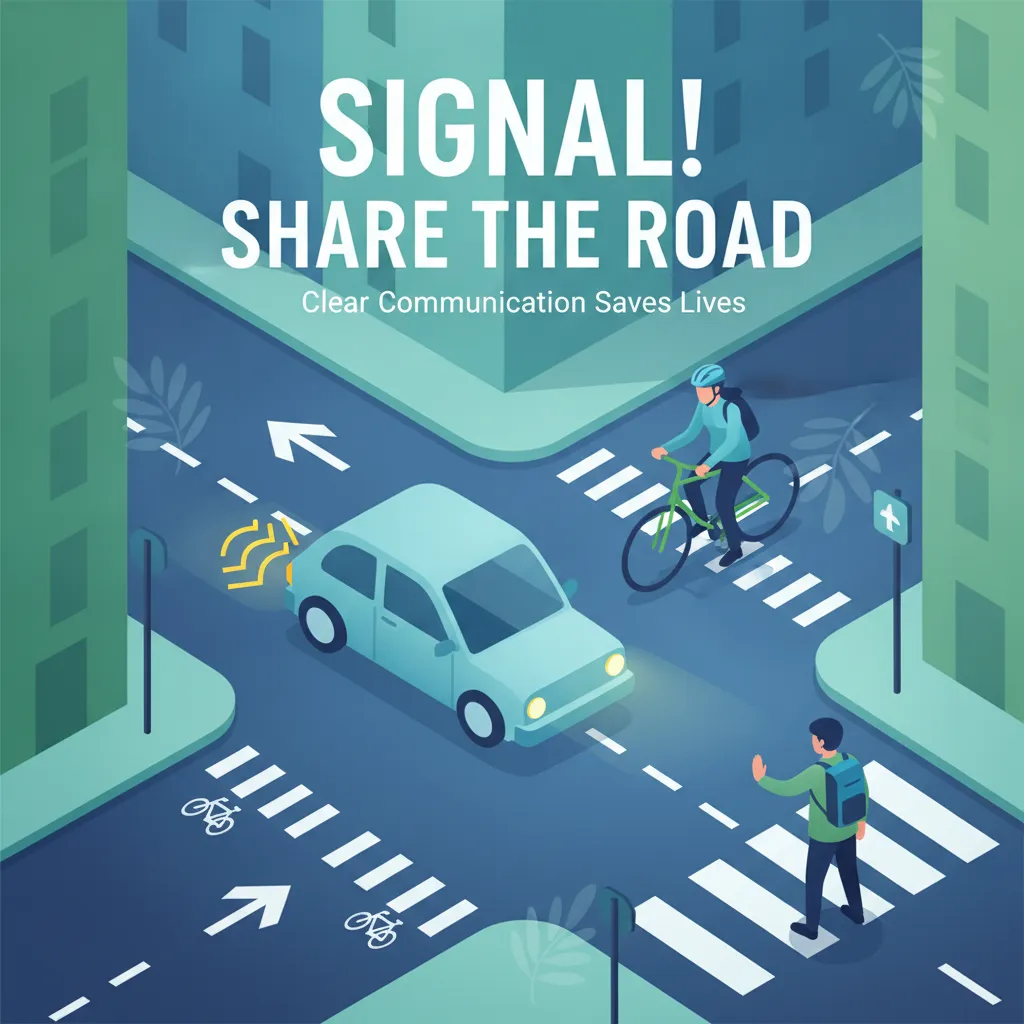
This lesson focuses on the different ways motorcyclists can communicate their intentions to others. It covers the correct use of electronic signals, standard hand signals, and the importance of making eye contact with drivers. Clear and early communication is essential for preventing conflicts and ensuring predictable interactions in traffic.
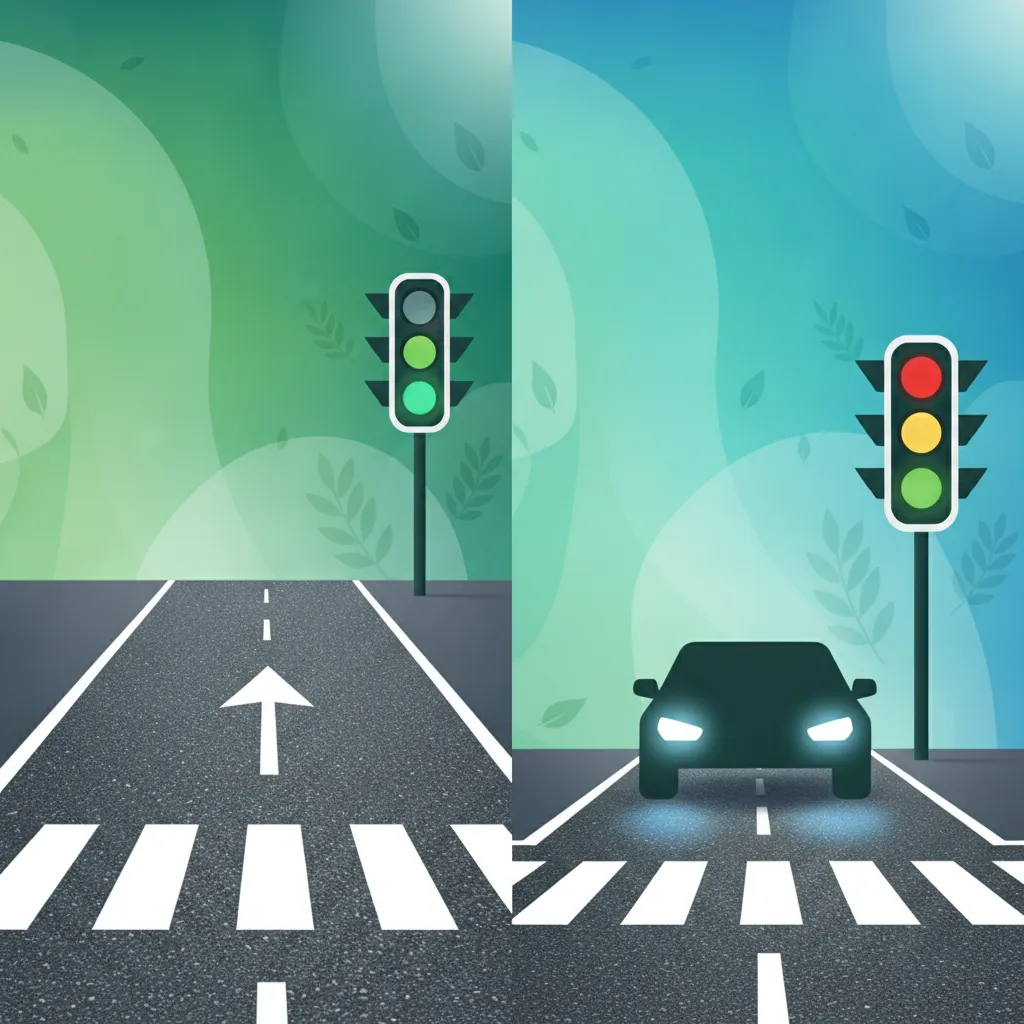
This lesson details the meaning and application of various road surface markings, including lane dividers, solid and broken lines, and directional arrows. You will also learn to interpret the full sequence of traffic light signals, including the specific rules for the amber (yellow) light phase. A proper understanding of these systems is vital for maintaining correct lane discipline and adhering to traffic controls.
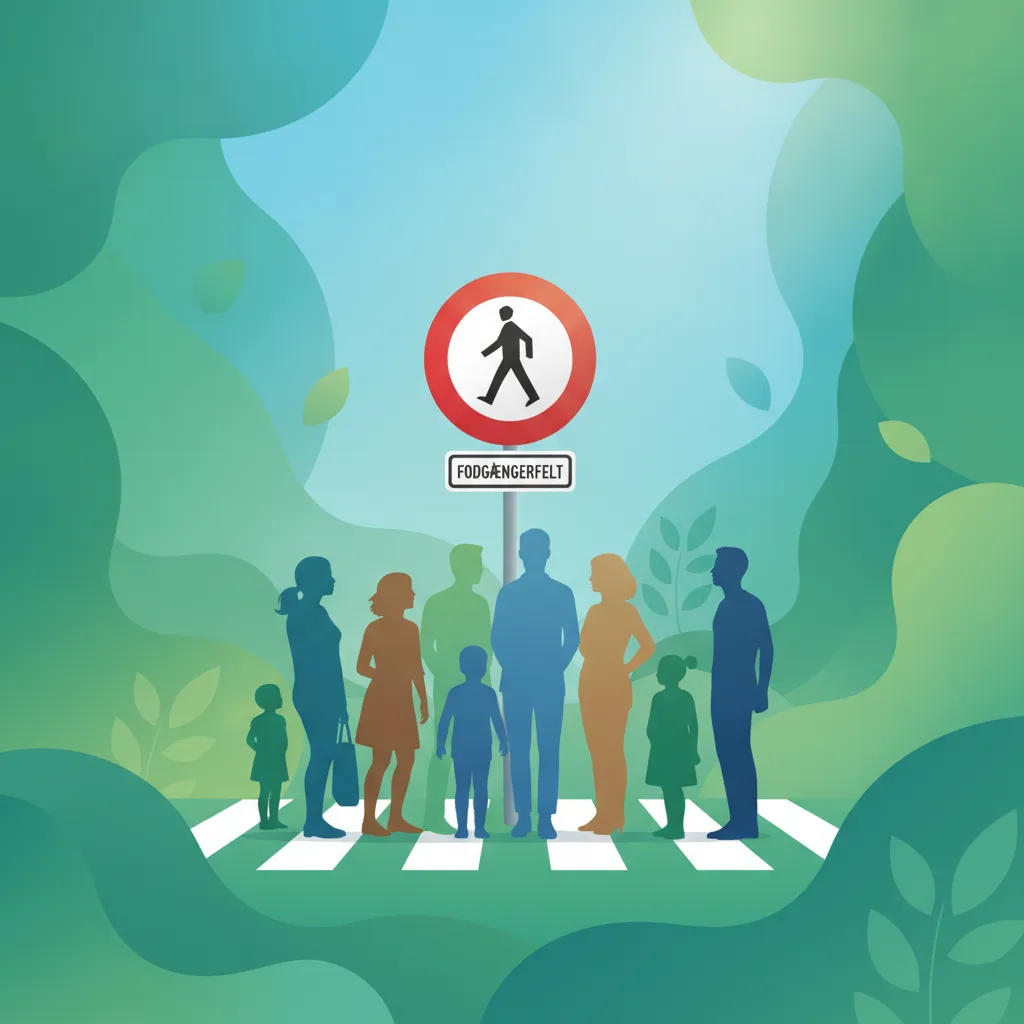
This lesson introduces the primary categories of Danish road signs and their legal implications. It covers regulatory signs that dictate mandatory actions or prohibitions, and warning signs that indicate upcoming hazards. Correct interpretation of these signs is fundamental for lawful and safe riding on Danish roads.

This lesson provides detailed instructions for navigating Danish roundabouts. It covers the rules for yielding upon entry, selecting the correct lane based on the intended exit, and signalling intentions clearly. The lesson also highlights the specific rules regarding priority for cyclists crossing entry and exit lanes.
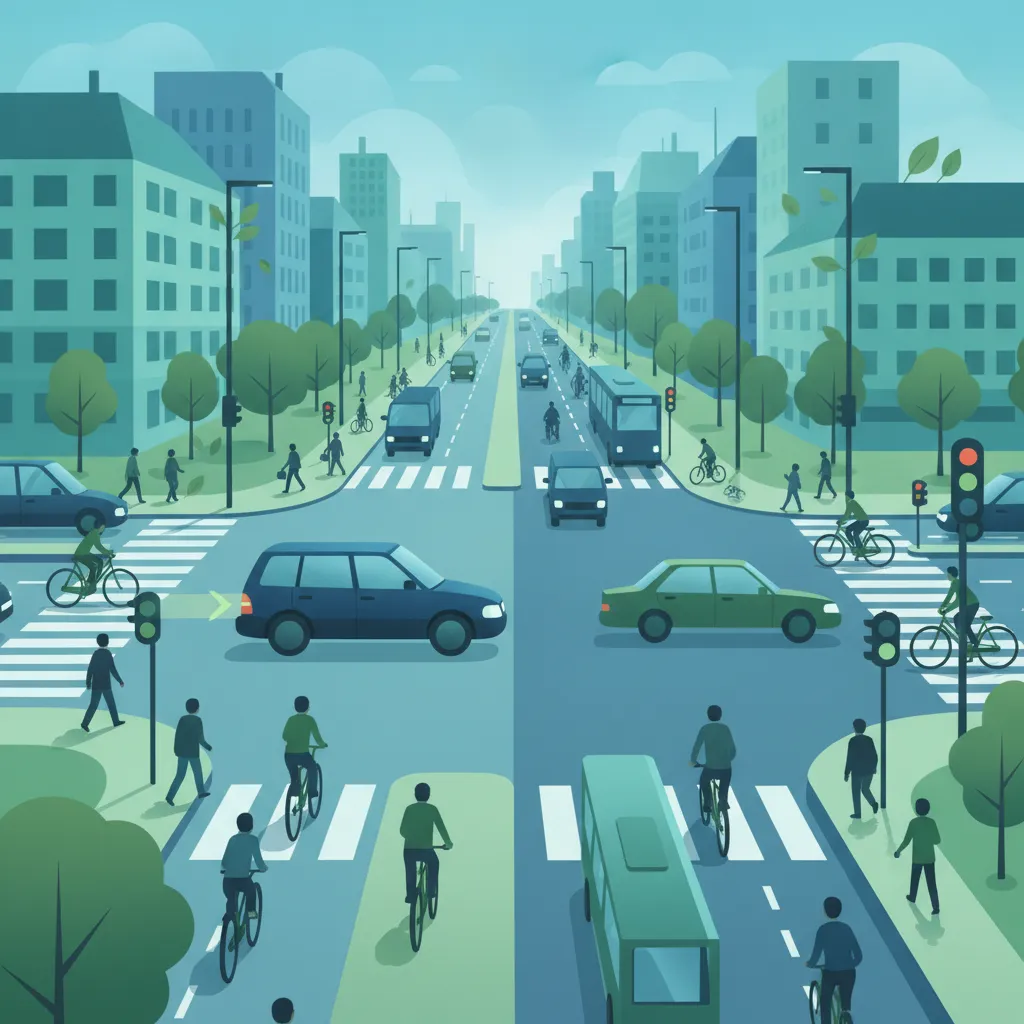
This lesson provides a structured method for approaching and crossing intersections safely. It reinforces the application of priority rules, the interpretation of signs and signals, and the importance of thorough observation. Specific attention is given to looking for cyclists and pedestrians who may be crossing the rider's path.

This lesson addresses the critical skill of safely coexisting with cyclists and cargo bikes, which are prevalent in Denmark. It explains how to maintain a safe distance, overtake properly, and be vigilant for cyclists, especially when turning right. Understanding the infrastructure of cycle lanes and predicting cyclist behavior is a key focus.
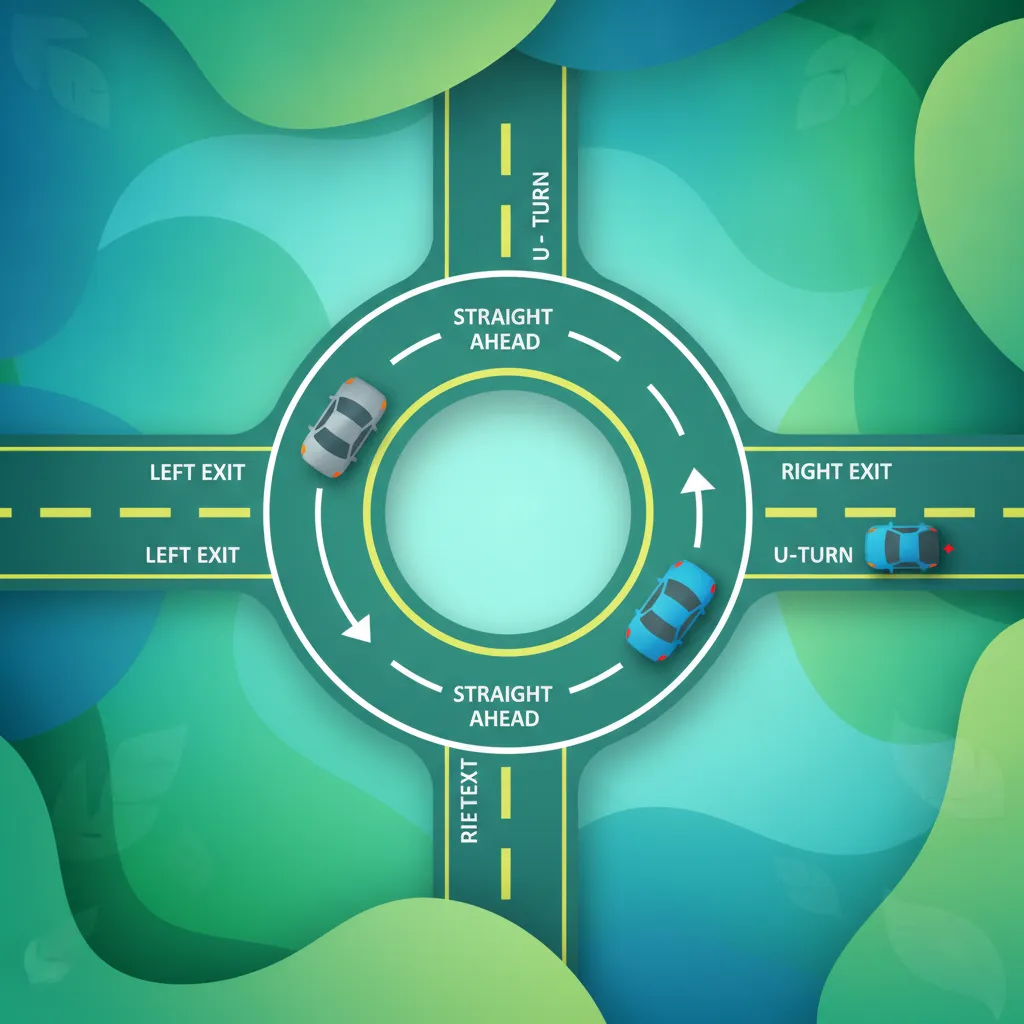
This lesson offers a step-by-step guide to navigating roundabouts in Denmark. You will learn how to approach and enter a roundabout, the requirement to yield to circulating traffic, and how to select the appropriate lane for your intended exit. Special attention is given to safely managing interactions with cyclists and pedestrians who may be present at roundabout entrances and exits.
Identify and avoid frequent signalling errors made by stor knallert riders. This lesson focuses on visibility issues with indicators and hand signals in Denmark, ensuring your intentions are always clear.
This lesson focuses on the different ways motorcyclists can communicate their intentions to others. It covers the correct use of electronic signals, standard hand signals, and the importance of making eye contact with drivers. Clear and early communication is essential for preventing conflicts and ensuring predictable interactions in traffic.
This lesson explores non-verbal communication techniques for safer road sharing. It discusses the importance of making eye contact with other drivers and pedestrians to confirm they have seen you. The content also explains the appropriate and legal use of the horn to alert others of your presence.
This lesson introduces the primary categories of Danish road signs and their legal implications. It covers regulatory signs that dictate mandatory actions or prohibitions, and warning signs that indicate upcoming hazards. Correct interpretation of these signs is fundamental for lawful and safe riding on Danish roads.
This lesson details the function and meaning of traffic light signals in Denmark. It covers the standard red, amber, and green sequences, as well as special signals like flashing amber lights and green arrows for turning. The content also explains signals specific to cyclists and pedestrians that moped riders must observe at intersections.
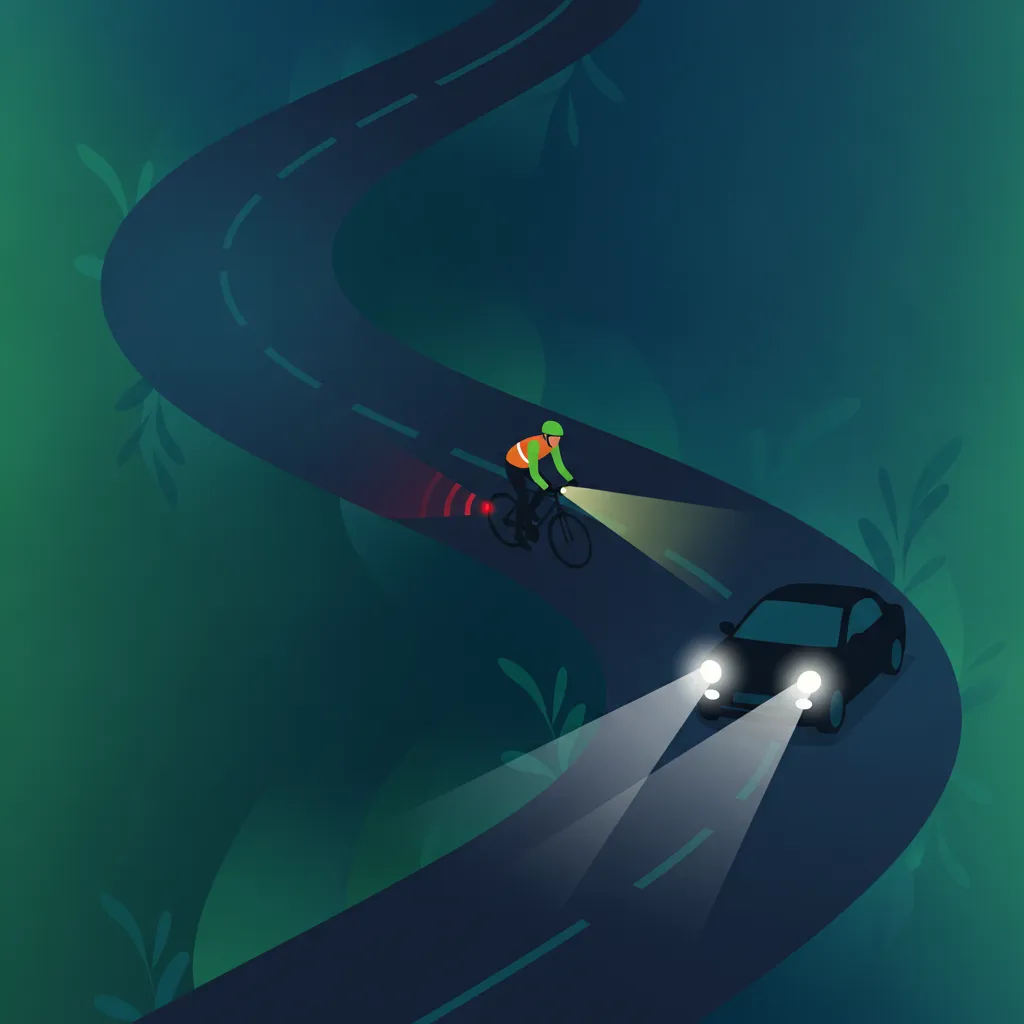
This lesson focuses on the specific challenges of riding in darkness. It explains the legal requirements and proper use of high and low beam headlights to see and be seen. The importance of wearing reflective clothing and ensuring all vehicle lights and reflectors are functioning is strongly emphasized.

This lesson provides a step-by-step guide for managing a vehicle breakdown safely. It instructs the rider on moving the vehicle to a safe location, making it visible to other traffic using hazard lights, and personal safety while waiting for assistance. The importance of staying away from active traffic lanes is a key point.
This lesson focuses on interpreting the various markings painted on Danish road surfaces. It explains the rules associated with solid and broken lane lines, directional arrows, and special-purpose lanes for buses and cyclists. Understanding these markings is crucial for maintaining correct lane discipline and safely navigating complex road layouts.
Properly functioning lighting and signaling systems are fundamental for safe communication on the road. This lesson details the purpose and correct use of all exterior lights, including headlights, brake lights, turn signals, and hazard lights, according to Danish law. It emphasizes the driver's responsibility to ensure these systems are clean and operational to maintain visibility and clearly signal maneuvers to other road users.

This lesson explains the critical importance of being visible to other road users. It details the proper use of headlights and daytime running lights as required by Danish law. The content also covers the effectiveness of wearing reflective clothing and ensuring the vehicle's reflectors are clean and functional.

This lesson focuses on the core safety duties of a stor knallert rider. It explains the legal requirement for wearing a helmet and the benefits of other protective gear. The content also covers essential pre-ride checks, including brakes, tyres, and lights, to ensure the vehicle is in safe operating condition.
Find clear answers to common questions learners have about Signalling with Indicators and Hand Signals. Learn how the lesson is structured, which driving theory objectives it supports, and how it fits into the overall learning path of units and curriculum progression in Denmark. These explanations help you understand key concepts, lesson flow, and exam focused study goals.
While turn indicators are the primary method for signalling, hand signals are legally recognized and encouraged as a backup to increase your visibility or if your indicators fail. They are particularly useful in heavy traffic to ensure you are clearly seen by others.
You must signal in good time before the manoeuvre starts. For the theory exam, always choose the option that emphasizes giving other road users sufficient warning to adjust their speed or position, especially when interacting with cyclists.
As a smaller, more vulnerable road user, your predictability is your best protection. Clear signalling informs drivers of cars and trucks about your intentions, significantly reducing the risk of being overlooked at intersections or during lane changes.
Yes, the theory exam often includes visual scenarios or situational questions asking you to identify the correct signal to use in specific road conditions to ensure safe passage and compliance with Danish priority rules.
Use our powerful search tool to pinpoint specific Danish driving theory topics, road signs, or traffic situations you need to review. Start exploring relevant practice sets now to reinforce your knowledge and build confidence for your upcoming driving licence exam.