
Logo
Danish Driving Theory Courses

Lesson 3 of the Priority Rules, Pedestrian Crossings, and Roundabouts unit

Danish Driving Theory B: Navigating Roundabouts Safely

This lesson guides you through the correct procedures for approaching and navigating roundabouts on Danish roads. You will learn the critical rules of priority, effective lane discipline, and how to manage potential hazards from cyclists and pedestrians. Mastering these skills is essential for your Category B theory exam and for driving with confidence in real traffic.
roundaboutspriority rulescategory Btheory testroad safety
Danish Driving Theory B: Navigating Roundabouts Safely

Lesson content overview

Danish Driving Theory B

Navigating Roundabouts Safely in Denmark

Roundabouts are a common feature of the Danish road network, designed to improve traffic flow and enhance safety at intersections. Unlike traditional crossroads, roundabouts minimize conflict points and encourage lower speeds, making them an efficient solution for managing traffic. Understanding the specific rules and etiquette for navigating roundabouts is crucial for all drivers, especially when preparing for your Danish Driving License Theory Course: Category B Preparation.

This lesson provides a comprehensive guide to successfully approaching, entering, circulating within, and exiting roundabouts in Denmark. We will delve into the critical aspects of yielding to circulating traffic, selecting the correct lane, and safely interacting with vulnerable road users such as cyclists and pedestrians, who are frequently present at roundabout entrances and exits.

Understanding Danish Roundabouts: Core Principles

Successful navigation of any roundabout, particularly in Denmark, relies on a few fundamental principles. Adhering to these principles ensures a smooth flow of traffic and significantly reduces the risk of accidents.

Definition

Roundabout

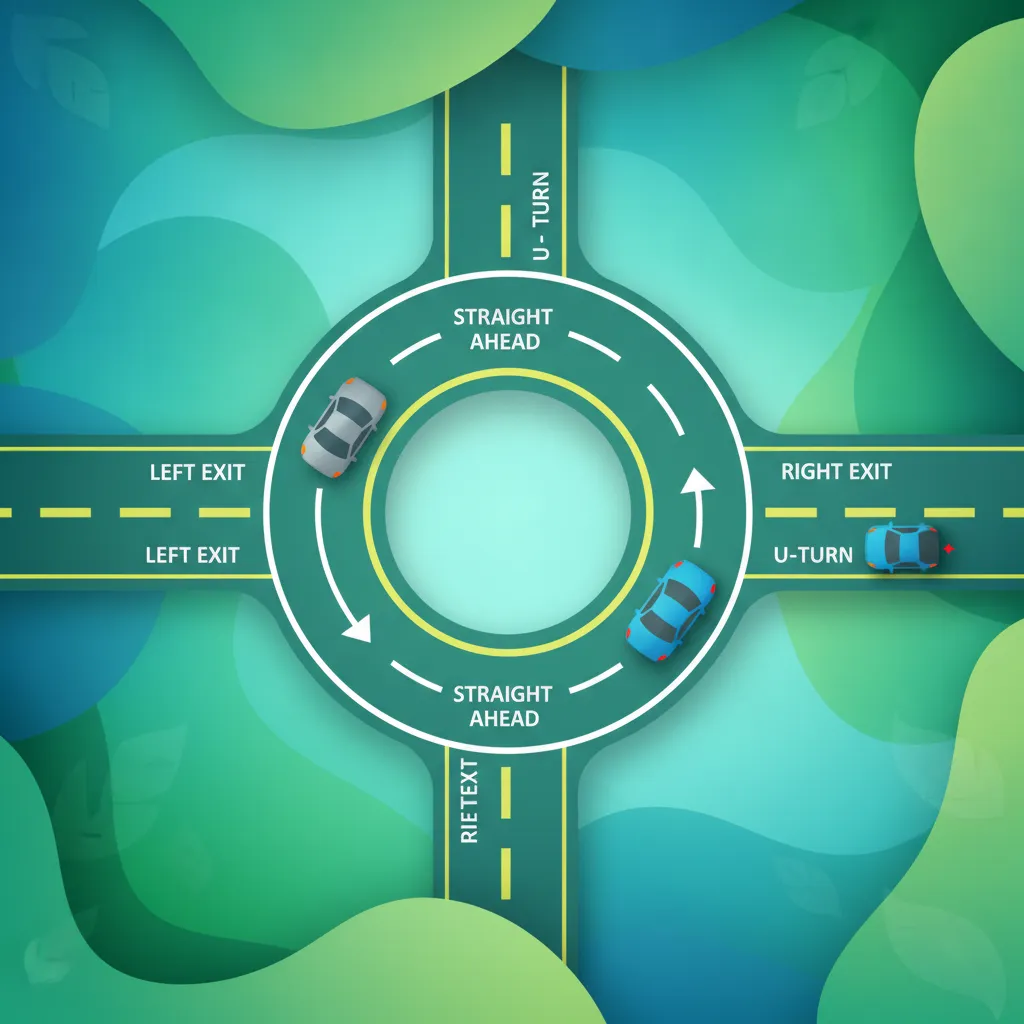
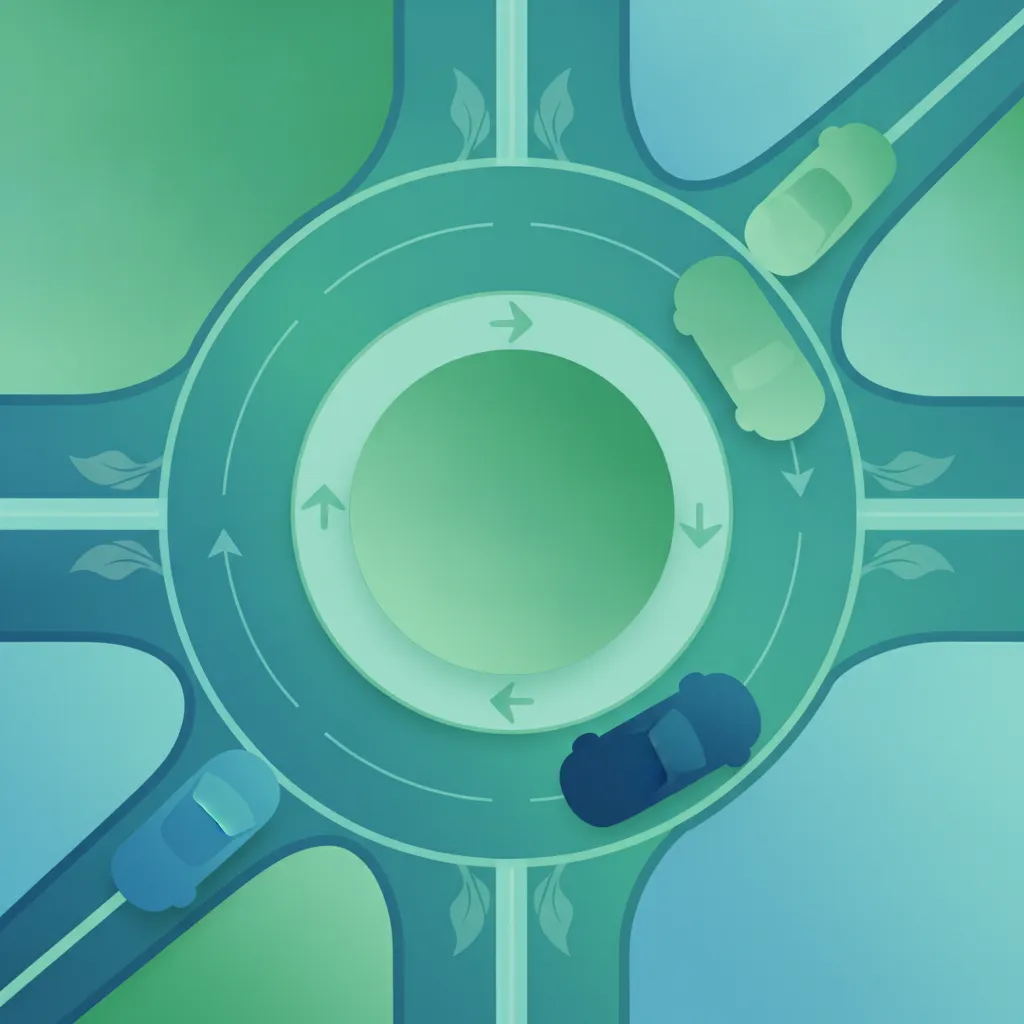
A circular intersection where traffic moves in one direction (clockwise in Denmark) around a central island.

Yielding to Circulating Traffic: The Golden Rule

The most important rule in Danish roundabouts is to yield to traffic already circulating within the roundabout. This means you must give way to any vehicle that has already entered and is moving around the central island, regardless of their position relative to your entry point. This rule prevents collisions and keeps the traffic moving efficiently.

Lane Discipline and Intent Communication

Choosing the correct lane before entering a multi-lane roundabout is paramount. Your lane selection should clearly communicate your intended exit to other road users. Maintaining your chosen lane while circulating is equally important to avoid confusion and potential side-swipe collisions. Proper signaling, especially when exiting, is also a vital part of communicating your intentions.

Speed Management for Safety

Approaching a roundabout requires reducing your speed significantly. This allows you ample time to observe the traffic conditions, identify circulating vehicles, and react safely to any changes. Maintaining a moderate speed within the roundabout itself ensures you can adjust your position or stop if necessary, while also giving other drivers time to react to your movements.

Awareness of Vulnerable Road Users

In Denmark, cyclists and pedestrians are often integrated into the roundabout design, frequently having dedicated paths or crossings at the entry and exit points. Drivers must maintain a high level of awareness for these vulnerable road users and be prepared to yield to them where designated. Failing to do so is a common cause of serious accidents.

Approaching a Roundabout: Observation and Preparation

The approach to a roundabout sets the stage for safe navigation. It is a critical phase where you gather information and prepare your vehicle.

Identifying Roundabout Signage and Markings

As you approach, look for advance warning signs indicating an upcoming roundabout. The most common sign you will encounter at the entry point of a Danish roundabout is the "Give Way" sign.

This sign explicitly mandates that you must yield to traffic already in the roundabout. Additionally, observe the road markings on the approach, which often indicate specific lanes for different exit directions, especially in multi-lane roundabouts.

Adjusting Your Speed and Position

Begin to reduce your speed well before reaching the roundabout entry line. This gives you time to assess the traffic situation, choose your lane, and prepare to stop if necessary. Scan the entire roundabout, including the central island, all entry points, and your intended exit, for other vehicles, cyclists, and pedestrians. Your vehicle's position should reflect your intended exit, even if lane markings are not explicitly present.

Tip

Early observation and speed reduction are key. The earlier you react, the more time you have to make safe decisions and avoid abrupt braking.

Yielding to Pedestrians and Cyclists on Approach

Before the roundabout entry, you may encounter crosswalks for pedestrians or dedicated cycle paths. Always be prepared to yield to pedestrians crossing at designated areas and to cyclists using their dedicated paths that may cross your entry lane. Their presence should be anticipated as part of your initial observation.

Entering the Roundabout: Yielding and Timing

Once you have approached safely, the next step is to enter the circulating flow of traffic. This requires precise timing and strict adherence to the yielding rule.

Mandatory Yielding to Circulating Traffic

Before you commit to entering, you must yield to all vehicles already circulating within the roundabout. This includes vehicles approaching from your left, as traffic moves clockwise. Do not enter if doing so would cause a circulating vehicle to brake or swerve. Wait for a safe gap in traffic before proceeding.

Definition

Yield

To give way or stop, allowing other traffic to proceed before you do. In roundabouts, this applies to circulating traffic, pedestrians, and cyclists.

Smooth Entry into the Traffic Flow

When a safe gap appears, enter the roundabout smoothly, accelerating gently to match the speed of the circulating traffic. Avoid abrupt stops or accelerations once you are in the roundabout, as this can disrupt the flow and create unpredictable situations for other drivers.

Warning

Never assume other drivers will yield to you. Always confirm a safe gap before entering, even if it appears a circulating vehicle might be able to slow down for you.

Lane Selection in Roundabouts: Planning Your Exit

Choosing the correct lane before entering is one of the most critical aspects of safe roundabout navigation, especially in multi-lane configurations. This decision directly impacts your ability to exit safely and without conflict.

Single-Lane Roundabouts

In single-lane roundabouts, lane selection is simpler. You typically stay in the single lane, adjusting your position to the left or right within that lane to indicate your general direction if no specific markings are present. However, always be prepared to share the lane with cyclists, who may ride closer to the center of the lane for visibility and safety.

Multi-Lane Roundabouts: Exit-Based Lane Choice

For roundabouts with multiple entry lanes, your choice of lane is determined by your intended exit:

Lane Selection for Multi-Lane Roundabouts

  1. Exiting Right (1st Exit): Position your vehicle in the right-hand lane on approach. You should indicate right before entering the roundabout.

  2. Exiting Straight Ahead (2nd Exit): Position your vehicle in the right-hand lane on approach. In some cases, the left lane may also be used if road markings explicitly allow, but the right lane is generally safer and more common. Do not indicate until you are past the exit before your intended exit.

  3. Exiting Left (3rd Exit) or Making a U-Turn: Position your vehicle in the left-hand lane on approach. You should indicate left before entering the roundabout. Once you pass the exit before your intended exit, change your signal to right to indicate your departure.

Always follow the road markings and overhead signs, as these can sometimes dictate specific lane uses that override general rules. Ignoring these can lead to unsafe maneuvers and potential collisions.

Circulating Within the Roundabout: Maintaining Flow and Lane Discipline

Once you have entered the roundabout, maintaining a steady, predictable course is essential until you reach your exit.

Staying in Your Chosen Lane

Continue to drive in the lane you selected upon entry. Avoid changing lanes within the roundabout unless absolutely necessary and only when road markings explicitly permit it and it is safe to do so. Unnecessary lane changes inside a roundabout can confuse other drivers and lead to side-swipe collisions.

Maintaining Appropriate Speed

Maintain a consistent and moderate speed that allows you to react to unexpected situations, such as a sudden stop by the vehicle in front or the appearance of a vulnerable road user. Your speed should also be appropriate for the road conditions, traffic volume, and the overall design of the roundabout.

Observing Other Road Users

Continuously scan the roundabout for other vehicles, paying close attention to their signals and movements. Be particularly aware of larger vehicles, such as trucks or buses, which may need more space to maneuver and turn. Always keep an eye out for cyclists and pedestrians, especially as you approach an exit.

Exiting the Roundabout: Signaling and Clearing the Way

Exiting the roundabout safely requires clear communication and vigilance, especially for vulnerable road users.

Signaling Your Intent to Exit

Proper signaling is crucial for informing other drivers and vulnerable road users of your intention to leave the roundabout.

  • For the first exit (turning right): Signal right before entering the roundabout.
  • For exits straight ahead (second exit) or turning left (third exit/U-turn): Signal right after you have passed the exit immediately preceding your intended exit. This prevents confusion for other drivers who might otherwise think you are taking an earlier exit.

Note

Failing to signal your exit is a common mistake and can lead to dangerous situations, as other drivers cannot anticipate your movements.

Checking for Cyclists and Pedestrians at the Exit

As you approach your exit, conduct a final check for cyclists and pedestrians. In Denmark, dedicated cycle paths often run parallel to the road and cross the roundabout exit. Pedestrians may also use marked crosswalks just as you exit. You must yield to these vulnerable road users.

Always ensure the exit is clear before you fully commit to leaving the roundabout. Be prepared to stop if a cyclist or pedestrian is crossing or about to cross your path.

Interactions with Cyclists and Pedestrians in Danish Roundabouts

Given Denmark's strong cycling culture, special attention to cyclists and pedestrians in roundabouts is non-negotiable.

Cyclist Priority at Entrances and Exits

Cyclists often have designated cycle paths that run alongside the road and cross the entry and exit lanes of roundabouts. When a cyclist is on such a path and is either entering the roundabout from your right or is crossing your exit path, they typically have priority. Drivers must be highly vigilant and prepared to yield. Never assume a cyclist has seen you or will stop for you.

Pedestrian Crossings

Pedestrians will use marked crosswalks, which are frequently located just before the entry line or immediately after the exit line of a roundabout. You must yield to pedestrians who are on or about to enter these crosswalks. Always check both sides of the crossing before proceeding.

Visibility Challenges

Be aware that cyclists and pedestrians can be difficult to spot, especially in poor light conditions, bad weather, or if they are in your vehicle's blind spots. Always perform thorough head checks and mirror checks, particularly when turning or exiting.

Common Mistakes and Violations in Danish Roundabouts

Awareness of common errors can help you avoid them and maintain safety.

  • Failure to Yield: Entering a roundabout without giving way to circulating traffic is a primary cause of collisions.
  • Wrong Lane Selection: Choosing an incorrect lane for your intended exit can lead to abrupt and dangerous lane changes within the roundabout, causing conflicts with other vehicles.
  • Not Signaling Exit: Failing to signal before exiting leaves other drivers guessing your intentions, which can result in sudden braking or near-misses.
  • Ignoring Cyclists and Pedestrians: Not yielding to vulnerable road users at entry or exit points is a significant safety risk and a common cause of accidents in Denmark.
  • Speeding Through the Roundabout: Excessive speed reduces your reaction time and increases the severity of any potential collision. It also makes it harder to yield safely.
  • Abrupt Braking/Acceleration: Erratic driving behavior disrupts traffic flow and can lead to rear-end collisions.

Safety and Reasoning Insights: Why These Rules Exist

The rules for navigating roundabouts are designed with specific safety and efficiency goals in mind:

  • Reduced Conflict Points: Roundabouts eliminate many of the direct crossing conflicts found at traditional intersections, such as head-on and right-angle collisions, which are often the most severe. Instead, they convert these into merging and diverging conflicts, which tend to be less severe.
  • Lower Speeds: The circular design naturally encourages lower speeds, giving drivers more time to react and reducing the force of any impact if a collision does occur.
  • Clearer Right-of-Way: The "yield to circulating traffic" rule provides a clear and consistent priority, simplifying decision-making for drivers compared to complex priority rules at many cross-intersections.
  • Improved Traffic Flow: By keeping traffic constantly moving (even if slowly), roundabouts can handle higher volumes of traffic more efficiently than intersections with stop signs or traffic lights, especially during peak hours.
  • Enhanced Pedestrian and Cyclist Safety: While requiring vigilance, integrating dedicated paths and crossings helps organize interactions with vulnerable road users, making their presence more predictable for drivers.

Final Concept Summary for Roundabout Navigation

Mastering roundabouts is a key component of safe driving in Denmark. Remember these crucial steps:

  • Approach: Observe signage and markings, reduce your speed, and scan for all road users.
  • Enter: Yield unconditionally to all traffic already circulating within the roundabout.
  • Lane Selection: Choose the correct lane before entering, based on your intended exit, and follow road markings.
  • Circulate: Maintain your lane, keep a safe speed, and continue observing your surroundings.
  • Exit: Signal your intention clearly, and crucially, yield to any pedestrians or cyclists present at the exit.

Adhering to these principles will enable you to navigate roundabouts confidently and safely, contributing to a smoother and more secure traffic environment for everyone.

Learn more with these articles

Check out these practice sets

Lesson recap

Quick summary before you move on

Fast revision

Navigating Danish roundabouts requires a systematic approach: observe signage and reduce speed well before entry, then yield unconditionally to all circulating traffic before entering. Choose your lane based on your intended exit before entering and maintain lane discipline throughout. Signal appropriately - right before entering for the first exit, or right after passing the exit immediately before your intended exit for other directions. Throughout the maneuver, remain highly vigilant for cyclists and pedestrians on dedicated paths and crosswalks, as they frequently have priority at entries and exits. Mastering these steps ensures both theory test success and safe, confident driving in real traffic.


Core takeaways

Main ideas from this lesson

A short set of high-value points that capture the most important learning from this lesson.

Always yield unconditionally to traffic already circulating in the roundabout before entering - this is the golden rule

Select your lane before entering based on your intended exit: right lane for 1st exit or straight ahead, left lane for 2nd exit (left turn or U-turn)

Maintain lane discipline throughout the roundabout - do not change lanes unless road markings explicitly permit and it is safe

Signal right before entering for the 1st exit; signal right after passing the exit immediately before your intended exit for other exits

Continuously scan for cyclists and pedestrians at entries and exits - they frequently have priority on dedicated paths and crosswalks

Remember this

Details worth keeping in mind

Point 1

Circulating traffic always has unconditional priority over vehicles attempting to enter the roundabout regardless of entry point

Point 2

For multi-lane roundabouts: right lane = first exit or straight; left lane = second exit (left/uturn) - decide before entering

Point 3

Cyclists on designated paths crossing your entry or exit lane have priority and must be yielded to

Point 4

The Give Way sign (B11) at roundabout entries mandates yielding to all circulating vehicles before entering

Point 5

Late or missing exit signals are a common cause of confusion and near-collisions - signal clearly and on time

Watch for this

Frequent learner mistakes

Entering without yielding to circulating traffic, assuming other drivers will slow down

Choosing the wrong lane for the intended exit, then attempting dangerous late lane changes

Failing to signal the exit, leaving other drivers unable to anticipate your movements

Not checking for cyclists and pedestrians at exits, especially those on parallel cycle paths

Driving too fast through the roundabout, reducing reaction time and increasing collision severity

Search topics related to Navigating Roundabouts Safely

Explore search topics learners often look for when studying Navigating Roundabouts Safely. These topics reflect common questions about road rules, driving situations, safety guidance, and lesson level theory preparation for learners in Denmark.

how to navigate roundabouts in DenmarkDanish roundabout priority rules explainedCategory B theory test roundabout questionslane selection for roundabouts Denmarkrules for cycling at roundabouts Denmarkpassing the Danish theory test roundabout section

Related driving theory lessons for Navigating Roundabouts Safely

Browse additional driving theory lessons that cover connected traffic rules, road signs, and common driving situations related to this topic. Improve your understanding of how different rules interact across everyday traffic scenarios.

Danish Roundabout Rules for Cyclists and Pedestrians Explained

Understand the specific rules and priority situations for cyclists and pedestrians when navigating Danish roundabouts. Learn how to safely interact with vulnerable road users at roundabout entrances and exits to avoid common accidents.
roundaboutscyclistspedestrianspriority rulesvulnerable road userstraffic safetydenmark
Roundabouts: Entry, Circulation, and Exit lesson image

Roundabouts: Entry, Circulation, and Exit

This lesson provides detailed instructions for navigating Danish roundabouts. It covers the rules for yielding upon entry, selecting the correct lane based on the intended exit, and signalling intentions clearly. The lesson also highlights the specific rules regarding priority for cyclists crossing entry and exit lanes.
Danish Driving Theory AMIntersections, Roundabouts, Cycle Traffic and Urban Risk
View lesson
Safe Interaction with High Volumes of Cycle Traffic lesson image

Safe Interaction with High Volumes of Cycle Traffic

This lesson provides critical guidance for driving in environments with heavy cycle traffic, typical of Danish cities. It focuses on identifying and yielding to cyclists in dedicated bike lanes, especially when turning right across their path. The content emphasizes advanced observation skills to detect cyclists in blind spots and the importance of giving adequate space.
Danish Passenger Transport Theory DCity Traffic, Bus Lanes, Cycle Traffic and Public Transport Priority
View lesson
Pedestrian Crossings and Cyclist Zones lesson image

Pedestrian Crossings and Cyclist Zones

This lesson provides detailed guidance on navigating pedestrian crossings (fodgængerfelter) and areas with high cyclist traffic. It clarifies your legal obligation to stop for pedestrians at zebra crossings and the proper speed to approach these zones. A central theme is understanding the rights of vulnerable road users and how to yield safely to them in accordance with Danish traffic law.

Danish Driving Theory BPriority Rules, Pedestrian Crossings, and Roundabouts
View lesson
Road Sharing with Cyclists and Pedestrians lesson image

Road Sharing with Cyclists and Pedestrians

This lesson focuses on the safe integration of cyclists and pedestrians within the traffic system, a key feature of Danish roads. It covers the specific rights and common behaviors of cyclists, including those on e-bikes and cargo bikes, and explains procedures for yielding to pedestrians. The content emphasizes maintaining safe distances and heightened awareness to prevent accidents and promote harmonious road sharing.
Danish Driving Theory BDanish Traffic Culture and Road Sharing Principles
View lesson
Roundabout Strategies for Motorcyclists lesson image

Roundabout Strategies for Motorcyclists

This lesson details the specific skills needed to navigate roundabouts on a motorcycle. It explains how to approach at a safe speed, select the correct lane based on your intended exit, and yield to circulating traffic. Proper use of signals to indicate intentions when entering and exiting is also covered.

Danish Motorcycle Theory AIntersections, Roundabouts, Cycle Traffic and Urban Riding
View lesson
Managing Interactions with Cyclists and E-Bikes lesson image

Managing Interactions with Cyclists and E-Bikes

This lesson provides in-depth guidance on safely interacting with cyclists and e-bike riders, a daily reality in Danish cities. It explains how to provide adequate space when overtaking, how to anticipate their movements at intersections, and how to respect their right-of-way in designated lanes. Understanding these dynamics is essential for preventing common accidents and ensuring a safe urban driving experience for everyone.

Danish Driving Theory BUrban Risk: Cyclists, E-bikes, Buses, and Pedestrians
View lesson
Managing Interactions with Cyclists and Tourists lesson image

Managing Interactions with Cyclists and Tourists

This lesson addresses the unique challenges of driving in tourist-heavy urban centers alongside cyclists. It teaches drivers to anticipate the behavior of individuals who may be distracted or unfamiliar with local traffic rules. The content provides strategies for communicating intentions clearly and navigating safely around large groups, luggage, and cyclists.
Danish Passenger Transport Theory DSchools, Pedestrians, Cyclists, Tourists and High-Risk Stop Areas
View lesson
Interacting with Cyclists, E-Bikes, and Pedestrians lesson image

Interacting with Cyclists, E-Bikes, and Pedestrians

This lesson focuses on safe interactions with Denmark's large population of cyclists and other vulnerable road users. It covers the rules for passing cyclists, yielding at pedestrian crossings, and the specific hazard of turning across a bike lane. Developing heightened awareness for these interactions is critical for urban riding.
Danish Motorcycle Theory AIntersections, Roundabouts, Cycle Traffic and Urban Riding
View lesson
Pedestrian Safety in Urban Areas and School Zones lesson image

Pedestrian Safety in Urban Areas and School Zones

This lesson reinforces the driver's responsibility to protect pedestrians, particularly in busy urban areas and near schools. It details the procedures for approaching pedestrian crossings, the legal requirement to reduce speed significantly in marked school zones, and how to anticipate the unpredictable actions of pedestrians. The content covers traffic calming measures and the legal rights of pedestrians in various settings.

Danish Driving Theory BUrban Risk: Cyclists, E-bikes, Buses, and Pedestrians
View lesson
Safe Right-Turn Manoeuvres with Cyclists lesson image

Safe Right-Turn Manoeuvres with Cyclists

This lesson provides critical instruction on executing right turns safely, a high-risk maneuver for heavy vehicles in urban settings. It places strong emphasis on Danish traffic laws concerning cyclist priority and teaches drivers how to position their vehicle to account for off-tracking. The content focuses on defensive driving techniques, such as scanning for cyclists and making intentions clear, to prevent right-turn collisions.

Danish Heavy Vehicle Theory CBlind Spots, Right Turns, Reversing and Manoeuvring Space
View lesson

Strategic Lane Selection in Danish Multi-Lane Roundabouts

Master lane selection and discipline for complex multi-lane roundabouts in Denmark. Learn the correct lane choice based on your exit and how to safely signal and maneuver to ensure smooth traffic flow and avoid conflicts.

roundaboutslane disciplinepriority rulestraffic flowdriving strategytheorydenmark
Roundabout Strategies for Motorcyclists lesson image

Roundabout Strategies for Motorcyclists

This lesson details the specific skills needed to navigate roundabouts on a motorcycle. It explains how to approach at a safe speed, select the correct lane based on your intended exit, and yield to circulating traffic. Proper use of signals to indicate intentions when entering and exiting is also covered.
Danish Motorcycle Theory AIntersections, Roundabouts, Cycle Traffic and Urban Riding
View lesson
Lane Discipline and Changing Lanes lesson image

Lane Discipline and Changing Lanes

This lesson explains the principles of correct lane discipline, including proper positioning within your lane and adherence to road markings. It provides a clear, safe procedure for changing lanes, which includes signalling your intentions early, checking mirrors, and performing a final shoulder check for the blind spot. Mastering this process is essential for smooth and safe navigation in multi-lane traffic.

Danish Driving Theory BObservation, Lane Use, Turning, and Overtaking
View lesson
Roundabouts: Entry, Circulation, and Exit lesson image

Roundabouts: Entry, Circulation, and Exit

This lesson provides detailed instructions for navigating Danish roundabouts. It covers the rules for yielding upon entry, selecting the correct lane based on the intended exit, and signalling intentions clearly. The lesson also highlights the specific rules regarding priority for cyclists crossing entry and exit lanes.

Danish Driving Theory AMIntersections, Roundabouts, Cycle Traffic and Urban Risk
View lesson
Motorway Driving and Lane Discipline lesson image

Motorway Driving and Lane Discipline

This lesson provides essential training for driving on motorways. It details the correct procedure for using acceleration lanes to merge safely into fast-moving traffic, maintaining proper lane discipline, and executing safe overtaking manoeuvres. You will also learn the importance of keeping a safe following distance and planning for your exit well in advance.
Danish Driving Theory BRural Roads, Motorways, Bridges, Tunnels, Ferries, and Weather
View lesson
Turning, Overtaking, and U-Turns lesson image

Turning, Overtaking, and U-Turns

This lesson covers the correct techniques for various turning manoeuvres, including how to signal, position your vehicle, and judge gaps in traffic. It also details the legal and safety protocols for overtaking, emphasizing the importance of assessing speed, distance, and oncoming traffic. A thorough understanding of these procedures is crucial for navigating intersections and two-lane roads safely.
Danish Driving Theory BObservation, Lane Use, Turning, and Overtaking
View lesson
Road Markings and Lane Usage lesson image

Road Markings and Lane Usage

This lesson focuses on interpreting the various markings painted on Danish road surfaces. It explains the rules associated with solid and broken lane lines, directional arrows, and special-purpose lanes for buses and cyclists. Understanding these markings is crucial for maintaining correct lane discipline and safely navigating complex road layouts.

Danish Driving Theory AMDanish Signs, Markings, Signals and Priority Rules
View lesson
Cooperative Driving and Mutual Respect lesson image

Cooperative Driving and Mutual Respect

This lesson introduces cooperative driving as a fundamental element of road safety in Denmark. It highlights the social responsibility of drivers to act predictably, anticipate the actions of others, and maintain courteous interactions with all road users. By fostering mutual respect and cooperation, you will learn how to reduce the potential for conflict and enhance overall traffic safety.

Danish Driving Theory BDanish Traffic Culture and Road Sharing Principles
View lesson
Safe Interaction with High Volumes of Cycle Traffic lesson image

Safe Interaction with High Volumes of Cycle Traffic

This lesson provides critical guidance for driving in environments with heavy cycle traffic, typical of Danish cities. It focuses on identifying and yielding to cyclists in dedicated bike lanes, especially when turning right across their path. The content emphasizes advanced observation skills to detect cyclists in blind spots and the importance of giving adequate space.

Danish Passenger Transport Theory DCity Traffic, Bus Lanes, Cycle Traffic and Public Transport Priority
View lesson
Driving on Motorways and Interchanges lesson image

Driving on Motorways and Interchanges

This lesson focuses on the rules and best practices for operating heavy vehicles on motorways and interchanges. It details Danish regulations regarding lane usage and speed limits for lorries, and explains safe techniques for merging into and exiting high-speed traffic. Maintaining a safe and appropriate following distance to allow for longer stopping distances is a key focus of the content.

Danish Heavy Vehicle Theory CMotorways, Bridges, Ferries, Rural Roads, Weather and Route Planning
View lesson
Riding on Motorways: Entry, Lane Discipline, and Exit lesson image

Riding on Motorways: Entry, Lane Discipline, and Exit

This lesson provides a guide to motorway riding, a high-speed and demanding environment. It details the process for using acceleration lanes to merge smoothly, maintaining proper lane discipline, and preparing for exits well in advance. Key safety principles like the two-second rule are reinforced for this context.

Danish Motorcycle Theory AOvertaking, Motorways, Bridges, Coastal Roads and Rural Traffic
View lesson

Frequently asked questions about Navigating Roundabouts Safely

Find clear answers to common questions learners have about Navigating Roundabouts Safely. Learn how the lesson is structured, which driving theory objectives it supports, and how it fits into the overall learning path of units and curriculum progression in Denmark. These explanations help you understand key concepts, lesson flow, and exam focused study goals.

Do I always have to yield to traffic coming from the left in a roundabout?

In Denmark, you must yield to traffic already in the roundabout (coming from your left) unless road signs indicate otherwise. Always check for specific signage as you approach the intersection.

When should I use my turn signal in a roundabout?

You should signal when you are about to exit the roundabout. This lets others waiting to enter know you are leaving, allowing them to proceed safely.

How do I handle cyclists when exiting a roundabout?

Cyclists in Denmark often have their own paths alongside the road. You must check your mirrors and perform a shoulder check before exiting to ensure no cyclist is continuing straight along the outer edge of the roundabout.

What lane should I choose if I want to go straight?

Generally, you should use the right lane for exiting at the first or second exit, unless road markings or signs specify otherwise for that specific roundabout.

Ready to Find Your Next Targeted Danish Driving Theory Practice Set?

Use our powerful search tool to pinpoint specific Danish driving theory topics, road signs, or traffic situations you need to review. Start exploring relevant practice sets now to reinforce your knowledge and build confidence for your upcoming driving licence exam.

Search Practice Questions

Continue your Danish driving theory learning journey

Danish road signsDanish article topicsSearch Danish road signsDanish driving theory homeDanish road sign categoriesDanish driving theory topicsSearch Danish theory articlesDanish driving theory coursesDanish Driving Theory B courseDanish driving theory articlesDanish driving theory practiceDanish practice set categoriesDanish Driving Theory AM courseDanish Motorcycle Theory A courseDanish driving licence proceduresDanish Heavy Vehicle Theory C courseSearch Danish driving theory practiceDanish driving theory terminology A–ZDanish driving theory terms and glossaryDanish Passenger Transport Theory D courseCategory B Overview and Learner Responsibilities unit in Danish Driving Theory BDanish Traffic Culture and Road Sharing Principles unit in Danish Driving Theory BDanish Signs, Markings, Signals and Priority Rules unit in Danish Driving Theory AMAM in Denmark, Stor Knallert and First-Rider Responsibility unit in Danish Driving Theory AMNavigating Roundabouts Safely lesson in Priority Rules, Pedestrian Crossings, and RoundaboutsMotorcycle Controls, Safety Checks and Protective Equipment unit in Danish Motorcycle Theory ADanish A1, A2 and A, Rider Responsibility and Motorcycle Risk unit in Danish Motorcycle Theory AMass, Dimensions, Axle Loads, Payload and Operating Limits unit in Danish Heavy Vehicle Theory CPedestrian Crossings and Cyclist Zones lesson in Priority Rules, Pedestrian Crossings, and RoundaboutsUnconditional Priority and Right-of-Way Rules lesson in Priority Rules, Pedestrian Crossings, and RoundaboutsDanish C Categories, Heavy-Vehicle Responsibility and Professional Mindset unit in Danish Heavy Vehicle Theory CDanish D Categories, Passenger Duty of Care and Professional Identity unit in Danish Passenger Transport Theory DPassenger Vehicle Checks, Dimensions, Doors, Mirrors and Safety Systems unit in Danish Passenger Transport Theory D