
This lesson explores the essential principles of visibility for Category AM riders, ensuring you understand how to remain seen by other road users in all conditions. You will learn the specific Danish legal requirements for using lights and the practical importance of maintaining functional, clean reflectors on your vehicle. Mastering these concepts is a critical step in our curriculum to ensure your safety and success in the official theory test.
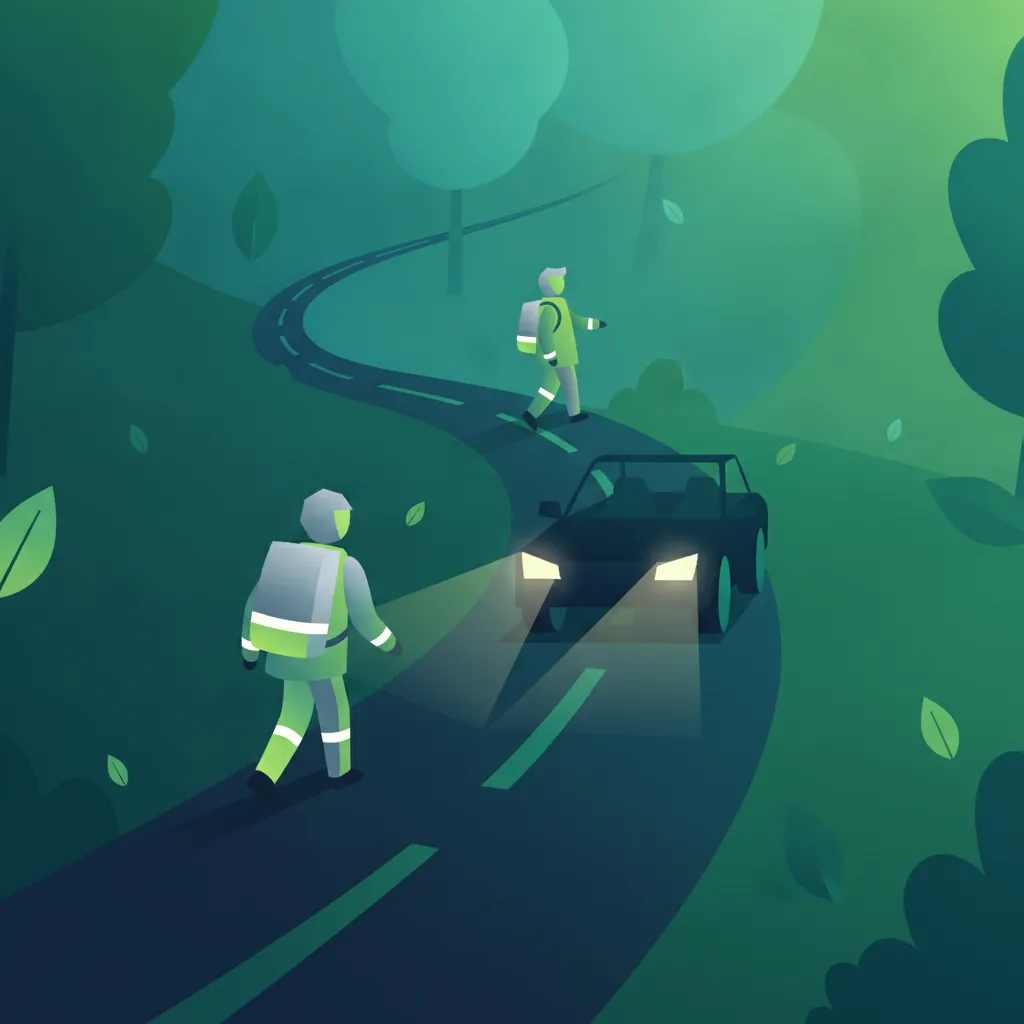
Lesson content overview
Visibility is a fundamental pillar of road safety, especially for riders of stor knallert (Category AM) within the Official Danish Driving Theory Course. Being seen by other road users and clearly seeing your environment are paramount to preventing collisions. This comprehensive lesson explores the principles of visibility, the proper use of vehicle lighting, the importance of reflective clothing, and the maintenance of vehicle reflectors, all within the context of Danish traffic law.
Ensuring that you are visible to other road users and that you can adequately perceive your surroundings is not merely a recommendation; it is a critical safety imperative. Many road incidents occur because one party was not seen, or because a driver's perception was compromised. As a stor knallert rider, your smaller profile makes effective visibility even more crucial.
The principle of mutual visibility dictates that all participants in traffic must be able to see and be seen by others. This reciprocal awareness forms the basis of safe interaction on the roads. Failure to uphold this principle significantly escalates the risk of accidents, endangering both yourself and those around you. Achieving optimal visibility relies on a combination of physics, legal mandates, and diligent personal practice. Lighting systems and reflective materials harness the physics of light to make objects more conspicuous, while traffic laws establish a minimum standard for their use.
Vehicle lighting is designed to serve two primary purposes: to illuminate the road ahead for the driver and to make the vehicle visible to others. In Denmark, specific rules govern the use of various lighting systems to achieve these goals.
Headlights are the most powerful active lighting units on your stor knallert. They project a beam of light forward, making the road ahead discernible and ensuring your presence is known to oncoming traffic and vehicles in front.
The headlight setting designed for normal night driving, providing sufficient forward illumination without dazzling oncoming drivers or those ahead of you.
Low beam headlights illuminate the road directly in front of the vehicle, typically for a distance suitable for urban speeds or when there is oncoming traffic. They are engineered to have a specific cut-off pattern that prevents the light from shining into the eyes of other drivers, thereby avoiding dangerous glare. According to Danish law, low beam headlights are mandatory from sunset to sunrise and whenever visibility is reduced, such as during rain, fog, or twilight.
The headlight setting that provides maximum, long-range illumination of the road ahead, intended for use on dark roads where there is no risk of dazzling other road users.
High beam headlights offer a much longer and more intense beam of light, significantly improving your forward visibility on unlit roads. However, their powerful illumination can temporarily blind other drivers if used improperly. Therefore, high beam must be switched off or dimmed to low beam whenever you encounter oncoming traffic or when you are following another vehicle within a certain distance. Using high beam in built-up areas with streetlights or heavy traffic is generally unnecessary and can be a nuisance to others.
Common mistakes include failing to activate low beam during adverse weather conditions or at dusk, and neglecting to switch off high beam when another vehicle is present. Such errors can lead to serious accidents.
Regularly check that both your low and high beam headlights are functioning correctly and that their lenses are clean. Dirt or damage can significantly reduce their effectiveness.
Daytime Running Lights (DRL) are a modern safety feature designed solely to make your stor knallert more noticeable to other road users during daylight hours. Unlike headlights, DRLs are not intended to illuminate the road for the driver.
Lights that automatically activate when the vehicle's engine is running during the day, specifically designed to increase the vehicle's conspicuity to others without illuminating the road.
DRLs typically operate at a lower intensity than low beam headlights and are often positioned differently. Their primary function is to enhance your vehicle's conspicuity – its ability to be easily seen – in bright conditions where standard headlights might not be necessary for illumination but active lighting still provides a safety benefit. In Denmark, DRLs are mandatory on newer vehicles and are designed to be automatically activated when the engine starts.
While vehicle lighting is crucial, personal visibility also plays a vital role, especially for vulnerable road users like stor knallert riders. Reflective clothing significantly enhances your visibility, particularly when vehicle lights alone might not suffice or when you are off your vehicle.
Apparel made with retroreflective material that reflects light directly back towards its source, making the wearer significantly more visible to drivers, especially in low-light conditions.
Retroreflective materials work by bouncing light back directly to the source (e.g., a car's headlights), making the wearer illuminate brightly to the driver of that vehicle. This is distinct from simply bright-colored clothing, which relies on ambient light. Reflective clothing comes in various forms, including vests, jackets, armbands, and even elements integrated into helmets or shoes.
Wearing reflective clothing is highly recommended for all road users, including stor knallert riders, whenever visibility might be compromised – this includes dusk, dawn, night, and adverse weather conditions. While specific mandates for stor knallert riders might not universally exist for reflective clothing, its use is a proactive safety measure. Some jurisdictions within Denmark may have specific requirements for cyclists operating at night or under particular conditions, highlighting the general importance of reflectivity.
Beyond active lighting, your stor knallert is equipped with passive reflectors. These devices do not generate light but are crucial for increasing visibility when your active lights are off, damaged, or obscured, or when your vehicle is parked.
Passive safety devices mounted on a vehicle (front, rear, and sides) that reflect light back to its source, enhancing the vehicle's visibility, particularly in low light or when its active lights are off.
Vehicle reflectors utilize retroreflective technology, much like reflective clothing. They are designed to catch and reflect light from other vehicles' headlights, making your stor knallert visible even without its own lights being on. Red reflectors are typically found at the rear, white or amber at the front, and amber on the sides, adhering to international standards.
Reflectors are a vital, albeit passive, safety feature. They serve as a crucial backup, ensuring some level of visibility even if your electrical system fails or if you are parked on an unlit road at night.
Adhering to Danish traffic laws regarding vehicle lighting and reflectors is not only a legal obligation but a cornerstone of safe riding. These regulations are designed to minimize risks for all road users.
Under Danish law, specific rules govern the use of headlights to ensure both the rider's vision and other road users' safety from glare.
Incorrect use of headlights, such as failing to switch to low beam when required or using high beam to dazzle others, can result in fines and points on your license, in addition to being extremely dangerous.
For vehicles equipped with them, including most modern stor knallert models, DRLs are mandatory in Denmark.
While specific legal mandates for stor knallert riders to wear reflective clothing might not be absolute, strong recommendations exist for vulnerable road users in Denmark.
All vehicles, including stor knallert, must be fitted with functional and clean reflectors according to Danish regulations.
Understanding the rules is the first step; applying them correctly and avoiding common pitfalls is essential for safety.
Visibility is not static; it changes dynamically with environmental conditions, time of day, and the road environment.
The link between proper visibility practices and road safety is direct and unambiguous:
Mastering visibility principles is paramount for every stor knallert rider. It is an ongoing responsibility that adapts to changing conditions and vehicle states.
stor knallert rider, strongly consider wearing reflective clothing, especially in low-light conditions, to maximize your personal conspicuity.stor knallert's entire lighting system and reflectors for optimal performance.This lesson covers the essential visibility requirements for stor knallert riders under Danish law, including mandatory low beam use from sunset to sunrise and in reduced visibility conditions. High beam headlights offer longer illumination but must be immediately dimmed when encountering other traffic. Daytime Running Lights increase conspicuity during daylight but do not replace headlights or provide rear visibility. Vehicle reflectors serve as crucial passive safety devices that must be maintained clean and undamaged, while reflective clothing with retroreflective material should be worn to achieve 360-degree visibility, particularly in low-light conditions. Regular maintenance of all lighting equipment and reflectors is both a legal requirement and a critical safety practice.
A short set of high-value points that capture the most important learning from this lesson.
Low beam headlights are mandatory from sunset to sunrise and whenever visibility is reduced by rain, fog, snow, or twilight.
High beam headlights must only be used on unlit roads with no oncoming traffic or vehicles ahead, and must be dimmed promptly when others appear.
Daytime Running Lights (DRL) enhance conspicuity during daylight but do not illuminate the road or replace low beam headlights in poor conditions.
Vehicle reflectors are passive safety devices that must always be present, clean, and undamaged—they work even when the vehicle's lights are off.
Reflective clothing should provide 360-degree coverage (front, rear, and sides) and is especially critical at dusk, dawn, and night.
Explore all units and lessons included in this driving theory course.
Low beam illuminates forward without dazzling others; high beam provides maximum long-range illumination but causes dangerous glare if misused.
DRLs are automatically activated and cannot be manually turned off—they do not replace tail lights or provide rider illumination.
Reflectors are color-coded: red at rear, amber on sides, and white or amber at front, adhering to international standards.
High beams reflect off fog particles and raindrops, creating glare; low beam is always the safer choice in adverse weather.
Vulnerable road users like stor knallert riders benefit most from retroreflective materials that bounce light directly back to its source.
Assuming DRLs are sufficient during twilight or poor weather—they provide no rear lighting and no forward illumination for the rider.
Neglecting to clean dirty headlights, tail lights, or reflectors, which drastically reduces their effectiveness.
Using high beam in urban areas with streetlights or when following another vehicle, causing dangerous glare.
Wearing reflective clothing only on the front or back, leaving the rider invisible from approaching side traffic.
Failing to switch to low beam during rain, fog, or heavy cloud cover even during daylight hours.
Lesson content overview
A short set of high-value points that capture the most important learning from this lesson.
Low beam headlights are mandatory from sunset to sunrise and whenever visibility is reduced by rain, fog, snow, or twilight.
High beam headlights must only be used on unlit roads with no oncoming traffic or vehicles ahead, and must be dimmed promptly when others appear.
Daytime Running Lights (DRL) enhance conspicuity during daylight but do not illuminate the road or replace low beam headlights in poor conditions.
Vehicle reflectors are passive safety devices that must always be present, clean, and undamaged—they work even when the vehicle's lights are off.
Reflective clothing should provide 360-degree coverage (front, rear, and sides) and is especially critical at dusk, dawn, and night.
Explore all units and lessons included in this driving theory course.
Low beam illuminates forward without dazzling others; high beam provides maximum long-range illumination but causes dangerous glare if misused.
DRLs are automatically activated and cannot be manually turned off—they do not replace tail lights or provide rider illumination.
Reflectors are color-coded: red at rear, amber on sides, and white or amber at front, adhering to international standards.
High beams reflect off fog particles and raindrops, creating glare; low beam is always the safer choice in adverse weather.
Vulnerable road users like stor knallert riders benefit most from retroreflective materials that bounce light directly back to its source.
Assuming DRLs are sufficient during twilight or poor weather—they provide no rear lighting and no forward illumination for the rider.
Neglecting to clean dirty headlights, tail lights, or reflectors, which drastically reduces their effectiveness.
Using high beam in urban areas with streetlights or when following another vehicle, causing dangerous glare.
Wearing reflective clothing only on the front or back, leaving the rider invisible from approaching side traffic.
Failing to switch to low beam during rain, fog, or heavy cloud cover even during daylight hours.
Explore search topics learners often look for when studying Visibility Principles and Reflectors. These topics reflect common questions about road rules, driving situations, safety guidance, and lesson level theory preparation for learners in Denmark.
Browse additional driving theory lessons that cover connected traffic rules, road signs, and common driving situations related to this topic. Improve your understanding of how different rules interact across everyday traffic scenarios.
Understand the Danish legal requirements for maintaining headlights, daytime running lights, and reflectors on your Category AM vehicle. Ensure your lights are clean, functional, and correctly aligned for optimal visibility and road safety.
Properly functioning lighting and signaling systems are fundamental for safe communication on the road. This lesson details the purpose and correct use of all exterior lights, including headlights, brake lights, turn signals, and hazard lights, according to Danish law. It emphasizes the driver's responsibility to ensure these systems are clean and operational to maintain visibility and clearly signal maneuvers to other road users.
This lesson provides a comprehensive overview of a vehicle's lighting systems and their proper use. It covers the functions of low and high beams, fog lights, and all signal lights, emphasizing their importance for visibility and communication with other drivers. The material explains the legal requirements for using lights in various conditions, including daytime, darkness, and adverse weather, as specified by Danish regulations.
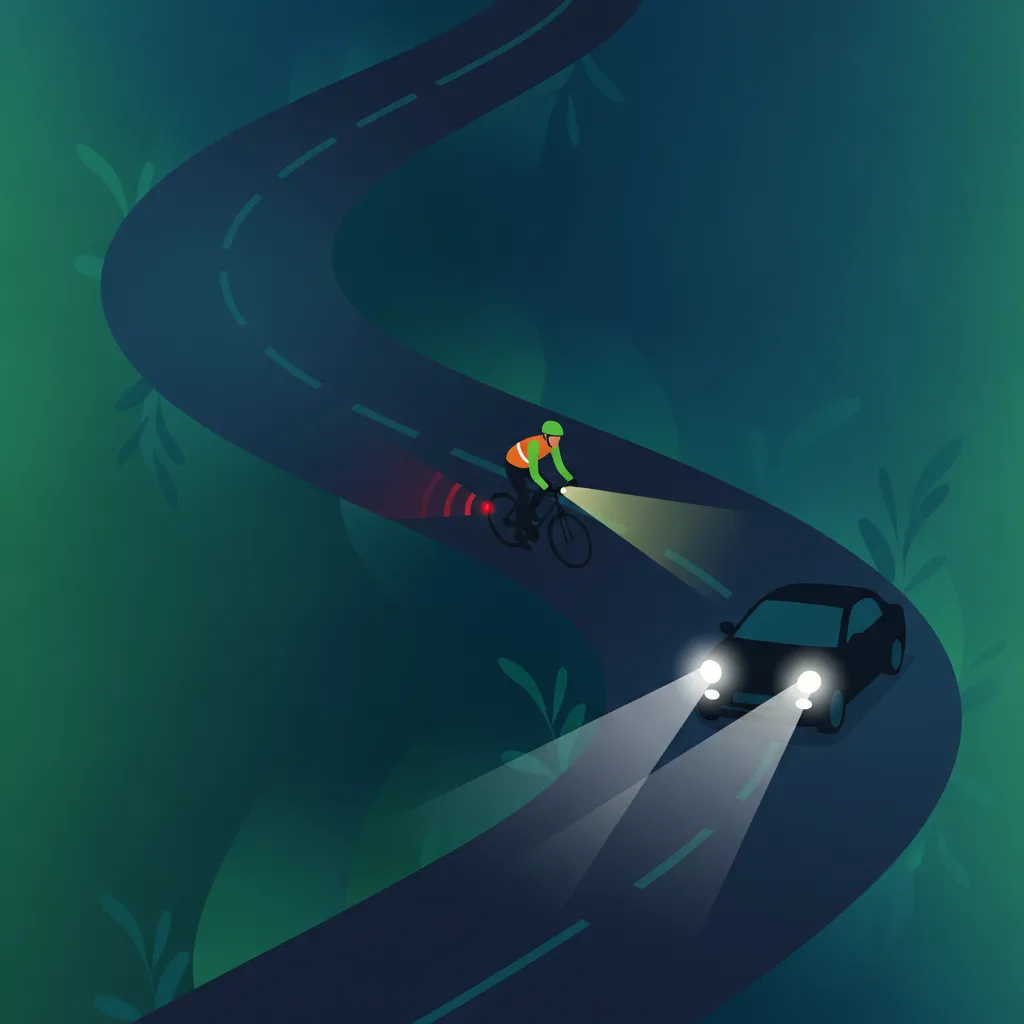
This lesson focuses on the specific challenges of riding in darkness. It explains the legal requirements and proper use of high and low beam headlights to see and be seen. The importance of wearing reflective clothing and ensuring all vehicle lights and reflectors are functioning is strongly emphasized.
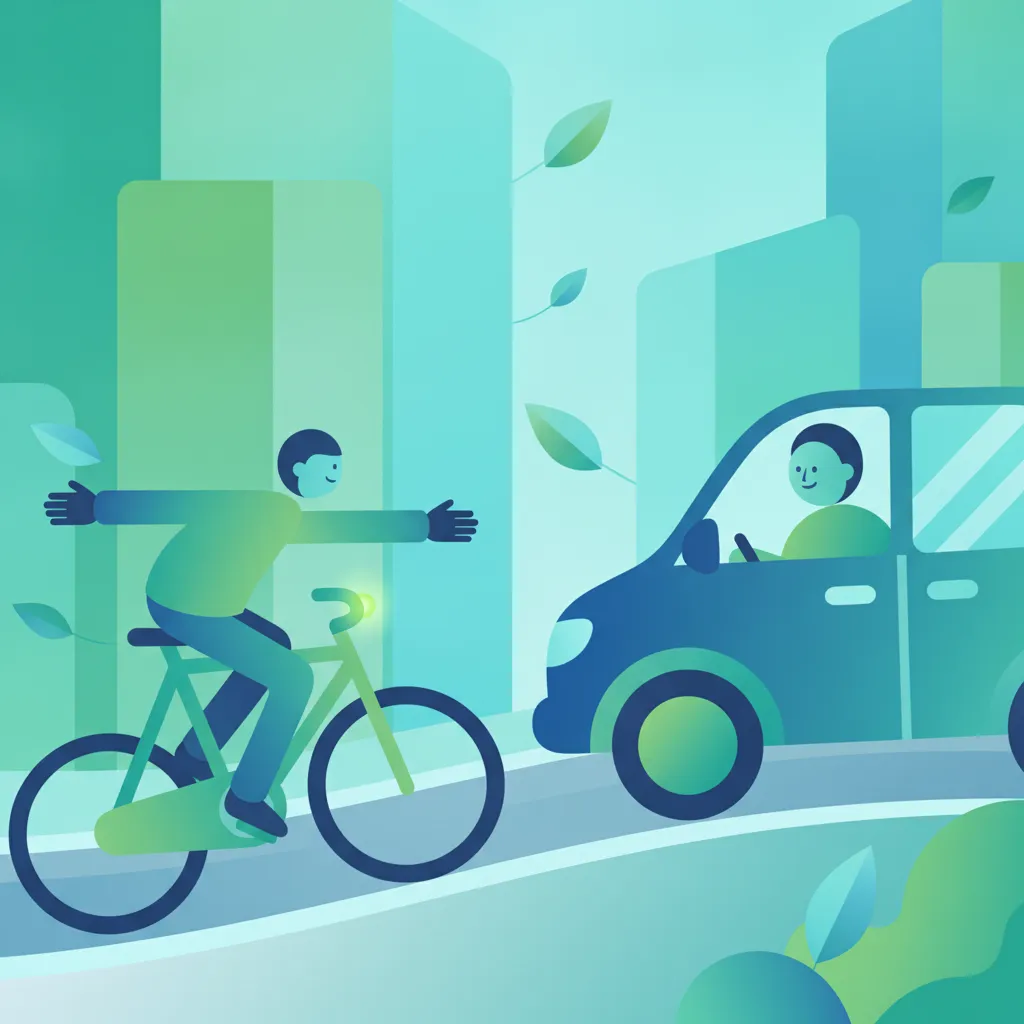
This lesson covers the proper methods for signalling intentions to other road users. It details the legal requirements for using turn indicators before turning or changing lanes. The content also explains how to use legally recognized hand signals as a backup or for added clarity.
This lesson details the function and meaning of traffic light signals in Denmark. It covers the standard red, amber, and green sequences, as well as special signals like flashing amber lights and green arrows for turning. The content also explains signals specific to cyclists and pedestrians that moped riders must observe at intersections.
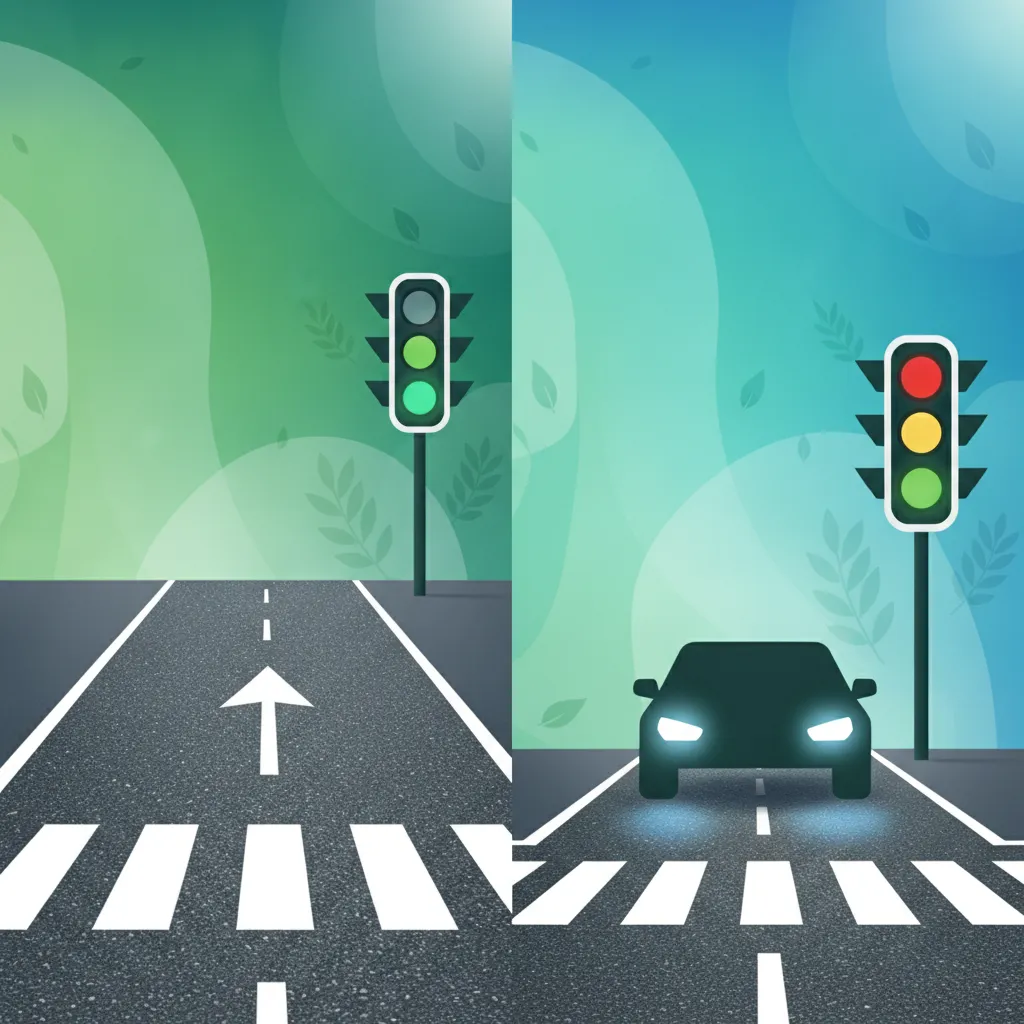
This lesson details the meaning and application of various road surface markings, including lane dividers, solid and broken lines, and directional arrows. You will also learn to interpret the full sequence of traffic light signals, including the specific rules for the amber (yellow) light phase. A proper understanding of these systems is vital for maintaining correct lane discipline and adhering to traffic controls.
Explore how varying conditions like rain, fog, and urban environments impact visibility for Category AM riders in Denmark. Learn strategies to manage these challenges and ensure you are seen and can see effectively.
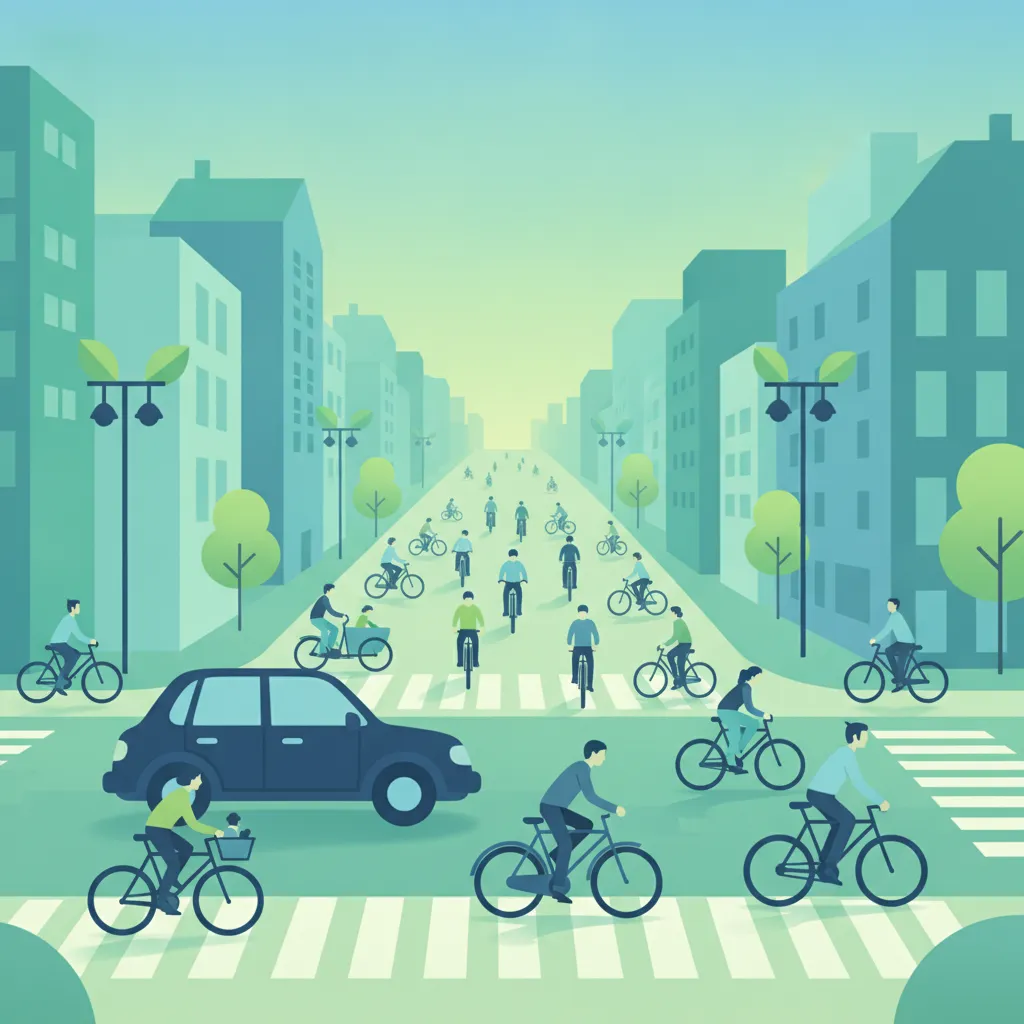
This lesson provides critical guidance for driving in environments with heavy cycle traffic, typical of Danish cities. It focuses on identifying and yielding to cyclists in dedicated bike lanes, especially when turning right across their path. The content emphasizes advanced observation skills to detect cyclists in blind spots and the importance of giving adequate space.
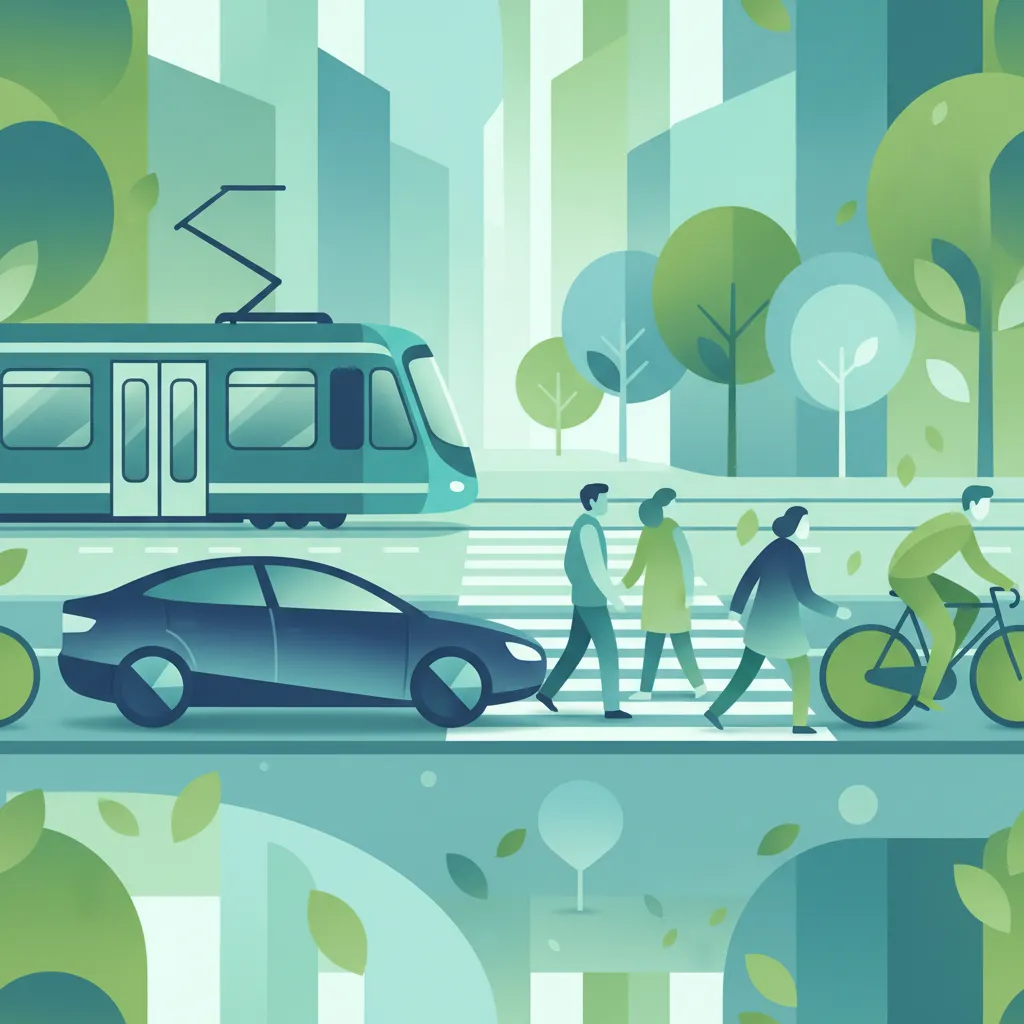
This lesson covers the core principles of defensive driving in an urban context. It teaches drivers how to anticipate the actions of other road users, maintain safe following distances in dense traffic, and navigate complex intersections with multiple signals. The content emphasizes heightened awareness of pedestrians, cyclists, and unexpected events common in Danish city environments.

This lesson addresses the unique challenges of driving in tourist-heavy urban centers alongside cyclists. It teaches drivers to anticipate the behavior of individuals who may be distracted or unfamiliar with local traffic rules. The content provides strategies for communicating intentions clearly and navigating safely around large groups, luggage, and cyclists.

This lesson equips you with the knowledge to drive safely in challenging weather conditions. It explains the risk of aquaplaning in heavy rain, how to counteract strong crosswinds, and the correct use of lights in darkness and fog. The core principle is adapting your speed and increasing your following distance to compensate for reduced visibility and traction.
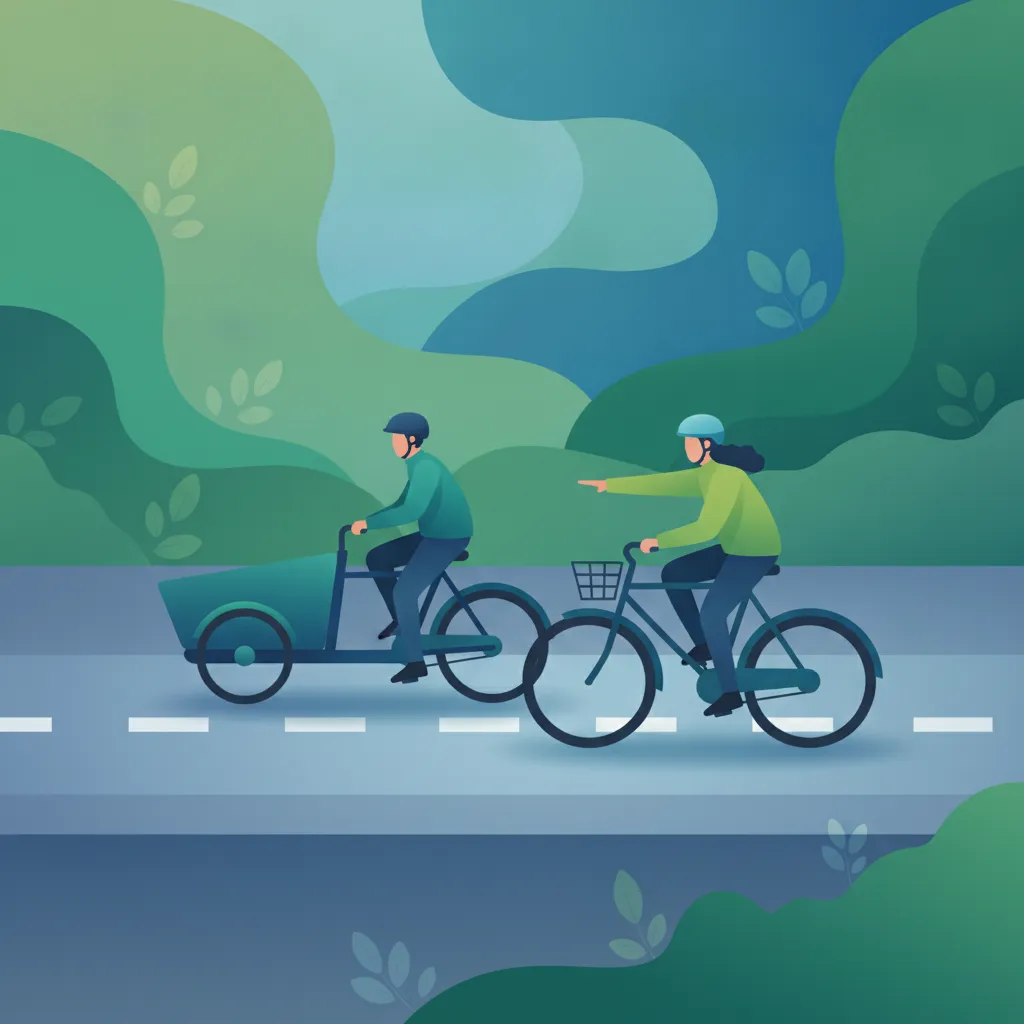
This lesson addresses the critical skill of safely coexisting with cyclists and cargo bikes, which are prevalent in Denmark. It explains how to maintain a safe distance, overtake properly, and be vigilant for cyclists, especially when turning right. Understanding the infrastructure of cycle lanes and predicting cyclist behavior is a key focus.

This lesson prepares riders for the specific hazards of rural roads, which often have less visibility and more unpredictable surfaces. It covers strategies for approaching blind curves, safely passing agricultural machinery, and being vigilant for animals on the road. Adjusting speed to match visibility is a core principle.
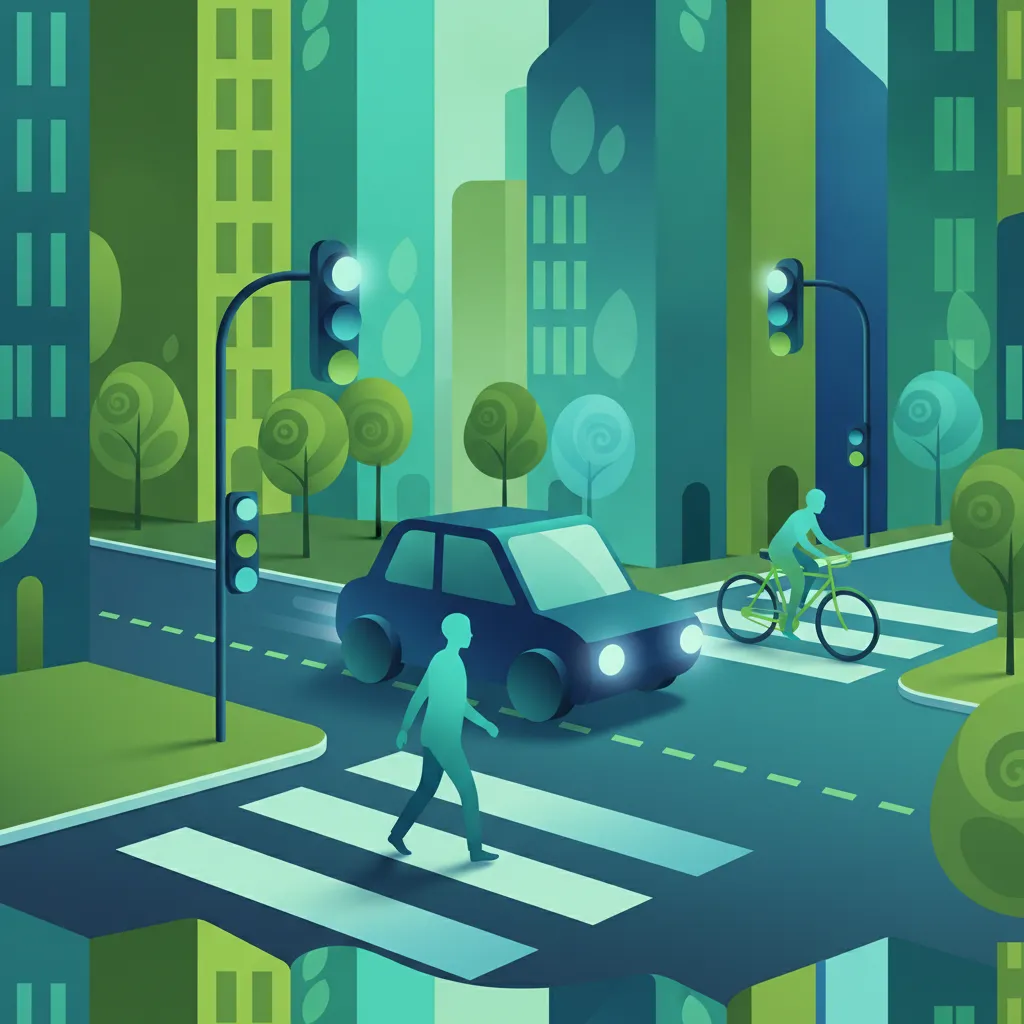
This lesson emphasizes the professional driver's heightened responsibility to protect vulnerable road users. It revisits Danish regulations concerning cyclist priority, particularly during right turns, and details the correct procedures for maintaining safe overtaking distances. The content focuses on developing advanced situational awareness, using mirrors and cameras effectively, and anticipating the behavior of pedestrians and cyclists in urban environments.
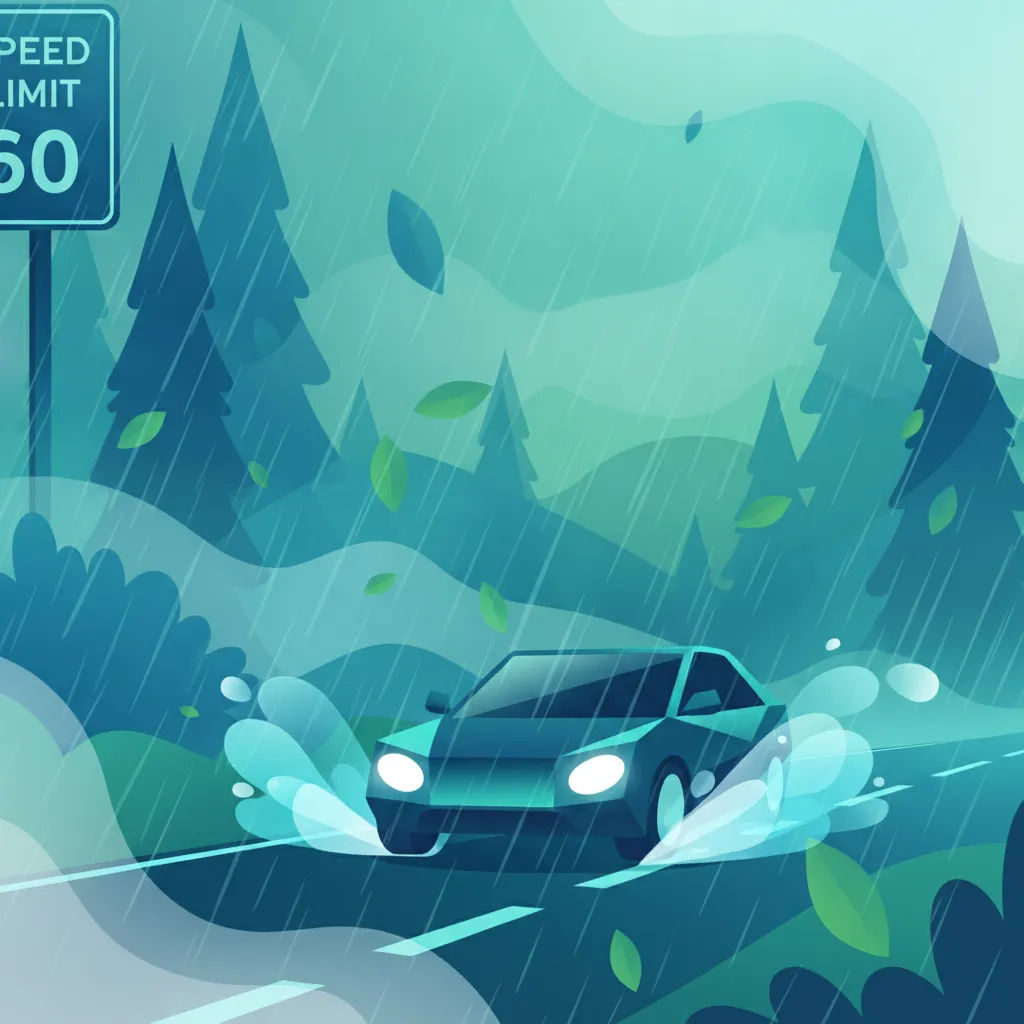
This lesson explains how to adjust driving techniques for adverse conditions. It covers the effects of rain, snow, ice, and fog on tire grip and visibility, emphasizing the need to increase following distances and reduce speed. The content also details the correct use of lights for night driving and in poor weather to ensure the bus is visible to others.
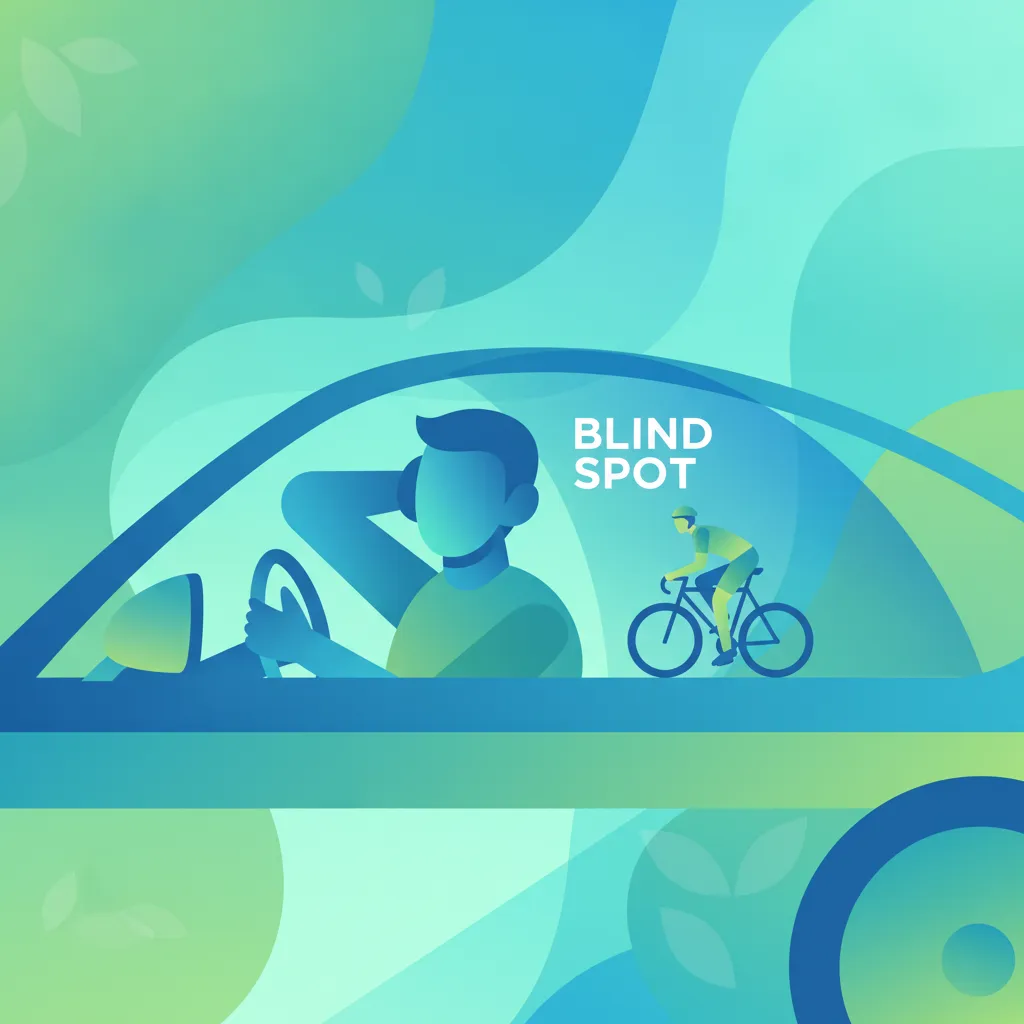
This lesson provides an in-depth analysis of the size and location of blind spots around a typical passenger bus. It teaches systematic scanning patterns that incorporate all mirrors, cameras, and direct head checks to maintain situational awareness. The content highlights high-risk areas where cyclists, pedestrians, or small vehicles can become hidden from view, especially during turns.
This lesson details the function and meaning of traffic light signals in Denmark. It covers the standard red, amber, and green sequences, as well as special signals like flashing amber lights and green arrows for turning. The content also explains signals specific to cyclists and pedestrians that moped riders must observe at intersections.
Find clear answers to common questions learners have about Visibility Principles and Reflectors. Learn how the lesson is structured, which driving theory objectives it supports, and how it fits into the overall learning path of units and curriculum progression in Denmark. These explanations help you understand key concepts, lesson flow, and exam focused study goals.
Yes, under Danish traffic law, you must use your low-beam headlights or designated daytime running lights whenever you are riding your stor knallert, regardless of the time of day.
Reflectors are your secondary safety system. If your lights fail or when you are riding in darkness, they ensure you are visible to other vehicles approaching from behind or the side, which is crucial for preventing rear-end collisions.
While not strictly mandatory in every scenario, using reflective clothing or high-visibility gear is highly recommended and aligns with the safety-first approach required to pass the hazard perception parts of the Danish theory test.
Many learners forget that lights must be clean and fully functional at all times. If a question asks about riding with a dirty or broken reflector, the correct answer is always that the vehicle is not in a legal, roadworthy condition.
Use our powerful search tool to pinpoint specific Danish driving theory topics, road signs, or traffic situations you need to review. Start exploring relevant practice sets now to reinforce your knowledge and build confidence for your upcoming driving licence exam.