
This lesson focuses on the mechanics of speed management, which is vital for the safety and stability of mopeds and speed pedelecs. By mastering gentle acceleration and efficient deceleration, you will build the foundation for safe, defensive riding on Belgian roads. This lesson serves as a key bridge between understanding traffic rules and developing practical vehicle control for your category AM theory test.
Lesson content overview
Operating a moped or speed pedelec, especially as an AM licence holder in Belgium, requires a profound understanding of how to manage your vehicle's speed. This lesson focuses on the critical techniques of smooth acceleration and gradual deceleration. Mastering these skills is not just about efficiency; it's fundamental for ensuring your safety, the comfort of your ride, and maintaining optimal control in various traffic situations. Smooth speed transitions prevent unexpected jerks, reduce the risk of accidents, and allow other road users to anticipate your movements more easily.
Smooth speed management is a cornerstone of defensive riding, particularly for operators of small, exposed vehicles like mopeds and speed pedelecs. Due to their smaller size and often quicker acceleration capabilities, precise control over speed changes is paramount. Abrupt acceleration can lead to loss of traction or control, while sudden deceleration can cause rear-end collisions or instability, especially for vulnerable road users. This proactive approach to managing your speed allows you to react safely to unforeseen circumstances and integrate seamlessly with the overall flow of traffic, enhancing both your personal safety and the safety of those around you.
Gentle acceleration refers to the controlled and steady increase in your vehicle's speed. It involves applying the throttle smoothly and progressively, avoiding sudden bursts of power that can destabilise your moped or speed pedelec. This technique is crucial for maintaining vehicle stability, conserving fuel, and ensuring a comfortable ride.
The throttle on your moped or speed pedelec directly controls the engine's power output. On most models, twisting the grip towards you increases engine revolutions and thus speed. A common mistake among new riders is to twist the throttle too aggressively, especially from a standstill or at low speeds. This can lead to the vehicle lurching forward, making it difficult to maintain balance and control. Instead, imagine gently squeezing the throttle, applying power gradually and consistently.
Just as gentle acceleration is vital, gradual deceleration is equally important for safe riding. This involves smoothly reducing your vehicle's speed using a combination of the brakes and, where applicable, engine braking. Gradual deceleration prevents sudden jolts, reduces the risk of rear-end collisions, and allows you to maintain better control, particularly in adverse conditions or when encountering unexpected hazards.
Mopeds and speed pedelecs typically have independent front and rear brakes, controlled by separate levers on the handlebars.
Always initiate braking well in advance of where you intend to stop or significantly slow down. This gives you ample time to adjust your braking force and allows drivers behind you to react. Pumping the brakes or applying them suddenly can lead to loss of control, especially on slippery surfaces. Instead, apply a steady, increasing pressure, and then ease off slightly just before coming to a complete stop to avoid a jerky halt.
Engine braking is an effective technique for slowing down your vehicle by using the resistance of the engine itself. It is particularly useful for AM licence holders on mopeds with manual gearboxes, but even automatic scooters provide some level of engine deceleration when the throttle is released.
When you release the throttle, fuel supply to the engine is reduced or cut off, but the wheels are still driving the engine through the drivetrain. This creates resistance, which in turn slows the vehicle. In mopeds with manual transmissions, downshifting to a lower gear increases this engine resistance, providing more significant deceleration.
Combine engine braking with gentle application of your friction brakes for the most effective and controlled deceleration. This prolongs the life of your brake pads and ensures you have maximum stopping power available for emergencies.
Effective acceleration and deceleration are heavily reliant on your ability to anticipate changes in the road environment and accurately judge distances and speeds. This proactive approach significantly reduces the need for sudden, emergency manoeuvres.
Always keep your eyes moving, scanning the road far ahead, to the sides, and checking your mirrors regularly. Don't just focus on the vehicle directly in front of you. Look beyond it, observing traffic lights, road signs, pedestrian crossings, and the behaviour of other road users much further down the road. This continuous scanning provides you with early warnings of potential hazards or changes in traffic flow, giving you more time to plan your speed adjustments.
Visual judgment involves accurately estimating the speed of other vehicles and the distances between them. This skill allows you to:
While specific laws might not dictate the smoothness of your acceleration or deceleration, the principles of safe driving embedded in the Belgian Highway Code implicitly demand these techniques. Reckless driving, which includes aggressive speed changes, can lead to penalties.
The Belgian Highway Code, relevant for all road users, emphasizes safe and controlled driving. Aggressive acceleration, sudden swerving, or violent braking are considered dangerous behaviours that can lead to loss of control, disrupt traffic flow, and increase the risk of collisions. As an AM licence holder, it's particularly important to demonstrate calm and controlled operation of your small vehicle. This is a recommended best practice to ensure your safety and that of others.
It is mandatory to bring your vehicle to a complete stop before a stop line or red traffic light. This legal requirement naturally necessitates gradual deceleration. Initiating braking well in advance ensures you can stop safely and precisely before the line, without skidding or needing emergency braking. Failing to stop before the line or running a red light can result in significant penalties.
Understanding common errors can help you actively prevent them, enhancing your riding safety and skill.
Your acceleration and deceleration techniques must be flexible, adapting to the dynamic environment around you.
On wet, icy, or gravelly surfaces, tire grip is significantly reduced. This demands even more gentle acceleration to prevent wheel spin and much earlier, more gradual deceleration to avoid skidding. Braking distances increase dramatically in poor weather.
In adverse weather, reduce your speed significantly and increase your following distance. Aggressive acceleration or sudden braking can easily lead to a loss of control.
A heavier load or carrying a passenger significantly increases your vehicle's stopping distance and affects its acceleration capability. You will need to apply the throttle more gently to avoid straining the engine and allow much more time and distance for deceleration. Communicate with your passenger about upcoming speed changes to avoid surprising them.
When approaching pedestrians, cyclists, or other vulnerable road users, your speed management must be exceptionally smooth and cautious. Sudden acceleration or deceleration near them can startle them or create dangerous situations. Always give them ample space and anticipate their movements.
Mastering acceleration and deceleration management is more than just learning to operate controls; it's about developing a profound understanding of vehicle dynamics, traffic flow, and defensive riding principles. For Category AM licence holders, smooth and controlled speed changes are vital for maintaining stability, preventing accidents, and ensuring a comfortable and safe journey for both yourself and other road users in Belgium. By practicing gentle acceleration, gradual deceleration (incorporating engine braking), and consistently applying anticipation and visual judgment, you lay a solid foundation for becoming a highly competent and responsible rider.
This lesson covers essential speed management techniques for AM licence candidates in Belgium, focusing on smooth acceleration through progressive throttle control and gradual deceleration using combined braking and engine braking methods. Riders learn to anticipate traffic flow through continuous visual scanning, maintain appropriate following distances, and adapt techniques to weather conditions and road types. The content explains specific scenarios including starting from stops, merging, overtaking, and descending hills, while emphasising that aggressive speed changes violate Belgian Highway Code principles and increase accident risk. Mastering these skills prepares riders for both the theory exam and safe practical riding on Belgian roads.
A short set of high-value points that capture the most important learning from this lesson.
Smooth throttle control involves applying power gradually and progressively to maintain vehicle stability and prevent loss of traction.
Combined braking using both front and rear brakes simultaneously distributes stopping force effectively and maintains vehicle balance.
Engine braking uses engine resistance to slow the vehicle, reducing brake wear on long descents and during anticipated stops.
Continuous visual scanning and looking far ahead enables early identification of hazards, allowing gradual speed adjustments rather than emergency reactions.
Following distance must increase in poor weather conditions due to significantly longer braking distances on wet or icy surfaces.
Explore all units and lessons included in this driving theory course.
The front brake provides the majority of stopping power but should be applied progressively alongside the rear brake for safe deceleration.
Gentle acceleration prevents wheel spin, loss of traction, and destabilisation, especially on low-grip surfaces.
Engine braking is most effective when initiated early, allowing natural deceleration before reaching the stopping point.
The Belgian Highway Code requires a complete stop before stop lines and red traffic lights, necessitating early and gradual braking.
Aggressive acceleration or sudden braking is considered dangerous behaviour under Belgian traffic law and can result in penalties.
Late braking and abrupt stops occur when riders wait until the last moment, risking skidding, loss of control, and rear-end collisions.
Jerky throttle control from over-accelerating can cause wheelies, traction loss, or instability, particularly from standstill or in corners.
Neglecting engine braking and relying solely on friction brakes causes premature brake wear and can lead to brake fade during extended braking.
Following too closely leaves insufficient space to decelerate safely if the vehicle ahead brakes suddenly, violating the two-second rule.
Lesson content overview
A short set of high-value points that capture the most important learning from this lesson.
Smooth throttle control involves applying power gradually and progressively to maintain vehicle stability and prevent loss of traction.
Combined braking using both front and rear brakes simultaneously distributes stopping force effectively and maintains vehicle balance.
Engine braking uses engine resistance to slow the vehicle, reducing brake wear on long descents and during anticipated stops.
Continuous visual scanning and looking far ahead enables early identification of hazards, allowing gradual speed adjustments rather than emergency reactions.
Following distance must increase in poor weather conditions due to significantly longer braking distances on wet or icy surfaces.
Explore all units and lessons included in this driving theory course.
The front brake provides the majority of stopping power but should be applied progressively alongside the rear brake for safe deceleration.
Gentle acceleration prevents wheel spin, loss of traction, and destabilisation, especially on low-grip surfaces.
Engine braking is most effective when initiated early, allowing natural deceleration before reaching the stopping point.
The Belgian Highway Code requires a complete stop before stop lines and red traffic lights, necessitating early and gradual braking.
Aggressive acceleration or sudden braking is considered dangerous behaviour under Belgian traffic law and can result in penalties.
Late braking and abrupt stops occur when riders wait until the last moment, risking skidding, loss of control, and rear-end collisions.
Jerky throttle control from over-accelerating can cause wheelies, traction loss, or instability, particularly from standstill or in corners.
Neglecting engine braking and relying solely on friction brakes causes premature brake wear and can lead to brake fade during extended braking.
Following too closely leaves insufficient space to decelerate safely if the vehicle ahead brakes suddenly, violating the two-second rule.
Explore search topics learners often look for when studying Acceleration and Deceleration Management. These topics reflect common questions about road rules, driving situations, safety guidance, and lesson level theory preparation for learners in Belgium.
Browse additional driving theory lessons that cover connected traffic rules, road signs, and common driving situations related to this topic. Improve your understanding of how different rules interact across everyday traffic scenarios.
Learn essential techniques for smooth acceleration and gradual deceleration on your moped or speed pedelec. Understand throttle control and safe braking to master vehicle speed adjustments according to Belgian theory.

This lesson focuses on two key handling skills: maneuvering at low speeds and navigating corners safely. It provides techniques for maintaining balance and making smooth steering inputs in tight spaces. For cornering, it explains the principles of selecting an appropriate speed, choosing a safe line through the bend, and using body lean to maintain stability.
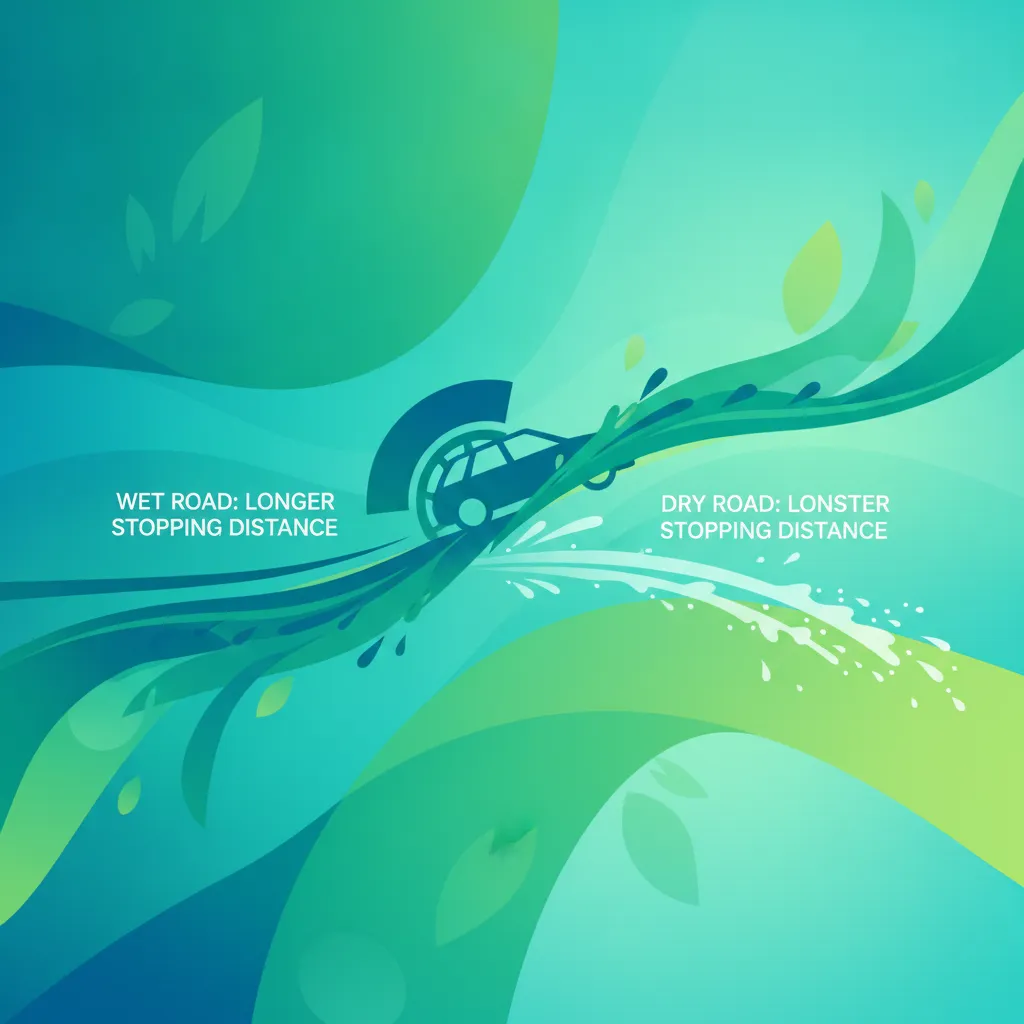
This lesson covers the principles of effective braking, distinguishing between controlled, progressive braking and emergency braking techniques. It breaks down the total stopping distance into reaction distance and braking distance, explaining how speed and road surface conditions dramatically affect the latter. Learners will understand how to use both front and rear brakes correctly to stop quickly and safely without losing control.
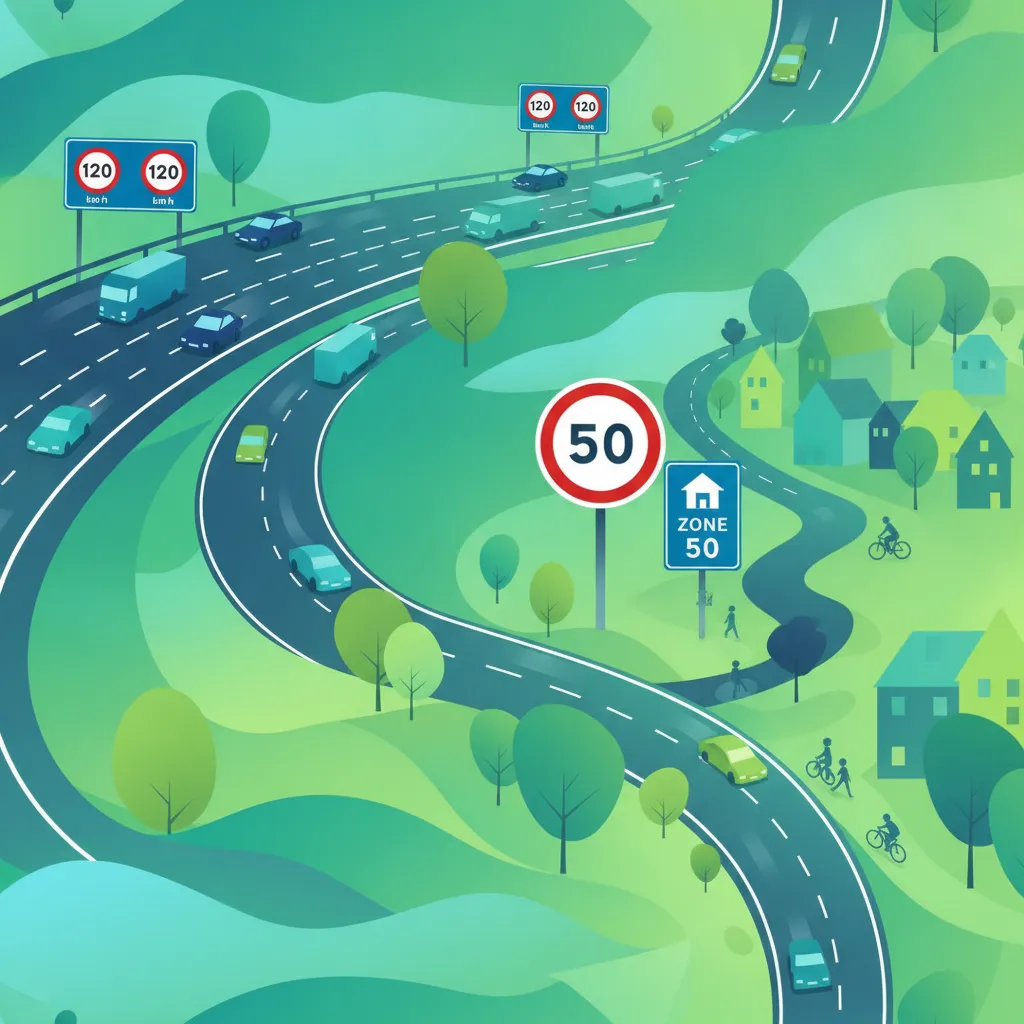
This lesson details the various legal speed limits applicable in Belgium, including those for urban, residential, and school zones. It explains the underlying safety rationale for these limits, linking speed to the severity of accidents and the time available to react to hazards. Learners will understand the difference between the maximum legal speed and a safe, appropriate speed for the prevailing conditions.
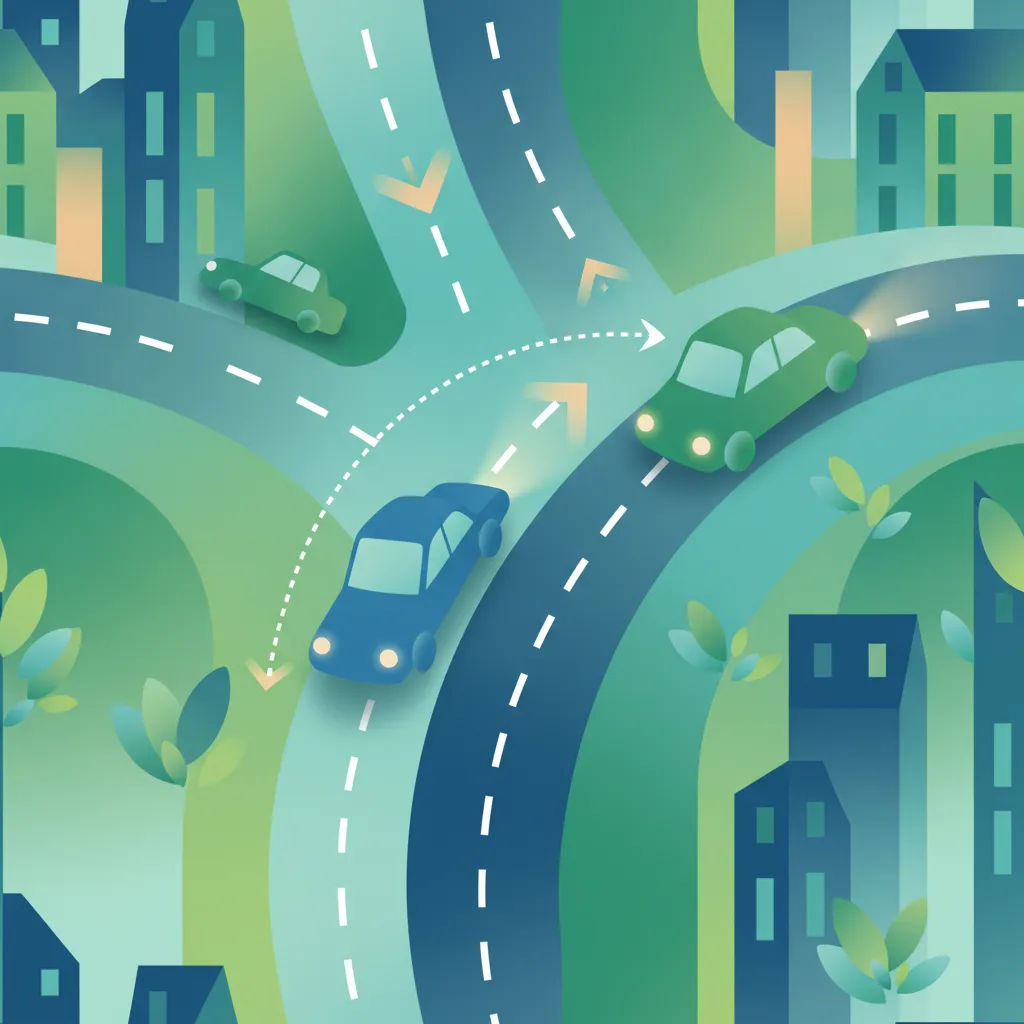
This lesson provides a step-by-step guide to executing turns and lane changes safely and efficiently. It covers the critical sequence of checking mirrors, signaling intent, and performing a head check for blind spots before any maneuver. Learners will also understand how to manage their speed and balance during cornering to maintain full control of the vehicle.

This lesson provides a clear definition of the Category AM license as specified by Belgian law. It details the specific types of vehicles covered, such as mopeds, light quadricycles, and speed pedelecs, outlining their legal limits on engine capacity and maximum speed. Learners will understand the permissions granted by an AM license and the specific context of their participation in public traffic as motor vehicle operators.

This lesson outlines the complete process for obtaining a Category AM license in Belgium, starting with the minimum age and health requirements. It details the sequence of theoretical and practical exams that candidates must pass to demonstrate their competence. The content also explains the administrative procedures for vehicle registration and securing mandatory insurance, ensuring all legal prerequisites are understood before riding.
This lesson focuses on the legal duties and responsibilities that an AM vehicle operator must uphold on Belgian roads. It covers critical rules such as adhering to speed limits, correctly applying right-of-way principles, and following regulations for overtaking other vehicles. The lesson also explains the system of fines and penalty points for traffic violations, emphasizing the legal consequences of non-compliance to foster responsible driving habits.

This lesson explains the concept of strategic road positioning to enhance safety and visibility. It teaches riders how to select the best position within a lane to be seen by other drivers and to have a good view of the road ahead. A key focus is on identifying and staying out of the large blind spots of cars, vans, and trucks to prevent dangerous situations.
Develop your ability to anticipate traffic changes and judge speeds and distances accurately. This lesson helps AM licence holders in Belgium make proactive speed adjustments for safer riding.

This lesson focuses on the specific challenges of riding in adverse conditions such as rain, fog, and darkness, which severely reduce visibility. It provides practical strategies for riders to increase their own conspicuity through the use of lights and reflective gear. The content also explains how to adapt riding behavior, such as reducing speed and increasing following distance, to safely manage these high-risk situations.
This lesson provides a step-by-step guide to executing turns and lane changes safely and efficiently. It covers the critical sequence of checking mirrors, signaling intent, and performing a head check for blind spots before any maneuver. Learners will also understand how to manage their speed and balance during cornering to maintain full control of the vehicle.
This lesson explains the concept of strategic road positioning to enhance safety and visibility. It teaches riders how to select the best position within a lane to be seen by other drivers and to have a good view of the road ahead. A key focus is on identifying and staying out of the large blind spots of cars, vans, and trucks to prevent dangerous situations.

This lesson focuses on the unique hazards associated with riding after dark. It emphasizes the importance of a fully functional lighting system and the use of reflective gear to be seen by others. The content explains how darkness affects depth perception and peripheral vision, requiring riders to reduce their speed to compensate for shorter sight distances and potential fatigue.
This lesson synthesizes key safety concepts into the practice of defensive riding, a proactive mindset focused on anticipation and risk reduction. It teaches you to continuously scan for potential hazards, predict the actions of other road users, and always maintain an escape path. By mastering these strategies, you learn to manage the space around you and take control of your own safety.
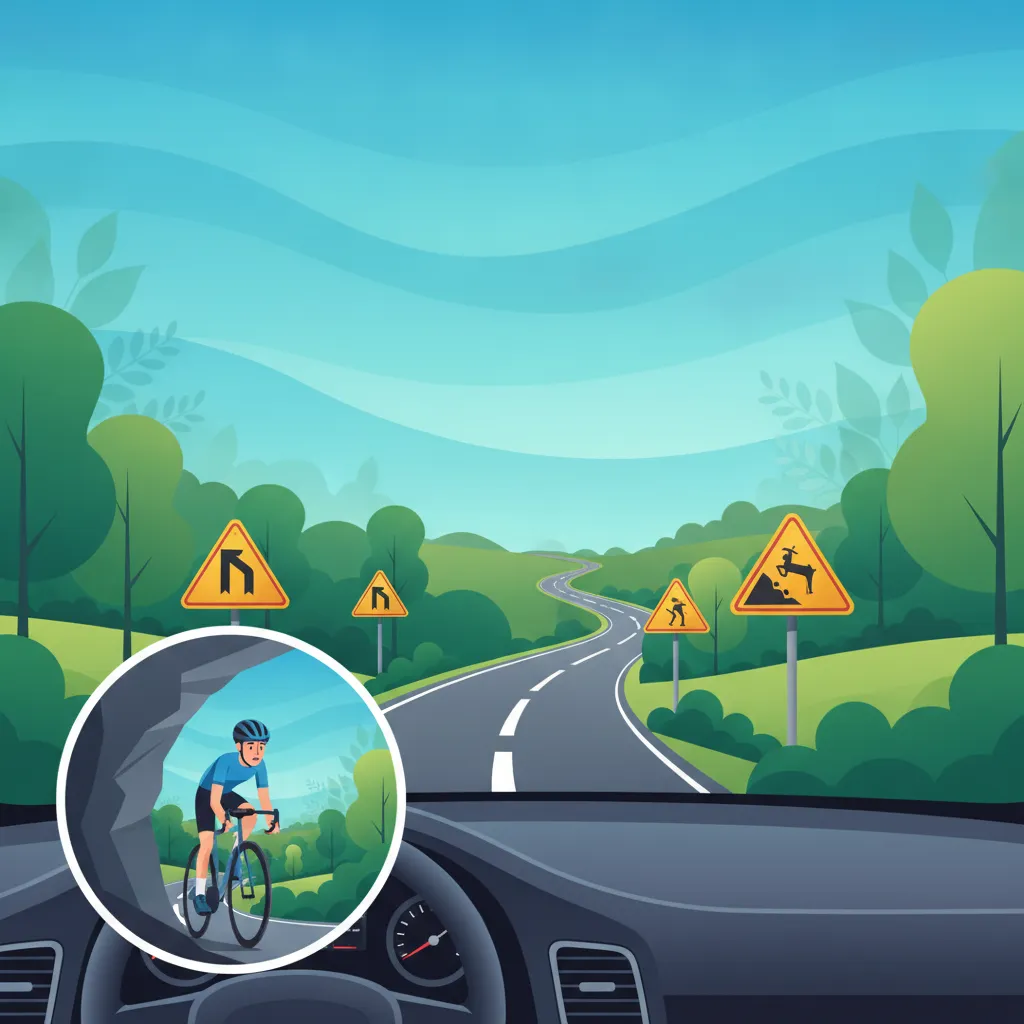
This lesson is dedicated to warning signs, which are designed to alert drivers to potential dangers ahead. It covers the interpretation of signs indicating sharp curves, steep gradients, slippery surfaces, and the presence of pedestrians or animals. By understanding these warnings, riders can anticipate potential hazards and adjust their speed and position proactively for safer travel.

This lesson provides a comprehensive overview of the mandatory lighting systems for all Category AM vehicles under Belgian law. It details the required functions of headlamps, rear lights, brake lights, and turn signals, explaining their importance for communication and visibility. Learners will understand the legal standards for this equipment and how to perform simple pre-ride checks to ensure all lights are functioning correctly.

This lesson provides crucial advice for riding in rainy conditions, a frequent occurrence in Belgium. It explains how water on the road surface dramatically reduces tire grip, extends stopping distances, and creates a risk of hydroplaning. Riders will learn how to adjust their speed, increase following distances, and manage reduced visibility from rain and road spray to maintain safety.
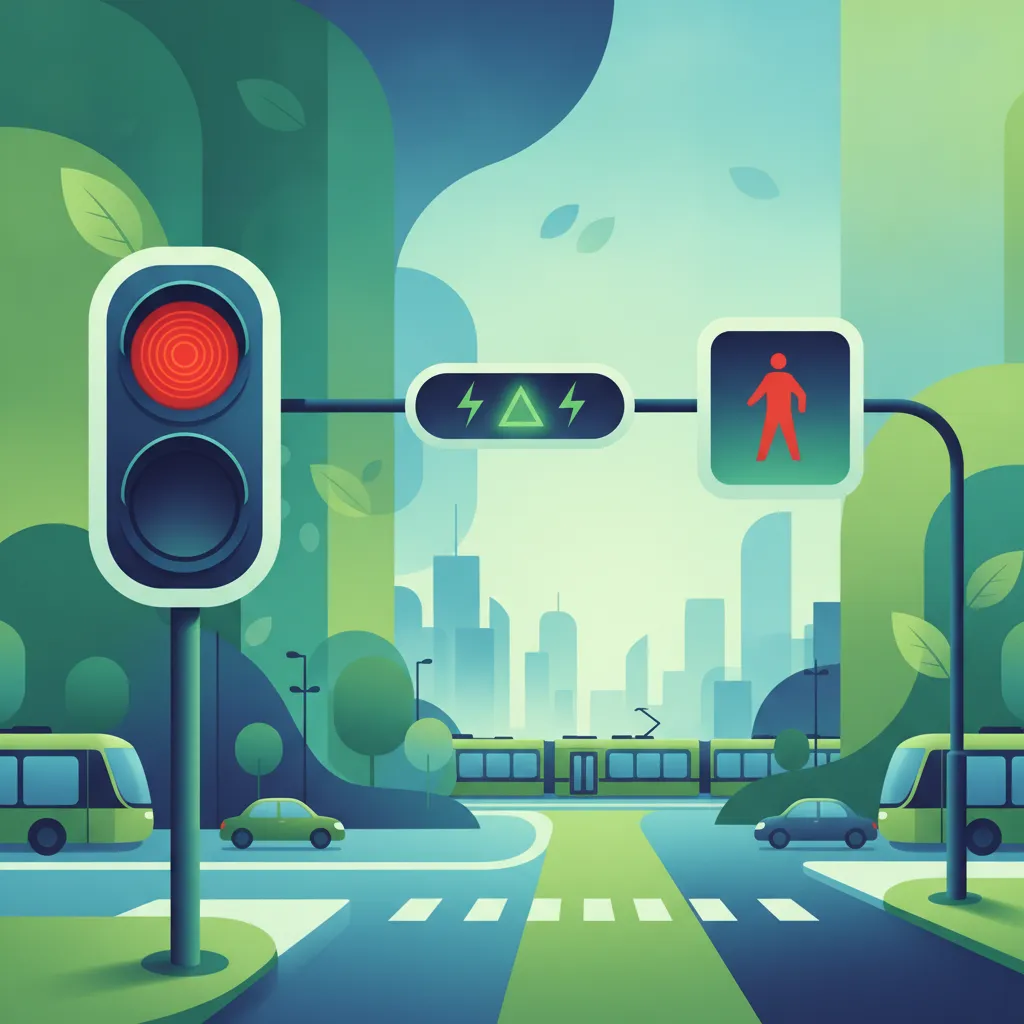
This lesson examines the operation of traffic light systems in Belgium, clarifying the meaning of red, amber, and green signals, including flashing lights and directional arrows. It details a motorcyclist's legal obligations when approaching and navigating signal-controlled intersections. The content also addresses specialized signals for pedestrians and trams that riders must recognize and respond to correctly.

This lesson details the safe and systematic approach to different types of intersections, both signal-controlled and uncontrolled. It explains how to use road signs and markings to determine right-of-way and when to stop or yield. The importance of comprehensive scanning for traffic from all directions and adjusting approach speed is emphasized to ensure safe passage.
Find clear answers to common questions learners have about Acceleration and Deceleration Management. Learn how the lesson is structured, which driving theory objectives it supports, and how it fits into the overall learning path of units and curriculum progression in Belgium. These explanations help you understand key concepts, lesson flow, and exam focused study goals.
Smooth acceleration helps maintain vehicle balance and prevents wheel slip, especially on wet or uneven surfaces. It also ensures you remain predictable to other road users, which is a core requirement for safe driving in Belgium.
Yes, in most cases, you should use both brakes to distribute braking force effectively. Learning to balance your braking ensures stability and reduces the risk of locking a wheel, which is a critical topic in your category AM theory exam.
While manual mopeds allow for clear gear-based engine braking, automatic mopeds rely more on closing the throttle early and using your brakes. You must learn to anticipate stops early to compensate for the lack of traditional engine braking.
The Belgian theory exam frequently tests your understanding of how speed affects stopping distance and reaction time. Expect questions that present scenarios where you must decide the safest speed to travel based on visibility and road conditions.
Ready to focus your Belgian driving theory revision? Utilize our powerful search tool to pinpoint exact topics, road signs, or difficulty levels. Engage with practice questions that directly address your learning needs and solidify your understanding of Belgian traffic laws for your upcoming exam.