
This lesson introduces the foundational legal requirements for obtaining your motorcycle licence in Belgium. We will break down the differences between categories A1, A2, and A, ensuring you understand the specific age and training criteria before moving into safety and road rules.
Lesson content overview
Navigating the regulations for motorcycle licences in Belgium is crucial for anyone aspiring to ride on public roads. The Belgian system is designed to progressively qualify riders, ensuring they gain the necessary experience and skills before operating more powerful motorcycles. This lesson provides a comprehensive overview of the different licence categories, their specific requirements, and the mandatory legal obligations every motorcyclist must fulfill.
Understanding these regulations is not only a legal necessity but also a fundamental step towards safe and responsible riding. Adherence to these rules minimizes risks and contributes to overall road safety for all users.
The Belgian motorcycle licence system employs a progressive structure, categorizing licences into A1, A2, and full A. This design aims to mitigate risks by gradually increasing the power and capability of motorcycles a rider is permitted to operate. Beginning with lower-power machines, riders accumulate experience and refine their skills, preparing them for more challenging motorcycles. This method aligns with broader European Union safety directives, prioritizing the development of competency and responsible rider behavior.
This structured advancement ensures that riders acquire a foundational understanding of motorcycle handling and traffic dynamics before progressing to higher power-to-weight ratio vehicles. It is a cornerstone of rider education and safety in Belgium.
Belgium's progressive motorcycle licensing framework distinguishes between three main categories: A1, A2, and the unrestricted A licence. Each category is defined by specific motorcycle power limits, engine displacement, and age requirements.
The Licence Category A1 permits individuals to ride light motorcycles. This category is specifically designed for beginners and younger riders, introducing them to motorcycling with manageable power.
Authorizes the riding of motorcycles with an engine displacement up to 125 cm³, a maximum power of 11 kW, and a power-to-weight ratio not exceeding 0.1 kW/kg.
To obtain an A1 licence, the minimum age requirement is 16 years. Candidates must complete a specific A1 training module, which includes both theoretical and practical components. This training ensures riders are competent in handling lower-power motorcycles and understand fundamental traffic rules relevant to their vehicle. For example, an A1 licence holder can ride a 125 cm³ scooter or motorbike for commuting on urban roads. However, there are typically restrictions on carrying passengers and on highway usage for initial A1 riders. A common misunderstanding is assuming that A1 eligibility allows for riding any 125 cm³ motorcycle, when power and power-to-weight ratio limits are equally critical.
The Licence Category A2 represents the intermediate step in the progressive licensing system. It allows riders to operate more powerful motorcycles than the A1 category, but still with specific power restrictions.
Authorizes the riding of motorcycles with a maximum power of 35 kW and a power-to-weight ratio not exceeding 0.2 kW/kg. The motorcycle must not be derived from a vehicle of more than double its power.
The minimum age to apply for an A2 licence is 18 years. If a rider is upgrading from an A1 licence, a mandatory training period of at least one year with the A1 licence is required before they can pursue an A2 licence. The A2 module includes advanced theoretical and practical training, focusing on handling mid-range motorcycles. This licence allows riders to operate a broader range of motorcycles, such as a 600 cm³ model that has been restricted to 35 kW. A frequent misunderstanding is believing an A2 licence grants permission to ride any motorcycle, whereas strict power and power-to-weight ratio limits apply.
The Full Licence Category A is the highest level of motorcycle certification, granting riders permission to operate any category of motorcycle without power restrictions. This licence signifies that a rider has achieved a high level of competency and experience.
Authorizes the riding of motorcycles with no restriction on power.
There are two primary pathways to obtaining a full A licence:
This full licence category provides access to high-performance sportbikes, large cruisers, and touring motorcycles. It is essential not to assume immediate eligibility without meeting the required age and experience thresholds, as specified training and examinations are mandatory.
Belgium's licensing system offers flexibility while maintaining its progressive safety framework. While the general progression is A1 -> A2 -> A, direct access is possible for older, more mature riders.
For example, an individual aged 24 or older can directly pursue a full A licence without first obtaining an A1 or A2. This direct access still necessitates comprehensive theoretical and practical training tailored to the full A category, alongside passing the relevant examinations. This acknowledges that older riders may possess greater maturity and a more developed risk perception. However, regardless of age, the rigorous training modules are essential to ensure all riders are fully capable of safely handling powerful motorcycles.
Beyond obtaining the correct licence category, several other legal requirements are mandatory for anyone operating a motorcycle in Belgium. These regulations are in place to ensure rider safety, public protection, and legal compliance.
A crucial preliminary step in obtaining any motorcycle licence in Belgium is securing a Medical Certificate. This document is a legal requirement designed to ensure that all riders are medically fit to operate a motorcycle safely, without posing undue risk to themselves or others.
A document issued by an authorized medical professional confirming the rider’s physical and mental fitness to operate a motorcycle safely.
The certificate typically involves a general health check-up, an eyesight test, and a review of any existing medical conditions that could impair driving ability. Without a valid medical certificate, the licence application process cannot proceed. It is a common misconception that this certificate is a one-time requirement; in reality, it often needs to be renewed periodically, particularly for riders over a certain age or those with specific medical conditions. This ongoing requirement underscores the continuous commitment to road safety.
Always consult an authorized medical professional in Belgium for the official medical examination needed for your motorcycle licence application.
In Belgium, as in most European countries, third-party liability insurance (Assurance Responsabilité Civile) for motorcycles is not merely recommended, but a mandatory legal requirement. This insurance is fundamental for protecting victims and ensuring financial responsibility in the event of an accident.
Mandatory third-party liability insurance (RC Auto) covering damages caused to others in the event of an accident.
Riding a motorcycle without valid insurance is a serious offense that can lead to significant legal penalties, including heavy fines and potential impoundment of the vehicle. This liability coverage ensures that any damages, injuries, or fatalities caused to third parties by the motorcyclist are financially covered. While third-party liability is mandatory, riders can opt for additional types of insurance, such as comprehensive coverage (omnium) or legal assistance insurance, to protect themselves and their own vehicle. It is crucial to ensure that your insurance policy is always active and covers the specific usage of your motorcycle.
Before a motorcycle can legally be ridden on public roads in Belgium, it must undergo the Vehicle Registration process. This ensures that the vehicle meets all safety standards, is properly identified, and its ownership is officially documented.
The official process of documenting a motorcycle's ownership and its legal permission to operate on public roads.
The registration process typically involves submitting various documents, including proof of ownership, a certificate of conformity, and proof of valid insurance. Once approved, the vehicle is assigned a unique registration number, and a registration certificate (carte grise/inschrijvingsbewijs) is issued. An unregistered motorcycle cannot be legally used on public roads, and doing so can result in fines and other penalties. This process is vital for road safety, crime prevention, and ensuring compliance with national technical and environmental standards. For instance, if you purchase a new motorcycle, registering it and obtaining insurance are necessary steps before its first legal use on Belgian roads.
Obtain a Certificate of Conformity: This document proves your motorcycle meets European technical standards.
Secure Mandatory Insurance: Acquire at least third-party liability insurance from a recognized insurer.
Complete the Application for Registration: Fill out the necessary forms, often obtained from your insurer or directly from the Directorate for the Registration of Vehicles (DIV).
Submit Documents to DIV: Your insurer usually handles the submission of documents to the DIV.
Receive Registration Plate and Certificate: Upon successful registration, you will receive your official Belgian license plate and registration certificate.
The progressive licensing system in Belgium is designed with a clear upgrade path, particularly for those starting with an A1 or A2 licence. Understanding this progression is key to advancing through the categories legally and safely.
The primary upgrade route involves moving from an A2 licence to a full A licence. A rider must have held a valid A2 licence for a minimum of two years before being eligible to apply for the full A licence. For example, if you obtain your A2 licence at 18, you cannot attempt the full A licence until you are 20, provided you have held the A2 for two full years. This two-year period is designed to ensure sufficient on-road experience is gained before handling unrestricted power. This upgrade path typically involves additional practical training and passing a specific practical examination.
When upgrading your licence, always ensure your current temporary licence or provisional permit is surrendered upon receiving your new, higher-category licence. This is a common administrative requirement.
Despite clear regulations, certain violations and misunderstandings frequently occur, leading to penalties and increased risk. Being aware of these can help new and experienced riders avoid common pitfalls.
One prevalent issue is riding without a valid insurance policy. This not only carries severe legal repercussions but also leaves the rider financially exposed in the event of an accident. Similarly, operating a motorcycle without proper registration documentation is illegal and can result in fines and the impoundment of the vehicle.
Another common violation is operating a motorcycle that exceeds the power limits for a given licence category. For instance, an A1 licence holder riding a motorcycle that, even if 125 cm³, exceeds the 11 kW power limit, is riding illegally. The same applies to A2 licence holders on unrestricted motorcycles. This is a critical safety violation as the rider lacks the certified training and experience for the vehicle's power output.
Failing to complete mandatory training modules before applying for a licence, riding with an expired medical certificate, or attempting to upgrade from A2 to full A without meeting the minimum two-year experience requirement are also frequent errors. Finally, carrying a passenger before meeting the age requirement for passenger carriage on your specific licence category is another overlooked rule. Always verify these details to ensure full compliance with Belgian traffic law.
Mastering the Belgian motorcycle licence regulations is more than just passing an exam; it's about embedding a culture of safety and responsibility. The progressive licensing system, from A1 to A2 and then to the full A licence, is fundamentally designed to ensure that riders gradually acquire the necessary skills and experience to handle increasingly powerful motorcycles safely.
Understanding the specific age requirements and the mandatory training modules for each licence category is paramount. Beyond the licence itself, vital legal obligations such as obtaining a valid medical certificate, securing comprehensive insurance, and properly registering your vehicle cannot be overlooked. These requirements serve to protect not only the rider but also passengers and other road users. By adhering to these regulations and following the correct upgrade pathways, motorcyclists contribute to a safer road environment and avoid potential legal consequences.
This lesson covers Belgium's progressive motorcycle licence system with three categories designed to develop rider competency safely. Category A1 permits light motorcycles up to 125cc and 11kW from age 16, A2 allows mid-power bikes up to 35kW from age 18, and full A grants unrestricted access at 24 (or 22 with two years of A2 experience). Beyond licence categories, riders must complete mandatory medical certification, secure third-party liability insurance, and complete vehicle registration with the Belgian Directorate for Registration of Vehicles before legally riding on public roads. The structured upgrade path ensures riders accumulate sufficient experience before handling more powerful motorcycles, aligning with EU safety directives.
A short set of high-value points that capture the most important learning from this lesson.
Belgium's motorcycle licence system progresses from A1 (125cc/11kW max) to A2 (35kW max) to full A (unrestricted), with minimum ages of 16, 18, and 24 respectively
Direct access to full A licence at age 24 bypasses A1 and A2, but still requires the same comprehensive training module
Third-party liability insurance is mandatory before a motorcycle can be ridden on public roads in Belgium
A medical certificate must be obtained before applying for any motorcycle licence and may require periodic renewal
Upgrading from A2 to full A requires holding the A2 licence for at least two years and reaching age 22
Explore all units and lessons included in this driving theory course.
A1 licence: max 125cm³, 11kW, power-to-weight ratio ≤0.1 kW/kg, minimum age 16 years
A2 licence: max 35kW, power-to-weight ratio ≤0.2 kW/kg, motorcycle must not be derived from a vehicle with more than double power, minimum age 18 years
Full A licence: no power restrictions, direct access at 24 years or progressive access at 22 years with 2 years A2 experience
Vehicle registration requires Certificate of Conformity, valid insurance, and submission to the Directorate for Registration of Vehicles (DIV)
A2 to full A upgrade requires completing additional practical training and examination after the mandatory 2-year experience period
Assuming A1 licence allows any 125cc motorcycle when the 11kW power limit is equally critical and binding
Riding an A2-restricted motorcycle that exceeds the 35kW power limit even if engine displacement is within range
Operating a motorcycle without valid third-party liability insurance, which carries severe legal penalties
Attempting to upgrade from A2 to full A before completing the mandatory 2-year A2 holding period
Failing to renew the medical certificate when required, particularly for older riders or those with medical conditions
Lesson content overview
A short set of high-value points that capture the most important learning from this lesson.
Belgium's motorcycle licence system progresses from A1 (125cc/11kW max) to A2 (35kW max) to full A (unrestricted), with minimum ages of 16, 18, and 24 respectively
Direct access to full A licence at age 24 bypasses A1 and A2, but still requires the same comprehensive training module
Third-party liability insurance is mandatory before a motorcycle can be ridden on public roads in Belgium
A medical certificate must be obtained before applying for any motorcycle licence and may require periodic renewal
Upgrading from A2 to full A requires holding the A2 licence for at least two years and reaching age 22
Explore all units and lessons included in this driving theory course.
A1 licence: max 125cm³, 11kW, power-to-weight ratio ≤0.1 kW/kg, minimum age 16 years
A2 licence: max 35kW, power-to-weight ratio ≤0.2 kW/kg, motorcycle must not be derived from a vehicle with more than double power, minimum age 18 years
Full A licence: no power restrictions, direct access at 24 years or progressive access at 22 years with 2 years A2 experience
Vehicle registration requires Certificate of Conformity, valid insurance, and submission to the Directorate for Registration of Vehicles (DIV)
A2 to full A upgrade requires completing additional practical training and examination after the mandatory 2-year experience period
Assuming A1 licence allows any 125cc motorcycle when the 11kW power limit is equally critical and binding
Riding an A2-restricted motorcycle that exceeds the 35kW power limit even if engine displacement is within range
Operating a motorcycle without valid third-party liability insurance, which carries severe legal penalties
Attempting to upgrade from A2 to full A before completing the mandatory 2-year A2 holding period
Failing to renew the medical certificate when required, particularly for older riders or those with medical conditions
Explore search topics learners often look for when studying Introduction to Belgian Motorcycle Licence Regulations. These topics reflect common questions about road rules, driving situations, safety guidance, and lesson level theory preparation for learners in Belgium.
Browse additional driving theory lessons that cover connected traffic rules, road signs, and common driving situations related to this topic. Improve your understanding of how different rules interact across everyday traffic scenarios.
Understand the differences between Belgian motorcycle licence categories A1, A2, and the full A. Learn the age, power, and training prerequisites for each, crucial for your Belgian theory exam preparation.
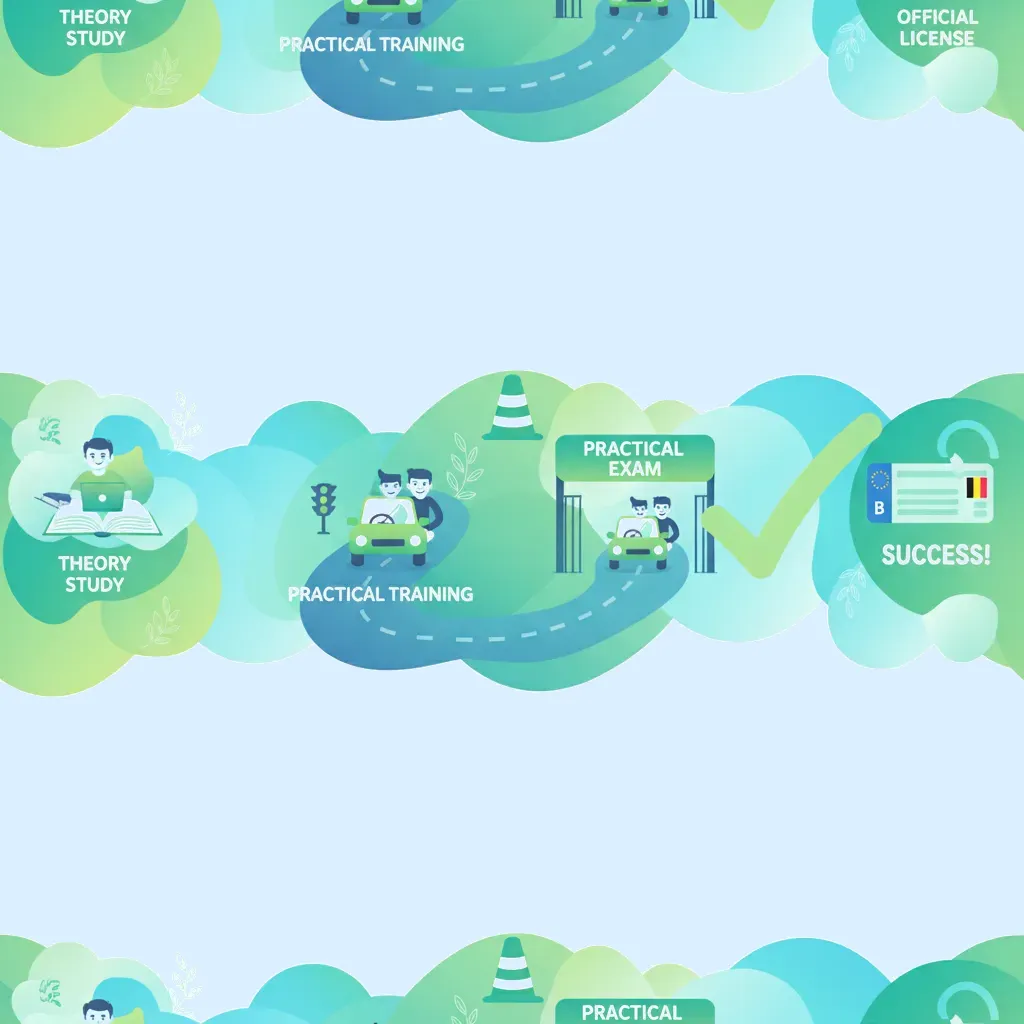
This lesson explains the complete procedure for acquiring a Belgian motorcycle licence, from registering for the theory examination to successfully passing the practical test. It provides a comprehensive list of required documentation, such as identity proof and medical certificates, and clarifies the associated fees. You will also learn about the progression routes available for moving from A1 to A2 and ultimately to a full Category A licence.
This lesson focuses on the legal responsibilities mandated for all motorcyclists in Belgium, emphasizing strict adherence to the traffic code. It details a rider's obligation to conduct risk assessments, comply with speed limits, and maintain high safety standards. The content also clarifies the legal liability associated with traffic infractions and the importance of carrying correct documentation at all times.

This lesson details the specific conditions for obtaining a Category B licence, including age limits, health criteria, and the structure of the two-part examination process. The legal framework governing the issuance and renewal of licences is examined, alongside the role of the licensing authority. Understanding these prerequisites equips learners to navigate the administrative process.

This lesson outlines the complete process for obtaining a Category AM license in Belgium, starting with the minimum age and health requirements. It details the sequence of theoretical and practical exams that candidates must pass to demonstrate their competence. The content also explains the administrative procedures for vehicle registration and securing mandatory insurance, ensuring all legal prerequisites are understood before riding.

This lesson provides a clear definition of the Category AM license as specified by Belgian law. It details the specific types of vehicles covered, such as mopeds, light quadricycles, and speed pedelecs, outlining their legal limits on engine capacity and maximum speed. Learners will understand the permissions granted by an AM license and the specific context of their participation in public traffic as motor vehicle operators.
Explore the mandatory legal obligations for Belgian motorcyclists including medical certificates, third-party liability insurance, and vehicle registration. Essential knowledge for safe and legal riding on Belgian roads.
This lesson focuses on the legal responsibilities mandated for all motorcyclists in Belgium, emphasizing strict adherence to the traffic code. It details a rider's obligation to conduct risk assessments, comply with speed limits, and maintain high safety standards. The content also clarifies the legal liability associated with traffic infractions and the importance of carrying correct documentation at all times.
This lesson explains the complete procedure for acquiring a Belgian motorcycle licence, from registering for the theory examination to successfully passing the practical test. It provides a comprehensive list of required documentation, such as identity proof and medical certificates, and clarifies the associated fees. You will also learn about the progression routes available for moving from A1 to A2 and ultimately to a full Category A licence.
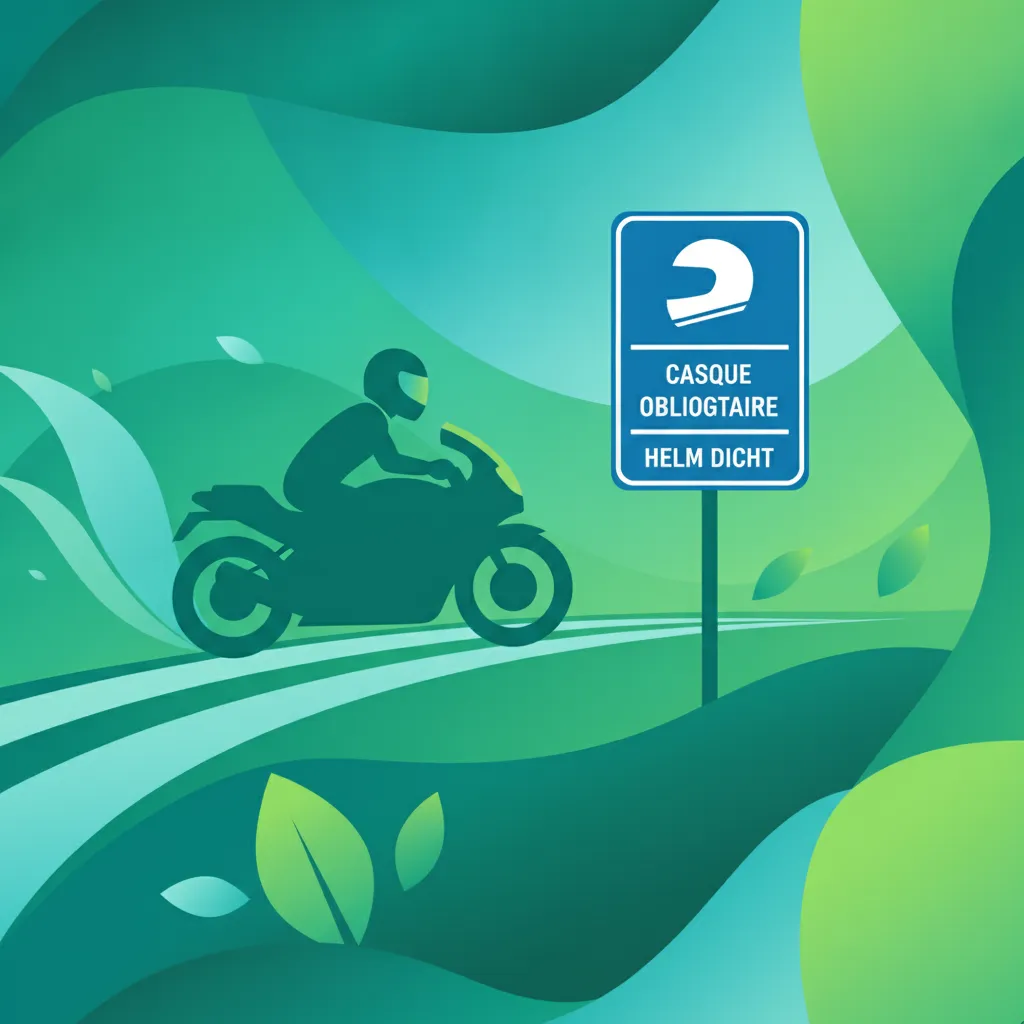
This lesson covers the absolute legal requirement for all Category AM vehicle operators in Belgium to wear a safety helmet. It explains the specific safety standards and certifications that helmets must meet to be legally compliant. Learners will be taught how to select the correct size, achieve a secure fit, and conduct regular inspections to ensure the helmet's protective integrity is maintained.
This lesson outlines the complete process for obtaining a Category AM license in Belgium, starting with the minimum age and health requirements. It details the sequence of theoretical and practical exams that candidates must pass to demonstrate their competence. The content also explains the administrative procedures for vehicle registration and securing mandatory insurance, ensuring all legal prerequisites are understood before riding.
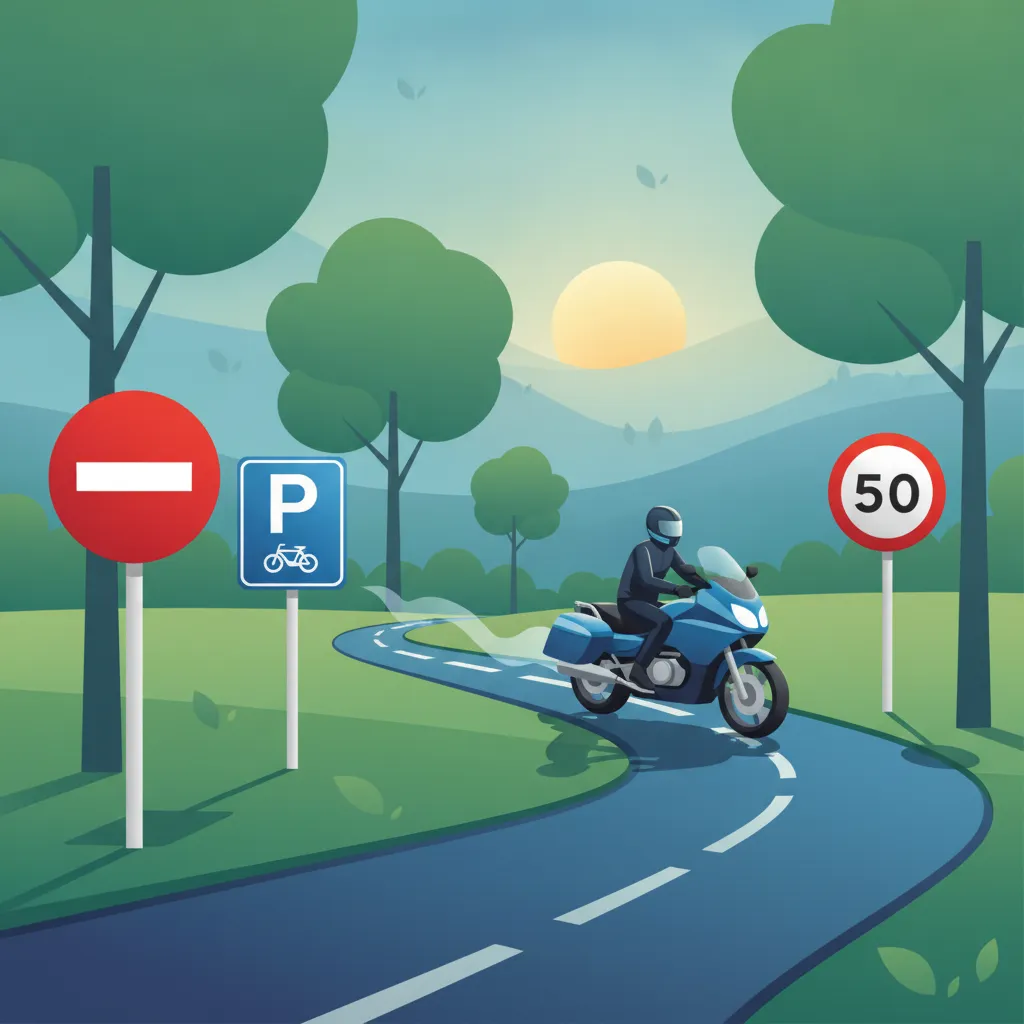
This lesson focuses on the correct identification and interpretation of regulatory and informative road signs that are particularly relevant to motorcyclists. It covers signs that dictate speed limits, prohibit overtaking, and indicate compulsory routes or turns. You will learn to recognize different sign categories based on their distinct shapes and colors as defined by Belgian traffic law.
This lesson covers the legal and safety requirements for motorcycle helmets in Belgium, with a focus on ECE certification standards. It explains the critical importance of a proper fit and how to correctly secure helmet straps for optimal effectiveness. You will also learn procedures for regular maintenance and how to inspect a helmet for damage that could compromise its protective capabilities.

This lesson details the specific rights and responsibilities of motorcyclists within the Belgian road system, focusing on the correct application of priority rules and safe overtaking. It covers the legal requirements for signaling intentions and adhering to proper road etiquette to ensure smooth traffic flow. The content emphasizes how riders must balance their rights with their safety obligations toward all other road users.
This lesson details the specific conditions for obtaining a Category B licence, including age limits, health criteria, and the structure of the two-part examination process. The legal framework governing the issuance and renewal of licences is examined, alongside the role of the licensing authority. Understanding these prerequisites equips learners to navigate the administrative process.

This lesson details a motorcyclist's obligations when approaching various types of crossings, including marked pedestrian and bicycle lanes. It emphasizes the legal requirement to yield to vulnerable road users and the importance of thorough visual checks before proceeding. You will learn how to maintain a safe distance and anticipate the movements of pedestrians and cyclists in urban areas.
Find clear answers to common questions learners have about Introduction to Belgian Motorcycle Licence Regulations. Learn how the lesson is structured, which driving theory objectives it supports, and how it fits into the overall learning path of units and curriculum progression in Belgium. These explanations help you understand key concepts, lesson flow, and exam focused study goals.
These categories are primarily distinguished by age requirements and motorcycle power output. A1 is for light motorcycles, A2 for medium-power motorcycles, and A represents the full unrestricted motorcycle licence.
While you can study the theory independently, certain official steps in your licence application process will require medical verification. Always check the specific requirements of your local municipality.
Yes, civil liability insurance is strictly mandatory for every motorcycle used on public roads in Belgium. Riding without insurance is a severe offence with heavy legal consequences.
Generally, you progress through the categories as you meet the age and experience milestones. The Belgian system is designed to build competence through graduated access to more powerful motorcycles.
Ready to focus your Belgian driving theory revision? Utilize our powerful search tool to pinpoint exact topics, road signs, or difficulty levels. Engage with practice questions that directly address your learning needs and solidify your understanding of Belgian traffic laws for your upcoming exam.