
This lesson details the formal procedure for acquiring your Belgian motorcycle licence, covering everything from initial theory registration to the final practical examination. Understanding these legal steps is essential for navigating the requirements for categories A1, A2, and A successfully.
Lesson content overview
Navigating the path to obtaining a motorcycle licence in Belgium requires a clear understanding of the administrative procedures, specific requirements, and the various stages involved. This comprehensive guide details the entire process, from initial registration for your theory exam to successfully passing your practical test and ultimately receiving your Belgian motorcycle licence. By familiarizing yourself with these steps, you can ensure a smooth and efficient journey towards becoming a licensed motorcyclist.
The Belgian licensing system for motorcycles is structured progressively, with different categories allowing for varying engine capacities and power outputs. This staged approach is designed to ensure riders gain experience incrementally, enhancing road safety for everyone. Understanding these categories is the first crucial step in planning your motorcycle journey.
The Category A1 licence is the entry point for younger riders and those who prefer lighter motorcycles. This licence permits you to operate motorcycles with a maximum cylinder capacity of 125 cubic centimeters (cc) and a power output not exceeding 11 kilowatts (kW). The power-to-weight ratio must also not exceed 0.1 kW per kilogram.
This category is ideal for urban commuting and learning the fundamentals of motorcycling. The minimum age requirement for the A1 licence is 18 years old. It serves as a foundational step for those who eventually wish to ride more powerful motorcycles.
For riders seeking more power and versatility than an A1 licence offers, the Category A2 licence is the next step. This licence allows you to ride motorcycles with a maximum power output of 35 kW and a power-to-weight ratio not exceeding 0.2 kW per kilogram. Crucially, the motorcycle must not be derived from a vehicle with more than double its power. This means a restricted 70 kW bike is permissible, but not a 100 kW bike restricted to 35 kW.
The A2 category offers a significant upgrade in performance while still imposing limits that encourage responsible riding. The minimum age for obtaining an A2 licence is 20 years old, or 18 if you have held an A1 licence for at least two years and completed additional training. This category is a stepping stone towards the unrestricted full Category A licence.
The Full Category A licence grants you the freedom to ride any motorcycle, regardless of its cylinder capacity or power output. This is the ultimate goal for many motorcyclists, providing access to the full range of available machines, from powerful sport bikes to large touring motorcycles.
The minimum age requirement for the full Category A licence is 24 years old. However, if you have held an A2 licence for at least two years, you can apply for the full Category A licence at 22 years old after completing specific training and practical testing. This progression route acknowledges and rewards prior riding experience.
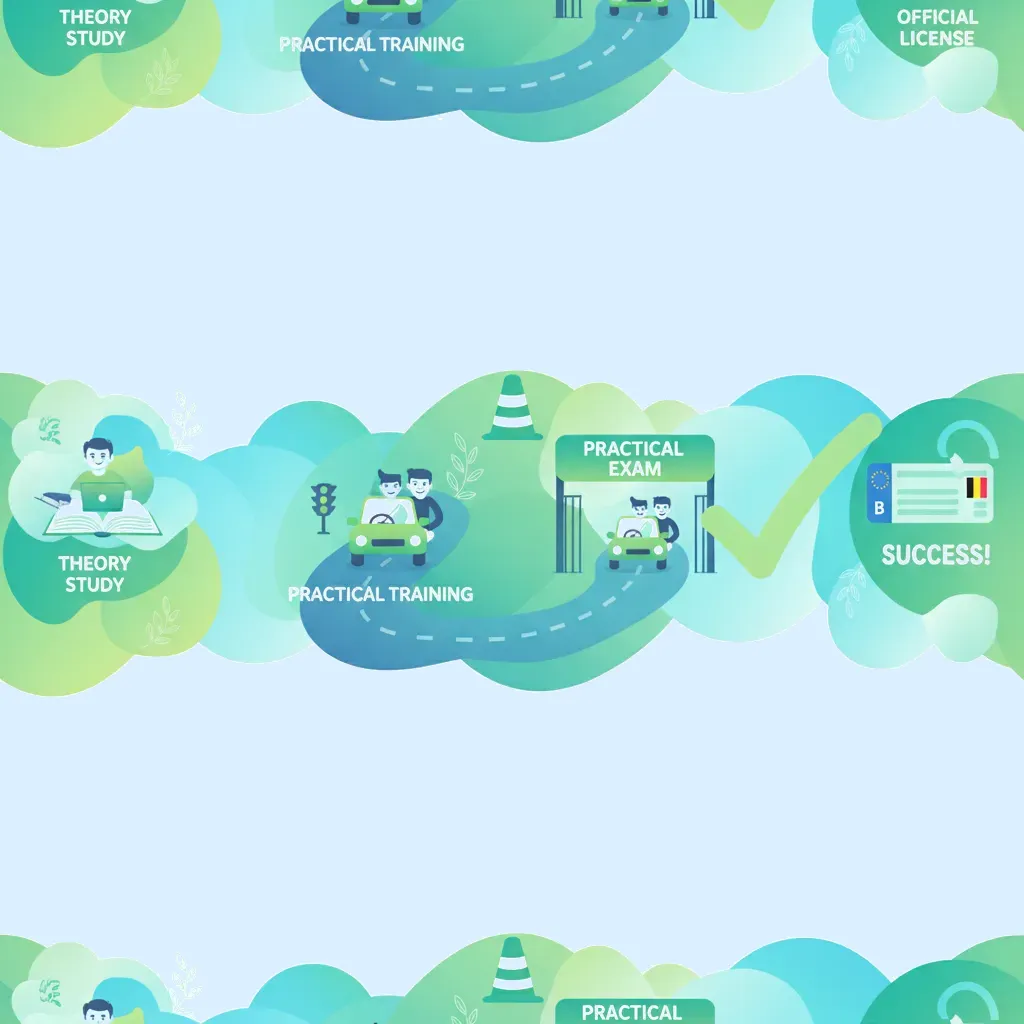
Obtaining your Belgian motorcycle licence involves a series of clearly defined stages, each with its own set of requirements and examinations. Following these steps diligently is essential for a successful outcome.
Register for Theory Exam: Enroll for the written test covering traffic laws and road signs.
Pass Theory Exam: Successfully complete the theoretical knowledge assessment.
Obtain Medical Certificate: Secure medical clearance if applying for A2 or Full A.
Complete Practical Training: Undertake mandatory riding lessons with an accredited school.
Pass Practical Exam: Demonstrate riding competence and adherence to traffic rules.
Receive Licence: Obtain your official Belgian motorcycle driving licence.
The first official step towards your motorcycle licence is to register for the theory examination. This formal enrollment process ensures that you are officially recognized as a candidate for the licence.
The formal enrollment process required before you can attempt the theory examination for any driving licence category.
Required Documents: When registering, you will typically need to present valid identity proof, such as your Belgian identity card or passport. Proof of residence in Belgium is also usually required. In some cases, a recent passport-sized photograph may also be requested.
Procedure: Registration can often be completed either online through designated governmental portals or in person at a local municipality office or a recognized examination centre. It is advisable to check the specific requirements and procedures of your chosen examination centre beforehand, as these can sometimes vary slightly.
After successfully registering, the next significant hurdle is the theory examination. This test assesses your foundational knowledge of road signs, traffic laws, and general rider responsibilities, which are crucial for safe motorcycling.
Prerequisites: To sit for the theory test, you must have completed the registration process and paid the associated theory test fee. It is imperative that all administrative requirements are met before your scheduled exam date to avoid any delays or cancellations.
Exam Format and Content: The theory examination typically consists of a series of multiple-choice questions presented either on a computer or in written format. Questions cover a broad range of topics including general traffic regulations, specific rules for motorcyclists, road signs and markings, priority rules, and safe riding principles. A passing score is required to proceed to the practical training stage.
Outcome: Upon successfully passing the theory examination, you will be issued a certificate of success. This certificate is a mandatory document that allows you to commence practical training and eventually take the practical riding test. It is valid for a limited period, so it is important to continue your journey promptly.
Thorough preparation is key to passing the theory test. Utilize official study materials, practice tests, and consider attending a theory course. Understanding the reasoning behind traffic rules, rather than just memorizing them, will significantly improve your chances of success.
For those pursuing an A2 or full Category A motorcycle licence, a medical certificate is a mandatory requirement before you can proceed with the practical examination. This certificate serves as official confirmation that you are physically and mentally fit to safely operate a medium or unrestricted motorcycle.
A formal document issued by a certified medical practitioner confirming an individual's physical and mental fitness to operate a motor vehicle.
Requirement: The medical certificate must be obtained from a certified medical practitioner. This examination typically assesses your vision, hearing, motor skills, and general health condition to ensure there are no underlying issues that could impair your ability to ride safely.
Validity: Medical certificates are generally valid for a limited duration, often one year. It is crucial to ensure that your medical certificate is current and valid at the time of your practical examination. An expired certificate will lead to refusal to take the test.
The practical examination is the final and often most anticipated stage of the licensing process. This real-world test evaluates your ability to safely and competently operate a motorcycle in various traffic conditions, demonstrating your practical riding skills and adherence to traffic laws.
Prerequisites: Before you can attempt the practical test, you must possess a valid theory examination certificate. For A2 and full Category A licences, a current and valid medical certificate is also mandatory. Additionally, you must have completed the required number of practical training hours with an accredited riding school.
Components of the Exam: The practical examination typically comprises several key components:
The examiner will assess not only your technical riding skills but also your situational awareness, decision-making, and ability to ride defensively. Successful completion of the practical examination is the final step before your licence can be issued.
Acquiring a Belgian motorcycle licence involves several fees that must be paid at different stages of the process. These fees cover administrative costs, examination services, and the issuance of your licence. It is important to budget for these expenses and understand when each payment is due.
A registration fee is typically required when you formally enroll for the theory examination. This initial payment covers the administrative costs associated with processing your application and scheduling your theory test. This fee is usually paid at the time of registration.
The theory test fee is a separate payment made at the time you take the actual theory examination. This fee covers the cost of administering the test and evaluating your knowledge. If you fail the theory test and need to retake it, you will generally be required to pay the theory test fee again for each subsequent attempt.
Before you can undertake your practical motorcycle examination, a practical test fee must be paid. This fee covers the costs associated with the practical driving test, including the examiner's time and the use of the examination facilities. Similar to the theory test, if you fail the practical test, you will need to pay the fee again for each retest. It is crucial to note that these fees are typically non-refundable if you do not pass the respective exam.
The Belgian motorcycle licensing system strongly emphasizes progressive learning, allowing riders to gain experience on less powerful machines before moving to more capable motorcycles. This structured progression helps foster safer riding habits and reduces risks.
If you initially obtained an A1 licence, you are eligible to progress to an A2 licence after fulfilling specific conditions. This progression route is often preferred by younger riders who start with an A1 licence at 18.
Requirements for A1 to A2:
Similarly, riders holding an A2 licence can upgrade to the full Category A licence, which allows for the operation of any motorcycle without power restrictions. This is the final step in the progressive licensing journey.
Requirements for A2 to Full Category A:
In addition to the specific waiting periods and training modules, all licence progressions also require administrative compliance. This includes:
Adhering to the specific rules and regulations governing motorcycle licences in Belgium is paramount. These rules ensure that all riders meet fundamental standards of age, fitness, and competence, contributing to overall road safety.
Minimum age requirements are strictly enforced for each licence category to ensure riders have reached a suitable level of maturity and cognitive development before operating motorcycles of increasing power.
The progressive licensing system includes mandatory waiting periods between categories, designed to allow riders to gain practical experience before moving to more powerful machines. These periods typically span two years between A1 and A2, and another two years between A2 and full Category A. This structured approach helps in the gradual development of advanced riding skills and judgment.
For each step in the progression (A1 to A2, and A2 to Full A), specific training modules are mandated. These modules, usually consisting of a fixed number of hours (e.g., 7 hours), must be completed at an accredited riding school. The training focuses on advanced techniques, traffic interaction, and specific skills relevant to the next higher category of motorcycle. These modules are crucial for skill development and are a prerequisite for the practical examination of the higher category.
Throughout the entire licensing process, presenting the correct and valid documentation at each stage is critical. This includes:
Failure to present any required document will lead to delays or refusal of examinations. All fees must also be paid in full before taking the respective exams.
Even with a clear understanding of the process, applicants can encounter common issues. Awareness of these pitfalls can help you avoid unnecessary delays and frustrations.
Obtaining your Belgian motorcycle licence is a rewarding journey that requires diligence, preparation, and adherence to specific administrative and regulatory procedures. By understanding the different licence categories (A1, A2, and Full A), knowing the step-by-step process from theory registration to practical examination, familiarizing yourself with the associated fees, and appreciating the progressive learning routes, you are well-equipped to navigate the system successfully.
Remember that each stage, from studying for the theory test to mastering practical riding skills and securing medical certification, plays a vital role in ensuring you become a safe, competent, and legally compliant motorcyclist on Belgian roads. Embrace the structured learning approach, comply with all requirements, and soon you will enjoy the freedom of two wheels.
The Belgian motorcycle licence system uses three progressive categories (A1, A2, Full A) with specific technical limits on engine capacity, power output, and power-to-weight ratios to ensure riders gain experience gradually. The licensing process requires passing a theory examination, obtaining required documents including a medical certificate for A2 and Full A, completing mandatory practical training with an accredited school, and passing a practical riding test. Candidates must observe strict age requirements (18/20/24 years) and waiting periods (typically two years between categories) when progressing through the system. Understanding these administrative requirements and technical specifications is essential for navigating the process without delays or rejections.
A short set of high-value points that capture the most important learning from this lesson.
Belgium categorizes motorcycle licences into A1 (up to 125cc/11kW), A2 (up to 35kW), and Full A (unrestricted), each with distinct technical limits and age requirements.
The licensing process follows a strict sequence: theory exam registration, theory test, medical certificate (A2/Full A only), practical training, and practical examination.
Progression between licence categories requires holding the lower licence for two years, completing mandatory training modules, and passing a practical examination.
Minimum ages are 18 for A1, 20 for A2 (or 18 with 2 years A1), and 24 for Full A (or 22 with 2 years A2).
A valid medical certificate from a certified practitioner is mandatory for A2 and Full A licences and must be current on exam day.
Explore all units and lessons included in this driving theory course.
A1 power-to-weight ratio must not exceed 0.1 kW/kg; A2 must not exceed 0.2 kW/kg and cannot be derived from a vehicle with more than double its power.
For A2, a motorcycle derived from a 100kW bike is not permitted even if restricted to 35kW, but a 70kW bike restricted to 35kW is allowed.
Two-year waiting periods are mandatory between each progression step: A1 to A2, and A2 to Full Category A.
Theory exam certificates have a limited validity period; delay in progressing will require re-taking the theory test.
All fees (registration, theory, and practical) are non-refundable and must be paid separately for each examination attempt.
Arriving at the practical exam with an expired medical certificate, which results in immediate refusal for A2 and Full A candidates.
Underestimating mandatory training hours and attempting to progress prematurely without completing the required accredited school modules.
Confusing the power-to-weight ratio limits between A1 and A2 categories, leading to riding an illegal motorcycle for the respective licence.
Failing to verify current fee amounts before registration, as fees can change and must be paid correctly to avoid exam postponement.
Assuming a high-power motorcycle can be registered for A2 simply because it has been electronically restricted, when the source vehicle exceeds 70kW.
Lesson content overview
A short set of high-value points that capture the most important learning from this lesson.
Belgium categorizes motorcycle licences into A1 (up to 125cc/11kW), A2 (up to 35kW), and Full A (unrestricted), each with distinct technical limits and age requirements.
The licensing process follows a strict sequence: theory exam registration, theory test, medical certificate (A2/Full A only), practical training, and practical examination.
Progression between licence categories requires holding the lower licence for two years, completing mandatory training modules, and passing a practical examination.
Minimum ages are 18 for A1, 20 for A2 (or 18 with 2 years A1), and 24 for Full A (or 22 with 2 years A2).
A valid medical certificate from a certified practitioner is mandatory for A2 and Full A licences and must be current on exam day.
Explore all units and lessons included in this driving theory course.
A1 power-to-weight ratio must not exceed 0.1 kW/kg; A2 must not exceed 0.2 kW/kg and cannot be derived from a vehicle with more than double its power.
For A2, a motorcycle derived from a 100kW bike is not permitted even if restricted to 35kW, but a 70kW bike restricted to 35kW is allowed.
Two-year waiting periods are mandatory between each progression step: A1 to A2, and A2 to Full Category A.
Theory exam certificates have a limited validity period; delay in progressing will require re-taking the theory test.
All fees (registration, theory, and practical) are non-refundable and must be paid separately for each examination attempt.
Arriving at the practical exam with an expired medical certificate, which results in immediate refusal for A2 and Full A candidates.
Underestimating mandatory training hours and attempting to progress prematurely without completing the required accredited school modules.
Confusing the power-to-weight ratio limits between A1 and A2 categories, leading to riding an illegal motorcycle for the respective licence.
Failing to verify current fee amounts before registration, as fees can change and must be paid correctly to avoid exam postponement.
Assuming a high-power motorcycle can be registered for A2 simply because it has been electronically restricted, when the source vehicle exceeds 70kW.
Explore search topics learners often look for when studying Understanding the License Process and Requirements. These topics reflect common questions about road rules, driving situations, safety guidance, and lesson level theory preparation for learners in Belgium.
Browse additional driving theory lessons that cover connected traffic rules, road signs, and common driving situations related to this topic. Improve your understanding of how different rules interact across everyday traffic scenarios.
Understand the distinctions between Belgian motorcycle licence categories A1, A2, and full A. Learn the requirements, age limits, and progressive steps for upgrading your licence.
This lesson provides a detailed overview of the Belgian motorcycle licence framework, explaining the distinctions between categories A1, A2, and the full A licence. It outlines the specific age and skill prerequisites for each level of certification. Furthermore, it covers the mandatory legal requirements such as obtaining a medical certificate, securing proper insurance, and completing the vehicle registration process.

This lesson details the specific conditions for obtaining a Category B licence, including age limits, health criteria, and the structure of the two-part examination process. The legal framework governing the issuance and renewal of licences is examined, alongside the role of the licensing authority. Understanding these prerequisites equips learners to navigate the administrative process.

This lesson outlines the complete process for obtaining a Category AM license in Belgium, starting with the minimum age and health requirements. It details the sequence of theoretical and practical exams that candidates must pass to demonstrate their competence. The content also explains the administrative procedures for vehicle registration and securing mandatory insurance, ensuring all legal prerequisites are understood before riding.
This lesson focuses on the legal responsibilities mandated for all motorcyclists in Belgium, emphasizing strict adherence to the traffic code. It details a rider's obligation to conduct risk assessments, comply with speed limits, and maintain high safety standards. The content also clarifies the legal liability associated with traffic infractions and the importance of carrying correct documentation at all times.

This lesson provides a comprehensive guide to motorway riding, starting with the procedure for safely merging into high-speed traffic from a slip road. It details the importance of strict lane discipline, including the rules for overtaking and the proper use of lanes. You will also learn the correct technique for planning and executing a safe exit from the motorway.

This lesson provides a clear definition of the Category AM license as specified by Belgian law. It details the specific types of vehicles covered, such as mopeds, light quadricycles, and speed pedelecs, outlining their legal limits on engine capacity and maximum speed. Learners will understand the permissions granted by an AM license and the specific context of their participation in public traffic as motor vehicle operators.

This lesson details the specific rights and responsibilities of motorcyclists within the Belgian road system, focusing on the correct application of priority rules and safe overtaking. It covers the legal requirements for signaling intentions and adhering to proper road etiquette to ensure smooth traffic flow. The content emphasizes how riders must balance their rights with their safety obligations toward all other road users.
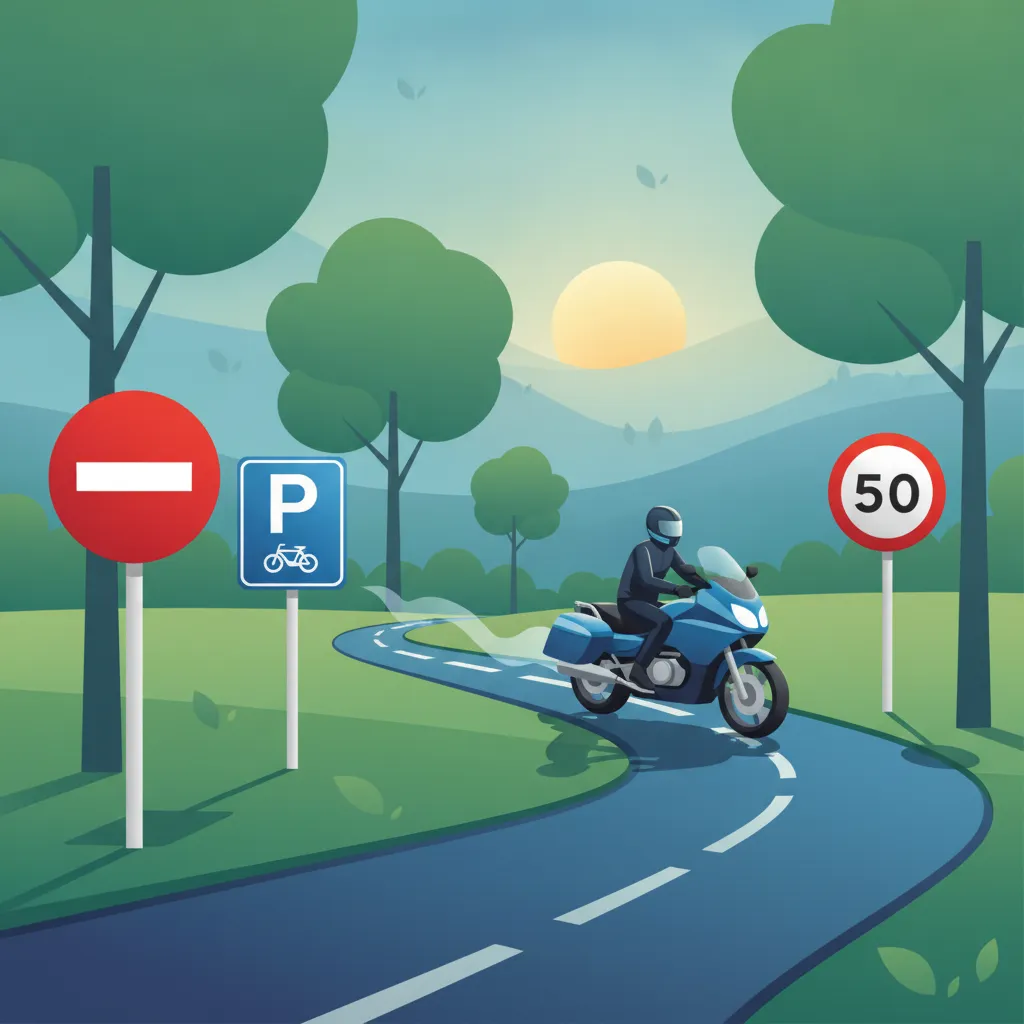
This lesson focuses on the correct identification and interpretation of regulatory and informative road signs that are particularly relevant to motorcyclists. It covers signs that dictate speed limits, prohibit overtaking, and indicate compulsory routes or turns. You will learn to recognize different sign categories based on their distinct shapes and colors as defined by Belgian traffic law.

This lesson provides a step-by-step guide to executing a safe overtaking maneuver in compliance with Belgian law. It covers the necessary pre-maneuver checks, proper signaling, and how to accurately judge the speed and distance of oncoming traffic. You will learn the correct procedure for passing a vehicle and safely returning to your original lane.
This lesson delves into the complex priority rules that govern Belgian roadways, with a strong focus on the default 'priority from the right' principle. It explains how to interpret priority signs, such as 'give way' and 'stop', and apply the correct right-of-way at various types of junctions. You will learn the hierarchy of road users and the specific rules for yielding in different traffic scenarios.
A detailed guide to the entire process of obtaining a Belgian motorcycle licence, covering theory registration, medical certificates, practical training, and final examination steps.
This lesson provides a detailed overview of the Belgian motorcycle licence framework, explaining the distinctions between categories A1, A2, and the full A licence. It outlines the specific age and skill prerequisites for each level of certification. Furthermore, it covers the mandatory legal requirements such as obtaining a medical certificate, securing proper insurance, and completing the vehicle registration process.
This lesson focuses on the legal responsibilities mandated for all motorcyclists in Belgium, emphasizing strict adherence to the traffic code. It details a rider's obligation to conduct risk assessments, comply with speed limits, and maintain high safety standards. The content also clarifies the legal liability associated with traffic infractions and the importance of carrying correct documentation at all times.
This lesson outlines the complete process for obtaining a Category AM license in Belgium, starting with the minimum age and health requirements. It details the sequence of theoretical and practical exams that candidates must pass to demonstrate their competence. The content also explains the administrative procedures for vehicle registration and securing mandatory insurance, ensuring all legal prerequisites are understood before riding.
This lesson details the specific conditions for obtaining a Category B licence, including age limits, health criteria, and the structure of the two-part examination process. The legal framework governing the issuance and renewal of licences is examined, alongside the role of the licensing authority. Understanding these prerequisites equips learners to navigate the administrative process.
This lesson provides a comprehensive guide to motorway riding, starting with the procedure for safely merging into high-speed traffic from a slip road. It details the importance of strict lane discipline, including the rules for overtaking and the proper use of lanes. You will also learn the correct technique for planning and executing a safe exit from the motorway.
This lesson focuses on the correct identification and interpretation of regulatory and informative road signs that are particularly relevant to motorcyclists. It covers signs that dictate speed limits, prohibit overtaking, and indicate compulsory routes or turns. You will learn to recognize different sign categories based on their distinct shapes and colors as defined by Belgian traffic law.
This lesson delves into the complex priority rules that govern Belgian roadways, with a strong focus on the default 'priority from the right' principle. It explains how to interpret priority signs, such as 'give way' and 'stop', and apply the correct right-of-way at various types of junctions. You will learn the hierarchy of road users and the specific rules for yielding in different traffic scenarios.
This lesson details the specific rights and responsibilities of motorcyclists within the Belgian road system, focusing on the correct application of priority rules and safe overtaking. It covers the legal requirements for signaling intentions and adhering to proper road etiquette to ensure smooth traffic flow. The content emphasizes how riders must balance their rights with their safety obligations toward all other road users.
This lesson provides a step-by-step guide to executing a safe overtaking maneuver in compliance with Belgian law. It covers the necessary pre-maneuver checks, proper signaling, and how to accurately judge the speed and distance of oncoming traffic. You will learn the correct procedure for passing a vehicle and safely returning to your original lane.

This lesson provides a detailed explanation of the various road markings found on Belgian roads and their specific significance for motorcyclists. It covers the rules associated with solid and broken lane lines, stop lines at junctions, and markings for pedestrian and bicycle crossings. Understanding these markings is essential for correct lane positioning and safe navigation.
Find clear answers to common questions learners have about Understanding the License Process and Requirements. Learn how the lesson is structured, which driving theory objectives it supports, and how it fits into the overall learning path of units and curriculum progression in Belgium. These explanations help you understand key concepts, lesson flow, and exam focused study goals.
You can start the theoretical exam for a category A1 motorcycle licence from the age of 17 years and 9 months. The practical driving test can only be taken once you have turned 18.
No, it is not automatic. After holding an A2 licence for at least two years, you must undergo specific training and pass a practical test to upgrade to a full Category A licence, unless you are aged 24 or older and meet direct access requirements.
Yes, you must be physically and mentally fit to operate a vehicle. Depending on your specific situation or health history, you may be required to provide a medical certificate from a qualified physician to the licensing authority.
You must bring a valid identity card and, depending on the examination centre's specific requirements, proof of your application or registration fee payment. Always check the official website of the examination centre where you booked your slot.
Ready to focus your Belgian driving theory revision? Utilize our powerful search tool to pinpoint exact topics, road signs, or difficulty levels. Engage with practice questions that directly address your learning needs and solidify your understanding of Belgian traffic laws for your upcoming exam.