
This lesson teaches you the critical procedures for executing safe turns and lane changes as a Category AM rider in Belgium. By mastering the sequence of mirror checks, signaling, and blind spot awareness, you will build the confidence needed to navigate intersections and traffic flows safely. This knowledge is essential for both your theory exam and your practical safety on the road.
Lesson content overview
Navigating the roads safely and efficiently as a Category AM license holder requires a solid understanding of how to execute turns and lane changes. These maneuvers are among the most frequent and potentially hazardous actions you will perform on a moped or speed pedelec. This lesson will provide you with a comprehensive, step-by-step guide to mastering these critical skills, emphasizing safety, control, and adherence to the Belgian Highway Code.
Proper execution of turns and lane changes is crucial for preventing accidents that often arise from misjudgment of space, speed, or unseen vehicles in blind spots. For operators of small, exposed vehicles like mopeds, these maneuvers are intrinsically linked to speed management, vehicle handling, and acute blind spot awareness, making precise technique even more vital.
Every successful turn or lane change hinges on a set of fundamental principles designed to ensure your safety and the safety of others. Adhering to these core tenets will help you maintain control of your vehicle and communicate your intentions clearly to other road users.
The first principle is Sequential Checking: always follow the precise order of checking your mirrors, signaling your intent, performing a head check for blind spots, and only then executing the maneuver. This systematic approach minimizes surprises.
Speed Management dictates that you must adjust your speed before initiating a turn or lane change. Entering a maneuver at an inappropriate speed can lead to loss of control, especially on a two-wheeled vehicle.
Blind Spot Coverage is non-negotiable. While mirrors offer a valuable view, they cannot show you everything. A dedicated head check is essential to scan those areas not visible in your mirrors, ensuring no vehicle or vulnerable road user is hidden.
Signal Timing involves activating your turn signal early enough to give surrounding traffic ample warning of your intentions. This allows other drivers and riders to anticipate your actions and react accordingly.
For turns, Cornering Balance is paramount. Maintaining the stability and grip of your moped through a turn requires smooth steering inputs and an appropriate, consistent speed. Sudden movements can easily destabilize a two-wheeled vehicle.
Finally, Lane Discipline ensures you use the correct lane for your intended turn or lane change, as indicated by road markings and traffic flow. This prevents confusion and conflicts with other road users.
Before any turn or lane change, a precise sequence of checks is mandatory. These steps are designed to gather all necessary information about your surroundings and clearly communicate your intentions to others.
Mirrors are your primary tools for assessing the traffic behind and to the sides of your vehicle. They provide a continuous view of traffic flow, help you identify gaps for lane changes, and alert you to approaching vehicles.
For AM license holders, especially on mopeds, having correctly adjusted side mirrors is critical. Always adjust your mirrors before starting your journey to ensure they provide the widest possible view without needing to move your head excessively. Remember, mirrors are a crucial tool but should never be your sole source of information, as they do not cover all areas around your vehicle. Relying only on mirrors without performing a head check is a common and dangerous mistake.
Communicating your intentions clearly and early is a cornerstone of safe driving. This is primarily done through your vehicle's signal lights, but hand signals are a vital backup.
Your turn signals provide an early warning to surrounding traffic, allowing them time to react to your planned maneuver. In Belgium, it is mandatory to activate your signal lights at least one second before initiating a turn, and for at least three seconds before changing lanes on multi-lane roads. Failing to signal or signaling too late can confuse other drivers and lead to dangerous situations. Always remember to cancel your signal after completing the maneuver to avoid misleading following traffic.
In situations where your electric signal lights are not working, or if they might be obscured (e.g., in bright sunlight from certain angles), hand signals become mandatory.
Even with perfectly adjusted mirrors, there are areas around your vehicle that remain invisible. These are known as blind spots. For moped riders, these blind spots can hide anything from another moped to a car or even a truck, making them extremely dangerous.
To eliminate blind spots, a head check is essential. This is a brief, but decisive, physical turn of your head to glance over your shoulder, checking the area directly to the side and slightly behind your vehicle that your mirrors cannot show.
Never rely solely on mirrors when changing lanes or turning. A thorough head check is mandatory to ensure no vehicle or vulnerable road user is in your blind spot. This is especially critical for moped riders, who are often less visible to other traffic.
The head check must be performed after you have checked your mirrors and activated your signal, but before you begin to move your vehicle laterally or turn. Skipping this crucial step is a common mistake that can have severe consequences, potentially leading to collisions with vehicles you simply didn't see.
Maintaining control of your moped through turns requires careful attention to your speed and how you balance the vehicle. These elements are interconnected and vital for safe cornering.
Speed management is the art of adjusting your vehicle's speed to suit the current road conditions, traffic flow, and the geometry of the upcoming maneuver. Before entering any turn, your speed must be reduced.
Reducing your speed before entering a turn allows you to maintain better control, reduces the required turn radius, and provides you with more time to react to unexpected hazards. If you enter a turn too fast, you risk losing grip, sliding, or having to brake sharply mid-turn, which can destabilize a moped. For sharp turns, such as those at intersections or when exiting a roundabout, slow down significantly. On wet or slippery roads, this speed reduction needs to be even more pronounced.
On a moped, maintaining balance and grip through a turn is critical. This is achieved through proper speed management and smooth, gradual steering inputs. Avoid abrupt steering corrections or sudden changes in speed while in a turn. Instead, aim for a steady, controlled speed throughout the curve, allowing your moped to lean naturally. Reduce speed before reaching the apex of the turn, then gently accelerate as you exit to stabilize the vehicle. This technique helps you maintain traction and control, preventing skidding or loss of balance.
Changing lanes and maintaining proper lane discipline are fundamental skills for safe operation on multi-lane roads, even for AM license holders. These maneuvers require careful observation and precise execution.
Executing a safe lane change involves a systematic approach to ensure you move from one lane to another without endangering yourself or other road users.
Assess the Situation: Look ahead to identify where you need to change lanes. Check traffic conditions, speed, and any road markings.
Check Mirrors: Scan your rear-view and side mirrors to assess traffic behind and to the side in your intended lane. Look for a safe gap.
Signal Intent: Activate your turn signal well in advance – mandatory for at least three seconds before beginning the lateral movement on multi-lane roads.
Perform Head Check: Quickly glance over your shoulder into your blind spot on the side you intend to move. Ensure no vehicle, cyclist, or pedestrian is hidden.
Execute Maneuver Smoothly: If the path is clear, steer smoothly and gradually into the new lane. Avoid sudden, sharp movements. Maintain your speed or adjust it appropriately to match the flow of traffic in the new lane.
Cancel Signal: Once fully in the new lane, cancel your turn signal.
Lane discipline ensures orderly traffic flow and minimizes conflicts, especially at intersections or on roads with multiple lanes. Always keep to the correct lane as indicated by road markings and traffic signs for your intended direction. For example, if you intend to turn left, position your moped in the left-most lane designated for left turns. Never drift between lanes or cut across multiple lanes without proper checks and signaling. This can lead to confusion for other drivers and significantly increase the risk of a collision.
Specific rules govern turns and lane changes in Belgium, ensuring consistency and safety for all road users. As an AM license holder, understanding these regulations is crucial.
Rule: Before beginning any journey, all mirrors (rear-view and side mirrors) must be correctly adjusted to provide the best possible view of the areas behind and to the sides of your vehicle. Rationale: This mandatory step ensures you have maximum situational awareness, allowing you to monitor surrounding traffic effectively. Applicability: This applies universally before every drive, regardless of the road or traffic conditions.
Rule: You must activate your turn signal at least one second before initiating a turn at an intersection or junction. For lane changes on multi-lane roads, you must signal for at least three seconds before beginning the lateral movement. Rationale: This provides adequate warning time for other road users to understand your intentions and react safely, preventing sudden braking or swerving. Applicability: This rule applies to all turns and lane changes on all road types.
Rule: Before changing lanes or making a turn that involves moving laterally (e.g., turning left from the right lane on a multi-lane road), you must perform a head check to verify that your blind spot is clear. Rationale: Mirrors have limitations; a head check is the only way to confirm no vehicle, cyclist, or pedestrian is hidden in your blind spot, thus preventing side collisions. Applicability: Essential for all lane changes and any turning maneuver that requires lateral movement.
Rule: You must reduce your speed before entering a turn or curve. The extent of reduction depends on the sharpness of the turn, road conditions, and your vehicle type. Rationale: Lowering your speed before the turn allows for a smoother, more controlled maneuver, helps maintain vehicle balance, and reduces the risk of skidding or losing control, especially critical for two-wheeled vehicles. Applicability: Applies to all turning situations, from gentle curves to sharp intersection turns.
Rule: After completing a turn or lane change, you must immediately cancel your turn signal. Rationale: Leaving your signal on can mislead other drivers about your next intended action, potentially causing confusion and dangerous situations. Applicability: Mandatory after every maneuver where a signal was activated.
Rule: When changing lanes on roads with multiple lanes, particularly on highways or urban multi-lane roads, you must signal your intent for at least three seconds before beginning the lateral movement. Rationale: This extended signaling time is crucial on faster roads or in heavier traffic, giving other drivers sufficient time to acknowledge your intention and adjust their speed or position. Applicability: All lane changes on roads with multiple lanes in the same direction.
Even experienced drivers can sometimes make mistakes during turns and lane changes. For AM license holders, understanding these common pitfalls is key to developing safe driving habits.
Late Signaling:
Skipping the Head Check:
Turning Too Fast:
Forgetting to Cancel Signals:
Improper Lane Positioning:
Driving conditions are rarely constant. Safe turning and lane changing also involve adapting your technique to different environments and situations.
For AM license holders, adverse conditions like rain or gravel on the road amplify the risk during turns. Always slow down significantly, maintain an upright posture, and avoid sudden braking or steering.
Mastering turns and lane changes is fundamental to safe and confident driving as an AM license holder. By consistently applying the learned principles and regulations, you can significantly reduce the risk of accidents and contribute to smoother traffic flow.
The core message remains consistent: meticulous preparation is key. Always follow the crucial sequence: Mirrors → Signal → Head Check → Maneuver. Combine this with appropriate speed management before entering any turn and maintaining excellent lane discipline. Remember to always anticipate the actions of other road users and adjust your own driving accordingly. Your vigilance and adherence to these principles will ensure safer journeys for everyone on the road.
This lesson teaches the essential mirror-signal-maneuver sequence for executing safe turns and lane changes as an AM license holder in Belgium. The core procedure involves checking mirrors, signaling at least 1 second before turns (3 seconds before lane changes), performing a mandatory head check to eliminate blind spots, then executing the maneuver. Speed management is critical—reduce before entering any turn to maintain stability and grip, especially on two-wheeled vehicles. Belgian regulations mandate correct mirror adjustment before every journey, proper signal timing, blind spot verification, and immediate signal cancellation after maneuvers. These skills are essential for both safe practical riding and passing the Belgian theory exam.
A short set of high-value points that capture the most important learning from this lesson.
Always follow the mirror-signal-head check-maneuver sequence before any turn or lane change
Reduce your speed before entering a turn, never during it, to maintain moped stability and control
Mirrors alone are insufficient; a head check is mandatory to eliminate blind spots before lateral movement
Position yourself in the correct lane well in advance according to road markings and intended direction
Signal timing is legally mandated: at least 1 second before turns, at least 3 seconds before lane changes on multi-lane roads
Explore all units and lessons included in this driving theory course.
Turn signal timing: 1 second minimum before turns, 3 seconds minimum before lane changes on multi-lane roads
Hand signals: left turn = arm straight out; right turn = arm bent up at elbow; slowing = arm bent down at elbow
Speed must be reduced before reaching the apex of any turn, then gently accelerate on exit for stability
Always cancel your turn signal immediately after completing a maneuver to avoid misleading other road users
In wet or slippery conditions, increase speed reduction significantly as grip is substantially reduced on two-wheeled vehicles
Activating turn signals only at the last moment, giving other road users insufficient time to react
Relying solely on mirrors without performing a head check, risking collision with vehicles in blind spots
Entering turns at high speed, which can cause loss of control, skidding, or destabilizing the moped
Leaving turn signals flashing after completing a maneuver, misleading following traffic about your next action
Initiating turns from the wrong lane or drifting between lanes, causing confusion and increasing collision risk
Lesson content overview
A short set of high-value points that capture the most important learning from this lesson.
Always follow the mirror-signal-head check-maneuver sequence before any turn or lane change
Reduce your speed before entering a turn, never during it, to maintain moped stability and control
Mirrors alone are insufficient; a head check is mandatory to eliminate blind spots before lateral movement
Position yourself in the correct lane well in advance according to road markings and intended direction
Signal timing is legally mandated: at least 1 second before turns, at least 3 seconds before lane changes on multi-lane roads
Explore all units and lessons included in this driving theory course.
Turn signal timing: 1 second minimum before turns, 3 seconds minimum before lane changes on multi-lane roads
Hand signals: left turn = arm straight out; right turn = arm bent up at elbow; slowing = arm bent down at elbow
Speed must be reduced before reaching the apex of any turn, then gently accelerate on exit for stability
Always cancel your turn signal immediately after completing a maneuver to avoid misleading other road users
In wet or slippery conditions, increase speed reduction significantly as grip is substantially reduced on two-wheeled vehicles
Activating turn signals only at the last moment, giving other road users insufficient time to react
Relying solely on mirrors without performing a head check, risking collision with vehicles in blind spots
Entering turns at high speed, which can cause loss of control, skidding, or destabilizing the moped
Leaving turn signals flashing after completing a maneuver, misleading following traffic about your next action
Initiating turns from the wrong lane or drifting between lanes, causing confusion and increasing collision risk
Explore search topics learners often look for when studying Turning and Lane Changes. These topics reflect common questions about road rules, driving situations, safety guidance, and lesson level theory preparation for learners in Belgium.
Browse additional driving theory lessons that cover connected traffic rules, road signs, and common driving situations related to this topic. Improve your understanding of how different rules interact across everyday traffic scenarios.
Explore advanced scenarios for turns and lane changes relevant to the Belgian AM licence. Understand specific rules for complex intersections, multi-lane roads, and challenging urban environments to enhance your road awareness.
This lesson focuses on basic manoeuvres, covering the proper use of indicators, safe lane positioning, and correct steering for turns. Learners will study the importance of checking blind spots and maintaining appropriate speed for a smooth transition when changing lanes. It also addresses turning at intersections and signaling intentions clearly to other road users.
This lesson offers specific strategies for motorcyclists navigating roundabouts in Belgium. It covers the rules for entering the roundabout, including yielding to circulating traffic, and how to choose the correct lane for your intended exit. The content stresses the importance of clear signaling and maintaining awareness of other vehicles during entry and exit maneuvers.
This lesson provides specific instructions for navigating roundabouts, a common feature on Belgian roads. It covers the rules of priority upon entry, the correct lane choice based on the intended exit, and the proper use of signals. Learners will understand how to safely circulate and exit, while being mindful of other vehicles, particularly larger ones with significant blind spots.
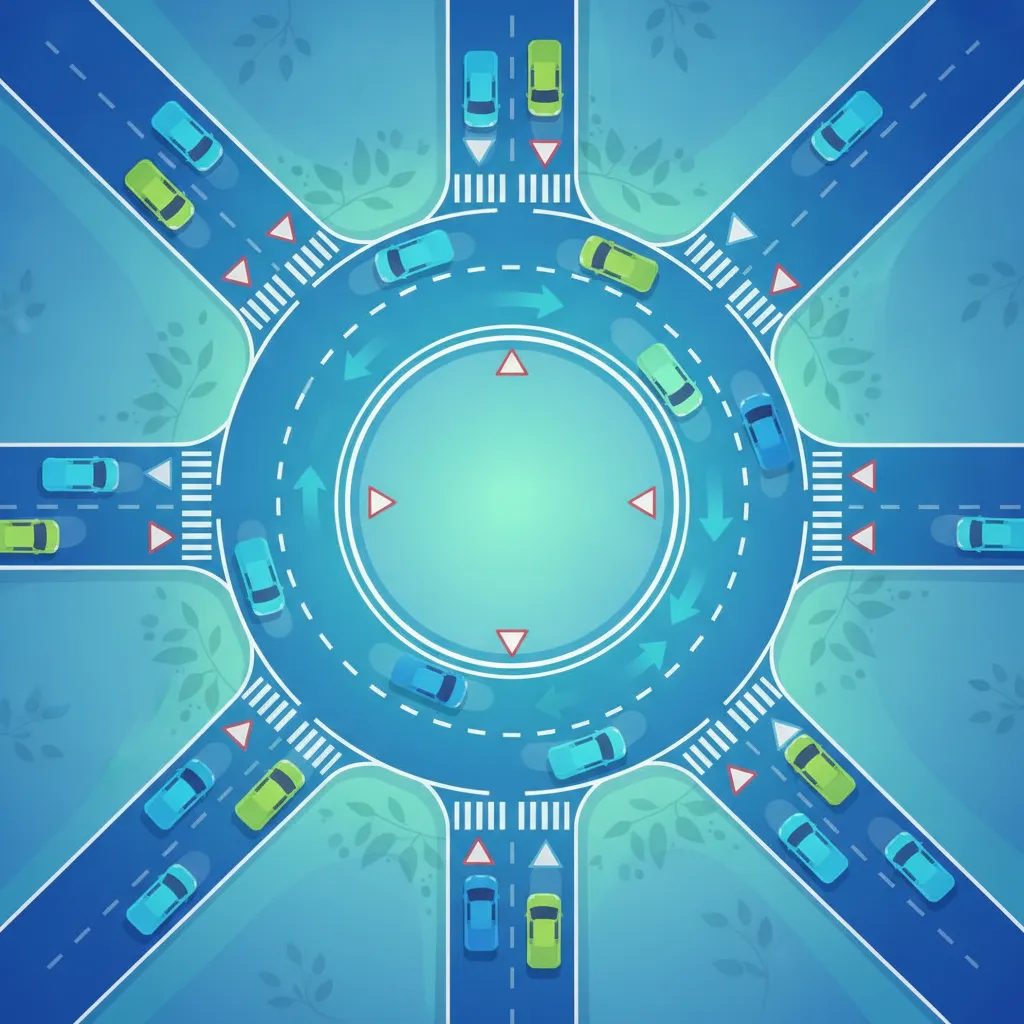
Roundabouts are a key feature of Belgian traffic management. This lesson explains how to approach, enter, navigate, and exit a roundabout safely, with a focus on yielding priority to traffic already circulating. Learners will also study correct lane positioning on multi-lane roundabouts and the appropriate use of signals.
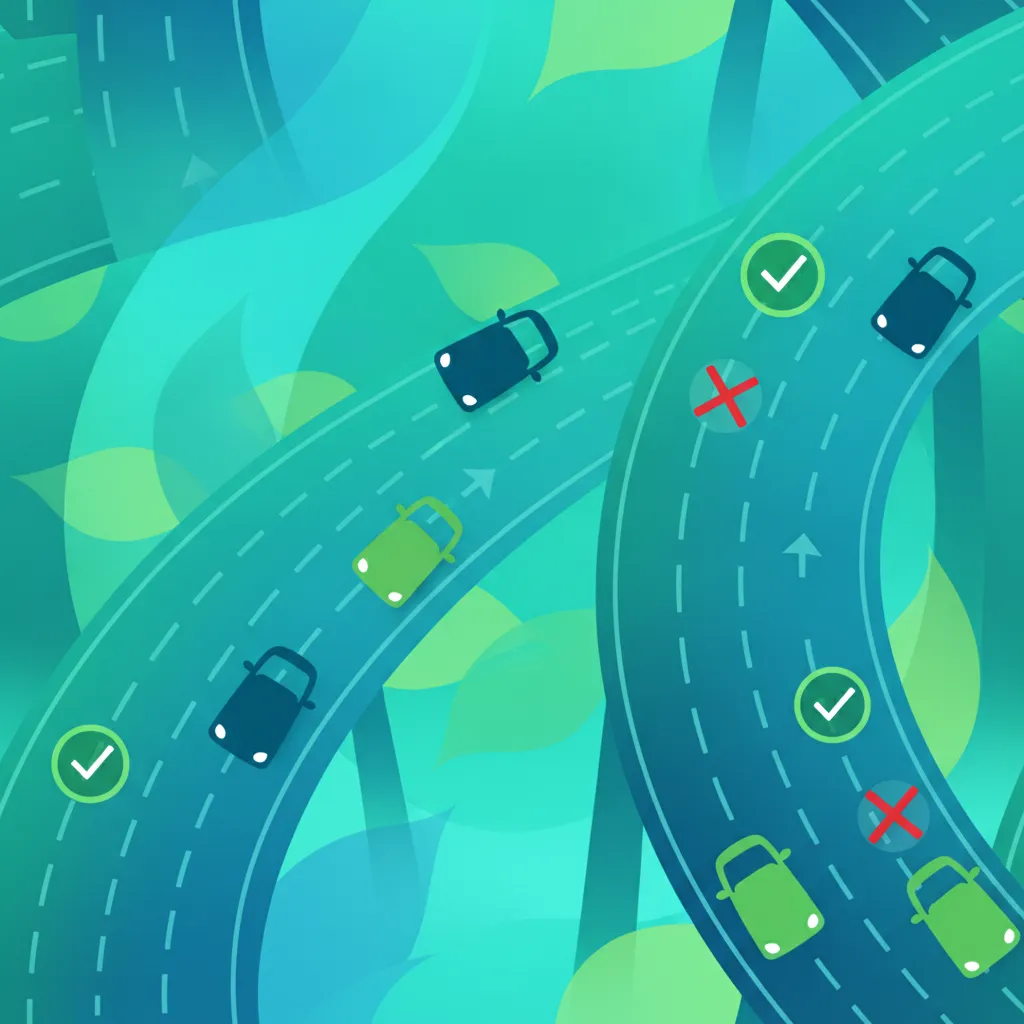
The focus of this lesson is on maintaining proper lane discipline, especially on motorways and other high-speed roads. Learners will explore the rules for changing lanes, overtaking, and positioning in the correct lane based on speed and traffic flow. Emphasis is placed on safe merging techniques and adherence to all lane markings for fluid traffic movement.

This lesson focuses on two key handling skills: maneuvering at low speeds and navigating corners safely. It provides techniques for maintaining balance and making smooth steering inputs in tight spaces. For cornering, it explains the principles of selecting an appropriate speed, choosing a safe line through the bend, and using body lean to maintain stability.
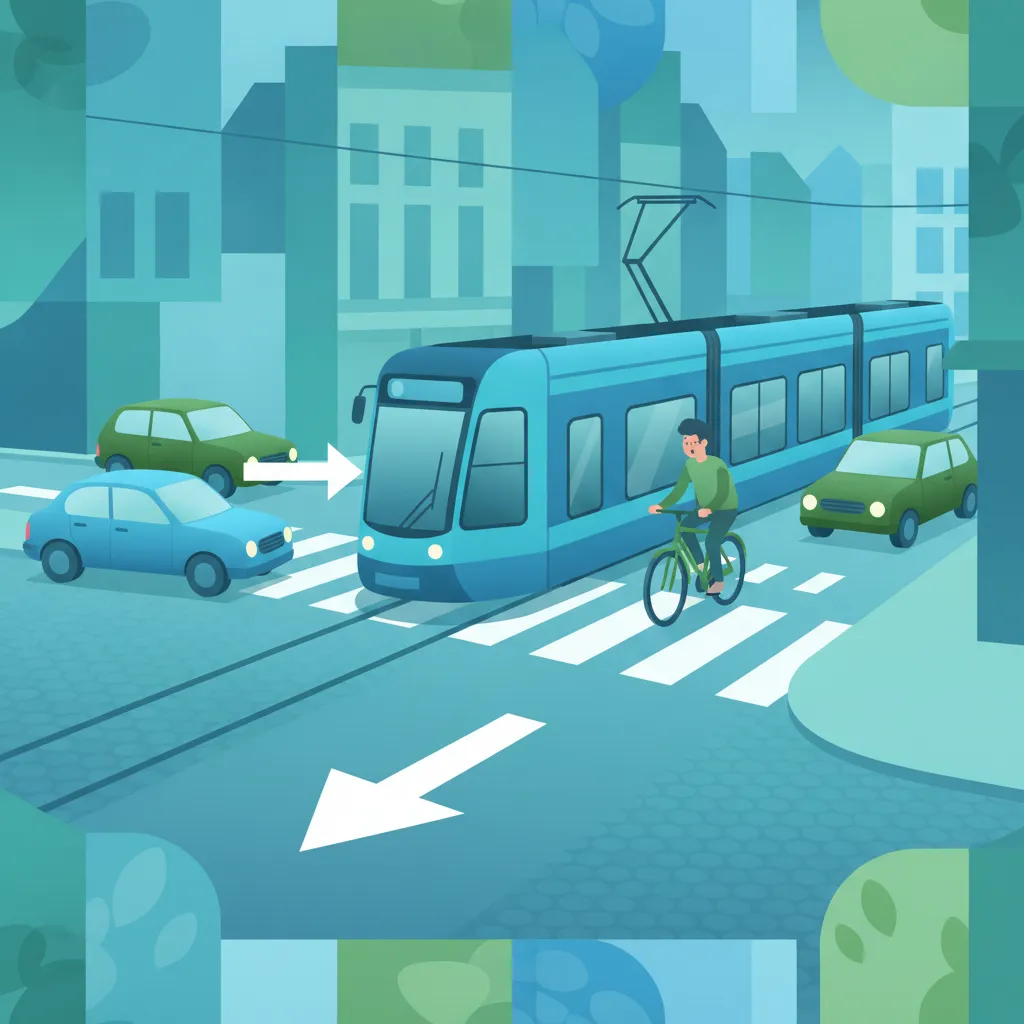
This lesson delves into the complex priority rules that govern Belgian roadways, with a strong focus on the default 'priority from the right' principle. It explains how to interpret priority signs, such as 'give way' and 'stop', and apply the correct right-of-way at various types of junctions. You will learn the hierarchy of road users and the specific rules for yielding in different traffic scenarios.

This lesson details the safe and systematic approach to different types of intersections, both signal-controlled and uncontrolled. It explains how to use road signs and markings to determine right-of-way and when to stop or yield. The importance of comprehensive scanning for traffic from all directions and adjusting approach speed is emphasized to ensure safe passage.
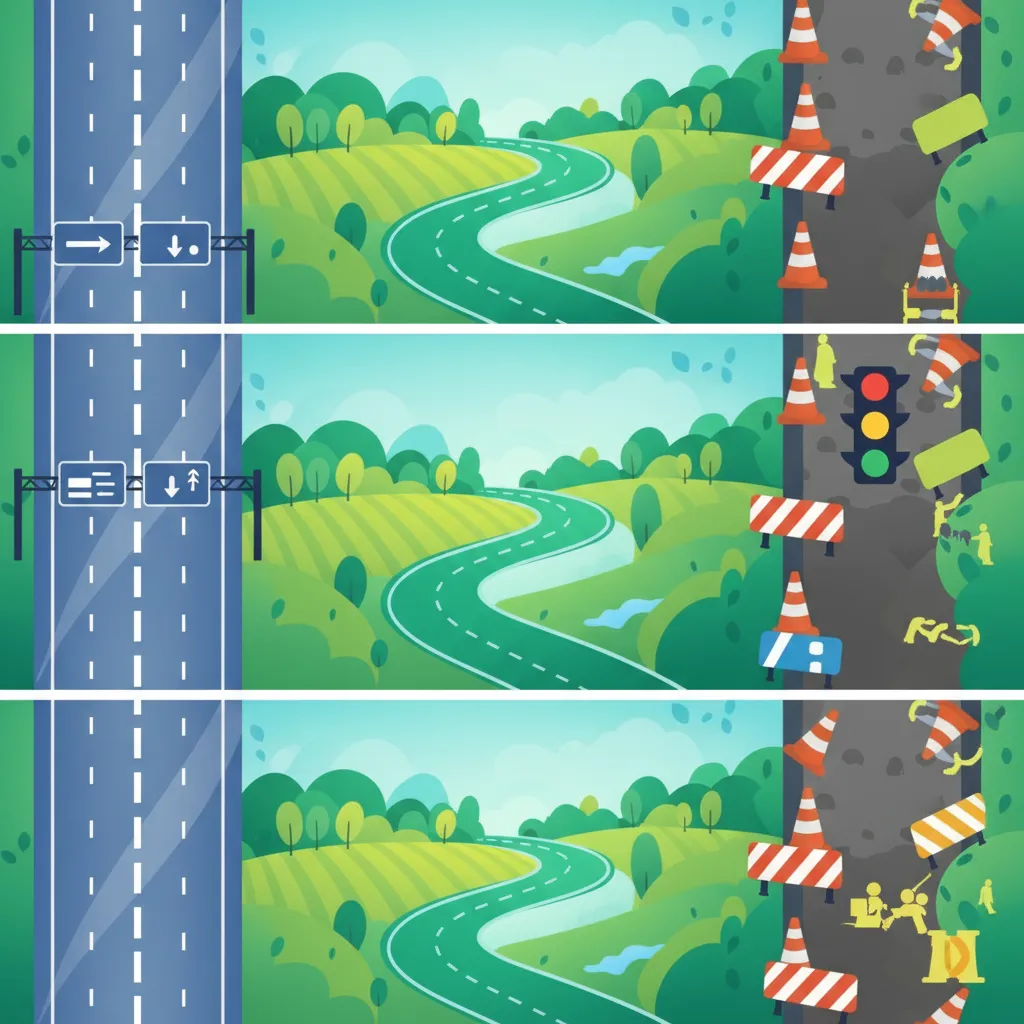
This lesson covers the specific challenges of driving on motorways, rural roads, and navigating roadworks. Learners will review lane discipline on high-speed roads and identify hazards common to rural roads, such as sharp bends and wildlife. It also explains the importance of adjusting speed and following temporary signage in construction zones.

This lesson provides a comprehensive guide to motorway riding, starting with the procedure for safely merging into high-speed traffic from a slip road. It details the importance of strict lane discipline, including the rules for overtaking and the proper use of lanes. You will also learn the correct technique for planning and executing a safe exit from the motorway.
Learn about the most frequent mistakes drivers make when executing turns and changing lanes. This lesson helps you avoid dangerous situations by understanding typical errors and their consequences in Belgian traffic.

This lesson explains the concept of strategic road positioning to enhance safety and visibility. It teaches riders how to select the best position within a lane to be seen by other drivers and to have a good view of the road ahead. A key focus is on identifying and staying out of the large blind spots of cars, vans, and trucks to prevent dangerous situations.
This lesson offers specific strategies for motorcyclists navigating roundabouts in Belgium. It covers the rules for entering the roundabout, including yielding to circulating traffic, and how to choose the correct lane for your intended exit. The content stresses the importance of clear signaling and maintaining awareness of other vehicles during entry and exit maneuvers.
This lesson focuses on two key handling skills: maneuvering at low speeds and navigating corners safely. It provides techniques for maintaining balance and making smooth steering inputs in tight spaces. For cornering, it explains the principles of selecting an appropriate speed, choosing a safe line through the bend, and using body lean to maintain stability.
This lesson provides specific instructions for navigating roundabouts, a common feature on Belgian roads. It covers the rules of priority upon entry, the correct lane choice based on the intended exit, and the proper use of signals. Learners will understand how to safely circulate and exit, while being mindful of other vehicles, particularly larger ones with significant blind spots.
This lesson focuses on basic manoeuvres, covering the proper use of indicators, safe lane positioning, and correct steering for turns. Learners will study the importance of checking blind spots and maintaining appropriate speed for a smooth transition when changing lanes. It also addresses turning at intersections and signaling intentions clearly to other road users.

This lesson focuses on the unique hazards associated with riding after dark. It emphasizes the importance of a fully functional lighting system and the use of reflective gear to be seen by others. The content explains how darkness affects depth perception and peripheral vision, requiring riders to reduce their speed to compensate for shorter sight distances and potential fatigue.
This lesson provides crucial advice for riding in rainy conditions, a frequent occurrence in Belgium. It explains how water on the road surface dramatically reduces tire grip, extends stopping distances, and creates a risk of hydroplaning. Riders will learn how to adjust their speed, increase following distances, and manage reduced visibility from rain and road spray to maintain safety.

This lesson details a motorcyclist's obligations when approaching various types of crossings, including marked pedestrian and bicycle lanes. It emphasizes the legal requirement to yield to vulnerable road users and the importance of thorough visual checks before proceeding. You will learn how to maintain a safe distance and anticipate the movements of pedestrians and cyclists in urban areas.

This lesson provides a step-by-step guide to executing a safe overtaking maneuver in compliance with Belgian law. It covers the necessary pre-maneuver checks, proper signaling, and how to accurately judge the speed and distance of oncoming traffic. You will learn the correct procedure for passing a vehicle and safely returning to your original lane.
This lesson covers the specific challenges of driving on motorways, rural roads, and navigating roadworks. Learners will review lane discipline on high-speed roads and identify hazards common to rural roads, such as sharp bends and wildlife. It also explains the importance of adjusting speed and following temporary signage in construction zones.
Find clear answers to common questions learners have about Turning and Lane Changes. Learn how the lesson is structured, which driving theory objectives it supports, and how it fits into the overall learning path of units and curriculum progression in Belgium. These explanations help you understand key concepts, lesson flow, and exam focused study goals.
Because moped riders are vulnerable, you must verify your surroundings before every shift in position. Failing to check mirrors is a leading cause of accidents when changing lanes.
Yes. Signaling your intent is mandatory in the Belgian Highway Code for any change in direction, helping other drivers anticipate your moves and preventing side-swipe collisions.
Changes in surface texture, such as tram tracks or wet markings, can reduce grip. You must adjust your speed and braking before initiating a turn to remain in control.
Many riders forget the head check to cover their blind spot. Always physically turn your head to check your blind spot in addition to using your mirrors.
Ready to focus your Belgian driving theory revision? Utilize our powerful search tool to pinpoint exact topics, road signs, or difficulty levels. Engage with practice questions that directly address your learning needs and solidify your understanding of Belgian traffic laws for your upcoming exam.