
This lesson teaches you how to scan the road effectively and identify potential hazards before they become immediate dangers. It is a critical component of safe driving in Belgium and prepares you for the complex situational questions in your Category B theory exam.
Lesson content overview
Driving safely on Belgian roads, and indeed anywhere, hinges on more than just knowing traffic rules and controlling your vehicle. It fundamentally relies on your ability to anticipate potential dangers and react effectively before they escalate into immediate threats. This lesson delves into the crucial skills of hazard perception and anticipation, equipping you with the knowledge to identify risks early, predict their development, and plan safe responses, significantly reducing your collision risk. These competencies are vital for anyone seeking a Belgian Category B Driving Licence, as they form the bedrock of proactive and defensive driving.
Successful driving is a continuous process of observation, evaluation, and action. At its heart lies the interplay between hazard perception and anticipation, two distinct but interconnected skills that allow drivers to navigate complex traffic environments safely. Understanding these concepts is the first step towards becoming a more responsible and skilled driver.
Hazard perception is your internal radar for potential danger. It's the skill of spotting anything on or around the road that could become a problem. This includes stationary objects, moving vehicles, pedestrians, animals, and even environmental conditions like changing weather or road surfaces. The key is early detection; the sooner you perceive a potential hazard, the more time you have to process the situation and formulate a response. For instance, noticing brake lights far ahead on the motorway, or observing a child playing near the roadside, are examples of effective hazard perception.
Anticipation takes hazard perception a step further. Once you've identified a potential hazard, anticipation involves predicting what might happen next. It's about thinking several steps ahead. For example, if you perceive a parked car ahead, anticipating that its door might suddenly open or that a pedestrian might step out from behind it allows you to adjust your speed or position proactively. This predictive element is critical for preventing collisions, especially at higher speeds where reaction times are naturally reduced. Effective anticipation is built upon experience, knowledge of traffic rules, and an understanding of human behavior.
In the dynamic environment of road traffic, situations can change in an instant. The ability to perceive hazards and anticipate their evolution is directly correlated with a driver's safety record. It allows you to:
This crucial skill is intrinsically linked to other fundamental driving concepts, such as maintaining a safe following distance and understanding stopping distances. A larger buffer, provided by proper following distance, directly increases the available reaction time when a hazard is perceived and anticipated.
To truly master hazard perception and anticipation, several core principles must be integrated into your daily driving habits. These principles form the foundation of proactive and defensive driving.
Proactive scanning is more than just glancing at the road; it's an active, systematic process. It involves constantly moving your eyes, checking your mirrors frequently, and scanning your peripheral vision. The primary purpose is the early detection of any object, event, or behavior that could pose a threat. This constant vigilance allows you significantly more time for decision-making and planning safe maneuvers, rather than reacting abruptly. A driver must adapt their scanning range according to their speed; at higher speeds, you need to look further ahead.
Not everything you see on the road is a hazard. Part of effective hazard perception is the ability to quickly evaluate objects or situations and determine if they are truly threatening.
The purpose of this differentiation is to prioritize your attention. By quickly identifying and focusing on relevant hazards, you reduce cognitive overload and improve your reaction times to genuine threats, preventing unnecessary actions for non-issues.
Maintaining a safe following distance is one of the most fundamental safety practices. It provides a crucial buffer zone, giving you the necessary time to react to hazards that develop ahead, such as sudden braking, swerving, or debris. The generally recommended minimum is the "two-second rule," which means you should be able to count two seconds from when the vehicle ahead passes a fixed point until your vehicle reaches the same point. A larger buffer directly influences your hazard perception capabilities by increasing the available time for detection, anticipation, and response.
Stopping distance is comprised of two parts: reaction distance (the distance travelled during the driver's perception and reaction time) and braking distance (the distance travelled while the brakes are applied). Understanding how speed, road conditions, and vehicle condition affect stopping distance is crucial. For instance, at 120 km/h, your stopping distance will be significantly longer than at 50 km/h. This understanding sets a practical benchmark for what constitutes a safe following distance and guides appropriate speed choices and scanning practices, especially when approaching potential hazards.
Your goal as a driver should be to maximize your anticipation time. This means spotting potential problems far in advance, allowing you to gradually adjust your speed or position rather than having to perform an emergency maneuver. The longer this interval, the lower the risk of a collision. For example, if you see a traffic jam building a kilometre ahead on the motorway, you have a long anticipation time to smoothly reduce speed and prepare to stop. In contrast, if you only notice the jam when you're 50 metres away, your anticipation time is minimal, forcing an abrupt and potentially dangerous response.
Effective observation is a learned skill that improves with practice. Beyond simply looking, drivers must employ systematic techniques to ensure all relevant areas are covered, minimizing the risk of missing critical information.
To prevent tunnel vision—the tendency to focus only on what's directly ahead—drivers should adopt systematic scanning patterns:
These techniques ensure you actively process information from your entire field of vision, including your mirrors and peripheral vision, rather than passively observing.
The intensity and focus of your scanning should adapt to the driving environment:
Failure to adjust your scanning method based on the environment can lead to crucial hazards being missed.
Hazards can generally be categorized into two main types, each requiring slightly different anticipatory strategies.
Static hazards are unchanging elements in the driving environment. Examples include:
For static hazards, your strategy often involves planning your path or speed adjustment well in advance, such as positioning your vehicle to provide a safe buffer when passing parked cars, or slowing down significantly before a blind bend.
Dynamic hazards are those that are in motion or whose status can change rapidly. These are often the most unpredictable and require immediate and flexible anticipation. Examples include:
Dealing with dynamic hazards requires constant monitoring of their speed, direction, and likely intentions. For instance, reducing your speed when you see a child on a bicycle near the road edge anticipates that they might swerve or cross suddenly.
Anticipatory driving is a mindset, a habit of constantly asking "what if?" and preparing for various outcomes. It goes beyond simply reacting to what happens; it's about predicting what might happen and positioning yourself to respond safely.
Drivers must learn to read the road and the environment for clues about changing conditions:
By anticipating these changes, you can adjust your driving style before the conditions become challenging.
A significant part of anticipatory driving involves predicting the behavior of other road users. While you should never assume others will follow the rules perfectly, you can anticipate common patterns:
For example, slowing down when you approach a series of green traffic lights at high speed anticipates that they might change before you reach them, allowing a smooth stop rather than an emergency brake.
Understanding and correctly applying priority rules is fundamental to hazard perception, as it dictates the expected behavior of road users at junctions and other conflict points. Misinterpreting these rules is a common cause of collisions.
In Belgium, as in many European countries, priority rules are crucial. A priority road allows vehicles travelling on it to proceed without yielding to traffic from intersecting roads, unless specified by signs or signals. However, even on a priority road, an anticipatory driver will still scan junctions and be prepared for potential violations.
This sign tells you that you have priority, but it doesn't mean you can drive recklessly. An anticipatory driver will still observe junctions and be ready to react if someone fails to yield.
Yielding is a critical action governed by signs and traffic rules. The most common instruction to yield comes from the "Give Way" sign.
When you encounter a B1 sign, you must slow down, prepare to stop, and ensure the way is clear before proceeding. This requires excellent hazard perception to identify approaching traffic and anticipation to judge their speed and trajectory. Similarly, the "Priority to the Right" rule (where traffic approaching from the right at an intersection without signs or signals has priority) demands constant vigilance and readiness to yield.
Belgian traffic law reinforces many of the principles of hazard perception and anticipation, emphasizing their mandatory nature for safe driving.
Rule Statement: Drivers must continuously scan the road ahead, including the sides and rear, adapting the scanning range according to their speed and the complexity of the environment.
Applicability: This rule applies universally across all driving conditions on Belgian roads, from quiet residential streets to busy motorways. Its legal status is fundamental to safe driving, and failure to observe adequately can be considered negligence in the event of an incident.
Rationale: The rationale is clear: early hazard detection reduces the time required for decision-making and reaction, significantly lowering the risk of collisions. For example, when driving on a motorway at 120 km/h, a driver should be looking at least 12 seconds ahead to have sufficient time to react to unfolding situations.
Rule Statement: A minimum safe following distance must be maintained behind the vehicle ahead, roughly equivalent to a two-second gap under normal conditions. This distance should be increased in adverse weather, poor visibility, or when driving a heavier vehicle.
Applicability: This recommendation applies to all driving situations in Belgium, regardless of road type or speed. While not always explicitly enforced as a fixed meter distance, failing to maintain a safe following distance that contributes to a collision can lead to legal penalties.
Rationale: This rule provides adequate time for a driver to perceive a hazard (like the vehicle ahead braking) and react safely without colliding. For instance, at 90 km/h, a two-second gap corresponds to approximately 50 meters, providing a crucial safety buffer.
Rule Statement: Drivers must reduce their speed when approaching intersections, especially if visibility is limited, and also when nearing blind corners or other areas where potential hazards might be concealed.
Applicability: This rule is mandatory for all drivers in Belgium, applying to both urban and rural intersections, as well as any situation where the view ahead is restricted.
Rationale: Reducing speed buys critical time. It allows adequate reaction time for cross-traffic, pedestrians, or cyclists who might unexpectedly appear from an obscured area. For example, reducing speed to 30 km/h when approaching a blind corner on a two-lane road significantly increases the chances of spotting an oncoming vehicle or unexpected obstruction in time to react safely.
Even experienced drivers can fall into common traps related to hazard perception. Recognizing these pitfalls is key to avoiding them.
Violation: Focusing only on the road immediately ahead, neglecting peripheral vision and mirror checks. This is exacerbated by distractions inside or outside the vehicle.
Consequence: Late detection of merging traffic, vehicles in blind spots, pedestrians, or cyclists approaching from the side. This dramatically reduces reaction time and increases collision risk.
Solution: Consciously practice systematic scanning. Make mirror checks a habit every 5-8 seconds, and actively scan left and right, not just straight ahead. Minimize in-cabin distractions like mobile phones.
Violation: Tailgating, or following the vehicle ahead too closely, especially at higher speeds.
Consequence: Severely reduced reaction time for sudden stops, leading to rear-end collisions, particularly in stop-and-go traffic or during emergency braking.
Solution: Always apply the two-second rule, increasing it to three or four seconds in adverse conditions (rain, fog, heavy load) or at higher speeds.
Violation: Not actively anticipating the presence or movement of pedestrians, cyclists, or motorcyclists, especially in areas like parked zones, school zones, or unofficial crossings.
Consequence: Unexpected incursions into the vehicle's path, leading to collisions with often severe consequences for the vulnerable road user.
Solution: Maintain heightened vigilance in urban and residential areas. Scan constantly for movements behind parked cars, near bus stops, and around schools. Assume pedestrians or cyclists might not see you or might act unpredictably.
Violation: Failing to adjust speed and following distance for poor visibility due to fog, heavy rain, snow, or night driving.
Consequence: Significantly reduced time to perceive and react to hazards, making emergency braking or evasive maneuvers more likely and often less successful.
Solution: Reduce speed substantially, increase following distance, and ensure all lights (dipped beam in rain/fog, high beam where appropriate at night) are used correctly. Drive according to your visibility limit – if you can only see 50 meters, ensure you can stop within 50 meters.
Violation: Trusting automatic alerts (e.g., collision warning systems, blind spot monitors) entirely, leading to a reduction in personal vigilance and active scanning.
Consequence: Failure to detect subtle or non-equipped hazards (e.g., a pedestrian not triggering a sensor, or a classic car without modern transponders), or a delayed reaction because the system responds later than an alert driver.
Solution: Use technology as an aid, not a replacement for your own senses and judgment. Always remain the primary observer and decision-maker.
Violation: Misreading road markings or signs, such as assuming a road is a priority road without confirming signage, or incorrectly interpreting lane use.
Consequence: Unnecessary yielding, causing confusion or delays, or, more dangerously, proceeding when you should yield, leading to a high risk of collision.
Solution: Regularly review road signs and markings. At every junction, actively look for signs (e.g., B1 "Give Way", B5 "Stop"), and understand priority rules, including "Priority to the Right" where no signs are present.
Effective hazard perception is highly dynamic, requiring constant adjustment based on the surrounding environment and specific driving challenges.
Weather conditions fundamentally alter the driving environment and your ability to perceive and react to hazards.
Different road types present unique hazard profiles.
The characteristics of your vehicle can also influence hazard perception requirements.
Pedestrians, cyclists, and motorcyclists are particularly vulnerable.
Driving at night significantly reduces visibility.
Dipped Beam) for oncoming traffic or when following another vehicle to avoid dazzling. Be vigilant for reflective objects (e.g., road signs, cat's eyes) and wildlife, which can be harder to spot in the dark. Be aware of glare from oncoming headlights.Effective hazard perception and anticipation fundamentally reshape your driving experience and significantly influence safety.
By consistently applying the principles of hazard perception and anticipation, you transform from a reactive driver into a proactive one, actively managing risks and contributing to safer roads for everyone, an essential skill for the Belgian Category B Driving Licence.
Many driving concepts are interconnected. Hazard perception and anticipation rely heavily on:
Hazard perception and anticipation are core defensive driving skills that transform you from a reactive into a proactive driver. Effective hazard perception means identifying potential dangers early, while anticipation involves predicting how those hazards will develop and planning a safe response. This requires systematic road scanning, maintaining appropriate following distances (the two-second rule), and adapting your observation to different environments—motorways demand scanning 12 seconds ahead, urban areas require vigilance for pedestrians and cyclists, and rural roads need attention to blind bends and wildlife. Common mistakes include tunnel vision, insufficient following distance, and failing to adjust for weather or visibility conditions. Belgian traffic law mandates continuous scanning and appropriate speed reduction at intersections, making these skills essential for both the theory exam and safe real-world driving.
A short set of high-value points that capture the most important learning from this lesson.
Hazard perception is your internal radar for spotting anything that could become a dangerous situation, requiring early detection to maximize reaction time.
Anticipation builds on perception by predicting how identified hazards will develop, allowing pre-emptive adjustments rather than emergency reactions.
Proactive scanning is a continuous, systematic process covering the road ahead, sides, and rear, with scanning range adapting to speed and environment.
Static hazards are fixed dangers like parked cars and roadworks, while dynamic hazards involve moving elements like pedestrians and cyclists that require constant monitoring.
Maintaining the two-second following distance rule provides the buffer needed to perceive and safely respond to hazards ahead.
Explore all units and lessons included in this driving theory course.
At motorway speeds (120 km/h), scan at least 12 seconds ahead to allow sufficient reaction time for developing hazards.
The two-second rule establishes minimum safe following distance under normal conditions, increasing to four seconds or more in adverse weather.
Reduce speed when approaching intersections, blind corners, or any area where visibility is restricted, regardless of priority rights.
Never assume other road users will follow traffic rules; always anticipate unexpected actions and prepare a safe response plan.
Static hazards (parked cars, roadworks) require planning path adjustments in advance; dynamic hazards (cyclists, pedestrians) require continuous monitoring of speed, direction, and intentions.
Suffering from tunnel vision by focusing only on the road immediately ahead and neglecting mirrors and peripheral vision, leading to late detection of merging traffic or pedestrians.
Following too closely behind other vehicles (tailgating), which severely reduces reaction time and increases the risk of rear-end collisions during sudden braking.
Failing to anticipate vulnerable road users such as pedestrians, cyclists, and motorcyclists, particularly near parked cars, bus stops, and residential areas.
Not adjusting speed and following distance for reduced visibility conditions like fog, heavy rain, or night driving, which significantly shortens available reaction time.
Over-relying on vehicle safety technology (collision warnings, blind spot monitors) as a replacement for personal vigilance and active scanning.
Lesson content overview
A short set of high-value points that capture the most important learning from this lesson.
Hazard perception is your internal radar for spotting anything that could become a dangerous situation, requiring early detection to maximize reaction time.
Anticipation builds on perception by predicting how identified hazards will develop, allowing pre-emptive adjustments rather than emergency reactions.
Proactive scanning is a continuous, systematic process covering the road ahead, sides, and rear, with scanning range adapting to speed and environment.
Static hazards are fixed dangers like parked cars and roadworks, while dynamic hazards involve moving elements like pedestrians and cyclists that require constant monitoring.
Maintaining the two-second following distance rule provides the buffer needed to perceive and safely respond to hazards ahead.
Explore all units and lessons included in this driving theory course.
At motorway speeds (120 km/h), scan at least 12 seconds ahead to allow sufficient reaction time for developing hazards.
The two-second rule establishes minimum safe following distance under normal conditions, increasing to four seconds or more in adverse weather.
Reduce speed when approaching intersections, blind corners, or any area where visibility is restricted, regardless of priority rights.
Never assume other road users will follow traffic rules; always anticipate unexpected actions and prepare a safe response plan.
Static hazards (parked cars, roadworks) require planning path adjustments in advance; dynamic hazards (cyclists, pedestrians) require continuous monitoring of speed, direction, and intentions.
Suffering from tunnel vision by focusing only on the road immediately ahead and neglecting mirrors and peripheral vision, leading to late detection of merging traffic or pedestrians.
Following too closely behind other vehicles (tailgating), which severely reduces reaction time and increases the risk of rear-end collisions during sudden braking.
Failing to anticipate vulnerable road users such as pedestrians, cyclists, and motorcyclists, particularly near parked cars, bus stops, and residential areas.
Not adjusting speed and following distance for reduced visibility conditions like fog, heavy rain, or night driving, which significantly shortens available reaction time.
Over-relying on vehicle safety technology (collision warnings, blind spot monitors) as a replacement for personal vigilance and active scanning.
Explore search topics learners often look for when studying Hazard Perception and Anticipation. These topics reflect common questions about road rules, driving situations, safety guidance, and lesson level theory preparation for learners in Belgium.
Browse additional driving theory lessons that cover connected traffic rules, road signs, and common driving situations related to this topic. Improve your understanding of how different rules interact across everyday traffic scenarios.
Explore common driving situations and how to apply hazard perception and anticipation skills. Learn to identify risks and react proactively in traffic like on Belgian roads, moving beyond theory to practical application.
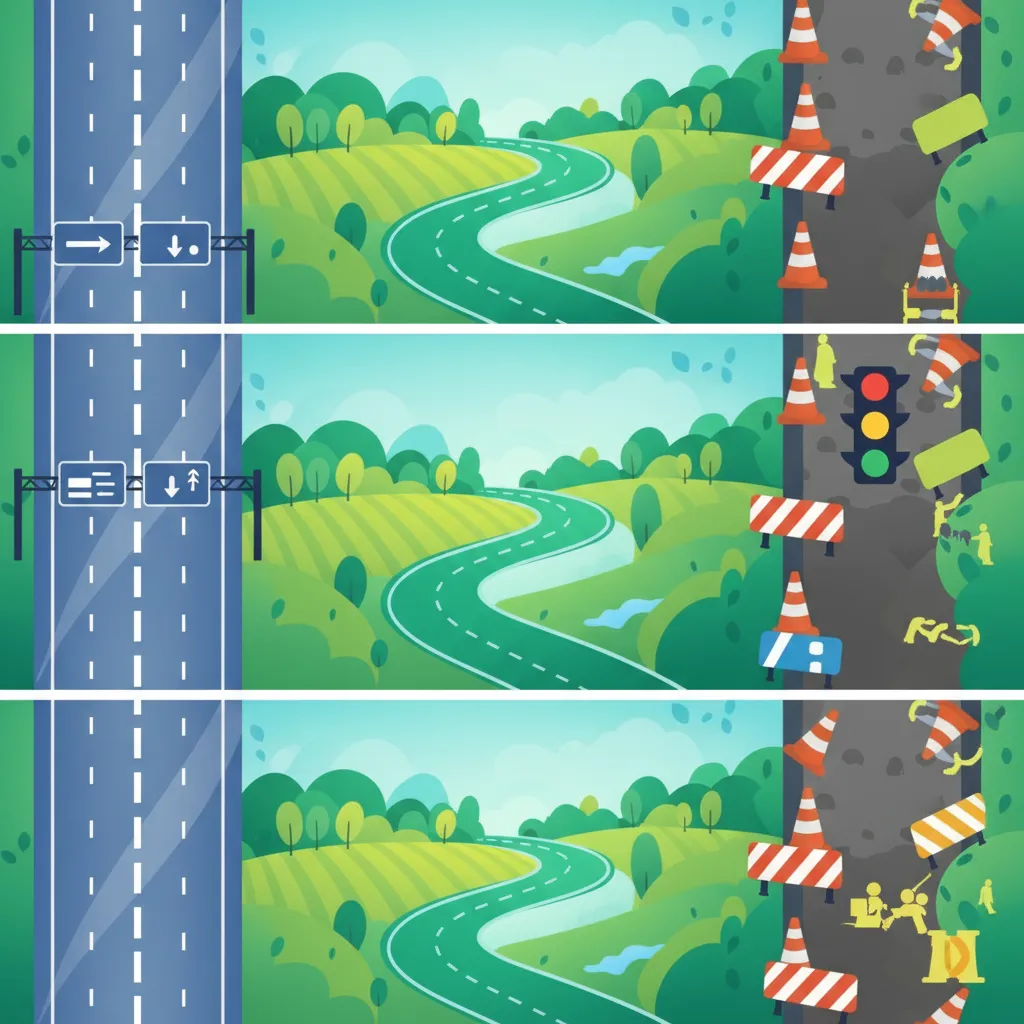
This lesson covers the specific challenges of driving on motorways, rural roads, and navigating roadworks. Learners will review lane discipline on high-speed roads and identify hazards common to rural roads, such as sharp bends and wildlife. It also explains the importance of adjusting speed and following temporary signage in construction zones.

This lesson synthesizes key safety concepts into the practice of defensive riding, a proactive mindset focused on anticipation and risk reduction. It teaches you to continuously scan for potential hazards, predict the actions of other road users, and always maintain an escape path. By mastering these strategies, you learn to manage the space around you and take control of your own safety.

This lesson focuses on warning signs designed to alert drivers to potential hazards ahead. Topics include warnings for sharp curves, steep gradients, slippery surfaces, and zones with high pedestrian or wildlife activity. Learners will understand how to correctly interpret these signs and adjust their driving behavior to maintain safety on the road.

This lesson focuses on driving safely in adverse weather like rain, fog, and low sun glare, which affects road friction and visibility. It provides guidelines on speed adaptation, maintaining a safe following distance, and the proper use of vehicle equipment like lights and wipers. Learners will understand how to reduce risks like hydroplaning and skidding.
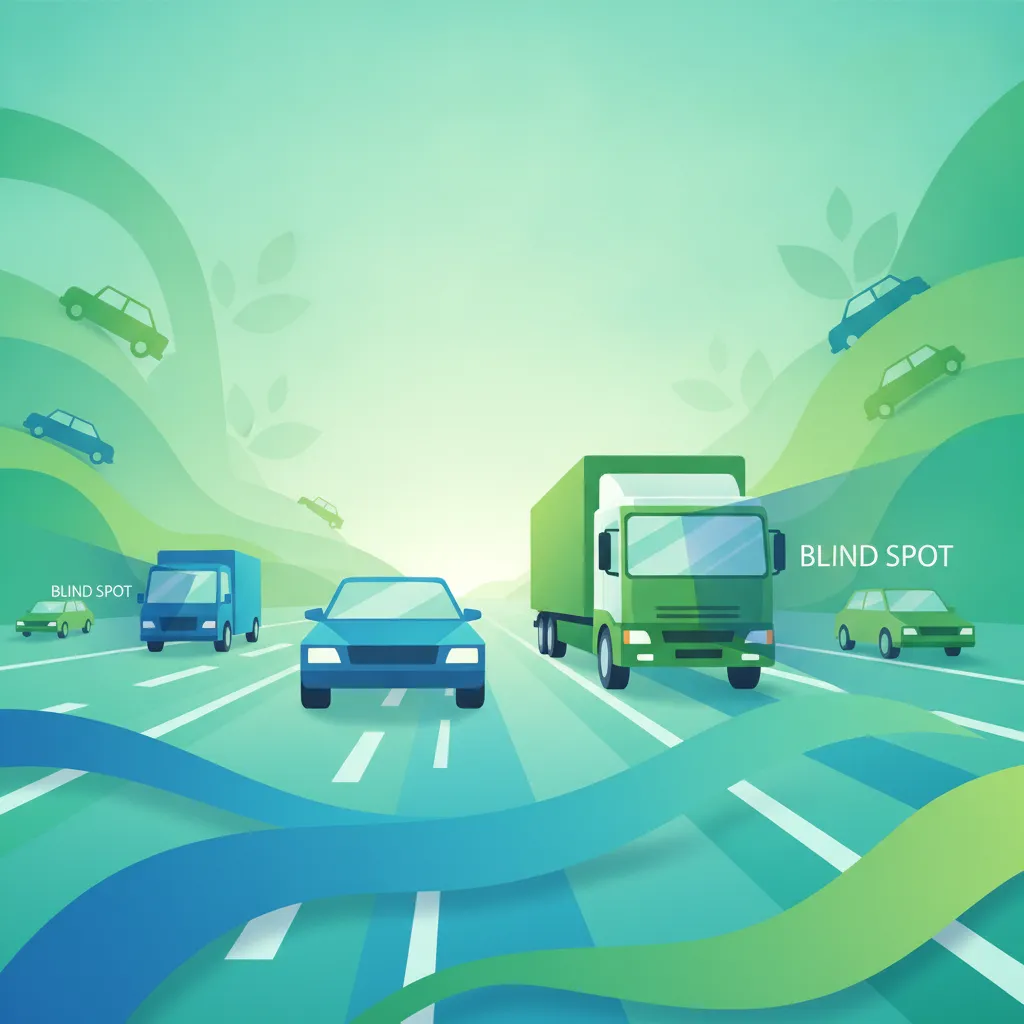
This lesson focuses on recognizing and staying out of the blind spots of other vehicles, especially large trucks and buses where 'no-zones' are significant. It provides practical strategies for managing your position on the road to ensure you remain visible to other drivers at all times. You will learn to anticipate lane changes and other maneuvers from vehicles that may not be aware of your presence.
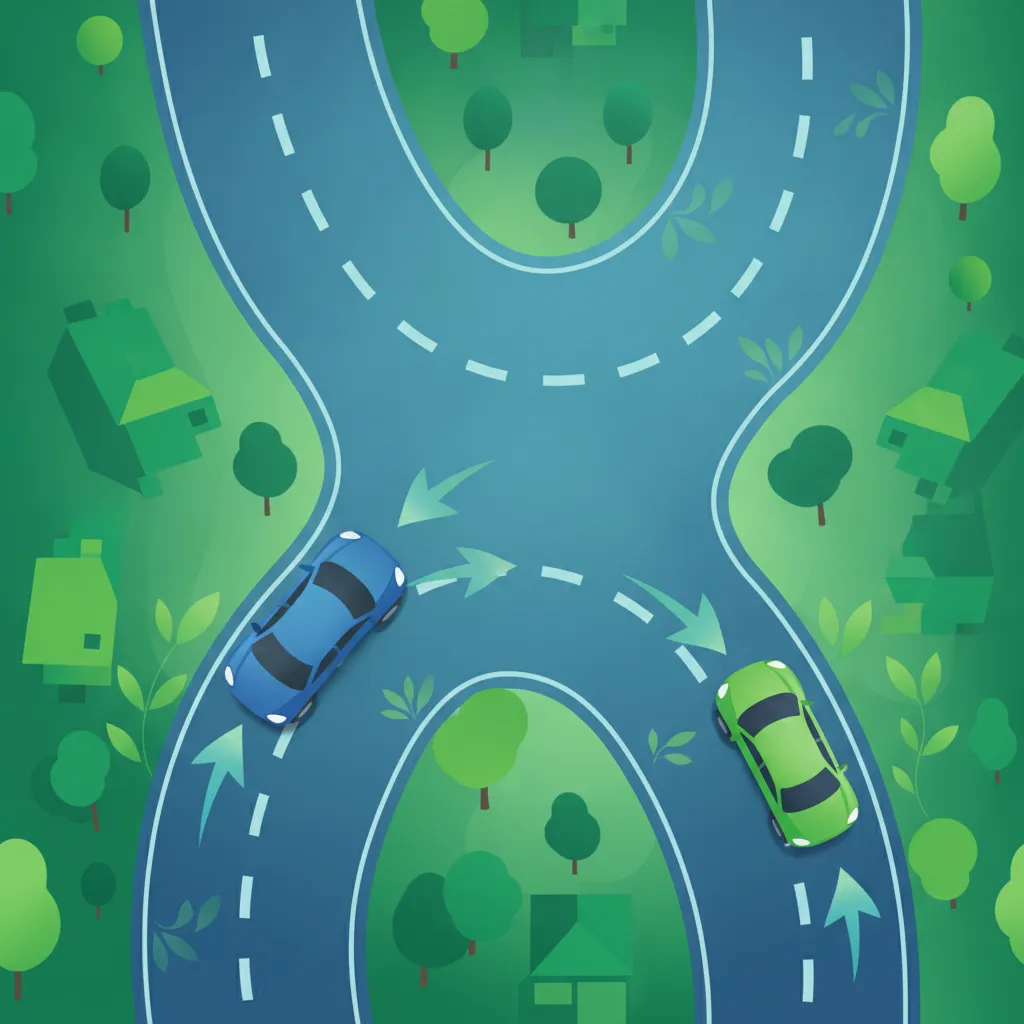
This lesson focuses on basic manoeuvres, covering the proper use of indicators, safe lane positioning, and correct steering for turns. Learners will study the importance of checking blind spots and maintaining appropriate speed for a smooth transition when changing lanes. It also addresses turning at intersections and signaling intentions clearly to other road users.
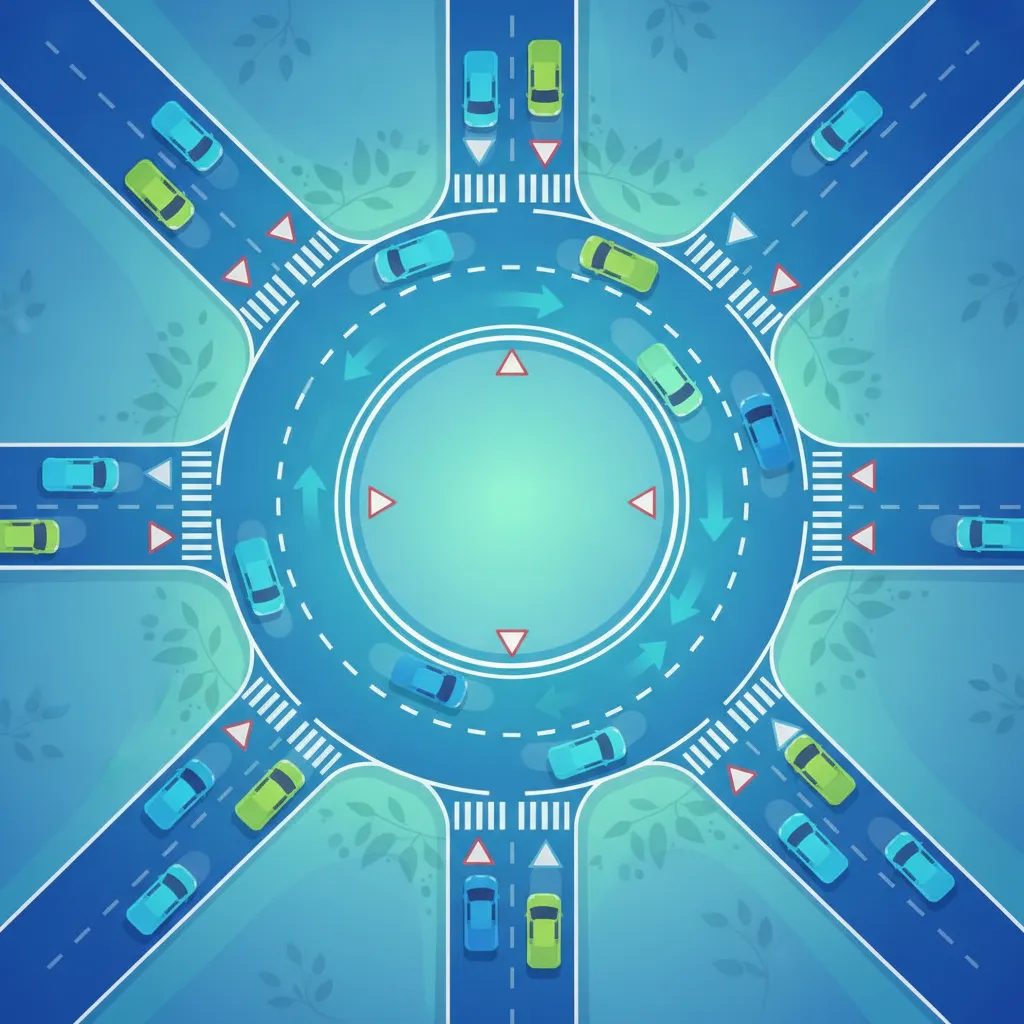
Roundabouts are a key feature of Belgian traffic management. This lesson explains how to approach, enter, navigate, and exit a roundabout safely, with a focus on yielding priority to traffic already circulating. Learners will also study correct lane positioning on multi-lane roundabouts and the appropriate use of signals.
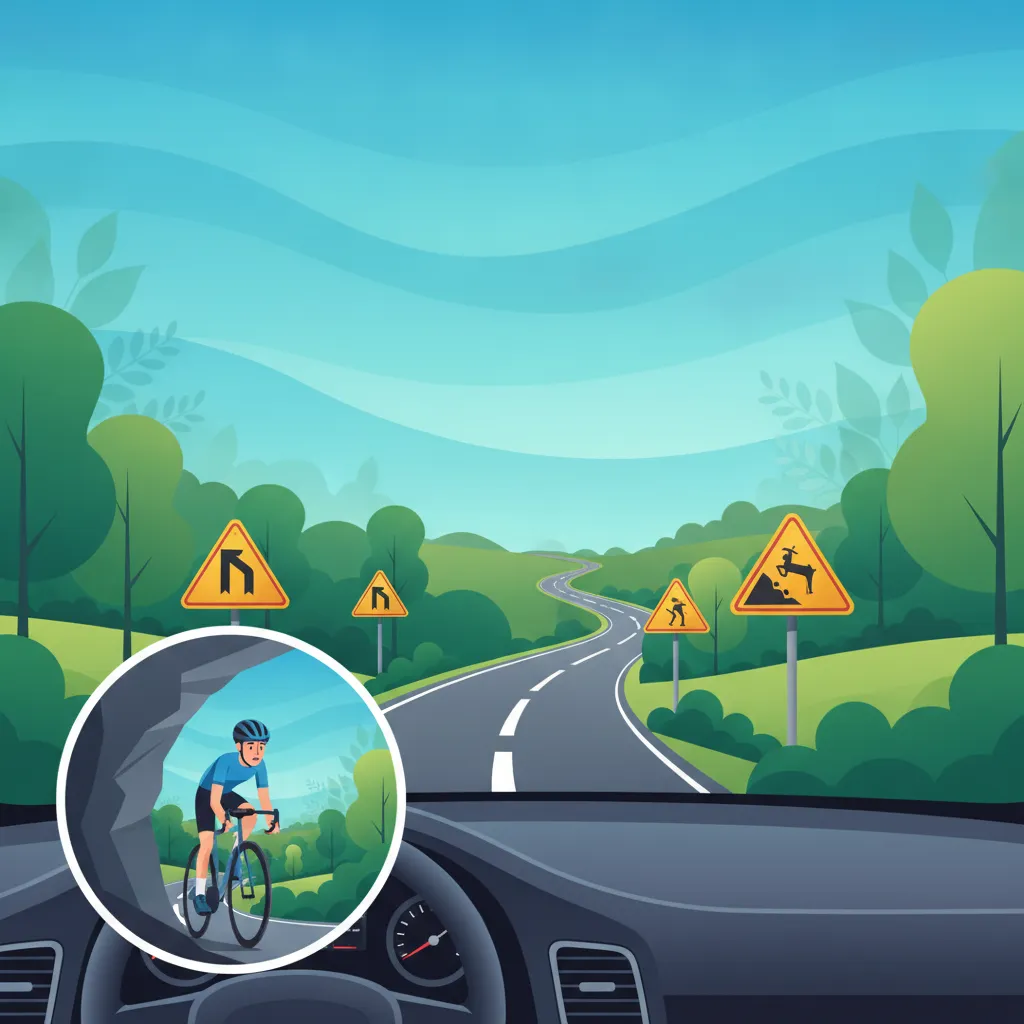
This lesson is dedicated to warning signs, which are designed to alert drivers to potential dangers ahead. It covers the interpretation of signs indicating sharp curves, steep gradients, slippery surfaces, and the presence of pedestrians or animals. By understanding these warnings, riders can anticipate potential hazards and adjust their speed and position proactively for safer travel.
Beyond legal requirements, this lesson emphasizes the ethical dimension of driving, focusing on courtesy and cooperative behavior on Belgian roads. It introduces the social norms and etiquette expected of drivers, including respectful interactions with vulnerable road users. This ethical foundation fosters a responsible and harmonious traffic environment.

This lesson explores the unique challenges presented by dense urban environments, including riding in heavy traffic and navigating narrow streets. It provides strategies for positioning your motorcycle to avoid the 'dooring zone' of parked cars and to maintain visibility. You will learn defensive riding techniques to anticipate sudden actions from other drivers in congested conditions.
Understand how to anticipate the movements of pedestrians, cyclists, and other vulnerable road users on Belgian roads. This lesson focuses on identifying their potential actions and reacting safely to avoid collisions.
This lesson details a motorcyclist's obligations when approaching various types of crossings, including marked pedestrian and bicycle lanes. It emphasizes the legal requirement to yield to vulnerable road users and the importance of thorough visual checks before proceeding. You will learn how to maintain a safe distance and anticipate the movements of pedestrians and cyclists in urban areas.
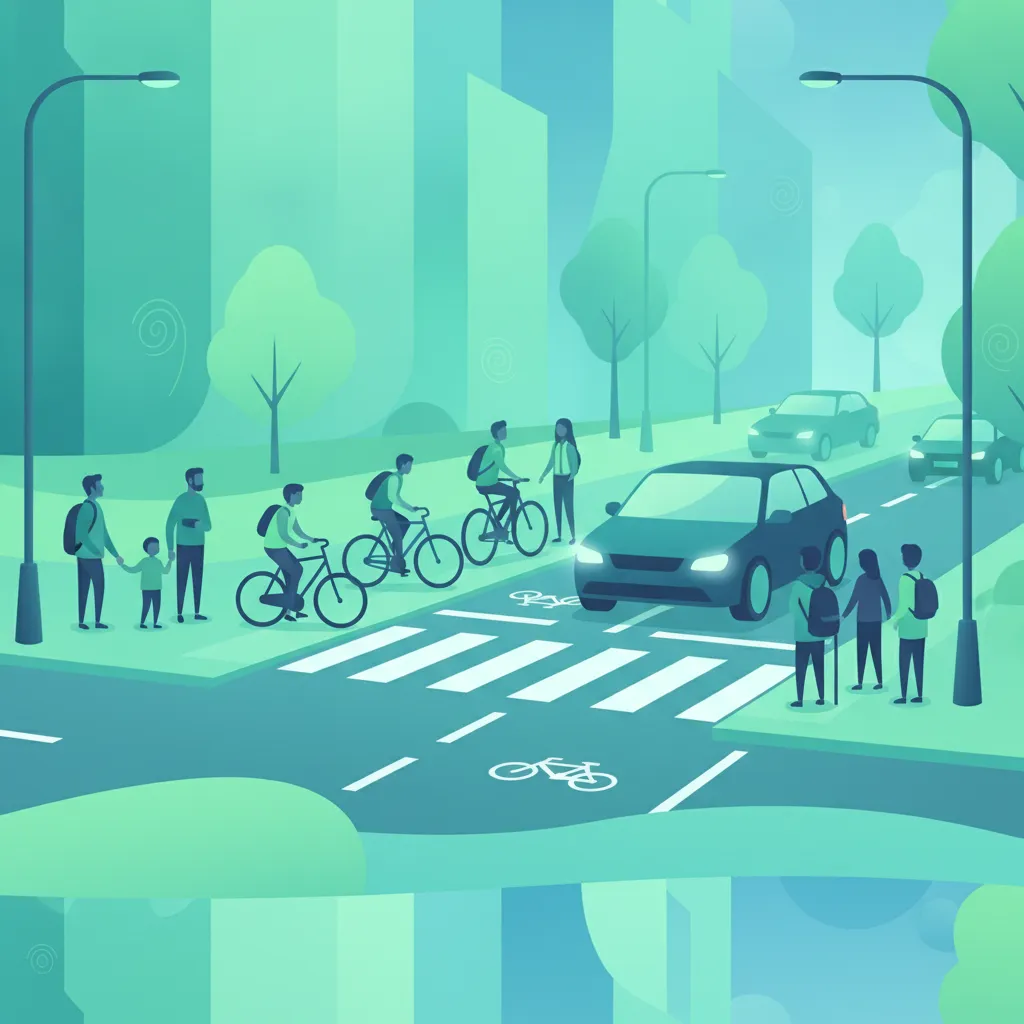
This lesson focuses on the heightened awareness required when approaching and traversing pedestrian and cyclist crossings. It clarifies the legal rules, including the absolute priority of pedestrians on zebra crossings, and the importance of reducing speed. Riders will learn how to anticipate the movements of these vulnerable road users and position their vehicle to ensure a safe interaction.

This lesson examines the interactions between private vehicles and public transport, focusing on buses and trams. Learners will understand the priority rules for these vehicles, recognizing dedicated lanes and stopping positions. Special considerations for motorcyclists, school buses, and other vulnerable users are also discussed to ensure safe coexistence.

This lesson focuses on the rules governing pedestrian crossings, including marked zebra crossings and signal-controlled crossings. Special attention is given to school zones and residential areas where pedestrian activity is high. Learners will understand how to recognize and respect pedestrian priority in various crossing scenarios to ensure their safety.
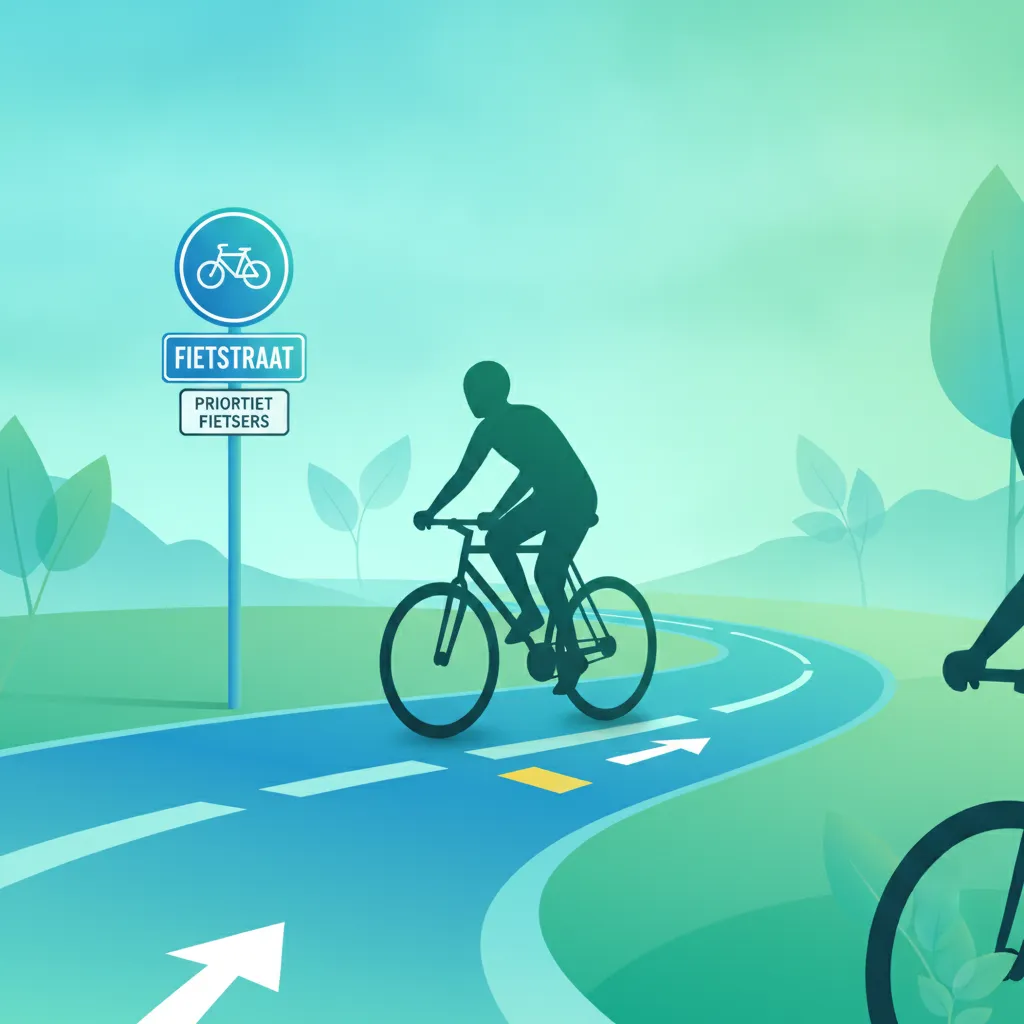
Cyclists are a significant part of Belgian traffic, and this lesson explores the rules and infrastructure that support safe cycling. Learners will study dedicated bicycle lanes, bicycle streets, and where cyclists have priority. The lesson also covers safe overtaking distances and the importance of anticipating cyclist movements.
This lesson covers the specific challenges of driving on motorways, rural roads, and navigating roadworks. Learners will review lane discipline on high-speed roads and identify hazards common to rural roads, such as sharp bends and wildlife. It also explains the importance of adjusting speed and following temporary signage in construction zones.

This lesson explains the concept of strategic road positioning to enhance safety and visibility. It teaches riders how to select the best position within a lane to be seen by other drivers and to have a good view of the road ahead. A key focus is on identifying and staying out of the large blind spots of cars, vans, and trucks to prevent dangerous situations.
Beyond legal requirements, this lesson emphasizes the ethical dimension of driving, focusing on courtesy and cooperative behavior on Belgian roads. It introduces the social norms and etiquette expected of drivers, including respectful interactions with vulnerable road users. This ethical foundation fosters a responsible and harmonious traffic environment.
This lesson details the safe and systematic approach to different types of intersections, both signal-controlled and uncontrolled. It explains how to use road signs and markings to determine right-of-way and when to stop or yield. The importance of comprehensive scanning for traffic from all directions and adjusting approach speed is emphasized to ensure safe passage.
Find clear answers to common questions learners have about Hazard Perception and Anticipation. Learn how the lesson is structured, which driving theory objectives it supports, and how it fits into the overall learning path of units and curriculum progression in Belgium. These explanations help you understand key concepts, lesson flow, and exam focused study goals.
The exam often uses photos of real traffic situations to test your judgment. If you cannot perceive a hidden hazard or anticipate a car's movement, you will likely choose the wrong answer regarding priority or speed.
Practice active scanning by moving your eyes constantly rather than staring at the car in front. Look at sidewalks for pedestrians, check intersections for cross-traffic, and observe the behavior of other drivers.
Yes. In the city, your focus is on vulnerable road users and intersections. On motorways, your focus shifts to lane changes, high-speed merges, and maintaining safe distances at speed.
The two-second rule provides the necessary buffer time to react to a hazard. If the car in front brakes suddenly, having this distance allows you enough time to perceive the danger and stop safely.
Ready to focus your Belgian driving theory revision? Utilize our powerful search tool to pinpoint exact topics, road signs, or difficulty levels. Engage with practice questions that directly address your learning needs and solidify your understanding of Belgian traffic laws for your upcoming exam.