
This lesson teaches you how to maintain control by understanding the complex relationship between motorcycle tires and various road surfaces. As part of our unit on motorcycle control, you will learn to adjust your riding style for hazards like wet asphalt, gravel, and painted markings. This knowledge is essential for both passing your Belgian motorcycle theory exam and staying safe on the road.
Lesson content overview
Motorcycle riding demands a profound understanding of how your tyres interact with the road. The ability to manage grip, or traction, across varying road surfaces is not just a skill; it is a fundamental pillar of rider safety and control, particularly in a diverse environment like Belgium where road conditions can change rapidly. This lesson, part of your Comprehensive Belgian Motorcycle Theory Course, delves into the critical techniques and knowledge required to maintain optimal tyre contact, prevent skids, and ensure a safe journey on two wheels.
Grip is the frictional force that prevents your motorcycle's tyres from sliding across the road surface. It is the key to accelerating, braking, and cornering effectively. Without adequate grip, a motorcycle loses its ability to respond to rider inputs, leading to a loss of control. Various factors influence this crucial friction, including the road surface material, weather conditions, tyre design, and rider inputs. A skilled motorcyclist constantly assesses these factors and adapts their riding style to maintain maximum control.
Different road surfaces and markings provide varying levels of tyre-road friction. What offers excellent grip on dry asphalt might be treacherously slippery when wet or covered in loose material. Recognising these differences is the first step towards effective grip management. Riders must understand that the amount of traction available is not constant and can change dramatically within a matter of metres.
Successful grip management hinges on the principle of anticipation. Riders must continuously scan the road ahead to forecast upcoming low-grip zones. This proactive approach allows time to adjust speed, riding line, and body position before entering a potentially hazardous area, rather than reacting suddenly when already in trouble. Anticipation reduces the need for abrupt maneuvers which are far more likely to cause a loss of traction.
On surfaces with reduced grip, smooth and gradual application of brakes, throttle, and steering is absolutely essential. Sudden inputs can easily overwhelm the limited available traction, causing a wheel to lock or spin. Instead, modulate your controls with finesse, progressively increasing or decreasing force to maintain the delicate balance between control and potential slip.
Entering a turn at an appropriate speed is always critical, but even more so on surfaces with lower grip. The principle of reduced cornering speed dictates that you must lower your entry speed into a turn when traction is compromised. This allows for a more upright lean angle, requiring less lateral force from the tyres and significantly reducing the risk of a front or rear wheel slide-out.
The internal air pressure within your motorcycle tyres directly affects their contact patch – the area of the tyre that is in actual contact with the road. Incorrect tyre pressure can severely compromise grip, leading to uneven wear, reduced stability, and a heightened risk of traction loss on certain surfaces. Regularly checking and adjusting tyre pressure according to manufacturer recommendations and load conditions is a non-negotiable aspect of grip management.
Understanding specific types of low-grip surfaces is crucial for any motorcyclist. Each presents unique challenges that demand specific riding adjustments.
Wet roads are among the most common low-grip conditions motorcyclists encounter. Water acts as a lubricant between the tyre and the road, significantly reducing friction.
Even a thin film of water on a road (lightly wet) can drastically reduce traction, especially on smooth asphalt or areas with oil residue. Heavily wet roads, characterised by standing water, present an even greater hazard. Here, the risk of aquaplaning increases, where the tyre loses contact with the road entirely as a wedge of water forms beneath it.
Water reduces the available friction, making sudden braking, acceleration, or aggressive cornering extremely risky. Your tyre's tread depth plays a crucial role here; deeper treads help disperse water. On wet roads, you must:
Never assume that Anti-lock Braking System (ABS) negates all risks on wet roads. While ABS helps prevent wheel lock-up, it cannot create grip where none exists. You still need to manage your speed and apply brakes smoothly.
Gravel roads, unpaved sections, or even patches of loose stones on otherwise paved roads pose a significant challenge. Loose particles can shift and roll beneath your tyres, dramatically reducing the stable contact patch.
Loose gravel, with its deep and shifting particles, offers very little consistent grip and high risk of sliding. Packed gravel, where stones are tightly compressed, offers comparatively more stability, but still far less than asphalt.
When encountering gravel, the primary goal is to minimise sudden weight transfers and keep the motorcycle as upright and stable as possible.
Riding slowly on gravel does not eliminate all risk. The technique of smooth, gentle inputs and a relaxed posture remains vital.
Painted road markings, such as lane lines, pedestrian crossings (zebra crossings), cycle lane symbols, and directional arrows, are ubiquitous on Belgian roads. However, the paint used for these markings has a significantly lower friction coefficient than asphalt, especially when wet or worn smooth.
This includes solid and dashed lane lines, "shark's teeth" for priority rules, yield lines, and large painted areas indicating bicycle lanes or pedestrian zones. All these can present a slip hazard.
Riding over painted markings, particularly while braking, accelerating, or leaning into a turn, carries a high risk of tyre slip.
A dimensionless quantity that describes the ratio of the force of friction between two bodies to the normal force pressing them together. A lower coefficient means less grip.
Metal surfaces embedded in the road, such as manhole covers, drain covers, utility access panels, and metal bridge expansion joints, are notoriously slippery for motorcycles, especially when wet, oily, or corroded.
Metal grates and manhole covers offer very little traction compared to the surrounding asphalt. When wet, they become extremely slick, often reducing the friction coefficient to near zero.
The key is to cross these surfaces as quickly and smoothly as possible, with minimal input from the rider.
Short encounters with metal surfaces can be hazardous. The cumulative effect of several metal covers in succession, or one encountered mid-corner, can be particularly dangerous.
Ice and frost represent the most dangerous low-grip conditions a motorcyclist can face. Traction is virtually non-existent, making control extremely difficult, if not impossible.
Black ice is particularly insidious because it is a thin, transparent layer of ice that is often invisible against the dark road surface. It frequently forms on bridges, shaded areas, and overpasses where temperatures drop faster. Frost patches, visible as white crystalline layers, also indicate extremely low grip.
The safest approach when encountering ice or frost is to avoid riding altogether. If unavoidable:
Proper tyre pressure is not merely about comfort or tyre longevity; it fundamentally affects the motorcycle's handling and, critically, its grip.
Underinflated tyres distort excessively, leading to a larger but less stable contact patch. This can cause the tyre to overheat, wear unevenly, and provide less precise steering. On wet roads, underinflated tyres are more prone to aquaplaning because their shape is less effective at displacing water.
Overinflated tyres have a smaller contact patch, reducing the amount of rubber in contact with the road. This results in harsher ride quality, reduced shock absorption, and, crucially, less overall grip. The smaller contact patch concentrates pressure, which can sometimes lead to premature wear in the centre of the tread.
Always check your tyre pressure regularly, ideally before every ride or at least weekly. Adjust it according to the motorcycle manufacturer's recommendations, taking into account the load (e.g., carrying a passenger or luggage) and anticipated speeds. Correct tyre pressure ensures optimal contact with the road, maximising grip and enhancing stability.
Belgian traffic law, like that in many other countries, places a strong emphasis on adapting your riding to prevailing conditions. While specific article numbers for every scenario might be complex, the underlying principle is clear: ride safely and responsibly.
Riders are legally obliged to adjust their speed to match the road surface conditions. This is a fundamental rule designed to prevent loss of control due to insufficient traction. Maintaining the speed limit is not always safe or legal if conditions (like wet or icy roads) demand a slower speed.
Application: This applies universally to all road types and under all varying surface conditions. For example, you must reduce your speed significantly before crossing a wet painted line or entering a gravel section. Failure to do so could be considered dangerous riding and lead to penalties.
While there isn't a specific law dictating how you brake, the requirement to maintain control implicitly demands smooth braking, especially on surfaces with reduced grip. Sudden braking can easily lock a wheel, leading to a skid and loss of control, which would be considered negligent riding.
Application: This practice is paramount on wet roads, painted markings, and metal surfaces. Gradually applying and releasing the brakes (braking modulation) allows the tyres to maintain traction while slowing down.
Motorcyclists must enter corners at a speed appropriate for the available grip level. This is directly linked to the general duty of care and safe riding. Excess speed into a turn on a low-grip surface (like wet asphalt or a painted curve) dramatically increases the risk of the tyres losing traction and the motorcycle sliding outward.
Application: This is especially critical on wet, gravel, or painted surfaces. Always assess the surface condition of a corner before committing to a lean angle or speed.
Maintaining correct tyre pressure is a mandatory requirement for all vehicles on Belgian roads. Tyres must be inflated to the manufacturer-recommended pressures. Incorrect pressure compromises safety and could lead to fines.
Application: This is applicable to all motorcycles. Regular checks ensure optimal contact patch and grip, directly contributing to safe handling and accident prevention.
Understanding how various factors interact with grip is key to becoming a proficient and safe motorcyclist.
Let's consider practical situations where grip management skills are put to the test.
Scenario: You are riding through a busy urban street in Ghent during a light rain shower. Ahead, there's a zebra crossing (painted pedestrian marking) at an intersection.
Scenario: You are on a country road near the Ardennes, approaching a residential driveway that is unpaved and covered in loose gravel. It's twilight, and visibility is moderate.
Scenario: You are taking a left-hand turn on a local road that has a long, painted arrow indicating the turn direction. The road surface is visibly damp from earlier rain.
Scenario: You are riding through a city district with numerous manhole covers and metal grates embedded in the road surface.
Effective grip management is paramount for motorcycle safety and control. It involves a continuous cycle of observation, anticipation, and smooth control inputs. Always remember to:
By integrating these principles with your foundational braking and cornering skills (as covered in previous lessons like "Principles of Braking and Stopping Distances" and "Cornering Techniques and Lean Angles"), you will significantly enhance your ability to ride safely and confidently on the diverse roads of Belgium. This proactive approach not only prevents accidents but also fosters a deeper, more intuitive connection with your motorcycle.
This lesson teaches motorcyclists how to manage tyre grip across diverse Belgian road conditions, from wet asphalt and gravel to painted markings and metal grates. The core principle is continuous observation and anticipation—identifying low-grip surfaces ahead allows time to reduce speed and adjust riding line before entering hazardous areas. On compromised surfaces, smooth and gradual control inputs are essential; sudden braking, acceleration, or steering can easily exceed available traction and cause a loss of control. Specific techniques vary by surface: wet roads require reduced speed and increased following distance, gravel demands keeping the bike upright with minimal input, painted markings and metal covers require a straight, upright crossing with no brake or throttle application, and ice demands postponing the journey if possible. Tyre pressure must be regularly checked to maintain optimal contact patch and grip.
A short set of high-value points that capture the most important learning from this lesson.
Grip is the frictional force between tyres and road surface that enables acceleration, braking, and cornering; without it, a motorcycle cannot respond to rider inputs.
Anticipation is a motorcyclist's primary tool—scanning ahead for low-grip surfaces allows time to adjust speed and line before entering hazardous areas.
On low-grip surfaces, all control inputs must be smooth and gradual; sudden braking, throttle, or steering can instantly exceed available traction.
Different road surfaces dramatically reduce grip in wet conditions: painted markings, metal covers, and manhole grates become extremely slippery.
Tyre pressure directly affects the contact patch; underinflated or overinflated tyres compromise grip, stability, and safety.
Explore all units and lessons included in this driving theory course.
Wet roads reduce friction significantly; even lightly wet painted markings and metal surfaces can cause near-zero traction.
When crossing painted markings or metal covers, keep the bike upright, maintain a straight line, and avoid any braking or throttle input.
On gravel, reduce speed substantially, keep the motorcycle upright, and use body weight for gentle steering rather than handlebar inputs.
Ice and frost create virtually no traction; if unavoidable, proceed at crawling speed with feet ready to dab and avoid any lean angle.
Belgian traffic law requires riders to adjust speed to match road surface conditions—maintaining the speed limit is not safe or legal when traction is compromised.
Maintaining speed when crossing painted road markings, especially in wet conditions where grip is dramatically reduced.
Applying brakes abruptly on wet roads, causing wheel lock-up and a slide when the sudden force exceeds limited traction.
Riding over metal grates or manhole covers at speed without keeping the motorcycle perfectly upright and straight.
Entering turns too fast on wet or painted surfaces, causing the motorcycle to slide outward as lateral force exceeds available grip.
Using incorrect tyre pressure, either underinflated (larger but unstable contact patch) or overinflated (smaller contact patch with reduced grip).
Lesson content overview
A short set of high-value points that capture the most important learning from this lesson.
Grip is the frictional force between tyres and road surface that enables acceleration, braking, and cornering; without it, a motorcycle cannot respond to rider inputs.
Anticipation is a motorcyclist's primary tool—scanning ahead for low-grip surfaces allows time to adjust speed and line before entering hazardous areas.
On low-grip surfaces, all control inputs must be smooth and gradual; sudden braking, throttle, or steering can instantly exceed available traction.
Different road surfaces dramatically reduce grip in wet conditions: painted markings, metal covers, and manhole grates become extremely slippery.
Tyre pressure directly affects the contact patch; underinflated or overinflated tyres compromise grip, stability, and safety.
Explore all units and lessons included in this driving theory course.
Wet roads reduce friction significantly; even lightly wet painted markings and metal surfaces can cause near-zero traction.
When crossing painted markings or metal covers, keep the bike upright, maintain a straight line, and avoid any braking or throttle input.
On gravel, reduce speed substantially, keep the motorcycle upright, and use body weight for gentle steering rather than handlebar inputs.
Ice and frost create virtually no traction; if unavoidable, proceed at crawling speed with feet ready to dab and avoid any lean angle.
Belgian traffic law requires riders to adjust speed to match road surface conditions—maintaining the speed limit is not safe or legal when traction is compromised.
Maintaining speed when crossing painted road markings, especially in wet conditions where grip is dramatically reduced.
Applying brakes abruptly on wet roads, causing wheel lock-up and a slide when the sudden force exceeds limited traction.
Riding over metal grates or manhole covers at speed without keeping the motorcycle perfectly upright and straight.
Entering turns too fast on wet or painted surfaces, causing the motorcycle to slide outward as lateral force exceeds available grip.
Using incorrect tyre pressure, either underinflated (larger but unstable contact patch) or overinflated (smaller contact patch with reduced grip).
Explore search topics learners often look for when studying Grip Management on Different Road Surfaces. These topics reflect common questions about road rules, driving situations, safety guidance, and lesson level theory preparation for learners in Belgium.
Browse additional driving theory lessons that cover connected traffic rules, road signs, and common driving situations related to this topic. Improve your understanding of how different rules interact across everyday traffic scenarios.
Understand the hazards of wet roads, gravel, painted lines, and metal surfaces for motorcycle grip. Learn Belgian theory on adapting speed and controls to maintain traction and prevent skids.

This lesson trains you to actively scan the road ahead for surface hazards that can compromise traction, such as oil spills, wet leaves, and loose gravel. It provides strategies for safely navigating these hazards, including avoidance maneuvers and gentle control inputs. You will also learn how to handle unexpected encounters with potholes and other road imperfections.

This lesson details the specific precautions and techniques required for riding in rain and fog. It explains how water on the road affects tyre grip and braking distances, and how to avoid aquaplaning. You will learn the correct use of lights to be seen in low visibility and how to adjust your speed and following distance accordingly.
This lesson explores the concept of tire grip, or traction, and its importance for vehicle stability and control. It explains how different road surfaces, such as wet asphalt, gravel, or oily patches, can reduce grip and increase the risk of skidding. The content also highlights the role of correct tire pressure in maintaining optimal contact with the road, helping riders avoid a loss of traction.

This lesson provides crucial advice for riding in rainy conditions, a frequent occurrence in Belgium. It explains how water on the road surface dramatically reduces tire grip, extends stopping distances, and creates a risk of hydroplaning. Riders will learn how to adjust their speed, increase following distances, and manage reduced visibility from rain and road spray to maintain safety.
This lesson provides a detailed explanation of the various road markings found on Belgian roads and their specific significance for motorcyclists. It covers the rules associated with solid and broken lane lines, stop lines at junctions, and markings for pedestrian and bicycle crossings. Understanding these markings is essential for correct lane positioning and safe navigation.
This lesson explores the unique challenges presented by dense urban environments, including riding in heavy traffic and navigating narrow streets. It provides strategies for positioning your motorcycle to avoid the 'dooring zone' of parked cars and to maintain visibility. You will learn defensive riding techniques to anticipate sudden actions from other drivers in congested conditions.

This lesson focuses on strategies for safely navigating situations where road space is limited, such as narrow lanes, road works, or between lines of traffic. It explains how to use assertive lane positioning to prevent other vehicles from crowding you. You will learn to anticipate and safely manage these 'squeeze points' to avoid being trapped or forced into a dangerous situation.

This lesson provides instruction on how to react in an emergency situation, covering techniques for performing a rapid, controlled stop. It explains how to apply maximum braking force without locking the wheels and how to manage a skid if one occurs. You will also learn about avoidance maneuvers, such as swerving, and the psychological challenge of overcoming target fixation.

This lesson teaches riders how to modify their technique and preparation in response to various weather conditions beyond just rain. It covers how to handle strong crosswinds, the effects of extreme heat on both the rider and the motorcycle, and the precautions for riding in cold temperatures. The focus is on proactive adaptation to ensure safety and comfort regardless of the weather.

This lesson provides a comprehensive guide to motorway riding, starting with the procedure for safely merging into high-speed traffic from a slip road. It details the importance of strict lane discipline, including the rules for overtaking and the proper use of lanes. You will also learn the correct technique for planning and executing a safe exit from the motorway.
Learn how correct and incorrect tyre pressure affects motorcycle grip, stability, and overall handling. Essential Belgian driving theory for maintaining optimal traction on different road surfaces.
This lesson explores the concept of tire grip, or traction, and its importance for vehicle stability and control. It explains how different road surfaces, such as wet asphalt, gravel, or oily patches, can reduce grip and increase the risk of skidding. The content also highlights the role of correct tire pressure in maintaining optimal contact with the road, helping riders avoid a loss of traction.
This lesson trains you to actively scan the road ahead for surface hazards that can compromise traction, such as oil spills, wet leaves, and loose gravel. It provides strategies for safely navigating these hazards, including avoidance maneuvers and gentle control inputs. You will also learn how to handle unexpected encounters with potholes and other road imperfections.
This lesson details the specific precautions and techniques required for riding in rain and fog. It explains how water on the road affects tyre grip and braking distances, and how to avoid aquaplaning. You will learn the correct use of lights to be seen in low visibility and how to adjust your speed and following distance accordingly.
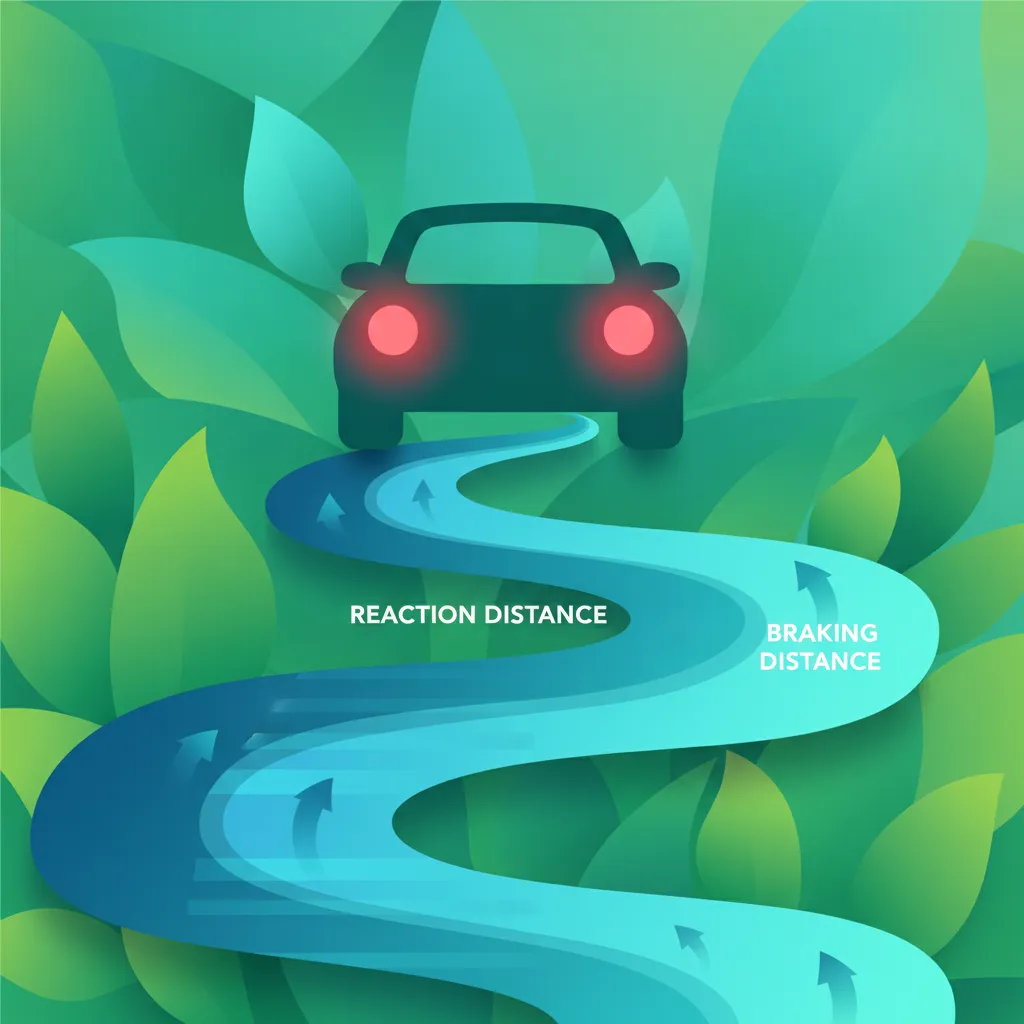
This lesson provides a comprehensive guide to motorcycle braking techniques, explaining the distinct roles of the front and rear brakes. It covers the concept of progressive brake application for smooth, controlled stops and the factors influencing total stopping distance. You will also learn about the function of Anti-lock Braking Systems (ABS) and how to adapt your braking for different conditions.
This lesson examines the crucial psychological factors that influence riding safety, such as maintaining mental focus and managing stress. It explains the process of accurate risk perception and the dangers of both under-confidence and overconfidence. You will learn about effective decision-making techniques that are essential for navigating complex traffic situations safely and responsibly.
This lesson provides instruction on how to react in an emergency situation, covering techniques for performing a rapid, controlled stop. It explains how to apply maximum braking force without locking the wheels and how to manage a skid if one occurs. You will also learn about avoidance maneuvers, such as swerving, and the psychological challenge of overcoming target fixation.
This lesson provides crucial advice for riding in rainy conditions, a frequent occurrence in Belgium. It explains how water on the road surface dramatically reduces tire grip, extends stopping distances, and creates a risk of hydroplaning. Riders will learn how to adjust their speed, increase following distances, and manage reduced visibility from rain and road spray to maintain safety.
This lesson explains the essential and often misunderstood principle of counter-steering, the primary method for initiating turns on a motorcycle at speed. It details how to apply this technique for precise and responsive directional control. You will also learn techniques for maintaining balance and stability, particularly during challenging low-speed maneuvers.
This lesson synthesizes key safety concepts into the practice of defensive riding, a proactive mindset focused on anticipation and risk reduction. It teaches you to continuously scan for potential hazards, predict the actions of other road users, and always maintain an escape path. By mastering these strategies, you learn to manage the space around you and take control of your own safety.
This lesson focuses on strategies for safely navigating situations where road space is limited, such as narrow lanes, road works, or between lines of traffic. It explains how to use assertive lane positioning to prevent other vehicles from crowding you. You will learn to anticipate and safely manage these 'squeeze points' to avoid being trapped or forced into a dangerous situation.
Find clear answers to common questions learners have about Grip Management on Different Road Surfaces. Learn how the lesson is structured, which driving theory objectives it supports, and how it fits into the overall learning path of units and curriculum progression in Belgium. These explanations help you understand key concepts, lesson flow, and exam focused study goals.
Painted road markings, especially when wet, have significantly less friction than asphalt. This makes them extremely slippery during braking or cornering, which can cause your tires to lose traction unexpectedly.
When riding on gravel, you should avoid sudden inputs to the throttle, brakes, or steering. Maintain a steady pace, keep the bike as upright as possible, and increase your following distance to provide extra space for braking.
Yes, metal manhole covers become very slick, especially in the rain or when they have become polished over time. Always try to avoid braking or turning sharply while directly over them.
Yes, the theory exam frequently includes scenarios regarding hazard perception where you must identify and react to surface risks. Understanding these rules is critical for scoring well on the safety components.
Ready to focus your Belgian driving theory revision? Utilize our powerful search tool to pinpoint exact topics, road signs, or difficulty levels. Engage with practice questions that directly address your learning needs and solidify your understanding of Belgian traffic laws for your upcoming exam.