
This lesson guides you through the essential administrative steps for starting your driving education in Denmark. You will learn about the registration process for a Category B license and the specific legal requirements for supervised driving sessions. Understanding these foundational rules is a prerequisite for moving toward your theory and practical tests.

Lesson content overview
Embarking on the journey to obtain a Danish Category B driving license requires careful adherence to a structured process, particularly concerning initial registration and the critical phase of supervised driving. This lesson provides a comprehensive overview of the official procedures, legal requirements, and responsibilities for both learner drivers and their supervising companions within the Danish Driving License Theory Course: Category B Preparation. Understanding these foundational elements is crucial for a smooth, safe, and legally compliant learning experience, setting the stage for future practical driving skills and the official theory and practical tests.
The first step towards earning your Category B driving license in Denmark is official registration as a learner driver. This process ensures that all individuals undertaking driving instruction meet the necessary preliminary criteria before they even sit behind the wheel. The registration formally acknowledges your intent to learn to drive and links you to the relevant authorities responsible for driver licensing.
While the minimum age to begin supervised practical driving for a Category B license in Denmark is 17 years old, the process of registering as a learner driver can actually commence earlier. You can register for your driving theory course and apply for a provisional licence at the age of 15 years and 9 months, provided you have parental consent if under 18. This early registration allows you to start the theoretical part of your training. However, it is important to emphasize that no actual supervised driving practice on public roads is permitted until you reach the age of 17. This distinction is vital for planning your training schedule.
The standard driving licence category that permits you to drive passenger cars and light goods vehicles with a maximum authorized mass (MAM) of up to 3,500 kg, designed to carry no more than eight passengers in addition to the driver.
The primary documentation required for registration typically includes a completed application form, often obtained through your driving school, a valid passport-sized photo, and payment of the applicable administrative fees. Ensuring all documents are correctly filled out and submitted promptly will help avoid unnecessary delays in obtaining your provisional licence and starting your practical training.
Early registration, even before reaching the driving age, allows you to immerse yourself in the theoretical aspects of driving. This includes learning Danish traffic laws, understanding road signs, and internalizing core driving principles without the pressure of immediate practical application. This foundational knowledge is essential and directly supports your readiness for supervised driving sessions when you turn 17.
Before any supervised driving practice can commence, every learner driver must obtain a provisional licence, often referred to as a learner licence. This is a crucial document that serves as official permission to drive a vehicle under specific conditions.
The provisional licence is not a full driving licence; it is a temporary permit that explicitly allows a learner to practice driving only under the direct supervision of a qualified accompanying driver. It legally validates your status as a learner. It restricts you from driving independently under any circumstances.
Driving without a valid provisional licence, or driving independently with a provisional licence, is a serious offence that can lead to significant fines, legal penalties, and potentially invalidate all your prior training efforts.
This licence typically has a validity period and must be renewed periodically or upon completion of your driving test. It is imperative to keep track of its expiry date to ensure continuous legal practice. During any practice session, the provisional licence must always be carried by the learner driver and, in many cases, displayed in the vehicle so it is visible to other road users and law enforcement. This ensures transparency and helps distinguish a learner vehicle from a fully licensed driver's car.
Supervised driving is a cornerstone of the Danish Category B driving license training. It bridges the gap between theoretical knowledge and practical application, allowing learners to gain real-world experience in a controlled environment. The person providing this supervision, the supervising driver, carries significant legal and ethical responsibilities.
To ensure the safety and effectiveness of supervised driving, the accompanying driver must meet stringent qualifications. These requirements are put in place to guarantee that the learner receives guidance from an experienced, responsible, and competent individual.
A supervising driver in Denmark must:
These qualifications are mandatory and are strictly enforced. Any deviation can lead to serious legal consequences for both the learner and the supervising driver, potentially invalidating insurance coverage and rendering practice sessions illegal.
The role of the supervising driver extends beyond merely sitting in the passenger seat. They are actively responsible for the learner's safety, instruction, and compliance with traffic laws. Key responsibilities include:
Consider having a 'L' plate or similar learner sign displayed on the vehicle during supervised practice sessions. While not always legally mandatory in Denmark, it serves as a clear indication to other road users that a learner is driving, often prompting greater patience and caution from others.
A crucial administrative requirement for learner drivers in Denmark is the maintenance of a logbook, known locally as a kørebog. This physical record is more than just a formality; it serves as a detailed ledger of your practical training, promoting accountability and demonstrating the breadth of your driving experience.
The kørebog is a mandatory record book that must be accurately filled out and kept in the vehicle at all times during supervised practice sessions. It provides verifiable documentation of your training, proving that you have completed the required hours and experienced diverse driving conditions under proper supervision.
Each entry in the kørebog must be meticulously recorded and should include the following details for every practice session:
The detailed nature of these entries ensures transparency and provides a comprehensive overview of your training progression. This record can be crucial in proving compliance if ever questioned by authorities.
Adhering to the legal framework governing learner drivers and supervised driving is paramount. Any deviation from these rules can lead to serious legal consequences, jeopardize your path to obtaining a licence, and compromise safety.
The overarching rule is simple: learner drivers must always be accompanied by a qualified supervising driver during all practice sessions. This rule applies universally to all Category B supervised driving. Its legal status is mandatory, meaning failure to comply is a direct violation of the Danish Road Traffic Act (Færdselsloven).
The rationale behind this strict requirement is fundamentally rooted in safety and effective learning. An inexperienced driver, even with theoretical knowledge, lacks the judgment, reaction time, and hazard perception skills of a seasoned driver. The presence of an experienced supervisor ensures immediate intervention in dangerous situations, provides real-time coaching, and facilitates the development of safe, responsible driving habits.
Several common violations can occur if the rules are not fully understood or intentionally disregarded:
Any serious violation of learner driver regulations can result in delays or even a temporary ban on obtaining your full driving licence. Always prioritize strict adherence to the law.
Practical driving experience must encompass a wide range of conditions to prepare learners for real-world scenarios. While the core rules of supervised driving remain constant, the execution of practice sessions must adapt to various external factors.
Supervised practice must occur in varying weather conditions to equip the learner with the skills to drive safely in rain, fog, strong winds, or even light snow. This requires additional caution, reduced speeds, and an emphasis on observing warning signs related to adverse conditions. Similarly, practicing on different road types – urban streets, rural roads, and eventually motorways (once appropriate training is completed) – is essential for developing comprehensive driving skills. Each environment presents unique challenges, from dense traffic and vulnerable road users in cities to higher speeds and complex merges on motorways.
The vehicle used for supervised practice must always be in excellent mechanical condition and meet all Danish roadworthiness standards. Any defects, such as faulty lights, worn tires, or malfunctioning brakes, must be immediately addressed. Driving a non-roadworthy vehicle during practice not only endangers the occupants and other road users but also constitutes a legal offense. The supervising driver is responsible for ensuring the vehicle's compliance.
Particular vigilance is required when practicing in areas with pedestrians, cyclists, and other vulnerable road users. Learner drivers must be taught to anticipate their movements, maintain safe distances, and exercise extreme caution, especially in urban environments or near schools. The supervising driver plays a critical role in pointing out potential hazards and reinforcing the importance of defensive driving around these groups.
The entire framework of learner driver registration and supervised driving is designed with two primary objectives: safety and effective learning.
Beyond immediate safety, these regulations cultivate a culture of responsibility and respect for traffic laws. By adhering to a rigorous training process, learner drivers internalize the importance of rules, the consequences of their actions, and the duty they have to other road users. This foundation is crucial for transitioning from a supervised learner to an independent, safe, and confident driver.
Obtaining a Danish Category B driving licence is a structured process designed to ensure competence and safety on the roads. Key takeaways for learner drivers include:
By embracing these guidelines, learner drivers not only navigate the path to their licence successfully but also lay the groundwork for a lifetime of safe and responsible driving.
This lesson covers the administrative and legal framework for obtaining a Danish Category B driving licence, starting with registration at 15 years 9 months for theory and supervised driving from age 17. Learner drivers must hold a provisional licence and practice exclusively with a qualified supervising driver who is at least 24 years old, holds a full Category B licence held for at least 5 years. All practice sessions must be documented in the mandatory kørebog with specific details including odometer readings, supervisor information, and signatures from both parties. Violations such as unsupervised driving, unqualified supervision, or incomplete documentation can result in significant penalties and delays in obtaining the full licence, making strict compliance essential for all aspiring drivers.
A short set of high-value points that capture the most important learning from this lesson.
You can register for Category B theory training at age 15 years 9 months with parental consent, but supervised driving on public roads is only permitted from age 17.
Your supervising driver must be at least 24 years old, hold a full unrestricted Category B licence, and have held that licence for a minimum of 5 years.
The provisional learner licence must be carried and displayed during all practice sessions; it is not a full driving licence and does not permit independent driving.
Every supervised practice session requires a completed kørebog entry including date, times, odometer readings, distance, supervisor details, vehicle registration, and both signatures.
Violations such as driving without supervision, using an unqualified supervisor, or failing to maintain proper documentation can result in fines, delays, or temporary bans on obtaining your licence.
Explore all units and lessons included in this driving theory course.
Supervisor qualifications: Full Category B licence + held for 5 years + aged 24 minimum.
Logbook must record: date, start/end times, odometer readings, distance, supervisor name, licence number, vehicle plate, and both signatures.
The provisional licence restricts you to supervised driving only; it is not valid for independent operation.
Early registration at 15y9m allows theory study before the 17y practical driving age.
The supervising driver must remain alert and unimpaired at all times during practice sessions.
Assuming supervised driving can begin before age 17, even if registered earlier.
Not verifying that a supervising driver meets all three qualification criteria before starting practice.
Incomplete kørebog entries, such as missing odometer readings, signatures, or vehicle registration numbers.
Leaving the provisional learner licence at home or failing to display it when required.
Allowing a supervising driver who is distracted, tired, or under the influence to accompany practice sessions.
Lesson content overview
A short set of high-value points that capture the most important learning from this lesson.
You can register for Category B theory training at age 15 years 9 months with parental consent, but supervised driving on public roads is only permitted from age 17.
Your supervising driver must be at least 24 years old, hold a full unrestricted Category B licence, and have held that licence for a minimum of 5 years.
The provisional learner licence must be carried and displayed during all practice sessions; it is not a full driving licence and does not permit independent driving.
Every supervised practice session requires a completed kørebog entry including date, times, odometer readings, distance, supervisor details, vehicle registration, and both signatures.
Violations such as driving without supervision, using an unqualified supervisor, or failing to maintain proper documentation can result in fines, delays, or temporary bans on obtaining your licence.
Explore all units and lessons included in this driving theory course.
Supervisor qualifications: Full Category B licence + held for 5 years + aged 24 minimum.
Logbook must record: date, start/end times, odometer readings, distance, supervisor name, licence number, vehicle plate, and both signatures.
The provisional licence restricts you to supervised driving only; it is not valid for independent operation.
Early registration at 15y9m allows theory study before the 17y practical driving age.
The supervising driver must remain alert and unimpaired at all times during practice sessions.
Assuming supervised driving can begin before age 17, even if registered earlier.
Not verifying that a supervising driver meets all three qualification criteria before starting practice.
Incomplete kørebog entries, such as missing odometer readings, signatures, or vehicle registration numbers.
Leaving the provisional learner licence at home or failing to display it when required.
Allowing a supervising driver who is distracted, tired, or under the influence to accompany practice sessions.
Explore search topics learners often look for when studying Learner Driver Registration and Supervised Driving. These topics reflect common questions about road rules, driving situations, safety guidance, and lesson level theory preparation for learners in Denmark.
Browse additional driving theory lessons that cover connected traffic rules, road signs, and common driving situations related to this topic. Improve your understanding of how different rules interact across everyday traffic scenarios.
Understand the legal qualifications and responsibilities for supervising a learner driver in Denmark. This lesson details who can supervise, their duties, and the importance of compliance for safe and legal practice.

This lesson introduces cooperative driving as a fundamental element of road safety in Denmark. It highlights the social responsibility of drivers to act predictably, anticipate the actions of others, and maintain courteous interactions with all road users. By fostering mutual respect and cooperation, you will learn how to reduce the potential for conflict and enhance overall traffic safety.
This lesson details the legal blood alcohol concentration (BAC) limit in Denmark and explains the zero-tolerance policy for driving under the influence of illegal drugs. It covers the serious legal consequences, which can include heavy fines, license suspension, and even imprisonment. The content also emphasizes the significant dangers and legal ramifications of distracted driving, particularly mobile phone use.

This lesson outlines the mandatory daily pre-trip inspection for passenger vehicles as required by Danish law. It provides a systematic checklist for examining brakes, lights, tires, mirrors, and emergency equipment to confirm the vehicle's roadworthiness. Following these procedures helps drivers identify and report potential mechanical faults before they can compromise passenger or public safety.

This lesson addresses the heightened risks faced by novice drivers, such as a tendency towards overconfidence, the influence of peer pressure, and the dangers of fatigue. It provides practical strategies for managing these risks, maintaining focus while driving, and cultivating a responsible attitude. The goal is to build a strong foundation of safe driving habits from the very beginning of your driving career.
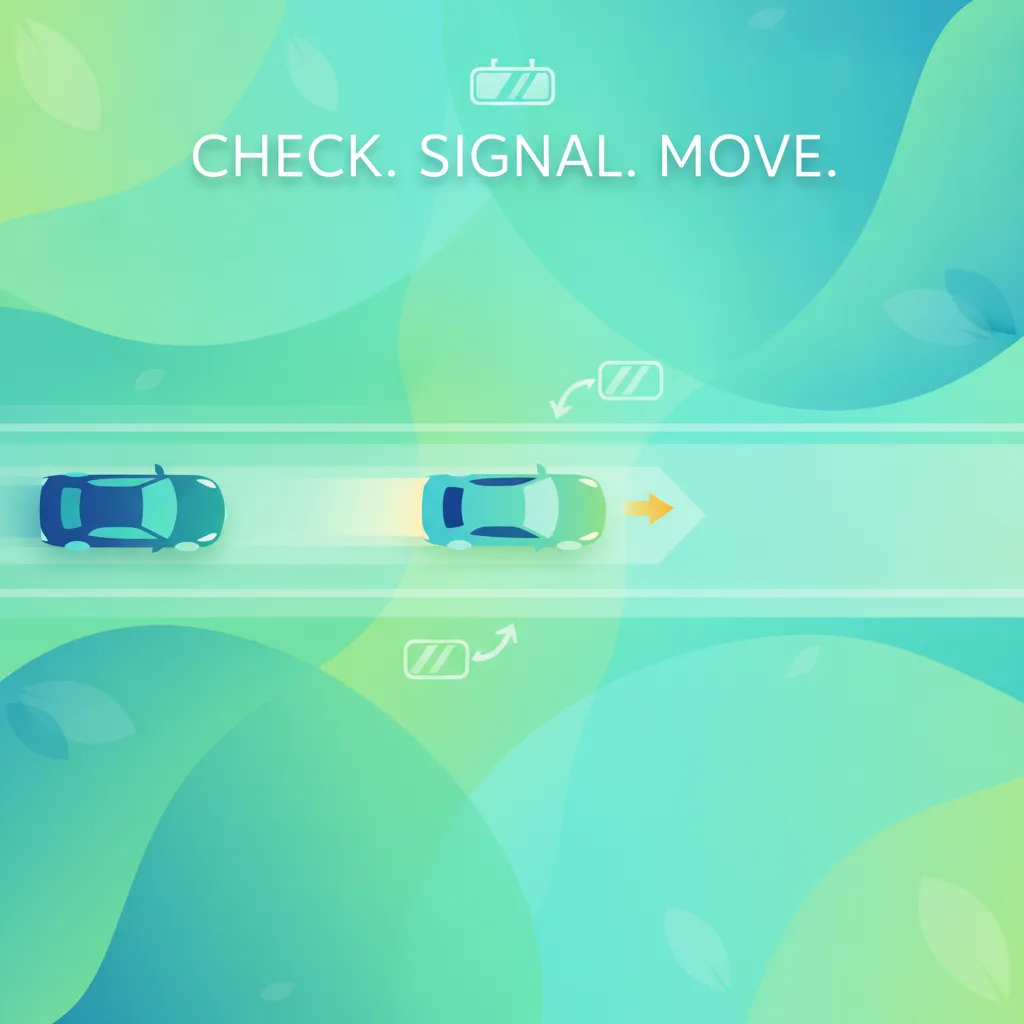
This lesson explains the principles of correct lane discipline, including proper positioning within your lane and adherence to road markings. It provides a clear, safe procedure for changing lanes, which includes signalling your intentions early, checking mirrors, and performing a final shoulder check for the blind spot. Mastering this process is essential for smooth and safe navigation in multi-lane traffic.

This lesson outlines the entire journey to obtaining a Danish driving license, from initial theory studies to the final practical examination. It explains the different stages of competency assessment and the specific criteria used to evaluate your driving skills and knowledge. The content covers all necessary prerequisites for taking each test, as well as the procedures and consequences related to failing and re-testing.
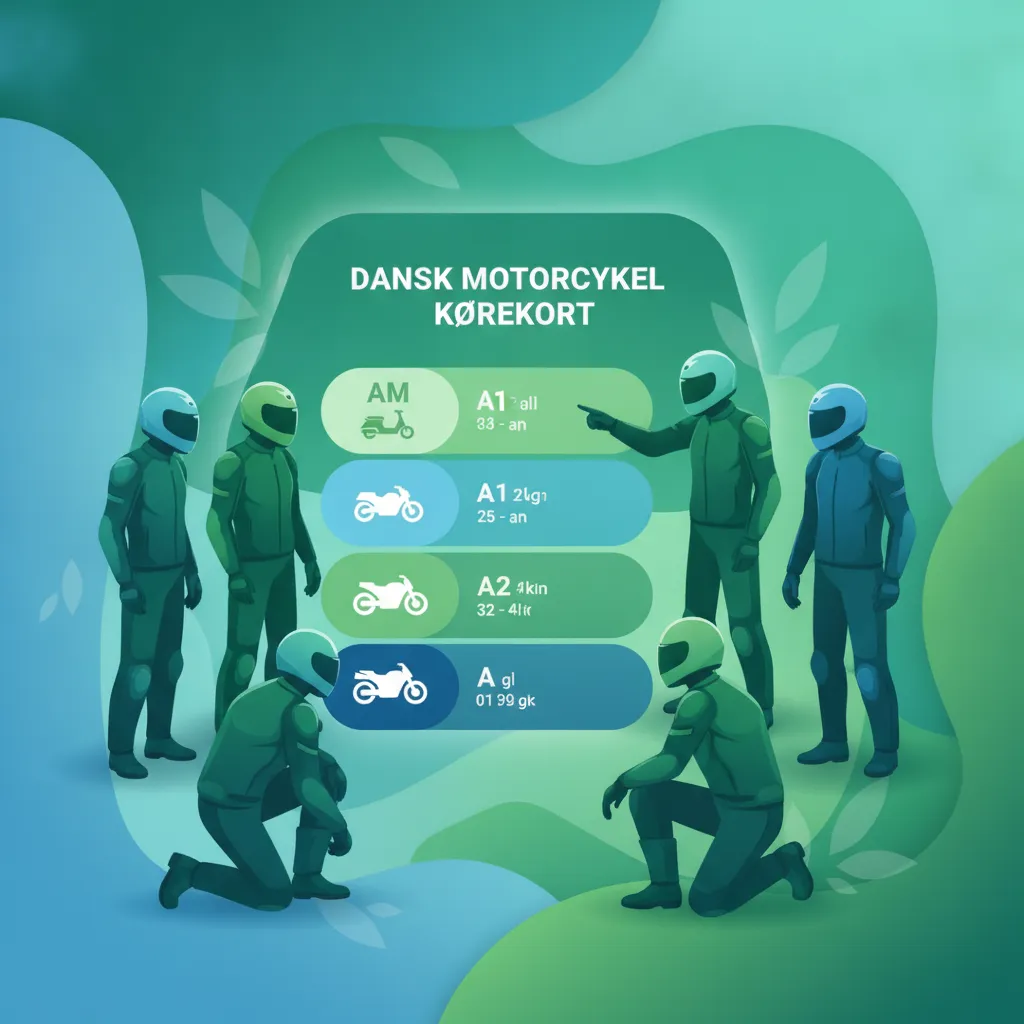
This lesson details the structure of the Danish motorcycle licensing system, covering categories A1, A2, and A. It outlines the specific age limits, engine displacement restrictions, and power-to-weight ratios for each category. Understanding these requirements provides a clear pathway for progressive skill development and legal operation.
This lesson introduces the essential principles of defensive driving, shifting the focus from reacting to hazards to proactively anticipating them. You will learn techniques for systematic scanning of the driving environment, maintaining a safety cushion around your vehicle, and identifying potential risks before they develop. These proactive strategies are fundamental to becoming a safer, more confident driver.

This lesson focuses on the core safety duties of a stor knallert rider. It explains the legal requirement for wearing a helmet and the benefits of other protective gear. The content also covers essential pre-ride checks, including brakes, tyres, and lights, to ensure the vehicle is in safe operating condition.

This lesson details the legal requirements and safety protocols for operating a bus near schools and pedestrian crossings. It covers mandatory speed reductions, the rules for yielding to pedestrians, and techniques for anticipating the sudden movements of children. The content emphasizes the importance of constant visual scanning and maintaining a high state of alert in these sensitive areas.
Learn the official procedure for registering as a learner driver in Denmark, including age requirements and how to obtain your provisional licence. Essential information for starting your driving education journey.
This lesson details the structure of the Danish motorcycle licensing system, covering categories A1, A2, and A. It outlines the specific age limits, engine displacement restrictions, and power-to-weight ratios for each category. Understanding these requirements provides a clear pathway for progressive skill development and legal operation.
This lesson outlines the administrative and legal steps for acquiring a Category AM licence in Denmark. It details the requirements for the theory and practical tests, the process for vehicle registration, and the necessity of valid insurance. Learners will understand the complete legal framework and documentation needed to become a licensed stor knallert rider.
This lesson outlines the entire journey to obtaining a Danish driving license, from initial theory studies to the final practical examination. It explains the different stages of competency assessment and the specific criteria used to evaluate your driving skills and knowledge. The content covers all necessary prerequisites for taking each test, as well as the procedures and consequences related to failing and re-testing.
This lesson provides a detailed breakdown of the Danish licence categories for passenger transport. It explains the differences between D1, D1E, D, and DE licences based on passenger capacity, vehicle size, and permitted combinations. The content clarifies the legal definitions and professional qualifications necessary for obtaining each licence, ensuring drivers operate within the correct regulatory framework.
This lesson details the legal framework governing the acquisition of a C-category driving license in Denmark. It covers the essential requirements, including medical fitness standards, the structure of the theoretical examination, and the scope of mandatory practical training. Furthermore, it explains the ongoing legal obligations of a license holder, such as renewal procedures and continuous compliance with evolving traffic laws and regulations.
Find clear answers to common questions learners have about Learner Driver Registration and Supervised Driving. Learn how the lesson is structured, which driving theory objectives it supports, and how it fits into the overall learning path of units and curriculum progression in Denmark. These explanations help you understand key concepts, lesson flow, and exam focused study goals.
A supervisor must meet specific criteria, including having held a valid driving license for a set number of years, not having their license suspended, and being physically and mentally capable of taking control of the vehicle if necessary.
You must always carry your valid learner registration document and proof of identity. The supervising driver must also carry their valid driving license at all times during the practice session.
No, the vehicle must meet specific safety requirements and be properly registered for driving instruction. Ensure the vehicle has the correct insurance coverage that includes learner drivers.
In Denmark, you must be officially registered as a learner driver through your driving school and relevant authorities before you can legally begin behind-the-wheel practice.
Use our powerful search tool to pinpoint specific Danish driving theory topics, road signs, or traffic situations you need to review. Start exploring relevant practice sets now to reinforce your knowledge and build confidence for your upcoming driving licence exam.