
This lesson guides you through the structured progression of obtaining your Category B driving license in Denmark. You will learn about the essential stages from initial theoretical study to the final practical exam, ensuring you understand exactly what is required to become a licensed driver.

Lesson content overview
Embarking on the journey to obtain a Danish Category B driving license (kørekort) is a significant step towards personal mobility and independence. This comprehensive lesson guides you through every stage of the process, from initial theory studies to the final practical examination. Understanding the structured pathway is crucial for effective preparation, ensuring you meet all legal prerequisites, navigate administrative steps efficiently, and ultimately succeed in becoming a licensed driver in Denmark.
The Danish driving test journey is designed to progressively assess your knowledge and skills, building confidence and competence at each turn. It emphasizes a structured learning approach, ensuring that foundational theoretical understanding is firmly established before practical driving abilities are evaluated under real-world conditions. This lesson will demystify the various phases, explaining the purpose of each assessment and what is required for successful progression.
Before delving into the test structure, it's essential to understand what the Category B driving license in Denmark entails. This foundational knowledge ensures you are preparing for the correct type of license and are aware of the privileges and limitations it grants.
The standard passenger car license in Denmark, permitting the driving of vehicles with a maximum authorized mass (MAM) of up to 3,500 kg.
With a Category B license, you are authorized to drive a car designed to carry up to eight passengers in addition to the driver. This category also allows for coupling a trailer, provided its maximum authorized mass does not exceed 750 kg. If the trailer's MAM exceeds 750 kg, specific conditions apply: the combined MAM of the car and trailer must not exceed 3,500 kg, and the trailer's MAM must not be greater than the car's unladen weight.
It is common for new drivers to misunderstand the precise regulations regarding trailers. While a standard Category B license covers many trailer scenarios, specialized B/E or B+ (often referred to as B96) categories exist for heavier trailers or higher combined vehicle masses. For the purpose of the initial Category B license, focus on the limits specified above. These regulations are established under the Danish Road Traffic Act (Færdselsloven) and the Danish Driving License Regulations (Kørekortbekendtgørelsen), forming the legal basis for your driving privileges.
The first formal step towards obtaining your driving license is the learner driver registration, commonly referred to as obtaining a 'lærerkort'. This crucial administrative process officially recognizes you as a learner driver within the Danish system, granting you the legal right to practice driving under supervision and enroll in the mandatory driving education program.
To register as a learner driver, you must meet several key requirements:
It is highly recommended to complete your health certificate examination early in the process, as it can sometimes take time to schedule and process.
Once registered, you can legally participate in driving lessons with a certified driving instructor and begin to accumulate the practical experience necessary for the tests. This registration is a cornerstone of the entire process, as all subsequent test registrations and your eventual license issuance depend on it.
The Danish driving test journey is systematically divided into six distinct phases. Each phase is a building block, requiring successful completion before you can advance to the next. This structured progression ensures a thorough understanding of traffic laws and the development of safe driving skills.
Let's explore each phase in detail:
The initial phase of your driving education focuses on acquiring a solid theoretical foundation. This involves attending a mandatory theory course, typically structured into several lessons covering various aspects of Danish traffic law, road signs, priority rules, vehicle mechanics, and safe driving practices. This is the stage where you learn the "why" and "how" of driving, preparing you for safe participation in traffic.
This Danish Driving License Theory Course: Category B Preparation is designed to provide you with all the necessary theoretical knowledge.
Upon completing the mandatory theory curriculum, you will face the Internal Theory Test (Kontrolprøve i Teori or KAT). This test is administered by your driving school and serves as a crucial internal checkpoint. Its purpose is to confirm that you have absorbed the necessary theoretical knowledge and are adequately prepared for the official, government-administered theory test. Passing the KAT is a mandatory prerequisite for registering for the Official Theory Test (UT).
A mandatory theory test administered by your driving school, which must be passed before you can register for the official Danish theory test.
Failing the KAT means you must review the relevant theory and retake the internal test until you pass. This ensures that you don't proceed to the official test without a strong grasp of the material, saving you time and money in the long run.
Between passing your Internal Theory Test and taking the Official Theory Test, there's a vital administrative phase. This involves gathering all necessary documents and submitting your application to the Danish police or relevant authority.
Application Submission: Your driving school typically assists with submitting your application for the official theory and practical tests. This package includes your learner driver registration details, health certificate, and proof of completing the mandatory theory course.
Test Fee Payment: Official test fees must be paid at this stage. These fees cover the cost of conducting both the theory and practical examinations.
Scheduling: Once your application is approved and fees are paid, you can be scheduled for your official theory test. Your driving school will usually handle the booking, coordinating with you to find a suitable date and time.
Ensuring all paperwork is accurate and submitted on time is crucial to avoid delays in your testing schedule. Any discrepancies or missing documents can prevent you from sitting the test.
The Official Theory Test (Teoriprøve, often referred to as UT for "Uformel Teoriprøve" or official theory test) is a standardized, computer-based examination that assesses your comprehensive understanding of Danish traffic rules, road signs, and safe driving principles. This test is taken at a designated testing center under supervised conditions.
Format: The test consists of multiple-choice questions, often presented as scenarios with accompanying images or videos. You will need to identify hazards, apply priority rules, or select the correct action based on traffic signs and situations.
Duration: You typically have 45 minutes to complete the test.
Number of Questions: The test usually comprises 25 questions or scenarios.
Passing Criteria: To pass the official theory test, you must answer a minimum number of questions correctly.
Attempting to take the official theory test without having completed the mandatory theory study and passed the internal theory test will result in your registration being denied, leading to wasted time and potential fees.
The theory test is designed to be challenging but fair, ensuring that all candidates possess the necessary theoretical knowledge to be safe and responsible drivers. It covers all aspects detailed in your theory curriculum, including traffic signs, markings, priority rules, environmental considerations, and vehicle safety.
After successfully passing the Official Theory Test, you are eligible to proceed to the Practical Road Test (Køreprøve or KT). This is the culmination of your driving education, where your actual driving skills, hazard perception, and adherence to traffic rules are assessed in real traffic conditions by a certified examiner.
A driving examination on public roads conducted by a certified examiner, assessing your real-world driving competence, hazard perception, and adherence to traffic rules.
The practical test typically lasts around 30-45 minutes and takes place at a traffic testing station (trafikprøvestation). You will drive a vehicle provided by your driving school (or sometimes your own, if it meets specific requirements and is registered), accompanied by your driving instructor and the examiner.
During the test, the examiner will evaluate various aspects of your driving, including:
The test aims to determine if you can drive safely and independently, without posing a risk to yourself or others. Any serious traffic violation, unsafe maneuver, or consistent pattern of minor errors can result in failure. The vehicle used for the test must be roadworthy and properly registered. Failing to bring required identification or a vehicle that doesn't meet standards will lead to test cancellation and additional costs.
Congratulations! If you successfully pass the Practical Road Test, the examiner will inform you immediately. Following this, your driving school or the testing authority will process your application for the official Category B driving license.
Initially, you might receive a temporary driving permit, which allows you to drive legally while your physical driving license card is being produced and sent to you. The official card will typically arrive by post within a few weeks. Once you receive your permanent license, you are officially a licensed driver in Denmark!
It's not uncommon to fail a test on the first attempt. The Danish system has clear retake policies designed to give learners opportunities for further practice while maintaining high safety standards.
If you fail the Official Theory Test, you cannot immediately retake it. A mandatory waiting period must be observed before you can register for a new theory test. This period is typically designed to allow you sufficient time to review the material, address your weaknesses, and prepare more thoroughly.
Your driving school will assist you in rescheduling the test after the waiting period has elapsed. It is crucial to use this time effectively for additional study.
Failing the Practical Road Test also triggers a mandatory waiting period before you can attempt it again. This period is usually longer than for the theory test, reflecting the need for more extensive practical driving practice to rectify any identified deficiencies.
During this waiting period, it is highly advisable to schedule additional driving lessons with your instructor. They can help you focus on the specific areas where you struggled, ensuring you are better prepared for your next attempt. Attempting to schedule a retake before the waiting period has elapsed will result in refusal by the test center.
Consider each failure as a learning opportunity. Analyze what went wrong, discuss it with your instructor, and dedicate extra time to practice those specific skills.
Throughout the driving test journey, certain common mistakes and administrative oversights can lead to delays or test failures. Being aware of these can help you avoid unnecessary complications.
While the core structure of the driving test remains consistent, external factors can influence the testing environment.
The meticulous structure of the Danish driving test journey is not arbitrary; it is rooted in fundamental safety principles and educational psychology.
By adhering to this structured pathway, the Danish system aims to produce drivers who are not only capable of operating a vehicle but are also deeply knowledgeable about traffic laws, highly observant, and committed to safe and responsible driving behaviors.
The journey to obtaining a Danish Category B driving license is a meticulously structured process designed to develop competent and safe drivers. It begins with the essential Learner Driver Registration (Lærerkort), followed by a mandatory Theory Study Course and an Internal Theory Test (KAT) to ensure foundational knowledge.
Once prepared, candidates undergo Administrative Preparation and then face the Official Theory Test (Teoriprøve / UT), a computer-based assessment requiring a minimum of correct answers to pass. Successfully passing the theory test makes you eligible for the Practical Road Test (Køreprøve / KT), a real-world driving examination evaluating skills, hazard perception, and adherence to traffic rules.
Crucially, Mandatory Waiting Periods are imposed after any failed test, allowing time for further preparation and practice. The entire process is built upon the principle of progressive competence evaluation, ensuring that knowledge precedes skill and that all assessments are conducted under standardized conditions. Ultimately, successful completion of the practical test leads to the Issuance of Your Driving Licence, marking your official entry as a licensed driver on Danish roads. This comprehensive pathway is aimed at enhancing road safety and preparing you for responsible driving for life.
Explore all units and lessons included in this driving theory course.
Lesson content overview
Explore all units and lessons included in this driving theory course.
Explore search topics learners often look for when studying Structure of the Driving Test Journey. These topics reflect common questions about road rules, driving situations, safety guidance, and lesson level theory preparation for learners in Denmark.
Browse additional driving theory lessons that cover connected traffic rules, road signs, and common driving situations related to this topic. Improve your understanding of how different rules interact across everyday traffic scenarios.
Understand the complete pathway to your Danish Category B driving license. This lesson details the stages of the theory exam, practical test, and administrative steps required for successful completion.
This lesson details the official procedure for registering as a learner driver, including the age requirements to begin supervised driving. It specifies the legal qualifications and responsibilities of the accompanying supervising driver, ensuring all practice sessions are compliant and safe. You will also learn about the role of the provisional license and the necessary documentation that must be maintained throughout your training period.
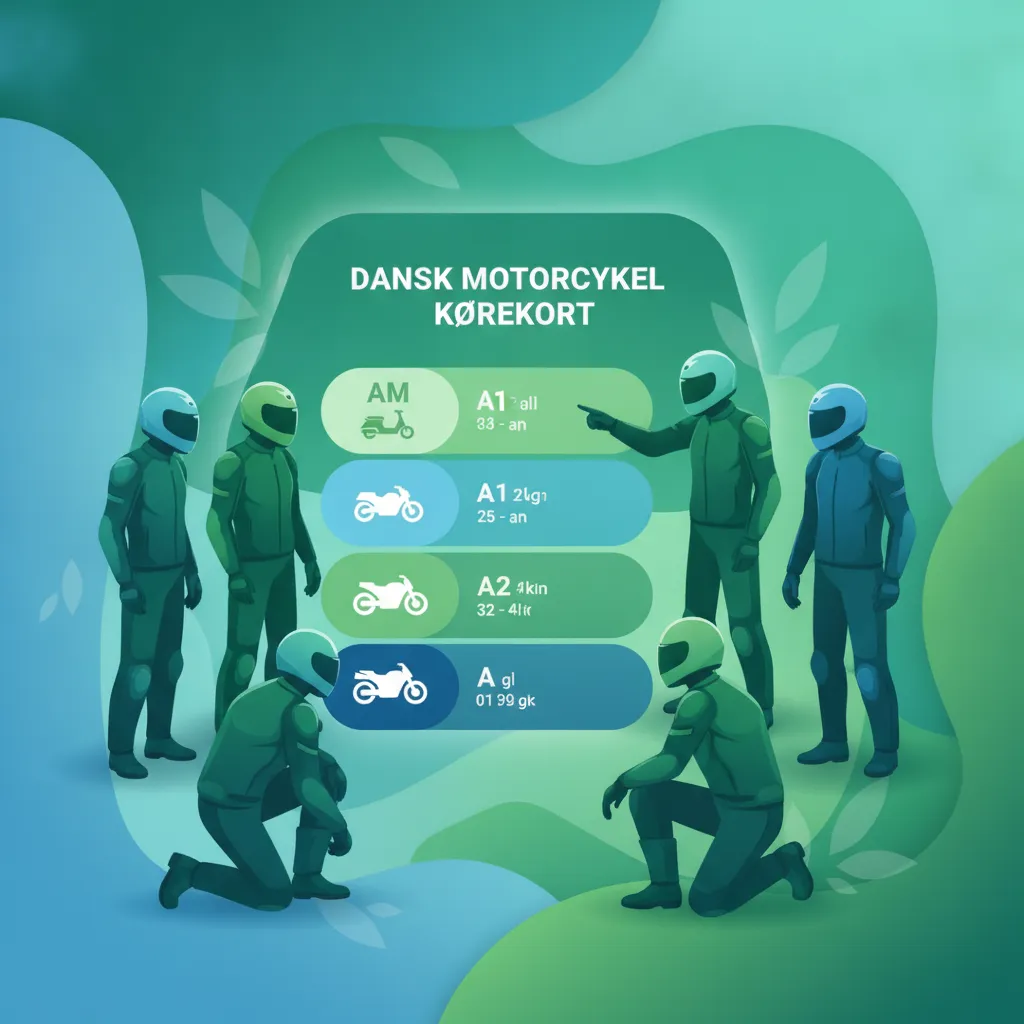
This lesson details the structure of the Danish motorcycle licensing system, covering categories A1, A2, and A. It outlines the specific age limits, engine displacement restrictions, and power-to-weight ratios for each category. Understanding these requirements provides a clear pathway for progressive skill development and legal operation.

This lesson covers the correct techniques for various turning manoeuvres, including how to signal, position your vehicle, and judge gaps in traffic. It also details the legal and safety protocols for overtaking, emphasizing the importance of assessing speed, distance, and oncoming traffic. A thorough understanding of these procedures is crucial for navigating intersections and two-lane roads safely.

This lesson addresses the unique driving situations presented by bridges, tunnels, and ferries. It explains the need for speed adjustments, awareness of changing light conditions in tunnels, and following lane controls on long bridges. The material also provides practical guidance for safely boarding and disembarking from a vehicle ferry, including following crew instructions for parking.

This lesson provides essential training for driving on motorways. It details the correct procedure for using acceleration lanes to merge safely into fast-moving traffic, maintaining proper lane discipline, and executing safe overtaking manoeuvres. You will also learn the importance of keeping a safe following distance and planning for your exit well in advance.
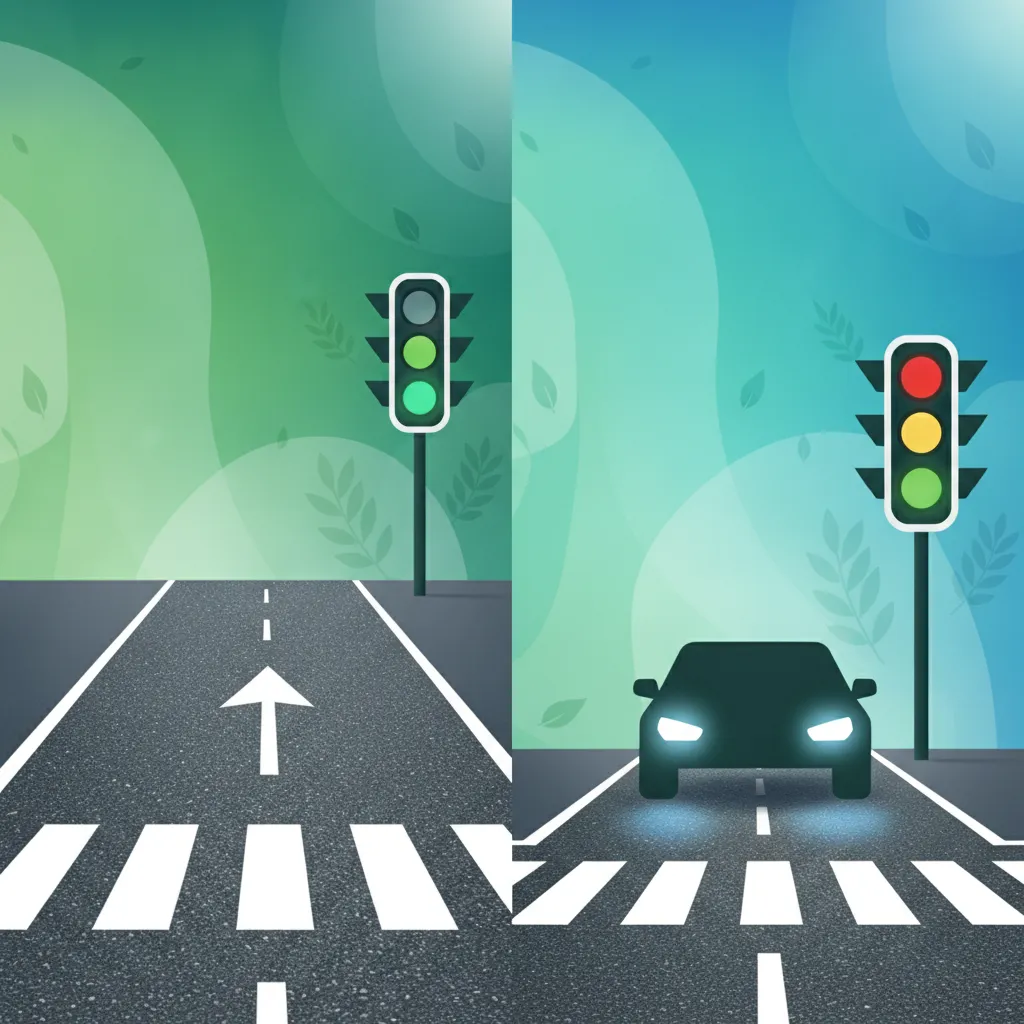
This lesson details the meaning and application of various road surface markings, including lane dividers, solid and broken lines, and directional arrows. You will also learn to interpret the full sequence of traffic light signals, including the specific rules for the amber (yellow) light phase. A proper understanding of these systems is vital for maintaining correct lane discipline and adhering to traffic controls.
This lesson provides a detailed breakdown of the Danish licence categories for passenger transport. It explains the differences between D1, D1E, D, and DE licences based on passenger capacity, vehicle size, and permitted combinations. The content clarifies the legal definitions and professional qualifications necessary for obtaining each licence, ensuring drivers operate within the correct regulatory framework.
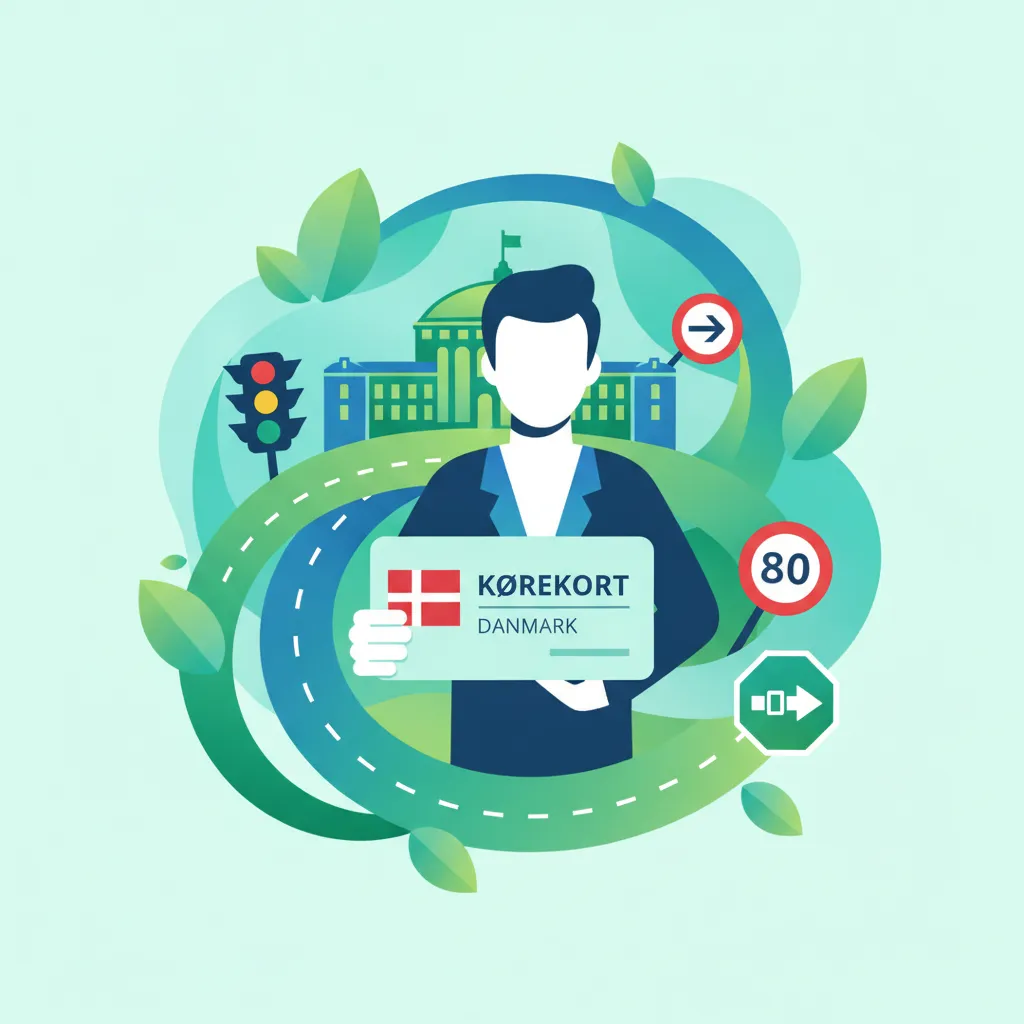
This lesson details the legal framework governing the acquisition of a C-category driving license in Denmark. It covers the essential requirements, including medical fitness standards, the structure of the theoretical examination, and the scope of mandatory practical training. Furthermore, it explains the ongoing legal obligations of a license holder, such as renewal procedures and continuous compliance with evolving traffic laws and regulations.

This lesson introduces cooperative driving as a fundamental element of road safety in Denmark. It highlights the social responsibility of drivers to act predictably, anticipate the actions of others, and maintain courteous interactions with all road users. By fostering mutual respect and cooperation, you will learn how to reduce the potential for conflict and enhance overall traffic safety.

This lesson introduces the essential principles of defensive driving, shifting the focus from reacting to hazards to proactively anticipating them. You will learn techniques for systematic scanning of the driving environment, maintaining a safety cushion around your vehicle, and identifying potential risks before they develop. These proactive strategies are fundamental to becoming a safer, more confident driver.
Learn about the procedures for retaking the Danish driving theory and practical tests. Understand mandatory waiting periods and common violations to avoid, ensuring a smoother path to your license.
This lesson covers the correct techniques for various turning manoeuvres, including how to signal, position your vehicle, and judge gaps in traffic. It also details the legal and safety protocols for overtaking, emphasizing the importance of assessing speed, distance, and oncoming traffic. A thorough understanding of these procedures is crucial for navigating intersections and two-lane roads safely.
This lesson introduces the essential principles of defensive driving, shifting the focus from reacting to hazards to proactively anticipating them. You will learn techniques for systematic scanning of the driving environment, maintaining a safety cushion around your vehicle, and identifying potential risks before they develop. These proactive strategies are fundamental to becoming a safer, more confident driver.

This lesson addresses the heightened risks faced by novice drivers, such as a tendency towards overconfidence, the influence of peer pressure, and the dangers of fatigue. It provides practical strategies for managing these risks, maintaining focus while driving, and cultivating a responsible attitude. The goal is to build a strong foundation of safe driving habits from the very beginning of your driving career.
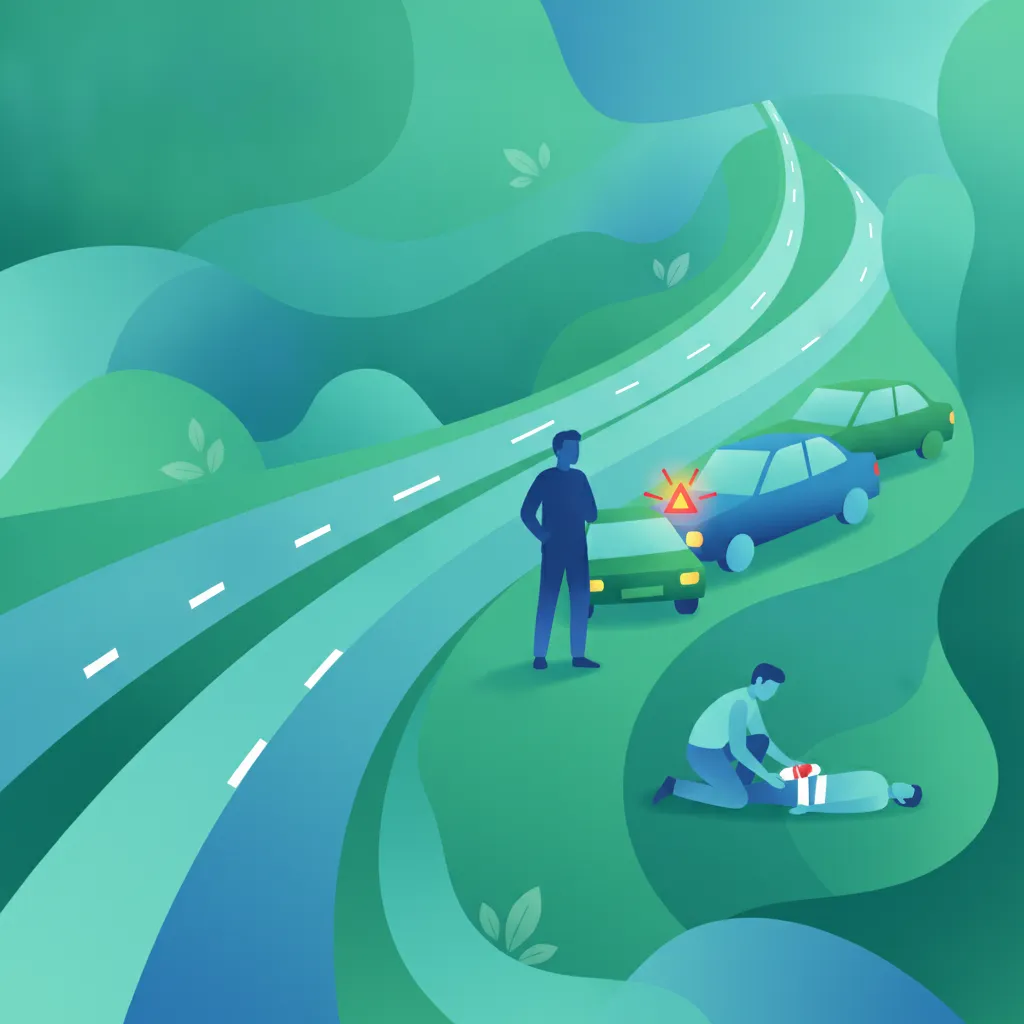
This lesson provides a clear action plan for handling emergencies on the road. It explains how to secure an accident scene using a warning triangle, when and how to call the emergency number 112, and the fundamentals of providing basic first aid. You will also learn the safe procedure for dealing with a vehicle breakdown to protect yourself and other road users.

This lesson breaks down the critical skill of overtaking into a safe, repeatable process. It covers how to judge the time and space needed, check for oncoming traffic, and execute the maneuver decisively. The importance of signaling and returning to the lane safely is also emphasized.

This lesson provides detailed instruction on two key practical skills. You will learn the correct procedure for reversing, which emphasizes slow speed and comprehensive 360-degree observation. It also covers the technique for executing a smooth hill start, teaching the precise coordination of the clutch, accelerator, and handbrake to prevent the vehicle from rolling backwards.
This lesson introduces cooperative driving as a fundamental element of road safety in Denmark. It highlights the social responsibility of drivers to act predictably, anticipate the actions of others, and maintain courteous interactions with all road users. By fostering mutual respect and cooperation, you will learn how to reduce the potential for conflict and enhance overall traffic safety.
This lesson addresses the unique driving situations presented by bridges, tunnels, and ferries. It explains the need for speed adjustments, awareness of changing light conditions in tunnels, and following lane controls on long bridges. The material also provides practical guidance for safely boarding and disembarking from a vehicle ferry, including following crew instructions for parking.

This lesson outlines a step-by-step procedure for managing a mechanical breakdown on the road. It covers moving the motorcycle to a safe location, using hazard lights, and wearing high-visibility clothing. The goal is to ensure personal safety while minimizing disruption and danger to other traffic.
This lesson details the meaning and application of various road surface markings, including lane dividers, solid and broken lines, and directional arrows. You will also learn to interpret the full sequence of traffic light signals, including the specific rules for the amber (yellow) light phase. A proper understanding of these systems is vital for maintaining correct lane discipline and adhering to traffic controls.
Find clear answers to common questions learners have about Structure of the Driving Test Journey. Learn how the lesson is structured, which driving theory objectives it supports, and how it fits into the overall learning path of units and curriculum progression in Denmark. These explanations help you understand key concepts, lesson flow, and exam focused study goals.
If you fail the theory test, you must book a new appointment and pay the required fee again. It is crucial to review your performance report to focus on your weak areas before attempting the test a second time.
No, you must pass the theory test before you can be scheduled for the practical driving test. The practical test assesses your ability to apply traffic laws and safety principles in real-world scenarios.
You typically need your learner driver registration documents and valid identification. Always ensure your instructor has verified that you have completed the mandatory lessons before attempting the final tests.
Yes, learners under 18 must participate in a structured supervised driving program. The test journey for these learners includes additional requirements regarding the presence of an experienced passenger during practice.
Use our powerful search tool to pinpoint specific Danish driving theory topics, road signs, or traffic situations you need to review. Start exploring relevant practice sets now to reinforce your knowledge and build confidence for your upcoming driving licence exam.