
The D-50 sign, also known as 'Zatoka awaryjna' or Emergency Bay, marks a designated stopping area off the main road, specifically for vehicles experiencing a breakdown or facing a genuine emergency. These bays are vital on highways and in tunnels where a safe hard shoulder is unavailable. Some may feature an SOS phone and fire extinguisher, indicated by a symbol. Always use these bays only for actual emergencies; non-emergency stops for rest or other purposes are strictly prohibited.
Understanding the D-50 Emergency Bay sign is crucial for safe driving, especially on Polish motorways and in tunnels where stopping on the main carriageway is highly dangerous. This detailed road sign meaning provides essential knowledge for emergency situations and is a key topic for your Polish driving theory test preparation.
The D-50 sign marks a 'Zatoka'—a short, paved area off the main road. It is strictly for vehicles that have broken down or for drivers in a medical emergency. If the sign includes an 'SOS' symbol, it means the bay is equipped with an emergency phone and a fire extinguisher. These are crucial on roads without a continuous hard shoulder or inside long tunnels where stopping on the roadway would be fatal.
A designated area on a highway or in a tunnel for emergency stops only.
Get clear, practical answers to the most common questions about the D-50 - Emergency Bay road sign. Learn how the sign works, what rules it represents, and how it affects real driving situations. This FAQ strengthens your understanding and supports accurate decision making for the Polish driving theory exam in Poland.
The D-50 sign designates a safe area for vehicles that have broken down or are experiencing a critical issue, such as engine trouble or a medical emergency. It is not for general rest stops or non-urgent reasons.
You should use the emergency bay if your vehicle has mechanical problems like a flat tire, smoking engine, or a critical warning light, or if you are experiencing a medical emergency. Always turn on your hazard lights as you enter the bay.
If the D-50 sign includes an SOS symbol, it means the emergency bay is equipped with additional facilities. These typically include an emergency telephone for contacting assistance and a fire extinguisher for safety.
You are prohibited from using the emergency bay for any non-emergency purpose, such as making phone calls, taking a break, eating, or letting passengers out for a seat change. It must be kept clear for genuine emergencies.
A common exam trap is confusing the emergency bay with a regular rest area or parking spot. Remember, the D-50 sign strictly enforces use only for breakdowns or emergencies. Misusing it could lead to penalties and is unsafe.
If your vehicle is functioning normally and you do not have an emergency, you should not stop in the emergency bay. Continue driving until you reach a designated rest area or your intended destination. The sign is for those who genuinely need to stop.
A clear reference image of the D-50 - Emergency Bay road sign used in Poland.
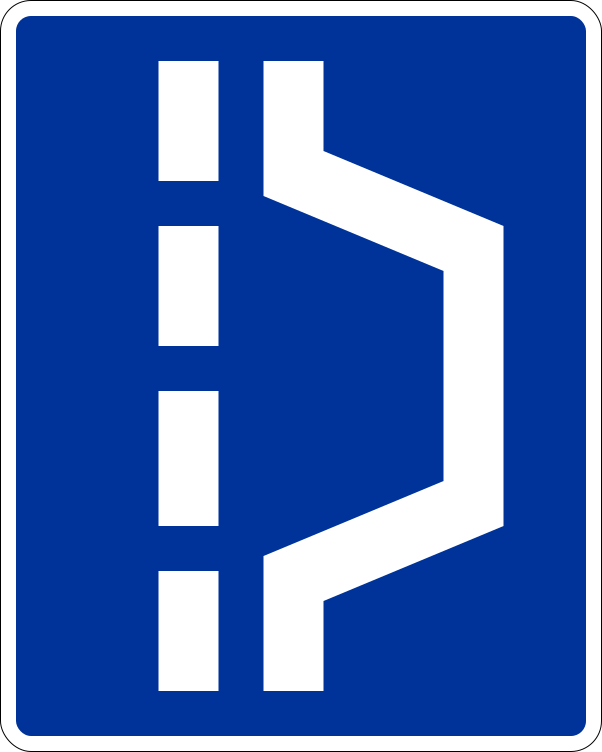
The D-50 - Emergency Bay road sign may also be known by these alternative names or terms.
The D-50 - Emergency Bay road sign is part of the Information Signs (D) category, which groups together signs with similar rules and functions.
Comparing similar traffic signs, like D-50 Emergency Bay, sharpens your recognition skills for the theory test. Understanding the subtle differences between related road signs is key for accurate exam preparation and safe driving.
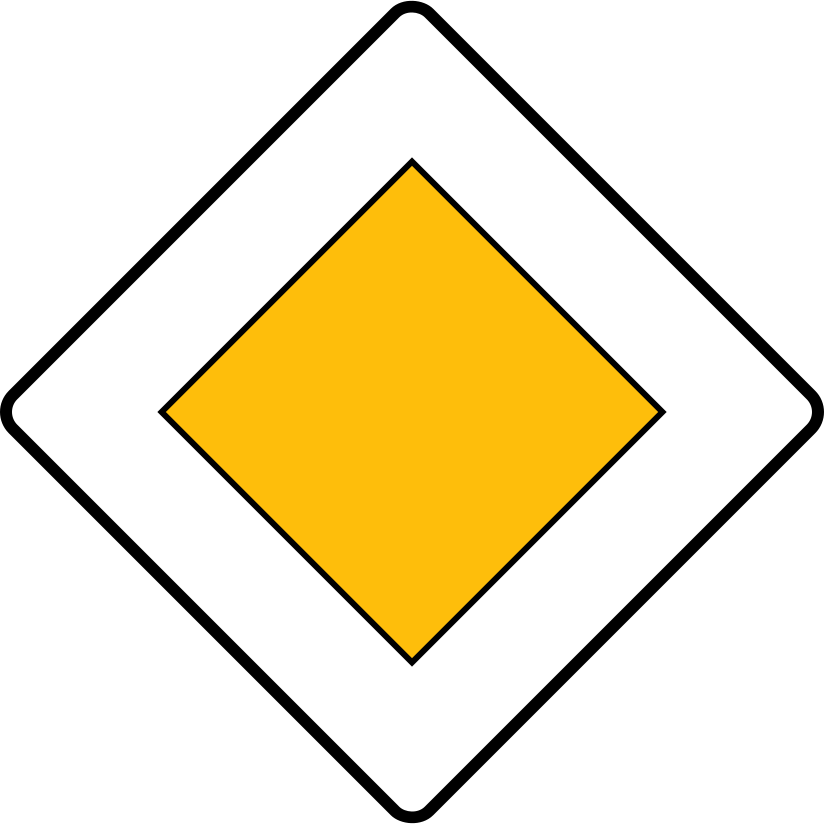
The D-1 Priority Road sign means you have the right of way.
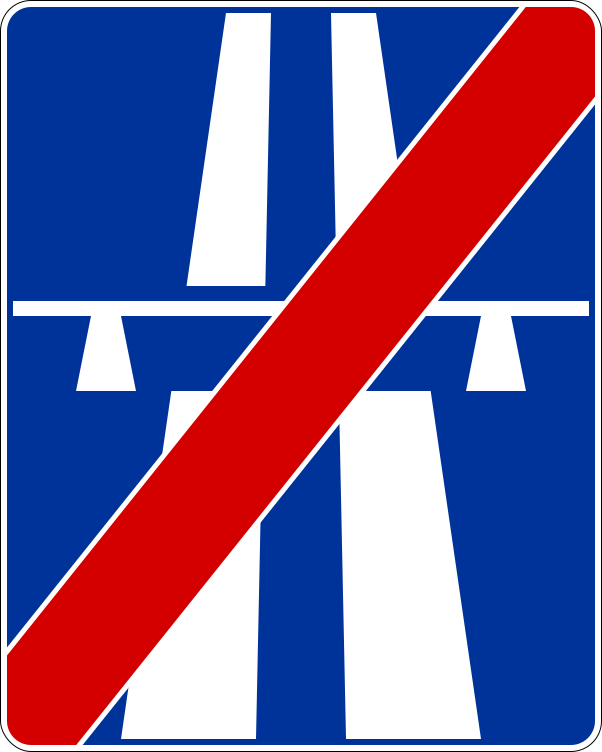
Prepare for the End of the Motorway with the D-10 Sign
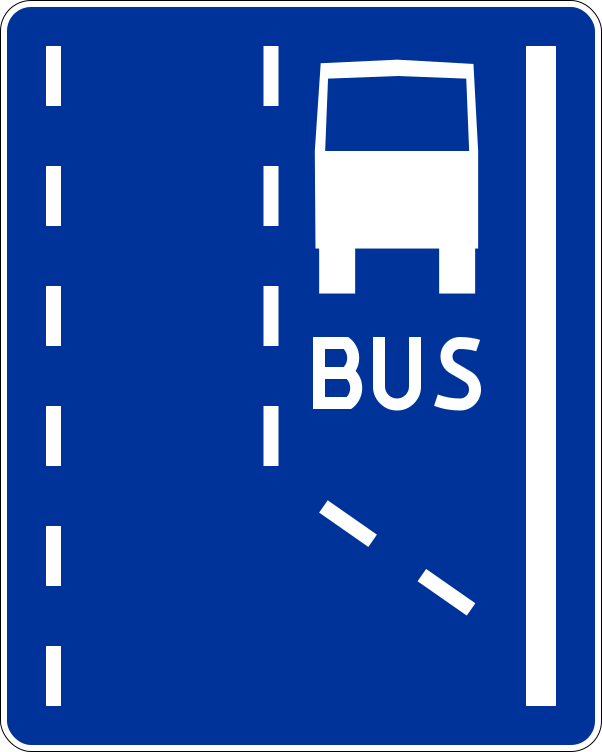
D-11 Road Sign: You're Approaching the Start of a Bus Lane
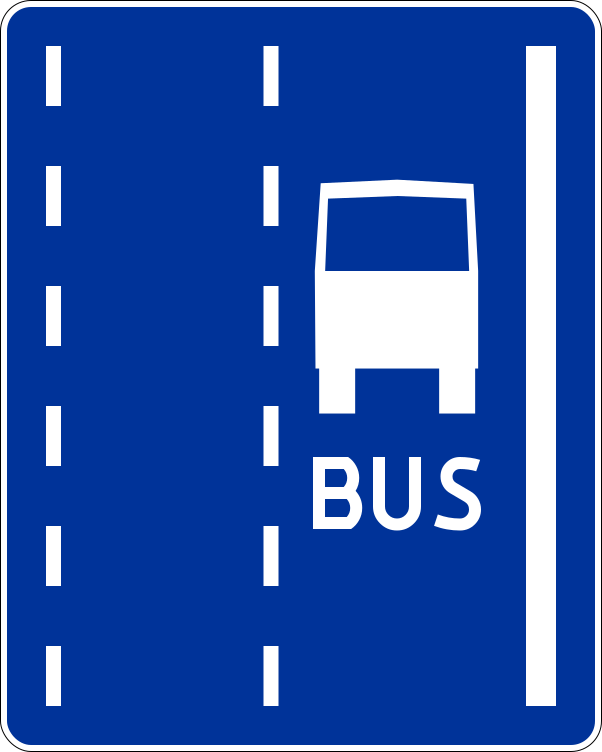
The D-12 'Bus Lane' sign confirms the lane remains exclusively for buses and authorized vehicles.
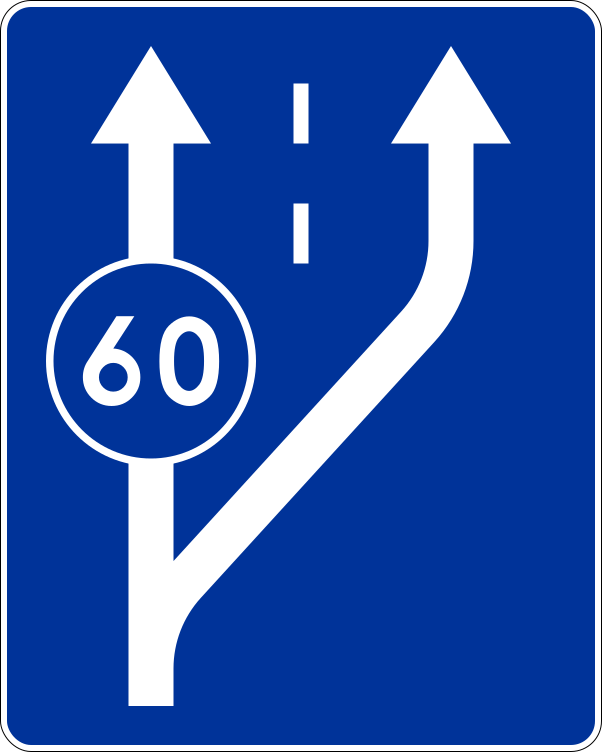
D-13 Sign: Prepare for the Start of a Slow-Moving Traffic Lane
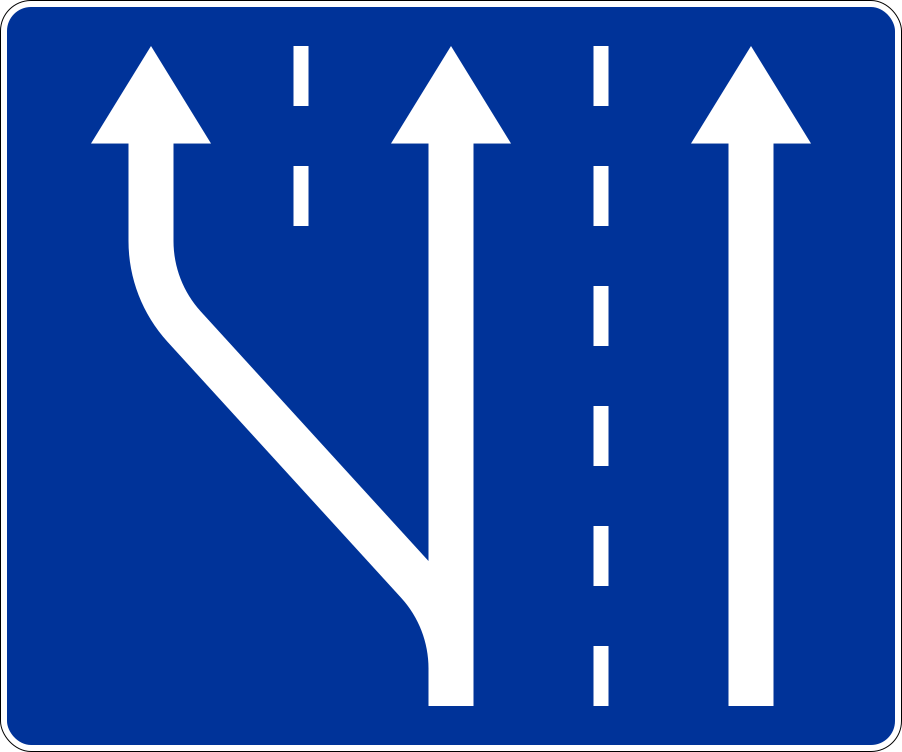
The D-13a 'Start of Lane' sign means a new lane is opening up ahead.
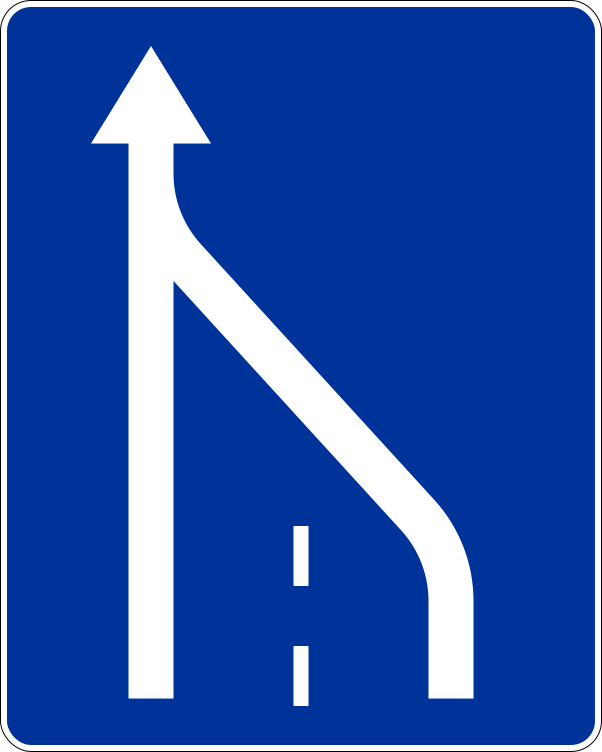
D-14 End of Lane: Know When and How to Merge Safely
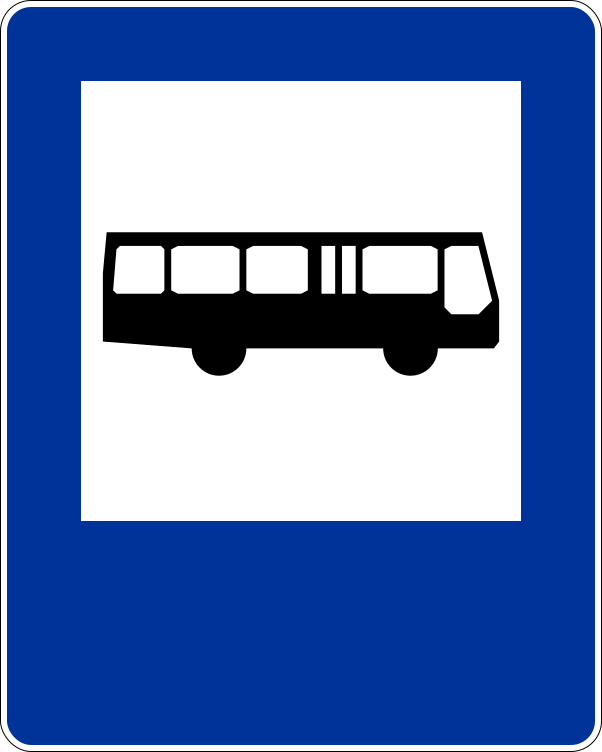
The D-15 'Bus Stop' Sign: Understanding and Reacting to Public Transport Stops
Deepen your understanding of specific road signs by reviewing official Polish traffic rules and associated real-world driving scenarios. These expert-led resources help you bridge the gap between visual recognition and practical exam application.
Don't Be a Road Block: Master Minimum Speeds and Smooth Traffic Flow for Your Polish Exam!
This article delves into the crucial meaning of the Polish D-42 'Obszar Zabudowany' (Built-up Area) sign, a key topic for your Polish driving theory exam. You will learn why this sign automatically enforces a 50 km/h speed limit and the severe penalties, including fines up to 5,000 PLN and potential license revocation, for violations. Understanding and respecting the D-42 sign is essential for safe driving and passing your theory test.
Navigating Polish roads requires a precise understanding of rules for overtaking slow-moving vehicles, especially on continuous solid lines. This article will detail when such maneuvers are legal, the legal obligations of tractor drivers, and the consequences of violations according to Polish traffic law. Mastering this topic is essential for safe driving and succeeding in your theory exam.
Even a Second Can Be Fatal: Understand Microsleep to Drive Safely in Poland.
The E-17a sign provides the name of the locality. Important: This sign itself DOES NOT automatically change the speed limit to 50 km/h. It is an informational sign. To change the speed limit, it must be accompanied by the D-42 'Built-up Area' (skyline) sign. It is useful for orientation and knowing your location relative to your map or GPS.
The A-17 sign indicates locations where children between the ages of 7 and 15 are likely to be present. Unlike adults, children can be unpredictable and may suddenly run into the street without looking. This sign is a signal to slow down significantly and be extra alert. It is common near primary schools, daycare centers, and organized sports fields.
After reviewing the full list of Polish road signs, explore specific sign categories for in-depth understanding. Challenge your knowledge with practice questions focused on sign recognition and interpretation to solidify your preparation for the driving theory exam.
Browse All Polish Road Signs