
The D-26c sign, featuring a black toilet symbol, informs drivers of a public restroom facility ahead. This sign is typically found at rest stops, petrol stations, or in urban areas to indicate available amenities. If the sign also shows the 'BUS' designation, it signifies a special station for emptying chemical toilets from larger vehicles like buses and caravans, crucial for long-distance journeys.
This explanation clarifies the D-26c 'Public Toilet' sign, vital for understanding available facilities during your journey. Master this sign's meaning for effective theory test revision and navigating Polish roads.
The D-26c sign shows a black toilet silhouette. It marks the location of restrooms, often found at rest stops, petrol stations, or in town centers. If the sign includes the letters 'BUS' at the bottom, it means the facility is equipped with a station to empty chemical toilets from buses and caravans, which is essential for long-distance travelers.
Informs you of a public restroom facility available nearby.
Get clear, practical answers to the most common questions about the D-26c - Public Toilet road sign. Learn how the sign works, what rules it represents, and how it affects real driving situations. This FAQ strengthens your understanding and supports accurate decision making for the Polish driving theory exam in Poland.
The D-26c road sign indicates the presence of a public toilet facility nearby. This is an information sign designed to help drivers locate essential amenities, especially during longer journeys.
If the D-26c sign includes the 'BUS' symbol, it means the public toilet facility is equipped with a special station for emptying chemical toilets. This is particularly useful for drivers of caravans and buses who need to dispose of waste properly.
While the sign indicates availability, some public toilets in Poland may require a small fee, payable by coins or sometimes through contactless payment. It's advisable to have some change ready, though many facilities are free to use.
A common exam trap is confusing this sign with one that indicates a specific type of service area or prohibition. Learners might also forget the additional meaning of the 'BUS' symbol. The D-26c sign is purely informational about toilet availability, not a mandatory stop or restriction.
When you see the D-26c sign, it means a public toilet is available nearby. You are not obligated to stop, but it's a useful sign if you need to use the restroom, freshen up, or empty your camper-van's chemical toilet if the 'BUS' symbol is present.
A clear reference image of the D-26c - Public Toilet road sign used in Poland.
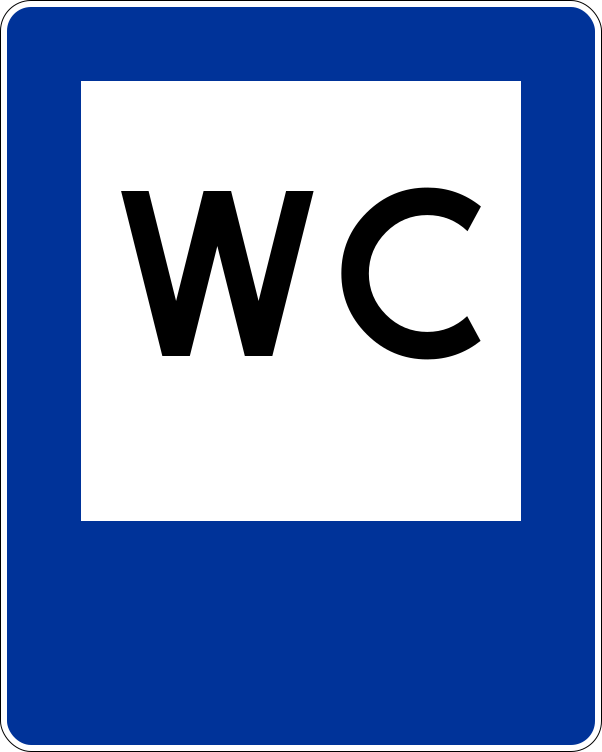
The D-26c - Public Toilet road sign may also be known by these alternative names or terms.
The D-26c - Public Toilet road sign is part of the Information Signs (D) category, which groups together signs with similar rules and functions.
Comparing related road signs like the D-26c Public Toilet with other information signs is crucial for accurate theory test revision. This focused approach helps solidify sign recognition and reduces common errors during your driving theory exam preparation.

The D-1 Priority Road sign means you have the right of way.
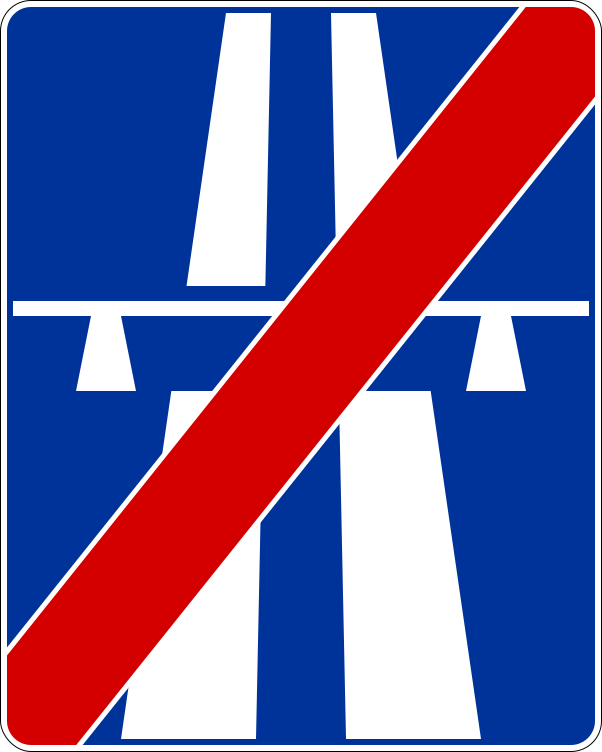
Prepare for the End of the Motorway with the D-10 Sign
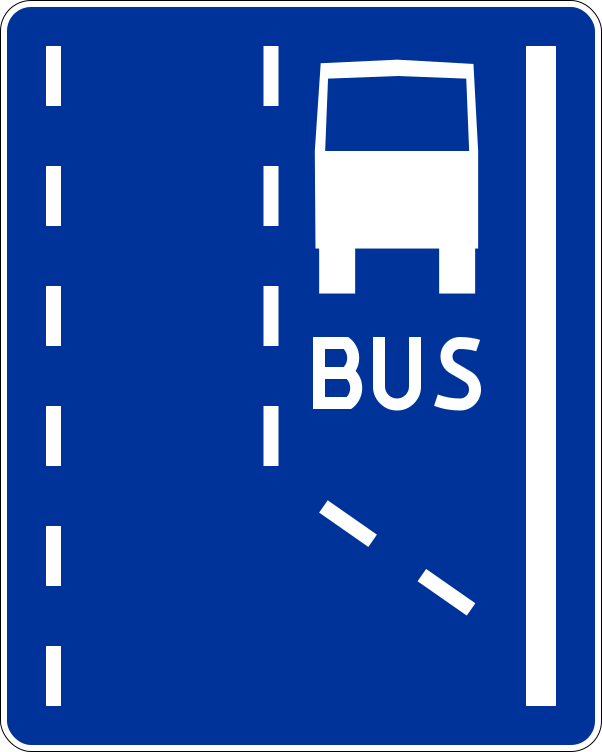
D-11 Road Sign: You're Approaching the Start of a Bus Lane
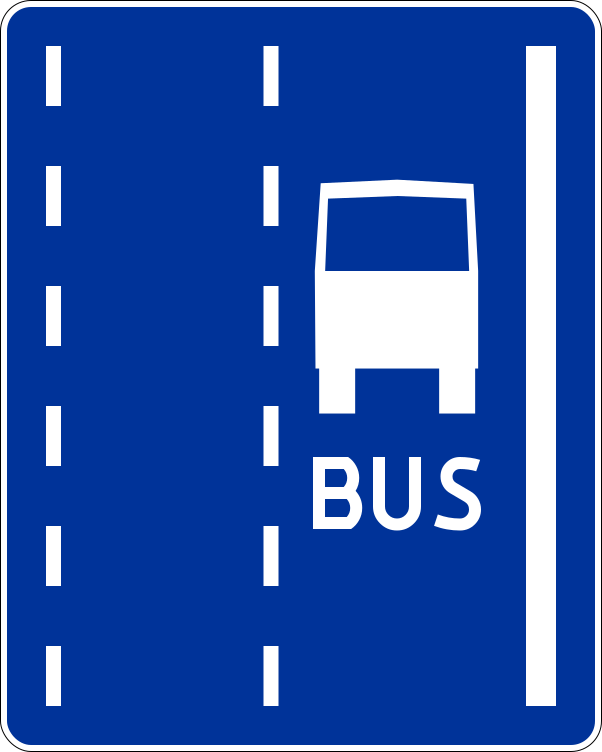
The D-12 'Bus Lane' sign confirms the lane remains exclusively for buses and authorized vehicles.
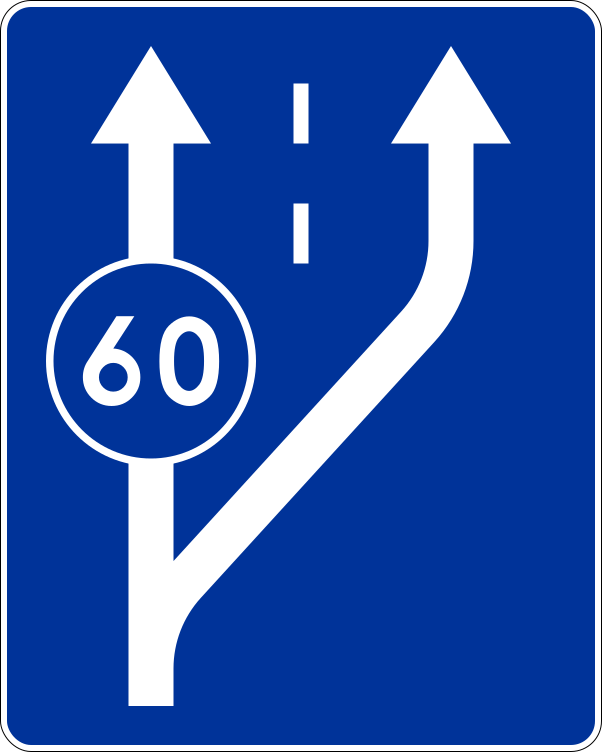
D-13 Sign: Prepare for the Start of a Slow-Moving Traffic Lane
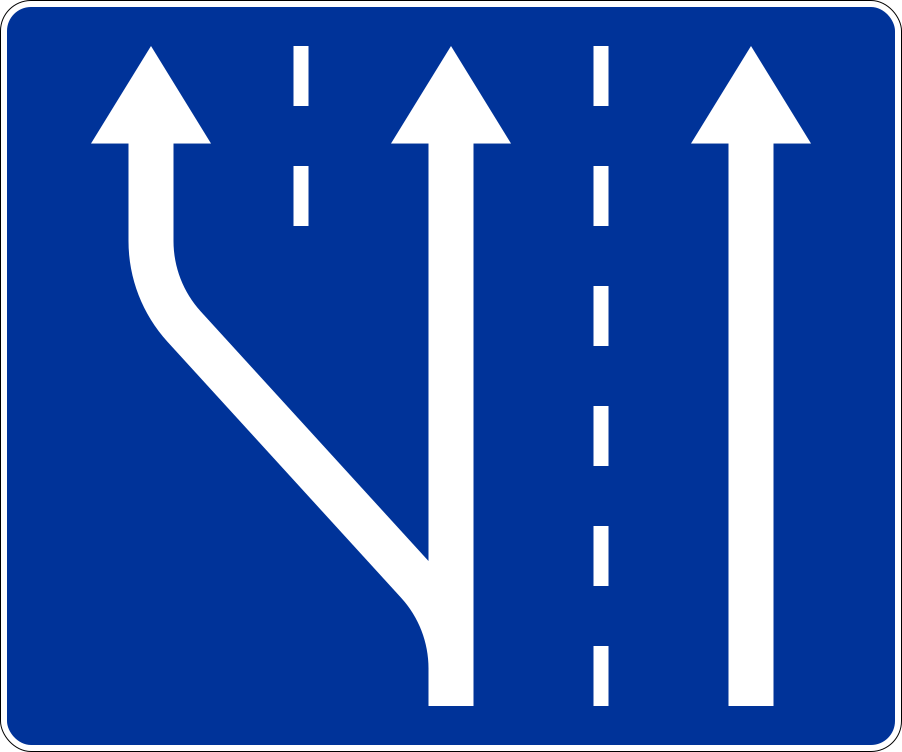
The D-13a 'Start of Lane' sign means a new lane is opening up ahead.
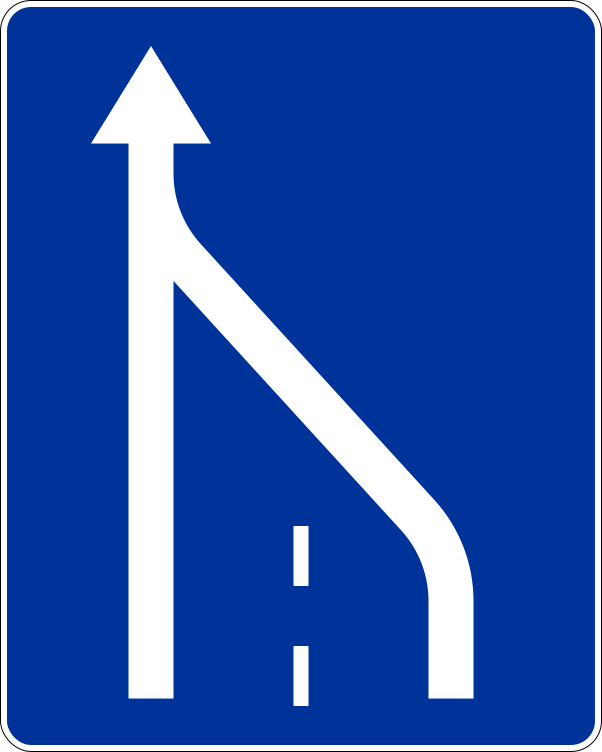
D-14 End of Lane: Know When and How to Merge Safely
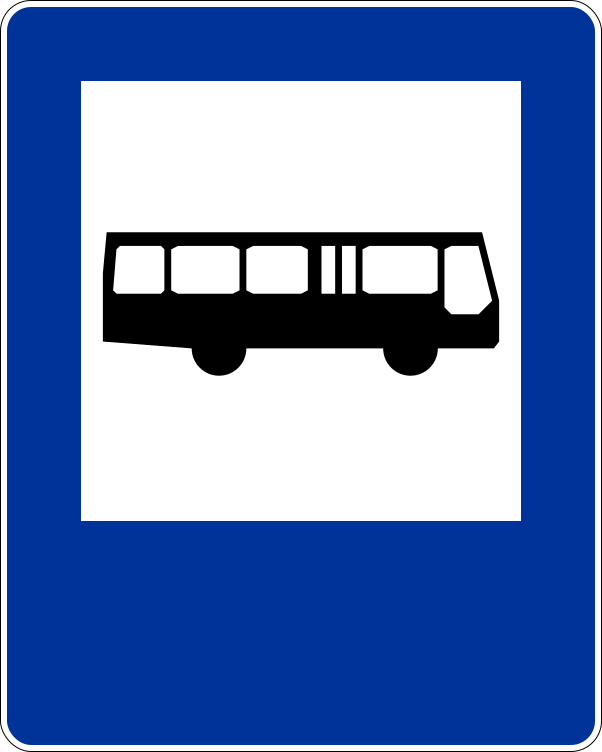
The D-15 'Bus Stop' Sign: Understanding and Reacting to Public Transport Stops
Deepen your understanding of specific road signs by reviewing official Polish traffic rules and associated real-world driving scenarios. These expert-led resources help you bridge the gap between visual recognition and practical exam application.
When driving in Polish cities, understanding how to interact with trams and buses is paramount. This guide breaks down the priority rules for trams and the specific regulations surrounding bus lanes, preparing you for complex urban scenarios encountered in the theory exam. Learn how to yield correctly and avoid hazardous situations, ensuring you drive safely and confidently in busy city environments.
Master the complex priority rules for trams and buses at Polish roundabouts.
Master Polish Crossing Markings for a Safer Drive and Exam Success.
Prepare thoroughly for the Polish bus driver theory exam by understanding your legal obligations and the documentation required to operate a bus in Poland. This guide covers key areas such as vehicle registration, driver licensing, and adherence to passenger limits, ensuring you are well-equipped for both the exam and professional driving.
The D-15 sign identifies a location where regular bus services stop to pick up and drop off passengers. It features a black bus silhouette on a blue background within a white rectangle. Beyond public transport, this sign also allows for the stopping of school buses and other vehicles performing regular passenger transport. Drivers should be particularly careful when passing a stopped bus, as passengers (especially children) may step out from behind the vehicle to cross the street.
The D-26d sign displays a black shower-head silhouette with water drops. These are typically located at motorway rest areas (MOP) or large truck stops. They are especially important for professional truck drivers who spend several days on the road, but they are also available to regular motorists and campers. Having access to a shower helps drivers stay refreshed and alert.
After reviewing the full list of Polish road signs, explore specific sign categories for in-depth understanding. Challenge your knowledge with practice questions focused on sign recognition and interpretation to solidify your preparation for the driving theory exam.
Browse All Polish Road Signs