
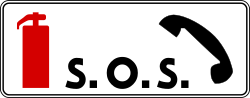
The T-33 sign, when seen below the D-50 'Emergency Bay' sign, informs you that this stopping area provides vital safety equipment. You'll find an SOS telephone for direct contact with road operators and a fire extinguisher to tackle small fires. These equipped bays are crucial for roadside safety, especially on expressways where they are typically spaced every 2 kilometers. Knowing its meaning ensures you can react appropriately in an emergency.
The T-33 sign indicates an emergency bay equipped with a telephone and fire extinguisher, vital for immediate assistance during breakdowns or incidents in Poland. Mastering this road sign meaning is crucial for your theory test revision and safe driving.
The T-33 plate features a telephone handset and a fire extinguisher silhouette. It is placed under the D-50 (Emergency Bay) sign. It tells the driver that this is not just a place to stop, but a life-saving station. If your car is on fire or you have a medical emergency, you can find the tools you need here. The SOS phone connects directly to the road operator's control center.
Informs you that the emergency bay is equipped with a phone and fire protection gear.
Get clear, practical answers to the most common questions about the T-33 - SOS Telephone and Extinguisher road sign. Learn how the sign works, what rules it represents, and how it affects real driving situations. This FAQ strengthens your understanding and supports accurate decision making for the Polish driving theory exam in Poland.
The T-33 sign's purpose is to inform drivers that a designated emergency bay is equipped with essential safety features: an SOS telephone connected to a control center and a fire extinguisher. It signifies that the bay offers more than just a place to stop; it provides tools for immediate assistance in case of fire or emergency.
You should use the SOS telephone marked by the T-33 sign strictly for genuine emergencies, such as reporting an accident, a serious breakdown, or a fire. Using it for non-emergencies, like asking for directions, is prohibited and can prevent others from accessing urgent help.
Yes, if you encounter a small engine fire or other minor fire incident while driving and can safely reach it, the fire extinguisher indicated by the T-33 sign is available for use. However, always prioritize your safety and do not attempt to fight a fire that is too large or dangerous.
A common misunderstanding in the theory exam is assuming any stopping area is equipped with an SOS phone and extinguisher. Remember, the T-33 sign specifically clarifies that these facilities are present in that particular emergency bay, usually located under the D-50 sign. Also, be aware of questions that test your knowledge on prohibited uses of the emergency phone.
The T-33 sign, especially in the context of expressways in Poland, often implies that these emergency bays with phones and extinguishers are strategically located at regular intervals, typically every 2 kilometers. This ensures drivers have access to help relatively quickly along these high-speed routes.
A clear reference image of the T-33 - SOS Telephone and Extinguisher road sign used in Poland.
The T-33 - SOS Telephone and Extinguisher road sign may also be known by these alternative names or terms.
The T-33 - SOS Telephone and Extinguisher road sign is part of the Supplementary Plates (T) category, which groups together signs with similar rules and functions.
Reviewing closely related road signs, like the T-33 'SOS Telephone and Extinguisher' with other supplementary plates, sharpens your recognition and reduces confusion. This targeted sign comparison is essential for effective theory test revision and accurate understanding of Polish traffic rules.
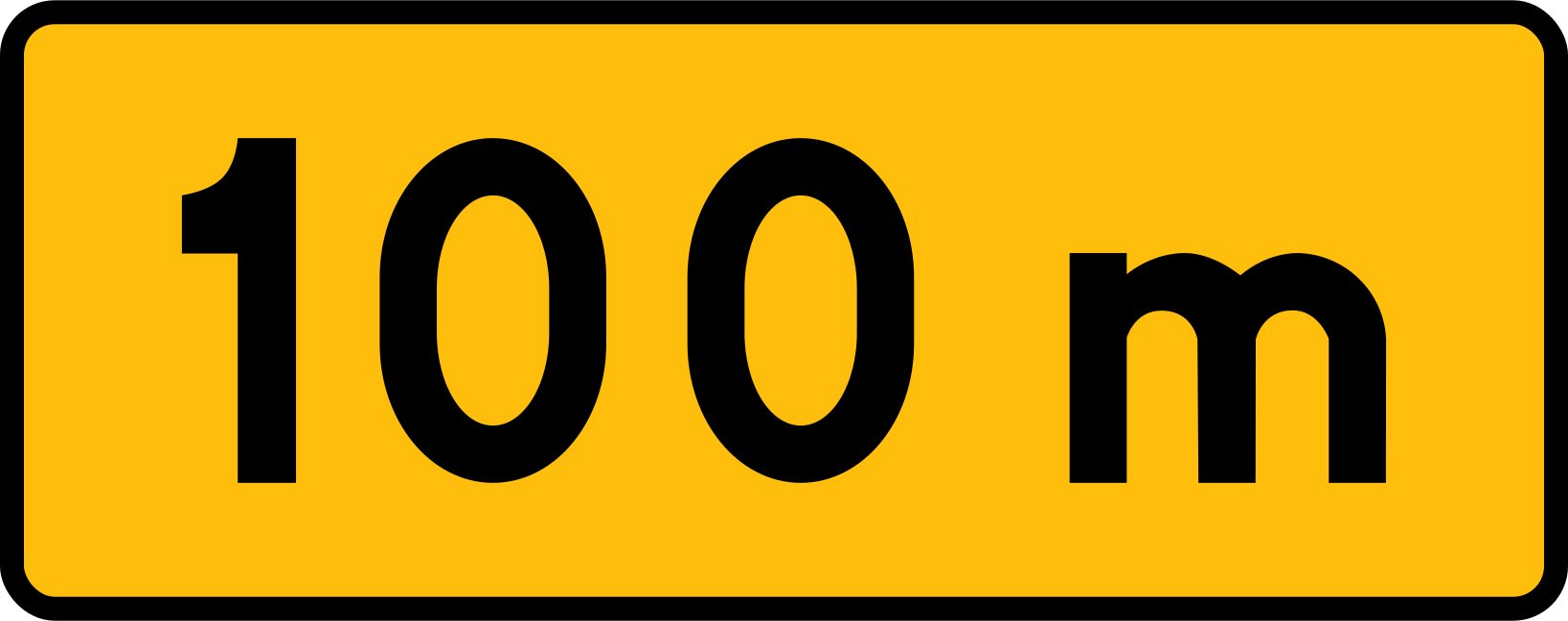
Understand the T-1 'Distance to Hazard' Plate for Safe Driving
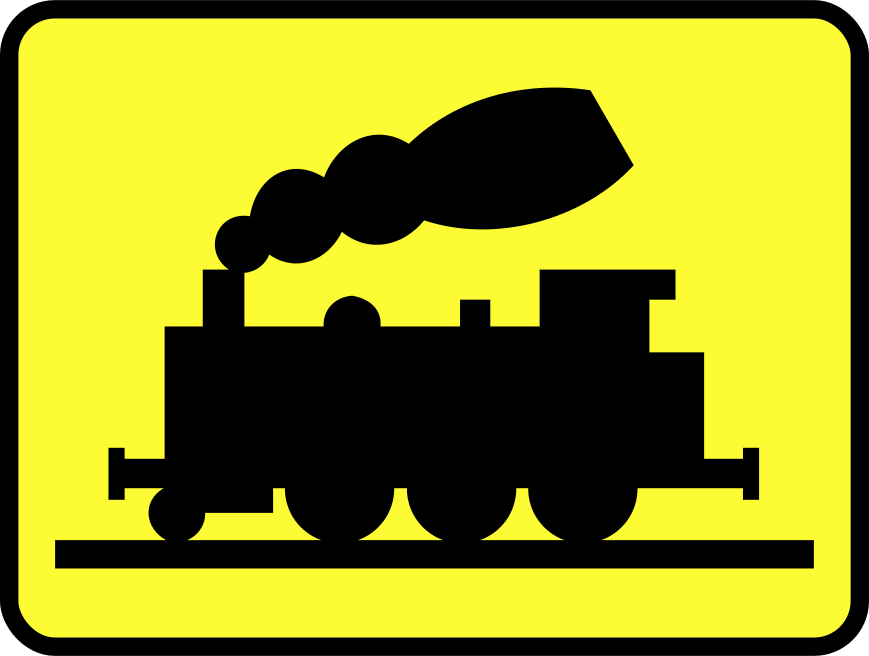
Beware of the T-10 sign: Industrial Railway Siding Ahead
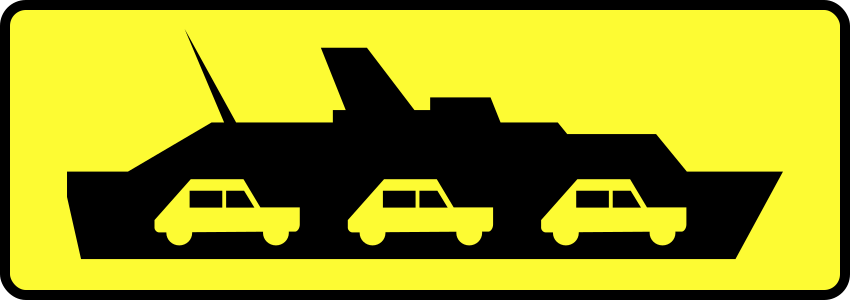
Prepare for a Ferry Crossing with the T-11 Warning Sign
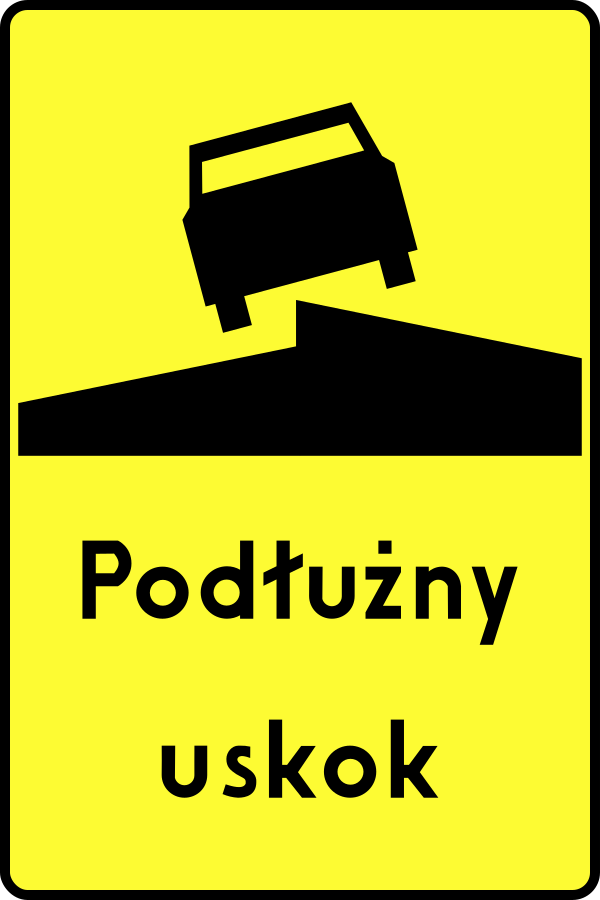
Watch out for the T-12 sign warning of a longitudinal step in the road surface!
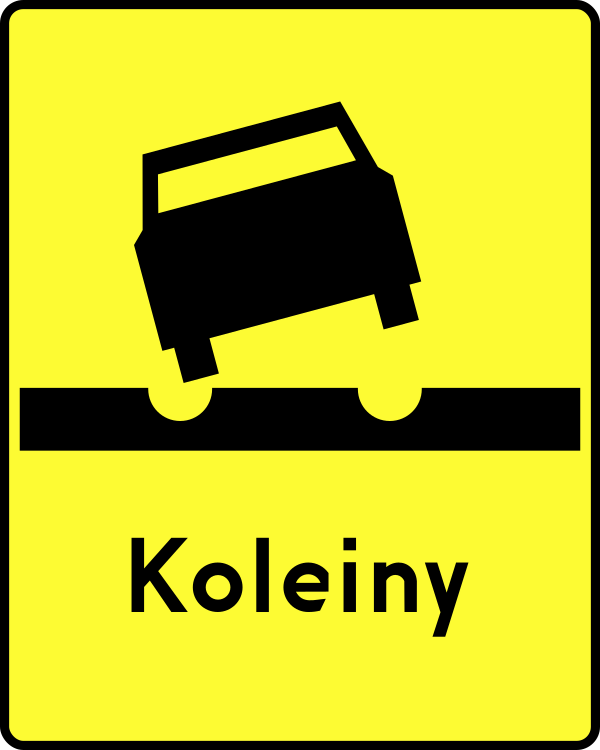
Warning: Deep Road Surface Ruts Ahead (T-13)
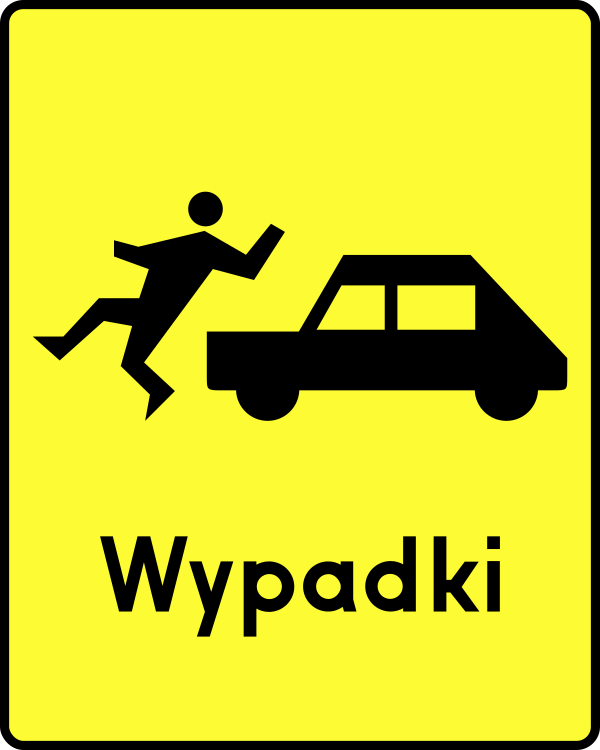
T-14: Beware of Frequent Pedestrian Accidents Ahead!
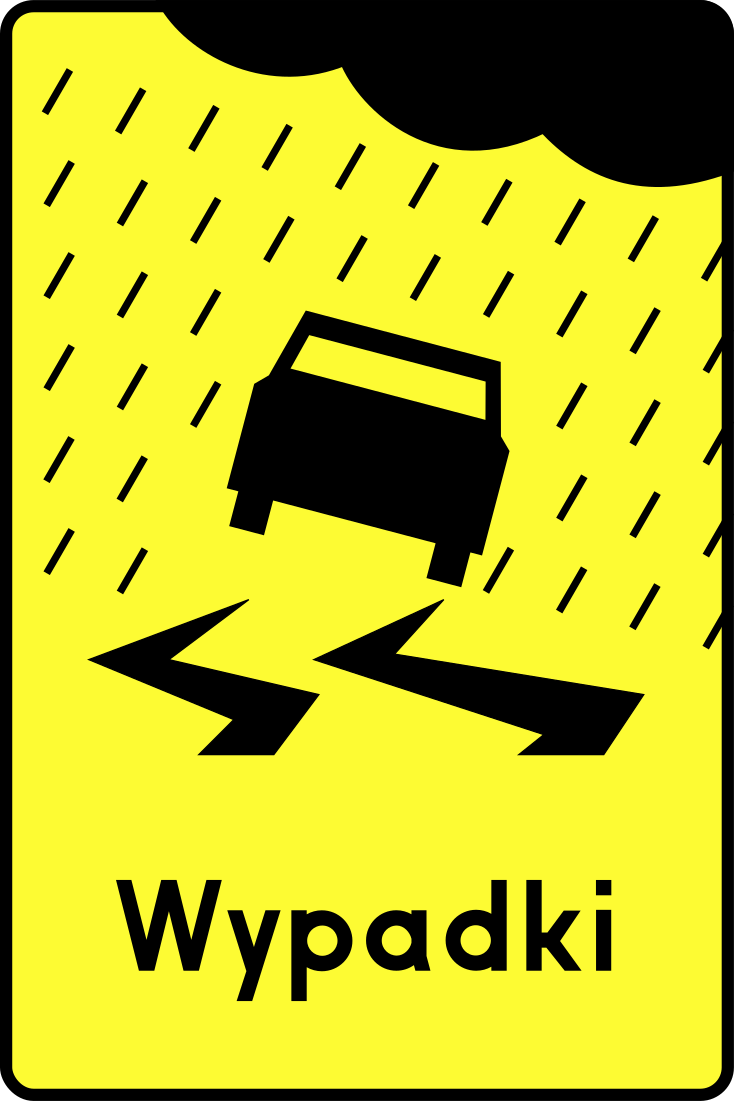
Beware: This Road Can Become Extremely Slippery When Wet!
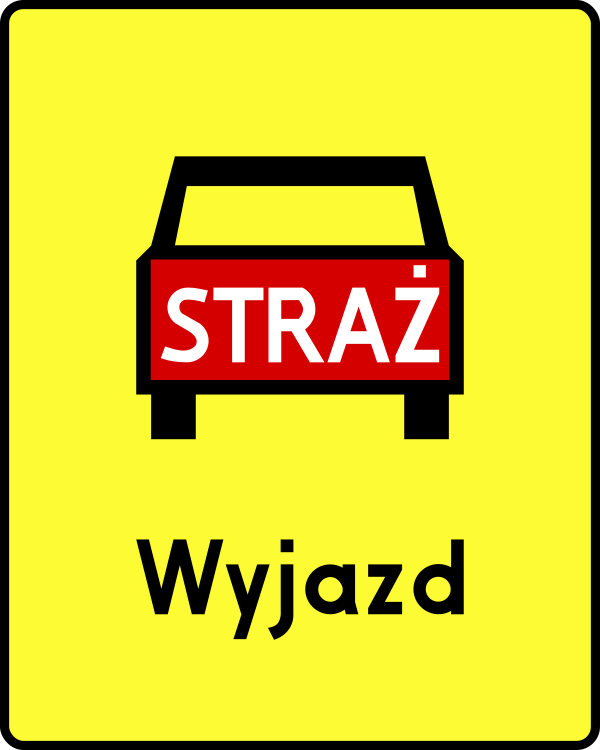
Prepare for sudden fire truck departures with the T-16 Fire Engine Exit sign.
Deepen your understanding of specific road signs by reviewing official Polish traffic rules and associated real-world driving scenarios. These expert-led resources help you bridge the gap between visual recognition and practical exam application.
Learn the critical distinctions between the Polish A-16 warning sign and the D-6 pedestrian crossing sign. This guide explains your legal responsibilities when approaching these areas, including the mandatory speed reduction and yielding requirements. Understand the significant penalties, such as hefty fines and accumulating penalty points, especially the 'recydywa' (repeat offender) system in Poland, which can lead to immediate license suspension.
This article delves into the crucial meaning of the Polish D-42 'Obszar Zabudowany' (Built-up Area) sign, a key topic for your Polish driving theory exam. You will learn why this sign automatically enforces a 50 km/h speed limit and the severe penalties, including fines up to 5,000 PLN and potential license revocation, for violations. Understanding and respecting the D-42 sign is essential for safe driving and passing your theory test.
Keep control of your car when the Polish weather turns severe.
Even a Second Can Be Fatal: Understand Microsleep to Drive Safely in Poland.
The D-34 sign features a lowercase 'i' (for information). It marks the location of an office dedicated to helping tourists navigate the local area. Here, you can find free maps, information about local attractions, museum opening hours, and help with booking accommodation. These centers are usually located in town halls, near train stations, or in popular tourist districts.
The T-13 plate is used with A-11 or A-30. Ruts (koleiny) are dangerous because they can trap your tires, making steering difficult, or they can fill with water, causing severe aquaplaning. In dry weather, they can cause a car to 'jump' out of the groove unexpectedly. Drivers should try to drive slightly offset from the ruts or reduce speed significantly to maintain control over the vehicle's direction.
After reviewing the full list of Polish road signs, explore specific sign categories for in-depth understanding. Challenge your knowledge with practice questions focused on sign recognition and interpretation to solidify your preparation for the driving theory exam.
Browse All Polish Road Signs