
Welcome to the final lesson in Unit 1, focusing on the structure of the Spanish DGT theoretical exam for motorcycle licences (A, A1, A2). This lesson is crucial for understanding how to best prepare for your test, providing essential insights into the exam format and effective study techniques. By mastering these strategies, you'll be well-equipped to tackle the official DGT questions and approach your exam with confidence.

Lesson content overview
Preparing for the Spanish DGT motorcycle theory exam requires a clear understanding of its structure, scoring, and the most effective study methods. This lesson provides a comprehensive guide to navigating the theoretical assessment for A, A1, and A2 licences, equipping you with the knowledge to approach your exam with confidence and maximize your chances of success. By understanding the test's blueprint and adopting proven study strategies, you can efficiently allocate your effort, reduce test-day anxiety, and aim for a first-attempt pass.
The Dirección General de Tráfico (DGT) motorcycle theory test assesses your knowledge of Spanish traffic laws, road safety principles, and motorcycle-specific regulations. It is a structured multiple-choice examination designed to ensure all prospective riders possess the fundamental theoretical understanding necessary for safe road use. Understanding this structure is the first step towards effective preparation.
The DGT theoretical exam typically comprises 30 multiple-choice questions (MCQs). Each question presents four possible answers, of which only one is correct. These questions cover a broad spectrum of topics, including traffic signs, road markings, speed limits, right-of-way rules, and specific motorcycle safety requirements. The consistency in format allows learners to familiarize themselves with the question style through practice, helping to build recognition and reduce processing time during the actual exam.
The required passing score for the DGT motorcycle theory test varies slightly depending on the specific licence category you are pursuing. For A1 and A2 licence categories, candidates must answer a minimum number of questions correctly to pass. The full A licence, which has no power restrictions, generally requires a slightly higher threshold due to its comprehensive nature. It is crucial to verify the exact pass mark for your specific licence category, as these figures represent absolute counts of correct answers, not percentages.
All DGT theory tests are administered under a strict time limit, typically 30 minutes for the 30 questions. This means candidates have, on average, one minute to read, comprehend, and answer each question. Efficient time management is therefore not just a recommendation but a mandatory skill for completing the exam successfully. Exceeding the total allotted time will result in automatic termination of the test session, regardless of how many questions have been answered.
Beyond knowing the number of questions and the time limit, understanding how your answers are scored is vital. The DGT employs a straightforward scoring algorithm that directly impacts your test-taking strategy. This transparency ensures a uniform and objective pass/fail decision across all test centers in Spain.
The DGT scoring algorithm is based purely on the number of correctly answered questions. Your raw score is simply the total count of items you answered right. To pass, this raw score must meet or exceed the predefined passing threshold for your specific licence category. For example, if the passing threshold is 27 out of 30 questions for an A1 licence, achieving 27, 28, 29, or 30 correct answers will result in a pass.
A key characteristic of the DGT theory test scoring algorithm is the absence of negative marking. This means that incorrect answers do not deduct points from your raw score. Only correct answers contribute positively to your total. This policy encourages candidates to attempt every question, even if they are unsure, as there is no penalty for guessing. However, relying heavily on guessing without prior knowledge is not a substitute for thorough preparation.
Since there is no penalty for incorrect answers, it is always advisable to answer every question. Do not leave any questions blank, even if you are uncertain about the correct response.
A successful approach to the DGT motorcycle theory test involves more than just memorizing facts; it requires a strategic plan built on evidence-based learning techniques. These methods are designed to enhance memory retention, improve recall speed, and build confidence under exam conditions.
Spaced repetition is a highly effective learning technique that involves reviewing information at increasing intervals over time. Instead of cramming all your studying into a few intensive sessions, spaced repetition leverages cognitive science principles to consolidate information into your long-term memory. This method prevents the rapid forgetting that often occurs after short-term cramming.
Initial Learning Phase: Dedicate focused sessions to thoroughly understand each thematic block (e.g., traffic signs, road markings, speed limits).
Review Phase: Revisit previously studied topics at increasing intervals. For instance, review a topic after 1 day, then 3 days, then a week, and then two weeks.
Consolidation Phase: In the weeks leading up to your exam, incorporate weekly full-length mock exams to test cumulative knowledge across all topics.
By structuring your study schedule with spaced repetition, you ensure that complex legal details and specific regulations are deeply embedded in your memory, making them easier to recall during the exam.
Active recall is the process of retrieving information from memory without external cues. Unlike passive review (e.g., re-reading notes or watching videos), active recall forces your brain to work harder, which strengthens memory pathways and improves your ability to remember facts under pressure. This technique directly mirrors the mental process required during the multiple-choice exam.
Flashcard Systems: Create flashcards (physical or digital, using apps like Anki) with a question or concept on one side and the answer on the other. Actively try to recall the answer before flipping the card.
Self-Testing: After reading a section, close your book or notes and try to summarize the key points in your own words. Ask yourself questions about the material and attempt to answer them without looking.
Practice Questions: Regularly engage with practice questions from official sources. This is a direct form of active recall that simulates the exam environment.
The most reliable resource for preparing for the Spanish motorcycle theory exam is the official question bank provided or approved by the DGT. These banks contain items that closely mimic the wording, style, and content of the questions you will encounter on the actual test. Studying from these official sources ensures that you are familiar with the exact competencies evaluated by the DGT.
Beware of unofficial or outdated question banks. Relying on materials that are not DGT-approved can expose you to incorrect information, misleading question formats, or topics that are no longer relevant, potentially harming your exam performance.
Many DGT-approved practice materials, including official PDFs or online platforms, are available and should form the cornerstone of your practice. Using these banks repeatedly is a highly effective way to internalize the correct answers and reasoning.
Full-length mock exams are indispensable for comprehensive preparation. These practice tests replicate the official exam environment, complete with the same number of questions and the strict time limit. Taking mock exams regularly provides invaluable feedback on your knowledge gaps, helps you refine your time management, and builds your test-taking stamina and confidence.
Identify Weak Areas: Mock exams reveal which thematic areas require further study.
Improve Pacing: They allow you to practice allocating your time effectively across all questions.
Reduce Anxiety: Familiarity with the exam format and pressure helps to calm nerves on test day.
Build Confidence: Consistently performing well on mock tests reinforces your readiness.
After each mock exam, review both your correct and incorrect answers. Understand why an answer was wrong, not just what the correct answer is. This critical self-analysis turns mistakes into learning opportunities.
Effective time management during the exam is as crucial as your theoretical knowledge. With only 30 minutes to answer 30 questions, a disciplined approach to pacing will prevent you from rushing or getting stuck on difficult items.
A general rule of thumb is to allocate approximately one minute per question. This baseline ensures you have enough time to read each question carefully, consider all answer options, and select your response. As you progress through the exam, periodically check your progress against the clock. For instance, after 15 minutes, you should ideally have completed around 15 questions.
Encountering a difficult question can disrupt your rhythm. Instead of dwelling on it, employ a strategic approach:
Practice this "flag and move on" strategy during your mock exams to build a natural rhythm and avoid getting bogged down by challenging questions.
Beyond the exam's internal structure, specific DGT regulations govern the test environment and the validity of your results. Adhering to these rules is paramount for a smooth testing experience and to ensure your efforts are recognized.
During the DGT theory test, absolutely no external aids are permitted. This includes books, notes, mobile phones, smartwatches, or any other electronic devices. The examination environment is strictly monitored to maintain integrity. Any attempt to use unauthorized aids will result in immediate disqualification and potential legal repercussions. Your preparation should therefore focus entirely on internalizing the knowledge you need.
Once you pass the DGT theory test, your score is typically valid for a specific period, generally one year. Within this timeframe, you must complete your practical riding tests to obtain your licence. If you fail to pass the practical exams within this validity period, you may need to re-register and retake the theory test. This policy ensures that candidates' theoretical knowledge remains current with any updates to traffic laws and regulations.
Even with thorough preparation, certain common mistakes can hinder performance on the DGT motorcycle theory test. Awareness of these pitfalls can help you steer clear of them.
One common misunderstanding is the belief that incorrect answers deduct points (negative marking). As discussed, the DGT scoring algorithm only counts correct answers. This misconception can lead candidates to leave questions unanswered out of fear of penalty, which ultimately lowers their potential raw score. Always attempt every question.
Relying on old or unofficial question banks is a significant risk. Traffic laws and regulations can be updated, and new question formats may be introduced. Using outdated materials can lead to confusion and incorrect answers on the actual exam. Always prioritize the latest official DGT resources for your study.
Many candidates struggle with time management. Spending too long on a single difficult question, rushing through the final questions, or leaving several questions unanswered due to poor pacing are common errors. These issues can be mitigated by consistent practice with timed mock exams and by employing the "flag and move on" strategy.
DGT questions are precise. Misinterpreting keywords like "must" versus "should," "always" versus "sometimes," or confusing different types of vehicles can lead to incorrect answers. Pay close attention to the exact wording and context of each question.
While the DGT theory test itself is a standardized set of questions, the real-world application of theoretical knowledge often involves contextual variations. Understanding these nuances is crucial for comprehensive learning and safe riding.
Questions about topics like stopping distances, visibility, or appropriate speed often have implied conditions. While the theory exam focuses on legal requirements, remember that factors like rain, fog, ice, or reduced light significantly alter safe riding practices. For example, a legal speed limit might be unsafe in heavy rain. Your study materials should ideally include examples that address how these conditions affect safe motorcycle operation.
The DGT exam covers general motorcycle knowledge, but certain rules vary based on the motorcycle's engine size or power output. For instance, specific speed limits or restrictions may apply to A1 licence holders (up to 125 cc motorcycles) compared to full A licence holders. Always ensure you understand which regulations apply to your specific licence category and motorcycle type.
Many theory questions pertain to sharing the road safely with vulnerable users such as pedestrians, cyclists, and other two-wheeled vehicles. The correct response in such scenarios often hinges on specific right-of-way rules, safe passing distances, and heightened awareness, which can differ based on the road environment (e.g., urban streets vs. rural roads, intersections vs. roundabouts).
The DGT motorcycle theory exam is not merely an academic exercise; it forms the foundational knowledge for safe and responsible riding. Every rule, regulation, and safety principle tested in the exam directly translates into real-world scenarios you will encounter on the road.
Understanding concepts like hazard perception, defensive riding techniques, and proper road positioning, which are built upon the theoretical knowledge, will equip you to make informed decisions and react appropriately to dynamic traffic situations. For instance, knowing the legal requirements for helmet use (a theory question) directly reduces injury risk (a safety insight). Similarly, understanding right-of-way at intersections (a theory topic) is critical for avoiding collisions in practice. This symbiotic relationship between theory and practice underscores the importance of mastering the DGT exam content thoroughly.
Understanding key terminology is crucial for success in the DGT theory test. Here are some essential terms you will encounter:
The DGT motorcycle theory test for A, A1, and A2 licences consists of 30 multiple-choice questions with a strict 30-minute time limit and no negative marking, meaning every question should be attempted. Effective preparation combines spaced repetition, active recall techniques, and regular practice with official DGT question banks, culminating in full-length mock exams to build pacing skills and identify weak areas. Understanding the scoring algorithm, permitted aids, and score validity periods is essential for a smooth testing experience. Common pitfalls include time management errors, outdated study materials, and misinterpreting precise question wording.
A short set of high-value points that capture the most important learning from this lesson.
The DGT motorcycle theory test uses 30 multiple-choice questions with four options each, requiring a specific number of correct answers to pass depending on licence category.
There is no negative marking in the DGT test, so candidates should always attempt every question even if uncertain.
Spaced repetition and active recall are evidence-based techniques that strengthen long-term memory retention for exam content.
Only official or DGT-approved question banks should be used for practice, as unofficial materials may contain outdated or incorrect information.
Mock exams help identify knowledge gaps, improve pacing, and build the confidence needed to pass on the first attempt.
Explore all units and lessons included in this driving theory course.
No external aids are permitted during the DGT theory test; all knowledge must be internalised beforehand.
The scoring algorithm only counts correct answers; incorrect answers do not deduct points.
Allocate approximately one minute per question to complete all 30 questions within the 30-minute time limit.
Traffic laws and specific regulations may vary depending on the motorcycle licence category (A1, A2, or A).
After passing, theory test scores are typically valid for one year to complete the practical riding tests.
Believing that incorrect answers deduct points leads candidates to leave questions blank, reducing their potential score.
Using outdated or unofficial question banks instead of official DGT materials can expose learners to incorrect information.
Poor time management, such as spending too long on difficult questions or rushing at the end, results in unanswered questions.
Misinterpreting keywords in questions like 'must' versus 'should' or 'always' versus 'sometimes' leads to incorrect answers.
Relying solely on passive review methods like re-reading notes instead of actively testing knowledge.
Lesson content overview
A short set of high-value points that capture the most important learning from this lesson.
The DGT motorcycle theory test uses 30 multiple-choice questions with four options each, requiring a specific number of correct answers to pass depending on licence category.
There is no negative marking in the DGT test, so candidates should always attempt every question even if uncertain.
Spaced repetition and active recall are evidence-based techniques that strengthen long-term memory retention for exam content.
Only official or DGT-approved question banks should be used for practice, as unofficial materials may contain outdated or incorrect information.
Mock exams help identify knowledge gaps, improve pacing, and build the confidence needed to pass on the first attempt.
Explore all units and lessons included in this driving theory course.
No external aids are permitted during the DGT theory test; all knowledge must be internalised beforehand.
The scoring algorithm only counts correct answers; incorrect answers do not deduct points.
Allocate approximately one minute per question to complete all 30 questions within the 30-minute time limit.
Traffic laws and specific regulations may vary depending on the motorcycle licence category (A1, A2, or A).
After passing, theory test scores are typically valid for one year to complete the practical riding tests.
Believing that incorrect answers deduct points leads candidates to leave questions blank, reducing their potential score.
Using outdated or unofficial question banks instead of official DGT materials can expose learners to incorrect information.
Poor time management, such as spending too long on difficult questions or rushing at the end, results in unanswered questions.
Misinterpreting keywords in questions like 'must' versus 'should' or 'always' versus 'sometimes' leads to incorrect answers.
Relying solely on passive review methods like re-reading notes instead of actively testing knowledge.
Explore search topics learners often look for when studying Theory Test Structure and Study Strategies. These topics reflect common questions about road rules, driving situations, safety guidance, and lesson level theory preparation for learners in Spain.
Browse additional driving theory lessons that cover connected traffic rules, road signs, and common driving situations related to this topic. Improve your understanding of how different rules interact across everyday traffic scenarios.
Understand the format of the DGT motorcycle theory test, including question count, passing scores for A, A1, A2 licences, and time limits. Learn proven study strategies for effective preparation and exam success.

In this lesson, the structure and administration of the driving licence examinations are explained, covering both the theory and practical components. It details the format of the multiple-choice theory test, the pass criteria, and the process of registering for examinations through the DGT platform. The content also discusses test locations, scheduling, and the issuance of certification upon successful completion.
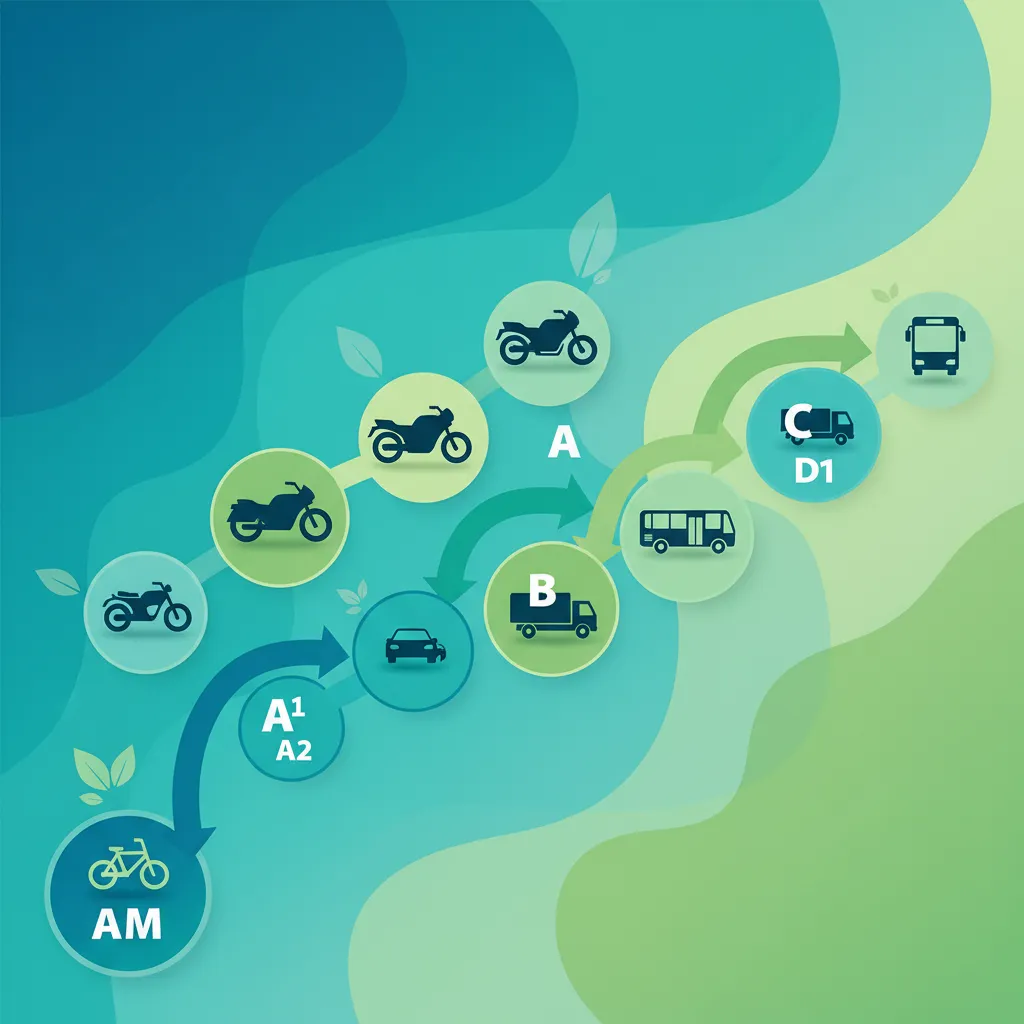
This lesson details the A1, A2, and A motorcycle licence categories recognized by the DGT, focusing on technical specifications like engine displacement and power limits. It explains the progressive licensing path, age thresholds, and mandatory training requirements for each stage. The content also covers the administrative procedures for applying and the legal responsibilities of each licence holder.

This lesson details overtaking rules specific to motorcyclists, covering safe zones, required visibility distance, and assessment of oncoming traffic. It emphasizes the importance of speed matching and correct timing of lane changes. The module references DGT regulations, including conditions for passing on the left or right in various environments.

This lesson categorizes the range of motorcycles, distinguishing between sport, naked, touring, off-road, scooter, and electric models. It analyzes each category’s design, performance characteristics, and typical use cases such as urban commuting or long-distance touring. Understanding these attributes helps align a vehicle choice with a specific licence category and riding environment.
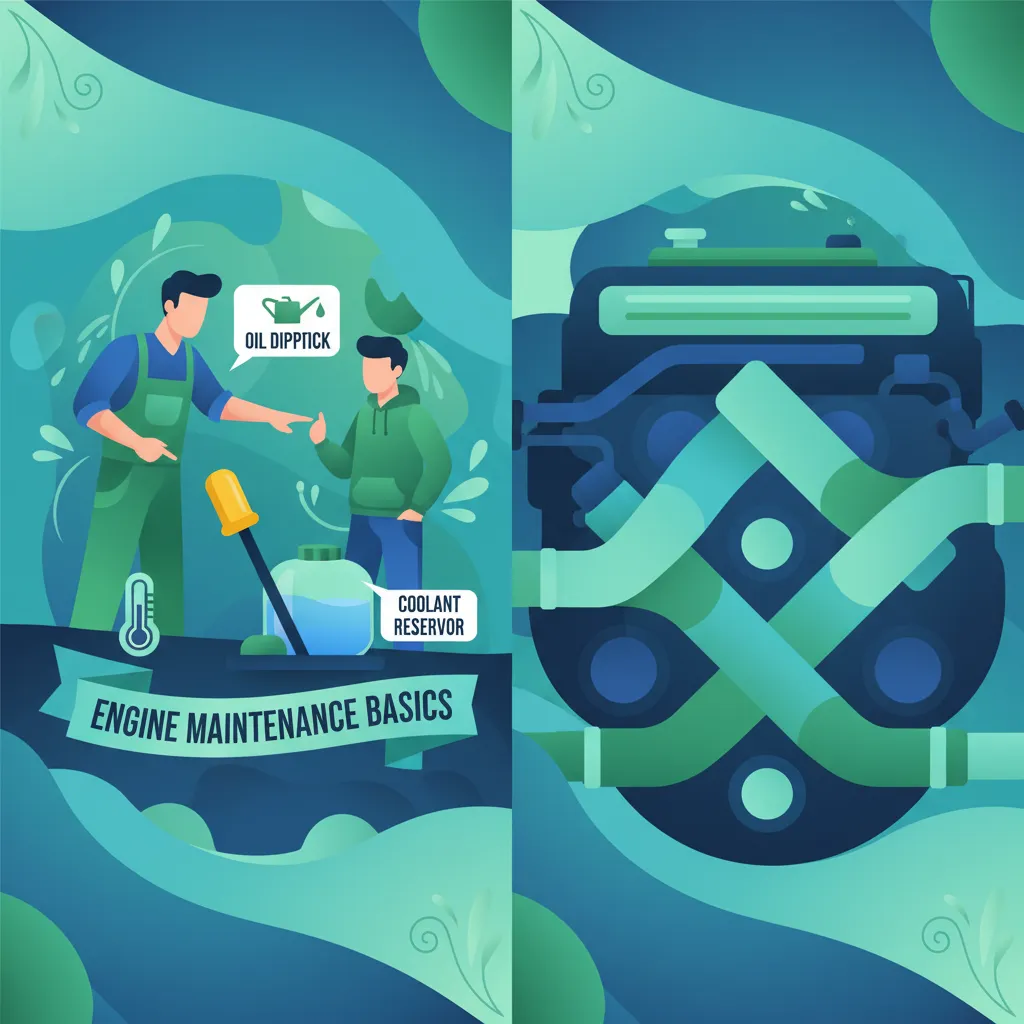
This lesson introduces essential mechanical checks to ensure motorcycle reliability and safety. Topics include monitoring engine oil and coolant levels, chain lubrication procedures, and tire pressure verification. By establishing a routine maintenance schedule, riders can proactively address issues and comply with DGT guidelines.

This lesson explores proper lane positioning, emphasizing strategic selection of traffic lanes for optimal visibility. It explains the importance of rider line of sight and peripheral vision in maintaining situational awareness. The content also covers legal aspects of lane splitting and correct usage of road shoulders, abiding by DGT regulations.

This lesson outlines procedures for handling emergency situations and accidents. It covers emergency braking techniques, hazard avoidance strategies, and the DGT emergency protocol for accident reporting. Emphasis is placed on rider protective actions, post-crash first aid, roadside safety, and legal obligations after an incident.

This lesson addresses the legal and practical aspects of carrying passengers, outlining DGT regulations and weight limits. Learners examine how extra weight influences the center of gravity, braking distances, and handling characteristics. Guidance is provided on proper load distribution and communication to maintain control and safety.
Learn how the DGT theory test scoring algorithm works, the absence of negative marking, and critical insights into common pitfalls. Understand how to avoid misinterpretations and preparation errors for the motorcycle theory exam.
In this lesson, the structure and administration of the driving licence examinations are explained, covering both the theory and practical components. It details the format of the multiple-choice theory test, the pass criteria, and the process of registering for examinations through the DGT platform. The content also discusses test locations, scheduling, and the issuance of certification upon successful completion.
This lesson outlines procedures for handling emergency situations and accidents. It covers emergency braking techniques, hazard avoidance strategies, and the DGT emergency protocol for accident reporting. Emphasis is placed on rider protective actions, post-crash first aid, roadside safety, and legal obligations after an incident.
This lesson details overtaking rules specific to motorcyclists, covering safe zones, required visibility distance, and assessment of oncoming traffic. It emphasizes the importance of speed matching and correct timing of lane changes. The module references DGT regulations, including conditions for passing on the left or right in various environments.

This lesson identifies frequent beginner errors such as over-application of throttle, misuse of the clutch, and improper braking timing. It analyzes the underlying causes of these mistakes and offers corrective techniques to develop safe riding habits. By referencing DGT exam examples, learners gain insight into how to avoid these common pitfalls.

This lesson addresses common errors made by drivers when using roundabouts and presents corrective strategies. It covers issues such as entering from the wrong lane, failing to yield to circulating traffic, exceeding the recommended speed, and not signaling an exit correctly. By understanding these mistakes, drivers can improve their roundabout proficiency and reduce accident risk.

This lesson presents advanced cornering scenarios common on Spanish roads, such as mountain hairpins and high-speed autovía exits. It outlines specific techniques for descent control, ascent maneuvers, and safely merging into traffic after cornering. Interaction with cyclists and emergency cornering strategies are also covered in accordance with DGT regulations.

This lesson explains the Spanish traffic penalty system, which combines fines with a demerit points system linked to the driving license. It outlines the different categories of infractions (minor, serious, very serious) and their corresponding penalties in terms of fines and points lost. Understanding this system is essential for riders to appreciate the long-term consequences of traffic violations, which can ultimately lead to the suspension of their license.

This lesson covers the legal overtaking procedures applicable on different road types, focusing on identifying safe passing zones and executing maneuvers correctly. Learners will be taught how to maintain adequate safety distances before, during, and after overtaking. The content includes DGT regulations for overtaking, appropriate signaling, and visibility checks to ensure safe completion of the maneuver.
This lesson addresses the legal and practical aspects of carrying passengers, outlining DGT regulations and weight limits. Learners examine how extra weight influences the center of gravity, braking distances, and handling characteristics. Guidance is provided on proper load distribution and communication to maintain control and safety.

This lesson focuses on identifying blind spot zones created by larger vehicles and the rider’s own positioning. It covers effective mirror usage, lateral awareness techniques, and the importance of head checks before lane changes. DGT blind spot guidelines are referenced, emphasizing situational scanning to maintain safety in traffic.
Find clear answers to common questions learners have about Theory Test Structure and Study Strategies. Learn how the lesson is structured, which driving theory objectives it supports, and how it fits into the overall learning path of units and curriculum progression in Spain. These explanations help you understand key concepts, lesson flow, and exam focused study goals.
The official DGT theory exam for motorcycle licences (A, A1, A2) typically consists of 30 multiple-choice questions. You need to answer a minimum of 27 questions correctly to pass.
To pass the DGT motorcycle theory test, you must achieve a score of at least 27 correct answers out of the 30 questions presented. This means a maximum of 3 errors are permitted.
Yes, effective strategies include creating a consistent revision schedule, regularly practicing with official DGT question banks, understanding the reasoning behind each answer, and simulating exam conditions to manage time effectively.
The DGT usually allocates approximately 30 minutes for the motorcycle theory exam. This means you should aim to spend about one minute per question, allowing extra time for reviewing your answers.
Official DGT question banks are often available through authorised driving schools or can be accessed via practice platforms that are updated regularly with official test material. Ensure you use up-to-date resources.
Use our powerful search functionality to pinpoint specific Spanish DGT driving theory practice sets. Filter by road sign categories, traffic law topics, or question difficulty to build custom study sessions and reinforce your knowledge precisely where it matters for your official exam.