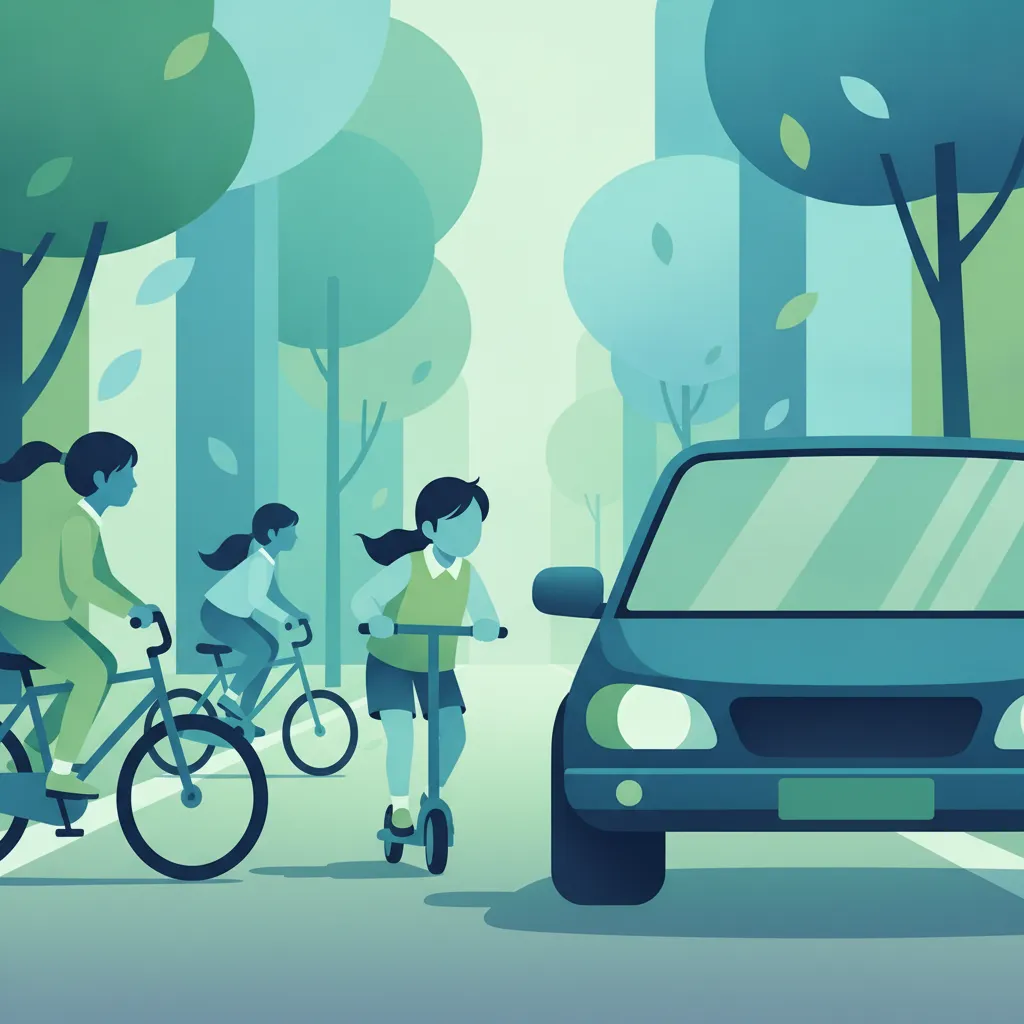
This lesson focuses on the essential skills for interacting with vulnerable road users, including children, cyclists, and the elderly. You will learn the strict StVO regulations for approaching public transport and master the life-saving procedure of forming an emergency corridor (Rettungsgasse) on German motorways.
Lesson content overview
As a driver in Germany, understanding and protecting vulnerable road users is not just a matter of courtesy, but a fundamental legal and ethical responsibility. These individuals, due to various factors like age, physical ability, or their mode of transport, are at a significantly higher risk of serious injury or fatality in the event of a collision. This lesson delves into identifying these vulnerable groups, outlines the specific rules and behaviors required when interacting with them, and details crucial safety protocols like forming an emergency corridor (Rettungsgasse) to ensure the safety of all road participants.
A vulnerable road user is defined as any person who is more susceptible to severe injury or death in a traffic accident due to their lack of protection compared to occupants of a motor vehicle. This category primarily includes pedestrians, cyclists, children, the elderly, and individuals with disabilities. Their vulnerability stems from factors such as lower visibility, slower reaction times, less predictable movements, and the complete lack of physical protection that a vehicle offers its occupants. Drivers must always apply increased vigilance, lower speeds, and maintain greater stopping distances when operating in areas where these users are likely to be present.
Children represent a particularly vulnerable group due to their developing cognitive and physical abilities. They often have a limited perception of danger, struggle to accurately judge speeds and distances of approaching vehicles, and their field of vision is narrower than that of adults. Their small stature also makes them less visible to drivers, especially when they dart out from between parked cars or obscured areas.
When driving near schools, playgrounds, residential streets, or any area where children might be present, drivers must:
Elderly pedestrians and cyclists also require special consideration. As people age, their physical and sensory abilities can diminish, affecting their hearing, vision, reaction time, and mobility. They may walk or cycle more slowly, take longer to cross the street, or misjudge traffic situations. They might also react unexpectedly to sudden changes in traffic.
Drivers should demonstrate:
Road users with disabilities, whether visible or not, may face unique challenges in traffic. This includes individuals using wheelchairs, mobility scooters, or crutches, as well as those with hearing or visual impairments. Their movements might be slower, or they might not perceive traffic signals or vehicle sounds as readily.
Drivers must:
While all pedestrians and cyclists are considered vulnerable, their risk increases significantly in certain situations, such as at intersections, when crossing multi-lane roads, or during adverse weather conditions. Drivers must constantly scan for these users, particularly when turning, opening car doors, or driving in urban environments. Remember that cyclists are often faster than pedestrians but still lack vehicle protection.
In Germany, drivers must always be prepared for unexpected actions from vulnerable road users. This proactive approach is key to preventing accidents.
School buses (Schulbusse) are a common sight in Germany, transporting children to and from educational institutions. The presence of a school bus, especially when it is actively engaged in dropping off or picking up passengers, requires specific and mandatory actions from all other drivers to ensure the safety of the children.
A public transport vehicle specifically designated for transporting school children. These buses are often equipped with special warning signals (e.g., flashing lights, extendable stop signs) to indicate when children are boarding or alighting.
When a school bus signals its stop to allow children to board or alight, all drivers approaching from either direction must stop completely. This rule applies regardless of the number of lanes, traffic dividers, or the direction of travel. You must remain stopped until the bus moves on, or its warning signals are deactivated. This is critical because children may rush to or from the bus, cross the road unpredictably, or be hidden from view by the bus itself.
Observe for flashing hazard lights or extendable stop signs on the school bus.
Slow down immediately and prepare to stop.
Stop completely, maintaining a safe distance from the bus, and wait for all children to clear the area.
Do not proceed until the bus moves or its warning signals are turned off.
Common Misunderstandings: Many drivers mistakenly believe they can continue if they are in an opposing lane or if there's a median. In Germany, the rule is unambiguous: stop for all active school bus signals. Failure to comply with this rule is a serious traffic violation and significantly endangers children.
Public transport vehicles (Öffentlicher Personennahverkehr or ÖPNV) such as buses and trams, frequently stop to allow passengers to board and alight. These interactions present specific scenarios where drivers must yield to ensure passenger safety.
Buses, trams, and similar vehicles that operate on set routes and schedules, providing mass transit services.
When a bus pulls away from a designated bus stop and signals its intention to re-enter traffic, drivers must generally yield the right-of-way to the bus. This allows the bus to maintain its schedule and ensures a smooth flow of public transport. However, this yielding obligation applies only if the bus signals its intention and re-enters the lane without endangering other traffic. In practice, it means giving way to the bus.
Crucially, when a bus or tram stops at a designated stop, especially if passengers are crossing the road to or from the vehicle, drivers must:
Trams often operate on their own tracks but may share road space with other vehicles. Drivers must be extremely cautious around trams as they cannot swerve or stop quickly. Pedestrians crossing tram tracks or passengers boarding/alighting trams that stop in the middle of the road require absolute priority and driver awareness. Always give ample space and be prepared for sudden stops.
The Rettungsgasse, or emergency corridor, is a mandatory traffic lane formation in Germany designed to allow emergency vehicles (police, fire brigade, ambulances) to quickly pass through traffic jams on motorways (Autobahnen) and federal roads (Bundesstraßen) with multiple lanes. Forming this corridor promptly is a legal requirement and can be the difference between life and death for those needing urgent help.
A designated lane formation created by drivers in congested traffic to provide a clear path for emergency vehicles.
The obligation to form a Rettungsgasse arises as soon as traffic slows down to a walking pace or comes to a complete standstill, typically when the speed drops below 60 km/h. It should be formed immediately and without waiting for sirens or flashing lights.
Do not wait for emergency vehicles to appear. The Rettungsgasse must be formed as soon as traffic starts to slow down significantly on multi-lane roads.
How to Form the Rettungsgasse:
On roads with two lanes in one direction: Vehicles in the left lane must move as far as possible to the left edge of their lane. Vehicles in the right lane must move as far as possible to the right edge of their lane. This creates a clear path down the middle.
On roads with three or more lanes in one direction: Vehicles in the leftmost lane must move as far as possible to the left edge of their lane. All other vehicles (in the middle and right lanes) must move as far as possible to the right edge of their respective lanes. This also creates the corridor between the leftmost lane and the lane immediately to its right.
As soon as traffic slows or stops on multi-lane roads, anticipate the need for a Rettungsgasse.
If you are in the leftmost lane, steer your vehicle towards the far left edge of your lane.
If you are in any other lane (right or middle), steer your vehicle towards the far right edge of your lane.
Ensure you leave enough space for emergency vehicles to pass safely and quickly.
Do not enter the emergency corridor yourself, and remain in your position until traffic begins to flow normally.
Failure to form a Rettungsgasse correctly or hindering emergency vehicles is a serious offense in Germany, carrying significant penalties. These penalties can include substantial fines, points on your driving license, and even a driving ban, especially if an emergency vehicle is obstructed. The legal obligation underscores the critical importance of this rule for public safety.
Effective interaction with all road users, especially vulnerable ones, hinges on three core principles:
In Germany, the principle of "defensive driving" is paramount. This means driving in a manner that accounts for the mistakes of others and avoids putting yourself or others at risk.
Many accidents involving vulnerable road users result from common driver errors. Being aware of these pitfalls can help you avoid them:
The German Road Traffic Act (Straßenverkehrs-Ordnung – StVO) explicitly outlines the duties of drivers towards vulnerable road users. Key principles include:
Adhering to these regulations is not only a legal mandate but a moral imperative to ensure the safety and well-being of all individuals sharing Germany's roads.
Explore all units and lessons included in this driving theory course.
Lesson content overview
Explore all units and lessons included in this driving theory course.
Explore search topics learners often look for when studying Vulnerable Road Users. These topics reflect common questions about road rules, driving situations, safety guidance, and lesson level theory preparation for learners in Germany.
Browse additional driving theory lessons that cover connected traffic rules, road signs, and common driving situations related to this topic. Improve your understanding of how different rules interact across everyday traffic scenarios.
Understand how to safely interact with vulnerable road users like children and seniors. Learn the German StVO rules for school buses and the critical requirement to form an emergency corridor (Rettungsgasse) for emergency vehicles.
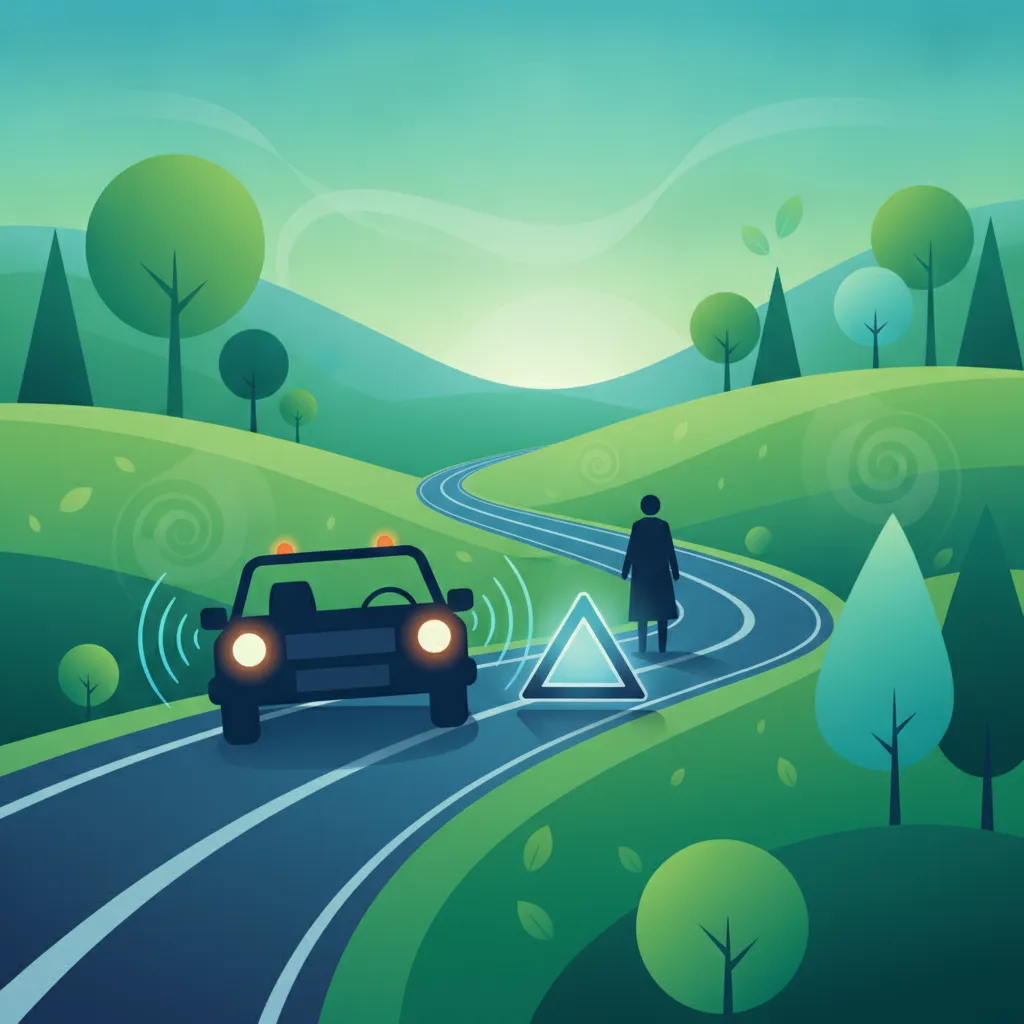
This lesson outlines a clear, systematic procedure for managing a vehicle breakdown safely and efficiently. It covers immediate actions such as activating hazard lights, placing a warning triangle, and moving the vehicle to a safe location if possible. Learners will understand how to communicate the situation to passengers, decide if an evacuation is necessary, and contact the appropriate breakdown services for assistance.
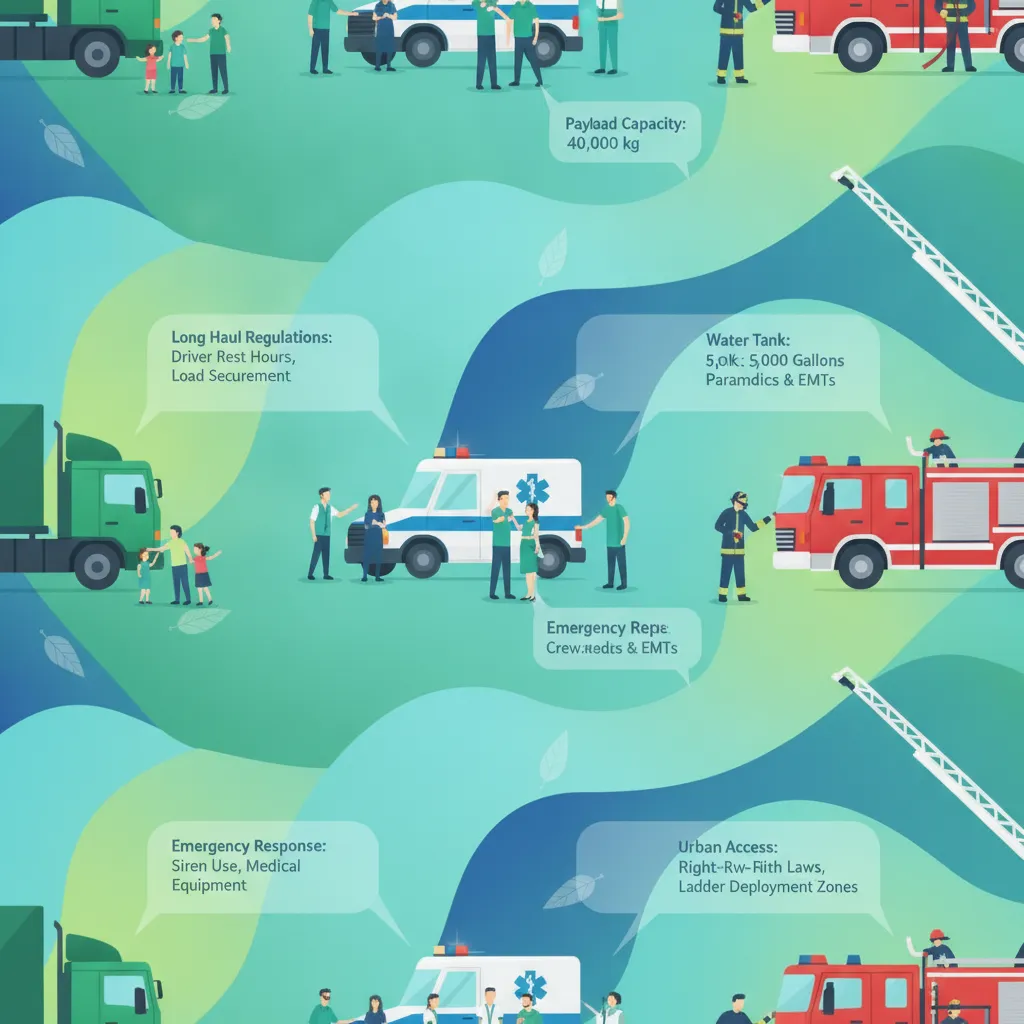
This lesson covers safe interaction with special vehicles. It details the challenges of driving near large trucks (LKW), including their extensive blind spots, longer stopping distances, and the effects of wind turbulence when overtaking them. A critical part of the lesson is explaining the correct procedure for reacting to emergency vehicles by creating an emergency corridor ('Rettungsgasse') on multi-lane roads.
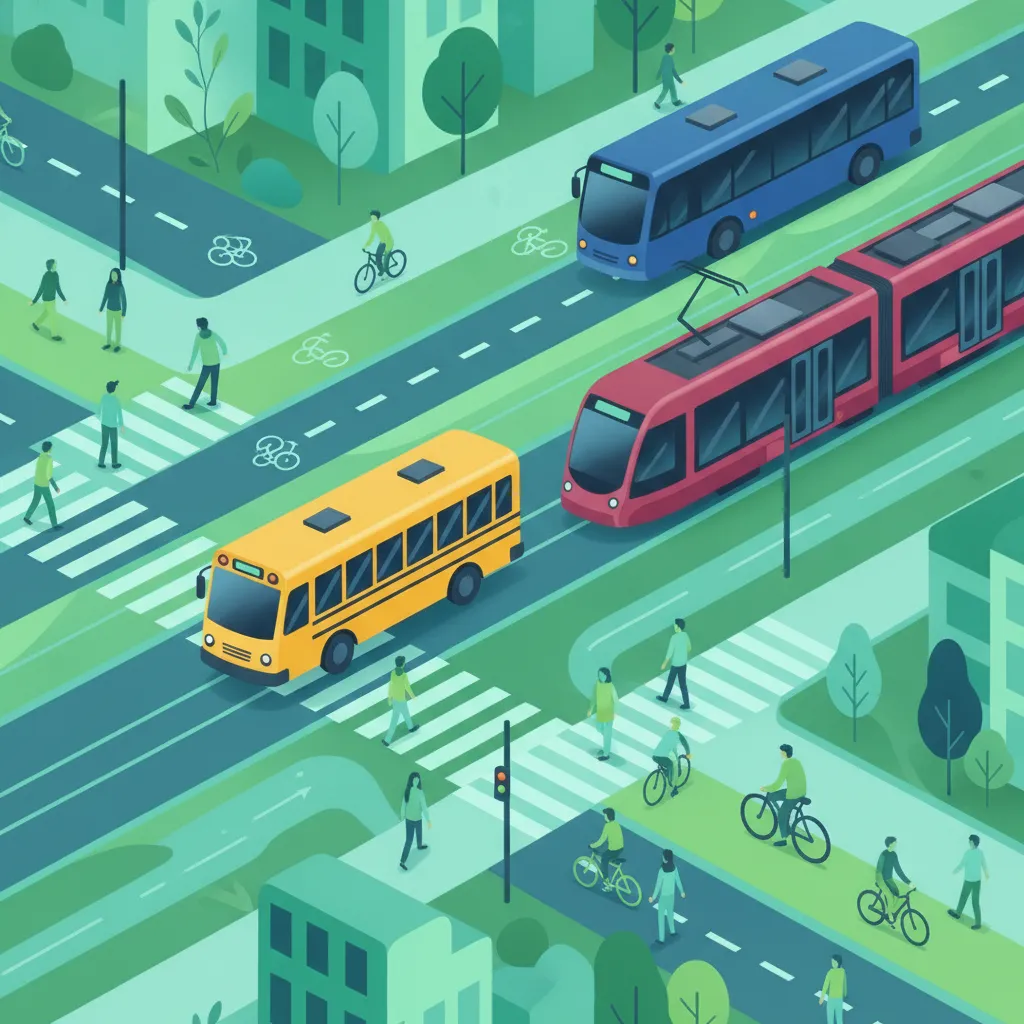
This lesson explains the specific regulations when encountering public transport. It covers the legal requirement to yield to public buses signaling to leave a bus stop and the strict rules for passing school buses with flashing hazard lights. You will also learn about the absolute priority of trams ('Straßenbahn') and how to safely drive on or across their tracks.
This lesson teaches riders how to interact safely and predictably with pedestrians, cyclists, and public transport vehicles. It highlights the importance of yielding at designated crossings, maintaining a safe passing distance, and anticipating the movements of buses and trams. The content emphasizes using eye contact and clear signaling to foster safe and respectful interactions with all road users.

This lesson covers the essential behavioral rules mandated by the German Road Traffic Act (StVO) that form the foundation of safe driving. Key principles discussed include the mandatory rule to drive on the right side of the road, maintaining a safe following distance, and adapting speed to conditions. It also explains the regulations for overtaking, merging, and parking to ensure smooth and safe traffic flow.
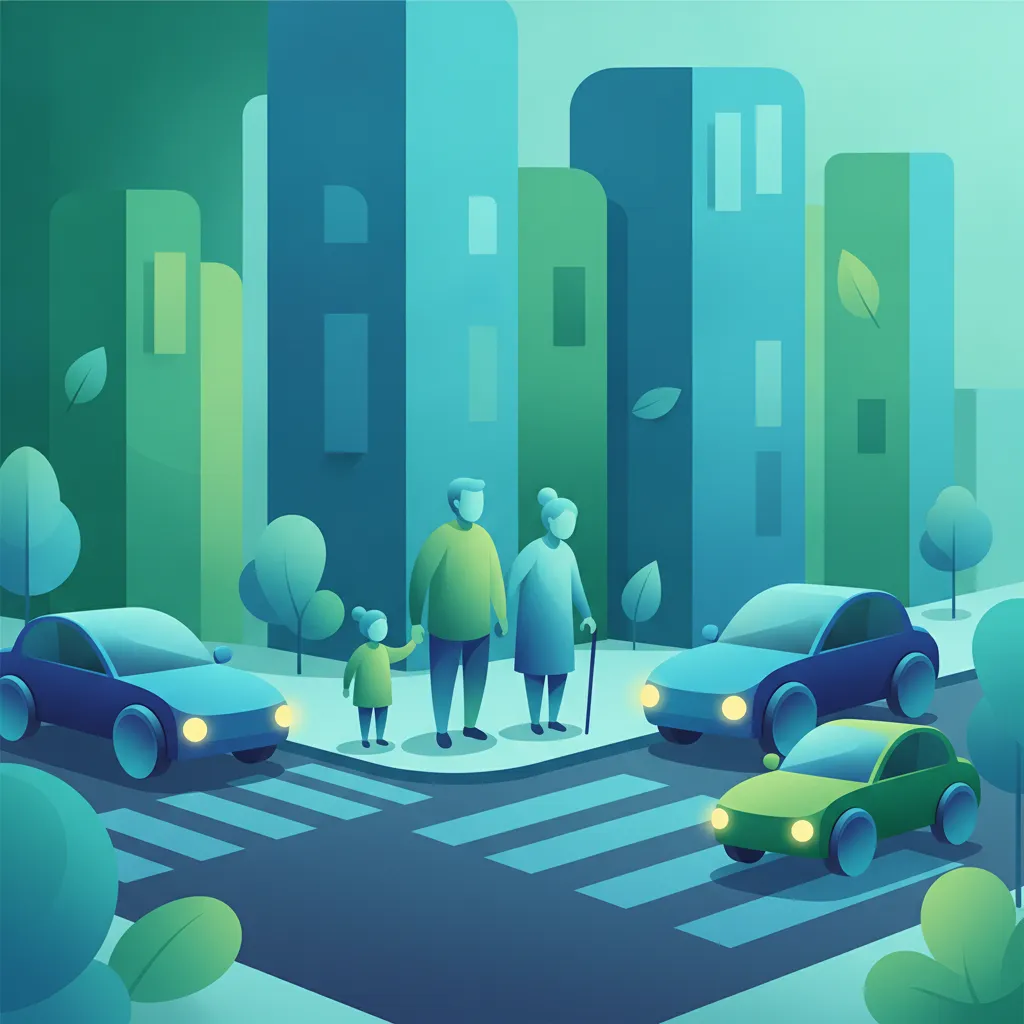
This lesson focuses on the particular care required when driving near pedestrians, with a special emphasis on children and the elderly, whose behavior can be unpredictable. It covers the rules for yielding at zebra crossings and the importance of reducing speed near schools, playgrounds, and residential areas. The goal is to instill a habit of constant vigilance and readiness to stop.
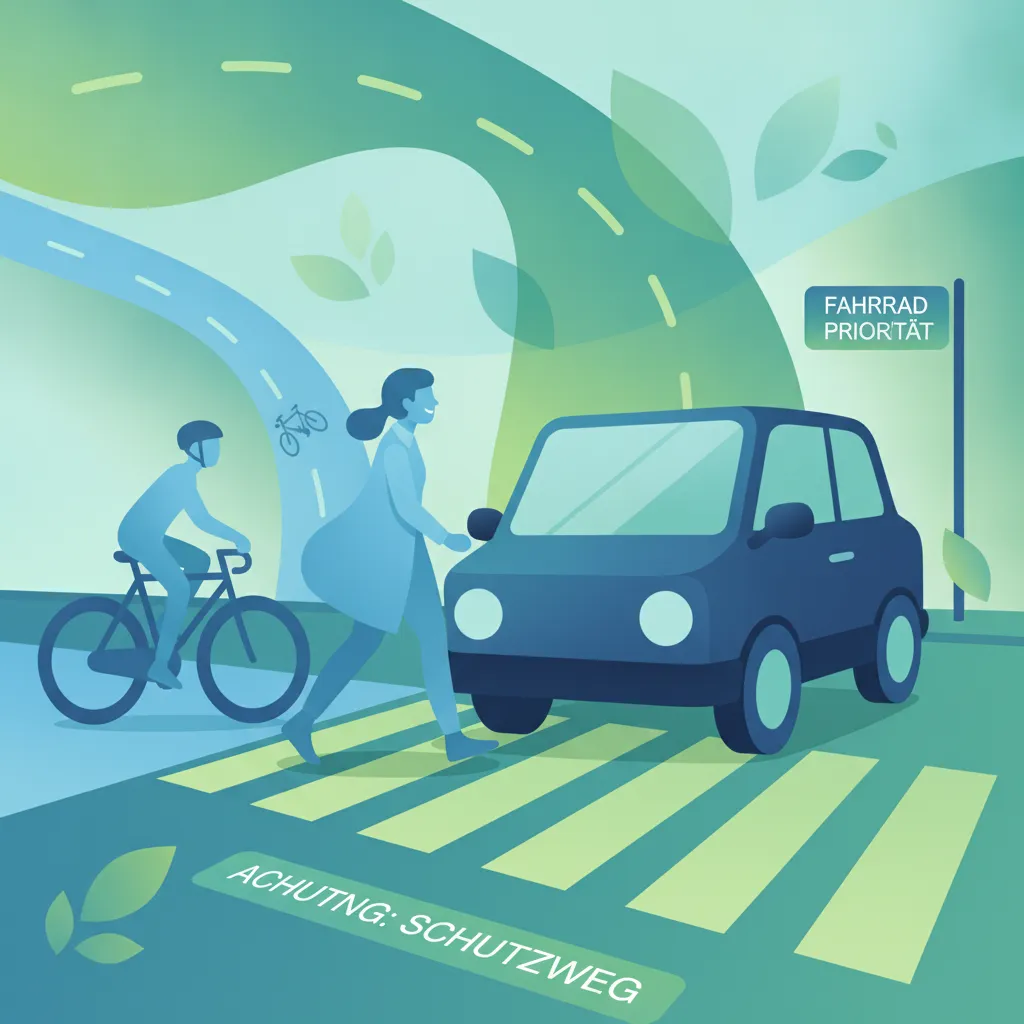
This lesson provides specific guidance on how to safely share the road with pedestrians and cyclists, who are among the most vulnerable road users. It covers the rules of conduct at zebra crossings, traffic lights for pedestrians, and designated cycle lanes. The content emphasizes the importance of vigilance, yielding right-of-way, and maintaining a safe distance to prevent accidents in urban and rural environments.
This lesson focuses on complex traffic environments where different types of road users share the same space. It provides guidance on situations like driving on streets with integrated tram tracks or where bus and bicycle lanes are part of the roadway. The content emphasizes understanding the specific priority rules and being extra vigilant to anticipate potential conflicts in these busy, shared zones.
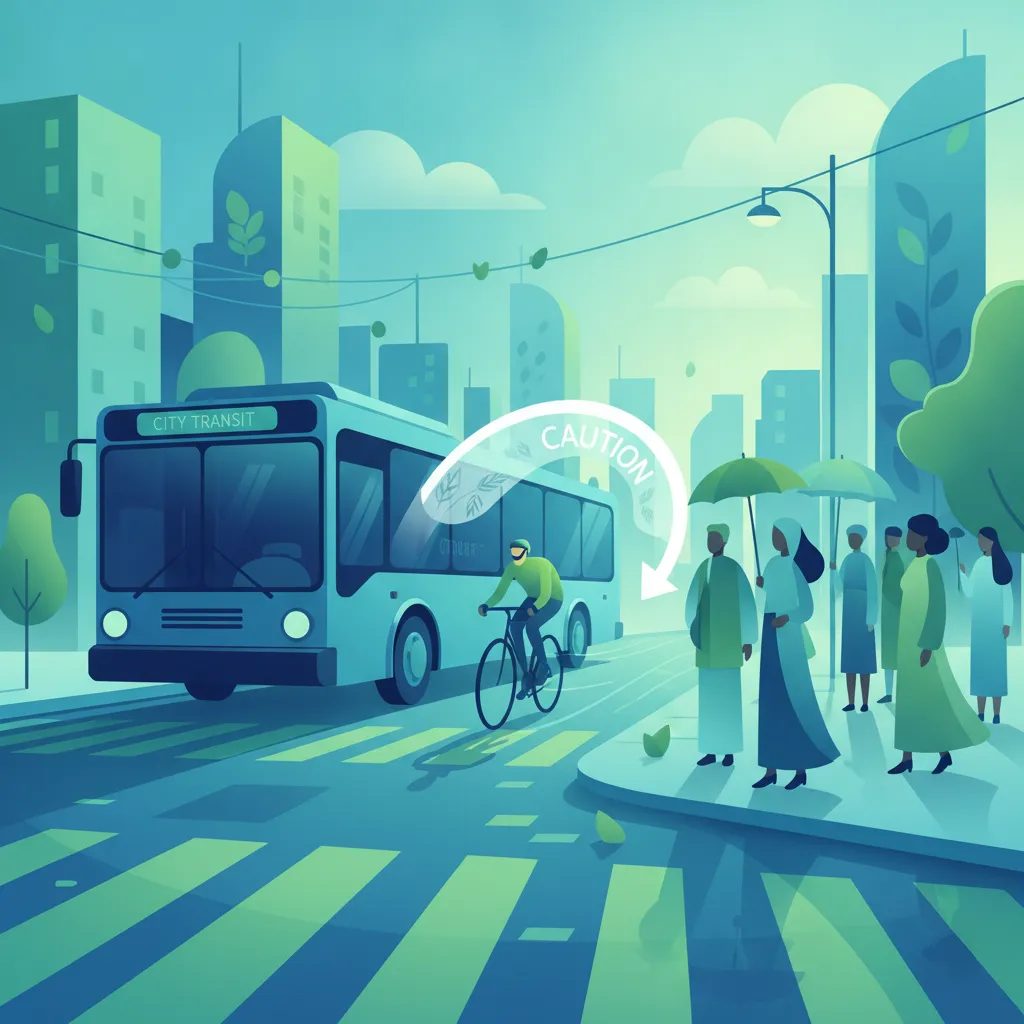
This lesson focuses on the critical moments of interaction with pedestrians and cyclists near bus stops, a common location for accidents. It reinforces the importance of reducing speed, yielding right-of-way, and constantly monitoring blind spots during the stopping process. Learners will practice techniques like making eye contact and using signals to communicate intentions, creating a safer environment for everyone around the vehicle.
This lesson provides a detailed breakdown of the various categories of participants in road traffic, from pedestrians and cyclists to cars, trucks, and public transport. It explains the concept of vulnerable road users and outlines the specific rules and expectations for interacting with each group. The objective is to foster mutual respect and understanding to ensure safe coexistence on the road for everyone.
Explore the specific rules and safe behaviors needed when encountering cyclists, motorcyclists, and public transport like buses and trams. This lesson details how to navigate shared road spaces and prioritize safety for all.
This lesson teaches riders how to interact safely and predictably with pedestrians, cyclists, and public transport vehicles. It highlights the importance of yielding at designated crossings, maintaining a safe passing distance, and anticipating the movements of buses and trams. The content emphasizes using eye contact and clear signaling to foster safe and respectful interactions with all road users.
This lesson provides specific guidance on how to safely share the road with pedestrians and cyclists, who are among the most vulnerable road users. It covers the rules of conduct at zebra crossings, traffic lights for pedestrians, and designated cycle lanes. The content emphasizes the importance of vigilance, yielding right-of-way, and maintaining a safe distance to prevent accidents in urban and rural environments.
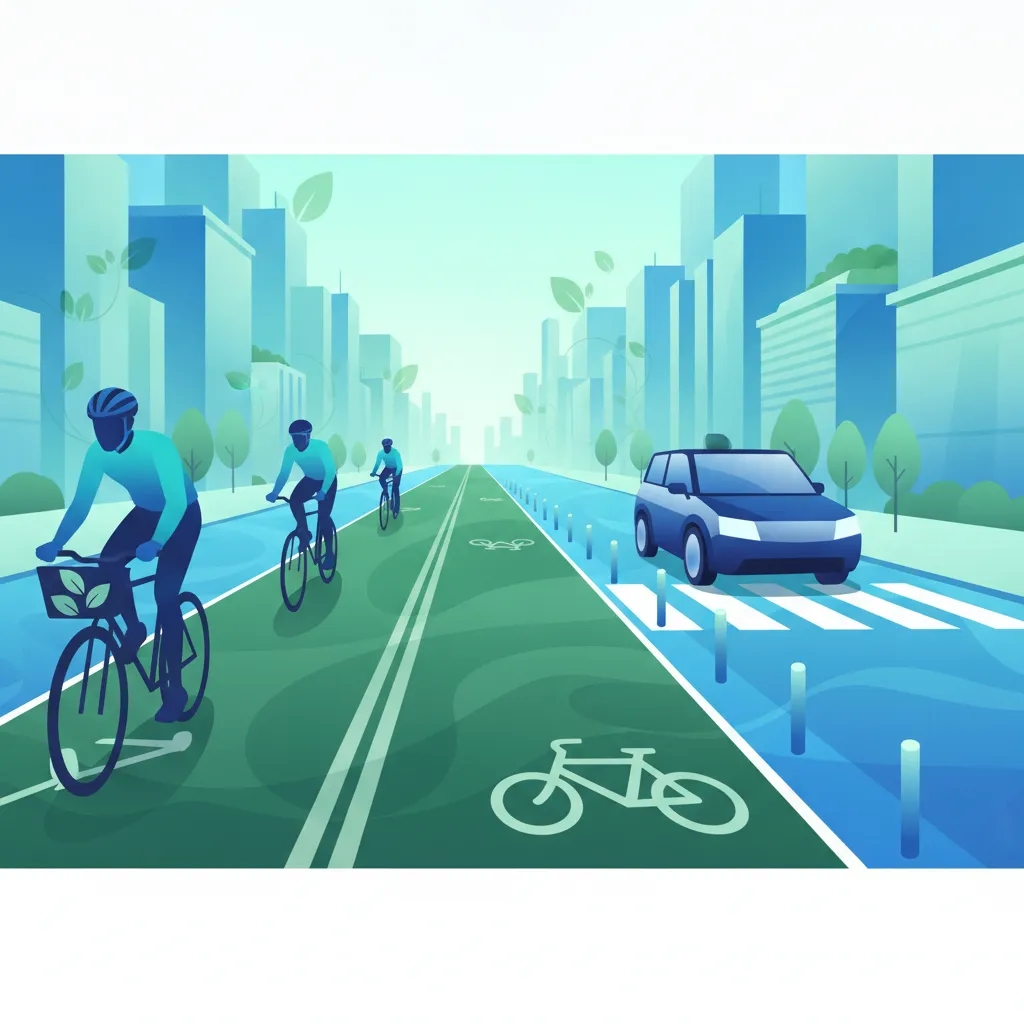
This lesson covers the correct and safe way to interact with cyclists. It explains the different types of bicycle infrastructure, such as dedicated cycle paths and advisory bike lanes on the road. Key topics include maintaining the legally required minimum passing distance, checking for cyclists before turning right, and being aware of the risk of 'dooring' when parked.
This lesson addresses the critical skill of safely interacting with other road users, particularly vulnerable ones like pedestrians and cyclists. It covers rules for yielding at crosswalks, maintaining a safe passing distance, and being aware of the limited visibility of a moped to car drivers. The focus is on fostering a defensive and cooperative mindset in mixed traffic.
This lesson focuses on complex traffic environments where different types of road users share the same space. It provides guidance on situations like driving on streets with integrated tram tracks or where bus and bicycle lanes are part of the roadway. The content emphasizes understanding the specific priority rules and being extra vigilant to anticipate potential conflicts in these busy, shared zones.
This lesson focuses on the critical moments of interaction with pedestrians and cyclists near bus stops, a common location for accidents. It reinforces the importance of reducing speed, yielding right-of-way, and constantly monitoring blind spots during the stopping process. Learners will practice techniques like making eye contact and using signals to communicate intentions, creating a safer environment for everyone around the vehicle.
This lesson provides a detailed breakdown of the various categories of participants in road traffic, from pedestrians and cyclists to cars, trucks, and public transport. It explains the concept of vulnerable road users and outlines the specific rules and expectations for interacting with each group. The objective is to foster mutual respect and understanding to ensure safe coexistence on the road for everyone.
This lesson addresses the challenges of operating a small AM vehicle in dense, mixed traffic. It provides strategies for increasing visibility to other drivers, positioning oneself defensively, and safely sharing lanes with cyclists. The content emphasizes awareness of larger vehicles' blind spots and maintaining a safe space cushion.

This lesson focuses on how motorcyclists can clearly communicate their intentions to other road users to prevent misunderstandings and collisions. It covers the correct use of indicators, brake lights, and standardized hand signals for turning and stopping. The importance of making eye contact with other drivers to confirm they have seen you is also a key topic for enhancing safety.
This lesson details the safe approach and navigation of various intersection types, including those controlled by traffic lights, stop signs, and give-way signs. Emphasis is placed on comprehensive observation of traffic flow, establishing eye contact with other road users, and ensuring clear visibility before proceeding. The lesson also covers correct lane positioning for turning and the importance of anticipating pedestrian movements.
Find clear answers to common questions learners have about Vulnerable Road Users. Learn how the lesson is structured, which driving theory objectives it supports, and how it fits into the overall learning path of units and curriculum progression in Germany. These explanations help you understand key concepts, lesson flow, and exam focused study goals.
When traffic slows to a standstill on a motorway or multi-lane road, drivers must immediately clear a path for emergency vehicles. On two-lane roads, move to the right-most lane to the right edge; on three-lane roads, the middle and left lanes move to the left, while the right lane moves to the right edge.
If a bus or school bus has hazard lights active while approaching a stop, you must only pass at a walking pace and keep a safe distance to allow passengers to exit and enter safely without risk.
Children have limited peripheral vision and often cannot judge the speed or distance of approaching vehicles correctly. As a driver, you are legally expected to anticipate their unpredictable behavior near schools, crossings, and residential areas.
No, the requirement to form an emergency corridor specifically applies to multi-lane roads and motorways where traffic has come to a standstill or is moving at a walking pace.
Begin your targeted revision now. Use our practice search to quickly find specific German driving theory questions. Filter by StVO rules, road signs, or hazard perception to create your focused study plan. Master challenging areas and prepare confidently for your theoretical driving test.