
This lesson introduces the fundamental vehicle safety checks every driver in Poland should know. It covers routine inspections that are critical for preventing breakdowns and ensuring overall road safety, directly supporting your understanding of vehicle operation for the Category B theory exam.
Lesson content overview
Driving a vehicle safely and responsibly extends beyond knowing traffic rules; it also involves ensuring your car is in proper working order. Regular vehicle maintenance and safety checks are not just good practice; they are a fundamental aspect of road safety and a legal requirement for drivers in Poland. This lesson will guide you through the essential inspections every Category B license holder should perform to prevent breakdowns, enhance safety, and comply with Polish Road Traffic Law (Ustawa Prawo o ruchu drogowym).
Maintaining your vehicle in good condition is paramount for several reasons. Firstly, it directly impacts your safety and the safety of other road users. A car with faulty brakes, worn tires, or non-functional lights is a hazard. Secondly, it helps prevent unexpected mechanical failures, which can be costly and inconvenient, especially during a long journey. Thirdly, regular checks ensure your vehicle complies with the stringent requirements of the Polish Road Traffic Law and passes the mandatory periodic technical inspection (Przegląd techniczny). Failure to meet these standards can result in fines, legal penalties, and even invalidation of your insurance in the event of an accident.
Preventive maintenance is always more cost-effective and safer than reactive repairs after a breakdown or accident.
Under Polish law, every driver has a responsibility to ensure their vehicle is roadworthy before driving. This means it must meet technical standards for safe operation on public roads. Key aspects of roadworthiness include functional braking systems, adequate tire tread depth, operational lighting, and clear visibility through the windshield. These requirements are periodically verified through the Przegląd techniczny, a mandatory technical inspection that passenger cars must undergo.
The legal status indicating a vehicle meets all technical standards and safety criteria for safe operation on public roads.
Tires are your vehicle's only contact with the road, making their condition critical for grip, braking, and handling. Proper tire maintenance is a simple yet effective way to significantly improve your safety.
Correct tire inflation pressure is vital for optimal performance and safety. Tires that are under-inflated can lead to increased rolling resistance, excessive heat buildup, premature wear, higher fuel consumption, and reduced handling capabilities. Over-inflation, on the other hand, can reduce the tire's contact patch with the road, leading to less grip, a harsher ride, and uneven wear.
Tire pressure is measured in pounds per square inch (PSI) or, more commonly in Europe, in bars. Your vehicle's manufacturer specifies the recommended cold inflation pressure, typically found on a sticker inside the driver's door jamb, in the glove compartment, or in the owner's manual. It often lists different pressures for front and rear tires, and sometimes higher pressures for a fully loaded vehicle or highway driving.
Ensure tires are "cold," meaning the vehicle has been parked for at least three hours or has not been driven for more than 2-3 kilometres at low speed. Driving heats tires, increasing pressure and giving an inaccurate reading.
Remove the valve cap from the tire.
Firmly press a tire pressure gauge onto the valve stem.
Read the pressure indicated on the gauge.
Add or release air as necessary until the pressure matches the manufacturer's recommendation.
Replace the valve cap. Repeat for all four tires, including the spare tire if applicable.
Tire tread is designed to provide grip and displace water, crucial for maintaining control, especially in wet conditions. As tires wear, their tread depth decreases, reducing their ability to channel water away, which increases the risk of hydroplaning and extends braking distances.
Polish law, specifically Ustawa Prawo o ruchu drogowym, Art. 58, mandates a minimum tread depth.
This minimum depth must be present across the entire width of the tire's tread. All modern tires have built-in tread wear indicators (TWIs) – small raised bars located in the main grooves of the tread. When the tire tread wears down to the level of these indicators, it means the tire has reached its legal minimum depth and needs to be replaced immediately.
Beyond pressure and tread, a visual inspection of the entire tire is essential. Look for any signs of damage such as cuts, bulges, cracks, or embedded objects (nails, screws). Sidewall damage can compromise the tire's structural integrity and lead to a sudden blowout. Uneven tire wear patterns can indicate underlying issues like incorrect wheel alignment, imbalanced tires, or suspension problems, which should be addressed by a mechanic.
Your car relies on various fluids to operate efficiently and safely. Regularly checking these levels can prevent serious mechanical issues and ensure critical systems function correctly.
Engine oil lubricates moving parts, reduces friction, prevents wear, helps cool the engine, and cleans internal components. Driving with insufficient oil can lead to severe engine damage due to overheating and increased friction.
Park your vehicle on a level surface.
Ensure the engine is off and has been allowed to cool down for at least 5-10 minutes. This allows the oil to drain back into the oil pan for an accurate reading.
Locate the dipstick (usually with a brightly colored handle, e.g., yellow or orange).
Pull out the dipstick, wipe it clean with a cloth, and reinsert it fully.
Pull the dipstick out again and observe the oil level between the "min" (or "low") and "max" (or "full") marks.
If the level is below "min," add the correct type and viscosity of engine oil (as specified in your owner's manual) slowly, a little at a time, checking the dipstick after each addition until the level is within the safe range. Do not overfill.
Engine oil also has a viscosity grade (e.g., 5W-30), which indicates its thickness at different temperatures. It's crucial to use the manufacturer-recommended viscosity, especially with seasonal changes, to ensure proper lubrication during cold starts and protection at high operating temperatures.
Coolant, also known as antifreeze, circulates through the engine to absorb heat and prevent the engine from overheating. It also contains additives to prevent freezing in cold weather and corrosion within the cooling system. An insufficient coolant level can lead to engine overheating, which can cause significant damage.
Always check the coolant level when the engine is cold. Opening a hot cooling system can release scalding hot steam and fluid under pressure.
Locate the transparent coolant reservoir (expansion tank) in the engine bay. It usually has "min" and "max" marks on its side.
The coolant level should be between these two marks.
If the level is low, carefully remove the reservoir cap and add the correct coolant type (usually a 50:50 mixture of antifreeze and distilled water) until it reaches the "max" mark. Do not use plain water, especially in winter, as it can freeze.
Never open the radiator cap or coolant reservoir cap when the engine is hot. The system is pressurized, and hot coolant can cause severe burns.
Brake fluid is a hydraulic fluid that transmits the force from your brake pedal to the brake calipers or drums, engaging the brakes. A low brake fluid level can indicate worn brake pads or a leak in the brake system, both of which can compromise your braking ability and lead to a spongy brake pedal or even complete brake failure.
Ensure the vehicle is on a level surface and the engine is off.
Locate the brake fluid reservoir, usually a small, translucent plastic container mounted on the master cylinder on the driver's side of the engine bay.
Check that the fluid level is between the "min" and "max" marks.
If the level is low, top it up with the manufacturer-specified brake fluid (e.g., DOT 4). Never use an incorrect type of brake fluid.
A consistently low brake fluid level, especially if you have recently replaced brake pads, may indicate a leak. Any suspected leak in the brake system warrants immediate professional inspection. The integrity of your brake system is a mandatory item for the Przegląd techniczny.
Maintaining a clear view of the road is non-negotiable for safe driving. Windshield washer fluid is essential for clearing dirt, grime, insects, and road spray from your windshield, especially in adverse weather conditions.
Locate the washer fluid reservoir in the engine bay (often marked with a windshield icon).
Visually check the fluid level if the reservoir is translucent. If it's opaque, simply lift the cap and look inside.
Top up with appropriate windshield washer fluid. In winter, use a fluid with antifreeze properties to prevent it from freezing and damaging the system.
It's good practice to keep the reservoir full, especially before long trips or during seasons with frequent rain, snow, or road salt.
Properly functioning lights are crucial for both your visibility and for communicating your intentions to other drivers. The electrical system, powered by the battery, is the heart of these functions.
Polish law (Ustawa Prawo o ruchu drogowym, Art. 84) mandates that all exterior lights must be functional. This includes:
Turn on the ignition.
Activate the headlights (dipped and then main beam). Walk around the vehicle to confirm all bulbs are working.
Activate each turn signal individually (left front, left rear, right front, right rear) and confirm they flash correctly.
Ask a helper to stand behind the car while you press the brake pedal, confirming all brake lights illuminate. If alone, you can often observe the reflection in a wall or window.
Turn on hazard lights to check all turn signals simultaneously.
Activate front and rear fog lights if your vehicle has them.
Even vehicles with automatic headlamp systems should be manually checked regularly, as sensors can fail or a bulb might burn out unnoticed.
Your car battery provides the electrical power to start the engine and operate various electronic components when the engine is off. A weak or faulty battery can lead to starting problems, especially in cold weather, and can affect the performance of electrical systems.
Visually inspect the battery terminals for corrosion (a fuzzy, white, or greenish substance). Clean any corrosion with a wire brush and a baking soda-water solution.
Ensure the battery terminals are securely attached. Loose connections can lead to intermittent power issues.
If your battery is not a sealed unit and has removable caps, check the electrolyte level (distilled water) and top up if necessary. Most modern batteries are maintenance-free.
Measure the battery voltage with a multimeter. A healthy battery at rest (engine off for several hours) should read around 12.6 volts. Lower readings suggest a weak battery.
The Cold Cranking Amps (CCA) rating indicates a battery's ability to start an engine in cold temperatures. Batteries lose efficiency in the cold, making CCA especially important in Polish winters.
These systems are fundamental to controlling your vehicle, absorbing road impacts, and maintaining stability. Issues with any of these can severely compromise your ability to drive safely.
Brake pads press against brake discs (rotors) to create friction and slow your vehicle. Both components wear down over time, reducing braking effectiveness.
If your wheels have open spokes, you might be able to visually inspect the brake pads between the wheel spokes. Look for the thickness of the pad material. Most brake pads have wear indicators; if the pad material is very thin (typically below 3mm) or you hear a squealing noise (from a metal wear indicator scraping the disc), it's time for replacement.
Examine the brake discs. They should have a smooth, even surface. Deep grooves, scoring, or excessive rust indicate wear and may require disc replacement along with pads.
Listen for unusual noises during braking, such as grinding, squealing (other than the wear indicator), or clunking sounds, which can signal problems.
The suspension system absorbs shocks from the road, keeping tires in contact with the surface and providing a comfortable ride. The steering system allows you to direct the vehicle. Any issues here can lead to poor handling, instability, and uneven tire wear.
Unusual Noises: Clunking or squeaking sounds when going over bumps or turning.
Uneven Tire Wear: Can indicate problems with alignment, balance, or suspension components like shock absorbers or ball joints.
Poor Handling: Excessive bounce after hitting a bump, vehicle pulling to one side, or a loose feeling in the steering wheel.
Fluid Leaks: Inspect shock absorbers for fluid leaks, which indicate they are failing.
If you notice any of these signs, have your vehicle inspected by a qualified mechanic promptly.
A clear and undamaged windshield is crucial for unobstructed visibility, which directly impacts your reaction time and ability to perceive hazards.
Inspect for Cracks and Chips: Carefully examine your windshield for any cracks or chips. Small chips can often be repaired, but larger cracks, especially those in the driver's direct line of sight, can obstruct vision and compromise the windshield's structural integrity. Polish law and technical inspection standards often have specific limits on the size and location of windshield damage.
Wiper Blade Condition: Check your wiper blades for signs of wear, such as cracks, tears, or hardening of the rubber. Worn blades will smear water rather than clearing it efficiently, severely reducing visibility in rain. Replace them if they leave streaks or chatter across the glass.
Before any drive, especially a long journey, a quick walk-around of your vehicle can help you spot potential problems early. This systematic visual inspection takes only a few minutes but can prevent major issues.
Tires: Visually check for obvious low pressure, damage, or objects embedded in the tread.
Lights: Quickly check headlights, tail lights, and turn signals (you can use reflections or a helper for brake lights).
Under the Vehicle: Look for any fresh fluid leaks (puddles or drips).
Windshield & Mirrors: Ensure they are clean and free of damage, and that all mirrors are properly adjusted.
Bodywork: Note any new dents or scratches that could indicate an unreported incident or damage.
Many drivers inadvertently neglect simple maintenance tasks, leading to preventable problems.
Przegląd Techniczny)The Przegląd techniczny is a mandatory periodic technical inspection for all registered vehicles in Poland. Its purpose is to ensure that vehicles meet statutory safety and environmental standards.
Przegląd techniczny certificate is illegal and can result in significant fines, potential impoundment of the vehicle, and invalidation of your insurance policy in the event of an accident.Basic vehicle maintenance and safety checks are an indispensable part of being a responsible driver in Poland. By routinely inspecting your tires, fluid levels, lights, and other critical components, you are not only ensuring your own safety and the safety of others but also complying with Polish traffic laws. These simple habits contribute to the longevity of your vehicle, reduce operating costs, and instill confidence every time you get behind the wheel. Embrace these checks as a fundamental part of your driving routine, contributing to safer roads for everyone.
This lesson covers essential pre-journey vehicle safety checks required for Polish Category B drivers, including detailed procedures for inspecting tires (pressure and tread depth), verifying fluid levels (engine oil, coolant, brake fluid, washer fluid), and testing all exterior lights. It emphasizes Polish legal requirements under the Road Traffic Law, the mandatory Przegląd techniczny inspection system, and practical warning signs of suspension, steering, and brake problems. Understanding these routine maintenance checks is crucial for road safety, preventing breakdowns, and passing theory exam questions on vehicle roadworthiness.
A short set of high-value points that capture the most important learning from this lesson.
Polish law mandates minimum 1.6 mm tread depth across the entire tire width, with tread wear indicators signaling when replacement is needed
Check tire pressure only when tires are cold (parked 3+ hours) using manufacturer-recommended PSI/bar values found on the driver's door jamb
Brake fluid level between min and max marks is critical; consistently low levels after pad replacement may indicate a leak requiring immediate professional attention
All exterior lights are legally required to be functional under Polish Road Traffic Law Art. 84, including dipped/main beam, indicators, brake lights, fog lights, and reverse lights
Never open the radiator or coolant reservoir cap when the engine is hot due to scalding risk from pressurized fluid
Explore all units and lessons included in this driving theory course.
Polish Przegląd techniczny (technical inspection) is mandatory for all registered vehicles in Poland, covering brakes, steering, suspension, lights, and tires
Engine oil should be checked on a level surface with the engine off for 5-10 minutes, using the dipstick marked between 'min' and 'max' levels
Battery Cold Cranking Amps (CCA) rating is especially critical in Polish winters when batteries lose efficiency significantly
Tread wear indicators (TWIs) are small raised bars in tire grooves that appear when legal minimum tread depth is reached
Dashboard warning lights should never be ignored as they indicate vehicle problems requiring attention
Assuming fluid levels are fine between service intervals without manual verification, risking critical component failure
Checking tire pressure after driving instead of when cold, leading to inaccurate readings and improper inflation
Driving on worn tires increases braking distance and hydroplaning risk, especially dangerous in Poland's wet and icy conditions
Neglecting to check brake lights because they cannot be seen from the driver's seat, which is both a safety and legal issue
Overlooking small windshield chips that can expand into large cracks due to temperature changes and vibration
Lesson content overview
A short set of high-value points that capture the most important learning from this lesson.
Polish law mandates minimum 1.6 mm tread depth across the entire tire width, with tread wear indicators signaling when replacement is needed
Check tire pressure only when tires are cold (parked 3+ hours) using manufacturer-recommended PSI/bar values found on the driver's door jamb
Brake fluid level between min and max marks is critical; consistently low levels after pad replacement may indicate a leak requiring immediate professional attention
All exterior lights are legally required to be functional under Polish Road Traffic Law Art. 84, including dipped/main beam, indicators, brake lights, fog lights, and reverse lights
Never open the radiator or coolant reservoir cap when the engine is hot due to scalding risk from pressurized fluid
Explore all units and lessons included in this driving theory course.
Polish Przegląd techniczny (technical inspection) is mandatory for all registered vehicles in Poland, covering brakes, steering, suspension, lights, and tires
Engine oil should be checked on a level surface with the engine off for 5-10 minutes, using the dipstick marked between 'min' and 'max' levels
Battery Cold Cranking Amps (CCA) rating is especially critical in Polish winters when batteries lose efficiency significantly
Tread wear indicators (TWIs) are small raised bars in tire grooves that appear when legal minimum tread depth is reached
Dashboard warning lights should never be ignored as they indicate vehicle problems requiring attention
Assuming fluid levels are fine between service intervals without manual verification, risking critical component failure
Checking tire pressure after driving instead of when cold, leading to inaccurate readings and improper inflation
Driving on worn tires increases braking distance and hydroplaning risk, especially dangerous in Poland's wet and icy conditions
Neglecting to check brake lights because they cannot be seen from the driver's seat, which is both a safety and legal issue
Overlooking small windshield chips that can expand into large cracks due to temperature changes and vibration
Explore search topics learners often look for when studying Basic Vehicle Maintenance and Safety Checks. These topics reflect common questions about road rules, driving situations, safety guidance, and lesson level theory preparation for learners in Poland.
Browse additional driving theory lessons that cover connected traffic rules, road signs, and common driving situations related to this topic. Improve your understanding of how different rules interact across everyday traffic scenarios.
Explore in-depth explanations of mandatory vehicle safety checks for Polish Category B drivers. Understand the legal requirements and critical importance of inspecting tires, fluids, lights, brakes, and suspension for roadworthiness.
This lesson enumerates the mandatory safety equipment every vehicle must carry in Poland, such as a warning triangle and a fire extinguisher. It explains their proper use and storage, alongside routine pre-journey inspections that a driver should perform. These checks include verifying lights, tire pressure, and fluid levels to ensure the vehicle is roadworthy and compliant with safety regulations.
This lesson provides a systematic approach to pre-use inspections, covering essential components that must be checked before operating a tractor. Learners will learn how to assess tire pressure, test brakes, verify the operation of all lights and beacons, and examine hitch conditions. Performing these checks ensures vehicle roadworthiness and reduces the risk of mechanical failure during operation.
This lesson focuses on the specific challenges of driving in rainy conditions. It explains the phenomenon of hydroplaning, where tires lose contact with the road surface, and how to prevent it by reducing speed. The importance of good tire condition, effective windscreen wipers, and extending following distances is also covered in detail.
This lesson focuses on the specific hazards introduced by seasonal weather, such as mud, snow, ice, fog, and heavy rain. It explains how these conditions affect traction, braking, and driver visibility, and provides guidance on adjusting speed and using appropriate tires. The lesson also covers the proper use of lights and reflectors to improve visibility in low-light conditions.

This lesson details the critical pre-trip inspection routine that every professional driver must perform. It provides a step-by-step checklist for visually inspecting essential components such as tires, brakes, lights, and fluid levels to identify potential safety hazards. Learners will understand the importance of verifying that mirrors are correctly adjusted, emergency equipment is present, and cargo securing points are intact, thereby ensuring the vehicle's roadworthiness and preventing roadside failures.
In this lesson, learners focus on the essential maintenance tasks required to keep a motorcycle in optimal condition across seasonal changes. The content outlines a comprehensive pre-ride checklist that includes tyre pressure verification, brake fluid inspection, battery performance checks, and chain lubrication. Learners will also study the selection of appropriate seasonal tyres and oil viscosity adjustments, helping prevent mechanical failures and enhance rider safety.

This lesson emphasizes the importance of systematic observation for safe driving. It teaches how to correctly adjust and use rearview and side mirrors to monitor traffic, and explains why shoulder checks are essential for detecting hazards in blind spots. These techniques are fundamental for safe lane changes, turns, and overall situational awareness.

This lesson prepares drivers for the event of a vehicle breakdown on a motorway or expressway. It details the correct procedure: pulling over to the emergency lane, activating hazard lights, and placing the warning triangle at the legally required distance. The importance of wearing a reflective vest when outside the vehicle is also a key safety point.
This lesson focuses on the skills needed for safe winter driving. It explains how to use gentle acceleration, steering, and braking to avoid losing traction on snow and ice. The lesson also discusses how to recognize and handle a skid, and the critical role that appropriate winter tires play in maintaining vehicle control.
This lesson provides essential guidance for driving in fog, one of the most dangerous conditions. It instructs on the correct use of low-beam headlights and fog lights to maximize visibility without causing glare. The core advice is to significantly reduce speed and use the edge of the road or markings as a guide.
Learn about typical errors drivers make with vehicle maintenance and safety checks in Poland. Understand the potential consequences of neglecting checks on tires, fluids, lights, and brakes to ensure you avoid them.

This lesson covers the fundamental procedures for vehicle operation, from starting the engine to securing the vehicle after a journey. It explains the correct use of the ignition system, handbrake, and techniques for smooth starts, including on an incline. The content also addresses fuel-efficient idling and proper engine shutdown protocols to protect the vehicle and the environment.
This lesson enumerates the mandatory safety equipment every vehicle must carry in Poland, such as a warning triangle and a fire extinguisher. It explains their proper use and storage, alongside routine pre-journey inspections that a driver should perform. These checks include verifying lights, tire pressure, and fluid levels to ensure the vehicle is roadworthy and compliant with safety regulations.
This lesson prepares drivers for the event of a vehicle breakdown on a motorway or expressway. It details the correct procedure: pulling over to the emergency lane, activating hazard lights, and placing the warning triangle at the legally required distance. The importance of wearing a reflective vest when outside the vehicle is also a key safety point.
This lesson provides essential guidance for driving in fog, one of the most dangerous conditions. It instructs on the correct use of low-beam headlights and fog lights to maximize visibility without causing glare. The core advice is to significantly reduce speed and use the edge of the road or markings as a guide.
This lesson emphasizes the importance of systematic observation for safe driving. It teaches how to correctly adjust and use rearview and side mirrors to monitor traffic, and explains why shoulder checks are essential for detecting hazards in blind spots. These techniques are fundamental for safe lane changes, turns, and overall situational awareness.

This lesson focuses on the rules of lane usage for maintaining safe and efficient traffic flow. It covers the meaning of different lane markings, such as solid versus broken lines, and the general principle of keeping to the rightmost lane unless overtaking. Proper lane discipline is crucial for predictability and preventing conflicts on multi-lane roads.

This lesson introduces the concept of eco-driving, a style that promotes fuel efficiency and reduces environmental impact. It teaches techniques such as maintaining a steady speed, anticipating traffic flow to avoid unnecessary braking, and ensuring the vehicle is well-maintained. These simple habits can lead to significant savings on fuel and reduce a driver's carbon footprint.
In this lesson, learners focus on the essential maintenance tasks required to keep a motorcycle in optimal condition across seasonal changes. The content outlines a comprehensive pre-ride checklist that includes tyre pressure verification, brake fluid inspection, battery performance checks, and chain lubrication. Learners will also study the selection of appropriate seasonal tyres and oil viscosity adjustments, helping prevent mechanical failures and enhance rider safety.
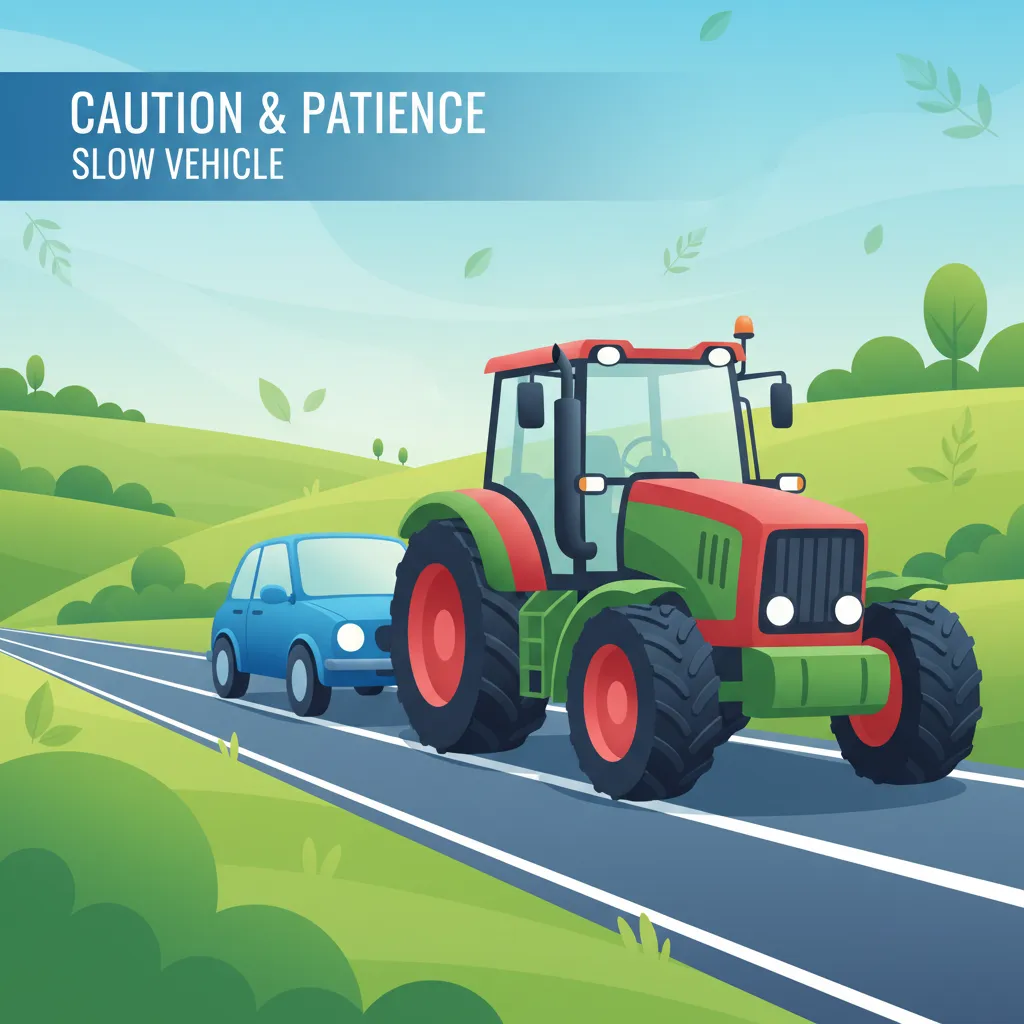
This lesson addresses encounters with slow-moving vehicles, such as tractors, which are common on rural roads. It teaches drivers to be patient, maintain a safe following distance, and only overtake when it is absolutely safe and legal to do so. Recognizing the large size and limited maneuverability of such vehicles is crucial for avoiding accidents.

This lesson details the operation of a vehicle's pedals and transmission. It explains the distinct functions of the accelerator, brake, and clutch, and contrasts the operation of manual and automatic gearboxes. Proper gear selection for different driving situations is covered to optimize fuel efficiency and vehicle performance.
Find clear answers to common questions learners have about Basic Vehicle Maintenance and Safety Checks. Learn how the lesson is structured, which driving theory objectives it supports, and how it fits into the overall learning path of units and curriculum progression in Poland. These explanations help you understand key concepts, lesson flow, and exam focused study goals.
Basic safety checks like tire pressure and light functionality should ideally be performed weekly or before any long journey. Fluid levels can be checked monthly, but always refer to your vehicle's owner manual for specific recommendations tailored to your car model.
For the Polish driving theory exam and general safety, you should know how to check engine oil, coolant, brake fluid, and windshield washer fluid. Understanding their locations and correct levels is key for exam questions and practical driving.
Yes, checking tire tread depth is very important. Insufficient tread depth (below the legal minimum in Poland, which is 1.6 mm) reduces grip and increases stopping distances, especially in wet conditions. You should know how to check it and its implications for both the theory and practical tests.
Driving with faulty lights in Poland is illegal and extremely dangerous. It reduces your visibility to other road users and can lead to fines and demerit points (punkty karne). The Polish theory exam often includes questions about vehicle lighting requirements and their correct use.
Most basic checks can be performed without special tools. For example, tire pressure requires a pressure gauge, which is inexpensive. Tread depth can be checked with a dedicated gauge or even a 1 Euro coin (though a gauge is more accurate). Fluid levels are typically visible through transparent reservoirs or with dipsticks.
Build custom practice sessions tailored precisely to your needs. Focus on areas requiring improvement, review specific Polish road signs, or master complex traffic rules to ensure full preparation for your official driving license exam.