
This lesson focuses on the critical manoeuvres of entering and exiting high-speed roads in Poland. Understanding acceleration and deceleration lanes, and mastering safe merging and exiting techniques, are vital for navigating expressways and motorways safely and successfully passing your Category B theory test.
Lesson content overview
Successfully entering and exiting high-speed roads such as expressways (drogi ekspresowe) and motorways (autostrady) is a critical skill for every driver in Poland. These maneuvers require precise speed management, vigilant observation, and adherence to specific traffic laws. This lesson provides a comprehensive guide to understanding and safely utilizing entry ramps, exit ramps, and their associated acceleration and deceleration lanes, which are specifically designed to facilitate smooth transitions between different speed environments.
Properly navigating these zones is not just about convenience; it's a fundamental aspect of road safety, directly impacting traffic flow and significantly reducing the risk of collisions. Mastering these techniques is essential not only for passing your Polish Category B theory test but also for becoming a responsible and confident driver on Poland's extensive high-speed road network.
Entry and exit ramps on high-speed roads are equipped with specialized lanes that serve distinct functions: acceleration lanes for joining traffic and deceleration lanes for leaving it. These dedicated zones are crucial for managing speed differentials, which are a major cause of accidents on faster roads. By providing a controlled environment for vehicles to adjust their speed, they minimize the need for sudden braking or acceleration within the main traffic flow.
The core safety logic behind these designs is to separate speed changes from the main carriageway. This segregation helps prevent dangerous situations like rear-end collisions or side-impacts that can occur when drivers on the main road are forced to react abruptly to vehicles entering or leaving the flow at incompatible speeds. Polish traffic law mandates the correct use of these lanes to maintain overall road safety and efficiency.
An acceleration lane (sometimes called a merging lane or entry lane) is a dedicated strip of road that runs parallel to the main carriageway of an expressway or motorway. Its primary purpose is to allow vehicles entering the high-speed road to increase their speed gradually and safely, matching the flow of traffic on the main lanes before merging.
An acceleration lane begins after the on-ramp curve and extends for a specific distance, providing space for drivers to build up speed. The length of these lanes can vary; a standard acceleration lane might be several hundred meters long, while an extended acceleration lane is provided where main road speed limits are higher or traffic density is significant. The goal is to reach a speed that is compatible with, or slightly less than, the flow of traffic on the main road, making the merge smooth and predictable.
Entering a high-speed road requires a sequence of careful steps:
Observe Early: As you enter the on-ramp, look far ahead on the main carriageway. Use your mirrors to assess the speed and density of traffic. Identify potential gaps where you can merge safely.
Accelerate Purposefully: Enter the acceleration lane and begin to accelerate briskly. Your objective is to reach a speed that closely matches the traffic flow on the main road. Avoid hesitating or slowing down unnecessarily in this lane.
Signal Your Intention: Activate your turn signal (indicator) at least 5-7 seconds before you intend to merge. This provides ample warning to drivers on the main carriageway about your intentions.
Check Mirrors and Blind Spots: Continuously check your side mirrors and perform a head check (shoulder check) to verify there are no vehicles in your blind spot. Be aware of traffic that might also be changing lanes.
Select a Safe Gap: Identify a sufficient gap in the main traffic flow that allows you to merge without forcing other drivers to brake or swerve. Remember, vehicles already on the main carriageway typically have the right-of-way unless priority signage indicates otherwise.
Merge Smoothly: Steer gently into the main traffic lane when it is safe to do so, maintaining your speed. Avoid abrupt steering or braking. Once merged, switch off your turn signal.
Several common errors can lead to dangerous situations:
Always remember that vehicles already on the main carriageway generally have priority. You must yield to them unless specific signage, such as "Uprzywilejowany wjazd" (Priority Entry), indicates otherwise.
A deceleration lane (sometimes called an exit lane or off-ramp lane) runs parallel to the main carriageway of an expressway or motorway, positioned just before an exit ramp. Its function is to allow vehicles to safely reduce their speed after leaving the main road, without impacting the flow of traffic remaining on the high-speed route.
A deceleration lane serves as a buffer zone, typically 200-300 meters long (or longer for extended deceleration lanes on very high-speed exits). It allows drivers to move off the main carriageway and begin slowing down to a speed appropriate for the connecting road they are about to join. This prevents abrupt braking on the main road, which could cause hazards for following traffic.
Exiting a high-speed road also requires a well-executed procedure:
Plan Ahead and Signal Early: As you approach your intended exit, activate your turn signal (indicator) at least 5-7 seconds before reaching the start of the deceleration lane. This gives drivers behind you plenty of time to adjust. Ensure you are in the correct lane well in advance for your exit.
Move into the Deceleration Lane: Gently steer your vehicle into the deceleration lane as soon as it begins. Do not wait until the last moment or brake on the main carriageway before entering.
Gradually Reduce Speed: Once fully within the deceleration lane, begin to reduce your speed smoothly. Decelerate to the appropriate speed limit for the exit ramp or the road you will be joining.
Maintain Lane Discipline: Stay within the deceleration lane until you reach the actual exit point or the end of the lane. Avoid changing lanes within the deceleration lane.
Be Prepared for Curves: Exit ramps often involve sharper curves than the main road. Adjust your speed accordingly to navigate these curves safely.
Misuse of deceleration lanes can also lead to significant risks:
Beyond the specific acceleration and deceleration lanes, it's important to understand the broader context of on-ramps and off-ramps.
An on-ramp is the entire road segment that provides access from a side road or local network onto a high-speed road. It usually starts with a curve and then transitions into the acceleration lane, culminating at the merge point with the main carriageway.
An off-ramp is the road segment that allows vehicles to leave a high-speed road. It typically begins with the deceleration lane, followed by the actual exit curve, leading to a connecting road or intersection.
The fundamental rule for on-ramps is to yield to main road traffic unless explicitly given priority. For off-ramps, the key is early signaling and smooth speed reduction within the dedicated lane.
Road markings and signs are crucial visual cues that guide drivers safely through entry and exit ramps. Understanding these in the Polish context is vital.
This sign typically signals that you are entering or are on a road where you have the right-of-way over traffic from side roads or intersections. If seen before an on-ramp, it might imply that merging traffic has priority, but it is less common for high-speed roads and drivers should always exercise caution.
These signs specify the direction(s) of travel allowed from a particular lane. They are critical on multi-lane ramps or before complex junctions to ensure drivers position themselves correctly for their exit or merge.
While not a standard sign code, the concept of "Uprzywilejowany wjazd" (Priority Entry) indicates that traffic on the ramp has priority over main road traffic. This is extremely rare on Polish motorways and expressways, typically only occurring in very specific, carefully designed low-speed access roads where traffic engineering allows for it. When present, drivers on the main road are expected to yield to merging traffic. However, always verify this by observing main road traffic carefully and ensuring a safe gap.
Compliance with Polish traffic law (Prawo o ruchu drogowym) is mandatory when using entry and exit ramps. Violations can lead to fines, penalty points, and dangerous road situations.
| Rule | Statement | Applicability | Legal Status | Rationale |
|---|---|---|---|---|
| Use of acceleration lane | Drivers must use the acceleration lane to reach the speed of the main carriageway before merging. | All on-ramps to expressways/motorways. | Mandatory (Polish Road Traffic Act, Art. 31 § 10). | Ensures smooth flow, avoids sudden braking on the main road. |
| Yielding on entry | If no priority sign is present, vehicles already on the main carriageway have the right-of-way. | Entry ramps without priority signs. | Mandatory (Polish Road Traffic Act, Art. 20). | Prevents collisions from unexpected merging; maintains main traffic flow. |
| No stopping in acceleration lane | Vehicles must not stop, park, or obstruct acceleration lanes unless traffic ahead has come to a complete standstill. | All acceleration lanes. | Mandatory (Polish Road Traffic Act, Art. 44). | Stopping blocks merging traffic, creating severe hazard. |
| Use of deceleration lane | Drivers leaving a high-speed road must use the deceleration lane to reduce speed before exiting. | All off-ramps. | Mandatory (Polish Road Traffic Act, Art. 31 § 10). | Allows safe speed reduction without affecting main road traffic. |
| Speed limits in lanes | Speed limits apply to each lane type (e.g., motorway speed limit on main road, potentially lower limits on the ramp itself or connecting roads). | Entire road network. | Mandatory (Regulation of Speed Limits). | Ensures consistency and safety according to road design. |
| Lane change on ramps | Overtaking or changing lanes within an acceleration or deceleration lane is prohibited unless clearly marked by broken lines. | Ramps with solid line markings. | Mandatory (Polish Road Traffic Act, Art. 25). | Prevents collision risk in limited-vision zones and high-change environments. |
| Signaling | Drivers must signal at least 5-7 seconds before merging or exiting a lane. | All ramp maneuvers. | Mandatory (Polish Road Traffic Act, Art. 52). | Provides early warning to other road users, allowing them to react. |
| Priority signs (if present) | Where an "Uprzywilejowany wjazd" sign or D-12 (priority road) is posted, traffic on the ramp has priority (though rare for high-speed merges). | Specific intersections on ramps. | Mandatory. | Removes the need to yield when design permits safe entry, but caution is still advised. |
Understanding common mistakes is the first step to preventing them.
The principles for using ramps remain consistent, but external conditions require adjustments to your driving behavior.
The design and rules for acceleration and deceleration lanes are rooted in fundamental safety principles and physics.
Mastering the use of acceleration and deceleration lanes is paramount for safe driving on Polish high-speed roads.
By diligently applying these principles, you will contribute to safer roads for everyone and be well-prepared for your Polish Category B driving theory test and practical driving challenges.
This lesson covers the essential procedures for safely entering and exiting Polish high-speed roads using acceleration and deceleration lanes. Acceleration lanes provide space to match main carriageway speeds before merging, requiring early signaling, mirror checks, and smooth entry without forcing other vehicles to brake. Deceleration lanes allow safe speed reduction away from main traffic, requiring early signaling and gradual deceleration before reaching exit curves. Polish law mandates using these dedicated lanes, signaling intentions 5-7 seconds in advance, and yielding to main-road traffic unless priority signs indicate otherwise. Understanding solid versus broken white line markings, ramp-specific signage (D-12, D-29), and adapting to weather, visibility, and vehicle type conditions are critical for both passing the Category B theory test and real-world motorway driving in Poland.
A short set of high-value points that capture the most important learning from this lesson.
Acceleration lanes allow you to match the speed of main carriageway traffic before merging, while deceleration lanes enable safe speed reduction before exiting.
Signal your intention at least 5-7 seconds before merging or exiting, giving other drivers adequate time to react.
Vehicles already on the main carriageway have priority when merging unless specific priority signage is displayed.
Never stop in an acceleration lane unless traffic ahead has completely stopped; continue driving and adjust your speed to find a safe gap.
Adverse weather and heavy vehicles require earlier and more gradual speed adjustments within ramp lanes.
Explore all units and lessons included in this driving theory course.
Solid white lines on ramps must not be crossed except where they become broken at the designated merge point.
Main road traffic always has priority during merging unless a 'Uprzywilejowany wjazd' or D-12 sign explicitly grants ramp traffic priority.
Use mirrors and perform head checks (shoulder checks) continuously while accelerating and merging to eliminate blind spots.
Exit ramps may have sharper curves than the main road; adjust your speed accordingly within the deceleration lane.
On motorways (autostrady) with higher speeds, acceleration and deceleration lanes are typically longer than on expressways (drogi ekspresowe).
Merging onto a motorway at insufficient speed forces main-road traffic to brake suddenly, creating a high risk of rear-end collisions.
Stopping or hesitating in the acceleration lane blocks merging traffic and can lead to being rear-ended.
Activating turn signals only seconds before merging or exiting confuses other drivers and increases collision risk.
Attempting to overtake another vehicle within a deceleration lane is prohibited and dangerous due to limited space and speed changes.
Crossing solid white lines prematurely to merge early is illegal and poses side-impact collision risks.
Lesson content overview
A short set of high-value points that capture the most important learning from this lesson.
Acceleration lanes allow you to match the speed of main carriageway traffic before merging, while deceleration lanes enable safe speed reduction before exiting.
Signal your intention at least 5-7 seconds before merging or exiting, giving other drivers adequate time to react.
Vehicles already on the main carriageway have priority when merging unless specific priority signage is displayed.
Never stop in an acceleration lane unless traffic ahead has completely stopped; continue driving and adjust your speed to find a safe gap.
Adverse weather and heavy vehicles require earlier and more gradual speed adjustments within ramp lanes.
Explore all units and lessons included in this driving theory course.
Solid white lines on ramps must not be crossed except where they become broken at the designated merge point.
Main road traffic always has priority during merging unless a 'Uprzywilejowany wjazd' or D-12 sign explicitly grants ramp traffic priority.
Use mirrors and perform head checks (shoulder checks) continuously while accelerating and merging to eliminate blind spots.
Exit ramps may have sharper curves than the main road; adjust your speed accordingly within the deceleration lane.
On motorways (autostrady) with higher speeds, acceleration and deceleration lanes are typically longer than on expressways (drogi ekspresowe).
Merging onto a motorway at insufficient speed forces main-road traffic to brake suddenly, creating a high risk of rear-end collisions.
Stopping or hesitating in the acceleration lane blocks merging traffic and can lead to being rear-ended.
Activating turn signals only seconds before merging or exiting confuses other drivers and increases collision risk.
Attempting to overtake another vehicle within a deceleration lane is prohibited and dangerous due to limited space and speed changes.
Crossing solid white lines prematurely to merge early is illegal and poses side-impact collision risks.
Explore search topics learners often look for when studying Entry and Exit Ramps, Acceleration/Deceleration Lanes. These topics reflect common questions about road rules, driving situations, safety guidance, and lesson level theory preparation for learners in Poland.
Browse additional driving theory lessons that cover connected traffic rules, road signs, and common driving situations related to this topic. Improve your understanding of how different rules interact across everyday traffic scenarios.
Explore advanced Polish driving theory for mastering motorway entry and exit procedures. This lesson details the critical use of acceleration and deceleration lanes, focusing on complex scenarios and high-speed traffic merging.

This lesson details the rules and best practices for driving on Poland's fastest roads. It covers the higher speed limits, the strict lane discipline of keeping right except to overtake, and prohibitions on stopping. The aim is to ensure drivers can handle the demands of sustained high-speed travel safely and efficiently.
This lesson provides a guide to safely entering high-speed roads. It explains the function of the acceleration lane, where drivers must increase their speed to match the flow of traffic on the main carriageway. The importance of signaling, checking mirrors, and looking over the shoulder for blind spots before merging is heavily emphasized.

This lesson prepares drivers for the event of a vehicle breakdown on a motorway or expressway. It details the correct procedure: pulling over to the emergency lane, activating hazard lights, and placing the warning triangle at the legally required distance. The importance of wearing a reflective vest when outside the vehicle is also a key safety point.

This lesson focuses on the rules of lane usage for maintaining safe and efficient traffic flow. It covers the meaning of different lane markings, such as solid versus broken lines, and the general principle of keeping to the rightmost lane unless overtaking. Proper lane discipline is crucial for predictability and preventing conflicts on multi-lane roads.
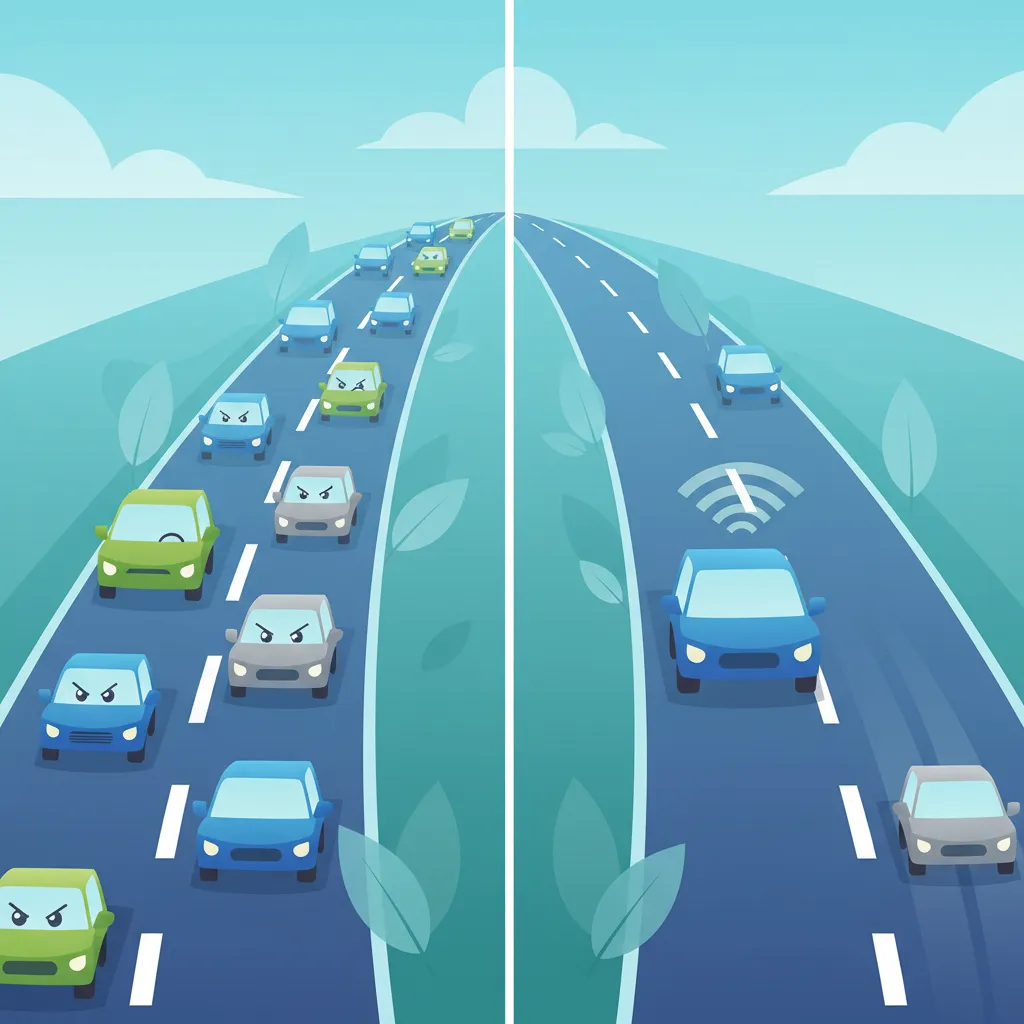
This lesson examines the specific rules and etiquette for riding on Polish motorways and high-speed highways, focusing on proper lane positioning, entry via acceleration lanes, and maintaining appropriate following distances. Learners will study overtaking protocols at high speeds, proper use of deceleration lanes for exits, and techniques for aerodynamic positioning. The content also covers safe lane changes and emergency lane usage to ensure efficient travel.
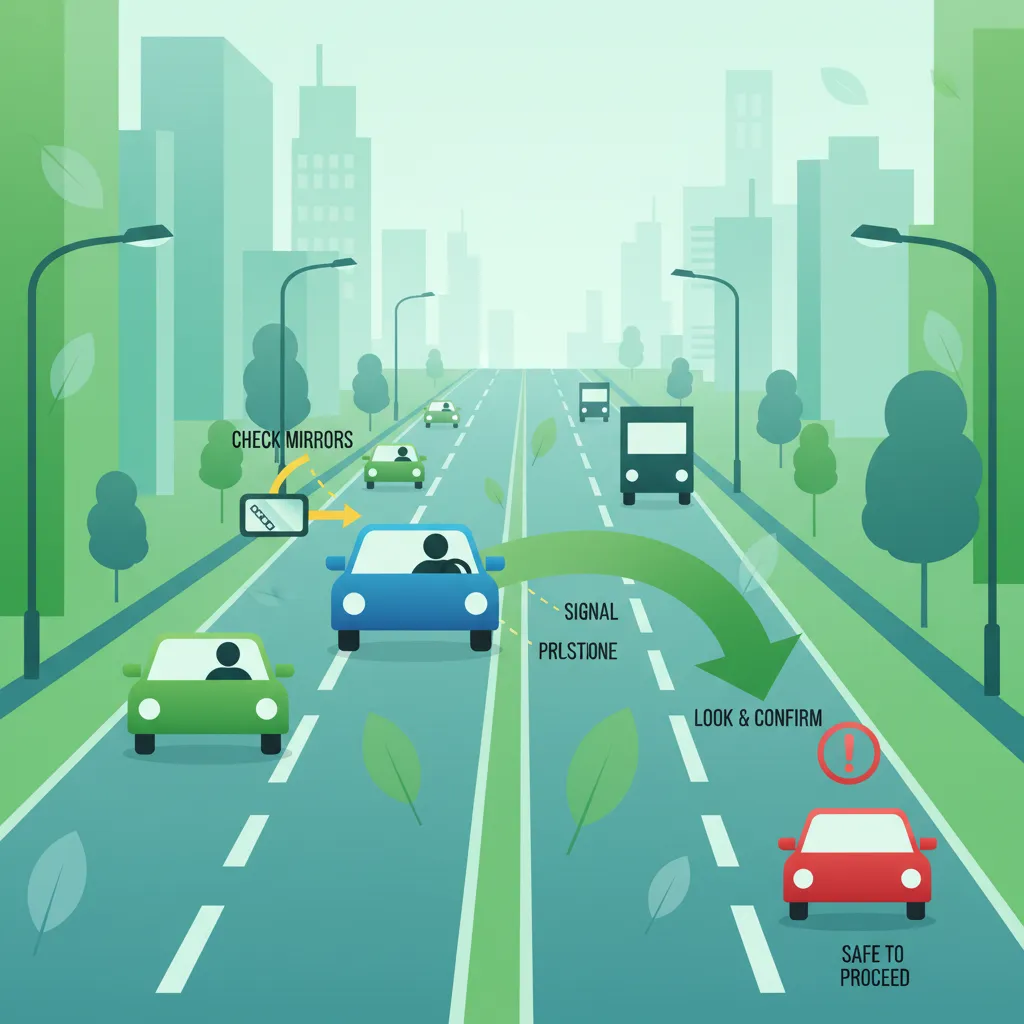
This lesson adapts lane-changing principles for the challenging environment of dense city traffic. It reinforces the critical 'mirror, signal, maneuver' sequence, with a strong focus on checking blind spots immediately before moving. The content advises on judging gaps in traffic and executing the lane change smoothly and decisively.

In this lesson, learners explore riding on rural and countryside roads, where road markings may be sparse and surface conditions varied. The content covers safe overtaking in single-lane sections, interaction with agricultural vehicles and animals, and the handling of gravel or uneven surfaces. Learners will also study the importance of anticipating curves and adjusting speed to light conditions, equipping them with the skills needed for safe countryside travel.
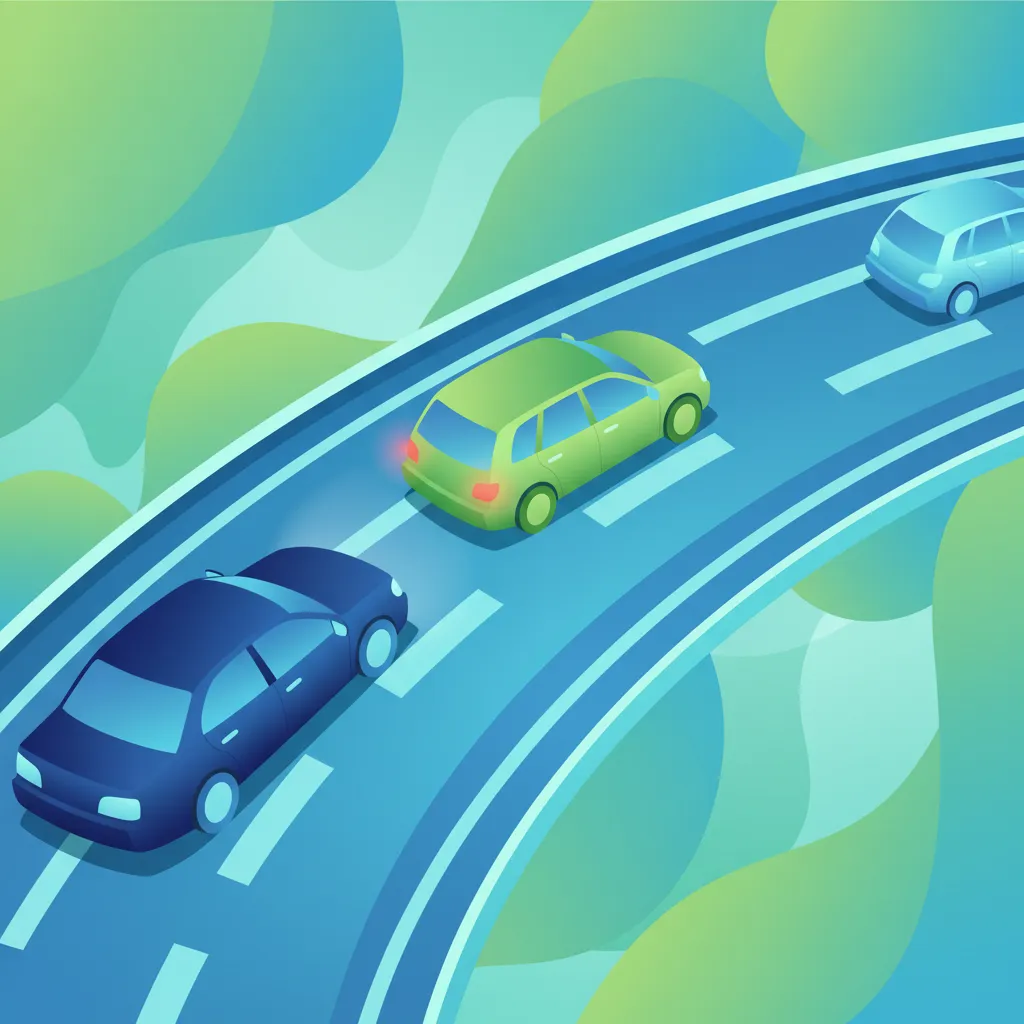
This lesson details the critical process of merging onto a high-speed motorway. It explains how to use the full length of the acceleration lane to build up to the speed of the flowing traffic, which is essential for a smooth and safe entry. Learners will study techniques for judging gaps in traffic, signaling intentions clearly, and performing thorough mirror and blind spot checks before executing the merge, ensuring a seamless integration into the highway environment.
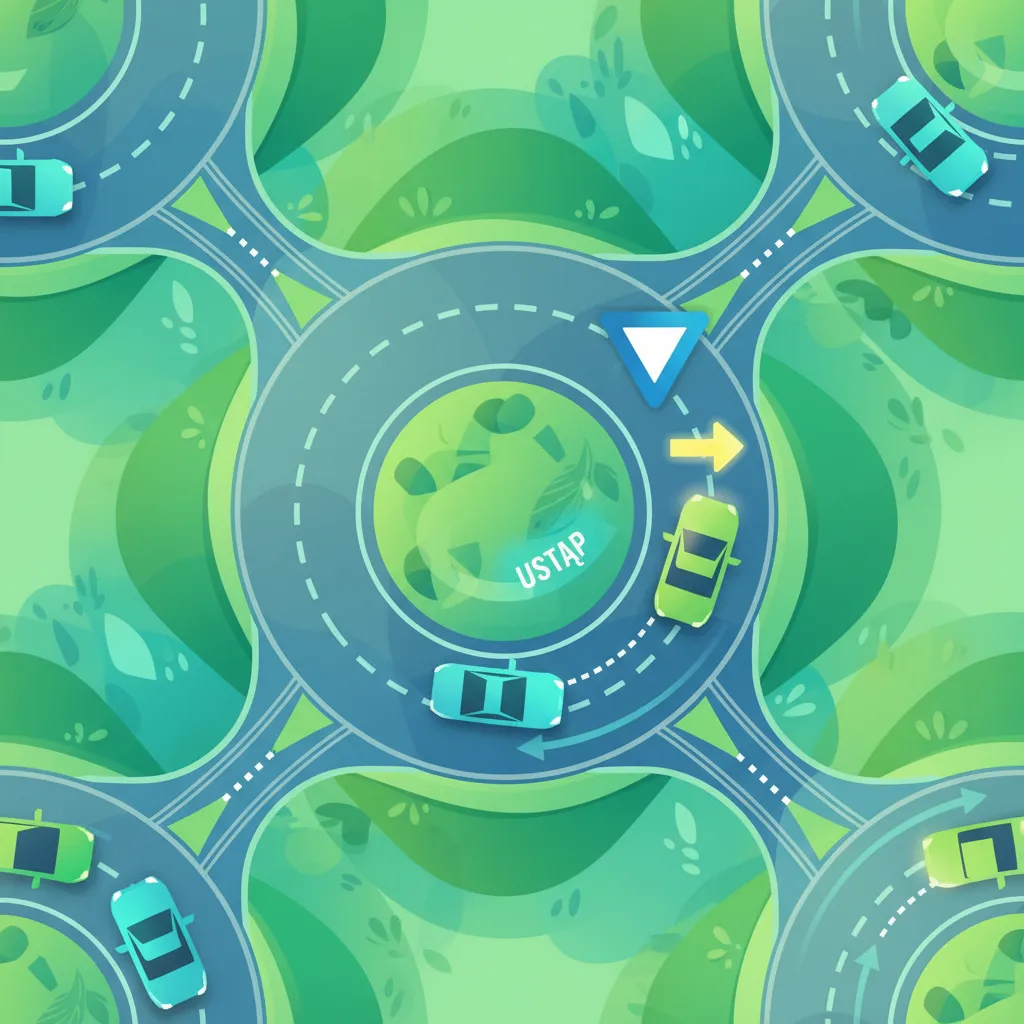
This lesson explains the specific rules for navigating roundabouts, a common feature on Polish roads. It emphasizes the primary rule of yielding to traffic already circulating within the roundabout before entering. The content also covers correct lane positioning for different exits and the proper use of indicators when exiting.
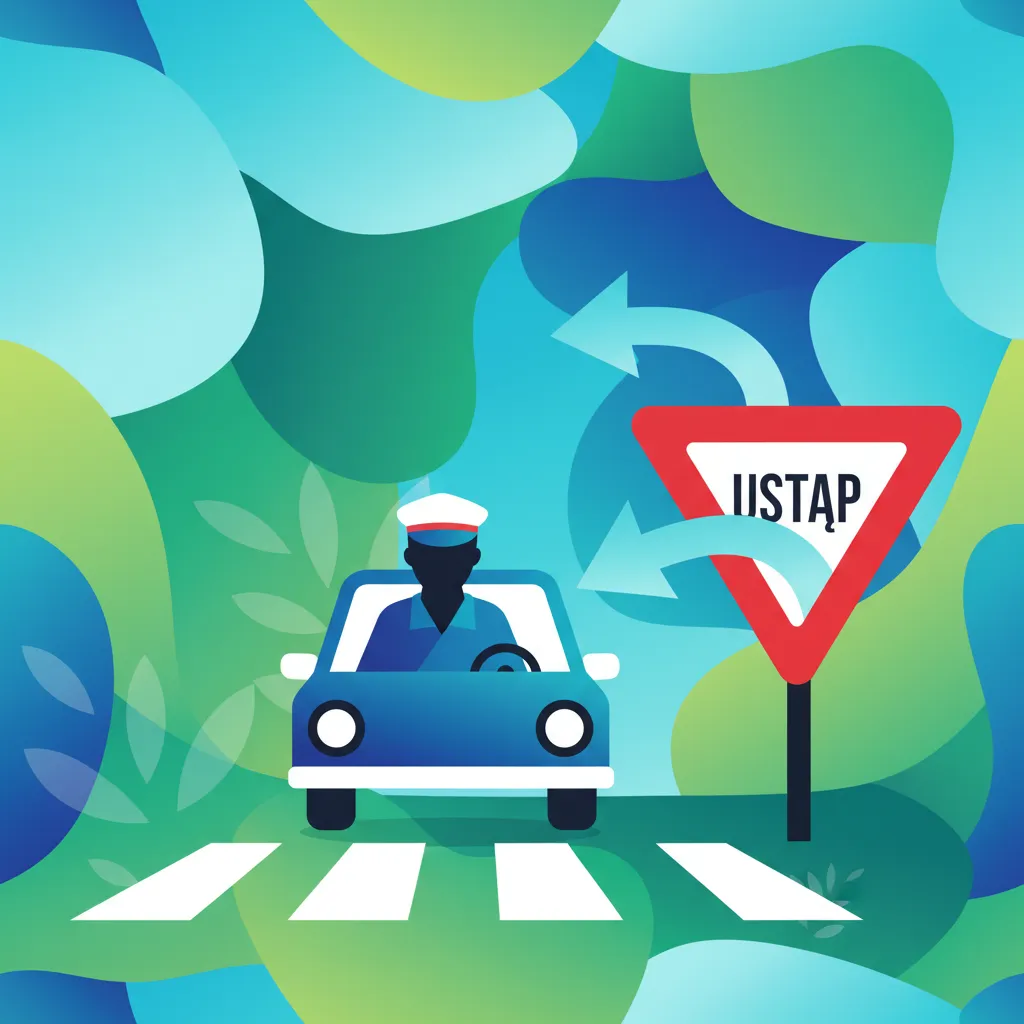
This lesson focuses on navigating intersections that are not controlled by traffic signals. It covers the interpretation of the 'Yield' sign (ustąp pierwszeństwa) and the application of the 'priority to the right' rule at junctions of equal roads. Safe decision-making and proper observation techniques are emphasized for these common scenarios.
Understand common mistakes and critical hazards when using acceleration and deceleration lanes on Polish expressways and motorways. Learn how to avoid dangerous situations during entry and exit maneuvers according to theory.
This lesson provides a guide to safely entering high-speed roads. It explains the function of the acceleration lane, where drivers must increase their speed to match the flow of traffic on the main carriageway. The importance of signaling, checking mirrors, and looking over the shoulder for blind spots before merging is heavily emphasized.
This lesson details the rules and best practices for driving on Poland's fastest roads. It covers the higher speed limits, the strict lane discipline of keeping right except to overtake, and prohibitions on stopping. The aim is to ensure drivers can handle the demands of sustained high-speed travel safely and efficiently.
This lesson prepares drivers for the event of a vehicle breakdown on a motorway or expressway. It details the correct procedure: pulling over to the emergency lane, activating hazard lights, and placing the warning triangle at the legally required distance. The importance of wearing a reflective vest when outside the vehicle is also a key safety point.
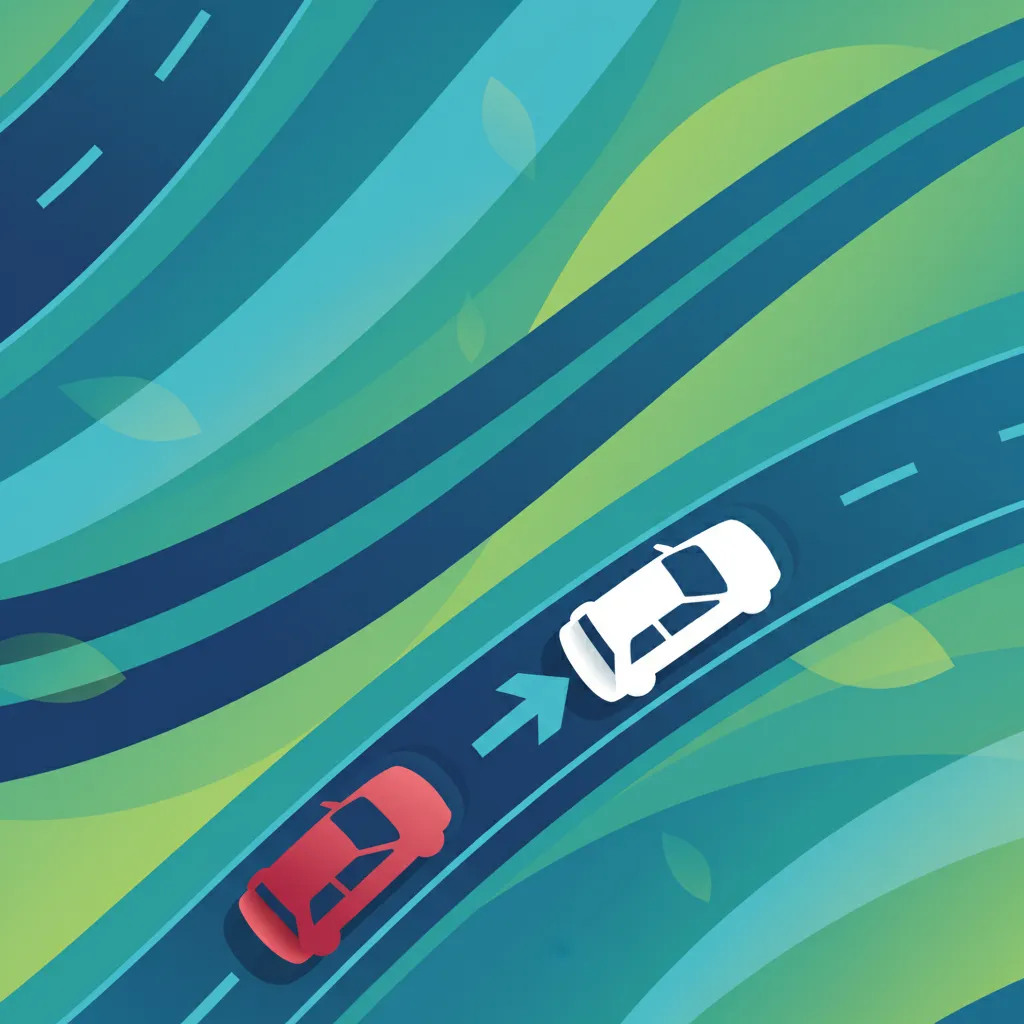
In this lesson, learners focus on the complex task of merging onto highways and changing lanes at high speeds, following Polish highway regulations. The content covers the use of acceleration lanes for building speed, selecting appropriate gaps, and positioning the motorcycle safely within traffic flow. It also highlights blind-spot monitoring, proper signaling, and the importance of maintaining a safety margin when entering or exiting lanes for hazard-free highway integration.
This lesson examines the specific rules and etiquette for riding on Polish motorways and high-speed highways, focusing on proper lane positioning, entry via acceleration lanes, and maintaining appropriate following distances. Learners will study overtaking protocols at high speeds, proper use of deceleration lanes for exits, and techniques for aerodynamic positioning. The content also covers safe lane changes and emergency lane usage to ensure efficient travel.
This lesson adapts lane-changing principles for the challenging environment of dense city traffic. It reinforces the critical 'mirror, signal, maneuver' sequence, with a strong focus on checking blind spots immediately before moving. The content advises on judging gaps in traffic and executing the lane change smoothly and decisively.
This lesson details the critical process of merging onto a high-speed motorway. It explains how to use the full length of the acceleration lane to build up to the speed of the flowing traffic, which is essential for a smooth and safe entry. Learners will study techniques for judging gaps in traffic, signaling intentions clearly, and performing thorough mirror and blind spot checks before executing the merge, ensuring a seamless integration into the highway environment.
This lesson focuses on the rules of lane usage for maintaining safe and efficient traffic flow. It covers the meaning of different lane markings, such as solid versus broken lines, and the general principle of keeping to the rightmost lane unless overtaking. Proper lane discipline is crucial for predictability and preventing conflicts on multi-lane roads.

This lesson addresses advanced scenarios, including multi-lane intersections and interactions with vulnerable road users. It reinforces the legal obligation to give absolute priority to pedestrians at marked crossings (zebra crossings). The content also covers navigating around traffic islands and using dedicated turning lanes in complex urban environments.
In this lesson, learners explore riding on rural and countryside roads, where road markings may be sparse and surface conditions varied. The content covers safe overtaking in single-lane sections, interaction with agricultural vehicles and animals, and the handling of gravel or uneven surfaces. Learners will also study the importance of anticipating curves and adjusting speed to light conditions, equipping them with the skills needed for safe countryside travel.
Find clear answers to common questions learners have about Entry and Exit Ramps, Acceleration/Deceleration Lanes. Learn how the lesson is structured, which driving theory objectives it supports, and how it fits into the overall learning path of units and curriculum progression in Poland. These explanations help you understand key concepts, lesson flow, and exam focused study goals.
The primary purpose of an acceleration lane on Polish motorways is to allow you to increase your vehicle's speed safely to match the flow of traffic already on the main carriageway. This ensures a smooth and safe merge, preventing abrupt stops or significant speed differences that could cause an accident.
You should only begin merging onto the motorway when you have reached a speed similar to that of the traffic in the right-hand lane and have a sufficient gap. Always check your mirrors and blind spot, signal your intention, and only proceed when it is safe to do so. Never force your way into traffic.
An acceleration lane is used when entering a motorway to gain speed and merge into traffic. A deceleration lane, conversely, is used when exiting a motorway. It allows you to slow down gradually after leaving the main carriageway, without impeding the flow of traffic on the motorway itself.
While there isn't a separate speed limit strictly for the acceleration or deceleration lanes themselves, you must adjust your speed according to the conditions and the main motorway speed limit. The goal is to accelerate to match motorway traffic on entry and decelerate safely away from it on exit.
Common mistakes include entering without adequate speed, not checking blind spots, failing to signal, or merging too abruptly. When exiting, drivers might brake too late on the main carriageway instead of using the deceleration lane, or fail to slow down sufficiently within the deceleration lane.
Build custom practice sessions tailored precisely to your needs. Focus on areas requiring improvement, review specific Polish road signs, or master complex traffic rules to ensure full preparation for your official driving license exam.