
Welcome to the lesson on Acceleration, Gear Shifting, and Engine Braking for your Polish Category C driving licence theory. This key topic within Vehicle Dynamics and Driving Maneuvers will equip you with the essential skills to manage your heavy goods vehicle's powertrain efficiently and safely, preparing you for complex road situations and the theory exam.
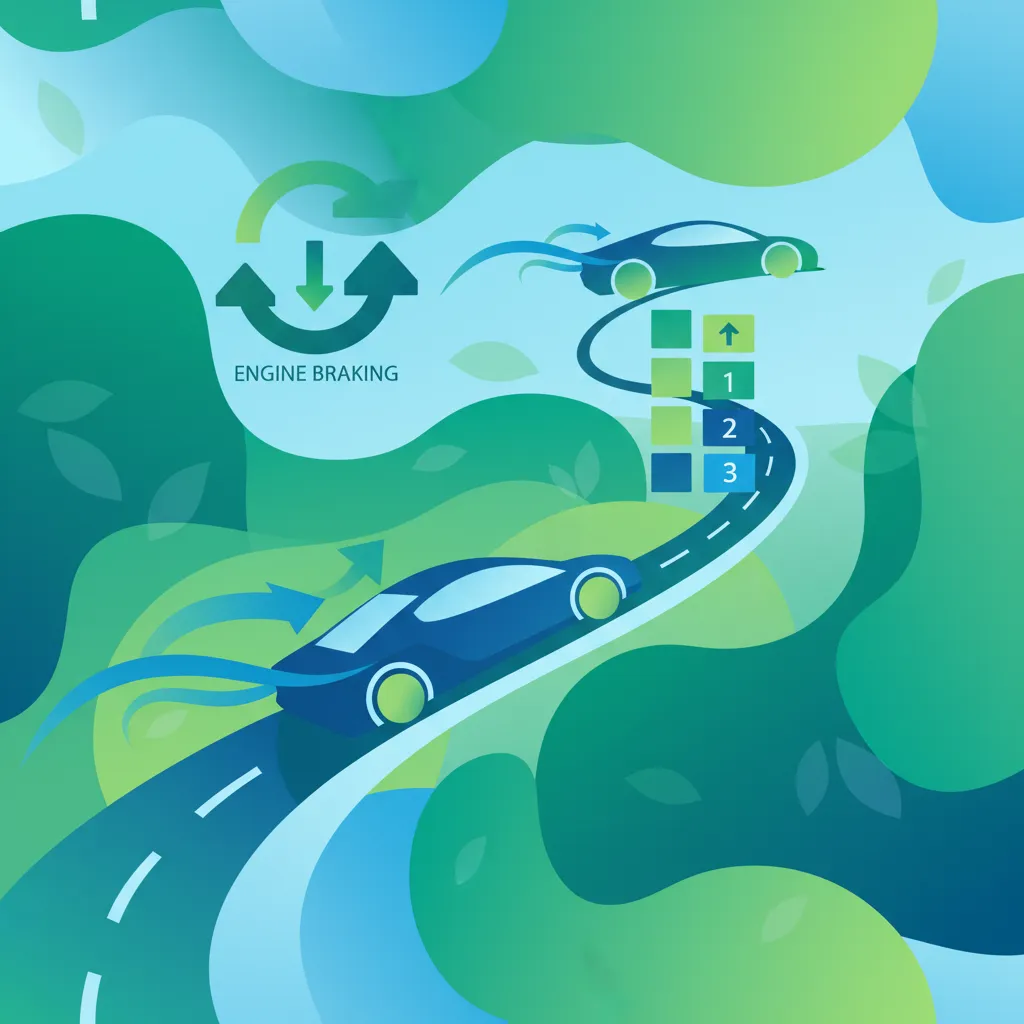
Lesson content overview
Operating a heavy goods vehicle (HGV) effectively and safely requires a deep understanding of its powertrain dynamics, particularly concerning acceleration, precise gear shifting, and the strategic use of engine braking. For professional drivers aiming for a Polish Category C Heavy Goods Vehicle license, mastering these techniques is not only crucial for passing the exam but also for ensuring fuel efficiency, minimizing vehicle wear, and upholding road safety, especially when navigating diverse Polish road conditions. This lesson delves into the principles that govern optimal performance and control for large commercial vehicles.
The heart of an HGV's performance lies in its engine and transmission system. Unlike passenger cars, heavy vehicles rely heavily on torque for moving massive loads, making precise control over engine speed (RPM) and gear selection paramount.
The torque curve is a graphical representation illustrating how much rotational force, or torque (measured in Newton-meters, Nm), an engine produces at different engine speeds (revolutions per minute, RPM). For diesel engines commonly found in Category C trucks, peak torque typically occurs within a relatively narrow and lower RPM band, often between 1,200 and 2,000 RPM. This is the "sweet spot" where the engine is most efficient and powerful for moving heavy loads.
Understanding this curve is vital. When the engine operates within its peak torque band, it delivers the most effective acceleration and sustained power, particularly useful when climbing grades or moving off from a standstill with a full load. Driving outside this optimal range—either at too low or too high RPMs—leads to inefficiencies such as reduced acceleration, increased fuel consumption, and accelerated engine wear. Polish traffic regulations, such as those implied by Article 99 on engine load management, underscore the importance of keeping the engine within its optimal operating range to prevent damage and ensure safe vehicle operation.
Gear ratios are fundamental to how an HGV translates engine power into usable force at the wheels. Each gear in the transmission represents a specific ratio between the engine's rotational speed and the wheel's rotational speed. Lower gears provide higher torque multiplication, essential for overcoming the inertia of heavy loads and climbing steep inclines. Conversely, higher gears reduce engine speed for a given road speed, promoting fuel efficiency during cruising on flat terrain.
Heavy goods vehicles employ several types of transmissions:
The choice of gear directly influences the mechanical advantage available to the driver. On a level highway, cruising in a high gear, such as 7th, at around 80 km/h might keep the engine comfortably within a fuel-efficient RPM range of 1,200 RPM. However, when faced with an uphill section, a downshift would be necessary to engage a lower gear ratio, providing the increased torque required to maintain speed without straining the engine.
Effective gear management is a cornerstone of professional HGV driving, impacting both performance and operational costs.
Shift points refer to the precise engine RPM at which a gear change should be made to maintain the engine within its optimal torque range.
Proper shift points ensure smooth acceleration, prevent unnecessary engine strain, and contribute significantly to fuel economy. Polish law, while not specifying exact RPMs, obliges drivers to use gears that allow the vehicle to maintain a safe speed and control, especially on grades, without excessive service braking.
Load-sensitive gear selection is the practice of adjusting your gear choice based on the total weight of the vehicle, including cargo and any trailers, as well as the position of the centre of gravity. A heavier load significantly increases the resistance the engine must overcome.
When carrying a heavy load, always choose a lower gear than you might for an empty vehicle, especially on inclines. This provides the necessary torque and prevents engine lugging or stalling.
For instance, with a fully loaded truck weighing 30 tonnes (GVW), climbing a 4% incline might necessitate staying in 3rd gear to maintain a steady 30 km/h and keep the engine within its optimal torque band. An empty truck, however, might manage the same incline in 4th or even 5th gear. Neglecting load-sensitive gear selection can lead to loss of momentum, increased fuel consumption, transmission strain, and even dangerous situations like an inability to maintain speed in traffic. Polish law (Art. 134) specifically requires drivers to reduce speed and select appropriate gears when descending with a fully loaded vehicle to maintain control.
Maintaining control over a heavy vehicle's speed, especially on descents, is critical for safety and prolonging the life of the service brakes. Engine braking and auxiliary braking systems are indispensable tools for this.
Engine braking is the technique of using the engine's inherent resistance to slow the vehicle down without applying the conventional friction (service) brakes. This occurs when the throttle is released, and the engine's internal friction, compression, and pumping losses work against the vehicle's momentum. This method is particularly effective for HGVs because it prevents the service brakes from overheating, a condition known as brake fade.
There are several types of engine braking systems:
Engine braking should never be used as the sole method to bring a vehicle to a complete stop. Its primary purpose is to control speed on descents and reduce the workload on service brakes.
Polish regulations are clear on this: Rozporządzenie Ministra Infrastruktury, § 74, mandates the use of engine braking on long descents when the vehicle speed exceeds 30 km/h and the road grade surpasses 5%, especially if service brakes are likely to overheat.
Retarders are auxiliary braking devices designed to provide additional, continuous deceleration force, independent of the vehicle's primary friction brakes. They are invaluable for HGVs on long or steep grades, significantly reducing service brake wear and improving safety.
Common types of retarders include:
Retarders are typically engaged at speeds above 30 km/h on grades exceeding 5% and can be set to various levels of braking force. While extremely effective for speed control, drivers must understand that retarders assist deceleration and cannot bring a vehicle to a complete stop. EU regulations, adopted by Poland, require retarders to be functional and properly maintained, emphasizing their role as a safety feature that complements, but does not replace, the normal braking system.
Compliance with Polish traffic law and adopting best practices are essential for HGV drivers.
Polish regulations are specific about how heavy goods vehicles should be driven, particularly concerning speed control and gear management:
Engine Braking on Descents: Drivers must use engine braking (including retarders) on descents where the gradient exceeds 5% and the service brake temperature may rise above safe limits. This rule applies to HGVs traveling faster than 30 km/h. Its primary purpose is to prevent brake fade and maintain control.
Gear Selection for Grades: When climbing with a loaded vehicle, drivers must select a gear that provides sufficient torque to overcome the grade resistance. This prevents the engine from lugging, stalling, or losing momentum, which can create hazards for other road users.
Engine Rev-Limit Adherence: Drivers must not exceed the engine's maximum safe RPM limit, as indicated in the vehicle's technical documentation. Over-revving can cause severe engine damage and shorten its lifespan.
Maintaining Speed Limits During Shifts: During gear changes, drivers must ensure they do not accelerate beyond permissible speed limits. Speed limits are constant, regardless of the maneuver.
Retarder Disengagement: While not always strictly regulated by law, it is strongly recommended (and often mandated by manufacturers) that retarders be disengaged when approaching very low speeds (e.g., below 15 km/h) or when coming to a full stop. Using a retarder at very low speeds can lead to abrupt deceleration that might be unexpected for other drivers or make fine speed adjustments difficult.
Misjudgment in gear selection and braking can lead to dangerous situations and vehicle damage:
Driving conditions rarely remain constant, requiring drivers to adapt their gear shifting and braking techniques:
Understanding the cause-and-effect relationships of driving techniques reinforces the importance of mastery.
Violations of proper gear and brake management can lead to severe consequences:
Conversely, the correct application of acceleration, gear shifting, and engine braking yields substantial benefits:
Applying these concepts in practical scenarios is fundamental to becoming a skilled HGV driver.
Mastery of acceleration, gear shifting, and engine braking is not merely about mechanical operation; it's about integrating physical principles, safety considerations, and legal obligations into every driving decision. For aspiring professional truck drivers preparing for the Polish Category C Heavy Goods Vehicle theory exam, this comprehensive understanding forms the bedrock of safe, efficient, and compliant driving. By consistently applying optimal shift points, leveraging engine braking and retarders, and adapting to varying conditions and loads, drivers can ensure prolonged vehicle lifespan, minimize fuel consumption, and crucially, enhance safety for themselves and all road users.
This lesson covers the essential techniques for managing a Category C heavy goods vehicle's powertrain, focusing on understanding the diesel engine torque curve to select optimal gears and shift points. It explains engine braking methods including compression brakes (Jake Brake) and retarders, which are critical for controlling speed on descents while preserving service brakes. Polish traffic regulations mandate engine braking on descents exceeding 5% gradient when traveling above 30 km/h. Proper load-sensitive gear selection and timely shifting keep the engine within its efficient operating range, directly impacting fuel economy, vehicle wear, and safety on Polish roads.
A short set of high-value points that capture the most important learning from this lesson.
Peak torque in diesel Category C engines typically occurs between 1,200 and 2,000 RPM, which is the optimal operating range for moving heavy loads efficiently.
Upshifting should occur between 1,500 and 1,800 RPM to keep the engine within its optimal torque band and avoid over-revving or lugging.
Engine braking uses the engine's internal resistance to slow the vehicle, preserving service brakes and preventing dangerous brake fade on long descents.
Retarders provide auxiliary deceleration independent of friction brakes and are particularly valuable on steep or long downhill sections.
Load-sensitive gear selection is essential: heavier loads require lower gears on inclines to prevent engine strain and maintain momentum.
Explore all units and lessons included in this driving theory course.
Always downshift before climbing grades with a loaded vehicle to keep the engine within its peak torque band.
On descents exceeding 5% gradient at speeds above 30 km/h, Polish regulations mandate engine braking to prevent service brake overheating.
Retarders should be disengaged at very low speeds (below 15 km/h) to avoid jerky deceleration and maintain vehicle control.
When carrying heavy loads, use lower gears than you would with an empty vehicle, especially on inclines.
Engine braking cannot bring a vehicle to a complete stop—it is for speed control only, not final stopping.
Remaining in too high a gear when climbing causes engine lugging, power loss, and potential stalling.
Relying solely on service brakes during long descents leads to brake fade and dangerous loss of braking effectiveness.
Downshifting to an unnecessarily low gear on moderate downgrades can cause unexpected acceleration due to insufficient engine resistance.
Engaging compression brakes at very low speeds provides little benefit and creates jerky deceleration that is harder to control.
Failing to downshift before stopping on a downgrade forces abrupt reliance on service brakes instead of using engine braking.
Lesson content overview
A short set of high-value points that capture the most important learning from this lesson.
Peak torque in diesel Category C engines typically occurs between 1,200 and 2,000 RPM, which is the optimal operating range for moving heavy loads efficiently.
Upshifting should occur between 1,500 and 1,800 RPM to keep the engine within its optimal torque band and avoid over-revving or lugging.
Engine braking uses the engine's internal resistance to slow the vehicle, preserving service brakes and preventing dangerous brake fade on long descents.
Retarders provide auxiliary deceleration independent of friction brakes and are particularly valuable on steep or long downhill sections.
Load-sensitive gear selection is essential: heavier loads require lower gears on inclines to prevent engine strain and maintain momentum.
Explore all units and lessons included in this driving theory course.
Always downshift before climbing grades with a loaded vehicle to keep the engine within its peak torque band.
On descents exceeding 5% gradient at speeds above 30 km/h, Polish regulations mandate engine braking to prevent service brake overheating.
Retarders should be disengaged at very low speeds (below 15 km/h) to avoid jerky deceleration and maintain vehicle control.
When carrying heavy loads, use lower gears than you would with an empty vehicle, especially on inclines.
Engine braking cannot bring a vehicle to a complete stop—it is for speed control only, not final stopping.
Remaining in too high a gear when climbing causes engine lugging, power loss, and potential stalling.
Relying solely on service brakes during long descents leads to brake fade and dangerous loss of braking effectiveness.
Downshifting to an unnecessarily low gear on moderate downgrades can cause unexpected acceleration due to insufficient engine resistance.
Engaging compression brakes at very low speeds provides little benefit and creates jerky deceleration that is harder to control.
Failing to downshift before stopping on a downgrade forces abrupt reliance on service brakes instead of using engine braking.
Explore search topics learners often look for when studying Acceleration, Gear Shifting, and Engine Braking. These topics reflect common questions about road rules, driving situations, safety guidance, and lesson level theory preparation for learners in Poland.
Browse additional driving theory lessons that cover connected traffic rules, road signs, and common driving situations related to this topic. Improve your understanding of how different rules interact across everyday traffic scenarios.
Learn how to optimize acceleration and fuel economy by mastering gear shifting techniques for Category C trucks. This lesson covers understanding the diesel engine torque curve and selecting optimal RPM ranges for Polish roads.

This lesson provides an in-depth look at the transmission and drivetrain systems in heavy trucks. It explains the differences between manual and automated manual transmissions and details the function of components like the clutch, drive shafts, and differential. Learners will study effective gear shifting strategies that account for load and terrain, ensuring efficient power delivery, improved fuel economy, and reduced mechanical wear on the entire drivetrain system.

This lesson introduces the fundamental principles of the diesel engines that power Category C vehicles. It covers key concepts such as torque, horsepower, fuel injection, and the role of turbocharging in generating power efficiently. Learners will also analyze how the powertrain transfers energy to the wheels and understand the practical application of engine braking as a primary method for controlling vehicle speed, especially on long descents, to reduce wear on service brakes.

This lesson explains the specialized techniques required for initiating movement and bringing a heavy, loaded truck to a halt. It emphasizes fine clutch and throttle control to overcome inertia without causing driveline stress or cargo shift. Learners will also study methods for smooth, gradual braking that account for the vehicle's significant momentum, ensuring safety, passenger comfort, and the integrity of the cargo while minimizing wear on the braking system.
This lesson outlines the statutory speed limits that professional drivers of Category C vehicles must adhere to on Polish roads. It clearly distinguishes the maximum permitted speeds in built-up areas, on single carriageways, and on motorways. The content also explains how to interpret road signs that may indicate temporary or vehicle-specific speed restrictions, ensuring drivers remain compliant with the law and avoid penalties from speed enforcement measures.

This lesson provides a detailed breakdown of vehicle classifications relevant to the Category C licence. It explains the concept of 'dopuszczalna masa całkowita' (permissible total weight) and how it defines a vehicle's category. Learners will identify different truck types, such as rigid vehicles, based on their axle configurations and understand the specific roadworthiness and registration requirements for each class, ensuring correct vehicle operation under the law.

This lesson introduces the principles of eco-driving, a set of techniques designed to minimize fuel consumption and emissions. It explains how factors like smooth acceleration, maintaining a steady speed, and anticipating traffic flow can lead to significant fuel savings. Learners will understand the benefits of reducing unnecessary idling, using cruise control effectively on appropriate terrain, and planning routes to avoid congestion, contributing to both economic and environmental sustainability.
This lesson details the specific protocols for overtaking and changing lanes in a heavy goods vehicle. It explains the importance of calculating sufficient space and speed differential before committing to a pass, while constantly being aware of the large blind spots around the truck. The content also covers procedures for safely merging onto highways and maintaining correct lane positioning to facilitate smooth and predictable traffic flow for all road users.
This lesson focuses on the specific challenges HGVs face when navigating roundabouts. It details the correct procedure for approach, including selecting the appropriate lane based on the intended exit and yielding to traffic already circulating. The content emphasizes the need to account for the vehicle's large turning radius and off-tracking to avoid encroaching on adjacent lanes or mounting curbs, ensuring a smooth and safe passage through the roundabout.
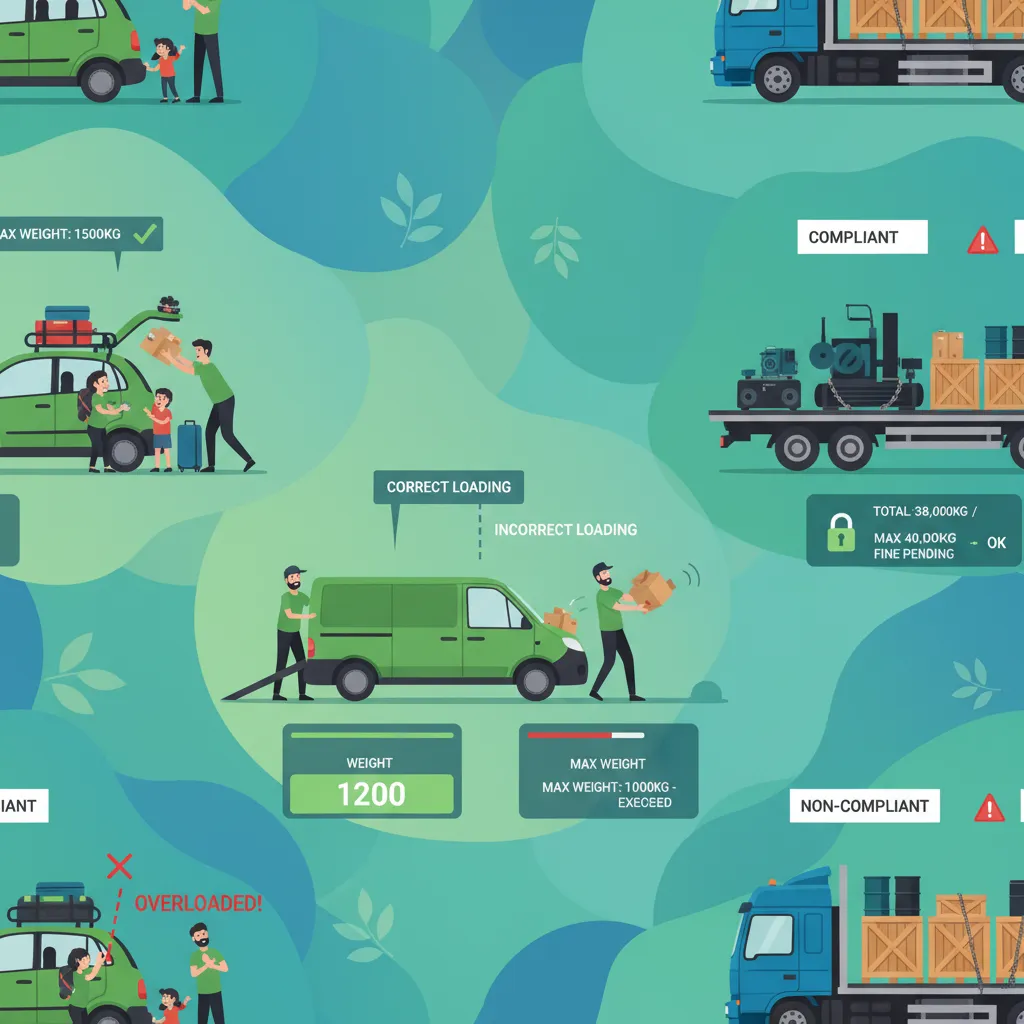
This lesson introduces the legal framework governing vehicle and axle weight limits in Poland and the EU. Learners will understand how to determine a vehicle's maximum permissible payload and interpret official load charts and documentation. The content covers the importance of correct weight distribution to avoid exceeding individual axle limits and explains the serious legal and safety consequences of operating an overloaded vehicle.
Master speed control for Category C trucks using engine braking and retarders on descents. Understand Polish regulations, prevent brake fade, and learn techniques for safe heavy vehicle deceleration and speed management.
This lesson is dedicated to the critical braking systems of heavy goods vehicles. It provides a detailed explanation of the air brake system, including the compressor, air tanks, and brake chambers, and highlights the safety function of the dual-circuit design. Learners will also differentiate between various types of auxiliary braking systems, such as engine brakes and retarders, and understand their role in managing speed and preventing service brake overheating on steep gradients.
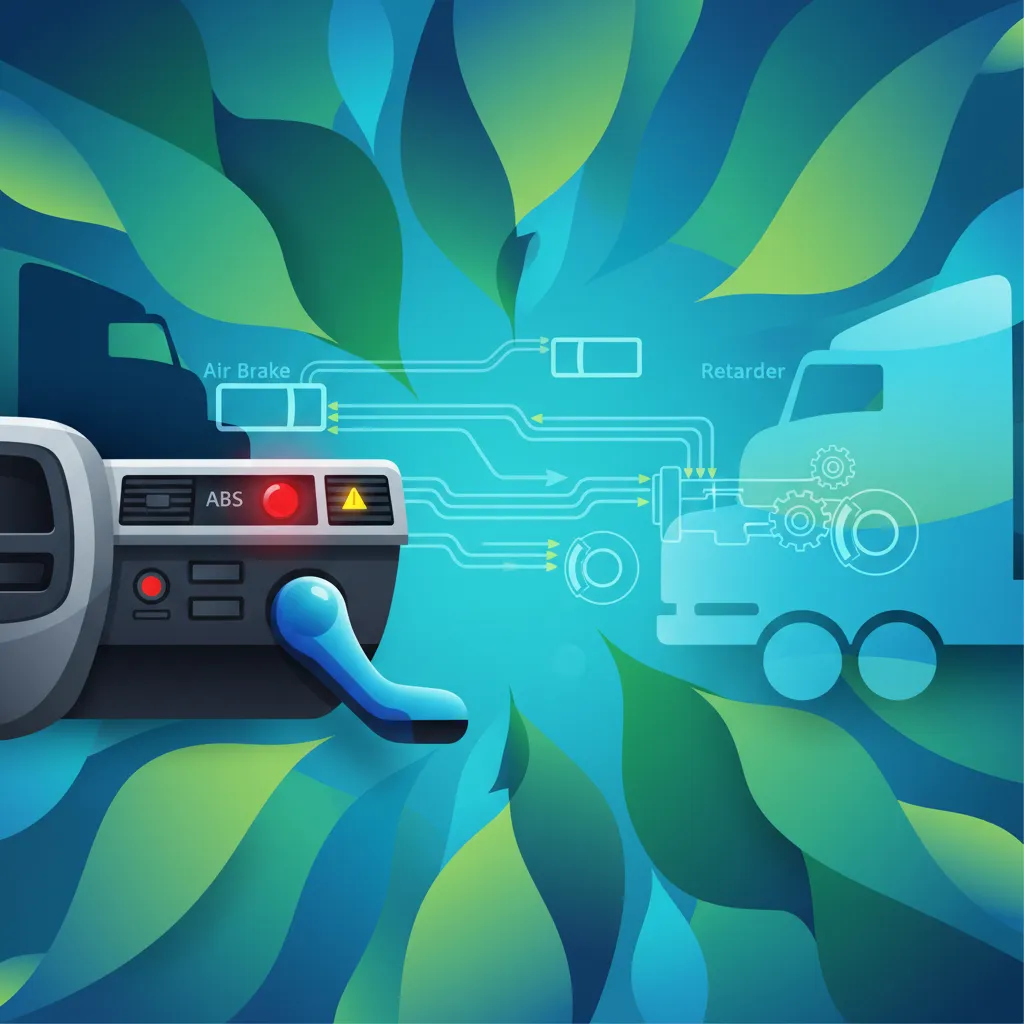
This lesson covers the braking mechanisms specific to large passenger vehicles, focusing on air brake systems and retarders. Learners will understand the components and operation of service and parking brakes, as well as the function of ABS and ESC. It also addresses strategies for emergency braking and the importance of regular maintenance for optimal performance.

This lesson focuses on the critical procedures for executing an emergency stop with an air-braked vehicle. It explains how to apply firm, steady pressure to the brake pedal to achieve maximum braking force without locking the wheels, which could lead to a loss of control. The content also discusses the response time of air brake systems and how to manage the significant forces of deceleration when the vehicle is fully loaded, ensuring the quickest possible stop in a crisis situation.
This lesson explains the specialized techniques required for initiating movement and bringing a heavy, loaded truck to a halt. It emphasizes fine clutch and throttle control to overcome inertia without causing driveline stress or cargo shift. Learners will also study methods for smooth, gradual braking that account for the vehicle's significant momentum, ensuring safety, passenger comfort, and the integrity of the cargo while minimizing wear on the braking system.
This lesson outlines the statutory speed limits that professional drivers of Category C vehicles must adhere to on Polish roads. It clearly distinguishes the maximum permitted speeds in built-up areas, on single carriageways, and on motorways. The content also explains how to interpret road signs that may indicate temporary or vehicle-specific speed restrictions, ensuring drivers remain compliant with the law and avoid penalties from speed enforcement measures.
This lesson provides essential knowledge for responding to sudden and dangerous vehicle malfunctions. It outlines step-by-step procedures for handling a catastrophic tire blowout, managing a loss of braking power, and reacting to a shift in cargo that destabilizes the vehicle. The focus is on maintaining as much control as possible, bringing the vehicle to a safe stop away from traffic, and activating hazard warnings to protect the scene and other road users.

This lesson teaches drivers how to adapt their speed, following distance, and control inputs to safely navigate adverse conditions. It covers the challenges posed by rain, snow, and ice, explaining the loss of traction and the increased risk of skidding or aquaplaning. The content provides specific strategies for driving in fog, which reduces visibility, and strong crosswinds, which can affect the stability of a high-sided vehicle, promoting a proactive and defensive driving mindset.
This lesson provides a detailed breakdown of vehicle classifications relevant to the Category C licence. It explains the concept of 'dopuszczalna masa całkowita' (permissible total weight) and how it defines a vehicle's category. Learners will identify different truck types, such as rigid vehicles, based on their axle configurations and understand the specific roadworthiness and registration requirements for each class, ensuring correct vehicle operation under the law.

This lesson explores the key components responsible for vehicle stability and control. It compares different suspension technologies, like traditional leaf springs and modern air suspension, and explains their impact on ride quality and load handling. Learners will also study the principles of hydraulic power steering and the importance of correct wheel alignment, as well as understand how different axle configurations affect load distribution and maneuverability.
Find clear answers to common questions learners have about Acceleration, Gear Shifting, and Engine Braking. Learn how the lesson is structured, which driving theory objectives it supports, and how it fits into the overall learning path of units and curriculum progression in Poland. These explanations help you understand key concepts, lesson flow, and exam focused study goals.
The torque curve shows how much turning force (torque) your truck's engine produces at different revolutions per minute (RPM). Understanding this curve helps you select gears that keep the engine operating in its most efficient and powerful range, ensuring smooth acceleration and preventing unnecessary strain on the engine and transmission.
Engine braking is ideal for controlling speed on descents or when slowing down gradually. It uses the engine's resistance to slow the vehicle, saving wear on your service brakes. Service brakes should be reserved for situations requiring rapid deceleration or emergency stops.
A heavier load requires more torque to get moving and maintain speed. You'll need to use lower gears initially and shift up more gradually. Conversely, on descents, a heavier load will accelerate faster, making engine braking even more critical for control.
While there aren't specific 'engine braking' regulations per se, Polish law mandates safe operation and preventing undue noise pollution. Proper use of engine braking for speed control is a key aspect of safe driving and is tested in the theory exam regarding vehicle control and anticipating road conditions.
Eco-driving focuses on fuel efficiency. This means shifting gears at lower RPMs (where appropriate), avoiding unnecessary acceleration and braking, and anticipating traffic flow to maintain momentum. Smooth gear changes and using engine braking effectively are core components of eco-driving.
Build custom practice sessions tailored precisely to your needs. Focus on areas requiring improvement, review specific Polish road signs, or master complex traffic rules to ensure full preparation for your official driving license exam.