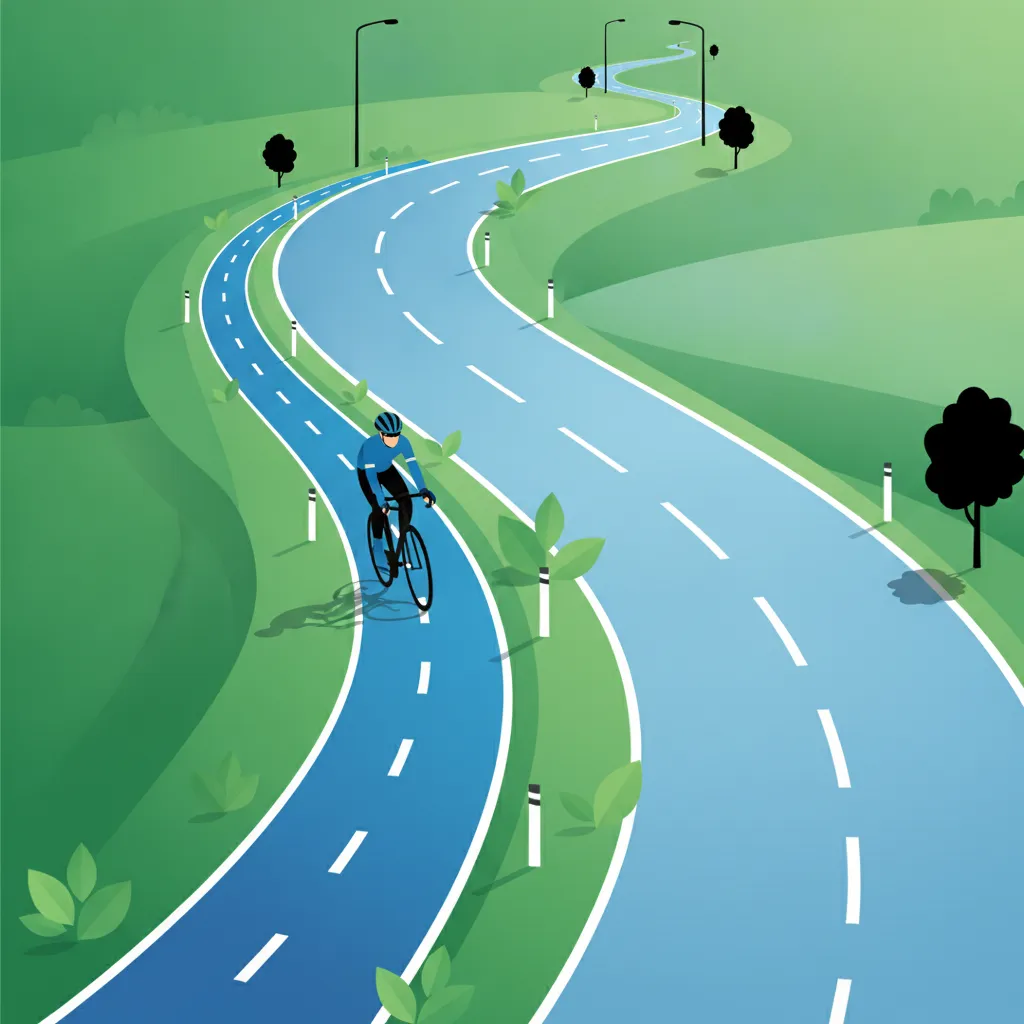
This lesson provides a deep dive into the visual language of Danish roads, focusing on surface markings that dictate lane usage and traffic flow. Understanding these rules is essential for Category AM riders to maintain correct positioning and anticipate road layouts safely. It builds directly upon your knowledge of road signs and prepares you for navigating complex intersections in later units.
Lesson content overview
Understanding the various markings painted on Danish road surfaces is fundamental for all road users, especially for those operating a Category AM (Stor Knallert) vehicle. These markings provide crucial visual guidance, ensuring smooth traffic flow, preventing accidents, and clearly defining the rules for lane usage, overtaking, and special-purpose lanes. Mastering the interpretation of these symbols and lines is not just about passing your theory test; it's about making safe and responsible decisions every time you ride.
This lesson will delve into the specific meanings of different line types—solid, broken, white, and yellow—as well as directional arrows and dedicated lanes for buses and cyclists. By the end, you will have a thorough understanding of Danish road markings, enabling you to maintain correct lane discipline and navigate complex road layouts with confidence. This knowledge builds upon your understanding of Danish traffic signs (as covered in a previous lesson) and forms a critical foundation for adhering to priority rules and safe riding practices.
Danish road markings are an integral part of the comprehensive traffic management system, designed to enhance safety and efficiency for all road users. Several core principles underpin their design and application:
The lines painted on the road surface are perhaps the most common and critical road markings. Their color and continuity (solid or broken) convey distinct rules regarding lane changes and overtaking.
A solid white line is a continuous line painted on the road surface, primarily used to separate traffic lanes travelling in the same direction. Its purpose is to mark lane boundaries where changing lanes is strictly prohibited to maintain traffic stability and prevent dangerous maneuvers.
For Stor Knallert riders, overlapping or crossing a solid white line is illegal and unsafe. These lines are not merely advisory; they represent a legal restriction. You will typically find solid white lines in areas where lane changes would be particularly hazardous, such as near intersections, tunnels, or curves, or where maintaining strict lane discipline is critical for safety.
Never cross a solid white line. It signifies a zone where lane changes are strictly forbidden due to safety concerns.
In contrast to solid lines, a broken white line is a dashed line separating traffic lanes moving in the same direction. This marking indicates that lane changes are permitted when it is safe to do so. These lines facilitate overtaking maneuvers and allow riders to transition between lanes as needed, provided they exercise caution.
When approaching a broken white line, Stor Knallert riders may cross it to change lanes or overtake. However, this permission is always conditional on safety. Riders must observe proper signaling, check mirrors, and clear their blind spots to ensure no other vehicle is in the intended path. Always prioritize safety over convenience.
A solid yellow line is a continuous line used to separate traffic moving in opposite directions. Its primary purpose is to indicate that crossing the line is prohibited for traffic in both directions, ensuring a clear and safe demarcation for oncoming vehicles.
In Denmark, a solid yellow line almost always means that overtaking is prohibited for traffic moving in either direction. Stor Knallert riders must not cross a solid yellow line into oncoming traffic under any circumstances. These lines are typically found on roads where visibility is limited, or where overtaking would be particularly dangerous, such as narrow roads, hills, or sharp bends. The only exceptions might be at designated intersections where other markings or signs explicitly allow specific turning movements.
A broken yellow line is a dashed line separating traffic moving in opposite directions. Unlike a solid yellow line, this marking indicates that overtaking is permitted when it is safe to do so, for traffic travelling in either direction. This usually signifies a section of a dual carriageway or a road with sufficient visibility and width for safe passing.
When encountering a broken yellow line, Stor Knallert riders may overtake slower vehicles by crossing into the opposing lane, provided there is adequate visibility and space. However, the permission to overtake does not negate the responsibility to ensure safety. Always check for oncoming traffic, potential hazards, and sufficient space to complete the maneuver safely before crossing the line and returning to your lane.
Double solid yellow lines consist of two parallel continuous yellow lines separating traffic moving in opposite directions. This is the most restrictive marking for opposing traffic flow, indicating that overtaking is strictly prohibited for vehicles travelling in either direction.
These lines are employed in areas where the risk of head-on collisions is exceptionally high, or where maintaining strict lane separation is crucial for safety, such as mountainous roads, approaches to dangerous intersections, or stretches with extremely limited visibility. Stor Knallert riders must never cross double solid yellow lines to overtake or for any other reason, except in extreme emergencies or when directed by traffic police.
Understanding the difference between white and yellow lines is critical. White lines primarily deal with traffic moving in the same direction, while yellow lines always relate to traffic moving in opposite directions.
Beyond simple lane boundaries, the road surface often features arrow markings – white or yellow arrows painted directly onto the asphalt. These arrows are vital visual cues that indicate the permitted directions of travel for a specific lane.
Directional arrows are commonly found approaching intersections, roundabouts, or at points where traffic lanes diverge for different destinations. For example, a lane might have an arrow pointing straight ahead and another curving to the left, indicating that traffic in that lane can either go straight or turn left. Some lanes may have only a single arrow, mandating a specific turn or straight-ahead movement.
Stor Knallert riders must pay close attention to these arrows and follow the direction indicated for their chosen lane. Deviating from the arrow's instruction can lead to dangerous conflicts with other traffic, as other drivers expect you to proceed as indicated. Entering an intersection in a lane marked "straight only" and then attempting to turn can cause collisions and is a violation of lane discipline.
Danish road networks incorporate special-purpose lanes to improve safety, manage traffic flow, and prioritize certain road users. Stor Knallert riders must be aware of and respect these designated areas.
Bus lanes are specific lanes reserved exclusively for public buses and sometimes for other authorized vehicles (e.g., taxis, emergency services). These lanes are typically marked with a continuous white line and often feature a prominent bus symbol painted on the road surface at regular intervals. They may also be indicated by specific road signs.
The purpose of bus lanes is to ensure the efficient movement of public transport, allowing buses to bypass general traffic congestion. Motorcyclists, Stor Knallert riders, and other private vehicles are generally prohibited from using bus lanes during their operational hours, which are often indicated on accompanying signs. Violating this rule can result in significant fines and disrupts public transport services. Exceptions might exist where a bus lane is open to general traffic outside peak hours, but this will always be clearly signposted.
Cycle lanes are designated pathways for bicycles, designed to enhance the safety and efficiency of cycling traffic. These lanes can be identified by bicycle symbols painted on the road surface, distinct colored pavement (e.g., red asphalt in some areas), or specific road signs. They are usually separated from general traffic by a solid or broken white line, and sometimes by a curb or physical barrier.
Stor Knallert riders and other motorists must not occupy or drive in cycle lanes. These lanes are exclusively for cyclists, and driving in them endangers vulnerable road users. You may only briefly cross a cycle lane if it is necessary to turn or access a property, and you must always yield to any cyclists present. Always be extremely vigilant when crossing or turning across a cycle lane, as cyclists can be hard to spot.
Certain road markings indicate zones where stopping or parking is prohibited to ensure traffic flow, emergency access, and safety. The most common markings include:
Stor Knallert riders must never stop or park on these marked sections. Failure to comply can lead to significant fines and inconvenience other road users. Always look for designated parking areas or signs indicating where parking is permitted.
The Danish Traffic Act, which contains the fundamental laws and regulations governing all road traffic in Denmark, including rules for road markings.
Adhering to Danish road markings is not just a matter of good practice; it is a legal requirement under the Færdselsloven (Danish Traffic Act). Here are the essential rules every Stor Knallert rider must know:
The visibility and interpretation of road markings can vary significantly depending on environmental and contextual factors. Stor Knallert riders must adapt their riding behavior accordingly to maintain safety.
Misinterpreting or ignoring road markings is a frequent cause of traffic violations and accidents. Here are some common mistakes Stor Knallert riders should actively avoid:
Road markings are silent instructors, constantly communicating vital information about lane usage, permissible movements, and potential hazards on Danish roads. For Stor Knallert riders, a comprehensive understanding and consistent compliance with these markings are non-negotiable for safe and lawful riding.
Key takeaways from this lesson include:
By internalizing these principles and consistently applying them, you will contribute to safer roads for everyone and ensure a smoother, more confident riding experience as a Stor Knallert operator in Denmark.
Danish road markings use color and line type to communicate distinct rules: white lines govern same-direction lane changes, while yellow lines govern overtaking of opposing traffic. Solid lines prohibit maneuvers, broken lines permit them when safe. Directional arrows at junctions are mandatory, and special lanes (bus and cycle) must be respected. Visibility can be reduced in adverse weather or at night, requiring adjusted riding behavior. These markings are legal requirements under Færdselsloven and critical for safe Category AM riding in Denmark.
A short set of high-value points that capture the most important learning from this lesson.
White lines separate traffic moving in the same direction, while yellow lines separate opposing traffic and prohibit crossing for overtaking.
Solid lines prohibit lane changes or overtaking; broken lines permit these maneuvers when safe to do so.
Double solid yellow lines are the most restrictive marking, prohibiting overtaking in both directions.
Directional arrows painted on the road must be followed precisely at intersections and roundabouts to maintain correct lane discipline.
Stor Knallert riders must never use bus lanes during operational hours or occupy cycle lanes, as these are exclusively for their designated users.
Explore all units and lessons included in this driving theory course.
Solid white = no lane change; broken white = lane change when safe.
Solid yellow = no overtaking; broken yellow = overtaking allowed when safe.
Double solid yellow = overtaking prohibited in both directions.
Bus lanes and cycle lanes are restricted; brief crossing is only permitted when necessary for turning or accessing property.
Directional arrows at junctions are mandatory guidance, not suggestions.
Believing solid white lines are merely advisory and crossing them to overtake, which is illegal.
Misjudging distance or oncoming traffic when overtaking over a broken yellow line, leading to dangerous head-on situations.
Entering bus lanes during operational hours due to inattention to signs or lane markings.
Being in the wrong lane at roundabouts or intersections by failing to observe directional arrows early enough.
Attempting to pass a stationary vehicle by crossing a solid yellow line, which remains prohibited regardless of whether opposing traffic is present.
Lesson content overview
A short set of high-value points that capture the most important learning from this lesson.
White lines separate traffic moving in the same direction, while yellow lines separate opposing traffic and prohibit crossing for overtaking.
Solid lines prohibit lane changes or overtaking; broken lines permit these maneuvers when safe to do so.
Double solid yellow lines are the most restrictive marking, prohibiting overtaking in both directions.
Directional arrows painted on the road must be followed precisely at intersections and roundabouts to maintain correct lane discipline.
Stor Knallert riders must never use bus lanes during operational hours or occupy cycle lanes, as these are exclusively for their designated users.
Explore all units and lessons included in this driving theory course.
Solid white = no lane change; broken white = lane change when safe.
Solid yellow = no overtaking; broken yellow = overtaking allowed when safe.
Double solid yellow = overtaking prohibited in both directions.
Bus lanes and cycle lanes are restricted; brief crossing is only permitted when necessary for turning or accessing property.
Directional arrows at junctions are mandatory guidance, not suggestions.
Believing solid white lines are merely advisory and crossing them to overtake, which is illegal.
Misjudging distance or oncoming traffic when overtaking over a broken yellow line, leading to dangerous head-on situations.
Entering bus lanes during operational hours due to inattention to signs or lane markings.
Being in the wrong lane at roundabouts or intersections by failing to observe directional arrows early enough.
Attempting to pass a stationary vehicle by crossing a solid yellow line, which remains prohibited regardless of whether opposing traffic is present.
Explore search topics learners often look for when studying Road Markings and Lane Usage. These topics reflect common questions about road rules, driving situations, safety guidance, and lesson level theory preparation for learners in Denmark.
Browse additional driving theory lessons that cover connected traffic rules, road signs, and common driving situations related to this topic. Improve your understanding of how different rules interact across everyday traffic scenarios.
Understand the rules for dedicated bus lanes, cycle lanes, and no-stopping zones in Denmark. Learn how to navigate these areas correctly to ensure safety and avoid fines as a Category AM rider.

This lesson details the specific rules related to bus lanes and bus stops. It clarifies when other vehicles may use bus lanes, the legal requirement to yield to buses pulling away from a stop, and the importance of being cautious around embarking or disembarking passengers. Adherence to these rules is vital for the efficient and safe operation of public transportation.
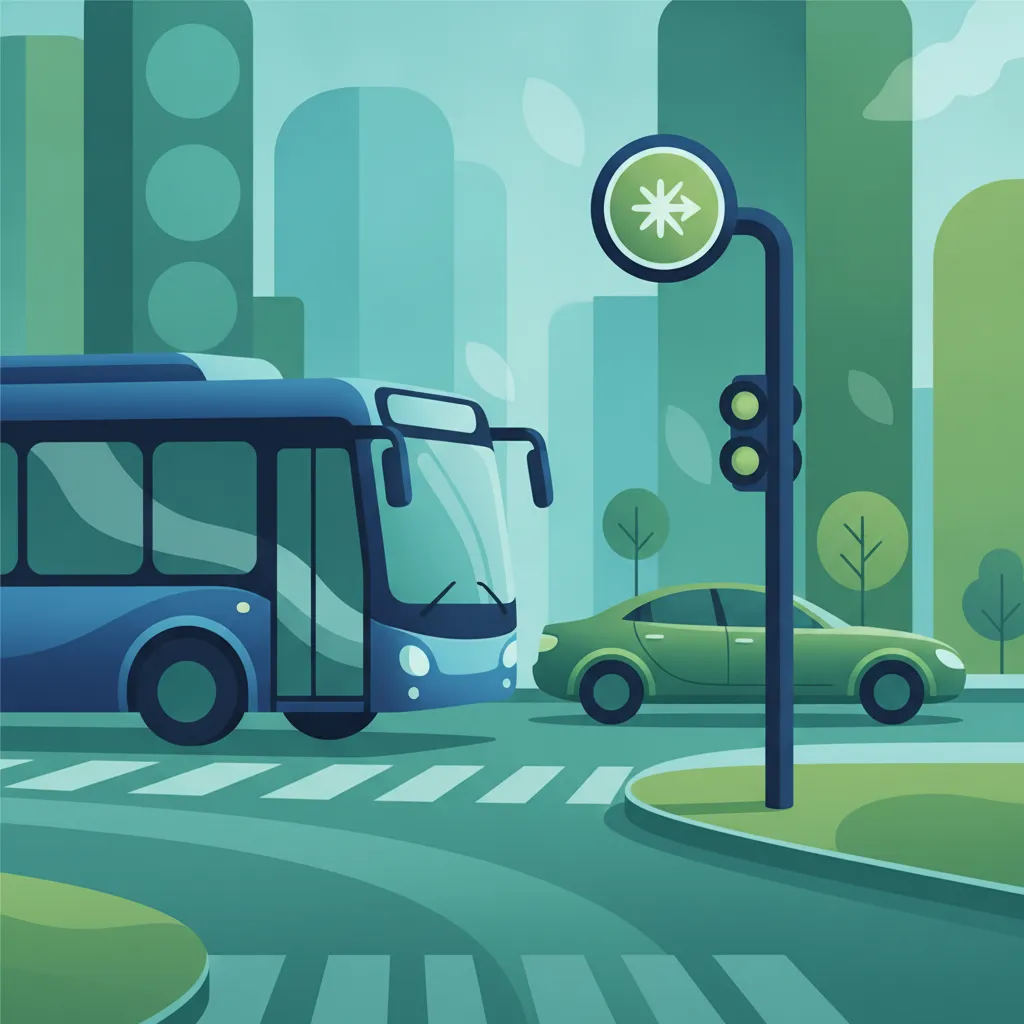
This lesson explains the regulations governing the use of dedicated bus lanes in Denmark. It covers when it is permissible to enter and exit these lanes, how to merge safely with general traffic, and the meaning of specific road markings. The content also details how public transport priority systems at traffic lights work and how drivers should respond to them.
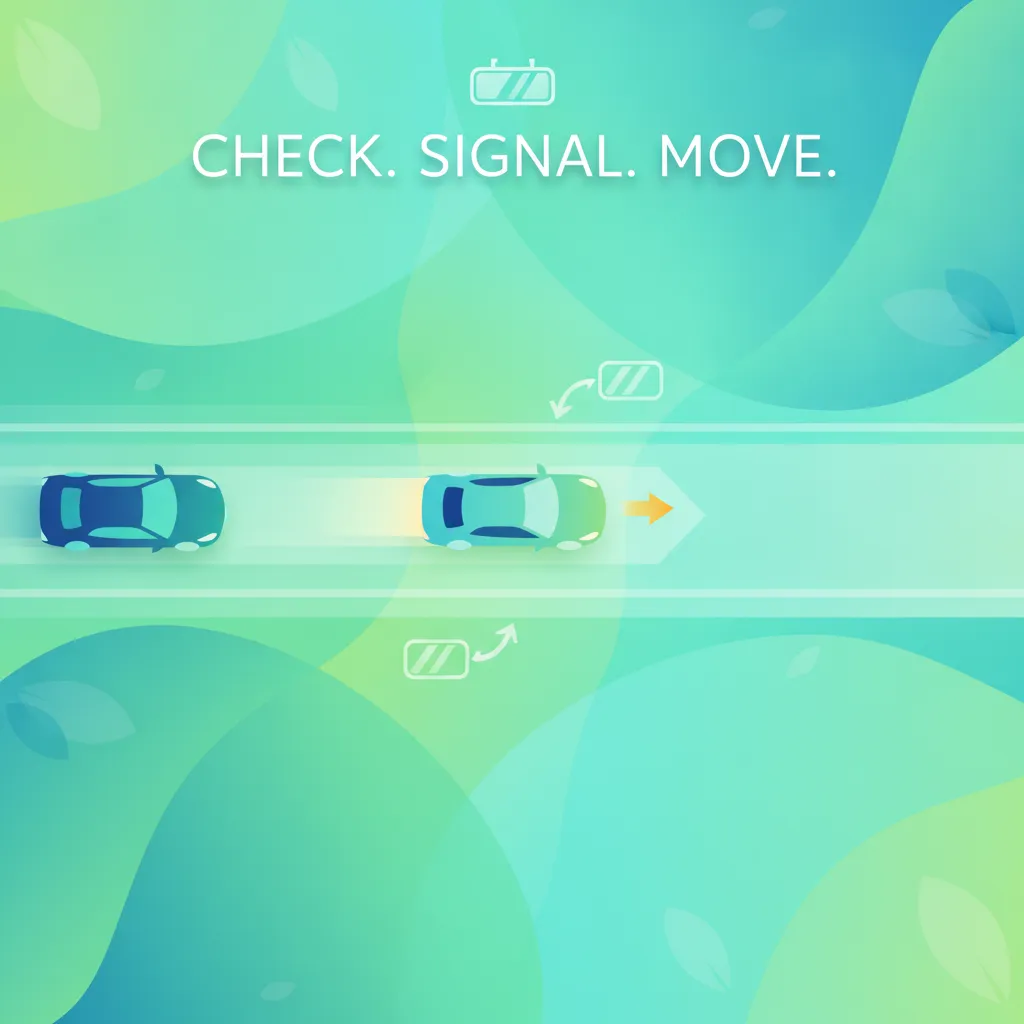
This lesson explains the principles of correct lane discipline, including proper positioning within your lane and adherence to road markings. It provides a clear, safe procedure for changing lanes, which includes signalling your intentions early, checking mirrors, and performing a final shoulder check for the blind spot. Mastering this process is essential for smooth and safe navigation in multi-lane traffic.

This lesson provides critical guidance for driving in environments with heavy cycle traffic, typical of Danish cities. It focuses on identifying and yielding to cyclists in dedicated bike lanes, especially when turning right across their path. The content emphasizes advanced observation skills to detect cyclists in blind spots and the importance of giving adequate space.
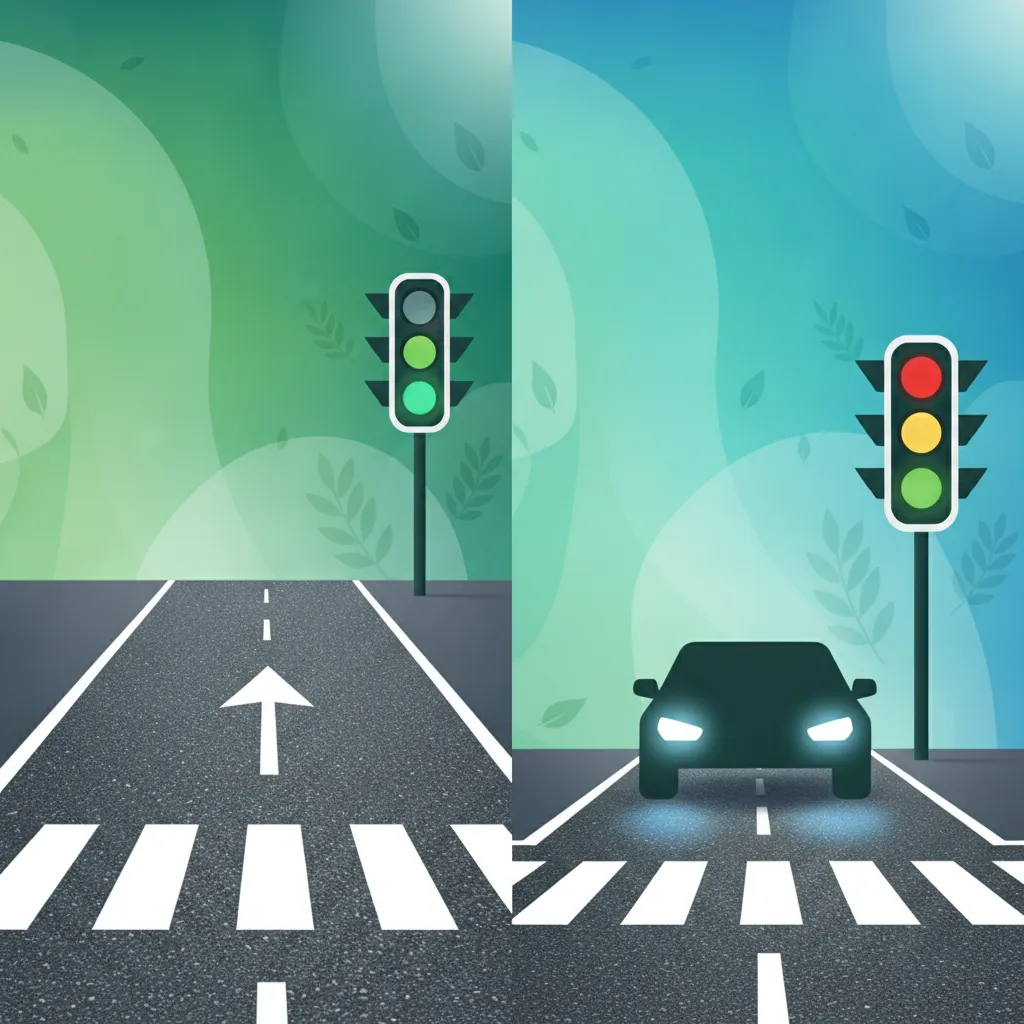
This lesson details the meaning and application of various road surface markings, including lane dividers, solid and broken lines, and directional arrows. You will also learn to interpret the full sequence of traffic light signals, including the specific rules for the amber (yellow) light phase. A proper understanding of these systems is vital for maintaining correct lane discipline and adhering to traffic controls.

This lesson provides essential training for driving on motorways. It details the correct procedure for using acceleration lanes to merge safely into fast-moving traffic, maintaining proper lane discipline, and executing safe overtaking manoeuvres. You will also learn the importance of keeping a safe following distance and planning for your exit well in advance.

This lesson focuses on the safe integration of cyclists and pedestrians within the traffic system, a key feature of Danish roads. It covers the specific rights and common behaviors of cyclists, including those on e-bikes and cargo bikes, and explains procedures for yielding to pedestrians. The content emphasizes maintaining safe distances and heightened awareness to prevent accidents and promote harmonious road sharing.

This lesson addresses the unique challenges of streets with dedicated cycle lanes and numerous bus stops. It teaches riders how to anticipate pedestrians moving to and from buses and how to position themselves to avoid conflict with cyclists. The goal is to navigate these complex environments smoothly and safely.
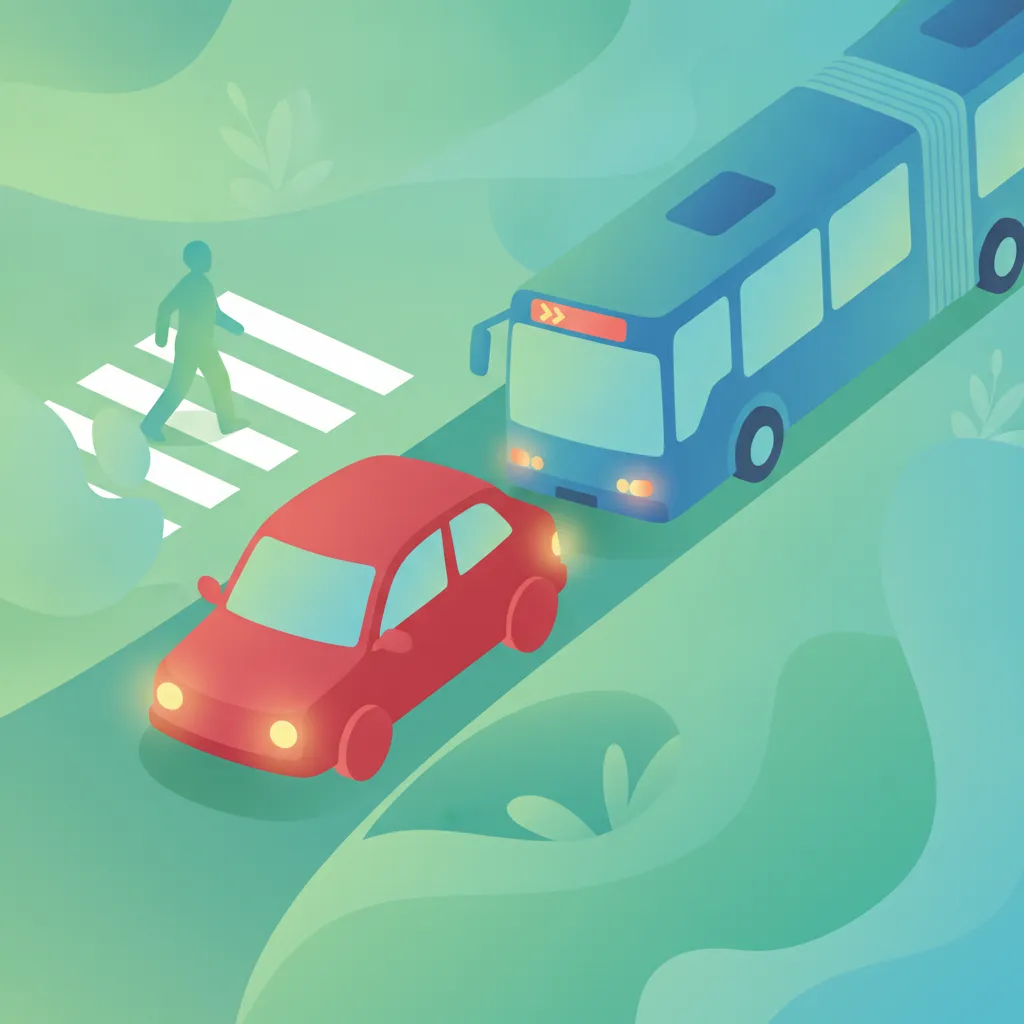
This lesson addresses the specific skills required to navigate around public transport and heavy goods vehicles safely. You will learn the rules for bus lanes, recognize when buses have priority at stops, and understand the unique challenges posed by large vehicles, such as wider turning circles and larger blind spots. The material also provides clear protocols for overtaking these vehicles while maintaining adequate safety margins.

This lesson contrasts the driving techniques required for rural roads and motorways. It covers managing speed on narrow, winding lanes with potential hazards like farm machinery or animals. The content also explains the principles of safe motorway driving, including maintaining lane discipline, managing high-speed stability, and executing safe overtaking maneuvers.
Gain a deep understanding of solid, broken, and double line markings on Danish roads. This lesson clarifies rules for lane changes and overtaking, essential for safe Category AM riding.
This lesson details the meaning and application of various road surface markings, including lane dividers, solid and broken lines, and directional arrows. You will also learn to interpret the full sequence of traffic light signals, including the specific rules for the amber (yellow) light phase. A proper understanding of these systems is vital for maintaining correct lane discipline and adhering to traffic controls.
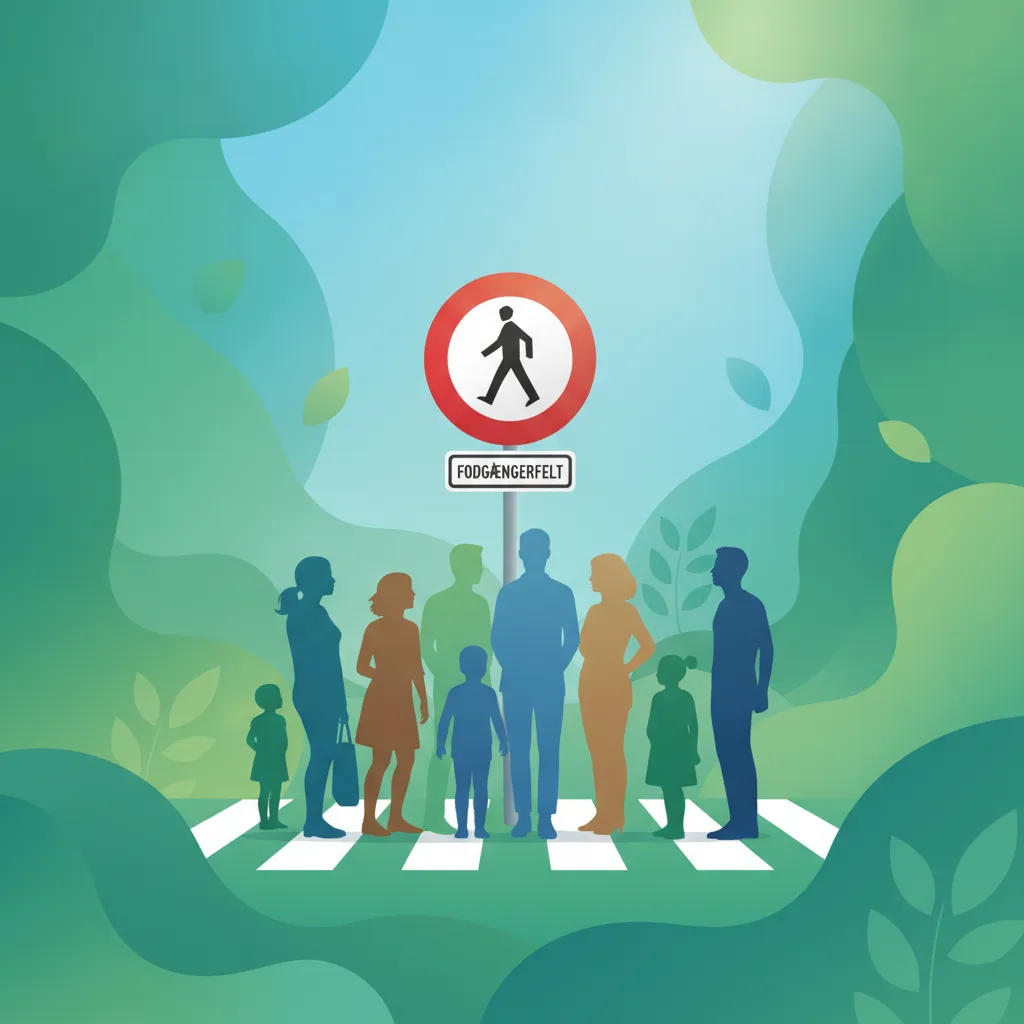
This lesson introduces the primary categories of Danish road signs and their legal implications. It covers regulatory signs that dictate mandatory actions or prohibitions, and warning signs that indicate upcoming hazards. Correct interpretation of these signs is fundamental for lawful and safe riding on Danish roads.
This lesson explains the principles of correct lane discipline, including proper positioning within your lane and adherence to road markings. It provides a clear, safe procedure for changing lanes, which includes signalling your intentions early, checking mirrors, and performing a final shoulder check for the blind spot. Mastering this process is essential for smooth and safe navigation in multi-lane traffic.
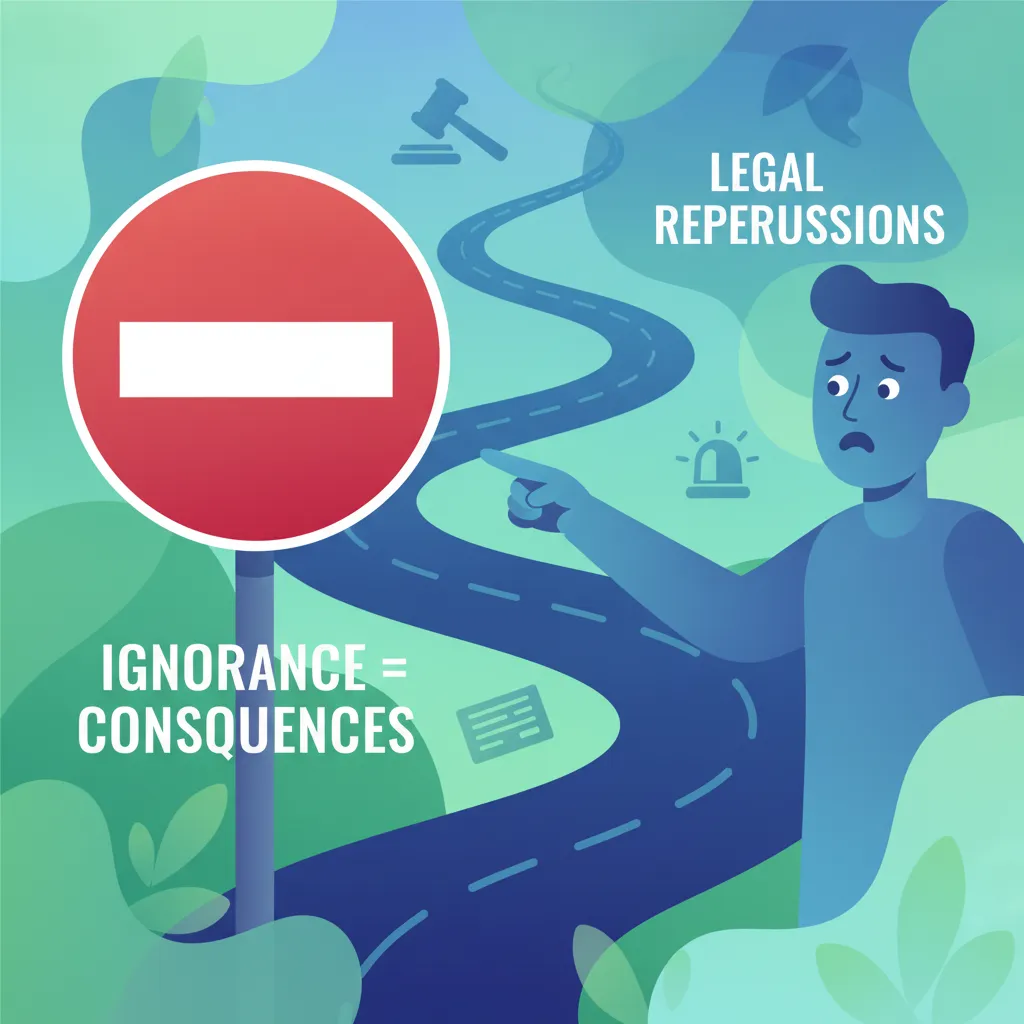
This lesson focuses on regulatory signs, which enforce mandatory actions or prohibitions, such as speed limits, stop signs, and no-entry signs. You will learn about the legally binding nature of these signs and the serious consequences of non-compliance. The material also explains signs related to parking rules and overtaking restrictions, providing a clear framework for adhering to Danish traffic law.

This lesson provides detailed guidance on navigating pedestrian crossings (fodgængerfelter) and areas with high cyclist traffic. It clarifies your legal obligation to stop for pedestrians at zebra crossings and the proper speed to approach these zones. A central theme is understanding the rights of vulnerable road users and how to yield safely to them in accordance with Danish traffic law.

This lesson provides an in-depth explanation of Denmark's priority rules, known as 'vigepligt.' It differentiates between unconditional priority ('ubetinget vigepligt'), often indicated by signs, and the default right-hand priority rule ('højre vigepligt'). Applying these rules correctly is essential for preventing collisions at junctions without traffic signals.
This lesson provides essential training for driving on motorways. It details the correct procedure for using acceleration lanes to merge safely into fast-moving traffic, maintaining proper lane discipline, and executing safe overtaking manoeuvres. You will also learn the importance of keeping a safe following distance and planning for your exit well in advance.

This lesson details the function and meaning of traffic light signals in Denmark. It covers the standard red, amber, and green sequences, as well as special signals like flashing amber lights and green arrows for turning. The content also explains signals specific to cyclists and pedestrians that moped riders must observe at intersections.

This lesson introduces cooperative driving as a fundamental element of road safety in Denmark. It highlights the social responsibility of drivers to act predictably, anticipate the actions of others, and maintain courteous interactions with all road users. By fostering mutual respect and cooperation, you will learn how to reduce the potential for conflict and enhance overall traffic safety.
This lesson explains the regulations governing the use of dedicated bus lanes in Denmark. It covers when it is permissible to enter and exit these lanes, how to merge safely with general traffic, and the meaning of specific road markings. The content also details how public transport priority systems at traffic lights work and how drivers should respond to them.
Find clear answers to common questions learners have about Road Markings and Lane Usage. Learn how the lesson is structured, which driving theory objectives it supports, and how it fits into the overall learning path of units and curriculum progression in Denmark. These explanations help you understand key concepts, lesson flow, and exam focused study goals.
No, in Denmark, a stor knallert must generally use the main road and is not permitted in cycle paths or lanes, unless specific signage explicitly allows it. Always follow the lane designated for motor vehicles.
A broken white line marks the division between lanes where changing lanes is permitted if safe. A solid white line indicates that you must stay within your lane and must not cross it, except in specific emergency or obstruction scenarios.
Directional arrows dictate the path you must follow from that specific lane. If an arrow points left, you are legally required to turn left, even if you intended to go straight. Always observe these well in advance to position yourself correctly.
As a stor knallert rider, you must respect bus lanes. You may only cross them to turn right or enter a property, but you should not travel within them unless specific road signs indicate that mopeds or small motor vehicles are permitted.
Use our powerful search tool to pinpoint specific Danish driving theory topics, road signs, or traffic situations you need to review. Start exploring relevant practice sets now to reinforce your knowledge and build confidence for your upcoming driving licence exam.